


Product name: Solasonine
Synonym name: Solasodamine
Catalogue No.: BP1323
Cas No.: 19121-58-5
Formula: C45H73NO16
Mol Weight: 884.07
Botanical Source: Solanum nigrum L.
Physical Description:
Type of Compound: Alkaloids
Purity: 95%~99%
Analysis Method: HPLC-DAD or/and HPLC-ELSD
Identification Method: Mass, NMR
Packing: Brown vial or HDPE plastic bottle
Storage: Store in a well closed container, protected from air and light. Put into refrigerate or freeze for long term storage.
Whenever possible, you should prepare and use solutions on the same day. However, if you need to make up stock solutions in advance, we recommend that you store the solution as aliquots in tightly sealed vials at -20℃. Generally, these will be useable for up to two weeks.
The product could be supplied from milligrams to grams
Inquire for bulk scale.
Description:
Solasonine displays leishmanicidal activity against promastigote forms of L. amazonensis.
References:
Phytochemistry. 1994 Nov;37(4):1007-11.
Interactions between the glycoalkaloids solasonine and solamargine in relation to inhibition of fungal growth.
Inhibition of mycelium development in Phoma medicaginis and Rhizoctonia solani by solamargine and Solasonine generally increased with increasing pH. P. medicaginis was the more susceptible species and solamargine the more potent compound.
METHODS AND RESULTS:
Solasonine was inactive against R. solani over the tested pH range (5-8). Dose-response curves confirmed these differential effects. Solamargine caused 50% growth inhibition in P. medicaginis at 60 microM (at pH 7) whereas no other treatment achieved this effect at 100 microM. Combinations of 50 microM of each glycoalkaloid produced synergistic effects against both fungi, especially R. solani which was essentially unaffected by either compound, by significantly inhibited by a 1:1 mixture of the two. The magnitude of the synergism was not affected by a pH change between 6 and 7. Spore germination in Alternaria brassicicola was markedly inhibited by 100 microM solamargine but unaffected by 100 microM Solasonine or either compound at 50 microM. In P. medicaginis, neither glycoalkaloid was inhibitory up to 150 microM.
CONCLUSIONS:
In combination, the two compounds caused synergistic effects in both species, but to a much greater extent in A. brassicicola.
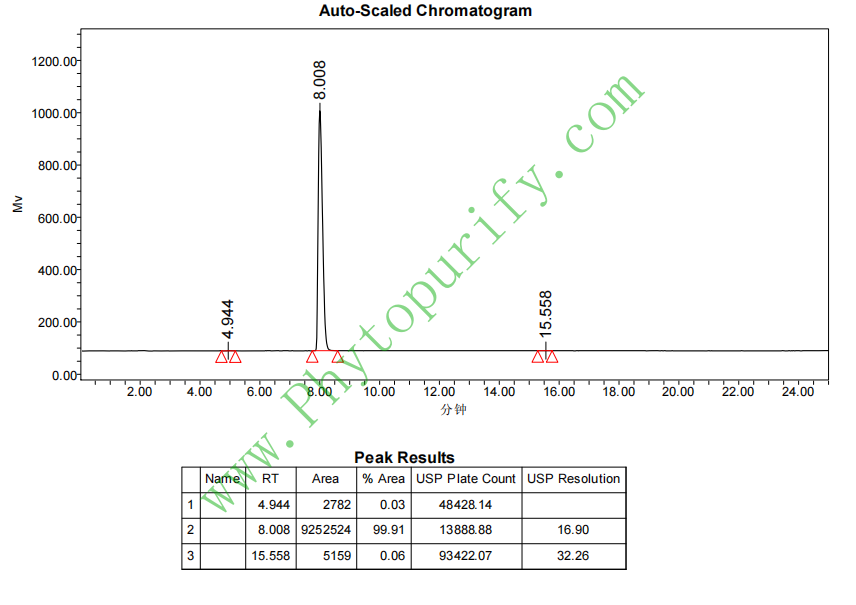
HPLC of Solasonine
Storage conditions:Short-term storage at 2~8℃, long-term storage at -20 ~ -80℃
258.7100
1.9635
.7045
.1528
.5227
.5957
Low
52.7306
6.7613
No
No
No
No
No
No
0.0
Yes
No
Yes
Yes
Natural products, as an important treasure trove for drug discovery, play an irreplaceable role in the history of human disease treatment. Among them, steroid alkaloids have always been a hot topic in medicinal chemistry and pharmacology research due to their structural diversity and wide range of biological activities. Solason (CAS number: 19121-58-5) is a glycosidic steroid alkaloid isolated from Solanaceae plants. Its core structure consists of Solason, which is linked to three sugar chains (glucose, galactose, and xylose). Traditionally, plant extracts containing Australian solanine have been used in folk medicine for anti-inflammatory and anti-tumor purposes. In recent years, with breakthroughs in the field of cell death research, especially the discovery of ferroptosis, a novel regulatory cell death mechanism, research on Australian solanine has ushered in a new opportunity. Research has shown that Australian solanine is an effective inducer of ferroptosis, which disrupts intracellular redox homeostasis by targeting glutathione peroxidase 4 (GPX4), demonstrating significant anti-tumor activity in various cancer models, particularly in areas such as liver cancer and ovarian cancer. This article aims to systematically review the chemical characteristics, plant sources, pharmacological activities, molecular mechanisms of action, medicinal properties, and clinical application prospects of Australian solanine, in order to provide comprehensive scientific references for the in-depth development and transformation research of this natural product.
The molecular formula of Australian solanine is C45H73NO16, with a molecular weight of 884.0700. Its basic skeleton is a steroid nucleus (cyclopentane dihydrophenanthrene), belonging to the spirostane alkaloid glycoside. Specifically, its aglycone is Australian solanine (a nitrogen-containing spirostane derivative), which is linked to a trisaccharide chain at the C-3 hydroxyl group in the order of β - D-glucose - (1 → 2) - [β - D-galactose - (1 → 3)] - β - D-rhamnose. This glycosylation structure is crucial for its water solubility and biological activity.
From the analysis of parameters related to drug properties, the lipid water partition coefficient (LogP) of Australian solanine is 1.9635, indicating that it has a certain degree of lipophilicity, but not highly hydrophobic. Its topological polar surface area (TPSA) is as high as 258.7100 Å ², mainly due to the presence of multiple hydroxyl groups and oxygen atoms on the sugar ring in the molecule, resulting in high polarity. The water solubility data is 0.1528 mg/mL, which belongs to the category of slight solubility, which poses a challenge for its formulation development. The molecular weight is close to 900, exceeding the standard of 500 in the Rule of Five, indicating that its oral bioavailability may be low. In the preliminary toxicity prediction, Australian solanine showed no significant risk of hERG potassium channel inhibition (hERG inhibition: No), and the Ames test result was 0.0, suggesting that it may not have direct genetic toxicity. However, its blood-brain barrier permeability is predicted to be 'low', which means it may have difficulty entering the central nervous system, which is unfavorable for treating brain tumors but may also reduce the risk of central nervous system side effects.
Australian solanine is mainly found in various plants of the Solanum genus in the Solanaceae family, especially Solanum nigrum L、Australian Solanum aviculare and Solanum surattense Wait. These plants are distributed in many regions around the world and are often used in traditional medicine to treat inflammation, infections, and neoplastic diseases.
The extraction of solanine from plant materials is usually carried out using organic solvent extraction combined with chromatographic separation techniques. The classic process is as follows:
1. Raw material pretreatment Crush the dried whole plant or fruit.
2. Solvent extraction Methanol, ethanol, or ethanol water mixed solutions are commonly used for reflux extraction or ultrasound assisted extraction to dissolve alkaloids and their glycosides.
3. Preliminary enrichment After the extraction solution is concentrated under reduced pressure, it is dissolved in acidic water (such as dilute hydrochloric acid) to make the alkaloids salt; Subsequently, liquid-liquid extraction was performed using organic solvents such as chloroform and ethyl acetate to remove lipophilic impurities; Re alkalize the aqueous phase (such as using ammonia water) to free the alkaloids, and then extract them with solvents such as n-butanol or chloroform to obtain the total alkaloid fraction.
4. Separation and purification Perform silica gel column chromatography on the total alkaloid fractions and separate them using gradient elution systems such as chloroform methanol water or dichloromethane methanol. Australian solanine often coexists with its aglycone, Australian solanine, or structurally similar Australian solanine, and requires repeated column chromatography or preparative high-performance liquid chromatography (HPLC) to obtain high-purity monomers. Modern technologies such as high-speed countercurrent chromatography (HSCCC) have also shown advantages in improving separation efficiency.
5. appraisal The purified compound was structurally confirmed by nuclear magnetic resonance (NMR, including 1H-NMR and 13C-NMR), mass spectrometry (MS), and comparison with standard samples.
Australian solanine exhibits various pharmacological activities, and its research focus has shifted from traditional antibacterial and anti-inflammatory to more modern anti-tumor fields.
The anti-tumor effect of Australian solanine, especially in ovarian cancer, involves a complex multi-target network, whose core is to induce ferroptosis, supplemented by regulation of other key signaling pathways.
Core mechanism: Inducing ferroptosis
* Main target: GPX4 Glutathione peroxidase 4 is a key negative regulator of ferroptosis, responsible for reducing toxic lipid peroxides to non-toxic lipid alcohols. Australian solanine can effectively inhibit the activity of GPX4. The specific way may be by consuming its essential substrate GSH or directly interacting with GPX4 protein. The inactivation of GPX4 function leads to a large accumulation of lipid peroxides (especially phospholipid hydroperoxides), which damages the integrity of the cell membrane and ultimately triggers ferroptosis.
* Downstream events Inhibition of GPX4 leads to an explosion of reactive oxygen species (ROS), changes in mitochondrial morphology (such as increased membrane density and decreased cristae), and disturbances in iron ion metabolism.
Multi target regulation in ovarian cancer
Based on the provided target information, the mechanism of action of Australian solanine on ovarian cancer can be summarized as follows:
* Affects cell apoptosis and survival By downregulating anti apoptotic proteins BCL2 The expression of promotes cancer cells towards apoptosis. Meanwhile, it can inhibit signal transduction and transcriptional activation factor 3(STAT3)Phosphorylation and activation. STAT3 is an important survival and proliferation signaling molecule, and its inhibition can block downstream oncogene expression.
* Interference with oxidative stress defense Nuclear factor E2 related factor 2(NFE2L2/Nrf2)It is the main regulator of cellular antioxidant response. Australian solanine may interfere with the Nrf2 pathway, weakening cancer cells' resistance to iron death and oxidative stress caused by chemotherapy drugs.
* Affects drug efflux and resistance:ABCB1(P-gp) It is an important drug efflux pump closely related to multidrug resistance (MDR). Australian solanine may inhibit the function or expression of ABCB1, thereby reversing the resistance of ovarian cancer cells to chemotherapy drugs.
* Inhibition of Topoisomerase and DNA Repair Topoisomerase I(TOP1)And II α(TOP2A)It is a key enzyme for DNA replication and transcription, and also a target for various chemotherapy drugs. Australian solanine may cause DNA damage by inhibiting the activity of these enzymes. At the same time, it affects tyrosyl DNA phosphodiesterase 1(TDP1)Inhibition can hinder the repair of DNA damage caused by TOP1 inhibitors, resulting in a synergistic killing effect.
* Regulating signaling pathways and hormone receptors By inhibiting mitogen activated protein kinase 1(MAPK1/ERK2)The activity interferes with cell proliferation and differentiation signals. In addition, it has an effect on estrogen receptor alpha(ESR1)The potential regulatory effect may affect the growth of hormone dependent ovarian cancer.
* Other potential targets Tyrosinase in the target list(TYR)Usually associated with melanin synthesis, its role in ovarian cancer is unclear, which may suggest that Australian solanine has an impact on certain specific metabolic pathways.
In summary, Australian solanine uses a strategy of "main attack" (inducing ferroptosis) combined with "auxiliary attack" (regulating multiple pathways such as apoptosis, survival, drug resistance, DNA repair, etc.) to produce multidimensional damage to ovarian cancer cells. This may be one of the reasons why it is highly effective in anti-tumor treatment and less prone to drug resistance.
Although Australian solanine has significant in vitro activity, its medicinal properties face many challenges, and related pharmacokinetic studies are still relatively limited.
Drug Challenge:
1. Solubility and permeability The high TPSA and molecular weight result in poor water solubility and membrane permeability, which directly affects its oral absorption and bioavailability.
2. Metabolic stability As a glycoside compound, Australian solanine is easily hydrolyzed by glycosidases in the gastrointestinal tract and liver, losing its active sugar chain and converting into aglycone Australian solanine, which is usually less active. This may result in extremely low blood drug concentration of the prototype drug after oral administration.
3. distribution and elimination The predicted low blood-brain barrier permeability limits its application in the treatment of brain tumors. The specific tissue distribution, metabolic pathways, and excretion patterns of it need to be systematically studied.
Existing pharmacokinetic studies:
Limited animal studies have shown that intravenous administration of Australian solanine results in faster distribution in the body, but also faster elimination. Its main metabolic pathways may be hydrolysis and hydroxylation. Developing a suitable drug delivery system is a key direction for improving its drug properties.
Formulation improvement strategy:
To improve the efficacy of Australian solanine and reduce systemic toxicity, new drug delivery systems have been extensively studied
* Nano delivery system Including liposomes, polymer nanoparticles, solid lipid nanoparticles, etc. These systems can effectively encapsulate Australian solanine, improve its water solubility, target tumor tissues through enhanced permeability and retention (EPR) effects, and protect them from premature metabolism. For example, preparing Australian solanine into folate receptor targeted liposomes can significantly improve its targeting and in vivo anti-tumor effect on ovarian cancer cells.
* Prodrug strategy Chemical modification of the sugar or hydroxyl groups of Australian solanine to prepare prodrugs, in order to improve its lipid solubility and metabolic stability, and then convert them into active forms in specific parts of the body (such as the tumor microenvironment).
* combination therapy Combined with clinical chemotherapy drugs (such as cisplatin, doxorubicin) or other iron death inducers, it can produce synergistic effects, reduce their respective dosages, minimize toxic side effects, and overcome drug resistance.
Australian solanine, as a natural anti-tumor candidate compound with multiple targets and novel mechanisms, has broad clinical application prospects, but the transformation still needs to overcome numerous obstacles.
Potential application directions:
1. cancer treatment:
* liver cancer As an inducer of ferroptosis, it may have a specific effect on GPX4 overexpressing drug-resistant liver cancer.
* ovarian cancer With its multi-target properties (overcoming drug resistance, inducing ferroptosis, inhibiting STAT3, etc.), it is expected to become a candidate drug for the treatment of recurrent or refractory ovarian cancer, especially in combination with existing chemotherapy regimens.
* Other solid tumors: It has potential therapeutic effects on breast cancer, pancreatic cancer, lung cancer and other cancers that rely on GPX4 and antioxidant defense system.
2. Auxiliary sensitizer By utilizing its ability to inhibit ABCB1 and DNA repair protein (TDP1), it can reverse tumor multidrug resistance and enhance the efficacy of traditional chemotherapy or radiotherapy.
3. Local treatment Given the pharmacokinetic challenges that its systemic administration may face, developing local administration forms (such as intratumoral injection and topical cream therapy for skin cancer) may be a faster pathway for transformation.
Future research prospects:
1. In depth mechanism research Further clarification is needed on the precise molecular patterns (such as eutectic structures) of the interactions between Australian solanine and targets such as GPX4, STAT3, ABCB1, and the cross dialogue between their multi-target networks.
2. Systematic pharmacokinetics and toxicological evaluation Conduct comprehensive preclinical pharmacokinetics, tissue distribution, metabolite identification, and long-term toxicity studies to clarify their safety window.
3. Advanced delivery technology development Continue to optimize targeted nano formulations, improve tumor specific delivery efficiency, and explore novel coupling strategies such as antibody drug conjugates (ADCs).
4. Exploration of clinical translation After completing sufficient preclinical research, promote its entry into the clinical trial phase, first exploring its safety and preliminary efficacy in patients with advanced solid tumors.
Australian solanine is a treasure discovered from traditional medicinal plants, and its unique steroid alkaloid glycoside structure endows it with multi-target anti-tumor activity centered on inducing ferroptosis. Especially in the treatment of ovarian cancer, it has shown great potential for synergistic effects through multiple mechanisms such as interfering with cellular redox balance, promoting apoptosis, inhibiting survival signals, and reversing drug resistance. Although its inherent pharmaceutical defects, such as poor solubility and metabolic instability, pose a bottleneck for clinical application, the flourishing development of modern drug chemical modification and novel nano delivery technologies provides powerful tools for overcoming these challenges. In the future, through interdisciplinary and in-depth research, Australian solanine is expected to be successfully transformed from a promising lead compound into an innovative drug for clinical cancer treatment, especially for addressing resistance and recurrence issues, continuing a new chapter in natural products in modern medicine.
