Introduction/Overview
Cardiovascular disease (CVD) is the main cause of death and disability worldwide, and its pathological basis often involves atherosclerosis, thrombosis and lipid metabolism disorder. In the search for efficient and low toxicity new therapeutic drugs, natural products have always been an important treasure trove for drug development due to their structural diversity and rich biological activity. Mao Dongqing(Ilex pubescens Hook. et Arn., as a traditional Chinese medicine, is commonly used to treat cardiovascular and cerebrovascular diseases, and its pharmacological active substance basis has attracted much attention. Ilexsaponin B3 is a triterpenoid saponin compound isolated from the roots of Ilex mongolica, with a CAS number of 109008-26-6. Early studies have revealed its significant cholesterol lowering activity, while recent studies have further discovered its potential for multi-target and multi link intervention in the field of antithrombotic therapy, involving multiple key pathological processes such as coagulation cascade reactions and platelet activation. This article aims to provide a systematic review of the chemical structure, plant origin, pharmacological activity, mechanism of action, pharmacological evaluation, and clinical application prospects of Mao Dongqing saponin B3, in order to provide comprehensive scientific references for the in-depth research and development of this compound.
Chemical structure and physicochemical properties
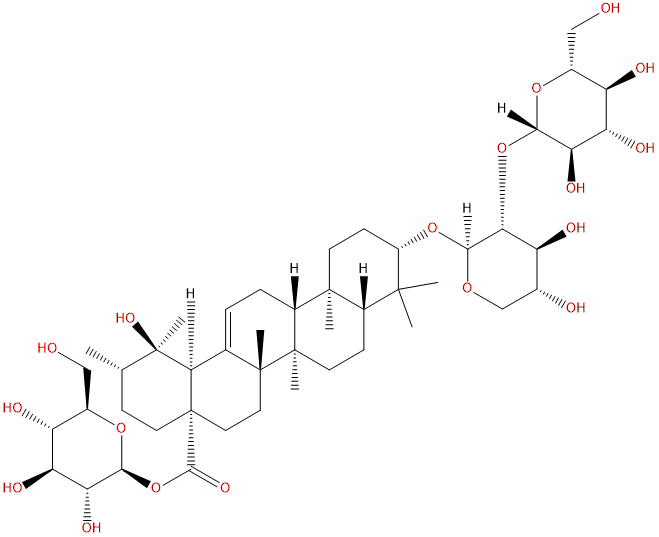
Mao Dongqing saponin B3 is an oleane type pentacyclic triterpenoid saponin. Its molecular formula is C ₄₇ H ₇₆ O ₁₈, and its molecular weight is 929.1070 Da. Its basic skeleton is oleanolic acid, and the sugar chain is connected to the C-3 position, usually composed of sugar groups such as glucose and glucuronic acid. This specific glycosylation mode has a decisive impact on its biological activity and water solubility.
From the analysis of physical and chemical parameters related to medicinal properties, the lipid water partition coefficient (LogP) of Ilex japonicus saponin B3 is 1.9099, indicating that it has a certain lipophilicity, but not high lipid solubility. Its topological polar surface area (TPSA) is as high as 294.9800 Å ², which is mainly attributed to the abundant hydroxyl and sugar chain structures in the molecule, leading to its high polarity. Consistent with this, its water solubility value is 0.1046, which belongs to slightly soluble or poorly soluble in water, which may affect its oral bioavailability. In the preliminary toxicity prediction, the compound showed no inhibitory activity on hERG potassium channels (hERG inhibition: No), indicating a low potential risk of arrhythmia. In addition, the Ames test predicted a value of 0.0, indicating that it may not have direct genetic toxicity. These preliminary pharmacological parameters provide basic data for its subsequent development, but also indicate challenges that need to be overcome, such as solubility and membrane permeability.
Plant sources and extraction methods
Mao Dongqing Saponin B3 mainly comes from the genus Mao Dongqing in the family Ileaceae(Ilex pubescens)Dry roots. Mao Dongqing is mainly distributed in various provinces in southern China, and its roots are often used in folk medicine to treat diseases such as thromboangiitis obliterans, coronary heart disease, and cerebral thrombosis.
The extraction of Mao Dongqing saponin B3 usually follows the conventional process of natural product chemistry. Firstly, the dried holly roots are crushed and subjected to heating reflux or ultrasound assisted extraction using polar solvents such as ethanol or methanol to fully extract saponin components. After vacuum concentration, the crude extract is preliminarily enriched and purified using macroporous adsorption resins (such as D101, AB-8). Water ethanol gradient elution is commonly used, and saponin components are usually concentrated in the 30% -70% ethanol elution site. Subsequently, further separation and purification were carried out using techniques such as silica gel column chromatography, reverse phase silica gel column chromatography (such as ODS-C18), high performance liquid chromatography (HPLC), and preparative liquid chromatography. The identification of Mao Dongqing saponin B3 mainly relies on modern spectroscopic techniques, including nuclear magnetic resonance (NMR, especially ¹ H-NMR and ¹ ³ C-NMR), mass spectrometry (MS, such as ESI-MS), and HPLC analysis of reference standards. Optimizing the extraction process, such as using supercritical CO ₂ extraction or microwave-assisted extraction, may help improve the yield and purity of the target product.
Pharmacological activity research
The pharmacological activity research of Mao Dongqing saponin B3 mainly focuses on the cardiovascular system, with cholesterol lowering and antithrombotic effects being the two core directions.
1. Cholesterol lowering activity:
Early studies have confirmed that saponin B3 from Ilex japonicus has a clear effect on reducing serum total cholesterol (TC), low-density lipoprotein cholesterol (LDL-C), and triglycerides (TG). Animal experiments have shown that it can effectively regulate the lipid profile in diet induced or drug-induced hyperlipidemia models, and its effect may be related to promoting cholesterol reverse transport, inhibiting intestinal cholesterol absorption, or regulating the activity of key enzymes in liver lipid metabolism (such as HMG CoA reductase).
2. Antithrombotic activity:
This is the pharmacological effect of Mao Dongqing saponin B3 that has received much attention in recent years. Thrombosis involves a complex process of endothelial injury, platelet activation, and coagulation system activation. Research has shown that Mao Dongqing saponin B3 exhibits significant antithrombotic effects in various in vitro and in vivo thrombus models.
* Effects on the coagulation system: It can prolong coagulation time (such as PT, APTT), indicating its inhibitory effect on both endogenous and exogenous coagulation pathways.
* Effects on platelet function: It can inhibit platelet aggregation caused by various inducers such as ADP, collagen, arachidonic acid, etc. In addition, it can also inhibit platelet adhesion and release reactions.
* Fibrinolytic activity: Some studies suggest that it may enhance the activity of the fibrinolytic system and promote thrombolysis.
These multifaceted effects make it a potential multi-target antithrombotic candidate drug.
Mechanism of action and molecular targets
The mechanism of antithrombotic effect of Mao Dongqing saponin B3 is complex, involving the regulation of multiple key targets, which is consistent with the characteristics of its multi-target natural products. According to existing research, its targets mainly focus on coagulation factors, platelet membrane receptors, and anticoagulant systems:
-
Inhibition of coagulation cascade reaction: Mao Dongqing saponin B3 may exert anticoagulant effects by affecting multiple coagulation factors. The relevant targets include:
- F2 (prothrombin/thrombin): Thrombin is the central enzyme in the coagulation process, and inhibiting its production or activity is a potent anticoagulant strategy.
- F7 (coagulation factor VII), F9 (coagulation factor IX), F10 (coagulation factor X): These are key factors in the internal and external coagulation pathways, and inhibiting them can block the formation of prothrombin enzyme complexes.
- PTGS1 (prostaglandin endoperoxide synthase 1, also known as COX-1): COX-1 in platelets catalyzes the production of thromboxane A2 (TXA2) from arachidonic acid, which is a potent platelet aggregator and vasoconstrictor. Inhibition of COX-1 can reduce TXA2 production, thereby inhibiting platelet activation.
-
Multi pathway inhibition of platelet activation: Platelet activation is the core process of thrombosis formation. Mao Dongqing saponin B3 acts on multiple platelet membrane receptors:
- P2RY12 (purinergic receptor P2Y12): ADP triggers strong and irreversible platelet aggregation by activating the P2Y12 receptor. Antagonism against P2Y12 is a commonly used antiplatelet strategy in clinical practice, such as clopidogrel.
- TBXA2R (thromboxane A2 receptor): Inhibiting the binding of TXA2 to its receptor can directly block the signal transduction of TXA2.
- ITGA2B (integrin α IIb, GPIIb) and ITGB3 (integrin β 3, GPIIa): The two form fibrinogen receptors (GPIIb/IIIa) on the platelet membrane. After platelet activation, the receptor undergoes conformational changes and binds to fibrinogen, mediating cross-linking and aggregation between platelets. Inhibition of GPIIb/IIIa is a potent antiplatelet pathway.
-
Enhancement of anti coagulation system:
- SERPINC1 (Antithrombin III, ATIII): ATIII is the most important physiological anticoagulant substance in the body, which can inactivate thrombin, FXa, and other substances. Mao Dongqing saponin B3 may indirectly exert a strong anticoagulant effect by enhancing the activity or expression of ATIII.
In summary, Mao Dongqing saponin B3 synergistically acts on coagulation factors (F2, F7, F9, F10), platelet activation key receptors (P2RY12, TBXA2R, ITGA2B/ITGB3), and anticoagulant system (SERPINC1), and inhibits the synthesis of TXA2 in platelets (PTGS1), forming a three-dimensional antithrombotic network covering multiple stages of coagulation initiation, amplification, platelet aggregation, and fibrin formation. This multi-target mode of action may bring more comprehensive therapeutic effects and may reduce the risk of bleeding caused by excessive inhibition of a single target.
Evaluation of drug properties and pharmacokinetics
Based on its physical and chemical properties and preliminary prediction data, a preliminary evaluation of the pharmacological properties of Mao Dongqing saponin B3 is conducted
Advantage:
1. Clear activity, multi-target effect: It has clear lipid-lowering and antithrombotic activities, and its mechanism of action involves multiple key targets, which may have the advantages of synergistic enhancement and reduction of drug resistance.
2. High security potential: Predicting the absence of hERG inhibition and genotoxicity provides a good starting point for its safety assessment.
3. Low blood-brain barrier permeability: Predicting low blood-brain barrier (BBB) permeability may reduce central nervous system side effects for drugs primarily targeting the peripheral cardiovascular system.
Challenge:
1. Solubility and permeability: The higher TPSA and lower LogP values result in less prominent water solubility and lipid solubility, belonging to Class IV (low solubility, low permeability) in the Biopharmaceutical Classification System (BCS). This suggests that its oral absorption may be poor and its bioavailability may be low.
2. High molecular weight: The molecular weight is close to 1000 Da, which may affect its transmembrane transport and oral absorption.
3. Lack of pharmacokinetic data: At present, there are few reports on the systematic pharmacokinetic studies (such as absorption, distribution, metabolism, excretion, ADME) of saponin B3 in holly. Saponins are often metabolized by gut microbiota and hydrolyzed into aglycones. Key information on the exposure, half-life, and metabolic pathways of their prototype drugs in the body urgently needs to be clarified.
Improvement strategy:
To enhance its pharmacological properties, future research may consider: ① structural modifications, such as preparing prodrugs or modifying sugar groups, to improve its solubility and membrane permeability; ② Develop new drug delivery systems, such as nanoparticles, liposomes, self microemulsions, etc., to improve their oral bioavailability or for injection administration; ③ Conduct systematic preclinical pharmacokinetic and toxicological studies to comprehensively evaluate its ADME characteristics and safety.
Clinical application prospects and prospects
Mao Dongqing Saponin B3, as a natural compound with multi-target antithrombotic and cholesterol lowering activities, has shown broad application prospects in the prevention and treatment of cardiovascular diseases.
Potential application directions:
1. Prevention and treatment of atherothrombotic disease: Such as acute coronary syndrome (ACS), ischemic stroke, peripheral arterial disease, etc. It has antiplatelet, anticoagulant and lipid regulating effects, and may be applicable to the management of the whole process of atherothrombotic thrombosis.
2. Prevention and treatment of venous thromboembolism (VTE): Its anticoagulant target is clear, and it may be a candidate for a new type of anticoagulant drug.
3. Exploration of combination therapy: The combination with traditional antiplatelet drugs (such as aspirin, clopidogrel) or statin lipid-lowering drugs may produce synergistic effects, or be used for patients who are resistant or intolerant to existing drugs.
Challenges and future research directions:
1. In depth mechanism research: It is necessary to use molecular docking, surface plasmon resonance (SPR), gene knockout and other technologies to accurately verify its direct interaction and strength with the above-mentioned targets, and elucidate the network pharmacology mechanism of multi-target regulation.
2. System drug optimization: The fundamental issues of low solubility, permeability, and oral bioavailability must be addressed. The application of structure based rational drug design or advanced formulation technology is crucial.
3. Preclinical and clinical studies: Completing the pharmacological (validated in animal models closer to human diseases), pharmacokinetic, and toxicological evaluations of the system is a necessary step towards advancing it towards clinical trials. Special attention should be paid to the balance between its antithrombotic effect and bleeding risk.
4. Quality control and standardization: As a natural product, it is necessary to establish stable and controllable quality standards from raw materials to finished products to ensure the consistency of active ingredients and the safety of the product.
Conclusion
Mao Dongqing Saponin B3 is an active ingredient of great research value discovered from traditional Chinese medicine Mao Dongqing. It not only inherits the traditional effects of maternal plants in promoting blood circulation, removing blood stasis, and relieving pain, but also has a clear cholesterol lowering and multi mechanism mediated antithrombotic activity, which has been elucidated in modern pharmacology. Although it faces challenges such as poor solubility and oral absorption, its unique multi target mechanism of action and good preliminary safety prediction make it an excellent lead compound for developing new multi effect anti atherothrombotic drugs. In the future, through interdisciplinary cooperation, combined with modern medicinal chemistry, pharmacy, and systems biology methods, we will deeply explore its mechanism of action, optimize its physicochemical properties, and promote its clinical translational research. It is expected to bring new vitality to this ancient natural molecule and provide new weapons for the prevention and treatment of cardiovascular diseases.