Introduction/Overview
Natural products, as an important source of drug discovery, play an irreplaceable role in the long history of human struggle against diseases. From the classic aspirin (salidroside) to the milestone antimalarial drug artemisinin, and then to the anti-cancer drug paclitaxel, plant secondary metabolites continue to provide valuable lead compounds for modern drug development with their unique chemical structures and diverse biological activities. Among numerous natural products with pharmacological activity, lignans have attracted much attention due to their significant anti-inflammatory, antioxidant, anti-tumor, and neuroprotective activities. Isolaridisinol, also known as Phenexolactone 1, is a typical aromatic tetrahydronaphthalene type lignan that has gradually entered the field of researchers in recent years due to its potential application value in the anti-inflammatory field.
Inflammation is a complex defense response of the body in response to infection, tissue damage, or immune stimulation. Its essence is the body's attempt to eliminate harmful stimuli and initiate repair processes. However, when the inflammatory response is excessive or persistent, it can transition from a protective response to a pathological state, becoming a core driving factor for various chronic diseases such as rheumatoid arthritis, inflammatory bowel disease, cardiovascular disease, neurodegenerative diseases, and even cancer. Therefore, precise regulation of inflammatory responses, especially interventions targeting key signaling pathways and inflammatory mediators, has become a hot topic in new drug development. Although traditional nonsteroidal anti-inflammatory drugs (NSAIDs) and glucocorticoids have definite therapeutic effects, long-term use often accompanies serious side effects such as gastrointestinal injury, cardiovascular risk, and immune suppression. This has prompted the academic community to continuously seek anti-inflammatory candidate molecules with novel structures, unique mechanisms of action, and higher safety.
Isomethomyl glycoside stands out in this context. Its chemical structure belongs to the reduced form of dibenzylbutyrolactone lignans and has a unique tetrahydronaphthalene core. This compound was initially isolated from various medicinal plants, such as the genus Rhodiola(Trachelospermum)Schisandra genus(Schisandra)And Euphorbia genus(Euphorbia)Plants, which are often used in traditional medical systems to treat rheumatism, rheumatism, traumatic injuries, and inflammation related diseases. Modern pharmacological research has preliminarily revealed that isodesmopyrosine has significant anti-inflammatory activity, which can inhibit the expression of key pro-inflammatory factors such as tumor necrosis factor - α (TNF - α), interleukin-6 (IL-6), and nitric oxide synthase (iNOS/NOS2) by regulating multiple inflammatory signaling pathways. More importantly, its target network involves multiple proteins closely related to the inflammatory cascade, such as STAT3, NF - κ B (RELA), CASP1, TRPV1, and TRPA1, exhibiting multi-target and multi pathway regulatory characteristics. This provides a solid theoretical basis for its development as a drug for treating complex inflammatory diseases.
The purpose of this article is to systematically review the research progress of isodesmopyroxine glycoside, starting from its chemical structure and physicochemical properties, deeply explore its plant origin and extraction process, comprehensively sort out its anti-inflammatory pharmacological activity and molecular mechanism of action, and objectively evaluate it based on its pharmacological parameters. Finally, this article will look forward to its potential and challenges in clinical applications, in order to provide valuable references for the subsequent research and development of this natural product.
Chemical structure and physicochemical properties
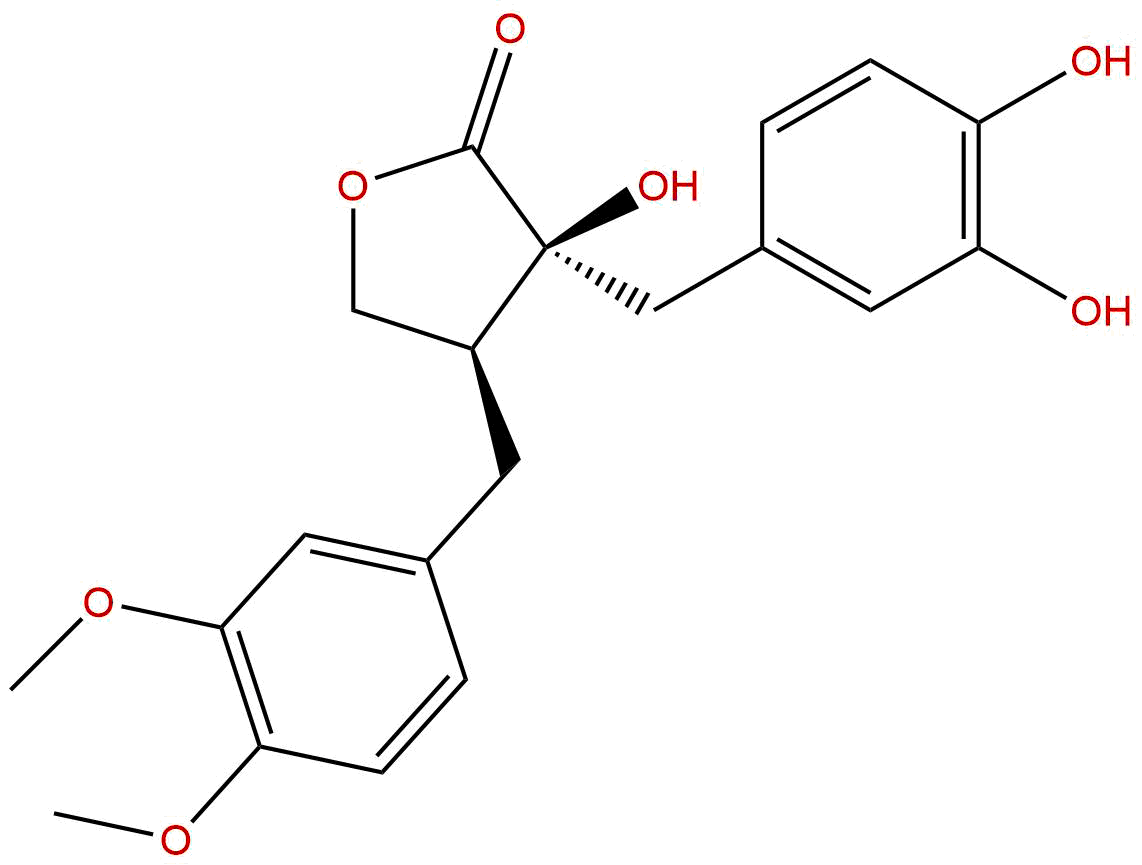
The chemical structure of Isolaridisinol belongs to the typical aryltetrahydronaphthalene type lignan. Its core skeleton is composed of a tetrahydronaphthalene ring, with substituents attached at C-1, C-2, and C-3 sites, respectively. Specifically, its structural features include: a 3,4-dimethoxyphenyl group (or 3-methoxy-4-hydroxyphenyl group, depending on the specific isomer) connected to the C-1 position, a hydroxymethyl group (- CH ₂ OH) connected to each of the C-2 and C-3 positions, and a hydroxyl substitution at the C-4 position. This structure endows the molecule with multiple chiral centers, resulting in various stereoisomers, among which the naturally occurring active form is usually the (2R, 3R) - configuration. This structure combines the polarity of phenolic hydroxyl groups with the hydrophobicity of aromatic rings, providing a structural basis for its interaction with biological targets.
From the perspective of physical and chemical properties, the molecular formula of isodesmopyrosine is C ₂₀ H ₂₂ O ₇, with a molecular weight of 374.3890 g/mol. Its lipid water partition coefficient (LogP) is 2.0925, indicating that the compound has moderate lipophilicity, which can penetrate the cell membrane to a certain extent without being difficult to distribute in the aqueous environment due to excessive lipophilicity. The topological polar surface area (TPSA) is 105.45 Å ², which is higher than the recommended threshold for oral drugs (<140 Å ²), indicating that it may have good oral absorption potential, but also suggesting that its transmembrane transport may be limited. The water solubility data (0.2095 mg/mL) shows that its solubility in water is low, making it a poorly soluble compound. This may require the use of solubilization techniques (such as cyclodextrin inclusion, solid dispersion, or lipid nanoparticles) in actual formulation development to improve its bioavailability.
In terms of drug safety prediction, isodesmopyrosine exhibits encouraging characteristics. The blood-brain barrier (BBB) penetration assessment is' low ', which means that the compound is not easily able to enter the central nervous system, potentially avoiding adverse reactions caused by central action such as sedation, dizziness, or drug dependence. In addition, the prediction result of hERG (human ether - à - go related gene) potassium channel inhibition is "no", which greatly reduces its risk of causing cardiac QT interval prolongation and fatal arrhythmias (such as apical torsion ventricular tachycardia), and is an important safety advantage as a candidate drug. The Ames test result was 0.0, indicating that it did not show mutagenicity in the bacterial recovery mutation test, and the genetic toxicity risk was preliminarily ruled out. These pharmacological parameters together outline the good safety profile of isostyrosine as an anti-inflammatory lead compound, laying a solid foundation for its further preclinical development.
Plant sources and extraction methods
Isomethomyl glycoside is widely distributed in nature, mainly found in various plants such as Oleaceae, Schisandraceae, Euphorbiaceae, and Apocynaceae. Among them, plants with relatively abundant content include Luo Shi(Trachelospermum jasminoides)Schisandra chinensis(Schisandra chinensis)The Great Spear(Euphorbia pekinensis)And Rhodiola rosea(Rhodiola rosea)Wait. These plants have many applications in traditional medicine, such as the use of Polygonatum sibiricum to treat rheumatism, joint swelling, and pain, and Schisandra chinensis to relieve cough, asthma, consolidate essence, and stop diarrhea. These traditional effects are highly consistent with modern anti-inflammatory pharmacological activities, suggesting that isostyrosine may be one of the important material bases for its pharmacological effects.
The extraction of isodesmopyrosine usually follows the classic process of natural product chemistry. Firstly, grind the dried plant materials (such as the vine stems of Luo Shi or the fruits of Schisandra chinensis) to an appropriate particle size to increase the solvent contact area. The selection of extraction solvent is crucial. Given the polarity and phenolic hydroxyl structure of the compound, polar solvents such as methanol, ethanol, or their aqueous solutions are often used for cold soaking or heating reflux extraction. In order to improve extraction efficiency and reduce impurities, modern techniques such as ultrasound assisted extraction or microwave-assisted extraction are sometimes used. After the extraction solution is concentrated under reduced pressure, crude extract is obtained.
Due to the complex composition of the crude extract, subsequent separation and purification are the key steps to obtain high-purity isodesmopyrosine glycosides. Common separation methods include liquid-liquid extraction (such as petroleum ether, ethyl acetate, and n-butanol extraction in turn, and the target compounds are usually enriched in the ethyl acetate layer), silica gel column chromatography (chloroform methanol or petroleum ether acetone gradient elution), Sephadex LH-20 gel column chromatography (further purification using molecular sieve effect), and preparative high-performance liquid chromatography (Pre HPLC). In recent years, high-speed countercurrent chromatography (HSCCC) has been successfully applied for the efficient separation of lignin compounds due to its advantages of irreversible adsorption and high sample recovery rate. Finally, the structure of the obtained monomer compound was confirmed by spectroscopic techniques such as nuclear magnetic resonance (NMR) and mass spectrometry (MS).
It is worth noting that there are significant differences in the content of isokaempferol in different plant sources, production areas, harvest seasons, and tissue parts (roots, stems, leaves, fruits). For example, in Schisandra chinensis, this compound is mainly present in fruits and vine stems, and its content varies with growth years and storage conditions. Therefore, establishing a stable and controllable plant resource base and optimizing extraction process parameters (such as solvent concentration, solid-liquid ratio, extraction temperature, and time) are crucial for ensuring the continuous supply and subsequent research of this compound.
Pharmacological activity research
At present, the pharmacological activity research of isosorbide dinitrogen mainly focuses on its anti-inflammatory effect, while there are also a few reports on its antioxidant, neuroprotective, and anti-tumor activities. Among them, anti-inflammatory activity is its most core and deeply researched direction.
Anti inflammatory activity: A large number of in vitro cell experiments have confirmed that isodesmopyrosine can significantly inhibit the inflammatory model of macrophages (such as RAW264.7 cell line) induced by lipopolysaccharide (LPS). Specifically, it manifests as a dose-dependent decrease in the production of nitric oxide (NO) and prostaglandin E ₂ (PGE ₂), which are key mediators of inflammatory response. At the same time, it can effectively inhibit the mRNA and protein expression of pro-inflammatory cytokines such as TNF - α, IL-6, and IL-1 β. In animal models, isodemethylamine glycoside also showed good in vivo anti-inflammatory effects. For example, in the carrageenan induced rat paw swelling model, oral or intraperitoneal injection of this compound can significantly reduce the degree of paw swelling; In the acetic acid-induced model of increased peritoneal capillary permeability in mice, it can effectively reduce dye leakage and demonstrate anti leakage effects. These results collectively indicate that isodesmopyrosine has significant anti-inflammatory potential in both acute and chronic inflammation models.
Antioxidant activity: Lignin compounds generally have antioxidant activity, and isodesmopyrosine is no exception. The phenolic hydroxyl group in its molecular structure can effectively scavenge free radicals (such as DPPH free radicals, ABTS cationic free radicals) and chelate transition metal ions (such as Fe ² ⁺), thereby blocking the chain reaction of lipid peroxidation. Research has shown that isodemethylated quercetin can reduce the levels of oxidative stress markers such as malondialdehyde (MDA) and increase the activity of endogenous antioxidant enzymes such as superoxide dismutase (SOD) and glutathione peroxidase (GSH Px) in cells. Given the close relationship between oxidative stress and inflammatory response (NF - κ B pathway can be activated by reactive oxygen species), its antioxidant activity may partially contribute to its anti-inflammatory effect.
Other activities: Preliminary studies also suggest that isodemethylated tyrosine glycosides may have neuroprotective effects, such as reducing neuronal apoptosis in glutamate induced neuronal injury models. In addition, it is reported that it has a weak inhibitory effect on the proliferation of some tumor cell lines (such as human hepatoma cell HepG2, human breast cancer cell MCF-7), but its anti-tumor activity is far less significant than its anti-inflammatory activity, which is still in the preliminary stage of exploration.
Mechanism of action and molecular targets
The core of the anti-inflammatory effect of isoniazid is its regulation of multiple key inflammatory signaling pathways, especially its inhibition of NF - κ B and STAT3 pathways. Its mechanism of action presents a multi-target and multi-level network regulation feature, which is consistent with its wide anti-inflammatory activity spectrum and relatively low side effects.
1. Inhibition of NF - κ B signaling pathway: NF - κ B (nuclear factor kappa B) is the core transcription factor in inflammatory response. In the resting state, NF - κ B (usually a p50/p65 heterodimer, where p65 is RELA) binds to its inhibitory protein I κ B α and exists in an inactive form in the cytoplasm. When cells are stimulated by LPS, TNF - α, etc., I κ B kinase (IKK, encoded by IKBKB) is activated, phosphorylating I κ B α, leading to its ubiquitination degradation. The released NF - κ B immediately enters the nucleus, initiating the transcription of downstream pro-inflammatory genes such as TNF - α, IL-6, iNOS, COX-2. Research has shown that isodemethylated tyrosine glycosides can effectively inhibit the activity of IKK β (IKBKB), thereby blocking the phosphorylation and degradation of I κ B α and preventing nuclear translocation of NF - κ B. In addition, it can directly inhibit the transcriptional activity of p65 subunit and reduce its binding to DNA. Through this mechanism, isodesmopyrosine inhibits the production of various pro-inflammatory factors from the source.
2. Inhibition of STAT3 signaling pathway: STAT3 (Signal Transduction and Transcription Activation Factor 3) is another transcription factor that plays a critical role in inflammation and immune responses. After binding to receptors, cytokines such as IL-6 activate JAK kinase, which in turn phosphorylates STAT3. Phosphorylated STAT3 forms dimers and merges into the nucleus, regulating downstream gene expression including acute phase proteins, anti apoptotic proteins, and pro-inflammatory factors. It has been confirmed that isodemethylamine glycoside can inhibit IL-6-induced STAT3 phosphorylation, thereby blocking its signaling pathway. Given the central role of the IL-6/STAT3 pathway in autoimmune diseases such as rheumatoid arthritis and inflammatory bowel disease, the discovery of this target provides a molecular basis for the treatment of such diseases with isostyrosine.
3. Regulating inflammasomes and ion channels: The targets of action of isodemethylated tyrosine glycosides also include CASP1 (cysteine aspartic protease 1) and TRP ion channels. CASP1 is a key effector protein of NLRP3 inflammasome, which can cleave pro-IL-1 β and pro-IL-18 into mature active forms upon activation, thereby triggering a strong inflammatory response. Isonorgestrel glycoside may reduce the release of IL-1 β by inhibiting the activity of CASP1. In addition, TRPV1 and TRPA1 are non selective cation channels expressed on sensory neurons, which not only mediate pain and itching sensations, but also participate in neurogenic inflammation. The regulatory effect of isostyrosine monophosphate on these channels may explain its potential efficacy in alleviating inflammation related pain.
4. Inhibit key inflammatory enzymes: PTGS1 (cyclooxygenase-1, COX-1) and NOS2 (inducible nitric oxide synthase, iNOS) are key enzymes involved in the synthesis of inflammatory mediators. Isonorgestrel glycoside can directly or indirectly inhibit the activity or expression of these two enzymes, thereby reducing the production of PGE ₂ and NO, which is consistent with the effects observed in cell experiments.
In summary, the isodemethylamine glycoside forms a synergistic anti-inflammatory network by simultaneously acting on multiple targets such as IKBKB, RELA, STAT3, CASP1, TRPV1, TRPA1, TNF, IL-6, PTGS1, and NOS2. This multi-target mode of action enables it to block the inflammatory cascade from multiple levels, which may have better efficacy and lower resistance risk than single target drugs.
Evaluation of drug properties and pharmacokinetics
Based on the aforementioned physicochemical parameters and preliminary pharmacological activity, a systematic evaluation of the pharmacological properties of isodesmopyroxine glycoside is a necessary step in advancing it to preclinical stage.
Pharmaceutical advantages: As mentioned earlier, isodemethyl kaempferol has shown excellent safety performance. Its low BBB penetration reduces the risk of central nervous system side effects; The absence of hERG inhibitory activity eliminates the hidden danger of cardiac toxicity; A negative Ames test ruled out genetic toxicity. These characteristics give it significant innate advantages among candidate drugs. In addition, its moderate LogP value (2.09) and reasonable TPSA value (105.45 Å ²) meet most of the requirements of Lipinski's "Five Rules" (molecular weight<500, LogP<5, hydrogen bond donor<5, hydrogen bond acceptor<10), indicating that it has the basic chemical spatial characteristics to become an oral drug.
Drug Challenge: However, its poor water solubility (0.2095 mg/mL) is the main bottleneck for drug development. Low water solubility not only affects the oral absorption of drugs, but may also lead to low bioavailability, thereby affecting the efficacy of drugs in vivo. In addition, the metabolic stability issues typically faced by natural products also require attention. Lignin compounds may undergo extensive phase I (oxidation, reduction) and phase II (glucuronidation, sulfation) metabolism in the body, leading to a shortened half-life. At present, there is still a lack of specific pharmacokinetic (ADME) data on isosorbide dinitrogen, such as oral bioavailability, plasma protein binding rate, half-life, metabolic pathway, and excretion mode. This is a key direction for future research.
Pharmacokinetic outlook: In order to overcome the above challenges, future research needs to: 1) establish a sensitive and specific LC-MS/MS quantitative method for the determination of isodesmopyrosine in biological samples (plasma, tissue); 2) Conduct pharmacokinetic studies of oral and intravenous administration in rats or mice to obtain key parameters; 3) Identify the main metabolites and metabolic enzymes of liver microsomes or liver cells through in vitro metabolic experiments; 4) Explore formulation strategies, such as preparing phospholipid complexes, self microemulsifying drug delivery systems, or nanocrystals, to enhance their solubility and oral bioavailability. Only through systematic pharmacokinetic studies can the in vivo exposure level be accurately evaluated and provide a basis for subsequent toxicology and clinical research design.
Clinical application prospects and prospects
Due to its unique anti-inflammatory mechanism and good safety profile, isostyrosine has shown broad application prospects in the treatment of various inflammation related diseases.
1. Chronic inflammatory diseases: Given its dual inhibition of the NF - κ B and STAT3 pathways, isodesmopyrosine is expected to be used for the treatment of autoimmune inflammatory diseases such as rheumatoid arthritis, inflammatory bowel diseases (such as Crohn's disease and ulcerative colitis), and psoriasis. Its multi-target nature may make it more effective than biologics that only target a single cytokine (such as TNF - α inhibitors), and the convenience of oral administration is its huge advantage over injectable biologics.
2. Neuroinflammation and pain: Its regulatory effects on TRPV1 and TRPA1 ion channels, as well as its inhibition of CASP1, suggest its potential in the treatment of neuropathic pain and inflammatory pain. Although its BBB penetration is low, its advantage may actually become an advantage for peripheral neuroinflammation and pain, as it can avoid central side effects. In addition, for certain inflammatory states that can enter the central nervous system through damaged blood-brain barriers (such as stroke, traumatic brain injury), their low BBB penetration may also indicate the need for special delivery strategies.
3. Metabolic inflammation: In recent years, metabolic diseases such as obesity, type 2 diabetes and atherosclerosis have been considered as a low-grade chronic inflammatory state (metabolic inflammation). Isonorgestrel glycosides may improve insulin resistance, alleviate adipose tissue inflammation, and have beneficial effects on metabolic syndrome by inhibiting inflammatory pathways.
Future research directions: Although the prospects are bright, there is still a long way to go before the clinical application of isodesmopyrosine glycosides. Future research should focus on the following aspects: 1)In depth in vivo pharmacological research Validate its efficacy in various animal disease models, such as collagen induced arthritis model and DSS induced colitis model, and clarify the dose-response relationship; 2)Comprehensive toxicological evaluation Conduct research on acute toxicity, subchronic toxicity, and reproductive toxicity to evaluate their safety window; 3)Research on Structural Optimization and Structure Performance Relationship Based on its parent nucleus structure, chemical modifications can be carried out, such as introducing water-soluble groups (phosphate esters, amino acid esters) to improve solubility and bioavailability, or enhance selectivity towards specific targets; 4)Drug delivery system development Using nanotechnology, liposomes, or prodrug strategies to solve the problems of poor water solubility and low bioavailability; 5)Combination therapy research Explore its synergistic effect with existing anti-inflammatory drugs such as methotrexate and sulfasalazine, in order to reduce the dosage and toxicity of the latter.
Conclusion
As an aromatic tetrahydronaphthalene type lignan derived from traditional medicinal plants, the unique chemical structure and significant multi-target anti-inflammatory activity of isodemethylamine provide new ideas for the development of natural product drugs. This article systematically reviews its chemical and physicochemical properties, plant sources, pharmacological activities, molecular mechanisms, and medicinal characteristics. Research has shown that this compound can regulate various inflammatory mediators such as TNF - α, IL-6, iNOS, and act on TRP ion channels and CASP1 by inhibiting core inflammatory pathways such as NF - κ B and STAT3, demonstrating a comprehensive and refined anti-inflammatory regulatory network. Its excellent safety prediction (low BBB penetration, no hERG inhibition, no genotoxicity) is its outstanding advantage as a candidate drug.
However, we must also be aware that the research on isodesmopyrosine is still in its early stages. Key issues such as poor water solubility, lack of pharmacokinetic data, and insufficient evidence of in vivo efficacy urgently need to be addressed. Future research needs to combine modern medicinal chemistry, pharmacology, pharmacy, and toxicology methods, while delving into their mechanisms of action and addressing the bottleneck of drug development. We have reason to believe that with the continuous deepening of research, this ancient natural molecule is expected to be rediscovered through modern science and ultimately transformed into a new type of drug for treating human inflammatory diseases, bringing new hope to patients. The transformation of isodesmopyrosine from plants to clinical use is a long journey, but each step of exploration contains scientific and innovative value.