Introduction/Overview
Angina pectoris is a typical clinical manifestation of coronary atherosclerotic heart disease. Its pathological core lies in the imbalance of myocardial oxygen supply and consumption, which leads to myocardial ischemia, hypoxia, and chest pain. Although modern treatment options centered around nitrates, beta blockers, calcium channel blockers, and antiplatelet drugs are relatively mature, there are still limitations such as drug resistance, side effects, and inability to reverse endothelial damage and myocardial cell apoptosis. Therefore, exploring new therapeutic molecules with multi-target, high efficiency and low toxicity characteristics from natural products has always been an important direction for drug development. Nortraheloside (CAS number: 33464-78-7) is a traditional medicinal plant derived from the Chinese medicinal plant Arashide(Trachelospermum jasminoides The lignans isolated from Lindl. Lem. have attracted much attention in recent years due to their multiple pharmacological activities in cardiovascular protection. Research has shown that its effects are not limited to traditional anti-inflammatory and antioxidant methods, but also involve multiple aspects closely related to the pathophysiology of angina, such as regulating cell apoptosis, improving endothelial function, and regulating ion channels. This article aims to provide a systematic review of the chemical properties, plant sources, pharmacological activities, molecular mechanisms of action, and medicinal properties of desmopyrosine, in order to provide comprehensive scientific references for the in-depth research and potential clinical applications of this natural product.
Chemical structure and physicochemical properties
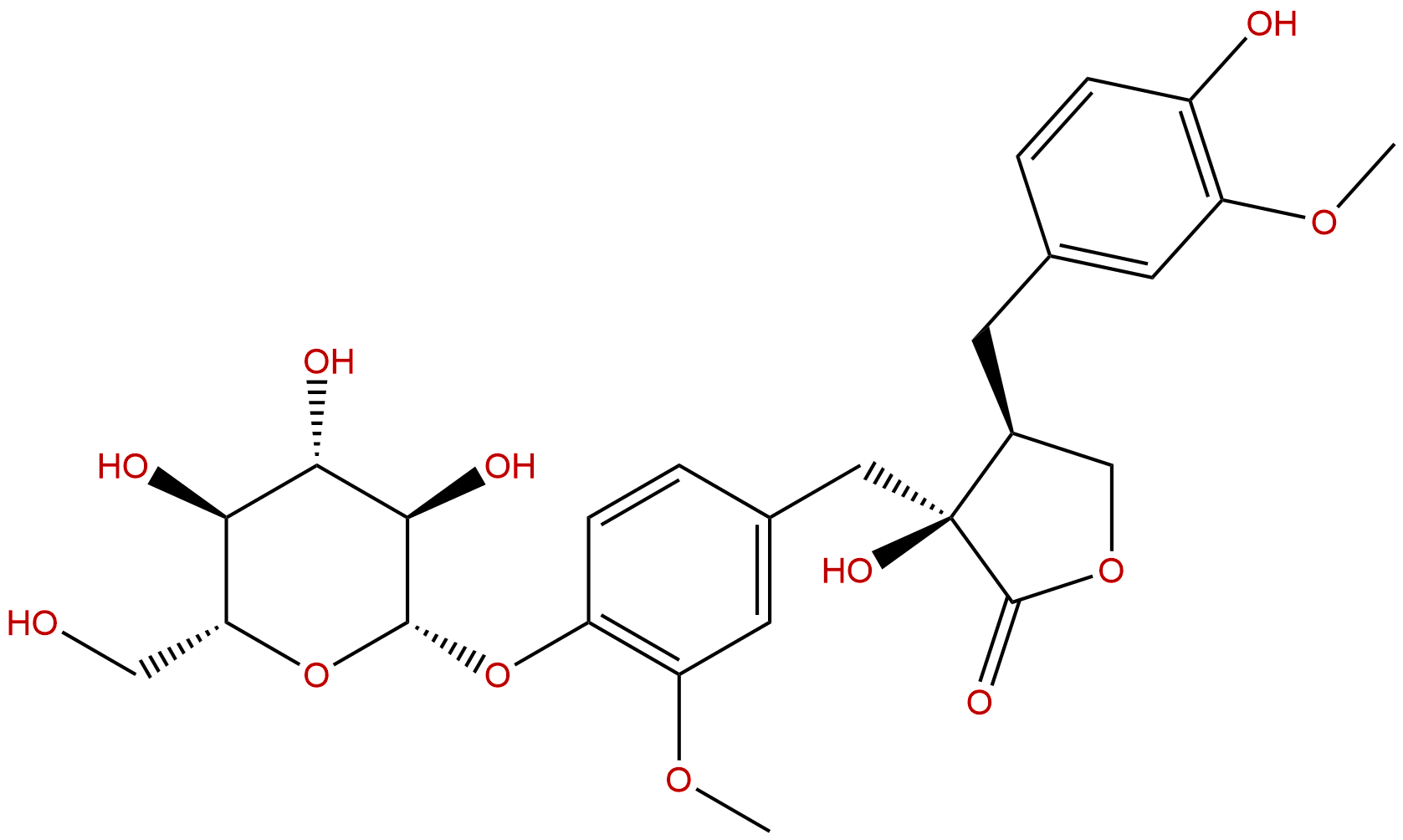
Nortraloside belongs to the lignan class of compounds, specifically aromatic tetrahydronaphthalene lignan glycosides. Its molecular formula is C27H28O11 and its molecular weight is 536.5300. Its structural feature lies in a core skeleton of tetrahydronaphthalene, which is connected to benzene rings, methoxy groups, and glycoside units. The sugar moiety is usually glucose, which is linked to lignin through glycosidic bonds, significantly affecting its water solubility and bioavailability.
From the analysis of physical and chemical parameters related to drug properties, desmopyrosine exhibits the following characteristics: its lipid water partition coefficient (LogP) is 0.2302, indicating that the compound has relatively balanced lipophilic and hydrophilic properties, leaning towards hydrophilicity. The topologically polar surface area (TPSA) is as high as 184.6000 Å ², mainly due to the numerous oxygen atoms (from sugar, hydroxyl, and methoxy groups) in its structure, which are usually unfavorable for passive diffusion across membranes. Its water solubility value is 2.0890 (usually measured in mg/mL or log mol/L, indicating moderate to low solubility), combined with LogP and TPSA, suggesting that it belongs to the low permeability, low to moderate solubility compound in the Biopharmaceutical Classification System (BCS). These properties collectively determine that its oral absorption may face challenges, and its bioavailability needs to be optimized. In addition, preliminary toxicity predictions showed that its Ames test result was 0.0 (indicating no mutagenic risk), and it had no significant inhibitory effect on hERG potassium channels, indicating a low risk of cardiac toxicity and providing preliminary chemical information support for its cardiovascular safety. Its blood-brain barrier permeability is predicted to be "low", indicating that its main target may be located in the peripheral system, and the risk of central nervous system side effects is relatively low.
Plant sources and extraction methods
The main source of demethylated jasmonic acid is jasmonic acid from the Oleander family's jasmonic acid plant, jasmonic acid(Trachelospermum jasminoides)In traditional Chinese medicine, its dried vine stem with leaves is called "Luoshi Teng", which has the effects of dispelling wind, unblocking meridians, cooling blood, and reducing swelling. It is commonly used to treat rheumatism and heat obstruction, muscle and vein spasm, throat obstruction, and abscess. Modern plant chemistry research has confirmed that Rhodiola rosea is rich in active ingredients such as lignans, flavonoids, and triterpenoids, among which lignans are considered one of its important pharmacological substances.
The extraction and separation of desmopyrosine from plant materials usually follow the conventional process of natural product chemistry. Firstly, solvent extraction method is used, commonly using methanol, ethanol or their aqueous solutions to leach or reflux extract the dried and crushed Polygonatum sibiricum, in order to fully extract the polar components. Subsequently, the crude extract was preliminarily divided using a system solvent separation method (such as extraction with petroleum ether, ethyl acetate, and n-butanol in sequence). Nortraloside, due to its glycosidic structure and high polarity, was mainly enriched in the n-butanol extraction site or water-soluble site. Further purification relies on various chromatographic techniques, including silica gel column chromatography, reverse phase silica gel (such as ODS) column chromatography, and high-performance liquid chromatography (HPLC) preparation. During the separation process, thin layer chromatography (TLC) or high-performance liquid chromatography-mass spectrometry (HPLC-MS) is often used for tracking and detection. In recent years, liquid-liquid distribution chromatography techniques such as high-speed counter current chromatography (HSCCC) have also been applied to the efficient preparation and separation of polar lignin glycosides. Optimizing the extraction solvent, temperature, time, and using ultrasound assisted or microwave-assisted extraction methods can help improve the extraction efficiency of the target compound.
Pharmacological activity research
The pharmacological activity research of norepinephrine, especially in the protection of cardiovascular system, has accumulated certain experimental evidence, mainly reflected in the following aspects:
-
Anti myocardial ischemia and protective effects In various experimental animal models of myocardial ischemia/reperfusion injury (I/R) and hypoxia/reoxygenation (H/R) cell models, norepinephrine showed significant cardioprotective effects. It can reduce the size of myocardial infarction, lower the levels of serum myocardial injury markers such as creatine kinase isoenzyme CK-MB and lactate dehydrogenase LDH, and improve cardiac function indicators. Its protective effect is closely related to reducing oxidative stress damage and inhibiting excessive apoptosis of myocardial cells.
-
anti-oxidative stress Oxidative stress is the core link of myocardial ischemic injury. Nortraloside can enhance the endogenous antioxidant defense system of cells. Research has shown that it can upregulate the expression and activity of superoxide dismutase 2 (SOD2), promote the production of glutathione (GSH), and effectively reduce the levels of lipid peroxidation products such as reactive oxygen species (ROS) and malondialdehyde (MDA) in ischemic myocardium or endothelial cells, thereby maintaining the integrity of the cell membrane and mitochondrial function.
-
antiapoptosis Apoptosis of myocardial cells is an important pathway for myocardial cell loss in ischemic heart disease. The anti apoptotic effect of norepinephrine has been confirmed. It can downregulate the expression of pro apoptotic protein Bax and upregulate the expression of key anti apoptotic protein Bcl-2, regulate the Bcl-2/Bax ratio, thereby inhibiting the release of cytochrome C and activation of caspase-3 in the mitochondrial apoptosis pathway, ultimately reducing myocardial cell apoptosis.
-
Endothelial function protection and vasodilation Endothelial dysfunction is the initiating factor of coronary heart disease and angina pectoris. Nortraloside has a protective effect on vascular endothelial cells, promoting the activation of endothelial nitric oxide synthase (eNOS, encoded by the NOS3 gene) and the production of nitric oxide (NO). NO is an important endogenous vasodilator and anti-inflammatory molecule. By increasing the bioavailability of NO, desmopyrosine helps improve endothelial dependent vasodilation, inhibit platelet aggregation and leukocyte adhesion, thereby maintaining vascular homeostasis.
-
Antiplatelet aggregation Platelet activation and aggregation play a crucial role in the formation of arterial thrombosis and acute occlusion of blood vessels. Preliminary studies suggest that norepinephrine may have a certain inhibitory effect on the platelet activation pathway, and its potential targets involve platelet membrane glycoprotein receptors (such as GP IIb/IIIa, integrin α IIb β 3, encoded by the ITGA2B and ITGB3 gene complexes), but the specific mechanism of action still needs to be further elucidated.
Mechanism of action and molecular targets
Based on existing research, the cardiovascular protective effect of norepinephrine involves a multi-target and multi pathway network regulatory mechanism, which interacts with multiple key targets related to angina pectoris
-
Regulating apoptosis balance: targeting the BCL2 protein family Nortraloside affects the expression and function of Bcl-2 protein directly or indirectly. Bcl-2 is an important anti apoptotic protein that can stabilize the outer membrane of mitochondria and prevent the release of apoptotic factors. Nortraloside upregulates Bcl-2 and may downregulate pro apoptotic proteins such as Bax, thereby reshaping the balance of apoptosis within cells and enhancing the survival ability of cardiomyocytes under ischemic stress.
-
Adapting to hypoxic stress: regulating HIF1A signaling Hypoxia inducible factor-1 alpha (HIF-1 alpha) is a core transcription factor that cells use to respond to hypoxic environments. During myocardial ischemia, norepinephrine may stabilize HIF-1 α or regulate its downstream target genes (such as erythropoietin EPO, vascular endothelial growth factor VEGF, etc.), activate the body's endogenous adaptation and protective mechanisms, promote angiogenesis and energy metabolism reorganization, and alleviate hypoxic injury.
-
Improving energy metabolism and redox homeostasis: activating the SIRT1 pathway Silent Information Regulatory Factor 1 (SIRT1) is an NAD+- dependent deacetylase involved in regulating energy metabolism, antioxidant stress, and cellular aging. Research has shown that demethylated tyrosine glycosides may act as activators or modulators of SIRT1, activating downstream targets such as PGC-1 α (mitochondrial biogenesis regulator), FOXOs (transcription factor, regulating antioxidant genes), and eNOS (NOS3) through deacetylation, thereby synergistically improving mitochondrial function, enhancing antioxidant defense, and promoting NO production.
-
Promoting vasodilation: activating NOS3 (eNOS)As mentioned earlier, desmopyrosine can significantly upregulate the activity of endothelial nitric oxide synthase (eNOS). The mechanism may involve: activation of eNOS deacetylation mediated by SIRT1; Activate eNOS through phosphorylation via the PI3K/Akt signaling pathway; Or by reducing the quenching of NO by superoxide anions through antioxidant effects, the bioavailability of NO can be improved. The increase of NO directly leads to vasodilation of vascular smooth muscle and improves coronary artery blood flow.
-
Enhance antioxidant defense: upregulate SOD2 Mitochondrial manganese superoxide dismutase (SOD2) is a key enzyme that clears superoxide anions within mitochondria. Nortraloside can upregulate SOD2 expression by activating transcription pathways such as Nrf2/ARE or FOXO, thereby specifically protecting mitochondria from oxidative damage and maintaining the normal operation of cellular energy factories.
-
Potential myocardial electrophysiology and receptor regulation: involving CACNA1C and ADRB1 The L-type calcium channel α 1C subunit (encoded by CACNA1C) is the main channel for calcium ion influx during the action potential plateau phase of cardiomyocytes, affecting myocardial contractility and oxygen consumption. β 1-adrenergic receptors (ADRB1) mediate the positive chronotropic and inotropic effects of catecholamines, increasing myocardial oxygen consumption. Although direct evidence is not yet sufficient, as a compound with potential anti angina activity, norepinephrine may reduce myocardial oxygen consumption by moderately inhibiting calcium channels or antagonizing β 1-receptors, which requires further research verification.
-
Inhibition of platelet aggregation: potential targeting of ITGA2B/ITGB3 (GP IIb/IIIa)The platelet glycoprotein IIb/IIIa receptor is the ultimate common pathway for platelet aggregation. Nortraloside may exert antithrombotic effects by interfering with the conformational changes of the receptor or ligand binding (such as fibrinogen), inhibiting platelet cross-linking and aggregation, and preventing coronary artery thrombosis.
Evaluation of drug properties and pharmacokinetics
Although norepinephrine has shown good pharmacological activity in vitro and animal models, its drug like and pharmacokinetic (PK) properties are the key factors determining its successful development as a drug.
According to its physical and chemical properties analysis, desmopyrosine belongs to the class of highly polar and high molecular weight glycosidic compounds. Its high TPSA (184.6 Å ²) and relatively low LogP (0.23) suggest that its oral bioavailability may face challenges: in the gastrointestinal tract, its transmembrane passive absorption is poor; Meanwhile, as a glycoside, it is highly susceptible to hydrolysis by gut microbiota or glycosidases on the intestinal mucosa, generating deglycosylated aglycones, whose physicochemical properties and activities may be vastly different from those of the prototype drug. In addition, the prototype drug and its metabolites may undergo phase II binding reactions (such as glucuronidation and sulfation) in the liver, leading to rapid excretion.
At present, there are relatively few reports on the pharmacokinetic studies of the desmopyroxine system. Limited non clinical studies suggest that the prototype drug may have lower exposure levels and shorter half lives in the bloodstream. Its poor blood-brain barrier permeability limits its central role, but also reduces the risk of central side effects. The prediction of no hERG inhibition and negative Ames test provides preliminary positive information for its safety.
Possible future research strategies to improve its pharmacological properties include: 1)Prodrug design Chemical modification of sugar or phenolic hydroxyl groups to prepare precursor drugs with higher lipid solubility, in order to improve membrane permeability and oral absorption, and then convert them into active forms in vivo. 2)New drug delivery system Develop delivery systems such as nanoliposomes, polymer micelles, solid dispersions, or self microemulsions to improve their solubility, stability, and intestinal absorption efficiency. 3)structural optimization Reasonably modify the molecular structure while retaining the pharmacophore, balance its hydrophilicity and lipophilicity, and optimize the ADMET (absorption, distribution, metabolism, excretion, toxicity) properties. 4)In depth research on PK/PD Conduct comprehensive pharmacokinetic studies in vivo, clarify their absorption, distribution, metabolism, and excretion pathways, establish pharmacokinetic pharmacodynamic (PK/PD) correlation models, and provide a basis for dosage form design and dosing regimen formulation.
Clinical application prospects and prospects
As a natural lignan with multi-target effects, norepinephrine has shown unique application potential in the prevention and treatment of angina pectoris and even broader cardiovascular diseases.
its Clinical application prospects This may be reflected in: 1)As an adjuvant therapy for angina pectoris Combined with traditional drugs, synergistic interventions targeting the complex pathological network of angina pectoris through multiple mechanisms such as antioxidant, anti apoptotic, endothelial protection, and potential antiplatelet effects may be particularly suitable for patients with poor response to conventional drugs or severe endothelial dysfunction. 2)Preventing myocardial ischemia/reperfusion injury In percutaneous coronary intervention (PCI) or cardiac surgery, as a pre-treatment or post-treatment drug, it reduces myocardial injury and microcirculation disorders caused by reperfusion. 3)Develop into functional food or health products Given the traditional edible and medicinal history of Lonicera japonica, extracts or derivatives with high content of norepinephrine can be used to develop health foods with cardiovascular protection functions.
However, in order to achieve its translation into clinical applications, there are still many challenges and a need for further exploration Research Direction:1)Deep analysis of the mechanism of action It is necessary to use techniques such as gene knockout/knockdown, co precipitation, and surface plasmon resonance to more accurately verify its direct interaction with the aforementioned targets (such as SIRT1 and HIF-1 α), and elucidate its upstream signal perception and transduction mechanisms. 2)Pharmacodynamic validation in vivo: It is necessary to systematically evaluate the effects of long-term administration on angina symptoms, plaque stability, cardiac remodeling and other endpoint indicators in animal models closer to human diseases (such as ApoE -/- mouse atherosclerosis model, miniature pig myocardial ischemia model). 3)Optimization of drug formulation system As mentioned earlier, the bottleneck problem of low bioavailability must be solved through pharmaceutical or chemical methods. 4)Comprehensive evaluation of safety Complete standardized preclinical toxicology studies, including acute toxicity, chronic toxicity, reproductive toxicity, etc., to ensure the safety of their clinical application. 5)Explore new indications Based on its anti-inflammatory, antioxidant and cytoprotective properties, we can explore its application value in heart failure, diabetes cardiomyopathy, stroke and other oxidative stress related diseases.
Conclusion
Norcresol glycoside is a lignan glycoside compound with important research value discovered from the traditional Chinese medicine Luo Shi Teng. It exhibits comprehensive cardiovascular protective effects through multi-target and multi pathway synergistic effects, including regulating BCL2 mediated cell apoptosis, activating SIRT1-NOS3 pathway to improve endothelial function and redox homeostasis, upregulating SOD2 to enhance antioxidant defense, and possibly involving HIF1A mediated hypoxia adaptation and platelet aggregation inhibition, in terms of anti myocardial ischemia, protecting vascular endothelium, inhibiting oxidative stress and cell apoptosis. These characteristics make it a potential candidate molecule for the prevention and treatment of ischemic heart diseases such as angina pectoris. Although it currently faces pharmaceutical challenges, especially in terms of oral bioavailability, which cannot be ignored, this is precisely the direction that modern pharmaceutical chemistry and pharmacy can focus on breaking through. With the further elucidation of its mechanism of action, structural optimization, and innovative application of delivery technology, norepinephrine is expected to gradually move from a potential natural active molecule to preclinical and clinical research, providing new options for the treatment of cardiovascular diseases, and also providing a useful example for the modernization of traditional Chinese medicine and the development of innovative natural product drugs. Future research should focus on interdisciplinary collaboration, integrating the strengths of pharmacology, chemistry, pharmacy, and clinical medicine to jointly promote the transformation process of this promising compound.