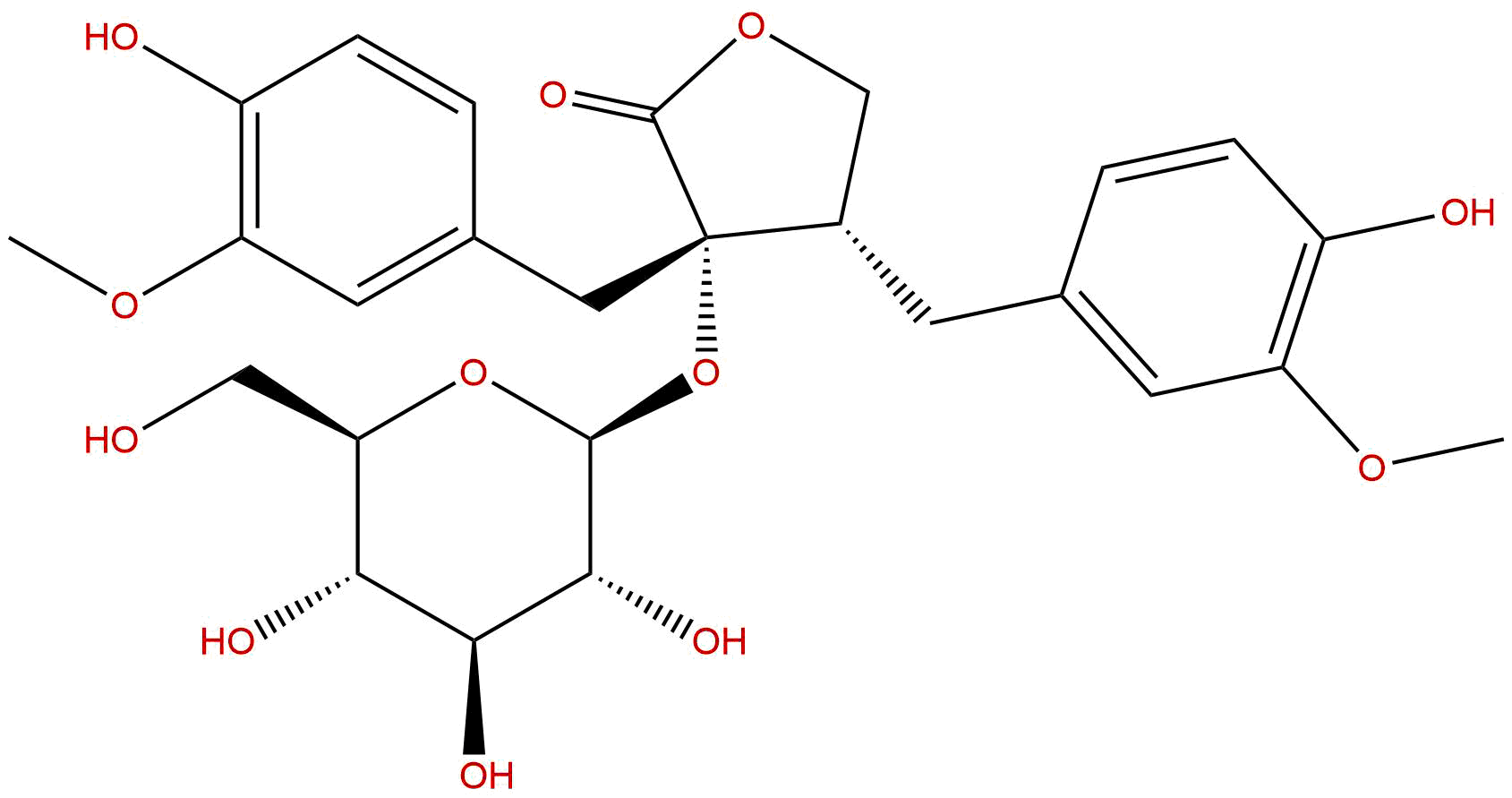


Product name: Nortrachelogenin-8'-O-β-D-glucopyranoside
Synonym name: (3S,4S)-3-(β-D-Glucopyranosyloxy)dihydro-3,4-bis[(4-hydroxy-3-methoxyphenyl)methyl]-2(3H)-furanone
Catalogue No.: BP4605
Cas No.: 858127-38-5
Formula: C26H32O12
Mol Weight: 536.53
Botanical Source:
Type of Compound:
Purity: 95%~99%
Analysis Method: HPLC-DAD or/and HPLC-ELSD
Identification Method: Mass, NMR
Packing: Brown vial or HDPE plastic bottle
Storage: Store in a well closed container, protected from air and light. Put into refrigerate or freeze for long term storage.
Whenever possible, you should prepare and use solutions on the same day. However, if you need to make up stock solutions in advance, we recommend that you store the solution as aliquots in tightly sealed vials at -20℃. Generally, these will be useable for up to two weeks.
The product could be supplied from milligrams to grams
Inquire for bulk scale.
For Reference Standard and R&D, Not for Human Use Directly.
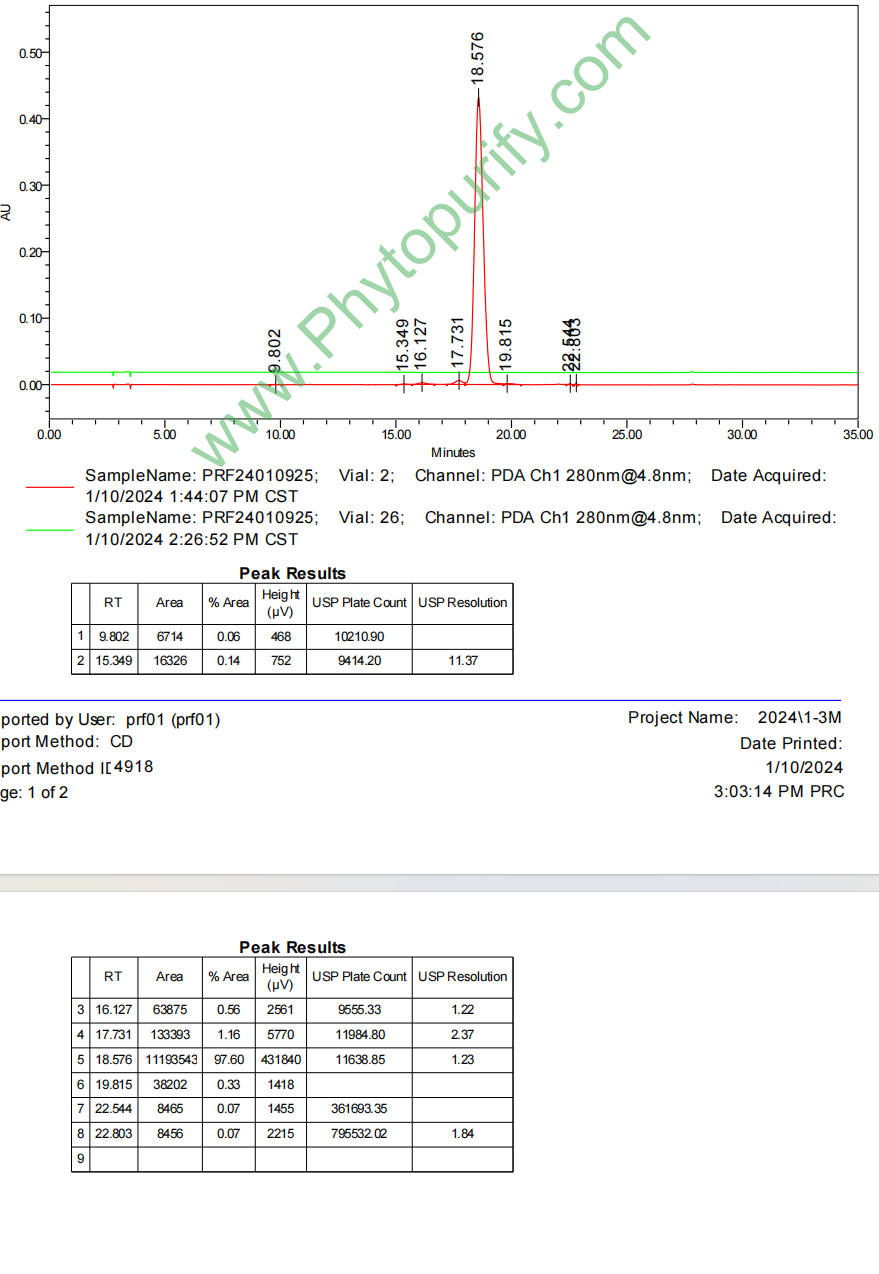
HPLC of Nortrachelogenin-8'-O-β-D-glucopyranoside
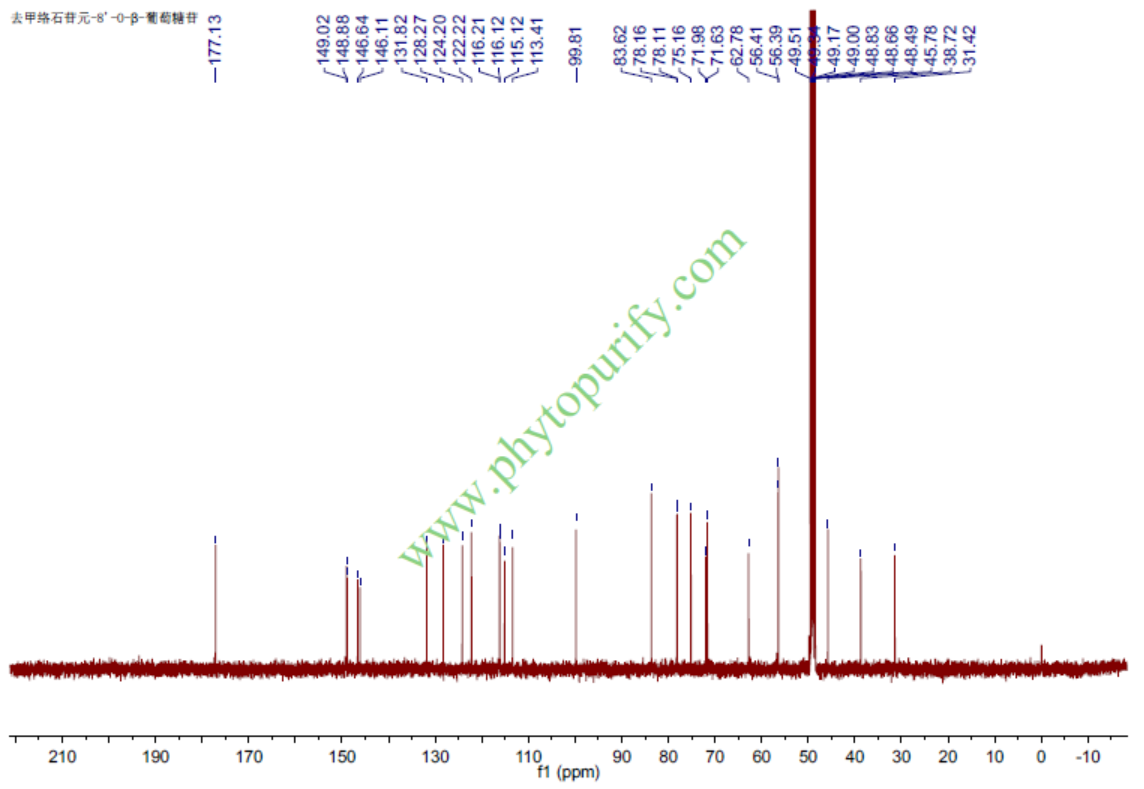
NMR of Nortrachelogenin-8'-O-β-D-glucopyranoside
Storage conditions:Short-term storage at 2~8℃, long-term storage at -20 ~ -80℃
184.6000
.3982
.3960
1.9566
.6415
.2105
Low
80.1948
4.5011
No
No
No
No
No
No
0.0
Yes
No
Yes
Yes
Cardiovascular diseases (CVDs) are the leading cause of death and disability worldwide, and their pathological processes involve multiple complex processes such as endothelial dysfunction, inflammation, oxidative stress, lipid metabolism disorders, and myocardial remodeling. Although existing drugs such as statins and angiotensin-converting enzyme inhibitors are widely used in clinical practice, problems such as side effects, drug resistance, and limited efficacy for some patients still exist. Therefore, searching for new cardiovascular protective agents with multi-target, high efficiency and low toxicity characteristics from natural products has always been an important direction for drug development. Nortrahelogen-8 '- O - β - glucoside (NTG), as a lignan glycoside compound, has attracted much attention in recent years due to its multiple pharmacological activities in cardiovascular protection. Its CAS number is 858127-38-5, with a unique molecular structure and pharmacological parameters indicating its good potential for development. This article aims to systematically review the chemical structure, plant origin, pharmacological activity, mechanism of action, and pharmacological properties of NTG, in order to provide comprehensive scientific references for the in-depth research and future clinical applications of this compound.
Nortoline-8 '- O - β - glucoside belongs to the lignan class of compounds. Its basic skeleton is Nortrachelogenin, which is a furan type lignan formed by the β - β 'connection of two molecules of phenylpropanoid (C6-C3). The characteristic of NTG is that the 8 'hydroxyl group of its parent nucleus of demethylated glycosides is connected to a molecule of β - D-glucopyranose through a glycosidic bond. This glycosylation modification significantly alters the physicochemical properties and biological activity of the parent aglycone.
Its molecular formula is C26H32O12 and its molecular weight is 536.5300. The calculated lipid water partition coefficient (LogP) is 0.3982, indicating that the compound has moderate lipophilicity and a tendency towards hydrophilicity, which is related to the presence of multiple hydroxyl groups and one hydrophilic sugar group in its structure. The topologically polar surface area (TPSA) is as high as 184.6000 Å ², mainly attributed to the abundant oxygen atoms (sugar and phenolic hydroxyl groups) in the molecule. High TPSA values are usually associated with poor cell membrane permeability, but are beneficial for water solubility and interaction with polar targets. The predicted water solubility value is 1.9566, which belongs to the soluble range, providing favorable conditions for its oral absorption and formulation development. Preliminary pharmacological prediction analysis shows that NTG has a low ability to penetrate the blood-brain barrier, suggesting that the risk of central nervous system side effects may be relatively low; There is no significant inhibitory tendency towards hERG potassium channels, indicating a lower risk of inducing QT interval prolongation and apical torsion type ventricular tachycardia in the heart; The Ames test predicted a value of 0.0, indicating that it may not be mutagenic and has a promising safety outlook.
NTG mainly exists in various Apocynaceae and Rosaceae plants. For example, in traditional medicinal plants Confederate-Jasmine The stem and leaf of Trachelossperm jasminoides (Lindl.) Lem. have been isolated and identified. In addition, the presence of this compound or its analogues has also been found in some Daphne plants. These plants are often used in traditional Asian medicine to treat inflammation, pain, and cardiovascular related diseases, providing ethnic pharmacological clues for the biological activity research of NTGs.
The extraction of NTG from plant materials usually involves the use of organic solvent extraction combined with various chromatographic separation techniques. The standard procedure is as follows:
1. Extract Dry and crushed plant materials (such as Luo Shi Teng) are subjected to reflux extraction or ultrasound assisted extraction using methanol, ethanol, or aqueous ethanol (such as 70% -95%). Alcohol solvents can effectively dissolve lignin glycosides.
2. Rough classification The extract obtained by vacuum concentration of the extract is subjected to extraction and classification using solvents with increasing polarity such as petroleum ether, ethyl acetate, n-butanol, etc. NTG is usually enriched in the polar n-butanol or water-soluble sites.
3. purification: The n-butanol part is further separated by column chromatography, usually using silica gel column chromatography, reverse phase silica gel (such as ODS) column chromatography, Sephadex LH-20 column chromatography, etc. According to the polarity difference between the target compound and impurities, gradient elution is performed using solvent systems such as chloroform methanol and methanol water in different ratios.
4. appraisal The isolated monomer compounds were structurally confirmed by nuclear magnetic resonance (NMR, including 1H-NMR, 13C-NMR, 2D-NMR), mass spectrometry (MS), infrared spectroscopy (IR), and comparison with literature data. High performance liquid chromatography (HPLC) or liquid chromatography-mass spectrometry (LC-MS) can be used for quantitative analysis and quality control of the extraction process.
In recent years, some green extraction techniques such as microwave-assisted extraction and supercritical fluid extraction have also been explored to improve extraction efficiency and selectivity.
Numerous in vitro and in vivo pharmacological studies have shown that NTG exerts significant cardiovascular protective effects through multiple pathways, with the main activities summarized as follows:
Anti inflammatory and endothelial protective effects Inflammatory reaction and endothelial cell injury are the initial and core links of cardiovascular diseases such as atherosclerosis (AS). NTG can significantly inhibit the adhesion molecules on the surface of human umbilical vein endothelial cells (HUVECs) stimulated by inflammatory factors such as tumor necrosis factor - α (TNF - α)VCAM1 and ICAM1 The expression. By reducing the adhesion between white blood cells and endothelial cells, NTG helps alleviate inflammation and infiltration of the vascular wall. Meanwhile, it can upregulate endothelial nitric oxide synthase(NOS3)The expression and activity of nitric oxide (NO) promote the production of nitric oxide (NO) with vasodilation, antiplatelet aggregation, and anti smooth muscle cell proliferation effects, thereby improving endothelial function.
Vasodilation and blood pressure regulation NTG affects angiotensin converting enzyme(ACE)Exhibiting certain inhibitory activity. ACE is a key enzyme in the renin-angiotensin system (RAS), catalyzing the conversion of angiotensin I into the potent vasoconstrictor angiotensin II. Inhibiting ACE activity can reduce angiotensin II levels, resulting in vasodilation and blood pressure lowering effects. In addition, its promotion of NO production is also an important mechanism for vasodilation.
Myocardial protection and antiarrhythmic potential Myocardial ischemia/reperfusion injury is often accompanied by intracellular calcium overload and oxidative stress. NTG may regulate sodium calcium exchangers(SLC8A1/NCX1)The activity of calcium affects the homeostasis of calcium ions in myocardial cells and combats myocardial injury caused by calcium overload. It pairs KCNH2(Encoding hERG potassium channel) has no direct inhibitory effect, indicating a low risk of arrhythmia, while the potential ion channel regulatory effect (requiring further research) may endow it with antiarrhythmic properties. In addition, NTG may be activated through AKT1 The signaling pathway plays a role in anti apoptosis and promoting cell survival, protecting myocardial cells from damage caused by stress factors such as ischemia and hypoxia.
Lipid regulating and metabolic regulatory effects Peroxisome proliferator activated receptor gamma(PPARG)It is a key nuclear receptor that regulates lipid metabolism and glucose homeostasis. NTG may serve as PPARG It can affect adipocyte differentiation, increase insulin sensitivity, and resist lipid deposition in the vascular wall, which is of positive significance for the prevention and treatment of cardiovascular complications related to atherosclerosis and metabolic syndrome.
Antiplatelet aggregation effect Platelet activation and aggregation are key steps in thrombus formation. P-selectin (composed of SELP Gene coding is expressed on the surface of activated platelets and endothelial cells, mediating the initial adhesion of platelets to white blood cells and endothelial cells. NTG has been reported to inhibit SELP The expression or function of platelets may interfere with their adhesion and aggregation processes, exerting anti thrombotic effects.
The cardiovascular protective effect of NTG exhibits the characteristics of multi-target and multi pathway synergy, and its core mechanism network can be summarized as follows:
Inhibit inflammation adhesion axis The core anti-inflammatory mechanism of NTG lies in downregulating the activity of key inflammatory transcription factors such as nuclear factor kappa B (NF - κ B). The activation of NF - κ B drives VCAM1、ICAM1 and SELP Overexpression of adhesion molecule genes. NTG inhibits vascular inflammatory response and leukocyte recruitment from upstream by intervening in this pathway, which is an important strategy to stabilize atherosclerotic plaque and delay disease progression.
Regulating vascular tone and RAS system By inhibiting ACE The activity of NTG directly intervenes in the classical RAS system, reducing the production of angiotensin II, while possibly increasing the level of bradykinin, which has vasodilatory effects. The dual effect leads to vasodilation and a decrease in blood pressure. In addition, by activating NOS3 Increasing the bioavailability of NO, NTG enhances endothelial dependent vasodilation function and exerts antioxidant and anti-inflammatory effects.
Activate the cell survival signaling pathway Protein kinase B (Akt)AKT1 Coding is a core regulatory factor for cell survival, proliferation, and metabolism. Activation of the PI3K/Akt signaling pathway can inhibit the activity of pro apoptotic proteins (such as Bad and Caspase-9) and promote cell survival in myocardial ischemia and other injuries. NTG may enhance the anti injury ability of myocardial cells and endothelium by activating this pathway.
Affects myocardial electrophysiology and calcium homeostasis Although it does not inhibit hERG(KCNH2)However, NTG may affect other ion channels (such as L-type calcium channels, other potassium channels) or regulate them SLC8A1(NCX1) is used to stabilize the electrical activity and calcium circulation of myocardial cells, which is crucial for maintaining normal heart function and combating arrhythmia.
Regulating metabolic nuclear receptors As:PPARG NTG, a potential regulator, can affect the expression of a series of downstream genes related to lipid uptake, storage, oxidation, and insulin sensitivity, improving the risk factors of cardiovascular disease at the metabolic level.
In summary, NTG is like a "multi tasker" that constructs a synergistic cardiovascular protection network by simultaneously acting on multiple key nodes such as inflammation, endothelial function, vascular tension, myocardial protection, and metabolism. This may have more advantages than single target drugs, especially in dealing with complex cardiovascular diseases with multiple factors.
Based on its physicochemical parameters and preliminary biological activity data, a preliminary evaluation of the pharmacological properties of NTG is conducted
absorb Moderate LogP value and good water solubility are beneficial for its dissolution in the gastrointestinal tract. However, larger molecular weight and higher TPSA may limit its efficiency in passive diffusion transmembrane absorption. Its glycosidic structure may serve as a substrate for glycosidases in gut microbiota or intestinal epithelial cells, leading to hydrolysis and the formation of demethylated glycosides, which are more lipophilic and easily absorbed. Therefore, the oral bioavailability of NTG may be greatly affected by first pass metabolism (including hydrolysis and II binding reactions), and pharmacokinetic studies are needed to clarify the exposure of its prototype drug and metabolites.
distribution The predicted low blood-brain barrier permeability reduces the risk of central side effects, which is beneficial for concentrating drug efficacy on the peripheral cardiovascular system. But its distribution concentration and retention time in target tissues such as the heart and blood vessels need to be verified through in vivo distribution experiments.
Metabolism As a glycoside compound, hydrolysis is its main I-phase metabolic pathway. Glucosides may be hydrolyzed into aglycones by β - glucosidase. Glycosides may undergo II binding reactions such as glucuronidation and sulfation of hydroxyl groups. Detailed identification of metabolites and determination of major metabolic enzymes (such as UGT, SULT) are crucial for evaluating individual differences and drug interactions.
excretion Hydrophilic metabolites, such as glucuronic acid conjugates, may be primarily excreted through the kidneys in urine. If the prototype drug is not completely hydrolyzed, it may also be partially excreted through the kidneys.
Preliminary Safety Prediction As mentioned earlier, hERG inhibition negative and Ames test negative predictions provide positive early signals for its cardiac safety and genetic toxicity. However, a comprehensive preclinical safety evaluation is still needed, including acute toxicity, chronic toxicity, reproductive toxicity, etc.
At present, pharmacokinetic studies on the NTG system (such as absolute bioavailability, half-life, tissue distribution, excretion pathways, etc.) are still lacking in public literature, which is a key data gap that must be filled in order to move towards drug development. Pharmaceutical strategies, such as preparing phospholipid complexes, nanoparticles, or prodrugs, may be used to improve their oral absorption and bioavailability.
NTG has shown broad application prospects in multi-target therapy for cardiovascular diseases:
Candidate drugs as multi target cardiovascular protective agents It is especially suitable for early intervention and combined treatment of atherosclerosis, hypertension, myocardial ischemia and other diseases. It has the functions of anti-inflammatory, endothelial protection, vasodilation, and myocardial protection, which may have synergistic benefits for multiple pathological stages of the disease.
The potential of combination therapy Can be used in combination with existing first-line cardiovascular drugs (such as statins, ACEI/ARBs), which may produce synergistic or attenuated effects (such as reducing muscle side effects caused by statins), but their interactions need to be validated through research.
Modernization of Traditional Chinese Medicine and Quality Markers NTG, as one of the effective ingredients in traditional Chinese medicines such as Luo Shi Teng, its in-depth research can help clarify the modern scientific connotation of the "promoting blood circulation and unblocking collaterals" effect of these Chinese medicines, and may serve as a key indicator component (Q-Marker) for quality control, improving the standardization and internationalization level of Chinese medicine products.
However, its clinical application still faces many challenges:
* Systematic pharmacodynamic validation: The existing activity data are mostly based on cell and some animal models, and need to be systematically verified in higher-order animal models closer to human diseases (such as ApoE -/- mouse atherosclerosis model, spontaneous hypertension rat model, myocardial infarction model, etc.).
* Comprehensive pharmacokinetic studies It is necessary to conduct research on the ADME (absorption, distribution, metabolism, excretion) system as soon as possible to clarify its fate in vivo.
* In depth analysis of the mechanism of action Chemical biology methods such as affinity fishing, molecular docking and point mutation verification, gene knockout/knockdown techniques need to be used to accurately identify its direct target and binding mode.
* Synthesis and structural optimization Relying on plant extraction is difficult to meet subsequent development needs, and it is necessary to establish a fully synthetic or semi synthetic route. Based on structure-activity relationship (SAR) research, reasonable modifications to its structure (such as glycosylation modification, parent nucleus modification) may optimize its activity, selectivity, and drug properties.
* Preclinical and clinical research Complete GLP toxicology evaluation that complies with regulations and ultimately validate its safety and efficacy in humans through clinical trials.
Nortoline-8 '- O - β - glucoside (NTG) is a natural lignan glycoside with a unique chemical structure. It exhibits multiple pharmacological activities in anti-inflammatory, endothelial protection, vasodilation, myocardial protection, and metabolic regulation by acting on multiple targets closely related to cardiovascular disease, such as SELP, PPARG, ACE, AKT1, NOS3, ICAM1, VCAM1, SLC8A1, etc. Its good water solubility, predicted low cardiac toxicity, and non mutagenicity have laid the preliminary foundation for its drug development. Although there is still a need for further exploration in terms of systematic pharmacodynamics, pharmacokinetics and precise mechanism of action, NTG is undoubtedly a lead compound with great potential for development as a multi target cardiovascular protective agent. With the continuous advancement of natural product chemistry, pharmacology, and drug development technology, in-depth research on NTG is not only expected to give birth to new cardiovascular drugs, but also provide strong basis for interpreting the scientific value of related traditional Chinese medicine. Future research should focus on addressing the bottleneck of drug development and accelerating its translation into clinical applications.
