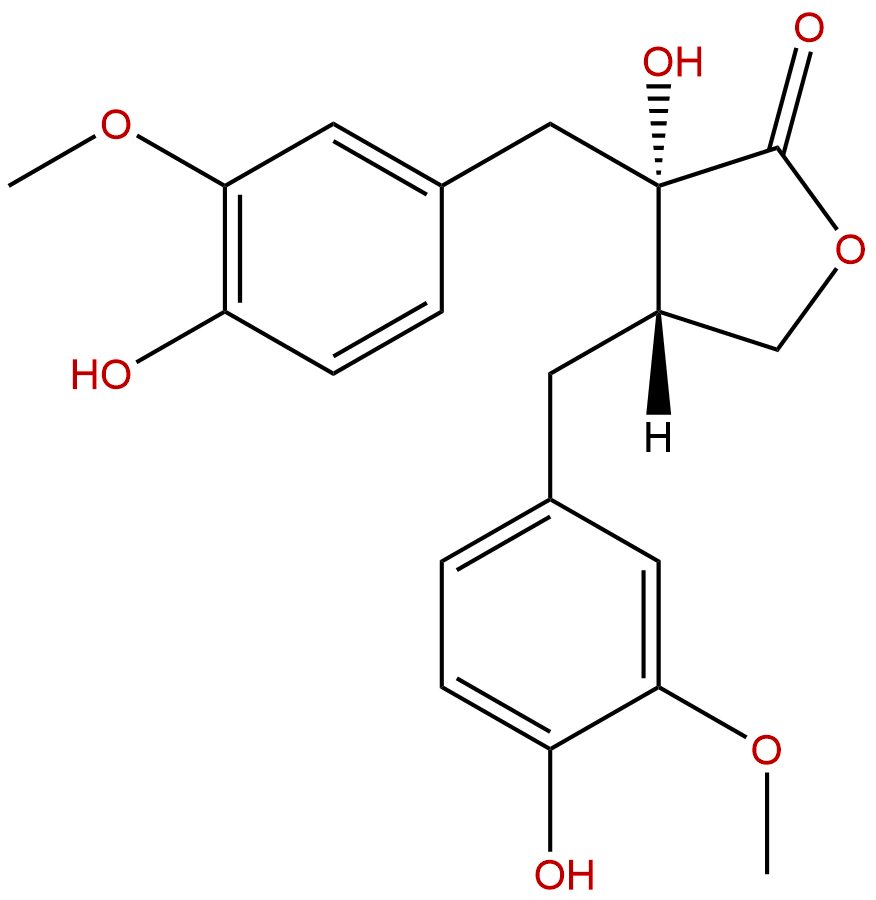


Product name: Nortrachelogenin
Synonym name:
Catalogue No.: SBP01337
Cas No.: 34444-37-6
Formula: C20H22O7
Mol Weight: 374.389
Botanical Source:
Physical Description: Powder
Type of Compound: Lignans
Purity: 95%~99%
Analysis Method: HPLC-DAD or/and HPLC-ELSD
Identification Method: Mass, NMR
Packing: Brown vial or HDPE plastic bottle
The product could be supplied from milligrams to grams. Inquire for bulk scale.
We provide solution to improve the water-solubility of compounds, thereby facilitating the variety of activity tests and clinic uses.
For Reference Standard and R&D, Not for Human Use Directly.
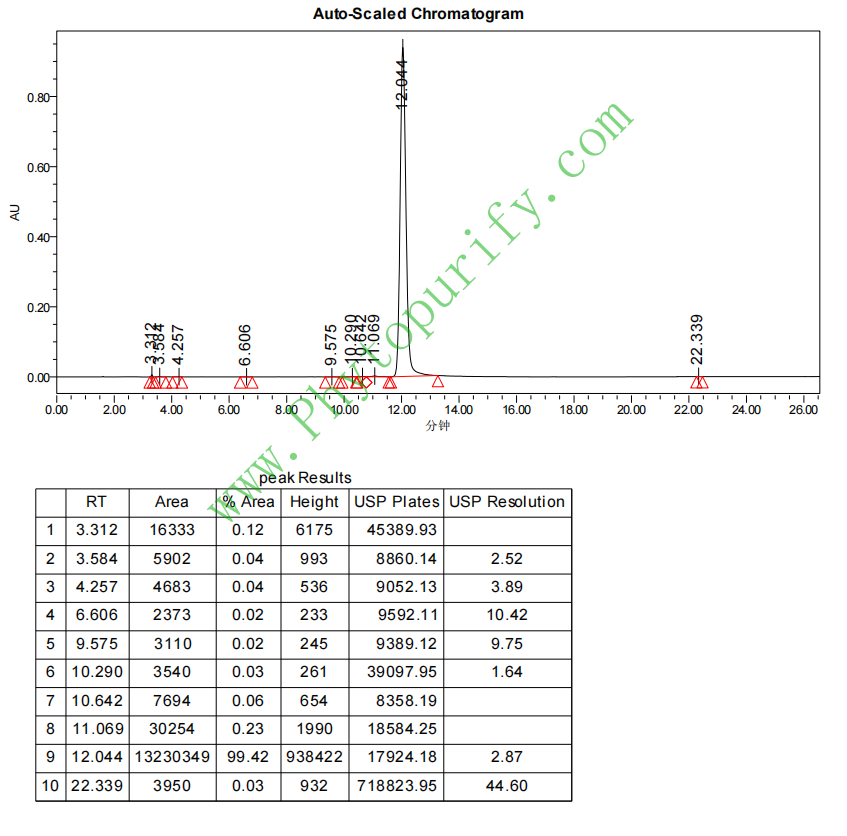
HPLC of Nortrachelogenin
Storage conditions:Short-term storage at 2~8℃, long-term storage at -20 ~ -80℃
105.4500
2.0747
2.0716
.1996
4.1913
2.2799
Low
87.7322
3.3632
No
No
No
No
No
No
0.0
Yes
No
No
No
Nortrachelogenin, also known as (-) - Wikistromol, is a natural lignan compound with significant biological activity. Its CAS number is 34444-37-6, molecular formula is C20H22O7, and molecular weight is approximately 374.39 g/mol. This compound was originally derived from the yellow flowered plant of the family Fabaceae(Partrinia scabiosaefolia)Separated from the middle, it was later found in the Apocynaceae plant, Wisteria gracilis(Trachelospermum jasminoides)It has also been appraised. Due to its unique chemical structure and extensive pharmacological activity, norepinephrine has attracted sustained attention in the fields of natural product pharmacy and medicinal chemistry research in recent years.
Early research has found that demethylated glycosides have an effect on Candida albicans(Candida albicans)It has the activity of inducing apoptosis, revealing its potential antifungal effect. With the deepening of research, its broader biological activities have gradually been revealed, especially in the areas of anti prostate cancer, anti-inflammatory, anti malaria, and regulating the central nervous system, showing remarkable potential. For example, it has been reported as a novel therapeutic agent for prostate cancer, which can effectively synergize with tumor necrosis factor related apoptosis inducing ligand (TRAIL) by inhibiting Akt membrane localization and activity, as well as the activation of growth factor receptors, to promote cancer cell apoptosis. Meanwhile, its anti-inflammatory properties are closely related to its inhibitory effect on the NF - κ B signaling pathway. These findings have transformed norepinephrine glycoside from a traditional phytochemical component into a modern drug lead compound with clear molecular targets and mechanisms of action, providing valuable chemical entities and research ideas for the development of novel anti-inflammatory and anti-tumor drugs.
Noramine belongs to the lignan class of compounds, specifically aromatic naphthalene lignans. Its SMILES string (COc1cc (C [C @ H] 2COC (=O) [C @] 2 (O) Cc2ccc (O) c (OC) c2) ccc1O) accurately describes its atomic connection order and stereochemical configuration. Structurally, it contains two benzene ring units (one of which is a guaiacyl structure with methoxy and hydroxyl substituents) connected by a butyrolactone ring and a propyl chain, forming multiple chiral centers (as indicated by the @ symbol in SMILES), which are crucial for its biological activity. The (-) - configuration of desmopyrosine is its main active form.
Its physicochemical properties provide a quantitative basis for evaluating its drug potential:
- Molecular weight (MW):374.39 g/mol, Meets the typical range of small molecule drugs (<500 Da).
- Lipid water partition coefficient (LogP)The calculated value is about 2.07, indicating that the compound has moderate lipophilicity, which is beneficial for its penetration of cell membranes, but does not cause metabolic or distribution problems due to high lipid solubility.
- Topological Polarity Surface Area (TPSA)105.45 Å ² reflects the total surface area of polar atoms (oxygen atoms) in the molecule. This value is moderate and usually associated with good membrane permeability.
- Water solubility The predicted value is about 0.2 mg/mL, which is slightly soluble. This suggests that solubilization strategies may need to be considered in formulation development.
- Caco-2 permeability The predicted value is 2.28 (usually measured in 10 ⁻⁶ cm/s), indicating moderate to good intestinal absorption potential.
- Blood-brain barrier (BBB) penetrability A prediction of 'low' indicates that it is not easily accessible to the central nervous system, which may reduce the risk of central side effects for drugs primarily targeting peripheral diseases such as anti-inflammatory and anti-tumor drugs, but is a disadvantageous factor for indications expected to act on the central nervous system.
- Plasma protein binding rate (PPB)As high as 87.73%, it means that most drugs bind to plasma proteins (mainly albumin) in the blood, which may affect their free concentration, distribution volume, and onset time of efficacy.
These physicochemical parameters collectively depict a natural small molecule profile with potential for drug development: moderate molecular weight, good lipid solubility, and certain membrane permeability, but water solubility and blood-brain barrier penetration are challenges that need to be overcome.
One of the main plant sources of norepinephrine glycosides is Trachelospermum jasminoides(Trachelospermum jasminoides)Also known as Shilongteng or Wanzi Jasmine, it is an evergreen woody vine plant belonging to the Apocynaceae family. In traditional Chinese medicine theory, Luo Shi Teng has a slightly cold nature, a bitter taste, and is associated with the heart, liver, and kidney meridians Dispelling wind, unblocking meridians, cooling blood, reducing swelling The efficacy. Clinically, it is commonly used to treat rheumatism and heat syndrome, muscle spasm, lower back and knee pain, pharyngitis, abscess, and traumatic injury. It is often combined with other traditional Chinese medicines and used to treat inflammatory diseases such as rheumatoid arthritis and gout. Modern pharmacological research has confirmed that extracts from Polygonatum sibiricum have various activities such as anti-inflammatory, analgesic, and immunomodulatory effects, and demethylated quercetin is considered one of its important active ingredients in exerting anti-inflammatory effects.
Another source of plants Huanghua Baijiang(Partrinia scabiosaefolia)Similarly, it has a long history in folk medicine and is commonly used for clearing heat and detoxifying, promoting blood circulation and expelling pus, treating intestinal abscess, lung abscess, abscess, swelling and toxin, etc. This confirms from the perspective of traditional applications the use of plant sources related to desmopyrrhizin in anti-inflammatory and anti infective aspects.
The isolation and identification of active monomers such as desmopyrin from traditional medicinal plants is a classic pathway for the modernization of traditional Chinese medicine research. It not only provides a scientific explanation of the material basis for traditional drug efficacy, but also provides a starting point for the development of new drugs based on natural product structures. The in-depth study of plants such as Luo Shi Teng is an important bridge connecting traditional wisdom with modern science.
The pharmacological activities of norepinephrine glycoside are diverse, and its core mechanism of action is closely related to regulating multiple key cellular signaling pathways and target proteins. Based on the provided target information (TNF, PTGS2, NFKB1, IL6, IL1B) and related diseases (anti-inflammatory), its anti-inflammatory and related anti-cancer effects can be further analyzed.
4.1 Anti inflammatory effect and its core target network
Inflammation is the core defensive response of the body to injury or infection, but excessive or chronic inflammation is the pathological basis of many diseases (such as arthritis, atherosclerosis, cancer). The norepinephrine glycoside exhibits clear anti-inflammatory properties, and its effects are mainly achieved through the regulation of the following key targets and pathways:
- NF - κ B signaling pathway (NFKB1)This is the core mechanism of the anti-inflammatory effect of norepinephrine glycoside. Nuclear factor kappa B (NF - κ B) is a core transcription factor that regulates inflammation, immunity, cell survival, and proliferation. In the resting state, NF - κ B binds to its inhibitory protein I κ B and exists in the cytoplasm. When stimulated by tumor necrosis factor alpha (TNF - α) and other factors, I κ B is phosphorylated and degraded, allowing NF - κ B (such as the p50/p65 dimer, encoded by the NFKB1 gene for the p50 subunit) to enter the nucleus and initiate the expression of a large number of pro-inflammatory cytokine genes. Research shows that demethylamine glycosides can Moderate inhibition of TNF - α - induced activation of NF - κ B signaling pathway The IC50 value is 49.4 μ M. This means that it can effectively block this core inflammatory switch, thereby downstream inhibiting the production of various pro-inflammatory mediators.
- Inflammatory cytokines (TNF, IL6, IL1B):TNF-α、 Interleukin-6 (IL-6) and interleukin-1 β (IL-1 β) are the most important pro-inflammatory cytokines downstream of the NF - κ B pathway, and they themselves can positively feedback activate NF - κ B, forming an inflammatory amplification loop. Nortoline effectively reduces the production and release of these cytokines by inhibiting NF - κ B, thereby cutting off the inflammatory cascade and alleviating tissue damage.
- Cyclooxygenase-2 (PTGS2/COX-2)COX-2 is a key enzyme that catalyzes the production of prostaglandins (PGs) from arachidonic acid, especially when strongly induced in inflammatory sites. The PGE2 produced is a potent mediator of pain, inflammation, and heat. As one of the downstream target genes of NF - κ B, the expression of COX-2 is also inhibited by desmopyrosine. This explains its potential analgesic and antipyretic effects.
By intervening with multiple targets on NF - κ B and its downstream cytokine and enzyme networks, demethylamine glycosides have constructed a synergistic anti-inflammatory system, which may have better efficacy and lower resistance risk than single target inhibitors.
4.2 Mechanism of anti-tumor action
The unique potential of norepinephrine glycoside in the treatment of prostate cancer is demonstrated, and its mechanism intersects with anti-inflammatory pathways and also involves more specific pro apoptotic pathways:
- Inhibition of Akt signaling pathway Akt (protein kinase B) is a key kinase for cell survival and proliferation. Noramine glycoside can Inhibition of Akt membrane localization and kinase activity Akt needs to be recruited onto the cell membrane and phosphorylated to activate it, but norepinephrine interferes with this process, thereby weakening Akt's ability to promote cell survival and inhibit apoptosis.
- Inhibition of growth factor receptor activation Overactivation of growth factor receptors (such as EGFR, IGF-1R) is a characteristic of many cancers, as they can downstream activate pathways such as Akt and NF - κ B. Noramine also has an inhibitory effect on this.
- Collaborative TRAIL induces apoptosis TRAIL can selectively induce apoptosis in cancer cells, but many cancer cells develop resistance to it. Nortrabine effectively inhibits Akt and NF - κ B (both known TRAIL resistance factors)Make cancer cells re sensitive to TRAIL Generate a powerful synergistic effect that promotes apoptosis. In addition, studies have shown that it can induce Candida albicans and certain cancer cells to Caspase dependent apoptosis And may also be achieved through Destruction of cell membrane structure(Antibacterial mechanism) exerting cytotoxic effects.
4.3 Other biological activities
- Antimicrobial activity In addition to inducing apoptosis of Candida albicans, it also affects malaria parasites(Plasmodium)It also has inhibitory activity (IC50 14.50 μ g/mL) and may exert antibacterial effects by disrupting cell membranes.
- Antiviral activity There are reports showing that it has moderate inhibitory activity against HIV-1 virus in vitro.
- Central nervous system function The (+) - configuration of desmopyrosine has inhibitory effects on the central nervous system of rabbits. The (-) - configuration may have a peripheral effect due to its low BBB penetration.
In summary, desmopyrosine is a multi-target and multifunctional natural product, and its anti-inflammatory and anticancer mechanisms are interrelated and complementary, forming a solid scientific foundation for its use as a drug lead compound.
Based on the provided pharmacological parameters and with reference to Lipinski's Five Rules The basic principles of drug design, such as the Rule of Five, can be used to preliminarily evaluate the potential of norepinephrine as an oral drug
Lipinski Five Rule Compliance:
The norepinephrine glycoside fully conforms to Lipinski's five rules, indicating that it has good properties Oral absorption potential。
Analysis of key parameters of absorption, distribution, metabolism, and excretion (ADME):
Feasibility of synthesis The SyneAccessibility parameter (3.36) provides a relative accessibility score, indicating that its chemical synthesis is challenging but not impossible to achieve. Extraction from natural plants is currently the main source, but research on total synthesis or semi synthesis is crucial for ensuring stable supply and structural modification.
Summary In terms of drug properties, desmopyroxine glycoside has shown many favorable characteristics: good drug like properties (in accordance with the five rules), acceptable membrane permeability, and preliminary low toxicity warning signals. The main challenge lies in its Water solubility and high plasma protein binding rate Future pharmaceutical chemistry optimization work can focus on these aspects, such as preparing water-soluble prodrugs, introducing groups that increase solubility through structural modifications, or developing suitable delivery systems.
At present, the research on desmopyrrhizin has progressed from early plant chemical isolation and activity screening to In depth exploration of the mechanism of action and optimization as a lead compound The stage. The mechanism research of its anti-inflammatory and anti prostate cancer effects is relatively systematic, especially the synergistic effect with TRAIL and the dual inhibition mechanism of NF - κ B/Akt, which provides a clear idea for the development of new anti-tumor drugs. In addition, its activity in antifungal and antimalarial fields is also worth further exploration.
Future research directions and potential application prospects include:
In summary, as a natural lignan derived from traditional Chinese medicine, desmopyrosine has become an attractive lead compound for drugs due to its clear multi-target mechanism of action and good pharmacological basis. With the deepening application of modern medicinal chemistry, pharmacology, and pharmaceutical technology, it is expected to be developed into a new type of drug for treating inflammation related diseases and cancer, achieving a leap from traditional herbs to modern innovative drugs.
