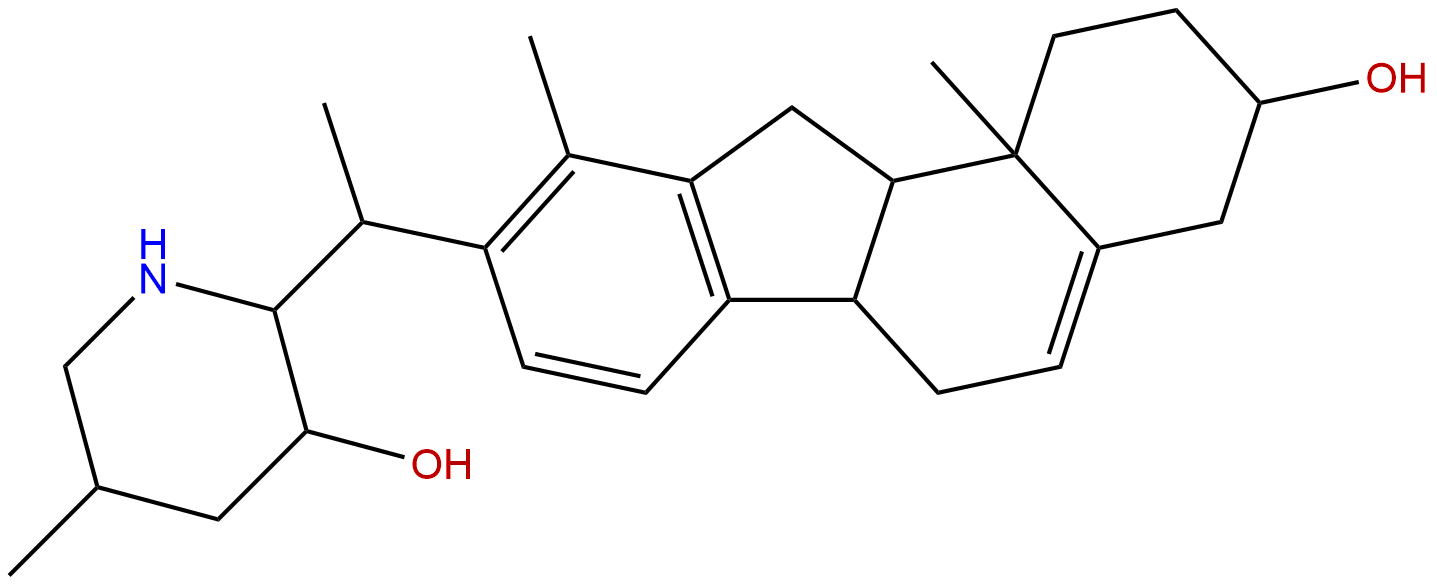


Product name: Veratramine
Synonym name:
Catalogue No.: BP1658
Cas No.: 60-70-8
Formula: C27H39NO2
Mol Weight: 409.614
Botanical Source: Veratrum album var. grandiflorum and several other Veratrum spp
Physical Description:
Type of Compound: Alkaloids
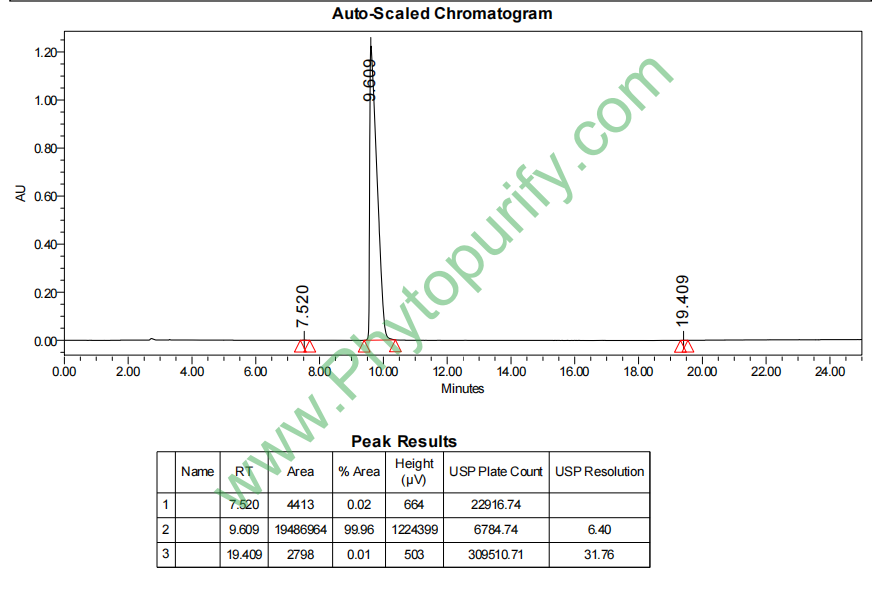
Purity: 95%~99%
Analysis Method: HPLC-DAD or/and HPLC-ELSD
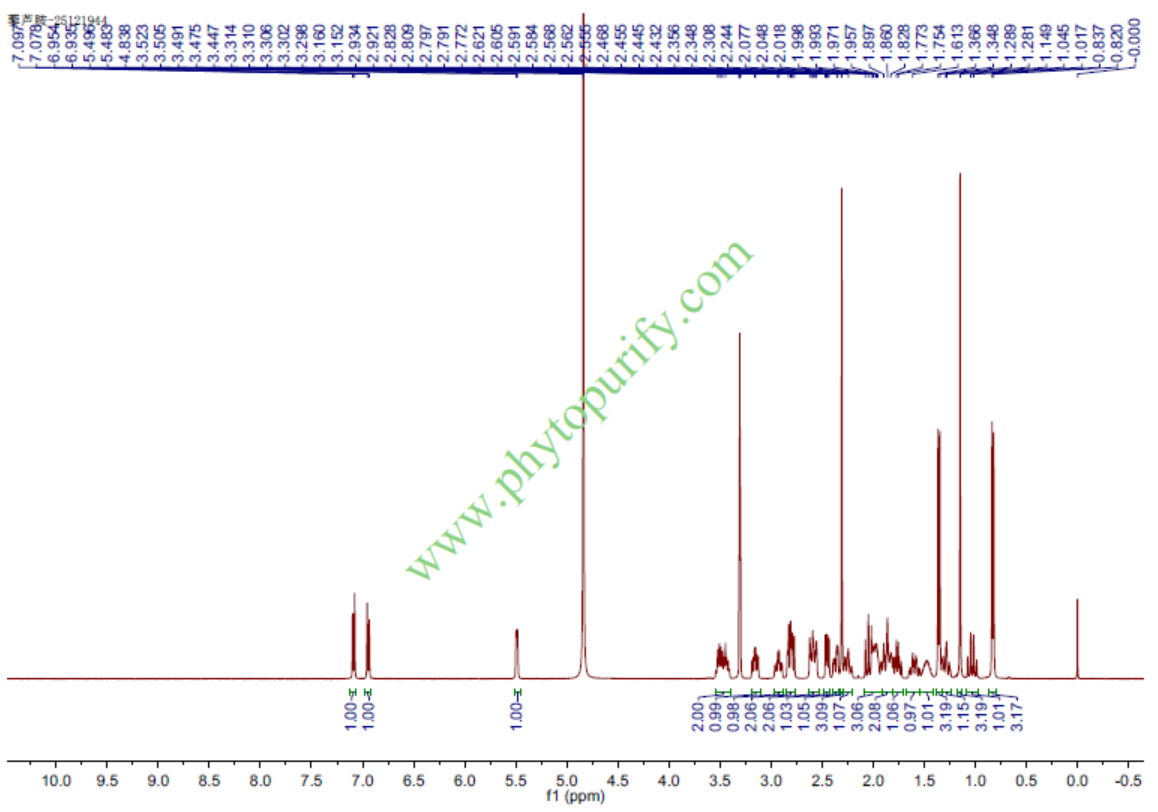
Identification Method: Mass, NMR
Packing: Brown vial or HDPE plastic bottle
The product could be supplied from milligrams to grams. Inquire for bulk scale.
We provide solution to improve the water-solubility of compounds, thereby facilitating the variety of activity tests and clinic uses.
For Reference Standard and R&D, Not for Human Use Directly.
HPLC of Veratramine
HNMR of Veratramine
Storage conditions:Short-term storage at 2~8℃, long-term storage at -20 ~ -80℃
52.4900
4.3258
2.8135
.0587
1.9636
12.9153
High
83.0671
4.8599
No
No
No
No
No
No
0.0
No
No
No
No
Natural products have always been an important source of innovative drug discovery due to their structural diversity and rich biological activity. Among numerous potential natural molecules, Veratramine, as a steroid alkaloid derived from traditional medicinal plants, has attracted much attention in recent years due to its unique multi-target pharmacological effects. Resveratrol (CAS number: 60-70-8) is not only an orally effective inhibitor of the PI3K/Akt/mTOR signaling pathway, but also a modulator of the sigma 1 receptor (SIGMAR1). Its pharmacological spectrum is extensive, covering multiple aspects such as inducing autophagic apoptosis of tumor cells, blocking the cell cycle, inhibiting tumor migration and invasion, reducing neuroinflammation and pathological damage. Studies have shown that verapamil shows significant therapeutic potential in many kinds of malignant tumors such as liver cancer, osteosarcoma, and diabetes peripheral neuropathy. This article aims to systematically review the chemical structure, plant origin, pharmacological activity, molecular mechanism of action, pharmacological characteristics, and clinical application prospects of resveratrol, in order to provide comprehensive academic references for the in-depth research and development of this compound.
Resveratrol is a C-nor-D-homo steroid alkaloid with the molecular formula C27H39NO2 and a molecular weight of 409.6140. Its core structure is based on a steroid skeleton, but the C ring is a five membered ring, the D ring is a six membered ring, and contains a nitrogen atom integrated into the structure, forming a complex multi ring system. This unique allosteric steroid skeleton is the structural basis of its biological activity.
From the analysis of physical and chemical properties, the lipid water partition coefficient (LogP) of resveratrol is 4.3258, indicating its high lipophilicity. Its topological polar surface area (TPSA) is 52.49 Å ², which is relatively small. The water solubility data is 0.0587, which belongs to compounds that are difficult to dissolve in water. These parameters collectively determine the distribution characteristics of resveratrol in living organisms. It is worth noting that its predicted blood-brain barrier permeability is "high", which is consistent with its observation in neuroprotective research that it can act on the central and peripheral nervous systems, reducing spinal cord and sciatic nerve injuries. In the early safety indicators, resveratrol showed no risk of hERG potassium channel inhibition (hERG inhibition: No), and the Ames test result was 0.0, indicating that it may not have direct genetic toxicity, providing preliminary safety evidence for its further drug development.
Resveratrol is mainly derived from plants of the genus Veratrum in the family Liliaceae, such as Veratrum album and Veratrum viride. Although these plants have been used in traditional medicine, they require extreme caution when used due to the presence of various toxic alkaloids such as veratrol and resveratrol. Resveratrol is typically present as one of the complex alkaloid mixtures in these plants.
The extraction and separation methods follow the conventional process of natural product chemistry. Firstly, the dried plant rhizomes are crushed and extracted or percolated using polar organic solvents such as methanol, ethanol, or acidified alcohol solutions to extract the alkaloid components. After concentration, the extract is treated with acidic water to dissolve the alkaloids into salts. Then, alkalization (such as ammonia water) is used to free the alkaloids and extract them using organic solvents such as chloroform or dichloromethane. The crude total alkaloids obtained need to be separated and purified through repeated column chromatography, often using fillers such as silica gel, alumina, or reverse phase silica gel, and gradient elution with solvents of different polarities (such as chloroform methanol). The separation and identification of resveratrol require monitoring by thin layer chromatography (TLC) and high performance liquid chromatography (HPLC), and ultimately confirming its chemical structure through spectroscopic methods such as nuclear magnetic resonance (NMR) and mass spectrometry (MS). Modern biotechnology such as plant cell culture also provides potential pathways for obtaining such rare active ingredients.
Resveratrol exhibits various pharmacological activities, mainly focused on anti-tumor and neuroprotective fields.
1. Antitumor activity:
Resveratrol has significant proliferation inhibition and pro apoptotic effects on various tumor cells. In the study of solid tumor models such as liver cancer and osteosarcoma, resveratrol can effectively inhibit cell growth, and its mechanism is closely related to inducing cell apoptosis and autophagy. In addition, resveratrol can block the cell cycle in the G0/G1 phase, prevent cells from entering the DNA synthesis phase, and thus inhibit the malignant proliferation of tumors. In terms of anti metastasis, resveratrol can downregulate the expression of epithelial mesenchymal transition (EMT) related proteins such as N-cadherin and vimentin, while upregulating the epithelial marker E-cadherin, thereby inhibiting the migration and invasion ability of tumor cells.
2. Neuroprotective and anti neuropathic activity:
Veratramine has shown a clear protective effect in nerve injury models such as diabetes peripheral neuropathy (DPN). It can significantly reduce pathological damage to the spinal cord and sciatic nerve of model animals, improve nerve conduction velocity, and alleviate symptoms such as hyperalgesia. Its function is related to inhibiting neuroinflammation and reducing neuronal apoptosis.
3. Anti inflammatory activity:
Inflammation is the common pathological basis of tumors and neuropathy. Resveratrol can exert anti-inflammatory effects by regulating key inflammatory signaling pathways such as NF - κ B, inhibiting the production and release of pro-inflammatory cytokines (such as TNF - α, IL-6, IL-1 β).
The multiple pharmacological activities of resveratrol stem from its regulation of multiple key signaling pathways and molecular targets within cells.
1. Inhibit the PI3K/Akt/mTOR signaling pathway:
This is one of the core mechanisms of resveratrol's anti-tumor effect. The PI3K/Akt/mTOR pathway is a core pathway that regulates cell growth, proliferation, metabolism, and survival, and is often overactivated in tumors. Resveratrol, as an orally effective inhibitor of this pathway, can downregulate the expression levels of phosphorylated Akt (p-Akt) and mTOR, thereby relieving their inhibition of downstream pro apoptotic proteins and inducing protective autophagy, ultimately leading to autophagic apoptosis in tumor cells.
2. Regulating the interaction between the Sigma 1 receptor (SIGMAR1) and the N-methyl-D-aspartate receptor (NMDAR):
This is the key molecular mechanism of its neuroprotective effect. SIGMAR1 is an endoplasmic reticulum chaperone protein involved in regulating calcium homeostasis and neuronal survival. In pathological conditions, SIGMAR1 binds excessively to NMDAR, leading to excessive phosphorylation of NMDAR at Ser896 site, causing a surge in calcium influx and excitotoxicity. Resveratrol, as a SIGMAR1 modulator, can inhibit the binding of SIGMAR1 to NMDAR, reduce the phosphorylation level of NMDAR Ser896, thereby alleviating calcium overload and subsequent neuronal damage and inflammatory response.
3. Regulating the lymphoma related target network:
Regarding lymphoma, research suggests that the action of verapamil may involve a complex network of targets. including:
* Survival promoting protein Possible downregulation of the expression of anti apoptotic proteins MCL1 and BCL2.
* cell cycle regulation May inhibit cell cycle phosphatase CDC25B and participate in G0/G1 phase arrest.
* Signal transduction and transcriptional activation May inhibit abnormal activation of STAT3 and regulate the activity of nuclear factor NF - κ B.
* Cell surface and regulatory proteins Possible effects on common leukocyte antigen PTPRC (CD45), retinoic acid X receptor beta (RXRB), etc.
* Tumor suppressor factor Its function may be associated with the p53 (TP53) pathway and the cell cycle inhibitory protein CDKN2A (p16INK4a).
* Microtubule associated protein The possible impact on MAPT (Tau protein) suggests its potential value in cellular cytoskeleton stability and broader neurodegenerative disorders.
These multi-target effects collectively form the molecular basis for the anti-tumor, apoptosis inducing, inflammation inhibiting, and neuroprotective effects of resveratrol.
Based on its physicochemical parameters, resveratrol exhibits certain drug like characteristics, but also faces challenges.
Advantage:
1. Oral efficacy Preclinical studies have shown that its oral administration route is effective and improves the convenience of administration.
2. Good blood-brain barrier permeability This is crucial for treating central nervous system related diseases or neuropathic pain.
3. Preliminary safety signal is good The absence of hERG inhibition and Ames mutagenicity warning reduces the risk of cardiac toxicity and genetic toxicity in early development.
Challenges and unknowns:
1. Poor water solubility A high LogP value and low water solubility may affect the dissolution and oral bioavailability of the formulation, and need to be improved through formulation techniques such as salt formation, nanocrystals, liposomes, cyclodextrin inclusion, etc.
2. Lack of pharmacokinetic data The currently available systematic pharmacokinetic studies on resveratrol, including specific parameters such as absorption, distribution, metabolism, and excretion, particularly its in vivo half-life, bioavailability, major metabolites, and metabolic enzymes, are not sufficient. As a steroid alkaloid, its metabolic stability in vivo, involvement of CYP450 enzyme system, and existence of first pass effects are key information that needs to be clarified.
3. Potential toxicity Although the initial genetic toxicity test was negative, it originated from toxic plants and its potential toxicity to other organs such as cardiovascular, liver, and kidney needs to be systematically evaluated in a more comprehensive preclinical safety assessment (GLP toxicology study).
Resveratrol, as a natural lead compound with multi-target effects, has broad potential in translational medicine.
1. Anti tumor therapy:
* solid tumor In cancer types such as liver cancer and osteosarcoma that have been studied, they can be explored as monotherapy or in combination with existing chemotherapy drugs and targeted drugs (such as PI3K/mTOR inhibitors) to enhance efficacy and overcome drug resistance.
* hematologic malignancy Based on its potential regulatory effect on lymphoma related target networks, it is worth conducting in-depth research in hematological malignancies models such as non Hodgkin lymphoma.
* Anti metastatic therapy Its activity in inhibiting EMT and tumor migration provides a new approach for the development of anti-tumor metastasis drugs.
2. Treatment of neurological disorders:
* Diabetes peripheral neuropathy (DPN)This is currently one of the most promising directions. It exerts neuroprotective effects through the SIGMAR1/NMDAR axis, providing a novel therapeutic strategy for DPN that is different from traditional antioxidant and neurotrophic approaches.
* Other neuropathic pain and neurodegenerative diseases Its anti-inflammatory and neuroprotective mechanisms suggest that it may have exploratory value in chemotherapy-induced neuropathic pain, bone cancer pain, and even Alzheimer's disease (related to Tau protein and NMDAR).
3. Combination therapy strategy:
Given its multi-target nature, the combination of resveratrol and other drugs with a single mechanism of action may produce synergistic effects, reducing their respective dosages and toxic side effects.
Future research direction outlook:
1. Deepening the mechanism of action Chemical biology methods such as affinity fishing and proteomics need to be used to further confirm its direct target and draw a more accurate signal network map.
2. structural optimization Using it as the parent nucleus for structural modification, the aim is to improve water solubility, enhance target selectivity, reduce potential toxicity, and obtain derivatives with better drug properties.
3. Systematic pharmacokinetics and toxicological evaluation Conduct comprehensive preclinical ADME (absorption, distribution, metabolism, excretion) studies and GLP toxicology studies to clarify their pharmacokinetic characteristics and safety window.
4. Development of a new delivery system Develop nano formulations, prodrugs, etc. to address its poor water solubility and improve its in vivo behavior.
Resveratrol is a steroid alkaloid with significant research value discovered from traditional medicinal plants. It exhibits unique double-edged sword characteristics in the fields of anti-tumor and neuroprotection due to its dual regulation of the PI3K/Akt/mTOR pathway and SIGMAR1/NMDAR interaction. Its multi-target and multi-functional pharmacological characteristics are in line with the concept of modern complex disease systemic therapy. Although there are still challenges in drug formulation, especially in terms of water solubility and systemic pharmacokinetics, its excellent oral activity, blood-brain barrier permeability, and preliminary safety characteristics have laid a solid foundation for its subsequent development. In the future, through in-depth mechanism research, reasonable structure optimization and advanced preparation technology, verapamine is expected to gradually develop from an excellent natural lead compound into a candidate drug for the treatment of malignant tumors or diabetes peripheral neuropathy and other diseases, with important scientific significance and clinical transformation value.
