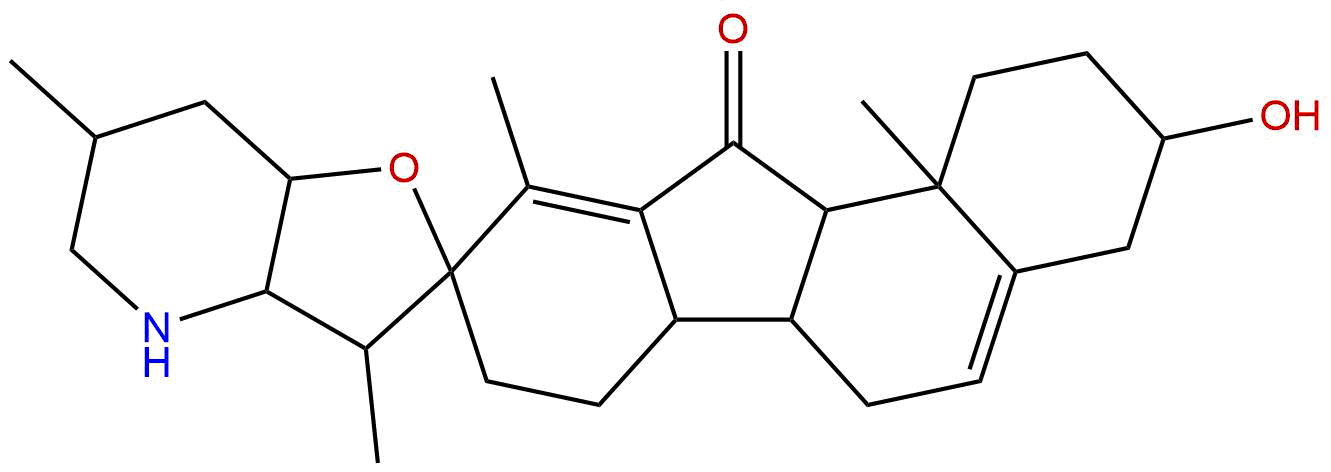


Product name: Jervine
Synonym name: 17,23-Epoxy-3-hydroxyveratraman-11-one; Jervin-11-one
Catalogue No.: BP0810
Cas No.: 469-59-0
Formula: C27H39NO3
Mol Weight: 425.613
Botanical Source: Veratrum nigrum L.
Physical Description:
Type of Compound: Alkaloids
Purity: 95%~99%
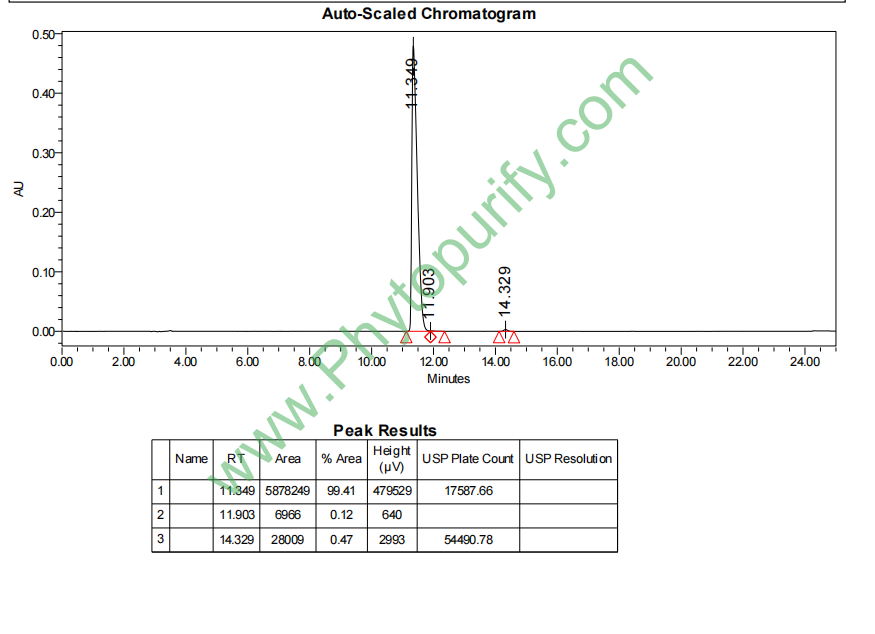
Analysis Method: HPLC-DAD or/and HPLC-ELSD
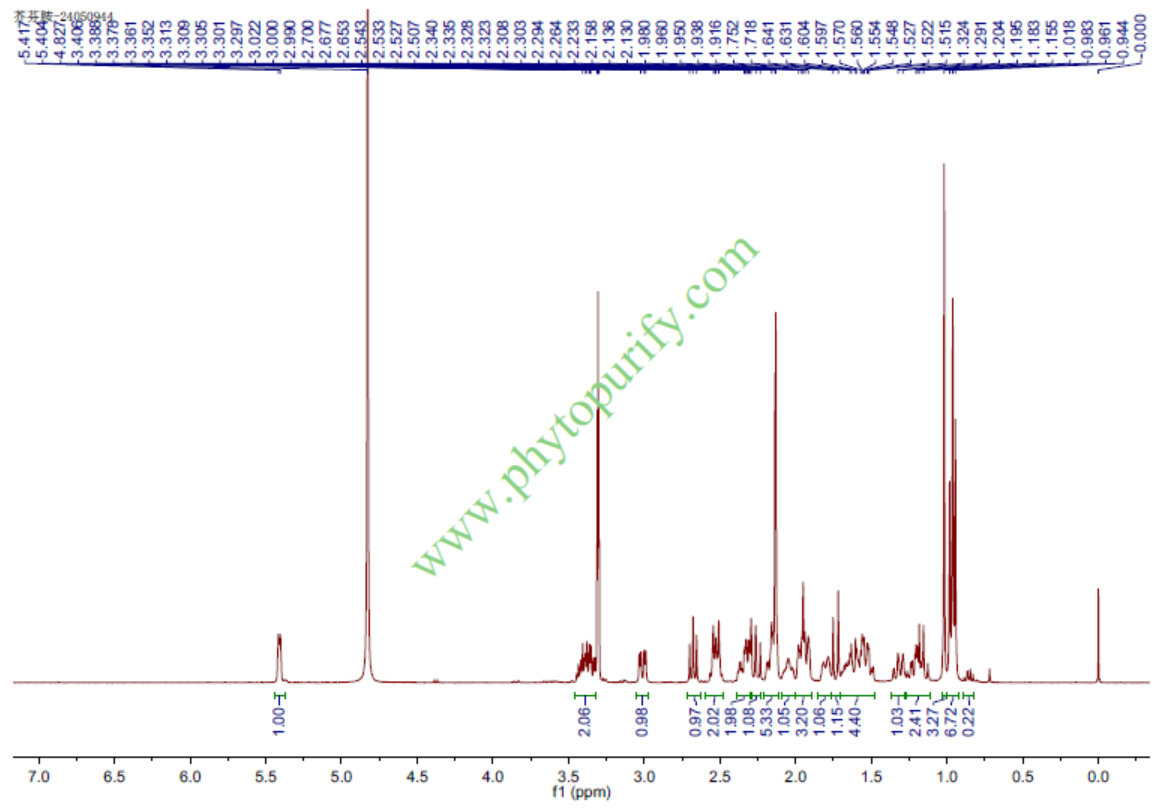
Identification Method: Mass, NMR
Packing: Brown vial or HDPE plastic bottle
Storage: Store in a well closed container, protected from air and light. Put into refrigerate or freeze for long term storage.
The product could be supplied from milligrams to grams
Inquire for bulk scale.
Description:
Jervine exhibits cytotoxic activity against human tumor cell lines A549, PANC-1, SW1990 and NCI-H249, it induces COX-2 overexpression in human erythroleukemia cells. Jervine exhibits potent toxic effects against Colorado potato beetle.
References:
Phytother Res. 2010 Jun;24(6):821-6.
Antitumor and antiplatelet activity of alkaloids from veratrum dahuricum.
CONCLUSIONS:
Ten steroidal alkaloids - cyclopamine, veratramine, Jervine, 3, 15-diangyloylgermine, 3-angyloylzygadenine, 3-veratroyl zygadenine, 15-veratroylgermine, germine, veratrosine and pseudoJervine - from Veratrum dahuricum, together with the ethanol extract and total alkaloids, were evaluated for their antitumor and antiplatelet activities. Cyclopamine, veratramine and germine significantly inhibited the hedgehog pathway in NIH/3T3 cells. Cyclopamine exerted a potent inhibitory effect against the growth of PANC-1 tumors in mice, with inhibition rates of 40.64%, 44.37%, 46.77% at doses of 5.0, 15.0 and 50.0 mg kg-1, respectively.
CONCLUSIONS:
Veratroylgermine was found to produce the strongest inhibition against the platelet aggregation induced by arachidonic acid, with inhibition rate of 92.0% at 100 microM.
Exp Cell Res. 2013 Apr 15;319(7):1043-53.
Cyclopamine and jervine induce COX-2 overexpression in human erythroleukemia cells but only cyclopamine has a pro-apoptotic effect.
Erythroleukemia is generally associated with a very poor response and survival to current available therapeutic agents. Cyclooxygenase-2 (COX-2) has been described to play a crucial role in the proliferation and differentiation of leukemia cells, this enzyme seems to play an important role in chemoresistance in different cancer types. Previously, we demonstrated that diosgenin, a plant steroid, induced apoptosis in HEL cells with concomitant COX-2 overexpression.
METHODS AND RESULTS:
In this study, we investigated the antiproliferative and apoptotic effects of cyclopamine and Jervine, two steroidal alkaloids with similar structures, on HEL and TF1a human erythroleukemia cell lines and, for the first time, their effect on COX-2 expression. Cyclopamine, but not Jervine, inhibited cell proliferation and induced apoptosis in these cells. Both compounds induced COX-2 overexpression which was responsible for apoptosis resistance. In Jervine-treated cells, COX-2 overexpression was NF-κB dependent. Inhibition of NF-κB reduced COX-2 overexpression and induced apoptosis. In addition, cyclopamine induced apoptosis and COX-2 overexpression via PKC activation. Inhibition of the PKC pathway reduced both apoptosis and COX-2 overexpression in both cell lines. Furthermore, we demonstrated that the p38/COX-2 pathway was involved in resistance to cyclopamine-induced apoptosis since p38 inhibition reduced COX-2 overexpression and increased apoptosis in both cell lines.
HPLC of Jervine
HNMR of Jervine
Storage conditions:Short-term storage at 2~8℃, long-term storage at -20 ~ -80℃
58.5600
3.5537
2.5124
.1246
2.2290
22.8711
High
67.0825
5.5989
No
No
No
No
No
No
0.0
No
No
Yes
No
Jervine, also known as 11 Ketocyclopamine, is a natural steroid alkaloid derived from the plant Veratrum nigrum. As an important inhibitor of the Hedgehog signaling pathway (Hh), chlorfenapyr has attracted widespread attention in the fields of molecular pharmacology and tumor therapy. Its unique chemical structure endows it with significant biological activity, especially showing potential application value in anti-inflammatory, antioxidant, and anti-tumor fields. In recent years, with the in-depth study of the molecular mechanisms of malignant tumors such as liver cancer, chlorfenapyr has become a hot topic in natural product pharmacology research due to its regulatory effects on multiple key carcinogenic targets.
This article aims to systematically review the chemical structure and physicochemical properties, plant sources and extraction processes, pharmacological activity and mechanism of action, drug evaluation and pharmacokinetic characteristics of chlorfenapyr. Combined with its potential applications in liver cancer and other related diseases, it explores its future clinical development prospects and challenges, providing theoretical support and research directions for natural product pharmacology and new drug development.
The molecular formula of Cefenamide is C27H39NO3, with a molecular weight of 425.6130. Its structure belongs to the class of steroid alkaloids, with a typical steroid skeleton containing multiple cyclic structures and one ketone group, hence it is named 11 ketocyclic amine. The LogP value of Cefenamide is 3.5537, indicating that it has good lipid solubility and is beneficial for penetrating cell membranes and the blood-brain barrier (BBB). Its TPSA (topological polar surface area) is 58.56 Å ², indicating that its polarity is moderate and helps maintain bioavailability. Low water solubility (0.1246 mg/mL) suggests limited solubility in aqueous phase, which may affect the design of its drug formulation.
Jiefenamide does not exhibit hERG channel inhibitory activity, reducing the potential risk of cardiac toxicity; The Ames test result is 0, indicating no significant genotoxicity. In addition, the molecular structure of chlorfenapyr contains a steroid core and a nitrogen atom, which endows it with the ability to bind to multiple biological targets and is the basis for its multi-target pharmacological activity.
Jiefenamine mainly exists in the rhizomes of Veratrum nigrum, a plant in the lily family widely distributed in northern China and Northeast Asia. In traditional Chinese medicine, the roots and stems of black clover are used as detoxifying, analgesic, and anti-inflammatory medicinal materials, and their pharmacological activity is partly attributed to the abundant steroid alkaloids in them.
The extraction of chlorfenapyr is usually carried out using organic solvent extraction combined with column chromatography separation technology. The specific steps include:
In recent years, with the advancement of separation technology, supercritical fluid extraction (SFE) and molecular imprinting techniques have also been attempted for the extraction of chlorfenapyr, improving purity and yield.
Jiefenamine, as a natural steroid alkaloid, exhibits various important pharmacological activities, mainly including the following aspects:
Jiefenamide is an effective inhibitor of the Hh signaling pathway, with an IC50 of approximately 500-700 nM. The Hh pathway plays a critical role in embryonic development and tissue homeostasis, and its abnormal activation is closely related to the occurrence of various tumors. Jiefenamine inhibits signal transduction and blocks the activation of downstream transcription factor Gli by binding to the key receptor Smoothened (SMO) in the Hh pathway, thereby inhibiting tumor cell proliferation and migration.
Multiple in vitro and in vivo experiments have shown that chlorfenapyr can significantly reduce the expression of inflammatory factors, such as PTGS2 (COX-2) and MMP9, and alleviate inflammatory responses. Its anti-inflammatory mechanism may involve inhibition of the NF - κ B signaling pathway, blocking the release of pro-inflammatory cytokines, and reducing tissue damage.
Jiefenamine has the ability to scavenge free radicals and exhibits good antioxidant properties. By regulating the intracellular redox state, cells are protected from oxidative stress damage, thereby exerting a cell protective effect.
Jiefenamide has shown significant anti-tumor effects in various tumor models such as liver cancer. Its targets include key oncogenes and signaling molecules such as BCL2, STAT3, TOP1, MAPK1, TERT, PIK3CA, MMP9, EGFR, PTGS2, and TP53. By regulating these targets, chlorfenapyr can induce tumor cell apoptosis, inhibit proliferation, block invasion and metastasis, demonstrating good therapeutic potential.
The pharmacological effects of Cefenamide are based on its regulation of multiple signaling pathways and molecular targets, mainly including:
Jiefenamine directly binds to SMO receptors, blocks Hh signaling, inhibits the activation of Gli family transcription factors, and reduces tumor cell proliferation and stem cell characteristics. This mechanism has been verified in many tumors such as liver cancer and pancreatic cancer.
Cefenamide downregulates the expression of anti apoptotic protein BCL2, promotes the activation of apoptosis related proteins, and induces programmed cell death in tumor cells. At the same time, regulating the TP53 signaling pathway restores cell cycle checkpoint function and prevents abnormal cell proliferation.
By inhibiting the expression of PTGS2 (COX-2) and MMP9, chlorfenapyr slows down inflammatory response and matrix degradation, prevents the release of tumor promoting factors in the tumor microenvironment, and inhibits the invasion and metastasis of tumor cells.
Jiefenamine regulates the STAT3, MAPK1, and PI3K/AKT pathways, inhibits tumor cell growth and survival signaling, enhances chemotherapy drug sensitivity, and overcomes drug resistance.
By inhibiting the expression of TERT (telomerase reverse transcriptase), chlorfenapyr limits the unlimited proliferation ability of tumor cells, promoting cell aging and apoptosis.
In summary, the synergistic effect of Jiefenamine on multiple targets and pathways demonstrates its anti-tumor and anti-inflammatory activities, reflecting the typical characteristics of multifunctional pharmacology of natural products.
The pharmacological parameters of Cefenamide indicate that it has certain potential for drug development:
There is currently limited research on pharmacokinetics. Existing in vivo experiments have shown that chlorfenapyr is absorbed quickly after oral administration, but its bioavailability is limited by its water solubility and first pass effect. Its metabolism is mainly through the liver enzyme system, and the metabolites are yet to be systematically identified. Jiefenamide is widely distributed in the body, especially accumulating in liver and brain tissues, which is in line with its potential for treating liver cancer and central nervous system diseases.
In the future, systematic pharmacokinetic (PK) and pharmacodynamic (PD) studies are needed to clarify their metabolic pathways, half-life, clearance rates, and targeted tissue distribution, providing a basis for clinical dose design and safety evaluation.
Jiefenamine, as a natural steroid alkaloid, has shown promising application prospects in the treatment of malignant tumors such as liver cancer due to its multi-target and multi mechanism pharmacological activities. Liver cancer, as one of the most common malignant tumors worldwide, has limited treatment options and prominent drug resistance issues. Jiefenamide provides a new strategy for the treatment of liver cancer by regulating multiple oncogenic signaling pathways such as BCL2, STAT3, EGFR, and PIK3CA.
In addition, the anti-inflammatory and antioxidant properties of chlorfenapyr make it potentially valuable in chronic inflammatory and neurodegenerative diseases. Its excellent blood-brain barrier penetration ability provides the possibility for drug development in central nervous system diseases.
However, the natural teratogenic characteristics of chlorfenapyr pose certain safety hazards for its clinical application. Future research needs to focus on its toxicological evaluation, clarify the teratogenic mechanism, and determine the safe dose range. Reducing its toxic side effects, improving selectivity and efficacy through structural modification and pharmaceutical optimization is the key to achieving clinical translation.
By combining modern drug design technologies such as computer-aided drug design (CADD), targeted drug delivery systems, and nanocarrier technology, it is expected to enhance the efficacy and safety of chlorfenapyr and promote its clinical application.
Jiefenamine, as a natural steroid alkaloid derived from Veratrum nigrum, has become a hot topic in natural product pharmacology research due to its significant inhibitory effect on the hedgehog signaling pathway and multi-target anti-tumor activity. Its unique chemical structure endows it with excellent pharmacological properties and pharmaceutical potential, especially in the treatment of malignant tumors such as liver cancer, showing broad application prospects.
Although there is a preliminary understanding of the pharmacological mechanism of chlorfenapyr, its pharmacokinetic characteristics, toxicological safety, and clinical applicability still require further research. In the future, through interdisciplinary collaboration and modern drug development technology, it is expected to overcome limitations such as poor water solubility and teratogenicity, and achieve its translational application from laboratory to clinical practice.
In summary, Cefenamide not only enriches the natural product drug library, but also provides new ideas and candidate drugs for the treatment of tumors and inflammatory diseases, which deserves continuous attention and in-depth exploration in the fields of natural product pharmacology and new drug development.
