


Synonym name: Trillin; Disogluside, Alliumoside A; Collettinside I; Funkioside A; Melongoside B; Polygonatoside A; Prosapogenin D'3
Catalogue No.: BP1124
Cas No.: 14144-06-0
Formula: C33H52O8
Mol Weight: 576.771
Botanical Source: Dioscorea spp., Yucca spp., Trillium terrestris, Trillium kamtschaticum, Trillium erectum, Trigonella foenum-graecum and Paris polyphylla
Purity: 95%~99%
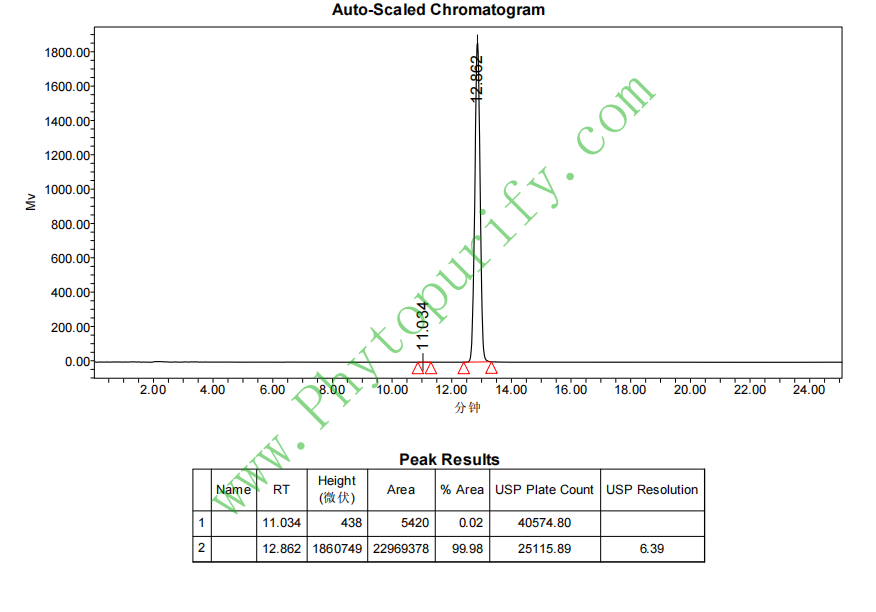
Analysis Method: HPLC-DAD or/and HPLC-ELSD
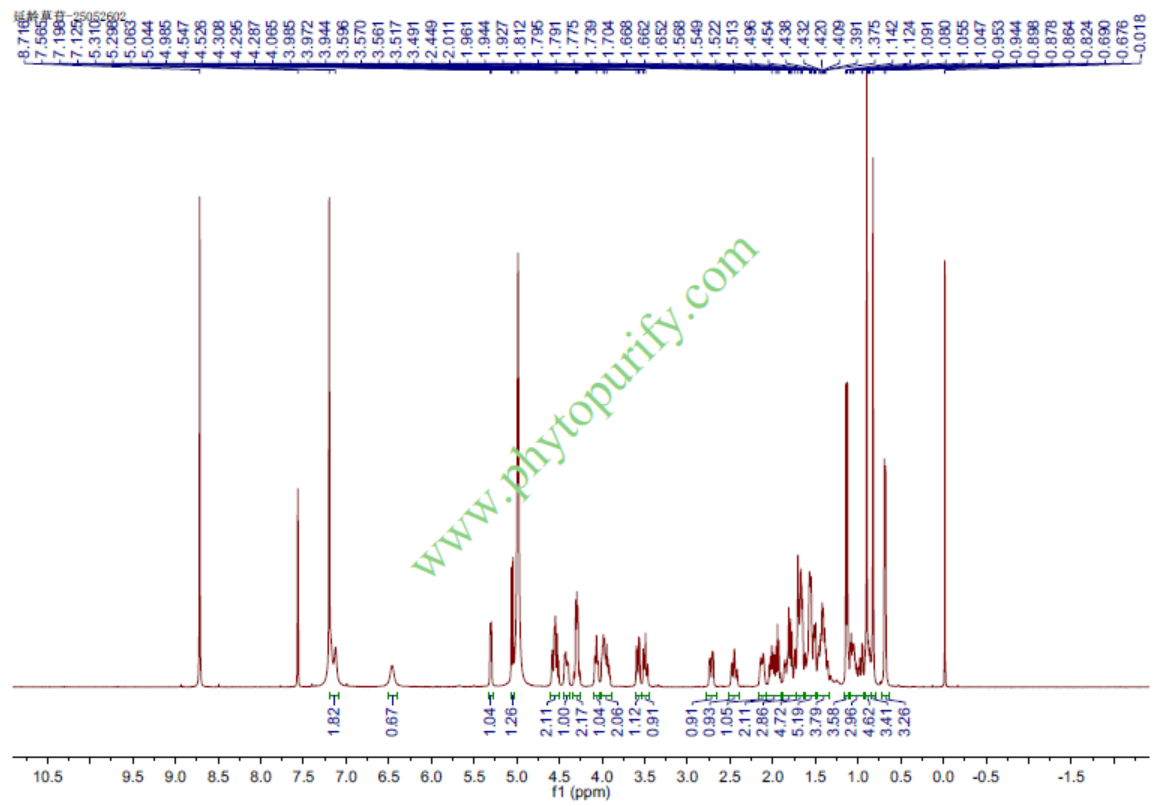
Identification Method: Mass, NMR
Packing: Brown vial or HDPE plastic bottle
Can be supplied from milligrams to grams.
For Reference Standard and R&D, Not for Human Use Directly.
Inquire for bulk scale.
HPLC of Trillin
HNMR of Trillin
Storage conditions:Short-term storage at 2~8℃, long-term storage at -20 ~ -80℃
117.8400
3.3292
3.3289
.0077
.6787
.8544
Low
79.5150
5.7250
No
No
No
No
No
No
0.0
Yes
No
No
No
Natural products, as an important source of drug discovery, play an irreplaceable role in the history of human disease treatment. Among them, steroidal saponins have always been a hot topic in medicinal chemistry and pharmacology research due to their structural diversity and wide range of biological activities. Trillin, also known as Diosgenin 3-O - β - D-glucoside, is a relatively simple steroid saponin monomer with a CAS number of 14144-06-0. As a directly glycosylated derivative of dioscin, it not only retains the basic skeleton of the mother nucleus, but also significantly changes its physicochemical properties and biological activity due to the introduction of sugar groups. In recent years, with the deepening of research on natural anti-tumor drugs, Trillium glycosides have attracted much attention due to their significant inhibitory activity in various tumor models. Its pharmacological effects involve multiple links such as inducing apoptosis, inhibiting proliferation, and resisting invasion and metastasis, and the molecular mechanisms of its action on multiple key targets such as MCL1, STAT3, and MMP2 have been preliminarily revealed. This article aims to provide a systematic review of the chemical properties, plant sources, pharmacological activities, mechanisms of action, and potential medicinal properties of Trillium glycosides, in order to provide comprehensive scientific references for the in-depth research and development of this compound.
The molecular formula of Trillium glycoside is C33H52O8, with a molecular weight of 576.7710. Its chemical structure is based on spirostanol (spirostane hydride) as the basic skeleton, belonging to the spirostane type steroid saponins in the six ring triterpenoid class. Specifically, its sterol component is Diosgenin, which is connected to a single β - D-glucose group through a β - glycosidic bond at the C-3 hydroxyl group of Diosgenin, forming Diosgenin 3-O - β - D-glucoside. This structure classifies it as a monosaccharide derivative and a sterol 3- β - D-glucoside.
In terms of physicochemical properties, the lipid water partition coefficient (LogP) of Trillium glycosides is 3.3292, indicating its lipophilicity. Its topological polar surface area (TPSA) is 117.84 Å ², mainly attributed to the polarity brought by the sugar and hydroxyl groups in the molecule. The water solubility data (0.0077, usually referring to mg/mL or molar solubility level) shows that its solubility in water is low, which is a common feature of many saponin compounds. However, compared to its glycoside diosgenin, the introduction of sugar groups can usually slightly improve its water solubility. These properties directly affect their bioavailability and subsequent formulation development strategies.
Trillium glycosides are not unique to a single plant, but are widely present in various medicinal plants such as Dioscoreaceae and Liliaceae. Its name "Trillium glycoside" is directly derived from the plant genus Trillium(Trillium spp.), It is relatively abundant in this genus of plants. In addition, it is also a variety of Dioscorea species(Dioscorea Plant species such as Dioscorea nipponica(Dioscorea nipponica)Mount Huangshan Medicine(Dioscorea panthaica)Important saponin components such as. In these plants, triterpenoid glycosides often coexist with other saponins with more complex structures.
The extraction and separation method follows the conventional process of natural product chemistry. Firstly, methanol, ethanol, or aqueous ethanol is usually used for reflux extraction or ultrasound assisted extraction of dried plant rhizomes to obtain crude total saponin extracts. Subsequently, macroporous adsorption resins (such as D101, AB-8) were used for preliminary enrichment and decolorization. Water was washed to remove water-soluble impurities such as polysaccharides, and then gradient elution was performed with different concentrations of ethanol to collect the saponin rich fraction. Further purification relies on chromatographic techniques, including normal phase silica gel column chromatography (using chloroform methanol water system as eluent), reverse phase silica gel column chromatography (such as ODS, using methanol water or acetonitrile water system as eluent), and high-performance liquid chromatography (HPLC) preparation. Structural identification is mainly completed through nuclear magnetic resonance (NMR, including 1H, 13C, 2D-NMR), mass spectrometry (MS), and comparison with literature data.
The pharmacological activity research of Trillium glycosides mainly focuses on the field of anti-tumor, and has shown multiple effects.
1. Antitumor activity
A large number of in vitro studies have shown that trillioside can inhibit proliferation and induce apoptosis in a variety of human tumor cell lines, including liver cancer (such as HepG2, SMMC-7721), breast cancer (such as MCF-7, MDA-MB-231), lung cancer (such as A549), colon cancer (such as HCT-116, HT-29), and egg nest cancer cells. Its inhibitory effect is concentration - and time-dependent. In in vivo experiments, berberine can significantly inhibit the growth of transplanted tumors in nude mice, and its toxicity is relatively low.
2. Inducing cell apoptosis
One of the core anti-tumor mechanisms of Trillium glycosides is the triggering of tumor cell apoptosis. Research has found that it can upregulate the expression of pro apoptotic proteins (such as Bax and cleaved Caspase-3) and downregulate the expression of anti apoptotic proteins (such as Bcl-2 and MCL1), leading to a decrease in mitochondrial membrane potential and release of cytochrome C, thereby activating the mitochondrial dependent apoptotic pathway.
3. Inhibit cell invasion and metastasis
Tumor metastasis is the main cause of treatment failure. Trillium glycoside has been shown to inhibit the migration and invasion ability of tumor cells. This effect is closely related to its downregulation of the expression and activity of matrix metalloproteinases such as MMP2 and MMP9, thereby weakening the degradation and penetration ability of tumor cells into the extracellular matrix.
4. Other potential activities
In addition to anti-tumor effects, some preliminary studies suggest that berberine may also have potential activities such as anti-inflammatory, antioxidant, and cardiovascular protection. However, research in these areas is not yet in-depth and needs further verification.
The anti-tumor effect of berberine involves a complex regulatory network of multiple targets and pathways. Some key targets and pathways that have been preliminarily revealed include:
1. Apoptosis regulatory targets: MCL1 and BCL2
MCL1 and BCL2 are important anti apoptotic proteins in the Bcl-2 family. Trillium glycoside can directly or indirectly inhibit their expression, release their binding to pro apoptotic proteins, and is a key step in initiating the mitochondrial apoptosis pathway.
2. Signal transduction targets: STAT3 and MAPK1
STAT3 is an important oncogenic transcription factor, and sustained activation of STAT3 signaling promotes cell proliferation, survival, and immune escape. Research has shown that Trillium glycosides can inhibit the phosphorylation (activation) of STAT3, block its nuclear translocation, and inhibit the transcription of downstream target genes such as Cyclin D1 and Survivors. MAPK1 (ERK2) is a core component of the MAPK/ERK pathway, which regulates cell growth and differentiation. The inhibition of its activity by berberine may contribute to its anti proliferative effect.
3. Extracellular matrix degradation target: MMP2
Matrix metalloproteinase-2 (MMP2) is a key enzyme that degrades type IV collagen (the main component of the basement membrane) and is crucial in tumor invasion and metastasis. Trillium glycoside effectively inhibits the invasive behavior of tumor cells by suppressing the expression and secretion of MMP2.
4. DNA metabolic targets: TOP1 and TOP2A
Topoisomerase I (TOP1) and II α (TOP2A) are key enzymes that regulate DNA topology and are targets of many chemotherapy drugs. Research suggests that berberine may interfere with the function of these enzymes, leading to DNA damage and replication disorders, thereby inhibiting tumor cell proliferation.
5. Tumor microenvironment and hormone related targets: HIF1A, ESR1, and CYP19A1
Hypoxia inducible factor 1 alpha (HIF1 alpha) plays a central role in tumor hypoxia adaptation, angiogenesis, and metastasis. Trillium glycoside may inhibit the stability or activity of HIF1 α, disrupting the hypoxic adaptation of tumors. Estrogen receptor alpha (ESR1) and aromatase (CYP19A1) are important targets for the treatment of hormone dependent breast cancer. Trillioside may exhibit anti estrogen activity or inhibit estrogen synthesis, which provides a potential basis for its application in the treatment of breast cancer.
These targets do not act in isolation, but form an interconnected network. For example, the inhibition of STAT3 may simultaneously downregulate the expression of MCL1, BCL2, and MMP2; The inhibition of MAPK signaling may also affect the activity of HIF1 α. The multi-target properties of Trillium glycosides enable them to synergistically act on multiple stages of tumor development, which may help overcome the problem of resistance to single target drugs.
Based on the provided parameters and existing research, the preliminary evaluation of the pharmacological properties of Trillium glycosides is as follows:
1. Physical, chemical, and absorption distribution properties
The molecular weight of 576.77 is generally within the acceptable range for drug like molecules (<500 Da is slightly higher, but many natural product drugs exceed this limit). The LogP value of 3.33 indicates that it has moderate lipophilicity, which is conducive to transmembrane absorption, but excessive lipid solubility may also affect its water solubility and dispersibility. Lower TPSA (<140 Å ²) typically favors cell infiltration. However, its extremely low water solubility (0.0077) is a major challenge for oral administration, which may limit its dissolution and absorption in the gastrointestinal tract, leading to low bioavailability. The prediction of "low" blood-brain barrier permeability means that it may not easily enter the central nervous system, which is a disadvantageous factor for treating brain tumors, but it may also reduce the risk of central neurotoxicity.
2. Preliminary safety assessment
A negative hERG inhibition is a positive signal, indicating a lower risk of potential cardiac toxicity (QT interval prolongation). The Ames test result is 0.0 (usually indicating no mutagenicity), indicating a negative result in the preliminary genotoxicity screening, but a more complete genotoxicity test combination is needed to confirm.
3. Metabolism and pharmacokinetics
As a saponin compound, the pharmacokinetic behavior of berberine in vivo deserves attention. After oral administration, its glycosidic bonds may be partially hydrolyzed by gut microbiota or intestinal mucosal enzymes to produce the glycoside diosgenin, which may be better absorbed but its activity may change. There is a lack of systematic research on the distribution, metabolism (possibly involving liver phase I and II metabolism), and excretion pathways of prototype drugs and their metabolites in vivo. Its lower solubility and potential P-glycoprotein efflux may also affect its oral bioavailability. Therefore, in-depth pharmacokinetic research, including analysis of the entire process of absorption, distribution, metabolism, and excretion (ADME), is a necessary task to advance it to clinical practice.
As a natural saponin with clear anti-tumor activity, the clinical application prospects and challenges of Trillium glycosides coexist.
Prospect:
1. New anti-tumor candidate drugs Its multi-target mechanism of action provides the possibility of developing therapeutic drugs for solid tumors such as liver cancer, breast cancer and colon cancer, especially for existing chemotherapy drug resistant or hormone dependent tumors.
2. Synergistic agents for combination therapy Given its unique pathway of action (such as inhibition of STAT3, MCL1), when combined with conventional chemotherapy drugs or other targeted drugs, it may produce synergistic effects, reduce drug dosage and toxic side effects, and overcome drug resistance.
3. Structural modification and optimization of lead compounds Its relatively simple structure provides convenience for medicinal chemists to modify its structure to improve drug properties. For example, by modifying the sugar group, modifying the steroid core, or preparing prodrugs, it is expected to significantly improve its water solubility, metabolic stability, and targeting.
Challenges and Prospects:
1. Optimization of drug properties The primary task is to address the issues of poor water solubility and low bioavailability. This needs to be achieved through pharmaceutical methods such as nanocrystals, liposomes, cyclodextrin inclusion complexes, solid dispersions, or systematic structural modifications.
2. In depth mechanism research At present, the understanding of the target of action is still mostly based on correlation research, and more biochemical and biophysical experiments (such as surface plasmon resonance, co crystallization) are needed to confirm its direct target of action and binding mode. The exact mechanism of signal network integration in its body also needs further clarification.
3. Comprehensive preclinical evaluation Before advancing to clinical research, it is necessary to complete a standardized preclinical pharmacodynamic (more in vivo models), pharmacokinetic (ADME), and toxicological (acute toxicity, chronic toxicity, reproductive toxicity, etc.) systematic evaluation to clarify its treatment window.
4. Explore new indications Based on its potential anti-inflammatory and antioxidant activities, its application value in chronic inflammatory diseases, metabolic diseases, and other fields can be explored.
Future research should integrate multidisciplinary forces such as natural product chemistry, pharmacology, pharmacy, and pharmacokinetics, focusing on the main line of "optimizing structure, elucidating mechanism, and evaluating drug properties", to promote the transformation of Trillium glycosides from laboratory active molecules to clinical candidate drugs.
As a steroid saponin derived from traditional medicinal plants, Trillium glycosides have shown great potential for drug development due to their clear anti-tumor activity and multi mechanism characteristics of acting on multiple key targets such as MCL1, STAT3, MMP2, etc. Although it faces challenges in terms of physicochemical properties (especially solubility) and systemic pharmacokinetics, this is precisely the problem that modern drug development can focus on solving. Through in-depth molecular mechanism analysis, rational structural optimization, and advanced formulation technology, it is expected to overcome its existing shortcomings and fully leverage its advantages in multi-target therapy. The study of triterpenoid glycosides not only contributes to the development of new anti-tumor drugs, but also provides an important example for a deeper understanding of the structure-activity relationship and biological functions of steroidal saponins. With the continuous deepening of research, this ancient natural molecule is expected to shine with new vitality in modern medicine, providing new strategies and choices for tumor treatment.
