Introduction/Overview
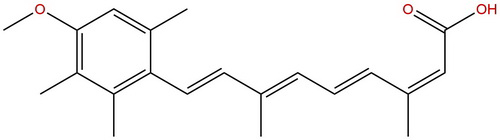
Natural products and their derivatives have always been an important source of drug discovery and development, especially playing a key role in the treatment of complex diseases such as psoriasis and neurodegenerative diseases. Among numerous compounds derived from natural vitamin A, Acitretin, as a representative of second-generation retinoic acid, has established an important position in the field of dermatology due to its unique pharmacological activity and relatively optimized safety. Atrotine, also known as all trans -9- (4-methoxy-2,3,6-trimethylphenyl) -3,7-dimethyl-2,4,6,8-nonatetraenoic acid, is a member of the retinoic acid drug family. Its predecessor, Etretinate, has gradually been replaced due to long-term toxicity caused by accumulation in the body, while Atrotine, as its active metabolite, has a shorter half-life and lower tissue accumulation risk, thus demonstrating better safety in clinical applications.
The history of retinoic acid drugs can be traced back to the mid-20th century, when scientists began to systematically study the regulatory effects of vitamin A and its derivatives on epithelial cell differentiation and proliferation. The development of atorvastatin represents an evolution from the first generation of retinoic acid (such as all trans retinoic acid, ATRA) to a more efficient, selective, and less toxic direction. At present, atorvastatin has been widely used to treat various keratinization disorders, especially moderate to severe psoriasis, and its efficacy has been fully validated in multiple randomized controlled trials. In addition, recent studies have found that atorvastatin has potential application value in regulating immune inflammatory responses, affecting cell apoptosis and autophagy, and intervening in neurodegenerative diseases, especially in the study of Alzheimer's disease (AD), which has attracted widespread attention.
This article aims to systematically review the chemical structure and physicochemical properties, pharmacological activity, molecular mechanism of action, pharmacological characteristics, and clinical application prospects of atorvastatin, in order to provide comprehensive academic references for the in-depth research and clinical translation of this compound.
Chemical structure and physicochemical properties
The chemical structure of Atrotine belongs to the class of retinol skeleton substituted with diaryl groups, and its core structure is a conjugated tetraenoic acid side chain connected to a trimethylmethoxybenzene ring. Specifically, its molecular formula is C ₂₁ H ₂₆ O3, and its molecular weight is 326.4360 g/mol. The all trans configuration in the structure is the key to its high affinity binding with retinoic acid receptors (RARs). Compared with the first generation retinoic acid, the benzene ring of atorvastatin is partially substituted with methoxy and trimethyl groups, which significantly enhances its metabolic stability and receptor selectivity.
In terms of physical and chemical properties, Atrotine exhibits typical lipophilic characteristics. Its oil-water partition coefficient (LogP) is 5.2770, indicating that the compound has extremely high lipid solubility, which facilitates its permeation through the cell membrane and binding to intracellular receptors. However, high LogP values also bring about the problem of poor water solubility, with a water solubility of only 0.0090 mg/mL. This characteristic leads to a significant impact of food (especially high-fat meals) on the oral bioavailability of atorvastatin, as fat soluble drugs require the assistance of chylomicrons to be effectively absorbed. The topological polar surface area (TPSA) is 46.53 Å ², which is at a moderate level, indicating its ability to penetrate cell membranes, but not sufficient to support efficient blood-brain barrier (BBB) penetration. In fact, the blood-brain barrier penetration ability of atorvastatin has been evaluated as "low", which to some extent limits its direct application in central nervous system diseases such as Alzheimer's disease, but also reduces the risk of central nervous system side effects.
From the perspective of chemical stability, the conjugated polyene structure in the molecule of atorvastatin is sensitive to light, heat, and oxidants, and is prone to isomerization and degradation. Therefore, it is necessary to avoid light, seal and place in a low-temperature environment during the preparation and storage process. In addition, the acidic carboxyl group of atorvastatin allows it to form salts under alkaline conditions, which provides the possibility for developing its water-soluble prodrug or formulation. Overall, the chemical structure of atorvastatin determines its high lipid solubility, low water solubility, and selectivity towards retinoic acid receptors. These properties are both the source of its pharmacological advantages and the root of its pharmacokinetic challenges.
Plant sources and extraction methods
Strictly speaking, atorvastatin is not directly derived from plants, but is a derivative of retinoic acid obtained through chemical synthesis. However, from the perspective of medicinal chemistry, its parent structure - Retinoic acid and its precursor vitamin A (retinol) - are widely present in nature, especially in animal liver, egg yolks, and certain plant-based foods (such as carrots, spinach, etc.) as beta carotene. The design inspiration for Atrotine comes from a deep understanding of the natural retinoic acid metabolism pathway and receptor binding characteristics.
In the field of synthetic chemistry, the preparation of atorvastatin typically involves the classical Wittig reaction or Horner Wadsworth Emmons reaction to construct conjugated polyene chains, followed by the introduction of carboxylic acid groups through selective oxidation and esterification reactions. The synthesis route involves multiple steps, including the condensation of aromatic aldehydes with phosphine ylides or phosphonates, stereoselective control, and the final hydrolysis reaction. Due to the presence of multiple double bonds in the molecule of atorvastatin, stereochemical control is a key challenge in synthesis, typically requiring the use of low-temperature reactions, selective catalysts (such as palladium catalysts), and chromatographic separation techniques to obtain high-purity all trans isomers.
In terms of extraction and purification, although Atractylodes itself does not involve plant extraction, the extraction methods of its analogues or precursor compounds are worth learning from. For example, the extraction of vitamin A compounds from natural products is usually carried out using organic solvent extraction methods, such as using ether, chloroform, or ethyl acetate to extract from animal liver or plant oils. Subsequently, purification was carried out through saponification, liquid-liquid partitioning, column chromatography (such as silica gel column or C18 reverse phase column), and high performance liquid chromatography (HPLC). For the synthetic products of Atrotine, the purification process also relies on HPLC or recrystallization techniques to ensure that the purity of the final product reaches pharmaceutical grade (usually requiring>99%). In addition, in order to overcome its poor water solubility, researchers have explored new drug delivery systems such as nanocrystals, liposomes, and cyclodextrin inclusion complexes in recent years. Although these technologies are not traditional "extraction", they greatly enhance the clinical accessibility of atorvastatin.
Pharmacological activity research
The pharmacological activity research of Atractylodes mainly focuses on the following aspects: treatment of psoriasis, other keratinized skin diseases, immune regulation, and emerging neuroprotective effects in recent years.
1. Psoriasis treatment Psoriasis is a chronic inflammatory skin disease mediated by T cells, characterized by excessive proliferation and abnormal differentiation of keratinocytes. Atrotine, as a retinoic acid receptor agonist, can directly act on keratinocytes, inhibit their excessive proliferation, and promote normal differentiation. Clinical trials have shown that oral administration of atorvastatin (usually at a dose of 25-50 mg/day) has significant therapeutic effects on moderate to severe plaque psoriasis, pustular psoriasis, and erythrodermic psoriasis. Its onset is relatively slow (usually taking 4-8 weeks), but long-term use can maintain a state of relief. It is worth noting that the efficacy of atorvastatin alone is limited, and it is often combined with phototherapy (such as narrow spectrum UVB or PUVA) or other systemic drugs (such as methotrexate, biologics) to enhance efficacy and reduce their respective doses.
2. Other skin diseases In addition to psoriasis, atropine is also used to treat various keratinization disorders, including severe ichthyosis, palmar and plantar keratosis, pityriasis hirsuta, lichen planus, etc. In these diseases, atorvastatin reverses abnormal keratinization processes and improves skin barrier function by regulating the differentiation program of epidermal cells. In addition, for HIV related psoriasis and severe psoriasis in children, atorvastatin is also considered as a second-line or third line treatment option.
3. Immune regulatory activity Atrotine not only acts on keratinocytes, but also exerts anti-inflammatory effects by regulating immune cell function. Research has found that atropine can inhibit the differentiation and function of Th17 cells, and reduce the production of pro-inflammatory cytokines such as IL-17 and IL-22. Meanwhile, it can also upregulate the proportion of regulatory T cells (Tregs), thereby restoring immune homeostasis in psoriasis lesions. This immune regulatory effect is closely related to the activation of retinoic acid receptors (RAR) and retinoic acid X receptors (RXR).
4. Research on neuroprotection and Alzheimer's disease In recent years, the research on atorvastatin in the field of neurodegenerative diseases has attracted widespread attention. The characteristics of Alzheimer's disease include deposition of beta amyloid (A β) protein, excessive phosphorylation of tau protein, neuroinflammation, and synaptic loss. In vitro experiments have shown that atorvastatin can activate RAR receptors, upregulate the expression of α - secretase 10 (ADAM10), promote non amyloid protein production pathways, and reduce the production of A β. At the same time, atropine can also inhibit the excessive activation of microglia, reduce the release of pro-inflammatory factors (such as TNF - α, IL-1 β), and enhance the resistance of neurons to oxidative stress. Animal model studies have shown that oral administration of atorvastatin can improve cognitive function and reduce the burden of A β plaques in the brain of APP/PS1 transgenic mice. However, due to the low blood-brain barrier penetration of atorvastatin, its effective concentration in the brain may be limited, prompting researchers to explore higher doses or more effective delivery strategies.
Mechanism of action and molecular targets
The pharmacological effects of atorvastatin are mainly achieved by activating retinoic acid receptors (RARs) and retinoic acid X receptors (RXRs) in the nuclear receptor superfamily. Specifically, atorvastatin is a non selective agonist of RAR α, RAR β, and RAR γ, but has a relatively high affinity for RAR γ. Unlike all trans retinoic acid, atorvastatin does not bind with high affinity to retinoic acid binding proteins (CRABPs) in cells, which may be one of the reasons for its slower metabolism and longer lasting effect.
1. Nuclear receptor signaling pathway After entering the cell, Atrotine binds to RAR in the cytoplasm to form a ligand receptor complex. The complex subsequently translocates to the nucleus and forms heterodimers (RAR/RXR) with RXR. This heterodimer recognizes the retinoic acid response element (RARE) in the promoter region of the target gene and recruits co activators (such as SRC-1, CBP/p300) or co inhibitors (such as NCoR, SMRT) to regulate the transcription of downstream genes. In psoriasis, atratine reverses the psoriasis phenotype by up regulating the expression of keratinocyte differentiation related genes (such as keratin 1, keratin 10, cucurbitacin, and epidermal protein), and inhibiting the expression of proliferation related genes (such as keratin 6, keratin 16, and epidermal growth factor receptor EGFR).
2. Key target analysis According to the provided target information, the action network of atorvastatin involves multiple signaling pathways:
-
AMPK(PRKAA1)AMPK is a key sensor for cellular energy metabolism. Atrotine may reduce excessive proliferation of keratinocytes by activating the AMPK signaling pathway and inhibiting mTOR activity. In addition, AMPK activation also has anti-inflammatory effects and can inhibit the NF - κ B pathway.
-
RARA and RARG As direct targets of atorvastatin, RAR α and RAR γ mediate most of its gene regulatory effects. RAR γ is highly expressed in the skin and is the main target of atorvastatin in the treatment of psoriasis. RAR α is more involved in immune regulation and nervous system function.
-
STAT3 STAT3 is a key transcription factor in psoriasis inflammation, mediating the signal transduction of IL-23/Th17 axis. Atrotine can alleviate inflammation by inhibiting STAT3 phosphorylation and reducing IL-17 production.
-
PRKCA Protein kinase C alpha (PKC alpha) is involved in cell proliferation and differentiation. Atrotine may affect the terminal differentiation process of keratinocytes by regulating PKC activity.
-
ALOX5 5-Lipoxygenase 5 (ALOX5) is a key enzyme in leukotriene synthesis, which is a potent pro-inflammatory mediator in psoriasis lesions. Atrotine can inhibit the expression or activity of ALOX5, thereby reducing the production of leukotriene B4.
-
NFE2L2(NRF2)NRF2 is the main regulator of antioxidant response. Atrotine can activate the NRF2 pathway, upregulate the expression of antioxidant enzymes such as HO-1 and NQO1, thereby protecting cells from oxidative stress damage.
-
CASP1 Caspase-1 is a key effector molecule for inflammasome activation, mediating the maturation of IL-1 β and IL-18. Atrotine may alleviate IL-1 β - driven inflammation by inhibiting NLRP3 inflammasome activation and reducing CASP1 activity.
-
TRPV1 TRPV1 is a nociceptive receptor involved in the transmission of itch and pain signals. Atractylodes may improve itching symptoms in psoriasis patients by regulating TRPV1 expression or activity.
-
RORC ROR γ t is a key transcription factor for Th17 cell differentiation. Atrotine can inhibit IL-17-mediated inflammation by suppressing the expression or activity of ROR γ t, reducing the generation of Th17 cells.
3. Epigenetic regulation In addition to direct transcriptional regulation, atorvastatin may also exert long-term effects by affecting histone modifications and DNA methylation. For example, retinoic acid signaling can recruit histone acetyltransferases (HATs) or deacetylases (HDACs) to alter chromatin status, thereby persistently altering gene expression profiles.
Evaluation of drug properties and pharmacokinetics
The pharmacological evaluation of atorvastatin needs to comprehensively consider its pharmacological advantages and pharmacokinetic challenges. According to the Lipinski rule, the molecular weight (326.44 Da) and number of hydrogen bond donors/acceptors (1 carboxyl group as the hydrogen bond donor and 2 oxygen atoms as the hydrogen bond acceptor) of atorvastatin meet the requirements, but its LogP value (5.28) exceeds the threshold of 5, indicating that its lipophilicity is too high, which may lead to solubility and absorption problems. In addition, its water solubility is extremely low (0.009 mg/mL), belonging to BCS (Biopharmaceutical Classification System) Class II or IV drugs, that is, low solubility, high permeability or low permeability drugs.
1. Pharmacokinetic characteristics:
-
absorb The absorption of oral atropine is highly dependent on the fat content in the food. When taken with high-fat meals, its absorption rate can be increased by about 2-3 times. The absolute bioavailability is about 60% (taken with meals). The peak time (Tmax) is approximately 2-5 hours.
-
distribution Atrotine has a very high plasma protein binding rate (>99.9%), mainly binding to albumin. Its apparent distribution volume (Vd) is relatively large (about 100 L), indicating widespread tissue distribution. However, due to its low affinity with CRABPs, its accumulation in the skin is lower than that of itraconazole.
-
Metabolism Atrotine is mainly metabolized through the liver and involves multiple CYP450 enzymes (including CYP2C8, CYP2C9, CYP3A4). The main metabolic pathways include isomerization (producing 13 cis octreotide), oxidation (producing hydroxylated products), and glucuronic acid binding. It is worth noting that atorvastatin can partially reverse to etoposide in the body (through esterification reaction), especially in the presence of alcohol. Ethanol can promote this conversion process, thereby increasing the risk of etoposide accumulation.
-
excretion Atrotine and its metabolites are mainly excreted through bile and feces (about 80%), with only a small amount excreted through urine (about 20%). Its terminal half-life is about 50 hours (range 33-96 hours), which is much shorter than that of itraconazole (about 120 days), which is its safety advantage. However, due to the presence of enterohepatic circulation, its elimination process may be prolonged.
2. Safety evaluation:
-
HERG inhibition Atrotine has no inhibitory activity on hERG potassium channels (hERG inhibition: No), indicating a low risk of cardiac toxicity.
-
Genotoxicity The Ames test result is negative (0.0), indicating that atorvastatin does not have direct mutagenicity. However, retinoids have clear teratogenicity, and atorvastatin is classified as a pregnancy X-class drug by the FDA and is prohibited for use in women preparing for pregnancy, pregnant, and breastfeeding. Women of childbearing age still need to take effective contraceptive measures for at least 3 years after discontinuing medication (as it may convert to etoposide and accumulate in adipose tissue).
-
Common adverse reactions This includes dry skin and mucous membranes (such as cheilitis, rhinitis, dry eyes, and skin flaking), hair loss, increased nail fragility, elevated blood lipids (especially triglycerides), abnormal liver function, and skeletal muscle pain (long-term use can lead to thick bone fat). These adverse reactions are usually dose related and can be managed by adjusting the dose or symptomatic treatment.
3. Drug interactions The combination of atorvastatin and methotrexate can increase the risk of liver toxicity; Co administration with tetracycline antibiotics can increase the risk of pseudobrain tumors (elevated intracranial pressure); Co administration with vitamin A or other retinoids can increase the risk of vitamin A excess. In addition, ethanol can promote the conversion of atorvastatin to ezetimibe, so alcohol should be strictly prohibited during medication.
Clinical application prospects and prospects
The application of atorvastatin in the field of dermatology is quite mature, but its clinical potential is far from fully developed. Future research directions will mainly focus on the following aspects:
1. Optimization of psoriasis treatment Although the rise of biologics and targeted small molecule drugs (such as JAK inhibitors and PDE4 inhibitors) has challenged the status of atorvastatin, as an oral drug, atorvastatin has advantages such as convenient administration, low cost, and no immunogenicity. In the future, atorvastatin may be used more as a base drug for combination therapy, such as in combination with biologics (such as IL-17 inhibitors, IL-23 inhibitors), to enhance efficacy and reduce dosage and side effects of biologics. In addition, the development of local preparations of atratine (such as gel and cream) for the treatment of localized psoriasis is also worth exploring.
2. Neurodegenerative diseases The preliminary results of atorvastatin in Alzheimer's disease research are encouraging, but its low blood-brain barrier penetration is its main obstacle. Future research can focus on: ① developing brain targeted delivery systems for atorvastatin, such as nanoparticles, liposomes, or conjugated penetrating peptides; ② Explore the safety at higher doses, as atropine may need to reach higher concentrations in the brain to exert its therapeutic effect; ③ Combined use of blood-brain barrier opening techniques (such as focused ultrasound) to increase drug uptake into the brain. In addition, the potential role of atorvastatin in other neurodegenerative diseases such as Parkinson's disease and amyotrophic lateral sclerosis is also worth exploring.
3. Immune related diseases Based on the regulatory effect of atorvastatin on Th17/Treg balance, its therapeutic potential in autoimmune diseases such as rheumatoid arthritis, inflammatory bowel disease, and multiple sclerosis deserves further investigation. Especially for patients who have poor response or intolerance to existing immunosuppressants, atorvastatin may provide a new treatment option.
4. Antitumor effect Retinoic acid drugs have been used in cancer treatment, such as ATRA therapy for acute promyelocytic leukemia. The anti proliferative and pro differentiation effects of atorvastatin in solid tumors such as cutaneous T-cell lymphoma and head and neck squamous cell carcinoma are being explored. Its combination with chemotherapy or radiotherapy may produce synergistic effects.
5. Precision medicine and biomarkers In the future, through genomics, transcriptomics, and proteomics analysis, identifying the subgroups of psoriasis or Alzheimer's disease patients with the best response to atorvastatin treatment will help achieve personalized treatment. For example, genetic polymorphisms in RAR γ or CRABP2 may affect drug response and toxicity.
Conclusion
Atrotine, as a representative drug of second-generation retinoic acid, has played an irreplaceable role in the treatment of psoriasis and other keratinized skin diseases. It activates nuclear receptors RAR/RXR to regulate a series of gene networks involved in cell proliferation, differentiation, immune regulation, and oxidative stress, exhibiting multi-target and multi pathway pharmacological characteristics. Despite its limitations such as poor water solubility, high teratogenicity, and the need to be taken with high-fat meals, the safety and efficacy of atorvastatin can be controlled through reasonable clinical management, dosage adjustment, and combination therapy strategies.
Looking ahead, research on atorvastatin is expanding from dermatology to neuroscience, immunology, and oncology. Especially in neurodegenerative diseases such as Alzheimer's disease, the potential application of atorvastatin provides a new paradigm for the "new use of old drugs". With the continuous deepening of understanding of the retinoic acid signaling pathway, as well as the development of new drug delivery systems and precision medicine technologies, atorvastatin and its derivatives are expected to radiate new vitality in a wider range of disease fields. For researchers in natural product pharmacology, the success story of atorvastatin once again proves that starting from natural vitamin A, through reasonable structural modification and mechanism research, drug molecules with important clinical value can be developed.