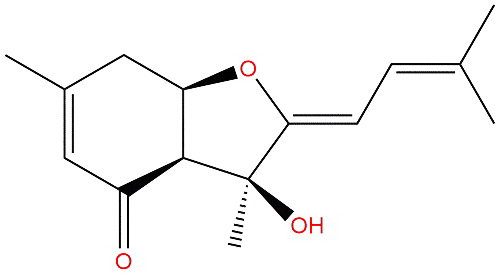


Product name: Bisabolangelone
Synonym name: Angelikoreanol; Ligustilone
Catalogue No.: BP3753
Cas No.: 30557-81-4
Formula: C15H20O3
Mol Weight: 248.322
Botanical Source:
Physical Description:
Type of Compound:
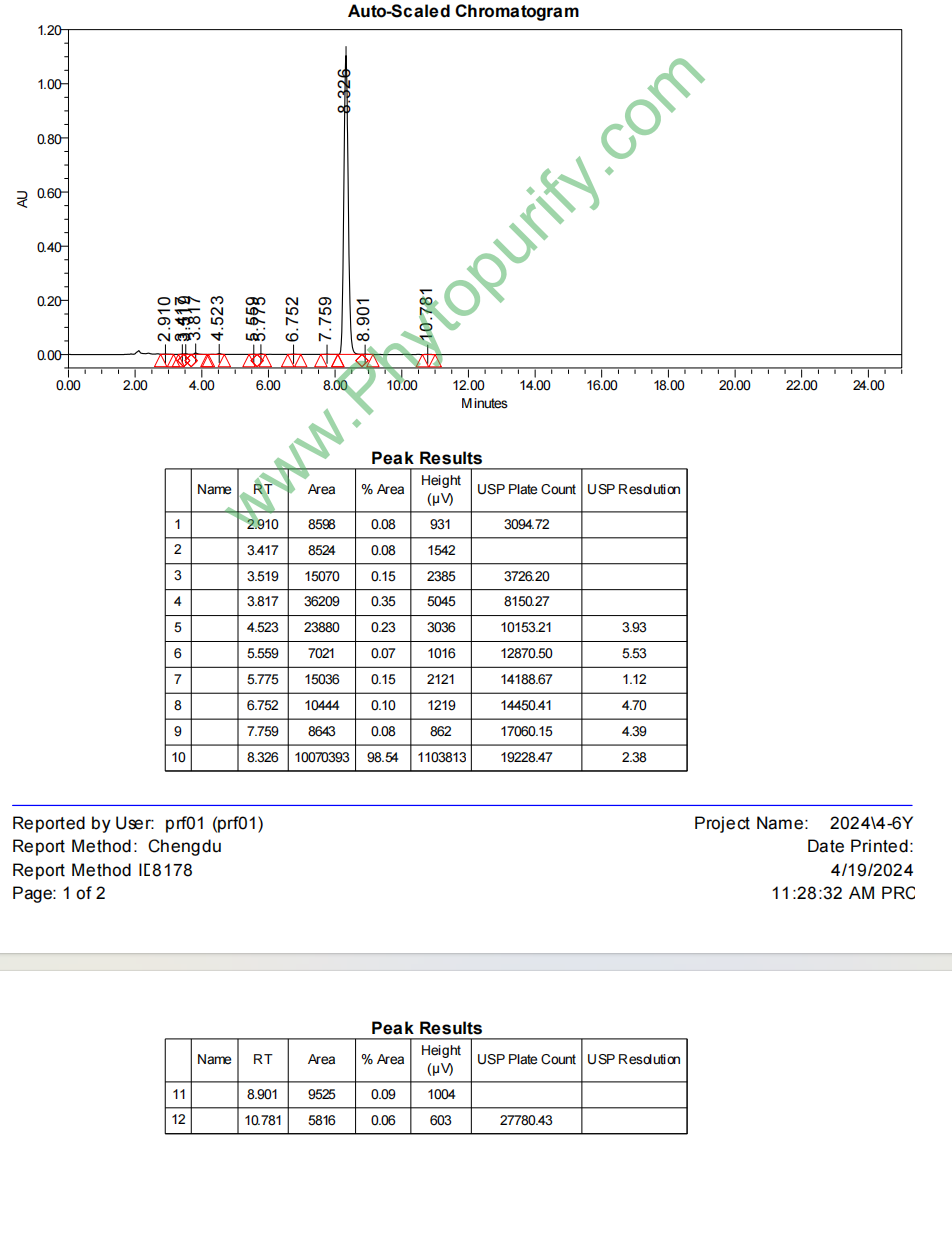
Purity: 95%~99%
Analysis Method: HPLC-DAD or/and HPLC-ELSD
Identification Method: Mass, NMR
Packing: Brown vial or HDPE plastic bottle
Storage: Store in a well closed container, protected from air and light. Put into refrigerate or freeze for long term storage.
Whenever possible, you should prepare and use solutions on the same day. However, if you need to make up stock solutions in advance, we recommend that you store the solution as aliquots in tightly sealed vials at -20℃. Generally, these will be useable for up to two weeks.
The product could be supplied from milligrams to grams
Inquire for bulk scale.
For Reference Standard and R&D, Not for Human Use Directly.
HPLC of Bisabolangelone
Storage conditions:Short-term storage at 2~8℃, long-term storage at -20 ~ -80℃
46.5300
2.1696
2.1695
.4837
4.3206
14.1861
High
68.1021
4.6392
No
Yes
No
No
No
No
0.0
Yes
Yes
Yes
Yes
Natural products, as an important source of drug discovery, have played an irreplaceable role in the long history of human struggle against diseases. From ancient times to the present, plants and their secondary metabolites have been the core means of treating various diseases. Among numerous natural compounds with biological activity, sesquiterpenes have attracted much attention due to their structural diversity and wide pharmacological activities. Bisabolangelone, derived from the traditional medicinal plant Qianghuo, is a type of myrrh(Osterici Radix)The sesquiterpene derivatives from roots have aroused strong interest among researchers in the field of natural product pharmacology in recent years. Its unique chemical skeleton and significant biological activity, especially its anti-inflammatory and anti ulcer effects, make it a potential lead compound for developing novel therapeutic drugs.
As a traditional Chinese medicine, Qianghuo has a long history of application in East Asia, especially in China, Japan, and South Korea. It is commonly used to treat inflammation related diseases such as colds, headaches, and rheumatism. Modern pharmacological research has gradually revealed the molecular basis of its active ingredients, among which the myrrh Angelica sinensis ketone stands out with its clear anti-inflammatory mechanism. Research has shown that the myrrh herb Angelica sinensis ketone can effectively inhibit the inflammatory response of macrophages stimulated by lipopolysaccharide (LPS), and its mechanism of action mainly involves blocking the nuclear factor kappa B (NF - κ B) and mitogen activated protein kinase (MAPK) signaling pathways. This discovery not only provides scientific basis for the modern application of traditional Chinese medicine, but also opens up new avenues for the development of novel treatment strategies for chronic inflammatory diseases.
This article aims to provide a comprehensive professional review of the chemical structure and physicochemical properties, plant sources and extraction methods, pharmacological activity, mechanism of action and molecular targets, pharmacological evaluation and pharmacokinetic characteristics of myrrh Angelica sinensis ketone, and to explore its future clinical application prospects. By integrating existing research results, this article aims to outline the full picture of this natural product, providing valuable references for subsequent basic research and drug development.
The chemical structure of Bisabolangelone belongs to the sesquiterpene class of compounds, specifically, its skeleton is based on the Bisabolane type carbon skeleton. Sesquiterpenes are terpenoids composed of three isoprene units (C ₁₅), widely present in plants and possessing rich structural diversity and biological activity. The molecular formula of myrrh Angelica sinensis ketone is C ₁₅ H ₂₀ O3, with a molecular weight of 248.3220 g/mol. Its core structure consists of a six membered ring (cyclohexenone) and a five membered ring (γ - lactone), forming a unique helical or fused ring system. This rigid structure may be closely related to its interaction with specific biological targets. This compound contains an α, β - unsaturated ketone structural unit, which is often considered as the receptor site for Michael addition reactions and may be related to covalent modification with cysteine residues of key proteins in its anti-inflammatory activity.
From the perspective of physical and chemical properties, myrrh Angelica sinensis ketone exhibits a certain degree of lipophilicity. The calculated lipid water partition coefficient (LogP) is 2.1696, indicating that the solubility of the compound in the lipid environment is slightly higher than that in the aqueous phase, which facilitates its penetration through biological membranes, including cell membranes and possible blood-brain barriers. In fact, its blood-brain barrier penetration has been evaluated as' high ', suggesting that the myrrh herb Angelica sinensis may have the potential to act on central nervous system targets, such as TRPV1 and TRPA1 channels associated with pain and neuroinflammation. Its topological polar surface area (TPSA) is 46.53 Å ², which is lower than the commonly assumed passive membrane permeability threshold (about 140 Å ²), further supporting its good cell permeability. In terms of water solubility, its predicted value is 0.4837 mg/mL, which belongs to the category of slight solubility. This may limit its oral bioavailability to some extent, but it can be improved through formulation techniques such as liposomes, cyclodextrin inclusion complexes, or nanoparticles. In addition, key pharmacological evaluations have shown that myrrh angelica ketone does not have hERG (human ether - à - go go related gene) potassium channel inhibitory activity, which reduces its risk of causing cardiac toxicity (such as QT interval prolongation). The Ames test result is 0.0, indicating that it did not show mutagenicity in the standard bacterial recovery mutation test, and the preliminary safety is good. These physicochemical properties and early safety data have laid a favorable foundation for the further development of myrrh Angelica sinensis ketone as a drug lead.
The main plant source of myrrh Angelica sinensis ketone is Qianghuo(Ostericum koreanum or Angelica koreana)The dried root is the traditional Chinese medicine "Qianghuo"(Osterici Radix). Qianghuo belongs to the Apiaceae family or the Qianghuo genus, mainly distributed in East Asia such as Northeast China, the Korean Peninsula, and Japan. This plant is used in traditional medicine to treat diseases such as wind cold, cold, headache, body pain, and rheumatism. Modern plant chemistry research has shown that the roots of Qianghuo are rich in various coumarins, volatile oils, and sesquiterpenes. Among them, the myrrh Angelica sinensis ketone is one of its characteristic active ingredients and an important material basis for its anti-inflammatory and anti ulcer effects.
The extraction of myrrh and angelica ketone from Qianghuo roots is usually carried out using classical natural product chemistry methods. Due to the lipophilicity of the compound, commonly used extraction solvents include organic solvents such as methanol, ethanol, or ethyl acetate. The typical extraction process is as follows: first, the dried Qianghuo roots are crushed into coarse powder, and then soaked or percolated with methanol or ethanol at room temperature or heating conditions for extraction. The extract is filtered and concentrated under reduced pressure to obtain the total extract. Subsequently, preliminary separation was carried out through liquid-liquid extraction, such as suspending the total extract in water and sequentially extracting with petroleum ether, ethyl acetate, and n-butanol. Due to its equipolarity, myrrh Angelica sinensis ketone is usually enriched in the ethyl acetate extraction site.
Further separation and purification require the use of various chromatographic techniques. Silica gel column chromatography is the most commonly used method, which uses mixed solvent systems such as petroleum ether ethyl acetate or chloroform methanol for gradient elution. Collect the fraction containing the target compound through thin-layer chromatography (TLC) detection. For impurities with similar structures, repeated column chromatography separation or purification using high-performance liquid chromatography (HPLC) may be required. In addition, modern separation techniques such as high-speed countercurrent chromatography (HSCCC) and preparative HPLC have also been applied to the efficient and high-purity preparation of myrrh Angelica sinensis ketone. Finally, the isolated compound was structurally identified using spectroscopic methods such as nuclear magnetic resonance (NMR) and mass spectrometry (MS), confirming its identity as myrrh angelica ketone. The extraction efficiency is influenced by various factors, including the origin of plant materials, harvesting time, drying method, as well as the selection of extraction solvents and conditions. Optimizing the extraction process and improving the yield and purity of the target compound are key to ensuring subsequent pharmacological research and potential industrial applications.
The pharmacological activity research of myrrh Angelica sinensis ketone mainly focuses on its anti-inflammatory and anti ulcer effects. In addition, some studies have also revealed its potential analgesic, antioxidant, and anti allergic activities.
1. Anti inflammatory activity
Anti inflammation is the core pharmacological activity of the myrrh herb Angelica sinensis ketone. In vitro cell experiments have shown that in a lipopolysaccharide (LPS) - stimulated macrophage model (such as RAW 264.7 cells), myrrh carvacrol can significantly inhibit the production of nitric oxide (NO) and prostaglandin E ₂ (PGE ₂). These two molecules are key mediators of inflammatory response, catalyzed by inducible nitric oxide synthase (iNOS, encoded by NOS2 gene) and cyclooxygenase-2 (COX-2, encoded by PTGS2 gene), respectively. Further research has found that myrrh Angelica sinensis ketone can downregulate the protein and mRNA expression levels of iNOS and COX-2. At the same time, it can significantly inhibit the release of pro-inflammatory cytokines such as tumor necrosis factor - α (TNF - α) and interleukin-6 (IL-6). These effects have been repeatedly validated in multiple laboratories, establishing their position as anti-inflammatory natural products. In vivo animal models, such as the rat toe swelling model induced by carrageenan and the mouse peritoneal capillary permeability increase model induced by acetic acid, have also confirmed the anti-inflammatory effect of the myrrh compound Danggui enone in vivo, which is comparable or better than positive control drugs such as indomethacin.
2. Anti ulcer activity
The anti ulcer activity of myrrh Angelica sinensis ketone is another research direction that has attracted much attention. In various experimental gastric ulcer models, including ethanol induced, stress induced, pyloric ligation induced, and nonsteroidal anti-inflammatory drug (such as indomethacin) induced gastric ulcer models, the myrrh compound Angelica sinensis ketone showed significant gastric mucosal protective effects. Its mechanism of action may involve multiple aspects: firstly, it can increase the secretion of gastric wall mucus, forming a physical barrier to protect the gastric mucosa; Secondly, it can enhance gastric mucosal blood flow, promote nutrient supply and repair of ulcer sites; In addition, its anti-inflammatory activity directly participates in the inhibition of gastric mucosal inflammatory damage. It is worth noting that its anti ulcer effect is not related to the inhibition of gastric acid secretion, which is different from the mechanism of traditional anti ulcer drugs (such as proton pump inhibitors), suggesting that it may become a new type of gastric mucosal protector.
3. Other activities
In addition to anti-inflammatory and anti ulcer effects, preliminary studies also suggest that the myrrh herb Angelica sinensis ketone may have other pharmacological activities. For example, based on its potential effects on TRPV1 and TRPA1 channels, it may have analgesic effects. In addition, some studies have reported its antioxidant activity, which can clear free radicals and alleviate oxidative stress damage. In terms of anti allergy, studies have shown that it can inhibit degranulation of mast cells and reduce the release of allergic mediators. However, these active studies are still in their early stages and require more experimental evidence to confirm and deepen.
The pharmacological activity of myrrh Angelica sinensis ketone, especially its anti-inflammatory effect, is achieved by regulating multiple key signaling pathways and molecular targets. Its mechanism of action has the characteristics of multi-target and multi pathway, which is closely related to its complex chemical structure.
1. Inhibition of NF - κ B signaling pathway
NF - κ B is the core transcription factor of inflammatory response. In the resting state, NF - κ B (usually a p50/RelA dimer, encoded by the RELA gene) binds to its inhibitory protein I κ B α and exists in an inactive form in the cytoplasm. When cells are stimulated by inflammation such as LPS and TNF - α, I κ B kinase (IKK, encoded by genes such as IKBKB) is activated, which phosphorylates I κ B α and leads to its ubiquitination degradation. The released NF - κ B is immediately translocated into the nucleus, initiating the transcription of various pro-inflammatory genes such as TNF, IL6, NOS2, and PTGS2. Research has shown that myrrh Angelica sinensis ketone can effectively inhibit LPS induced phosphorylation and degradation of I κ B α, thereby blocking the nuclear translocation and transcriptional activity of NF - κ B. This inhibition of the NF - κ B pathway is a key upstream mechanism for downregulating the expression of inflammatory mediators such as iNOS, COX-2, TNF - α, and IL-6.
2. Inhibition of MAPK signaling pathway
The MAPK pathway is another signaling cascade that plays an important role in inflammatory responses. The main branches include ERK, JNK, and p38 MAPK. LPS stimulation can activate these kinases, phosphorylate and activate downstream transcription factors (such as AP-1), and synergistically regulate inflammatory gene expression with NF - κ B. Research has found that myrrh Angelica sinensis ketone can inhibit LPS induced phosphorylation of p38 MAPK and JNK, while having little or no effect on ERK phosphorylation. This indicates that its regulation of the MAPK pathway is selective. By simultaneously inhibiting the two key pathways of NF - κ B and MAPK (p38/JNK), myrrh Angelica sinensis ketone can effectively block the transmission of inflammatory signals, thereby exerting its anti-inflammatory effect.
3. Direct effects on specific molecular targets
In addition to regulating signaling pathways, myrrh Angelica sinensis ketone may also directly act on certain specific molecular targets. The α, β - unsaturated ketones in its chemical structure are potential Michael addition receptors that can covalently bind to cysteine thiol groups in target proteins, thereby altering protein function. For example, it may directly bind to the active site cysteine residues of IKK β (encoded by IKBKB) or p38 MAPK, thereby inhibiting their kinase activity. In addition, based on its anti ulcer activity and potential impact on TRP channels, myrrh angelica ketone may directly act on TRPV1 and TRPA1 channels. These channels play a crucial role in nociceptive and neurogenic inflammation. There are studies speculating that the myrrh herb Angelica sinensis ketone may act as an antagonist or desensitizer of TRPV1, thereby exerting analgesic and anti-inflammatory effects. Meanwhile, its potential inhibitory effect on CASP1 (caspase-1) is also worth noting, as Caspase-1 is a key effector enzyme for inflammasome activation, responsible for cleaving pro-IL-1 β and pro-IL-18 into mature active forms. In addition, STAT3, as a key transcription factor in the IL-6 signaling pathway, its activity may also be indirectly regulated by the myrrh herb Angelica sinensis ketone. These potential direct targets need to be further identified and validated through chemical biology methods such as activity-based proteomic analysis (ABPP).
The evaluation of drug properties and pharmacokinetic studies are essential steps in promoting natural products from laboratory research to clinical applications. Based on existing computational predictions and preliminary experimental data, a preliminary evaluation of the pharmacological properties of myrrh Angelica sinensis ketone can be conducted.
1. Analysis of pharmacological parameters
As mentioned earlier, the molecular weight of myrrh Angelica sinensis ketone is 248.32 Da, which meets the requirement of molecular weight less than 500 in Lipinski's Rule of Five. Its LogP is 2.17, which is within the ideal range (-0.4 to 5.6), indicating that it has good lipid solubility and is conducive to membrane permeation. The TPSA is 46.53 Å ², much lower than 140 Å ², indicating its good oral absorption potential. Although the water solubility (0.48 mg/mL) is relatively low, it is still within an acceptable range and can be improved through formulation methods. The key toxicity prediction results are encouraging: no hERG inhibitory activity and negative Ames test, reducing the risk of cardiac toxicity and genetic toxicity. Overall, myrrh Angelica sinensis ketone has good drug like properties and is a promising lead compound.
2. Pharmacokinetic characteristics
At present, there is relatively limited experimental data on the pharmacokinetics of myrrh Angelica sinensis ketone in vivo, but based on its physicochemical properties and preliminary animal experiments, some characteristics can be inferred. Due to its high lipid solubility and good membrane permeability, myrrh angelica ketone is expected to be absorbed orally. However, its limited water solubility may limit its absorption rate and degree, resulting in low bioavailability. In addition, as a sesquiterpene compound, it may undergo extensive hepatic first pass metabolism involving oxidation of cytochrome P450 enzymes and conjugation reactions of glucuronosyltransferase, which significantly reduces its oral bioavailability. Its high blood-brain barrier penetration suggests that it can enter the central nervous system, which is both an opportunity and a challenge: the opportunity lies in developing therapeutic drugs for central nervous system diseases such as neuroinflammation and pain; The challenge lies in the potential for central nervous system related side effects. Its distribution volume may be large, indicating that the organization is widely distributed. The elimination half-life is not yet clear, but it is expected to be relatively short and requires frequent administration. To overcome these potential pharmacokinetic deficiencies, future research needs to systematically conduct in vivo pharmacokinetic experiments and explore strategies such as prodrug design, nano formulations, liposome encapsulation, or structural modification to improve solubility, enhance bioavailability, and prolong action time.
Based on the unique pharmacological activity and good initial pharmacological properties of myrrh Angelica sinensis ketone, it has shown broad application prospects in the treatment of various diseases.
1. Inflammatory diseases
The most direct application prospect of myrrh Angelica sinensis ketone is in the treatment of various acute and chronic inflammatory diseases. It effectively reduces the levels of key pro-inflammatory factors such as TNF - α and IL-6 by inhibiting the NF - κ B and MAPK pathways, making it possible for the treatment of rheumatoid arthritis, inflammatory bowel disease (such as Crohn's disease and ulcerative colitis), psoriasis, asthma, etc. In particular, its anti ulcer activity and gastric mucosal protective effect give it unique advantages in treating gastrointestinal injuries caused by nonsteroidal anti-inflammatory drugs (NSAIDs), and it is expected to be developed into a drug with dual anti-inflammatory and gastric protective effects, solving the contradiction between anti-inflammatory treatment and gastrointestinal side effects in current clinical practice.
2. Digestive system diseases
In addition to serving as an adjunct to anti-inflammatory drugs, the myrrh herb Angelica sinensis ketone itself is a potential anti ulcer drug. It does not rely on the unique mechanism of inhibiting gastric acid secretion, providing a new option for treating gastric ulcers, duodenal ulcers, and even stress ulcers. For ulcer patients with normal or low gastric acid secretion, as well as those who need to take NSAIDs for a long time, myrrh carvacrol may be a safer and more effective alternative or combination therapy.
3. Pain management
Given its potential effects on TRPV1 and TRPA1 channels, the myrrh herb Angelica sinensis ketone may have analgesic activity, particularly in the treatment of inflammatory pain and neuropathic pain. Its high blood-brain barrier penetration also provides the possibility for it to act on the central pain pathway. The development of non opioid and non steroidal analgesic drugs is an urgent need in the current field of pain treatment, and the myrrh drug Danggui enone is expected to occupy a place in this field.
4. Future research directions
Despite the bright prospects, the clinical translation of myrrh containing Angelica sinensis ketone still faces many challenges. Future research should focus on the following aspects:
- In depth mechanism research Using chemical biology methods such as ABPP to identify its direct protein targets and elucidate the molecular details of its interactions with NF - κ B, MAPK pathways, and TRP channels.
- Pharmacokinetic study of the system Conduct comprehensive in vivo ADME (absorption, distribution, metabolism, excretion) research to clarify its metabolic pathways, metabolites, and pharmacokinetic parameters.
- Research on Structure Modification and Structure Activity Relationship Systematic structural modifications are carried out around its core skeleton to synthesize a series of analogues, and the effects of different substituents on activity, selectivity, and pharmacokinetic properties are studied in order to obtain candidate drugs with stronger activity, higher selectivity, and better pharmacokinetic properties.
- Formulation development Develop suitable drug delivery systems, such as liposomes, nanoparticles, solid dispersions, etc., to address the issues of poor water solubility and potential low bioavailability.
- Comprehensive toxicological evaluation Conduct comprehensive preclinical safety evaluations on long-term toxicity, reproductive toxicity, immune toxicity, etc. to ensure their safety.
As a sesquiterpene derivative derived from traditional Chinese medicine Qianghuo, myrrh Angelica sinensis ketone has become a remarkable research object in the field of natural product pharmacology due to its clear anti-inflammatory and anti ulcer activities, as well as its unique molecular mechanism of acting by blocking the NF - κ B and MAPK pathways. Its excellent drug like parameters and preliminary safety data have laid a solid foundation for its use as a lead compound in the development of new drugs. Although there are still challenges in pharmacokinetic optimization and in-depth target identification, myrrh angelica ketone undoubtedly provides new chemical entities and ideas for the treatment of inflammatory diseases, digestive system diseases, and pain. In the future, through interdisciplinary collaboration and the use of modern research methods in medicinal chemistry, pharmacology, pharmacy, and toxicology, myrrh carvacrol and its derivatives are expected to move from the laboratory to clinical practice, contributing to the cause of human health. In depth research on such natural products not only helps to reveal the scientific connotation of traditional Chinese medicine, but also provides an inexhaustible source for the discovery of modern innovative drugs.
