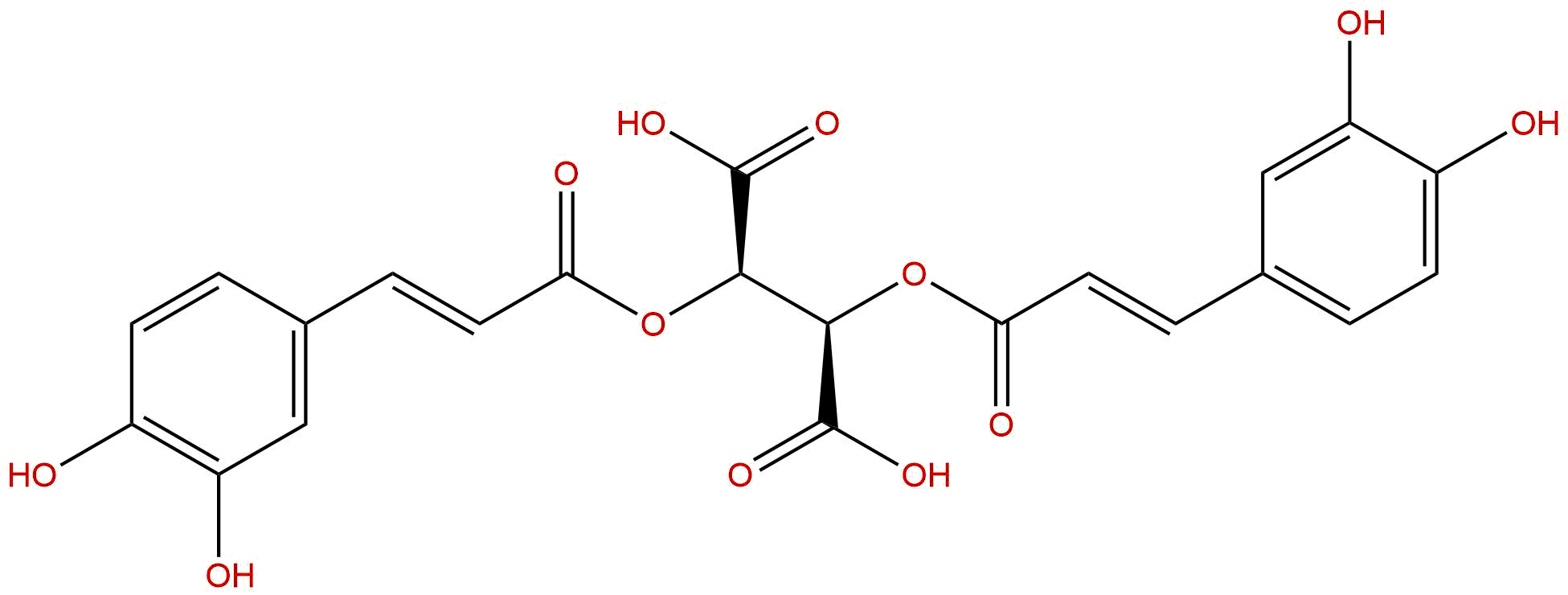


Product name: Chicoric acid
Synonym name: (-)-Chicoric acid; (-)-L-Chicoric acid; Chicoric acid, (-)-; L-Chicoric acid
Catalogue No.: BP0343
Cas No.: 70831-56-0
Formula: C22H18O12
Mol Weight: 474.374
Botanical Source: Echinacea purpurea (Linn.) Moench
Physical Description:
Type of Compound: Phenylpropanoids
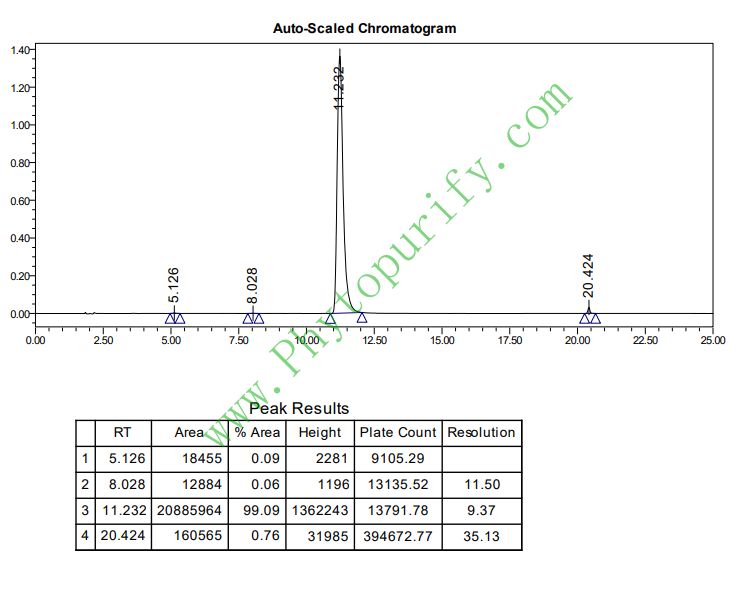
Purity: 95%~99%
Analysis Method: HPLC-DAD or/and HPLC-ELSD
Identification Method: Mass, NMR
Packing: Brown vial or HDPE plastic bottle
Storage: Store in a well closed container, protected from air and light. Put into refrigerate or freeze for long term storage.
Whenever possible, you should prepare and use solutions on the same day. However, if you need to make up stock solutions in advance, we recommend that you store the solution as aliquots in tightly sealed vials at -20℃. Generally, these will be useable for up to two weeks.
The product could be supplied from milligrams to grams
Inquire for bulk scale.
Description:
Chicoric acid, a new compound able to enhance insulin release and glucose uptake, it is a new potential antidiabetic agent carrying both insulin sensitizing and insulin-secreting properties. Chicoric acid has antiobesity effects, it can induce apoptosis in 3T3-L1 preadipocytes through ROS-mediated PI3K/Akt and MAPK signaling pathways. L-Chicoric acid has antiviral activity against HIV-1, which has been attributed to the inhibition of HIV-1 integration.
References:
J Agric Food Chem. 2013 Feb 20;61(7):1509-20.
Chicoric acid induces apoptosis in 3T3-L1 preadipocytes through ROS-mediated PI3K/Akt and MAPK signaling pathways.
Chicoric acid has been reported to possess various bioactivities. However, the antiobesity effects of Chicoric acid remain poorly understood.
METHODS AND RESULTS:
In this study, we investigated the effects of Chicoric acid on 3T3-L1 preadipocytes and its molecular mechanisms of apoptosis. Chicoric acid inhibited cell viability and induced apoptosis in 3T3-L1 preadipocytes which was characterized by chromatin condensation and poly ADP-ribose-polymerase (PARP) cleavage. Mitochondrial membrane potential (MMP) loss, Bax/Bcl-2 dysregulation, cytochrome c release, and caspase-3 activation were observed, indicating mitochondria-dependent apoptosis induced by Chicoric acid. Furthermore, PI3K/Akt and MAPK (p38 MAPK, JNK, and ERK1/2) signaling pathways were involved in Chicoric acid-induced apoptosis. The employment of protein kinase inhibitors LY294002, SB203580, SP600125, and U0126 revealed that PI3K/Akt signaling pathway interplayed with MAPK signaling pathways. Moreover, Chicoric acid induced reactive oxygen species (ROS) generation.
CONCLUSIONS:
Pretreatment with the antioxidant N-acetylcysteine (NAC) significantly blocked cell death and changes of Akt and MAPK signalings induced by Chicoric acid. In addition, Chicoric acid down regulated HO-1 and COX-2 via the PI3K/Akt pathway.
Biochem Biophys Res Commun. 2008 Dec 5;377(1):131-5.
Chicoric acid, a new compound able to enhance insulin release and glucose uptake.
Caffeic acid and chlorogenic acid (CGA), a mono-caffeoyl ester, have been described as potential antidiabetic agents.
METHODS AND RESULTS:
Using in vitro studies, we report the effects of a dicaffeoyl ester, Chicoric acid (CRA) purified from Cichorium intybus, on glucose uptake and insulin secretion. Our results show that CRA and CGA increased glucose uptake in L6 muscular cells, an effect only observed in the presence of stimulating concentrations of insulin. Moreover, we found that both CRA and CGA were able to stimulate insulin secretion from the INS-1E insulin-secreting cell line and rat islets of Langerhans. In the later case, the effect of CRA is only observed in the presence of subnormal glucose levels. Patch clamps studies show that the mechanism of CRA and CGA was different from that of sulfonylureas, as they did not close K(ATP) channels.
CONCLUSIONS:
Chicoric acid is a new potential antidiabetic agent carrying both insulin sensitizing and insulin-secreting properties.
Fitoterapia. 2014 Mar;93:132-41.Identification of chicoric acid as a hypoglycemic agent from Ocimum gratissimum leaf extract in a biomonitoring in vivo study.[Pubmed: 24418658]Ocimum gratissimum L. is popularly used to treat diabetes mellitus. The hypoglycemic activity of this medicinal species has been confirmed by in vivo studies.
METHODS AND RESULTS:
The present study conducted a chemical investigation of a leaf decoction (10% p/v) of O. gratissimum monitored by in vivo hypoglycemic activity assays. Four phenolic substances were identified: L-caftaric acid (1), L-Chicoric acid (2), eugenyl-β-D-glucopyranoside (3) and vicenin-2 (4). The acute hypoglycemic activity of the O. gratissimum decoction fractions Og1-S (300 mg/kg), Og1-A (240 mg/kg) and Og1-B (80 mg/kg) was evaluated intraperitoneally in normal and streptozotocin-induced diabetic mice. They reduced glycemia by 63%, 76% and 60% (in 120 min), respectively, in the diabetic mice. Subfractions of Og1-A were also evaluated under the same conditions: Og1-AS (200 mg/kg) and Og1-AP (40 mg/kg) produced a decrease of only 37% and 39%, respectively. Among the major phenolic substances, only Chicoric acid (2; 3 mg/kg) reduced significantly the glycemic levels of diabetic mice by 53%, 120 min after treatment. This is the first study describing the hypoglycemic activity of Chicoric acid in an animal model of diabetes mellitus. In addition, we suggest that there may be other substances contributing to this activity.
CONCLUSIONS:
Thus, for the first time, a correlation is established between the hypoglycemic activity of O. gratissimum and its chemical composition.
HPLC of Chicoric acid
Storage conditions:Short-term storage at 2~8℃, long-term storage at -20 ~ -80℃
208.1200
1.6030
-.8740
.9922
.6197
.3662
Low
88.8385
3.5142
Yes
Yes
Yes
No
Yes
No
0.0
Yes
Yes
Yes
Yes
Chicolic acid, also known as di caffeoyl tartaric acid, is a natural phenolic acid compound widely present in plants of the Asteraceae family. Its CAS number is 70831-56-0. Since its identification, chicory acid has attracted much attention due to its abundant content and potential biological activity in traditional herbs such as Echinochloa purpurea. Modern pharmacological studies have revealed that cichoric acid shows a variety of biological effects, including significant antioxidant, anti-inflammatory, anti diabetes and potential anti obesity and antiviral activities. Its core mechanism involves regulating intracellular reactive oxygen species (ROS) levels, thereby affecting multiple key signaling pathways such as PI3K/Akt, MAPK, NF - κ B, and regulating processes such as cell proliferation, apoptosis, inflammatory cytokine expression, and glucose metabolism. With the global prevalence of metabolic diseases (such as type 2 diabetes, obesity) and chronic inflammation related diseases, finding safe and effective natural intervention strategies has become a research hotspot. Chicory acid, as an orally effective multi-target natural product, its in-depth systematic research is of great significance for the development of new functional food or drug lead compounds. This article aims to systematically review the chemical properties, plant sources, pharmacological activities, molecular mechanisms of action, medicinal characteristics, and clinical application prospects of chicory acid.
Chicory acid is a phenolic acid derivative formed by ester bonding between two molecules of caffeic acid and one molecule of tartaric acid. Its molecular formula is C22H18O12 and its molecular weight is 474.3740. Its structural feature is that two catechol structures are esterified with two carboxyl groups of tartaric acid through unsaturated acrylic side chains. This structure endows chicory acid with strong hydrogen bond donor ability and electron delocalization system, which is the chemical basis for its excellent antioxidant activity.
In terms of physicochemical properties, the lipid water partition coefficient (LogP) of chicory acid is about 1.60, indicating that it has a certain lipophilicity, but overall it still tends to be hydrophilic. Its topological polar surface area (TPSA) is as high as 208.12 Å ², mainly due to the numerous polar groups such as hydroxyl and carboxyl in the molecule, indicating good water solubility (calculated value of about 0.99 mg/mL), but may affect its transmembrane permeability. Experiments have shown that chicory acid has good solubility in aqueous solutions in vitro, which is beneficial for its oral absorption. Preliminary pharmacological parameter predictions indicate that chicory acid has a low ability to penetrate the blood-brain barrier, suggesting that its direct effects on the central nervous system may be limited. In terms of safety warning, existing computational models predict that there is no significant risk of hERG potassium channel inhibition (which may lead to prolonged QT interval in the heart) and genetic toxicity (Ames test predicted negative), providing preliminary theoretical support for its relatively good safety.
Chicory acid is one of the characteristic components of Asteraceae plants, especially abundant in plants of the genus Echinochloa, such as the aerial and root parts of narrow leaved Echinochloa and Echinochloa. In addition, it is widely present in edible plants such as chicory, dandelion, lettuce, and Korean thistle, which provides the possibility for daily dietary intake.
Solvent extraction is commonly used to extract chicory acid from plant materials. Due to its phenolic acid properties, solvent systems with medium polarity have higher efficiency, such as methanol water and ethanol water mixed solutions, which are commonly used extraction solvents. In order to improve extraction efficiency and selectivity, modern extraction techniques such as ultrasound assisted extraction, microwave-assisted extraction, and pressurized liquid extraction have been successfully applied. These methods destroy plant cell walls through physical means, accelerate solvent permeation and solute diffusion, and can achieve higher yields of chicory acid in a shorter time and at lower temperatures. The crude extract after extraction usually requires further purification. Macroporous adsorption resin chromatography (such as AB-8 and D101) is widely used for enriching chicory acid due to its excellent adsorption and desorption properties for phenolic substances. The final high-purity preparation relies heavily on preparative high-performance liquid chromatography. The optimization of extraction process requires comprehensive consideration of multiple factors such as raw material types, parts, extraction solvents, temperature, time, and solid-liquid ratio to achieve efficient, green, and large-scale preparation of chicory acid.
Numerous in vitro and in vivo studies have confirmed that chicory acid has diverse pharmacological activities, with its core revolving around antioxidant, anti-inflammatory, and metabolic regulation.
1. Antioxidant activity: Chicory acid is a potent natural antioxidant. The multiple phenolic hydroxyl groups in its molecular structure can effectively scavenge free radicals such as DPPH and ABTS ⁺, and exhibit strong iron ion reduction ability. In cell models, it can alleviate the excessive accumulation of ROS induced by oxidative stressors such as hydrogen peroxide and high sugar, protecting cells from oxidative damage. This direct antioxidant effect is the basis for many other biological activities.
2. Anti inflammatory effect: Chicory acid has shown significant anti-inflammatory effects in various acute and chronic inflammation models. In macrophages stimulated by lipopolysaccharide (LPS), such as RAW264.7, chicory acid can dose dependently inhibit the production of nitric oxide (NO) and prostaglandin E2 (PGE2), and downregulate the expression of inducible nitric oxide synthase (iNOS/NOS2) and cyclooxygenase-2 (COX-2/PTGS2). More importantly, it can significantly inhibit the production of various pro-inflammatory cytokines, including tumor necrosis factor - α (TNF - α), interleukin-6 (IL-6), and interleukin-1 β (IL-1 β). In animal models, chicory acid has shown good improvement effects on acute inflammation such as xylene induced ear swelling in mice, carrageenan induced paw swelling in rats, and chronic low-grade inflammation induced by high-fat diet or glucosamine.
3. Anti diabetes and improvement of insulin resistance: Cichoric acid shows double potential in the prevention and treatment of diabetes. On the one hand, it can promote glucose uptake in insulin sensitive tissues such as adipocytes and skeletal muscle cells, and its effect is comparable to that of the classic insulin sensitizer, Rosiglitazone. In insulin resistant cell models such as palmitic acid-induced HepG2 cells, chicory acid can restore sensitivity to the insulin signaling pathway. On the other hand, in the animal model of diabetes induced by streptozotocin or fed with high-fat and high-sugar diet, cichoric acid oral administration can effectively reduce fasting blood glucose, improve glucose tolerance, regulate dyslipidemia, and protect pancreatic β cell function. Its hypoglycemic mechanism is closely related to activating AMPK, regulating the PI3K/Akt signaling pathway, and reducing the inflammatory state of insulin target tissues.
4. Anti obesity and induction of preadipocyte apoptosis: Recent studies have found that chicory acid has inhibitory effects on the proliferation and differentiation of 3T3-L1 preadipocytes. More importantly, it can induce ROS generation, activate mitochondrial dependent apoptosis pathways (such as reducing the Bcl-2/Bax ratio, activating caspase-3, etc.), thereby inducing preadipocyte apoptosis and reducing the number of adipocytes. This characteristic provides a new perspective for the application of chicory acid in the prevention and treatment of obesity and related metabolic syndrome.
5. Other activities: The study also reported that chicory acid has potential activities such as inhibiting HIV-1 integrase, protecting nerves, and anti osteoporosis, demonstrating its multifaceted medicinal value.
The multiple pharmacological effects of chicory acid stem from its extensive regulation of cellular signaling networks, and its core mechanism is related to ROS mediated signal transduction and intervention in key inflammatory and metabolic pathways.
1. Bilateral regulation of ROS and induction of apoptosis: Chicory acid can induce moderate levels of ROS in specific cells such as 3T3-L1 preadipocytes at pharmacological concentrations. This "pro oxidative" effect is not simply a toxic effect, but rather serves as a signaling molecule that triggers the mitochondrial dependent apoptotic pathway. The accumulation of ROS leads to a decrease in mitochondrial membrane potential, release of cytochrome c, and subsequent activation of caspase-9 and caspase-3 (CASP3), ultimately resulting in cell apoptosis. During this process, the PI3K/Akt (survival promoting signal) and MAPK (such as JNK, p38) signaling pathways are significantly regulated, jointly determining the fate of cells.
2. Signal pathways and targets of anti-inflammatory effects: The anti-inflammatory mechanism of chicory acid mainly focuses on inhibiting the activation of classic pro-inflammatory transcription factors such as NF - κ B and STAT3. Under LPS stimulation, chicory acid can inhibit the activation of I κ B kinase (IKK, encoded by IKBKB), prevent the degradation of I κ B α, and thus block the nuclear translocation of NF - κ B (its key subunit is RELA/p65) and the transcription of downstream genes such as TNF, IL6, NOS2. Meanwhile, chicory acid can also inhibit the JAK-STAT pathway, reduce the phosphorylation level of STAT3, and block its mediated inflammatory signals. In addition, research suggests that chicory acid may affect neurogenic inflammation by regulating transient receptor potential vanillic acid subtype 1 (TRPV1) and anchored protein subtype 1 (TRPA1) plasma channels.
3. Molecular basis for improving insulin resistance: The mechanism by which chicory acid improves insulin sensitivity involves multiple levels. It can activate insulin receptor base-1 (IRS-1) and downstream PI3K/Akt pathway, which is a key step in insulin stimulated glucose transport. At the same time, it can activate AMP activated protein kinase (AMPK), the "energy receptor" of cells that promotes glucose uptake and fatty acid oxidation independently of insulin signaling. In addition, the anti-inflammatory mechanisms mentioned above alleviate chronic low-grade inflammation in adipose tissue, liver, and muscle (manifested as a decrease in TNF - α and IL-6 levels), indirectly improving insulin signaling in these tissues.
4. Direct interaction targets: In addition to signal pathway regulation, molecular docking and some experimental studies have shown that chicory acid may directly bind to certain enzymes or receptors, such as inhibiting COX-2 (PTGS2), HIV-1 integrase, α - glucosidase, etc., which constitutes the direct molecular basis for some of its pharmacological activities.
Although chicory acid has shown extensive biological activity in vitro and animal models, its success as a drug or health ingredient depends on its pharmacological characteristics.
Absorption, distribution, metabolism, excretion (ADME): After oral administration, chicory acid can be absorbed into the systemic circulation, but its absolute bioavailability may be affected by various factors. Its high polarity and molecular weight may limit its passive transmembrane diffusion. In the body, chicory acid, as a phenolic acid ester, is easily hydrolyzed by esterases in the digestive tract, blood, and tissues to produce caffeic acid, tartaric acid, or their derivatives. Therefore, the concentration of the prototype drug detected after oral administration is usually low, and the observed in vivo activity is likely the result of the combined action of the prototype drug and its hydrolysis products. Chicory acid and its metabolites are mainly excreted through urine and bile. Its low blood-brain barrier permeability limits its direct therapeutic potential for central nervous system diseases, but may also reduce central side effects.
Formulation and delivery strategy: In order to improve the oral bioavailability and stability of chicory acid, research on a new drug delivery system is currently underway. For example, preparing it into phospholipid complexes, cyclodextrin inclusion complexes, nanoliposomes, or solid dispersions can enhance its lipid solubility, mask phenolic hydroxyl groups, improve solubility and membrane permeability, thereby protecting it from premature hydrolysis and promoting intestinal absorption.
Security: Existing toxicology studies have shown that chicory acid exhibits low acute toxicity within the experimental dose range. It originates from common edible plants, and its long-term consumption history suggests its good safety. However, as a potential drug ingredient, systematic preclinical safety evaluations (including long-term toxicity, reproductive toxicity, etc.) and standardized clinical trials are still needed to clarify its safe dosage range and potential adverse reactions.
The multi-target and multifunctional properties of chicory acid have depicted broad prospects for its application in multiple fields.
1. Prevention and treatment of metabolic diseases: As a natural compound that can improve insulin resistance, regulate blood glucose and lipids, and inhibit fat cell accumulation, cichoric acid is an ideal candidate for developing adjuvant treatment or preventive functional food/health care products for type 2 diabetes, obesity, and non-alcoholic fatty liver disease. It can serve as a supplement or alternative to existing drugs, especially suitable for early intervention and lifestyle management.
2. Inflammatory related diseases: Its strong anti-inflammatory activity makes it have potential therapeutic value for arthritis, colitis, atherosclerosis (as a chronic inflammatory disease), etc. Especially its potential to intervene in pain and neuroinflammation by regulating targets such as TRPV1 is worthy of further exploration.
3. Combination therapy and multi-component preparations: Given the synergistic effect of natural products with multiple components and targets, chicory acid can be combined with other natural active ingredients with complementary effects (such as flavonoids and polysaccharides) to develop composite preparations for enhancing immunity, antioxidation, and anti fatigue. Purple cone chrysanthemum extract (rich in chicory acid) has been widely used in the prevention and treatment of colds in Europe and America, which is a successful example.
4. Challenges and Future Directions: Despite the bright prospects, the development of chicory acid still faces challenges: ① The issue of bioavailability This is the biggest bottleneck and requires continuous optimization of the delivery system; ② Complex mechanism of action network The interaction relationships between various pathways and their contribution weights in the overall efficacy need to be analyzed more finely; ③ Insufficient research on structure-activity relationship It is crucial to clarify its pharmacophore for designing better derivatives; ④ More rigorous designs and sufficient scale are needed Human clinical trials To confirm its effectiveness and safety. Future research should comprehensively utilize metabolomics, proteomics, network pharmacology, and synthetic biology to elucidate its "in vivo fate" and systemic pharmacology mechanisms, and promote its substantial translation into clinical applications.
Cichoric acid, as a natural phenolic compound with rich resources and diverse activities, has shown remarkable pharmacological potential in antioxidant, anti-inflammatory, anti diabetes and anti obesity. The study of its mechanism of action has progressed from early phenomenon description to molecular regulation of key pathways such as ROS signaling, NF - κ B, PI3K/Akt, MAPK, etc., revealing its multi-target nature. Although there are still challenges in terms of oral bioavailability and systematic clinical evidence, chicory acid is expected to develop from a highly anticipated natural product to an important candidate molecule for the prevention and treatment of metabolic syndrome and related chronic inflammatory diseases through dosage form innovation, mechanism deepening, and clinical validation. It not only provides a scientific paradigm for understanding the health effects of phytochemicals, but also brings new insights for developing novel therapeutic strategies based on natural products.
