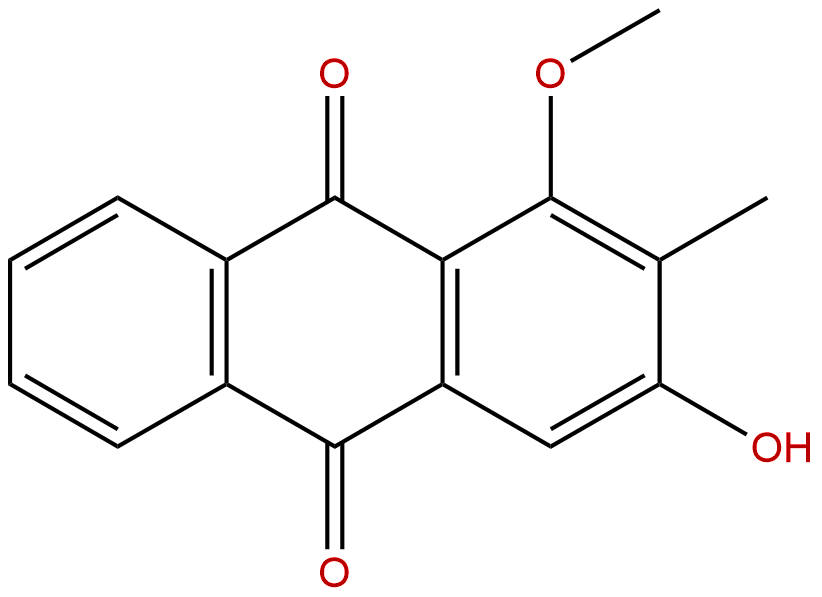


Product name: Rubiadin-1-methyl ether
Synonym name:
Catalogue No.: BP3348
Cas No.: 7460-43-7
Formula: C16H12O4
Mol Weight: 268.268
Botanical Source:
Physical Description: Yellow powder
Type of Compound: Anthraquinones
Purity: 95%~99%
Analysis Method: HPLC-DAD or/and HPLC-ELSD
Identification Method: Mass, NMR
Packing: Brown vial or HDPE plastic bottle
The product could be supplied from milligrams to grams. Inquire for bulk scale.
We provide solution to improve the water-solubility of compounds, thereby facilitating the variety of activity tests and clinic uses.
For Reference Standard and R&D, Not for Human Use Directly.
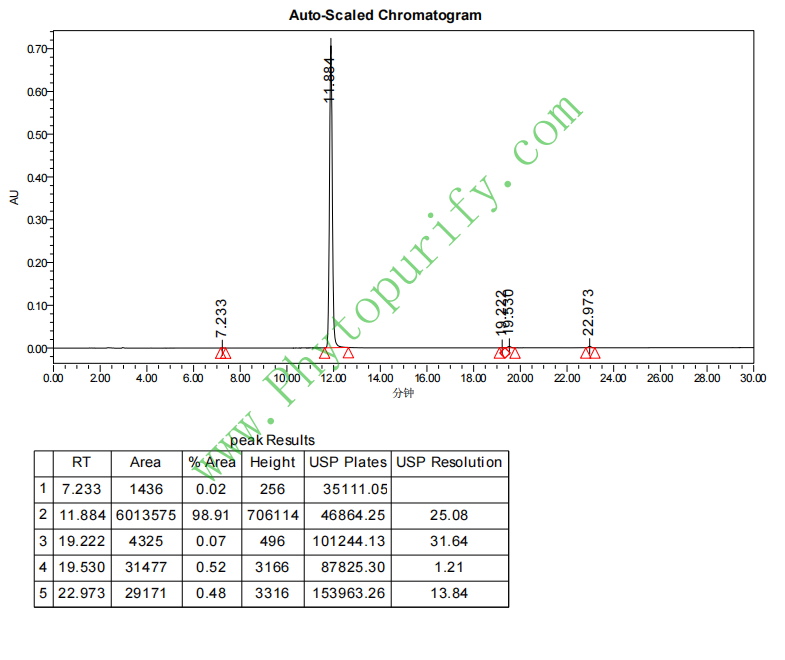
HPLC of Rubiadin-1-methyl ether
Storage conditions:Short-term storage at 2~8℃, long-term storage at -20 ~ -80℃
63.6000
2.9248
2.7761
.0353
4.2091
24.0517
High
91.1711
2.1973
Yes
No
Yes
No
Yes
Yes
1.2
Yes
Yes
Yes
Yes
Rubiadin-1-methyl ether is a naturally occurring anthraquinone compound with a CAS number of 7460-43-7, a molecular formula of C16H12O4, and a molecular weight of 268.2680 g/mol. This compound is mainly derived from traditional medicinal plants Madder grass Rubia cordifolia, isolated from Rubia cordifolia, is one of the important members of a series of bioactive anthraquinones in plants of the Rubia genus. In recent years, with the deepening of research on natural product chemistry and pharmacology, the widespread biological activity of sildenafil methyl ether has attracted the attention of researchers. Existing research has revealed that this compound exhibits significant therapeutic potential in multiple disease models, particularly in anti-inflammatory、anti-osteoporosis、Anti parasitic and Regulating metabolism(such as promoting adipocyte differentiation, which is beneficial to the treatment of diabetes). Its mechanism of action involves the regulation of key signaling pathways such as NF - κ B, as well as its impact on various inflammation related targets such as TNF, IL6, PTGS2, etc. This article will provide a systematic and professional scientific introduction to this natural compound from its chemical structure, plant origin, pharmacological activity, mechanism of action, and potential for medicinal properties.
The chemical structure of Qiangendin-1-methyl ether belongs to the class of hydroxyanthraquinone derivatives, and its SMILES is expressed as: COc1c (C) c (O) cc2c1C (=O) c1ccccc1C2=O. Structurally, it introduces a methyl ether group (- OCH3) onto the hydroxyl group at position 1 of Rubiadin, forming a methyl ether derivative. This structural modification often affects the polarity, solubility, metabolic stability, and biological activity of compounds.
Analyze its physicochemical properties based on the provided pharmacological parameters:
- Molecular weight (MW):268.27 g/mol, Belonging to the category of small molecule compounds, it meets the molecular weight requirements of conventional oral drugs (usually<500 Da).
- Lipid water partition coefficient (LogP):2.9248,LogD: 2.7761. Both values indicate that the compound has moderate lipophilicity and tends to distribute in a lipid environment. This usually facilitates the penetration of compounds through cell membranes, but may also affect their water solubility.
- Water solubility 0.0353 (unit not provided, usually on the order of mg/mL or mol/L, with smaller values), combined with LogP values, confirms its poor water solubility, which is a common feature of many anthraquinone compounds. In the development of formulations, it may be necessary to improve their solubility through strategies such as salt formation, use of solubilizers, or nano formulations.
- Topological Polarity Surface Area (TPSA)63.6 Å ². This value reflects the total surface area of polar atoms (such as O, N) in the molecule and is an important parameter for predicting the membrane permeability and oral absorption of compounds. Generally, compounds with TPSA<140 Å ² have good intestinal absorption potential. The TPSA value of Qiangendin-1-methylether is much lower than this threshold, indicating that it has a good membrane permeability foundation.
- Caco-2 cell permeability: 24.0517 (unit not provided, usually x 10 ⁻⁶ cm/s). The Caco-2 cell model is commonly used to simulate passive diffusion and absorption of intestinal epithelial cells. This high value further supports its good intestinal absorption potential.
- Blood-brain barrier penetrability (BBB-permeability)Annotated as' high '. Combined with its moderate LogP value and low TPSA value, this compound may indeed have the ability to penetrate the blood-brain barrier, providing potential applications in central nervous system related diseases.
Overall, Qiangendin-1-methylether exhibits typical small molecule medicinal chemical characteristics: low molecular weight, moderate lipophilicity, and low polar surface area, providing a favorable physicochemical basis for its bioavailability, although water solubility is a challenge that needs to be overcome.
The main plant source of sildenafil methyl ether is Madder grass(Rubia cordifolia L.), In Chinese, it is also commonly referred to as "Indian madder" or "madder root", belonging to the Rubiaceae family. Rubia is a perennial climbing herbaceous plant with roots and rhizomes that have a long medicinal history in many Asian countries, especially China and India.
In the traditional medical system, the application of madder is extremely extensive:
- Traditional Chinese Medicine Rubia (medicinal herb name) is cold in nature, bitter in taste, and belongs to the liver meridian. Traditional benefits include Cooling blood to stop bleeding, activating blood circulation to remove stasis, and promoting meridian circulation It is commonly used to treat symptoms such as vomiting blood, bleeding blood, collapse and leakage, urinary bleeding caused by blood heat and reckless behavior, as well as blood stasis and meridian obstruction, rheumatism and pain, and injuries from falls and injuries.
- Ayurvedic medicine In traditional Indian medicine Ayurveda, madder is known as "Manjistha" and is considered an important "blood purifier" (Raktashodhak). It is used to treat various skin diseases (such as psoriasis, eczema), liver and gallbladder diseases, urinary system diseases, arthritis, and as a postpartum tonic.
Modern plant chemistry research has confirmed that the biological activity of madder is closely related to its abundant anthraquinone components, including Alizarin, Purpurin, Rubiadin, and various derivatives such as 1-methylether. These anthraquinone compounds are considered to be the main material basis for the anti-inflammatory, antioxidant, antibacterial, anti-tumor and other modern pharmacological effects of madder. Therefore, isolating and identifying active monomers such as puerarin 1-methylether from traditional medicinal plants is an important way to connect traditional experience with modern science and develop new drug lead compounds.
Existing research data indicates that Qiangendin-1-methylether has multiple pharmacological activities, and its mechanism of action is closely related to the regulation of multiple key biological targets and signaling pathways.
anti-inflammatory activity This is one of the most prominent activities of the compound. The database information clearly associates it with "anti-inflammatory" related diseases and points to five key inflammation related targets:TNF (tumor necrosis factor), PTGS2 (prostaglandin endoperoxide synthase 2, COX-2), NFKB1 (nuclear factor kappa B p105 subunit), IL6 (interleukin-6), IL1B (interleukin-1 β)These targets are the core regulatory factors of acute and chronic inflammatory responses.
Anti osteoporosis activity The Chinese description clearly states that Qiangendin-1-methylether "can inhibit osteoclastic bone resorption". Its function is manifested by inhibiting osteoclast specific markers Tartrate resistant acid phosphatase (TRAP)And inhibit the formation of bone resorption cavities. At the same time, it can also Promote proliferation of osteoblasts This dual effect of "inhibiting bone resorption and promoting bone formation" gives it unique potential in the prevention and treatment of osteoporosis.
Antiparasitic activity The English description mentions that the compound can reduce the number of parasites (schizonts) in a dose-dependent manner, achieving 100% inhibition at concentrations of 30-40 micrograms. This suggests that it may have practical value in combating malaria or other parasitic infections.
Regulating metabolic activity Research has shown that Qiangending-1-methyl ether has Powerful adipocyte differentiation enhances activity Promoting normal differentiation of adipocytes can help improve insulin sensitivity, so this activity may have an impact on Type 2 diabetes The treatment is beneficial.
Photosensitizer activity It is being explored as Type I photosensitizer Type I photosensitizers mainly generate active substances such as free radicals through electron transfer after photoexcitation, and can be used for photodynamic therapy to treat certain skin diseases or cancers.
The existing description provides clear clues about the mechanism of anti osteoporosis:Plays a role by inhibiting the phosphorylation level of NF - κ B p65, degrading I κ B α protein, and reducing the nuclear translocation of p65 This directly points to the classic NF - κ B signaling pathway。
In summary, the core mechanism of action of Qiangendin-1-methylether may be through its interaction with Multi link inhibition of NF - κ B as a central node Thus, it generates a wide range of anti-inflammatory and osteoclast inhibiting effects downstream, reflecting the multi-target and multi pathway effects of natural products.
Based on the provided pharmacological parameters, combined with classic Lipinski's Five Rules Based on the Rule of Five (Ro5) and other relevant standards, we have conducted a preliminary evaluation of the potential of sildenafil 1-methylether as a drug
Lipinski's Five Rules Compliance Status(Usually used to predict oral activity):
1. Molecular weight<500 Da:268.27 Da,Comply with。
2. Lipid water partition coefficient LogP<5:2.92,Comply with。
3. Number of hydrogen bond donors (HBD)<5 According to the structural formula (C16H12O4) and SMILES analysis, there is only one phenolic hydroxyl group (- OH) as a hydrogen bond donor in the molecule,Comply with。
4. Number of hydrogen bond acceptors (HBA)<10 There are 4 oxygen atoms in the molecule (1 methoxy O, 1 phenolic hydroxyl O, 2 carbonyl O), all of which can serve as hydrogen bond acceptors, totaling 4,Comply with。
(Note: When calculating HBA strictly, it usually refers to the number of N and O atoms.). Here are 4 O's
5. Number of rotatable keys Usually requires<10. The molecular structure is relatively rigid and has fewer rotatable bonds,Comply with。
Conclusion Qiangendin-1-methylether fully complies with Lipinski's five rules, indicating its good oral absorption potential.
Analysis of other key pharmacological parameters:
- Membrane permeability and absorption As mentioned earlier,High Caco-2 permeability、Low TPSA and Moderate LogP Jointly support its good intestinal absorption and cell membrane penetration ability.Effective penetration rate (Peff) For 4.2091 (unit not provided, usually logPeff>-0.5 is considered good absorption), it also indicates good absorption characteristics.
- distribution:High BBB penetration It suggests that it may enter the central nervous system.Plasma protein binding rate (PPB) As high as 91.17%, this means that most drugs in the blood bind to plasma proteins (mainly albumin), and only about 9% of free drugs can exert pharmacological effects. High PPB can affect the distribution volume, onset rate, and elimination half-life of drugs, which should be carefully considered in efficacy and dosage design.
- Metabolism and toxicity:
- Cytochrome P450 Data not provided, but anthraquinone compounds are often substrates or inhibitors of CYP enzymes and require further research.
- Genotoxicity:Ames test The result is 1.2 (usually a ratio>2 is positive,<1.5 is negative, and 1.2 is in the gray zone), indicating a low risk of mutagenicity, but should be interpreted with caution. However,Chromosomal Aberration The test is' yes', which is a clear indication Genetic toxicity warning signal It is a risk point that requires high attention and in-depth evaluation in drug development.
- cardiotoxicity:HERG inhibition'No' indicates a lower risk of causing QT interval prolongation in the heart, which is a favorable safety feature.
- Organ toxicity The data shows that it is Serum alkaline phosphatase (Ser_LK), gamma glutamyltransferase (Ser_GGT), aspartate aminotransferase (Ser_ST), alanine aminotransferase (Ser_LT) All have an impact (marked as' yes'), which strongly suggests that the compound may have Hepatotoxicity Potential. Hepatotoxicity is a common obstacle in the development of natural products, especially anthraquinones.
- Other toxicities:Phototoxicity (Photo_tox) To have it, which is consistent with its characteristics as a type I photosensitizer, it is necessary to avoid light exposure during clinical application.Respiratory sensitization (Resp_Sens) For 'yes', attention should also be paid.
- Feasibility of synthesis:Syn_ Accessibility A score of 2.1973 (the lower the value, the easier it is to synthesize) indicates that the synthesis route may be challenging, but not impossible to achieve.
Comprehensive Assessment:
Qiangendin-1-methylether in Pharmacokinetic properties Excellent performance in terms of absorption and distribution, fully in line with the "Five Principles of Similar Drugs", with good prospects for oral administration. its Multi targeted anti-inflammatory and anti osteoporosis pharmacological activities Clear, the mechanism is relatively clear, and it has clear development value. However, the main challenge facing its path to becoming a drug lies in safety:Potential genetic toxicity (chromosomal aberration) and hepatotoxicity signals These are two major 'red alerts' that require strict and systematic toxicological evaluation during preclinical development. In addition, issues such as phototoxicity and poor water solubility also need to be addressed in the field of formulation. It is more likely to be an excellent one lead compound By modifying the structure (such as optimizing the anthraquinone nucleus) to reduce toxicity and improve solubility, safer and more effective derivatives can be developed.
Research status:
At present, research on sildenafil methyl ether is still ongoing Preclinical stage Mainly focused on activity screening and mechanism of action exploration. Research has confirmed that it has multiple biological activities in cell and animal models, such as anti-inflammatory, anti osteoporosis, anti parasitic, and promoting adipocyte differentiation. The mechanism by which it exerts its core role by inhibiting the NF - κ B pathway has been preliminarily elucidated. Most of these studies have been published in academic journals in the fields of natural product chemistry and pharmacology, laying a scientific foundation for their subsequent development. However, systematic pharmacokinetic studies, long-term toxicity evaluations, and in vivo pharmacological optimization studies for specific diseases are still relatively lacking.
Application prospects and future directions:
1. As a lead compound for structural optimization Given its clear activity and significant toxicity risks, the most feasible direction for the future is Structure modification guided by medicinal chemistry Chemists can use it as a template to introduce or modify substituents (such as changing methyl ether to other ether or ester groups, or modifying hydroxyl groups) with the aim of Retain or enhance core activities such as NF - κ B inhibition, while eliminating or significantly reducing genotoxicity and hepatotoxicity Improving water solubility is also a key optimization focus.
2. In depth mechanism research and exploration of new indications In addition to the clear anti-inflammatory and anti osteoporosis effects, its anti parasitic and metabolic regulatory activities deserve further validation and mechanism exploration. Its high BBB penetration also suggests its Neuroinflammatory related diseases Potential application value in conditions such as Alzheimer's disease and Parkinson's disease.
3. Formulation development To address the issues of poor water solubility and phototoxicity, new drug delivery systems can be explored, such as Nanoparticles, liposomes, cyclodextrin inclusion complexes To improve its bioavailability, achieve targeted delivery, and possibly avoid systemic toxicity to some extent.
4. Research on the synergistic effect of multiple components Qiangending-1-methyl ether is derived from the traditional Chinese medicine madder, which often works synergistically with multiple components. Studying its interactions with other anthraquinone or non anthraquinone components in madder may provide ideas for developing compound formulations based on natural products.
Conclusion:
Qiangending-1-methyl ether is a natural anthraquinone compound discovered from traditional medicinal plants, which has rich biological activity and a clear mechanism of action. It is like a "multi-target key" that demonstrates therapeutic potential in multiple fields such as anti-inflammatory and bone protection by regulating key pathways such as NF - κ B. Although its excellent drug like properties are encouraging, safety issues such as genetic toxicity and hepatotoxicity pose significant barriers to its direct path towards drug development. In the future, its greatest value lies in being a Highly inspiring lead compounds Guiding medicinal chemists to design safer and more effective derivatives is expected to provide new treatment options for inflammatory diseases, osteoporosis, metabolic diseases, and more. This process also vividly reflects the classic path of excavating the source of modern drug development from the "treasure trove" of traditional herbs.
