


Product name: Mollugin
Synonym name: Rubimaillin
Catalogue No.: BP1228
Cas No.: 55481-88-4
Formula: C17H16O4
Mol Weight: 284.311
Botanical Source: Rubia cordifolia L.
Physical Description:
Type of Compound: Sesquiterpenoids
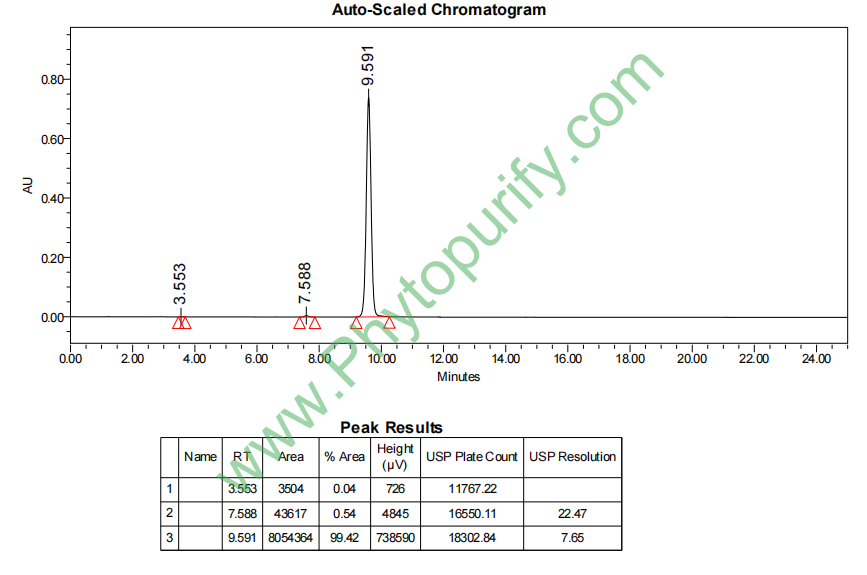
Purity: 95%~99%
Analysis Method: HPLC-DAD or/and HPLC-ELSD
Identification Method: Mass, NMR
Packing: Brown vial or HDPE plastic bottle
Storage: Store in a well closed container, protected from air and light. Put into refrigerate or freeze for long term storage.
Whenever possible, you should prepare and use solutions on the same day. However, if you need to make up stock solutions in advance, we recommend that you store the solution as aliquots in tightly sealed vials at -20℃. Generally, these will be useable for up to two weeks.
The product could be supplied from milligrams to grams
Inquire for bulk scale.
Description:
Mollugin is a JAK2 inhibitor and inhibits LPS-induced inflammatory responses by blocking the activation of the JAK-STAT pathway. Mollugin may be a novel therapeutic candidate for bone loss-associated disorders including osteoporosis, rheumatoid arthritis, and periodontitis. Mollugin has anticancer efficacy, can modulate the HER2, HO-1, Nrf2 , and NF- κB pathways.
References:
Biochem Biophys Res Commun. 2014 Jul 18;450(1):247-54.
Mollugin induces tumor cell apoptosis and autophagy via the PI3K/AKT/mTOR/p70S6K and ERK signaling pathways.
Mollugin, a bioactive phytochemical isolated from Rubia cordifolia L., has shown preclinical anticancer efficacy in various cancer models. However the effects of Mollugin in regulating cancer cell survival and death remains undefined.
METHODS AND RESULTS:
In the present study we found that Mollugin exhibited cytotoxicity on various cancer models. The suppression of cell viability was due to the induction of mitochondria apoptosis. In addition, the presence of autophagic hallmarks was observed in Mollugin-treated cells. Notably, blockade of autophagy by a chemical inhibitor or RNA interference enhanced the cytotoxicity of Mollugin. Further experiments demonstrated that phosphatidylinositide 3-kinases/protein kinase B/mammalian target of rapamycin/p70S6 kinase (PI3K/AKT/mTOR/p70S6K) and extracellular regulated protein kinases (ERK) signaling pathways participated in Mollugin-induced autophagy and apoptosis.
CONCLUSIONS:
Together, these findings support further studies of Mollugin as candidate for treatment of human cancer cells.
Phytomedicine. 2015 Jan 15;22(1):27-35.
Mollugin from Rubea cordifolia suppresses receptor activator of nuclear factor-κB ligand-induced osteoclastogenesis and bone resorbing activity in vitro and prevents lipopolysaccharide-induced bone loss in vivo.
Osteopenic diseases, such as osteoporosis, are characterized by progressive and excessive bone resorption mediated by enhanced receptor activator of nuclear factor-κB ligand (RANKL) signaling. Therefore, downregulation of RANKL downstream signals may be a valuable approach for the treatment of bone loss-associated disorders.
METHODS AND RESULTS:
In this study, we investigated the effects of the naphthohydroquinone Mollugin on osteoclastogenesis and its function in vitro and in vivo. Mollugin efficiently suppressed RANKL-induced osteoclast differentiation of bone marrow macrophages (BMMs) and bone resorbing activity of mature osteoclasts by inhibiting RANKL-induced c-Fos and NFATc1 expression. Mollugin reduced the phosphorylation of signaling pathways activated in the early stages of osteoclast differentiation, including the MAP kinase, Akt, and GSK3β and inhibited the expression of different genes associated with osteoclastogenesis, such as OSCAR, TRAP, DC-STAMP, OC-STAMP, integrin αν, integrin β3, cathepsin K, and ICAM-1. Furthermore, mice treated with Mollugin showed significant restoration of lipopolysaccharide (LPS)-induced bone loss as indicated by micro-CT and histological analysis of femurs.
CONCLUSIONS:
Consequently, these results suggested that Mollugin could be a novel therapeutic candidate for bone loss-associated disorders including osteoporosis, rheumatoid arthritis, and periodontitis.
HPLC of Mollugin
Storage conditions:Short-term storage at 2~8℃, long-term storage at -20 ~ -80℃
55.7600
4.3152
4.2847
.0307
6.8294
10.3519
High
93.3437
2.5594
Yes
Yes
No
No
Yes
Yes
0.9
Yes
No
Yes
Yes
Natural products, as an important source of drug discovery, play an irreplaceable role in the history of human disease treatment. Among them, naphthoquinone compounds have always been a hot topic in medicinal chemistry and pharmacology research due to their unique chemical structures and extensive biological activities. Mollugin, also known as 6-hydroxy-2,2-dimethyl-3,4-dihydro-2H-naphtho [1,2-b] pyran-5,10-dione, is a natural naphthoquinone compound isolated from traditional medicinal plants in the Rubiaceae family. Since its structure was elucidated, researchers have gradually revealed its multifaceted biological activities, particularly demonstrating great potential in the fields of anti-inflammatory and anti-tumor. As an orally effective inhibitor of the nuclear factor kappa B (NF - κ B) signaling pathway, quercetin regulates multiple key signaling pathways, affecting core biological processes such as cell cycle, apoptosis, oxidative stress, and differentiation, thereby exerting intervention effects on various disease models, especially cancer. This article aims to provide a systematic review of the chemical properties, plant sources, pharmacological activities, molecular mechanisms of action, pharmacological evaluation, and clinical application prospects of rubicin, in order to provide comprehensive academic references for the in-depth research and development of this compound.
The molecular formula of big leaf madder is C17H16O4, with a molecular weight of 284.3110 g/mol. Its core structure is a naphthopyran diketone skeleton, specifically a dihydropyran ring fused to the naphthoquinone parent nucleus. This unique fused ring structure endows it with specific physicochemical properties. According to calculations, its lipid water partition coefficient (LogP) is 4.3152, indicating that the compound has high lipophilicity. The topologically polar surface area (TPSA) is 55.7600 Å ², which is relatively small due to the limited polar groups (carbonyl and hydroxyl) in its molecular structure. Its water solubility is relatively low, about 0.0307 mg/mL, which is consistent with its high LogP value, indicating that solubilization strategies may need to be considered in formulation development. From the preliminary analysis of pharmacological parameters, it is found that Rubia asiatica has a high blood-brain barrier permeability potential, which provides a possibility for its application in central nervous system related diseases. Preliminary safety screening shows that it has no significant inhibitory effect on hERG potassium channels (hERG inhibition: No), reducing the risk of inducing QT interval prolongation in the heart. The Ames test result is 0.9, indicating a low risk of mutagenicity, but further in vitro and in vivo genetic toxicity studies are needed to confirm. Overall, rubicin is a small molecule compound with clear hydrophobic properties, and its preliminary pharmacological parameters show certain development prospects. However, poor water solubility is a key physical property obstacle that needs to be overcome.
The main source of big leaf madder extract comes from plants in the Rubiaceae family, particularly from one of the original plants of the traditional Chinese medicine "madder" - Rubia schumanniana, as well as commonly used medicinal madder such as Rubia cordifolia. These plants are commonly used in traditional medicine for promoting blood circulation, removing blood stasis, cooling blood, stopping bleeding, and activating meridians and collaterals. Rubin is usually present in the roots of plants.
The extraction and separation method follows the conventional process of natural product chemistry. Firstly, crush the dried plant roots and extract them using organic solvents. The commonly used extraction solvents include methanol, ethanol, ethyl acetate, or mixed solvents with different ratios. Extraction methods such as impregnation, reflux, or ultrasound assisted extraction are used to improve the yield. After decompression and concentration, the crude extract is separated and purified by various chromatographic techniques, such as silica gel column chromatography, gel column chromatography (Sephadex LH-20) and high performance liquid chromatography (HPLC). The separation process is often tracked by thin layer chromatography (TLC) or high-performance liquid chromatography, and detected based on its UV absorption or fluorescence characteristics. With the development of technology, preparative high-performance liquid chromatography has become a key step in obtaining high-purity quercetin. The optimization of extraction processes, such as solvent selection, extraction temperature and time, as well as the application of new extraction technologies (such as supercritical fluid extraction), is of great significance for improving the yield of rubicin and achieving large-scale preparation.
Numerous studies have shown that madder has diverse pharmacological activities, with anti-tumor activity being the core focus of research.
1. Antitumor activity Rubin gallate exhibits growth inhibition and pro apoptotic effects on various tumor cell lines. In HepG2 liver cancer cells, it can induce cell cycle arrest in the S phase and significantly increase intracellular reactive oxygen species (ROS) levels, leading to DNA damage (manifested as increased phosphorylation levels of γ - H2AX). In the study of breast cancer, its activity is particularly remarkable. Alizarin can effectively inhibit the proliferation of a variety of breast cancer cells, including cell lines resistant to traditional chemotherapy drugs. Its function involves inducing cell apoptosis, inhibiting cell migration and invasion, and other aspects. In addition, research also suggests that it has inhibitory effects on cells such as colon cancer, lung cancer, and prostate cancer.
2. anti-inflammatory activity As an effective inhibitor of the NF - κ B signaling pathway, quercetin can significantly inhibit the activation of NF - κ B induced by inflammatory factors such as tumor necrosis factor - α (TNF - α). NF - κ B is a core transcription factor in inflammatory response, and its sustained activation is closely related to chronic inflammation and tumor development. Therefore, the anti-inflammatory effect of rubicin is the basis for its anti-tumor and potential treatment of other inflammatory diseases.
3. Promoting bone formation activity In recent years, studies have found that quercetin can enhance the osteogenic activity of bone morphogenetic protein-2 (BMP-2) through the p38 mitogen activated protein kinase (MAPK) - Smad signaling pathway. It can promote osteogenic differentiation and mineralization of osteoblast precursor cells, indicating its potential value in the treatment of bone metabolism diseases such as osteoporosis.
4. Other activities Some studies have also reported that madder has antioxidant and antibacterial activities, but its main research value is still focused on anti-tumor and bone metabolism regulation.
Rubiacillin exerts its multiple pharmacological effects, especially its anti breast cancer activity, by acting on multiple key molecular targets and signal pathways, forming a complex regulatory network.
1. Core pathway: NF - κ B signaling pathway inhibition Large leaf madder has been identified as an orally effective NF - κ B inhibitor. It inhibits the nuclear translocation and transcriptional activity of NF - κ B p65 subunit by interfering with the activation of I κ B kinase (IKK) through stimulation signals such as TNF - α, preventing the phosphorylation and degradation of I κ B protein. The NF - κ B target genes are involved in cell proliferation (such as Cyclin D1), apoptosis inhibition (such as Bcl-2, Bcl xL), inflammatory factors, and invasion and metastasis (such as MMP-9). Therefore, inhibiting this pathway is the core mechanism of its anti-inflammatory, anti proliferative, and pro apoptotic effects.
2. Key targets related to breast cancer:
* Energy and Metabolism Sensor AMPK (PRKAA1)Rubin can activate AMPK, which is the energy metabolism hub of cells. The activation of AMPK can inhibit the mammalian target protein of rapamycin (mTOR) pathway, thereby suppressing protein synthesis and cell growth, and promoting autophagy, playing an important role in inhibiting tumor growth.
* Apoptosis regulatory factor BCL2 (BCL2)Rubin can downregulate the expression of anti apoptotic protein Bcl-2, disrupt mitochondrial membrane potential, promote cytochrome C release, activate caspase cascade reaction, and induce intrinsic apoptosis pathway in tumor cells.
* Transcription factor STAT3 (STAT3)STAT3 is an important oncogenic transcription factor. Rubin can inhibit the phosphorylation (activation) of STAT3 and the expression of downstream target genes (such as Survivor, Mcl-1), thereby inhibiting cell proliferation and promoting apoptosis.
* Estrogen receptor beta (ESR2)As a selective estrogen receptor modulator, alizarin may play a regulatory role in hormone dependent breast cancer by acting on ESR2, but its specific mechanism needs further exploration.
* Drug efflux pumps ABCB1 and ABCG2: Alizarin is proved to be an inhibitor of P-glycoprotein (ABCB1) and breast cancer resistance protein (ABCG2). It can reverse multidrug resistance (MDR) mediated by these efflux pumps, increase the accumulation of traditional chemotherapy drugs (such as doxorubicin and paclitaxel) in drug-resistant tumor cells, and restore their cytotoxicity.
* Protein kinase C alpha (PRKCA) and microtubule associated protein tau (MAPT): Alizarin may interfere with cell signal transduction and skeleton stability by affecting PKC α signal or interacting with tau protein, but its specific role in anti breast cancer remains to be clarified.
* Matrix metalloproteinase 2 (MMP2)Rubin can inhibit the expression and activity of MMP2. MMP2 is a key enzyme that degrades the extracellular matrix, and its inhibition can effectively reduce the invasion and metastasis ability of tumor cells.
* Lymphocyte specific protein tyrosine kinase (LCK)Although LCK is mainly expressed in T cells, it is also found in some breast cancer cells and may participate in growth signal transduction. The potential impact of rubicin on it is worth paying attention to.
3. Other pathways:
* DNA damage and cell cycle By inducing excessive production of ROS, rubicin induces oxidative DNA damage, activating DNA damage responses (such as p53, Chk1/2), leading to activation of cell cycle checkpoints (S phase arrest) and apoptosis.
* P38 Smad pathway In the process of osteogenesis, quercetin activates p38 MAPK, which phosphorylates Smad1/5/8 and synergizes with BMP-2 signaling to enhance the transcription of osteogenic related genes (such as Runx2, Osterix) and promote osteogenic differentiation.
Despite exhibiting excellent biological activity in vitro, the potential for pharmacological development from active compounds to successful drugs requires systematic evaluation.
1. Physicochemical and ADME properties As mentioned earlier, the high lipophilicity (high LogP) and low water solubility of rubicin are the main challenges for its oral absorption and in vivo distribution. Low water solubility may lead to low oral bioavailability and irregular absorption. Higher blood-brain barrier permeability predicts advantages in treating brain diseases or brain metastases, but potential central nervous system side effects also need to be considered. At present, there is relatively limited publicly available data on the pharmacokinetics of its system, such as absorption, distribution, metabolism, and excretion. Based on its structure, it is speculated that it may undergo extensive phase I (such as cytochrome P450 enzyme mediated oxidation) and phase II (such as glucuronic acid binding and sulfation) metabolism in the liver. Clarifying its main metabolites, metabolic enzymes, and excretion pathways is crucial for evaluating its safety and drug interactions.
2. Preliminary safety HERG inhibition negative and Ames test negative are good early signals, but a complete preclinical safety evaluation is still needed, including acute/subchronic toxicity testing, genotoxicity comprehensive testing, reproductive toxicity, and toxicity studies on major organs (liver, kidney, heart).
3. Formulation strategy To improve its water solubility and bioavailability, it may be necessary to develop advanced drug delivery systems. For example, making it into nanocrystals, liposomes, micelles, or solid dispersions, or preparing water-soluble prodrugs through structural modification. These strategies aim to improve its dissolution rate and degree, promote intestinal absorption, and potentially achieve targeted delivery.
4. Pharmacokinetic/Pharmacodynamic (PK/PD) Relationship Future research needs to establish a quantitative relationship between the exposure level (blood drug concentration time curve) of Rubin in animal models and its pharmacological effects (such as tumor inhibition rate and biomarker changes), laying the foundation for determining effective treatment windows and dosing regimens.
As a natural active molecule with multiple targets and pathways, the clinical application prospects of large leaf madder are broad, but it also faces many challenges.
1. Potential application directions:
* Antitumor therapy, especially breast cancer In view of its multi-target inhibitory effect on breast cancer cells, especially its reversal of multidrug resistance mediated by ABC transporter, alizarin is expected to be developed as a new type of anti breast cancer drug, or used together with existing drugs (such as taxanes and anthracyclines) as a chemosensitizer to overcome clinical drug resistance problems.
* Bone related diseases The enhanced osteogenic activity of BMP-2 provides a new candidate molecule for the treatment of osteoporosis, delayed fracture healing, and periodontal bone defects.
* Inflammatory diseases Based on its potent NF - κ B inhibitory activity, its potential application in chronic inflammatory diseases such as rheumatoid arthritis and inflammatory bowel disease can be explored.
2. Future research directions and challenges:
* Deep exploration of the mechanism of action It is necessary to use chemical biology methods such as affinity fishing and proteomics to more accurately identify its direct target and elucidate the source of its pleiotropy.
* Optimization of drug properties in the system Comprehensive preclinical pharmacokinetic and toxicological studies must be conducted. By rational drug chemical modification, its solubility, metabolic stability, and safety can be optimized while retaining its activity.
* Combination therapy strategy Explore the synergistic effect of Rubia asiatica extract with existing standard therapies (chemotherapy, radiotherapy, targeted therapy, immunotherapy) and develop the optimal combination therapy.
* Clinical translational research After completing sufficient preclinical research, promote the development of drugs that comply with Good Clinical Practice (GLP) and Good Manufacturing Practice (GMP) requirements, and ultimately enter the clinical trial phase to verify their safety and efficacy in humans.
As a natural naphthoquinone compound derived from traditional medicinal plants, large leaf madder has demonstrated remarkable pharmacological activities in anti-tumor, anti-inflammatory, and bone formation promotion due to its core properties as an NF - κ B inhibitor. Especially in the field of breast cancer, it plays a multi pathway anti-tumor and drug resistance reversal role by regulating multiple key targets such as AMPK, STAT3, BCL2, ABC transporter, etc., revealing its great potential as a multi target therapeutic drug. However, the road from lead compounds to clinical drugs is still long, and the inherent problems such as poor water solubility urgently need to be solved through formulation or structural modification strategies. The pharmacokinetic characteristics and long-term safety of the system also need to be further elucidated. In the future, through interdisciplinary collaboration, we will deeply reveal its molecular network mechanism and focus on promoting its drug optimization and preclinical development. With the potential to transform from an excellent natural product molecule to an innovative drug for treating major diseases such as cancer and osteoporosis, we hope to achieve a leap from traditional medical wisdom to modern clinical applications.
