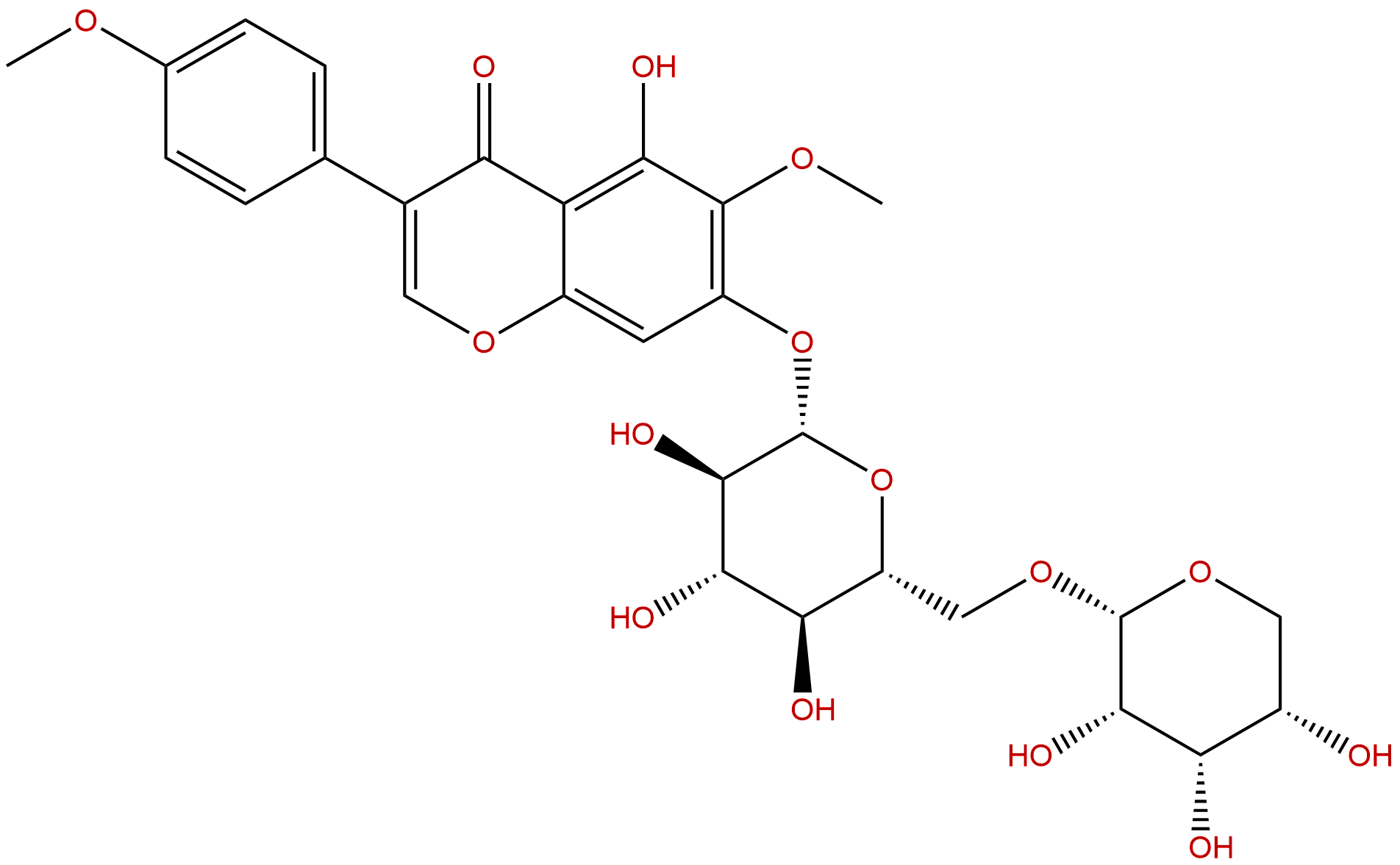


Product name: Kakkalide
Synonym name:
Catalogue No.: BP3670
Cas No.: 58274-56-9
Formula: C28H32O15
Mol Weight: 608.549
Botanical Source: Flower of Pueraria lobata(Willd.)Ohwi or P. thomsonii Benth.
Physical Description:
Type of Compound:
Purity: 95%~99%
Analysis Method: HPLC-DAD or/and HPLC-ELSD
Identification Method: Mass, NMR
Packing: Brown vial or HDPE plastic bottle
The product could be supplied from milligrams to grams. Inquire for bulk scale.
We provide solution to improve the water-solubility of compounds, thereby facilitating the variety of activity tests and clinic uses.
For Reference Standard and R&D, Not for Human Use Directly.
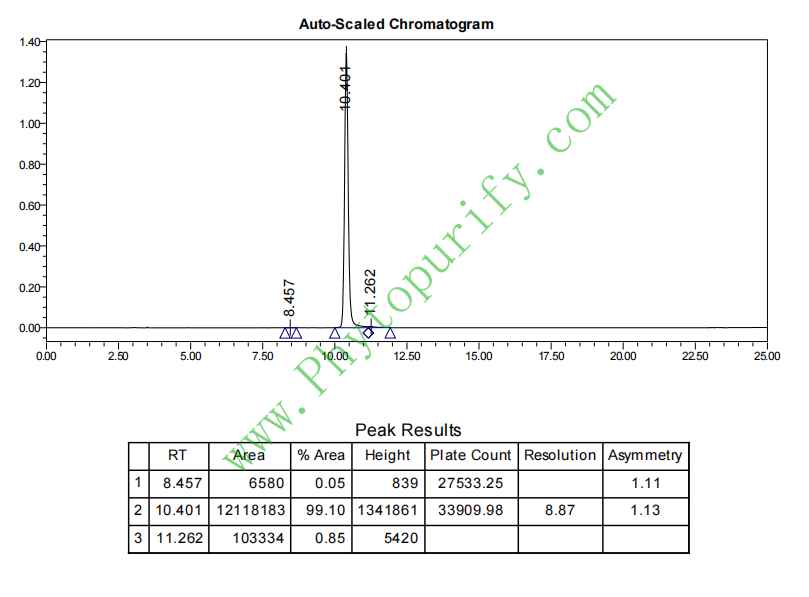
HPLC of Kakkalide
Storage conditions:Short-term storage at 2~8℃, long-term storage at -20 ~ -80℃
227.2000
-.0548
-.0680
1.2124
.6133
.4680
Low
78.8152
4.6412
Yes
No
Yes
No
Yes
No
0.9
Yes
No
No
Yes
Kakkalide, also known as a type of isoflavone glycoside compound, has a CAS number of 58274-56-9, a molecular formula of C28H32O15, and a molecular weight of approximately 608.55 g/mol. It is a traditional medicinal plant Ge Hua The characteristic active ingredients isolated from the flowers of Pueraria montana var. lobata. In traditional Chinese medicine literature, Pueraria lobata is commonly used to relieve alcohol intoxication, protect the liver, and relieve headaches. Modern pharmacological research has gradually revealed that Pueraria lobata glycoside may be one of the key substance bases for its hepatoprotective and anti-inflammatory effects.
In recent years, with the increasing incidence of metabolic diseases, inflammation related diseases and drug-induced liver injury, it has become a research hotspot to find efficient and low toxic natural liver protective and anti-inflammatory drugs. Ge Hua Gan is able to Inhibit reactive oxygen species (ROS) - related inflammatory responses、Improving insulin resistance in endothelial cells and Reduce ethanol induced gastric and liver damage And it has attracted much attention. Its mechanism of action involves the regulation of multiple key targets, including matrix metalloproteinase 9 (MMP9), transforming growth factor beta 1 (TGFB1), etc., indicating its potential application value in anti fibrosis and liver cell protection. This article will systematically expound the scientific connotation and research progress of puerarin from the aspects of chemical structure, plant origin, pharmacological mechanism, medicinal evaluation, and research prospects.
The molecular formula of puerarin is C28H32O15, which belongs to the class of isoflavone glycosides. The core of its structure is the isoflavone mother nucleus, which is connected to a complex oligosaccharide chain (composed of glucose and other sugar units) through glycosidic bonds. From the provided SMILES expression, it can be seen that its structure contains multiple methoxy groups (- OCH3) and hydroxyl groups (- OH), which are crucial for its water solubility, antioxidant activity, and interaction with target proteins.
According to the pharmacological parameters, the molecular weight (MW) of puerarin is 608.55, slightly exceeding the standard of 500 Da for conventional small molecule drugs. Its topological polar surface area (TPSA) is as high as 227.20 Å ², indicating strong molecular polarity, which is mainly attributed to the presence of multiple hydroxyl and sugar groups in the structure. The lipid water partition coefficient (LogP) is -0.0548 and the LogD is -0.0680, both close to zero, indicating that the compound exhibits a physiological pH environment hydrophilicity This is consistent with the actual measured water solubility value of 1.2124 (usually measured in mg/mL or mol/L, which should indicate good solubility). The strong hydrophilicity and high TPSA also indicate that its transmembrane passive diffusion ability may be limited, which is confirmed by the evaluation of Caco-2 cell permeability (0.4680, low) and blood-brain barrier (BBB) permeability as "low".
Overall, puerarin is a medium to large molecule with strong polarity and good water solubility. Its physicochemical properties are more inclined towards hydrophilic glycosides in "drug like" compounds, which have important implications for its absorption, distribution, and administration pathway design.
The plant source of puerarin is single and clear, that is Ge Hua, derived from leguminous plants of the Pueraria genus Wild Ge Dried flower buds of Pueraria montana var. lobata. The roots (kudzu root) and flowers (kudzu flowers) of wild kudzu have a long history of medicinal use in East Asian regions such as China, Japan, and South Korea.
In traditional Chinese medicine theory, Ge Hua has a sweet and smooth nature, and can regulate the spleen and stomach meridians. Its main functions are Relieve drunkenness, invigorate the spleen, and stop bleeding It is commonly used to treat symptoms such as alcohol intoxication, thirst, vomiting, liver stomach disharmony, and intestinal bleeding caused by wind. The famous hangover relieving formula "Ge Hua Jie Cheng Tang" uses Ge Hua as the main herb to alleviate discomfort such as headaches, vomiting, chest and diaphragm fullness caused by excessive alcohol consumption. Traditional experience suggests that Ge Hua can "relieve alcohol toxicity", while modern research links its hepatoprotective effect with its anti ethanol damage activity.
Kudzu root (the root of a plant) is rich in isoflavones such as puerarin, which are commonly used for symptoms such as fever, thirst, and strong pain in the neck and back. Although Ge Hua and Ge Gen share the same origin, their chemical composition and functional focus are different. Ge Hua is rich in specific isoflavone glycosides such as Ge Hua glycoside, which may be the material basis for its characteristic of sobering up and protecting the liver. This traditional medicinal experience provides valuable clues for modern research, driving the isolation, identification, and pharmacological validation of its active ingredients.
The pharmacological activity research of puerarin mainly focuses on Anti inflammation, liver protection, improvement of insulin resistance and gastric protection In terms of other aspects. Its mechanism of action is multi-target and multi pathway. The following will elaborate on its known target information:
Core mechanism: Inhibit ROS related inflammation
Research has confirmed that puerarin can effectively inhibit the production of reactive oxygen species (ROS) and the inflammatory signaling pathways it mediates. ROS is a key mediator of cellular damage caused by various stresses such as ethanol, drugs, and metabolic abnormalities. Ge Hua glycoside reduces oxidative stress by clearing ROS or inhibiting its generation, thereby inhibiting the activation of inflammatory transcription factors such as nuclear factor kappa B (NF - κ B) and downregulating the expression of pro-inflammatory factors such as tumor necrosis factor - α (TNF - α) and interleukin-6 (IL-6). This is the basis for improving endothelial dysfunction and reducing organ damage.
Exploration of the mechanism of liver protection
Ge Hua glycoside showed significant protective effects in ethanol induced mouse liver injury model. Interestingly, research has found its hepatoprotective effect Biotransformation dependent on human gut microbiota After being metabolized by gut microbiota, the prototype puerarin may be converted into more active aglycones or other metabolites, thereby exerting its effects. Its hepatoprotective effect is closely related to regulating the following targets:
- MMP9 (matrix metalloproteinase 9) and TIMP1 (tissue inhibitor of metalloproteinase 1)MMP9 is involved in the degradation of extracellular matrix (ECM) and is overexpressed in the process of liver fibrosis. TIMP1 is its endogenous inhibitor. Ge Hua glycoside may exert anti liver fibrosis effects by regulating the balance of MMP9/TIMP1, inhibiting the activation of hepatic stellate cells, slowing down excessive ECM deposition.
- TGFB1 (Transforming Growth Factor β 1)TGFB1 is a core cytokine that promotes fibrosis, activates hepatic stellate cells, and promotes collagen synthesis. Inhibiting the TGFB1 signaling pathway is an important strategy for anti fibrotic therapy. Ge Hua glycoside may inhibit the progression of liver fibrosis by downregulating TGFB1 expression, blocking its downstream Smad signaling pathway.
- COL1A1 (type I collagen alpha 1 chain) and ACTA2 (alpha smooth muscle actin)COL1A1 is the main collagen protein deposited in fibrotic tissue, while ACTA2 is a marker of activated hepatic stellate cells. Ge Hua glycoside can reduce the number of ACTA2 positive cells and the expression of COL1A1 by inhibiting signals such as TGFB1, thereby reducing collagen production and deposition.
Improving insulin resistance in endothelial cells
Insulin resistance is the core of metabolic syndrome and type 2 diabetes. Puerarin has been shown to improve insulin resistance in endothelial cells induced by inflammation or high glucose. The mechanism involves the function of insulin receptor substrate 1 (IRS-1)Beneficial regulation Usually, in an inflammatory state, tyrosine phosphorylation (activation signal) of IRS-1 is inhibited, while serine phosphorylation (inhibition signal) is enhanced. Ge Hua glycoside may restore the normal tyrosine phosphorylation level of IRS-1 by inhibiting ROS and inflammatory pathways, thereby improving the downstream PI3K/Akt signaling pathway, promoting endothelial cell nitric oxide (NO) production, improving vasodilation function and insulin sensitivity.
Other activities
Ge Hua Gan has also been reported as an inhibitor of lactate dehydrogenase (LDH). LDH is a key enzyme in glycolysis, which is released in large quantities during ischemia, hypoxia, and other injuries. Inhibiting LDH may help reduce acidosis and cell damage caused by anaerobic metabolism. In addition, it alleviates ethanol induced gastric injury by inhibiting neutrophil infiltration, demonstrating strong anti-inflammatory properties.
Summary: Ge Hua Glycosides through Antioxidant stress, anti-inflammatory, anti fibrotic Through multiple mechanisms, it acts on multiple targets related to tissue damage repair and fibrosis, such as MMP9, TGFB1, ACTA2, COL1A1, TIMP1, etc., synergistically exerting liver protection, metabolic improvement, and organ protection effects.
Based on the provided pharmacological parameters, we can conduct a preliminary evaluation of the development prospects of puerarin as a potential drug, and combine it with Lipinski's Five Rules(Rule of Five, Ro5) for analysis.
Lipinski's Five Rules Compliance Analysis:
1. Molecular weight (MW)<500 Da The MW of puerarin is 608.55,not conform to(Over 500).
2. Lipid water partition coefficient (LogP)<5 LogP is -0.0548,Comply with(Far less than 5).
3. The number of hydrogen bond donors (HBDs) is less than 5 According to the structural formula, it contains multiple hydroxyl groups (on the sugar and glycoside sides), and the number of HBDs may exceed 5,May not comply。
4. The number of hydrogen bond acceptors (HBAs) is less than 10 The molecule contains a large number of oxygen atoms (glycosidic bonds, hydroxyl groups, methoxy groups), and the number of HBAs far exceeds 10,not conform to。
Ge Hua Gan may violate three out of the five rules (MW, HBD, HBA), and strictly speaking, it does not belong to the category of "class drugs" small molecules that meet Ro5. This is consistent with its characteristics as a natural glycoside compound - high polarity and high molecular weight. Ro5 is mainly based on the statistics of small molecule drugs with good oral absorption. Violating Ro5 does not mean that it is not drug effective, but it usually indicates Oral bioavailability may be low And more likely to serve as Inject or administer via other routes。
Interpretation of other key pharmacological parameters:
- Absorption and penetration Caco-2 has a low permeability (0.4680) and a predicted human effective permeability (Peff) of 0.6133, indicating poor intestinal absorption. This is consistent with high TPSA and strong hydrophilicity.
- distribution The plasma protein binding rate (PPB) is about 78.8%, which is a moderately high level and may affect the concentration of free drugs. The low penetration of BBB means that it is not easily able to enter the central nervous system, which can reduce the risk of central side effects for peripheral target therapies such as liver disease.
- Metabolism and toxicity:
-The Ames test (0.9) is usually recommended to be negative (<1.1), and caution should be exercised when approaching 1, indicating a low risk of mutagenicity but further confirmation is needed.
- chromosome aberration The data shows' yes', which requires high vigilance Potential genotoxic signals It is a critical safety issue that must be thoroughly evaluated and eliminated in drug development.
-HERG inhibition is' no ', indicating a lower risk of causing QT interval prolongation in the heart.
-In serum biochemical indicators, it suggests that it may cause Serum alkaline phosphatase (ALK) and alanine aminotransferase (ALT) Elevation itself is a sign of liver injury. For a liver protection candidate, it is necessary to clarify whether it is drug-induced liver injury or physiological fluctuations under model protection, and strict differentiation is required.
- Other security measures Skin sensitization (Skid_Sens) is negative, but respiratory sensitization (Resp_Sens) is positive, and attention should be paid to the safety of its inhalation route.
Comprehensive evaluation of the potential of traditional Chinese medicine:
Ge Hua glycoside exhibits clear pharmacological activity, especially when co acting with gut microbiota. However, its medicinal properties face challenges Poor oral absorption, potential genetic toxicity (chromosomal aberration), and possible liver enzyme effects Waiting for the main challenge. Future development strategies may include:
1. Prodrug modification Modify its sugar or phenolic hydroxyl groups to improve lipid solubility and membrane permeability, and hydrolyze them into active forms in vivo.
2. Formulation optimization Develop nano formulations, liposomes, or phospholipid complexes to improve their bioavailability.
3. In depth security evaluation Strict and systematic preclinical toxicology studies must be conducted on chromosomal aberrations and serum liver enzyme changes to clarify their safety window.
4. Explore non oral administration routes Such as injection administration, bypassing absorption barriers, and directly used in scenarios such as acute liver injury.
Research status:
At present, research on puerarin is still in progress Preclinical stage The main focus is on validating its activity and mechanism in vitro cell models (such as hepatic stellate cells and endothelial cells) and animal disease models (such as alcoholic liver injury, liver fibrosis, and gastric injury models). The research depth has extended from phenotype observation to the regulation of signaling pathways such as MMP9/TGFB1. Regarding it Dependent on gut microbiota transformation The discovery provides a new perspective for understanding the true in vivo effective forms of natural glycoside drugs, and also suggests that directly using their intestinal metabolites may be a more efficient development strategy.
Application Prospects:
1. Adjuvant therapy for liver disease As:Alcoholic liver disease, non-alcoholic steatohepatitis (NASH), and early liver fibrosis Potential therapeutic or adjuvant therapy drugs. Its multi-target anti-inflammatory and anti fibrotic properties meet the treatment needs of complex liver diseases.
2. Metabolic diseases Based on its ability to improve endothelial insulin resistance, it may be useful for Vascular complications of diabetes Prevention and control.
3. Chemical preventive agent As a natural antioxidant and anti-inflammatory ingredient, developed as a functional food or health product for liver protection in long-term alcohol drinkers.
4. New drug lead compounds Based on its structure, chemical modifications are carried out to optimize its pharmacokinetics and safety, and develop new drugs with independent intellectual property rights.
Future research directions:
- Structure performance relationship and structural optimization Systematically study the effects of various functional groups in the structure of puerarin on its activity, metabolism, and toxicity, and design and synthesize derivatives with higher activity, lower toxicity, and better drug properties.
- Deep functional mechanism network Using omics techniques (transcriptome, proteome, metabolome) to comprehensively map the action network of puerarin and its metabolites, and discover new targets and pathways of action.
- Study on the Interaction of Gut Microbiota Clarify the key gut bacteria involved in the conversion of puerarin and their metabolite profiles, and explore the feasibility of directly using metabolites as drugs.
- Preclinical development of the system Under compliant GLP conditions, complete pharmacokinetic, distribution, metabolism, excretion (ADME), and comprehensive toxicological evaluations, especially conducting in-depth research on the suggested genetic toxicity and liver enzyme effects, to provide decisive evidence for its entry into clinical trials.
Conclusion:
Ge Hua Gan is a natural compound discovered from the traditional Chinese medicine Ge Hua, which has multiple pharmacological activities such as anti-inflammatory, hepatoprotective, and improving insulin resistance. The mechanism by which it exerts its effects through regulating multiple targets such as MMP9 and TGFB1 is gradually becoming clear. Despite the challenges of poor oral absorption and potential safety issues in terms of drug efficacy, it is undoubtedly a valuable solution lead compound and Key molecules that elucidate the scientific connotation of the traditional Chinese medicine Ge Hua in "relieving alcohol toxicity"By using modern medicinal chemistry and pharmaceutical methods to modify and optimize it, combined with a deep understanding of its gut microbiota metabolic characteristics, puerarin is expected to occupy a place in the future drug development of liver disease and metabolic diseases, achieving the transformation from traditional wisdom to modern innovative drugs.
