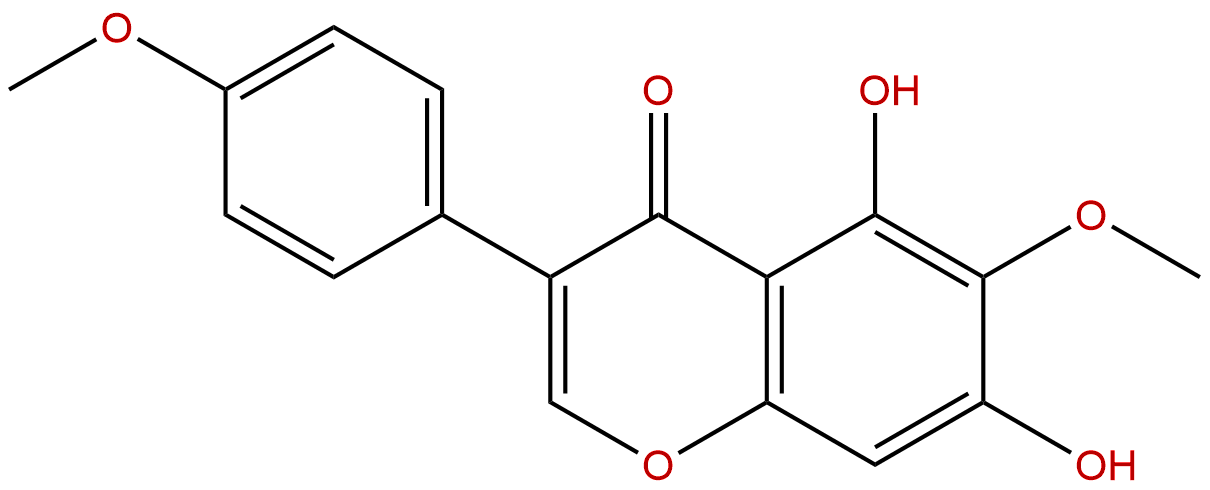


Product name: Irisolidone
Synonym name: 4'-O-Methyltectorigenin; 5,7-Dihydroxy-6,4'-dimethoxyisoflavone
Catalogue No.: BP3669
Cas No.: 2345-17-7
Formula: C17H14O6
Mol Weight: 314.293
Botanical Source: Flower of Pueraria lobata(Willd.)Ohwi or P. thomsonii Benth.
Physical Description:
Type of Compound:
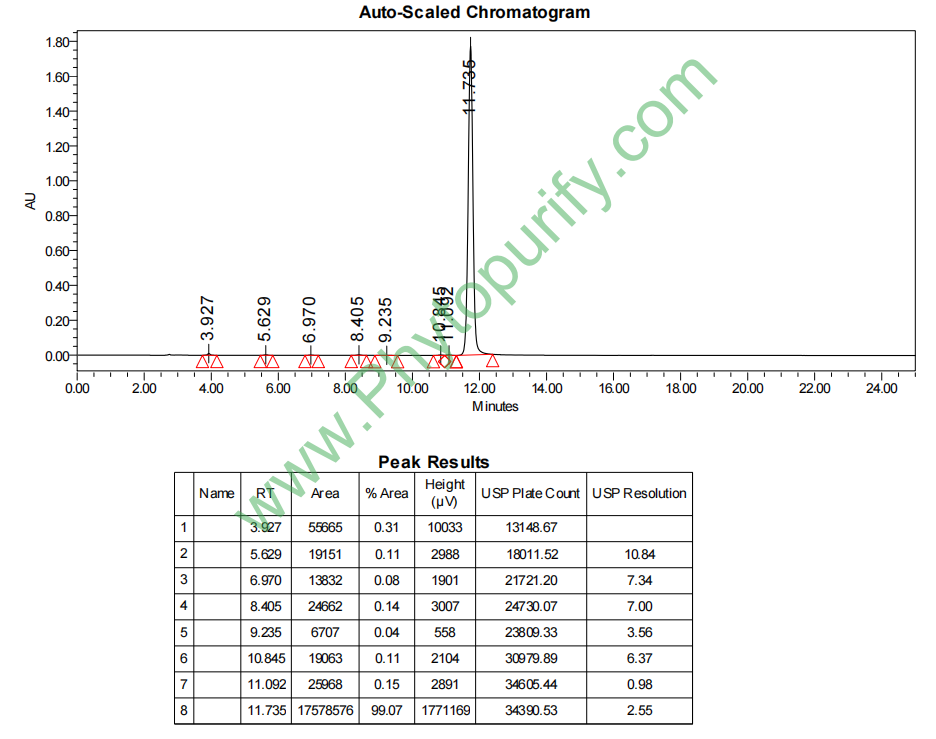
Purity: 95%~99%
Analysis Method: HPLC-DAD or/and HPLC-ELSD
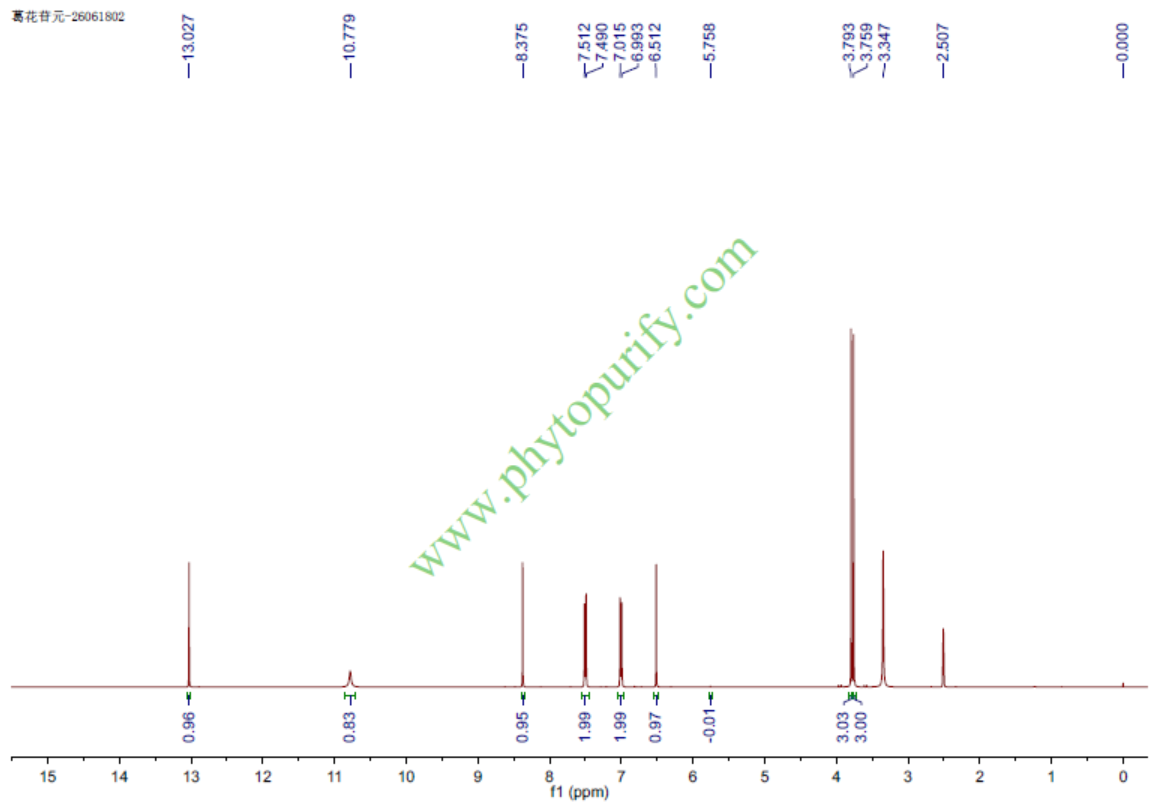
Identification Method: Mass, NMR
Packing: Brown vial or HDPE plastic bottle
The product could be supplied from milligrams to grams. Inquire for bulk scale.
We provide solution to improve the water-solubility of compounds, thereby facilitating the variety of activity tests and clinic uses.
For Reference Standard and R&D, Not for Human Use Directly.
HPLC of Irisolidone
HNMR of Irisolidone
Storage conditions:Short-term storage at 2~8℃, long-term storage at -20 ~ -80℃
89.1300
2.3306
2.0617
.0121
5.1192
38.0716
Low
91.8642
2.3257
Yes
No
Yes
No
Yes
Yes
1.2
No
No
No
No
Irisolidone, also known as 5,7-dihydroxy-4 ', 6-dimethoxyflavone, is a naturally occurring flavonoid compound with a CAS number of 2345-17-7. This compound is mainly isolated from the traditional Chinese medicine Pueraria montana var. lobata and is one of the characteristic active ingredients in Pueraria montana var. lobata. Isoflavones have attracted much attention due to their wide range of biological activities, and puerarin, as one of them, has shown multifaceted potential in pharmacological research in recent years.
The research background shows that puerarin was initially identified due to its abundance in kudzu flowers. With the advancement of modern separation and identification techniques, its chemical structure has been clarified and gradually become a hot topic in natural product chemistry and pharmacology research. Early research focused on its antioxidant and anti-inflammatory properties, while recent in-depth exploration has revealed its biological activities in regulating ion channels, antimicrobial, anti-tumor, and protecting the liver and gastrointestinal tract. Especially as a highly effective inhibitor of volume regulated anion channels (VRAC) with IC50 values at the micromolar level, it provides a new potential intervention target for cardiovascular and cerebrovascular diseases, as well as cellular edema related pathological states. In addition, its inhibitory activity against Helicobacter pylori and anti proliferative effect against melanoma cells further broaden its application prospects. This article will systematically expound the scientific connotation of puerarin from the aspects of chemical structure, plant origin, pharmacological mechanism, medicinal evaluation, and research prospects.
The molecular formula of puerarin is C17H14O6, with a molecular weight of 314.2930 g/mol. Its structure belongs to the isoflavone skeleton, characterized by the presence of 5,7-dihydroxy on the A ring, 4 '- methoxy on the B ring, and a methoxy substitution at the 6th position of the C ring. Its SMILES representation (COc1ccc (- c2oc3cc (O) c (OC) c (O) c3c2=O) cc1) accurately describes its connection mode: a benzene ring (B ring) is connected to a benzopyranone ring (A ring and C ring) through a single bond, where the A ring has two hydroxyl groups and one methoxy group, and the C ring is a pyranone structure with a carbonyl group.
From the analysis of medicinal parameters, its physicochemical properties exhibit typical characteristics of natural phenolic compounds:
- Molecular weight (MW):314.29 g/mol, Far below 500 Da, it falls within the common range of small molecule drugs.
- Lipid water partition coefficient (LogP/LogD)The calculated LogP is 2.33 and LogD (pH 7.4) is 2.06, indicating that the compound has moderate lipophilicity, which is beneficial for transmembrane absorption, but will not cause distribution or metabolic problems due to high lipid solubility.
- Topological Polarity Surface Area (TPSA)It is 89.13 Å ², reflecting the polarity brought by multiple hydroxyl and methoxy groups in the molecule. This value is below 140 Å ² and is generally considered beneficial for oral absorption.
- Water solubility The value is relatively low (0.0121, usually measured in mg/mL or mol/L), which is similar to many isoflavone compounds, indicating limited solubility in water and may require consideration of solubilization strategies in formulation development.
- Permeability The permeability data of Caco-2 cells is 38.07 (usually measured in x 10 ⁻⁶ cm/s), indicating moderate or good permeability. The blood-brain barrier (BBB) penetration is predicted to be "low", which is related to the higher polar surface area and the presence of hydrogen bond donors/acceptors in the molecule, indicating that it may not easily enter the central nervous system.
These physicochemical parameters collectively depict a small molecule profile with moderate polarity, some lipid solubility, and decent oral absorption potential but poor water solubility, providing a basic chemical basis for its subsequent biological activity and drug optimization.
The main plant source of puerarin is leguminous plants of the Pueraria genus Ge The dried flower buds of Pueraria montana var. lobata, also known as the traditional Chinese medicine "Ge Hua". Kudzu root (the root of a plant) is more well-known as a medicinal herb for relieving external heat, generating fluids, and quenching thirst, while kudzu flower is traditionally used mainly for sobering up the spleen and stomach, and stopping nausea.
In traditional Chinese medicine theory, Pueraria lobata has a sweet and smooth nature, and belongs to the spleen and stomach meridians. Commonly used to treat symptoms that damage the spleen and stomach caused by excessive alcohol consumption, such as headache, dizziness, restlessness, fullness of the chest and diaphragm, vomiting and acid water. The folk commonly use Ge Hua tea or decoction to alleviate the discomfort of drunkenness, and its "detoxification" effect has been recorded in medical books throughout history. As the main flavonoid component in Pueraria lobata, puerarin is considered as one of the important material bases for its modern pharmacological effects such as liver protection, stomach protection, and anti-inflammatory effects, providing a scientific chemical entity explanation for its traditional efficacy.
In addition to kudzu flowers, other plants or different parts of the same genus may also contain trace amounts of kudzu glycosides, but kudzu flowers are still the most abundant and commonly used source currently known. The modern research on the traditional application of Pueraria lobata starts with the isolation and identification of active ingredients such as Pueraria lobata glycosides, and then verifies their specific effects through pharmacological experiments, thus building a bridge between traditional experience and modern science.
Ge Hua Yuan exhibits diverse pharmacological activities, and its mechanism of action involves multi-target regulation, with the core being its anti-inflammatory, antioxidant, and ion channel regulatory properties.
Core activity and mechanism:
1. Powerful VRAC channel inhibitor This is one of the most prominent pharmacological properties of puerarin. Volume regulated anion channels (VRAC) play a crucial role in cell volume regulation, transport of organic and inorganic substances, as well as cell proliferation, apoptosis, and migration. Ge Hua Yuan can block VRAC currents with micromolar potency (IC50 of approximately 9.8 μ M, literature reports range from 5-13 μ M). Overactivated VRAC is associated with neuronal swelling, migration of certain cancer cells, and chemotherapy resistance after ischemic stroke. Therefore, as a VRAC inhibitor, puerarin has potential value in cardiovascular and cerebrovascular protection (such as reducing cerebral ischemia-reperfusion injury) and anti-tumor adjuvant therapy.
Other important pharmacological activities:
- Hepatoprotective activity This is a modern interpretation of its traditional sobering effect. The mechanism may be related to its anti-inflammatory, antioxidant (clearing free radicals), and inhibition of liver cell apoptosis, reducing the damage of alcohol or toxins to the liver.
- Anti Helicobacter pylori (H. pylori)It has inhibitory activity against Helicobacter pylori, an important pathogen that causes gastritis and gastric ulcers, which complements its anti gastritis effect.
- Antiplatelet aggregation Helps prevent thrombosis and may be beneficial for cardiovascular protection.
- α - amylase inhibitory activity It suggests that it may have the potential to assist in regulating postprandial blood sugar.
- Anti melanoma cell proliferation It showed anti proliferative activity against non pigmented melanoma cells, revealing its potential anti-tumor application direction, and the mechanism may involve inducing cell cycle arrest or apoptosis.
In summary, puerarin exerts its comprehensive effects of liver protection, stomach protection, anti-inflammatory, antimicrobial, and potential anti-tumor through a "multi-target, multi pathway" approach, reflecting the complexity advantage of the mechanism of action of natural products.
Based on the provided pharmacological parameters and combined with classical methods Lipinski's Five Rules Analysis using Rule of Five (Ro5) can provide a preliminary evaluation of the pharmacological potential of puerarin as a potential lead compound
Lipinski Five Rule Compliance:
Analysis of other key parameters:
Comprehensive Assessment Ge Hua Yuan has shown good performance in oral absorption as a "drug like substance", but its poor solubility, extremely high protein binding rate, and especially potential Genotoxicity and phototoxicity risks This poses a significant challenge for its conversion into drugs. It is currently more suitable as an excellent lead compound or Pharmacological research tool molecules Future structural optimization (such as improving solubility and reducing toxicity through chemical modification) or as a standardized quality control component for compound Chinese medicine are possible development paths.
Research status:
At present, research on puerarin has progressed from early isolation, identification, and activity screening to mechanism exploration and some preclinical studies. Numerous in vitro and animal experiments have confirmed its anti-inflammatory, hepatoprotective, anti Helicobacter pylori, VRAC channel inhibition, and anti-tumor activities. The research on the mechanism of action focuses on signaling pathways such as NF - κ B and MAPK, as well as downstream inflammatory factors. However, the vast majority of research still remains at the laboratory level, lacking systematic pharmacokinetic, toxicological, and in vivo pharmacological evaluations for specific diseases. The safety risks such as genetic toxicity have not been fully elucidated and addressed.
Application Prospects:
1. As a lead compound for structural optimization In response to its poor water solubility and potential toxicity, medicinal chemists can modify its structure to preserve or enhance its core pharmacological activities (such as VRAC inhibition and anti-inflammatory), while improving its physicochemical properties, reducing toxic side effects, and developing more potent derivatives or analogues.
2. Modernization and Quality Control of Traditional Chinese Medicine As one of the key active ingredients of Pueraria lobata, Pueraria lobata glycoside can serve as a quality control biomarker for Pueraria lobata and related traditional Chinese medicine preparations (such as sobering and liver protecting health products), ensuring the effectiveness and consistency of the product, and promoting the standardization and internationalization of traditional medicine.
3. Potential applications in specific disease domains:
- Gastrointestinal diseases Based on its anti Helicobacter pylori and anti ethanol gastritis effects, develop drugs or functional foods for adjuvant treatment of gastritis and gastric ulcers.
- Metabolic and inflammatory diseases Its hepatoprotective, anti-inflammatory, and alpha amylase inhibitory activities make it of exploratory value in the auxiliary management of non-alcoholic fatty liver disease and metabolic syndrome.
- Cardiovascular and cerebrovascular protection The inhibitory and antiplatelet aggregation properties of VRAC provide a new intervention approach for diseases related to cerebral ischemia and cell edema.
- Assisted anti-tumor therapy Its anti melanoma cell activity and potential to reverse chemotherapy resistance (through the VRAC mechanism) are worth exploring in the field of tumor combination therapy.
Future research directions:
Future research should focus on: ① conducting comprehensive preclinical pharmacokinetic (ADME) and toxicological evaluations to clarify their safety window; ② By utilizing tools such as gene knockout and specific inhibitors, we aim to elucidate the specific mode of action of its core target, such as VRAC; ③ Explore its synergistic effects with other drugs or natural ingredients, especially in the context of compound traditional Chinese medicine; ④ On the basis of clarifying safety, carry out standardized preclinical efficacy verification for specific indications (such as alcoholic liver injury and H. pylori associated gastritis).
In summary, puerarin is a natural isoflavone with rich biological activity and clear targets of action. Although it faces challenges in direct commercialization, it is undoubtedly a valuable "natural gift" that provides important chemical clues and research starting points for the discovery of innovative drugs, scientific interpretation of traditional Chinese medicine, and the solution of human health problems.
