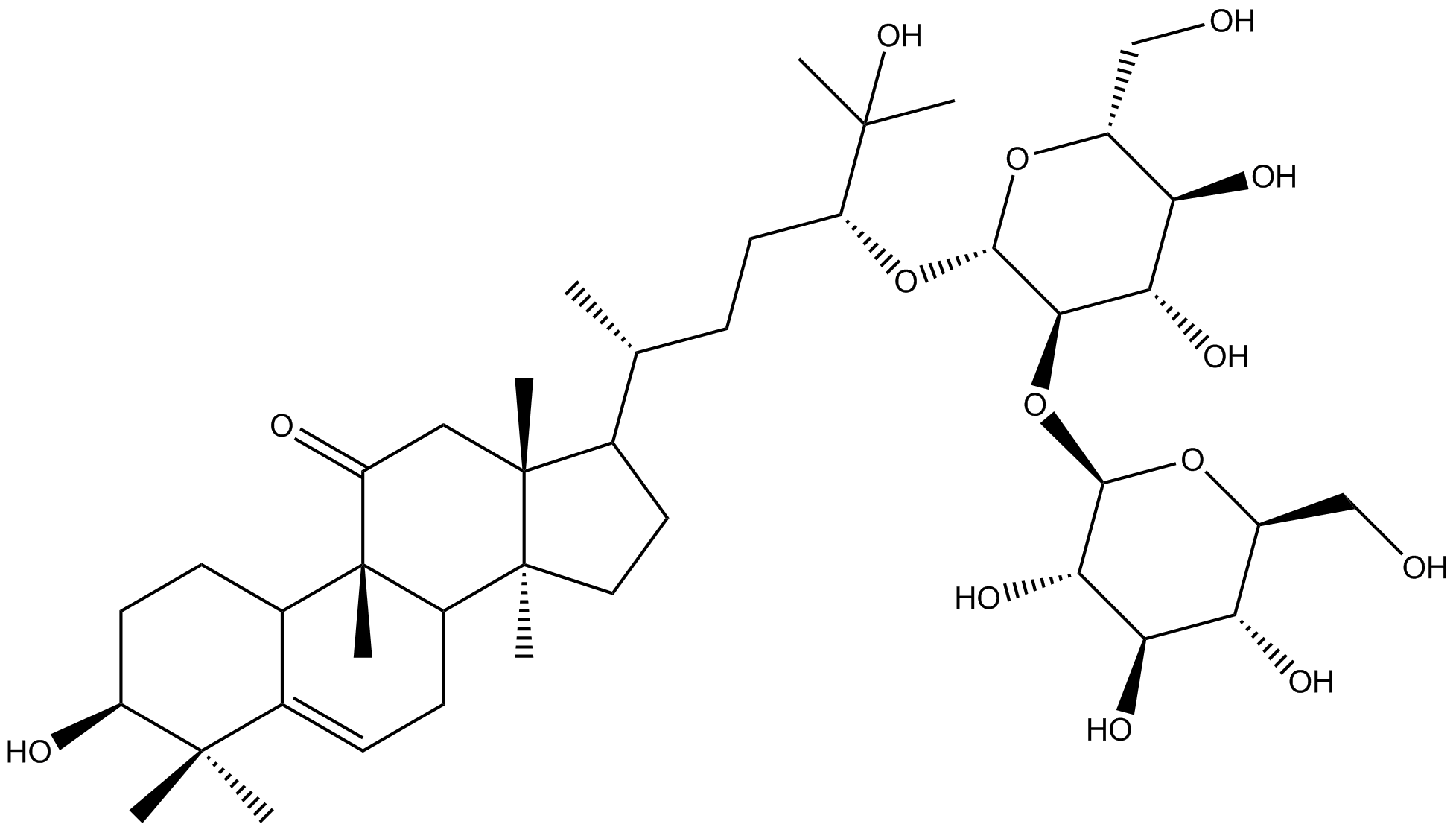
Product name: 11-Oxomogroside IIa
Synonym name:
Catalogue No.: BP2039
Cas No.: BP2039
Formula: C42H70O14
Mol Weight: 799.008
Botanical Source: Siraitiae fructus
Physical Description:
Type of Compound: Triterpenoids
Purity: 95%~99%
Analysis Method: HPLC-DAD or/and HPLC-ELSD
Identification Method: Mass, NMR
Packing: Brown vial or HDPE plastic bottle
Storage: Store in a well closed container, protected from air and light. Put into refrigerate or freeze for long term storage.
Whenever possible, you should prepare and use solutions on the same day. However, if you need to make up stock solutions in advance, we recommend that you store the solution as aliquots in tightly sealed vials at -20℃. Generally, these will be useable for up to two weeks.
The product could be supplied from milligrams to grams
Inquire for bulk scale.
For Reference Standard and R&D, Not for Human Use Directly.
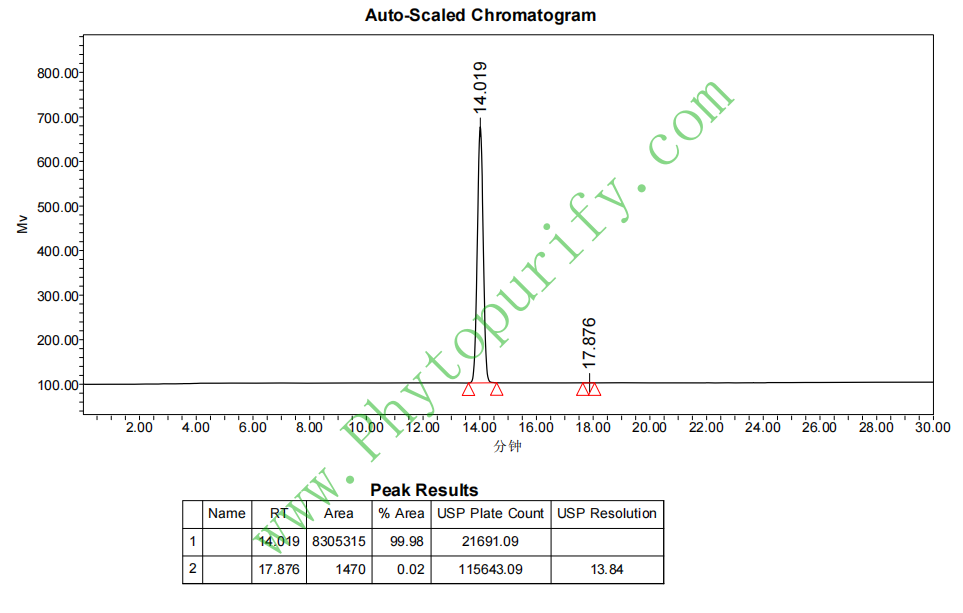
HPLC of 11-Oxomogroside IIa
Storage conditions:Short-term storage at 2~8℃, long-term storage at -20 ~ -80℃
237.6000
-.5000
-1.2000
No
.8500
No
Negative
11-O - Arhat fruit glycoside IIa (11-Oxomogroside IIa, product number: BP2039) is a traditional medicinal plant from Momordica grosvenorii(Siraitia grosvenorii)The triterpenoid glycosides of cucurbitacin obtained through separation. As one of the important members of siraitia grosvenorii glycosides family, it is not only the main contributor to the sweetness of siraitia grosvenorii, but also has attracted the attention of modern pharmaceutical researchers due to its excellent biological activity in regulating the metabolism of glucose and lipid. In recent years, with the rapid increase of incidence rate of chronic metabolic diseases such as type 2 diabetes, obesity and metabolic syndrome worldwide, the search for new therapeutic drugs with high efficiency and low toxicity has become a frontier hotspot in the pharmaceutical field. Natural products have always been an important source of innovative drug discovery due to their structural diversity and good biocompatibility. 11-O - Arhat fruit glycoside IIa is just the star molecule in this context. Its unique chemical structure enables it to act on multiple key targets closely related to energy metabolism and glucose homeostasis, such as AMPK, PPARG, SLC5A2 (SGLT2), GLP1R, and so on. It shows the great potential of multi-channel and multi-target synergistic treatment of metabolic diseases. Although the systematic research on this compound is still in depth, and its exact molecular formula, molecular weight, and other basic data need to be further clarified, the existing target disease association information has clearly outlined its grand blueprint as a new generation of natural source candidate drugs for anti metabolic diseases. This article will provide a systematic and professional scientific interpretation of this promising natural active molecule from its chemical essence, origin, pharmacological mechanism, drug properties, and prospects.
11-O-neneneba arhat fruit glycoside IIa belongs to cucurbitane triterpene glycosides. The basic skeleton of this type of compound is a tetracyclic triterpenoid cucurbitane composed of 30 carbon atoms. Its characteristic is that multiple sugar groups (such as glucose, rhamnose, etc.) are usually connected at C-3, C-24 and other sites, forming a glycoside structure with high water solubility. The "11-Oxo -" in the name of the compound indicates that there is a carbonyl (keto) at the C-11 position of the parent nucleus. This structural modification may significantly affect its spatial conformation, electronic distribution and interaction mode with the target protein, which is the key feature of its biological activity that distinguishes it from other Arhat fruit glycosides (such as Arhat fruit glycoside V, Arhat fruit glycoside IV).
Although its precise molecular formula and molecular weight are not included in the currently disclosed database, it is inferred based on the structure of its homologue Arhat fruit glycoside IIa (C22H72O14, molecular weight 801.0 g/mol) that 11-O - Arhat fruit glycoside IIa probably has a similar glycosyl linkage formula (presumably two molecular glucose), and its molecular formula may be about C42H70O15, with a molecular weight of about 814 g/mol. This molecular weight has exceeded the range of conventional small molecule drugs (<500 Da) and belongs to the natural glycoside class with larger molecular weight.
In terms of physical and chemical properties, due to its connection with multiple hydrophilic sugar groups, this compound should have high polarity. It is speculated that its lipid water partition coefficient (LogP) value is low, indicating good water solubility. This characteristic determines that after oral administration, it may not easily diffuse through the lipid bilayer of intestinal mucosal cells through passive diffusion, and its bioavailability may face challenges. At the same time, a larger molecular weight and more hydrogen bond donors/acceptors (a large number of hydroxyl groups on the sugar group) mean that it may have a higher topological polar surface area (TPSA), which further affects its membrane permeability. These preliminary physical and chemical property analyses are an important basis for subsequent evaluation of their pharmacological properties.
11-O-neneneba Siraitin IIa mainly comes from the cucurbitaceae plant Siraitia grosvenorii(Siraitia grosvenorii The dried fruit of Swingle. Momordica grosvenorii is a traditional dual-use plant unique to Guangxi, China. It has been used in the folk for more than 300 years, and is known as the "Oriental Fruit". In traditional Chinese medicine theory, Momordica grosvenorii is cool in nature, sweet in taste, and belongs to the lung and large intestine meridians. Its main effects are clearing heat and moistening the lung, facilitating the pharynx and opening the voice, smoothing the intestines and relieving constipation. It is often used to treat lung heat and dry cough, sore throat and aphonia, dry intestines and constipation. Its sweetness is very high (the main sweet ingredient is siraitia grosvenorii glycoside), but its calories are very low. Therefore, it has also been used as a natural sweetener for a long time, especially suitable for sugar substitute for diabetes patients and obese people.
Modern phytochemical studies have isolated and identified dozens of mogrosides from Siraitia grosvenorii, of which mogroside V has the highest content and is the most widely studied. As one of the oxidized aglycones, 11-O - Arhat fruit glycoside IIa has a relatively low content, but its biological activity may be more unique. Although the traditional application does not clearly point to the modern sense of "anti diabetes" or "weight loss", its "lung moistening" effect may be related to the improvement of systemic inflammation (metabolic diseases are often accompanied by chronic low-grade inflammation). The "intestinal smoothing" effect may involve the regulation of intestinal flora, and as a "natural sugar substitute", it can reduce the intake of refined sugar itself, which coincides with the modern concept of prevention and control of metabolic diseases. It can be said that the traditional experience has provided valuable clues and a long history of safe application for the modern pharmacological research of 11-O - Arhat fruit glycoside IIa.
Based on the target information provided by the database, the pharmacological effects of 11-O - Arhat fruit glycoside IIa mainly focus on regulating glucose and lipid metabolism, improving insulin resistance and inhibiting inflammation. Its mechanism of action involves multiple key signaling pathways and molecular targets, forming a synergistic network.
Core target and mechanism analysis:
AMPK (AMP activated protein kinase)AMPK is the "master switch" for cellular energy metabolism. Activated when the cellular energy state is low (AMP/ATP ratio increases). 11-O - Arhat fruit glycoside IIa may directly or indirectly activate AMPK. Activated AMPK promotes fatty acid oxidation (increasing energy expenditure), inhibits fat and cholesterol synthesis, enhances glucose uptake (by promoting GLUT4 translocation), thereby comprehensively improving energy metabolism. This is one of its core mechanisms in combating obesity, non-alcoholic fatty liver disease (NAFLD), and insulin resistance.
PPARG (Peroxisome proliferator activated receptor gamma)PPARG is a member of the nuclear receptor superfamily and a key regulatory factor for adipocyte differentiation and lipid metabolism. It is the target of insulin sensitizer thiazolidinedione drugs (such as Rosiglitazone). 11-O - Arhat fruit glycoside IIa may be used as part of the agonist or regulator of PPARG to promote the normal differentiation of adipocytes and improve insulin sensitivity, while avoiding weight gain, edema and other side effects caused by traditional drugs.
SLC5A2 (sodium glucose cotransporter 2, SGLT2)SGLT2 is mainly responsible for the reabsorption of approximately 90% glucose in the original urine by the renal proximal tubules. Inhibition of SGLT2 has become a new mechanism drug for the treatment of type 2 diabetes (such as daggligin and enggligin). 11-O - Arhat fruit glycoside IIa may have SGLT2 inhibitory activity, which can directly reduce blood sugar by promoting urine glucose excretion, and at the same time bring additional benefits of weight loss and blood pressure reduction.
GLP1R (glucagon like peptide-1 receptor)GLP-1 is an incretin that stimulates insulin secretion in a glucose dependent manner, inhibits glucagon secretion, delays gastric emptying, and increases satiety. GLP-1 receptor agonists, such as liraglutide and semaglutide, are currently one of the most popular hypoglycemic and weight loss drugs. 11-O - Arhat fruit glycoside IIa may be used as an activator or positive regulator of GLP1R to simulate various beneficial effects of GLP-1.
DPP4 (dipeptidyl peptidase-4)DPP4 is the main enzyme in the body that degrades GLP-1. Inhibiting DPP4 (such as sitagliptin and saxagliptin) can prolong the activity of endogenous GLP-1, thereby exerting hypoglycemic effects. This compound may possess DPP4 inhibitory activity and synergize with GLP1R activation.
SLC2A4 (Glucose Transporter 4, GLUT4)GLUT4 is the main transporter for insulin mediated glucose uptake into muscles and adipocytes. Under insulin resistance, the translocation of GLUT4 to the cell membrane is obstructed. 11-O - Arhat fruit glycoside IIa may promote the translocation and membrane fusion of GLUT4 by activating AMPK and other pathways, and directly improve glucose utilization in peripheral tissues.
NFKB1 (nuclear factor kappa B)NF - κ B is a core transcription factor that regulates inflammatory responses. Chronic low-grade inflammation is an important driving force behind the occurrence and development of insulin resistance and metabolic syndrome. This compound may alleviate metabolic inflammation at its root by inhibiting the activation of NF - κ B and reducing the production of downstream inflammatory factors such as TNF - α and IL-6.
Association with related diseases:
In conclusion, 11-O - Arhat fruit glycoside IIa shows the unique advantage of "killing many birds with one stone". Its multi target action mechanism just fits in with the complex pathological network of metabolic diseases, and is expected to become a natural candidate drug for comprehensive management of sugar, fat, weight and inflammation.
Pharmacokinetic assessment is a crucial step in determining whether an active molecule can be successfully developed into a drug, primarily examining its absorption, distribution, metabolism, excretion, and toxicity (ADMET) properties. Although there is a lack of detailed experimental pharmacokinetic parameters of 11-O - Arhat fruit glycoside IIa (such as accurate LogP, TPSA, in vitro metabolic stability, cytotoxicity data, etc.), we can still conduct preliminary analysis and prediction based on the information of its chemical structure category and known homologues, combined with classic drug design rules.
Preliminary analysis based on Lipinski's Rule of Five:
This rule is typically used to predict the oral bioavailability of small molecule compounds. Its content is: molecular weight<500; LogP < 5; Hydrogen bond donor (HBD)<5; Hydrogen bond acceptor (HBA)<10. If more than two items are violated, the oral bioavailability may be poor.
* molecular weight Speculatively around 814, far exceeding the upper limit of 500 Da.
* LogP Due to the presence of multiple sugar groups and high polarity, it is speculated that the LogP value is very low (possibly negative), far less than 5.
* Hydrogen bond donor/acceptor The sugar group contains a large number of hydroxyl groups (- OH), and the number of HBD and HBA is bound to far exceed the standard.
Therefore, 11-O - Arhat fruit glycoside IIa seriously violates all the items in the five rules of Lipinski. This strongly reminds,If viewed by the standards of traditional oral small molecule drugs, their oral absorption may be very difficult, making it difficult to passively diffuse through biofilms, and the expected oral bioavailability will be very low.
Prediction and challenges of other pharmacological parameters:
* Topological Polarity Surface Area (TPSA)The extremely high TPSA (>200 Å ²) further confirms its poor membrane permeability.
* Blood-brain barrier (BBB) penetrability The extremely high polarity and molecular weight make it almost impossible for it to penetrate the blood-brain barrier, which may actually be an advantage, meaning that the risk of central nervous system side effects is extremely low.
* solubility Expected to have excellent water solubility, which is a favorable condition for its use as an injection or special oral dosage form (such as an osmotic pump).
* Metabolic stability As glycoside compounds, their glycosidic bonds may be easily hydrolyzed by glycosidases in the gut microbiota and/or brush edges of intestinal epithelial cells to generate aglycones. The physicochemical properties and activities of aglycones may differ from those of the prototype glycoside, which increases the complexity of their metabolic processes in vivo.
* toxicity: Based on the long-term edible history of Siraitia grosvenorii, the acute toxicity of its related glycosides is usually very low. However, as a drug development, it is still necessary to systematically evaluate its long-term toxicity, genetic toxicity, etc.
Optimization strategy for drug properties:
In the face of the above challenges, the development of 11-O - Arhat fruit glycoside IIa requires innovative pharmaceutical and pharmaceutical chemistry strategies:
1. Prodrug strategy Esterification, acylation and other modifications are carried out on the hydroxyl groups on the sugar group to prepare lipophilic prodrugs, in order to improve their membrane permeability and oral absorption. The prodrug releases the original drug through enzymatic interpretation in the body.
2. New drug delivery system Develop nanoparticles, liposomes, microemulsions, self microemulsifying drug delivery systems, etc., and encapsulate them to promote their lymphatic or paracellular absorption through the intestinal mucosa.
3. Non oral administration route Consider developing injections (such as subcutaneous injections, similar to GLP-1 receptor agonists) to bypass absorption barriers. Or develop formulations for transdermal and pulmonary administration.
4. Simplification and Modification of Structure Using its active aglycone or core structural fragment as a lead compound, structural modification and simplification are carried out to retain key pharmacophores while reducing molecular weight and polarity, making it more in line with the principle of "drug like properties".
At present, there are relatively few independent and systematic research literature on 11-O - Arhat IIa, and most of its biological activity data may be derived from research inferences on the total extract or mixed glycoside components of Siraitin, as well as computer simulation (such as molecular docking) prediction based on its clear target correlation. It is still in the early stages of discovering natural product activity and has a long way to go before becoming a clinical drug.
Current research status:
1. Basic research stage The research focus may be on the separation and purification of compounds, structural confirmation, and in vitro enzyme activity or cell model activity validation targeting key targets such as AMPK, SGLT2, GLP1R, etc. We need concrete experimental evidence to confirm its multi-target effect.
2. Exploration of in vivo pharmacodynamics: It is necessary to evaluate the overall efficacy (hypoglycemic, lipid-lowering, weight loss, and improvement of liver steatosis) and dose effect relationship after intragastric administration or injection in animal models such as type 2 diabetes, obesity, NAFLD (such as db/db mice, high-fat diet induced mice).
3. Preliminary ADMET study Conduct pharmacokinetic studies on it in animals such as rats and dogs, clarify its absorption, distribution, metabolism, and excretion characteristics, and provide a basis for formulation design.
Future application prospects:
1. As a novel multi-target candidate drug for anti metabolic diseases If its multi target synergy is confirmed in preclinical and clinical studies, it is expected to be developed into a new generation of drugs with more comprehensive management advantages than existing single target drugs for the treatment of type 2 diabetes, obesity and their complications.
2. As a dietary supplement or functional food ingredient With its natural source and the safety background of long-term consumption of siraitia grosvenorii, it can be developed as a health product to assist in regulating blood sugar and blood lipids. But its dosage and efficacy claims require strict scientific data support.
3. As a lead compound for structural optimization Its unique cucurbitane triterpenoid core and 11 carbonyl group are valuable starting points for medicinal chemistry. Pharmaceutical chemists can systematically modify its structure in order to obtain derivatives or analogues with stronger activity and better drug properties.
4. To clarify the material basis of modern efficacy of Momordica grosvenorii: The in-depth study of 11-O - Arhat IIa is helpful to reveal the modern scientific connotation of Siraitia grosvenorii beyond its traditional functions of "moistening the lungs" and "catharsis" at the molecular level, and promote the modernization and international recognition of traditional Chinese medicine.
Challenges and Prospects:
The main challenges lie in its poor drug like properties (oral absorption difficulties) and potential low content, high extraction and separation costs, complex structure, and difficulty in complete synthesis as a natural product. Future research requires interdisciplinary collaboration: natural medicinal chemists are responsible for obtaining and modifying compounds; Further elucidation of the pharmacological family's mechanism of action and network; Pharmacists design innovative delivery systems; Toxicologists comprehensively evaluate its safety. Only through such systematic efforts can 11-O-neneneba arhat fruit glycoside IIa be truly transformed from a potential natural active molecule into an effective drug that can benefit hundreds of millions of patients with metabolic diseases worldwide.
In a word, 11-O-neneneba arhat fruit glycoside IIa, with its unique multi target mechanism of action, provides us with a promising new idea to fight against the increasingly popular metabolic diseases. Although the road ahead is full of challenges, its scientific value and application potential undoubtedly deserve more research resources for in-depth exploration.