Introduction/Overview
Natural products, as an important source of drug discovery and functional food development, have long played an indispensable role in human health maintenance and disease prevention and treatment. Among numerous natural active ingredients, oligosaccharides have become a research hotspot due to their unique physicochemical properties and significant biological activities, especially their regulatory effects on intestinal microbiota. Fructo oligosaccharides DP13 (CAS number: 137405-37-9), as an inulin type oligofructose with a degree of polymerization of 13, is a long-chain member of the functional oligosaccharide family. Compared with common short chain oligofructose (such as cane trisaccharide and cane tetrasaccharide), cane thirteen sugar has a higher molecular weight and more complex structural characteristics, which endows it with unique physiological and metabolic properties.
Thirteen sugars of sugarcane fruit were originally derived from the traditional medicinal plant Morinda officinalis(Morinda officinalis)Separated from the middle. As a representative traditional Chinese medicine for tonifying kidney yang and strengthening muscles and bones, Morinda officinalis has a wide range of pharmacological activities, including immune regulation, antidepressant, anti osteoporosis, and improving cognitive function. In recent years, with the deepening of research on the active ingredients of Morinda officinalis, its rich oligosaccharide components, especially cane fruit thirteen sugar, have been proven to be one of the key material foundations for its intestinal protection and immune regulation effects. Modern research has shown that cane thirteen sugars are not directly digested and absorbed by the body, but are selectively fermented and utilized by beneficial gut microbiota (such as bifidobacteria and lactobacilli) as a "prebiotic", thereby regulating gut microbiota balance, enhancing gut barrier function, and affecting systemic immune and metabolic homeostasis.
Given the close relationship between gut health and various chronic diseases such as inflammatory bowel disease, metabolic syndrome, neurodegenerative diseases, and immune disorders, in-depth analysis of the structural characteristics, pharmacological activities, and molecular mechanisms of cane thirteen sugars has important scientific value and application prospects for developing gut health intervention strategies based on natural products. This article will provide a systematic review of the research progress of cane fruit thirteen sugar from the aspects of chemical structure, plant origin, pharmacological activity, mechanism of action, medicinal properties, and clinical application prospects, in order to provide reference for the in-depth development and utilization of this compound.
Chemical structure and physicochemical properties
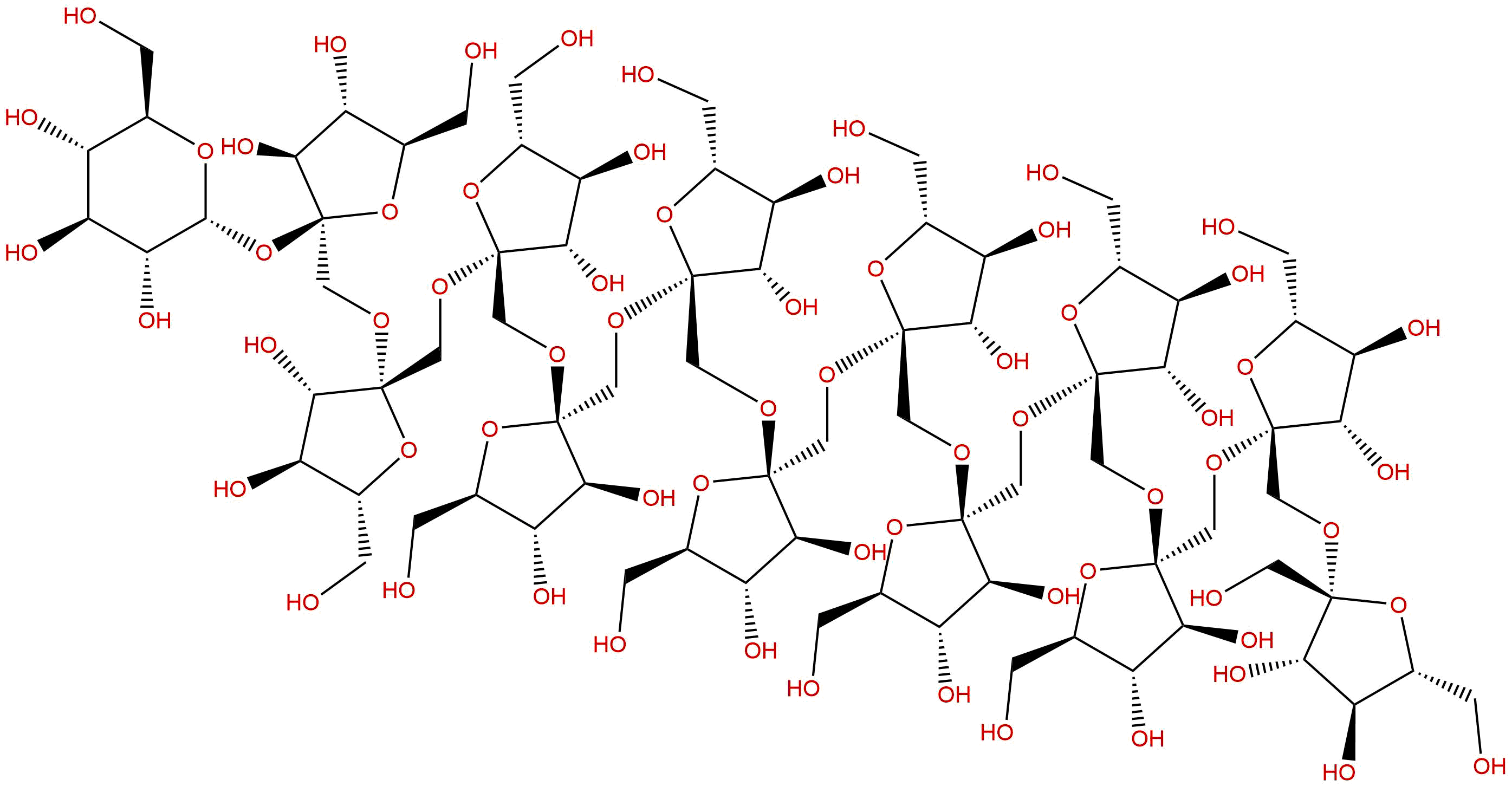
The chemical essence of Fructo oligosaccharides DP13 is a straight chain oligofructose composed of one glucose group and 13 fructose groups connected by β - (2 → 1) glycosidic bonds. Its structural formula can be expressed as GFn (where G represents the glucose group and F represents the fructose group), n=13)。 As a member of the inulin type oligofructose family, its degree of polymerization (DP) is 13 and its molecular weight is accurately calculated to be 2125.8480 Da. This relatively high molecular weight distinguishes it from short chain oligofructose with lower DP values in terms of physicochemical properties.
From a chemical structure perspective, the molecular end of cane thirteen sugar contains an α - D-glucopyranose group, while the remaining fructose units are all β - D-fructofuranyl groups. The units are linearly connected by β - (2 → 1) bonds. This β - configured glycosidic bond is a key structural basis that endogenous enzymes in the human digestive tract, such as alpha amylase, sucrase, maltase, etc., cannot effectively hydrolyze. Therefore, cane thirteen sugar has significant anti digestibility and can reach the large intestine intact for utilization by intestinal microorganisms. The abundant hydroxyl groups exposed in its molecule endow the compound with strong hydrophilicity, and the calculated water solubility value is 27.3780 mg/mL, indicating its good solubility in aqueous solution, which provides convenience for its application in food and pharmaceutical preparations.
In terms of lipid water partition coefficient, the LogP value of cane thirteen sugar is -5.8233, which is an extremely low negative value, strongly indicating that the compound has extremely high hydrophilicity but almost no lipid solubility. This characteristic determines that it is difficult for it to passively diffuse through biofilms composed of lipid bilayers, especially the blood-brain barrier (BBB). The evaluation result of "blood-brain barrier: low" in the pharmacological parameters of the drug is consistent with this, indicating that the direct distribution of cane fruit thirteen sugar in the central nervous system is extremely limited, and its pharmacological effects are mainly limited to local intestinal and indirect systemic effects mediated through intestinal axis (such as gut brain axis, gut liver axis). In addition, its topological polar surface area (TPSA) is as high as 1060.1800 Å ², further confirming its strong polarity and difficult transmembrane properties. In the early assessment of safety, the hERG inhibition test result was negative, and the Ames test result was 1.2 (usually considered negative or weakly positive if less than 2), indicating a low risk of cardiac and genetic toxicity and preliminary good safety.
Plant sources and extraction methods
The main natural source of thirteen sugars in sugarcane fruit is the Euphorbia officinalis plant in the Rubiaceae family(Morinda officinalis Dry roots of How. Morinda officinalis is mainly distributed in southern provinces such as Guangdong, Guangxi, Fujian, and Hainan in China, and is one of the famous "Four Great Southern Medicines". Modern plant chemistry research has shown that the roots of Morinda officinalis are rich in various active ingredients, including anthraquinones (such as methyl isoquercetin), iridoid glycosides (such as crystal orchid glycosides), and oligosaccharides. Among them, oligosaccharides are a type of component with high content and significant biological activity in Morinda officinalis, with a total content of over 20% -50% of the weight of the raw medicine. The components of Morinda officinalis oligosaccharides are a complex mixture containing various Fructo oligosaccharides (FOS) with polymerization degrees ranging from 3 to 14. Among them, Fructo oligosaccharides (DP13) are one of the important monomers with high polymerization degrees and clear structures.
The extraction and purification of thirteen sugars from sugarcane usually follow the technical route of "extraction separation purification". Firstly, crude extraction of Morinda officinalis medicinal materials is carried out using water extraction or alcohol extraction methods. Due to the high polarity and good water solubility of oligosaccharides, hot water extraction or reflux extraction are commonly used methods. The extraction temperature is generally controlled at 60-100 ℃, the solid-liquid ratio is 1:10-1:20, the extraction time is 1-3 hours, and the process is repeated 2-3 times. After concentration of the extract, ethanol is added for fractional precipitation. Different concentrations of ethanol (such as 30%, 50%, 70%, 80%) can precipitate sugars with different degrees of polymerization. The highly polymerized cane thirteen sugars are usually enriched in precipitates of higher concentrations of ethanol.
The crude extract contains a large amount of impurities such as pigments, proteins, monosaccharides, and low degree of polymerization sugars, which require further purification. Common methods include activated carbon decolorization, ion exchange resin desalination, and various chromatographic separation techniques. Among them, gel filtration chromatography (such as Sephadex G series) and high performance liquid chromatography (HPLC) are the key means to separate and purify oligosaccharides with different polymerization degrees. Through repeated gel column chromatography and molecular sieve effect, oligosaccharides with different molecular weights can be effectively separated. In recent years, preparative high-performance liquid chromatography (Pre HPLC) combined with differential refractive index detector (RID) or evaporative light scattering detector (ELSD) has become the mainstream technology for obtaining high-purity cane thirteen sugar monomers. In addition, membrane separation technologies such as nanofiltration and ultrafiltration have also been attempted for the preliminary classification and purification of oligosaccharides due to their ease of operation and easy scaling up.
Pharmacological activity research
As one of the core components of Morinda officinalis oligosaccharides, the pharmacological activity research of cane fruit thirteen sugar mainly focuses on intestinal health, immune regulation, and anti-inflammatory effects, and gradually expands to other systems.
1. Regulation of intestinal microbiota
As a typical prebiotic, the core pharmacological activity of cane thirteen sugar lies in regulating intestinal microbiota. In vitro fermentation experiments and animal model studies have shown that cane thirteen sugar can resist digestive enzyme hydrolysis in the upper gastrointestinal tract and reach the colon intact. In the colon, it is infected with bifidobacteria(Bifidobacterium Spp. and lactobacilli(Lactobacillus Selective fermentation and utilization of beneficial bacteria such as spp, promoting their proliferation while inhibiting Clostridium perfringens(Clostridium perfringens)Waiting for the growth of potential pathogenic bacteria. This regulatory effect helps to restore or maintain the homeostasis of the gut microbiota, increasing the production of short chain fatty acids (SCFAs, such as acetic acid, propionic acid, and butyric acid). Butyric acid, as the main energy source for colonic epithelial cells, plays a crucial role in maintaining intestinal barrier integrity and inhibiting inflammatory responses.
2. Intestinal barrier protection and anti-inflammatory activity
Multiple studies have confirmed that cane thirteen sugar can enhance intestinal barrier function. In chemically induced colitis models (such as DSS or TNBS induced colitis in mice), administration of cane sugar can significantly reduce disease activity index (DAI), lower colonic histopathological scores, and decrease inflammatory cell infiltration. Its mechanism is closely related to upregulating the expression of tight junction proteins (such as Occludin, Claudin-1, ZO-1), thereby reducing intestinal permeability and preventing the translocation of bacteria and their metabolites (such as lipopolysaccharide LPS). In addition, cane thirteen sugar can directly or indirectly inhibit the production of pro-inflammatory cytokines (such as TNF - α, IL-6, IL-1 β) and promote the secretion of anti-inflammatory cytokines (such as IL-10), demonstrating clear anti-inflammatory activity.
3. Immune regulatory effect
The immunomodulatory effect of cane thirteen sugar is not limited to the local intestinal area, but can also affect the systemic immune system by regulating the gut associated lymphoid tissue (GALT). Research has shown that it can regulate the differentiation of T cells, promote the differentiation and proliferation of regulatory T cells (Tregs), which is related to its upregulation of FOXP3 expression. Treg cells play a central role in maintaining immune tolerance and suppressing excessive immune responses. In addition, cane thirteen sugar can also affect the function of dendritic cells (DCs), leading them towards a tolerant phenotype, thereby regulating Th1/Th2 immune balance.
4. Other potential pharmacological activities
Based on the association between gut health and overall health, the potential pharmacological activity of cane thirteen sugar is constantly being explored. For example, in metabolic diseases, by regulating gut microbiota and improving intestinal barriers, cane thirteen sugar may help alleviate endotoxemia, improve insulin resistance, and fatty liver. In terms of neurological and psychiatric disorders, regulating gut brain communication through the gut brain axis may have a positive impact on behaviors such as depression and anxiety. In addition, studies on the anti osteoporosis effects of Morinda officinalis oligosaccharides (rich in cane thirteen sugars) also suggest that they may exert their effects by regulating intestinal calcium absorption or affecting immune pathways related to bone metabolism.
Mechanism of action and molecular targets
The pharmacological mechanism of thirteen sugars in sugarcane fruit is multi-layered and multi-target, with its core being the "prebiotic" effect and direct or indirect regulation of host signaling pathways. According to the provided target information, its mechanism of action can be summarized as follows:
1. Regulation of Pattern Recognition Receptors (PRRs)
- TLR4 (Toll like receptor 4)TLR4 is a key receptor for recognizing Gram negative bacterial LPS, and its overactivation is a core link in intestinal inflammation and metabolic endotoxemia. Thirteen sugars from sugarcane fruit indirectly inhibit the overactivation of TLR4 by improving the structure of gut microbiota, reducing LPS producing bacteria, lowering LPS levels in the intestinal lumen and circulation. In addition, certain oligosaccharides or SCFAs can directly interact with TLR4, regulate its signal transduction, inhibit the activation of downstream NF - κ B and MAPK pathways, and reduce the release of pro-inflammatory factors such as TNF - α.
- NOD2 (nucleotide binding oligomerization domain 2)NOD2 is a pattern recognition receptor for intracellular recognition of bacterial peptidoglycan (MDP), which is crucial in maintaining intestinal homeostasis and Paneth cell function. NOD2 gene mutations are closely associated with an increased risk of Crohn's disease. Sugarcane Thirteen Sugar may regulate the composition of gut microbiota, alter MDP production, or affect the NOD2 signaling pathway through metabolites such as SCFAs, thereby regulating autophagy and the production of antimicrobial peptides (such as defense factors), maintaining gut immune homeostasis.
2. Inflammatory and immune related targets
- TNF (tumor necrosis factor)TNF - α is a core pro-inflammatory factor in chronic inflammatory diseases such as inflammatory bowel disease (IBD). Sugarcane Thirteen Sugar significantly reduces the mRNA and protein levels of TNF - α in colon tissue by inhibiting pathways such as TLR4/NF - κ B, which is a key manifestation of its anti-inflammatory effect.
- TGFB1 (transforming growth factor beta 1) and IL10 (interleukin 10)TGF - β 1 and IL-10 are important anti-inflammatory and immunomodulatory cytokines. Thirteen sugars from sugarcane can promote the differentiation of Treg cells, which are the main sources of TGF - β 1 and IL-10. Upregulation of FOXP3 (Treg cell specific transcription factor) expression is an important mechanism by which cane thirteen sugar induces immune tolerance and inhibits intestinal inflammation. IL-10 downregulates pro-inflammatory responses by inhibiting the antigen presentation function of macrophages and dendritic cells.
- FOXP3 (forkhead box protein P3)As a key transcription factor for the development and function of Treg cells, the expression level of FOXP3 directly reflects the number and inhibitory activity of Treg cells. Thirteen sugars from sugarcane fruit are upregulated in FOXP3 expression through epigenetic modifications (such as histone deacetylase inhibition) through metabolites such as SCFAs (especially butyric acid), thereby promoting Treg cell differentiation.
3. Targets related to intestinal barrier function
- MUC2 (Mucin 2)MUC2 is the main mucin secreted by intestinal goblet cells, which forms the intestinal mucus layer and serves as the first line of defense against pathogen invasion. Thirteen sugars from sugarcane can directly stimulate goblet cell proliferation and MUC2 gene expression through its metabolite butyric acid, enhance the thickness and function of the mucus layer, and protect intestinal epithelial cells from damage.
- XBP1 (X-box binding protein 1)XBP1 is a key transcription factor in the unfolded protein response (UPR) of endoplasmic reticulum stress (ERS), which is crucial for the normal function of secretory cells such as goblet cells and Paneth cells. XBP1 deficiency can lead to dysfunction of goblet cells and intestinal inflammation. Thirteen sugars from sugarcane fruits may maintain intestinal microbiota homeostasis, reduce the stimulation of harmful metabolites on intestinal epithelial cells by ERS, thereby maintaining the normal function of XBP1 and protecting the intestinal barrier.
- ATG16L1 (autophagy related 16 like protein 1)ATG16L1 is a key protein in autophagy, involved in intracellular pathogen clearance, antigen presentation, and inflammasome regulation. The ATG16L1 gene mutation is a risk factor for Crohn's disease. Thirteen sugars from sugarcane fruit may affect autophagy activity through the NOD2 signaling pathway or regulate SCFAs levels, thereby playing a role in maintaining Paneth cell function and inhibiting inflammation.
- IL23R (interleukin 23 receptor)The IL-23/Th17 pathway plays a crucial pathogenic role in various autoimmune diseases and IBD. IL23R is a receptor for IL-23. Thirteen sugars from sugarcane fruits may indirectly inhibit the excessive activation of the IL-23/Th17 pathway by regulating gut microbiota and Treg/Th17 balance, thereby reducing inflammation.
Evaluation of drug properties and pharmacokinetics
To evaluate the pharmacological properties of cane thirteen sugar, it is necessary to consider its characteristics as a large molecule hydrophilic compound.
1. Analysis of drug properties
According to the Lipinski Five Rules, the molecular weight of cane thirteen sugar (2125.85 Da) far exceeds 500 Da, the LogP value (-5.82) is much lower than 5, and the number of hydrogen bond donors and acceptors also far exceeds the upper limit of the rules. Therefore, it does not meet the "drug like" standard of traditional oral small molecule drugs. However, this does not mean that it lacks development value. The applicability of the "Five Rules" is limited for drugs or functional food ingredients that act locally on the intestine. The "non pharmacological" properties of cane thirteen sugars are precisely the structural basis for their local intestinal effects as prebiotics - they are not absorbed, metabolized, or targeted towards the colon.
2. Pharmacokinetic characteristics
- absorb Due to its high hydrophilicity and high molecular weight, cane thirteen sugar is almost not absorbed by the stomach and small intestine after oral administration. Its absorption fraction is extremely low, and its oral bioavailability can be ignored. This determines that its pharmacokinetic behavior is completely different from systemic drugs.
- distribution The amount absorbed into the systemic circulation is extremely small, so its apparent distribution volume is very small, mainly limited to the gastrointestinal tract. The ability to penetrate the blood-brain barrier is low, and the distribution of the central nervous system can be ignored.
- Metabolism Not hydrolyzed by human digestive enzymes (alpha amylase, sucrase, etc.). Its main metabolic pathway is fermentation by colonic microbiota, producing SCFAs (acetic acid, propionic acid, butyric acid) and gases (H ₂, CO ₂, CH ₄). SCFAs are key mediators that exert systemic pharmacological effects.
- excretion A small amount of unfermented cane Thirteen Sugar is excreted from the body with feces.
3. Safety evaluation
The preliminary results of hERG inhibition (no) and Ames test (1.2) in the pharmacological parameters indicate that cane fruit thirteen sugar has a low risk of cardiac toxicity and genetic toxicity. Its safety is mainly related to intestinal tolerance, and high-dose intake may cause bloating, diarrhea, and gastrointestinal bloating, which is a common problem among all fermentable oligosaccharides. Overall, cane thirteen sugar has high safety and has been approved by multiple countries for use as a food ingredient or dietary supplement.
4. Formulation strategy
Given its non absorbable nature when taken orally, the focus of formulation development is to protect its activity and ensure its smooth delivery to the colon. Common dosage forms include powders, granules, capsules, tablets, and functional food matrices added to beverages, dairy products, and baked goods. For specific applications that require targeted colon release, such as IBD treatment, pH sensitive or time-dependent coating techniques can be used, or they can be embedded in delivery systems such as microspheres or liposomes to increase their concentration and efficacy in the colon.
Clinical application prospects and prospects
Thirteen sugars from sugarcane fruits have broad application prospects in multiple disease fields due to their clear intestinal microbiota regulation, barrier protection, and immune regulatory activities.
1. Inflammatory bowel disease (IBD)
IBD (including Crohn's disease and ulcerative colitis) is one of the most promising application directions for cane thirteen sugar. It can effectively alleviate experimental colitis by regulating the microbiota, enhancing the barrier, inhibiting the TLR4/NF - κ B pathway, and promoting Treg differentiation through multiple mechanisms. In the future, the development of high-purity cane thirteen sugar as an adjuvant therapy for IBD or a functional food to maintain remission has high clinical translational value.
2. Irritable bowel syndrome (IBS)
IBS is closely related to dysbiosis of gut microbiota, visceral hypersensitivity, and abnormal intestinal barrier function. Thirteen sugar cane fruits have the potential to improve bloating, abdominal pain, and abnormal bowel habits in IBS patients by regulating the microbiota and reducing intestinal permeability. However, it should be noted that some IBS patients (especially those with diarrhea) may be sensitive to the gases produced by FOS fermentation, and individualized application and dosage adjustment are key.
3. Metabolic disorders
Through the "gut liver axis" and "gut brain axis", cane fruit tridecase shows potential in non-alcoholic fatty liver disease (NAFLD), type 2 diabetes, obesity and other metabolic diseases. The mechanism involves improving endotoxemia, regulating bile acid metabolism, and increasing the secretion of enteropancreatin such as GLP-1. Future research needs to focus on its exact efficacy and dose-response relationship in the human body.
4. Immune related diseases
By promoting Treg cell differentiation, cane thirteen sugar may have therapeutic potential in allergic diseases (such as food allergies, atopic dermatitis) and autoimmune diseases (such as rheumatoid arthritis). Its role as an immunomodulatory agent deserves further exploration.
5. Neuropsychiatric disorders
The study of the gut brain axis provides new ideas for the application of cane thirteen sugar in depression, anxiety, and neurodegenerative diseases such as Parkinson's disease. By regulating the microbiota gut brain axis, improving neuroinflammation and neurotransmitter metabolism, it may become a new type of 'spiritual prebiotic'.
Outlook:
Despite the bright prospects, the clinical translation of cane thirteen sugar still faces challenges. Firstly, as a component in a mixture, achieving high-purity and low-cost large-scale production is a bottleneck for industrialization. Secondly, its metabolic fate and mechanism of action in the complex human intestinal environment still require further research, especially its interaction with specific members of the microbiota. Finally, high-quality randomized controlled clinical trials (RCTs) are the gold standard for verifying their clinical effectiveness, and there is currently a lack of rigorous clinical evidence for cane thirteen sugar monomers. Future research directions should focus on developing efficient biosynthetic or enzymatic preparation technologies; Using multi omics techniques (metagenomics, metabolomics) to analyze its mechanism of action; Conduct clinical translational studies targeting specific indications and explore their synergistic effects with other prebiotics or probiotics.
Conclusion
As a high polymerization degree inulin type oligofructose derived from the traditional Chinese medicine Morinda officinalis, cane fruit thirteen sugar exhibits excellent pharmacological activity in the field of intestinal health due to its unique chemical structure (high polymerization degree, β - (2 → 1) glycosidic bond) and excellent physicochemical properties (high hydrophilicity, anti digestibility). Its mechanism of action is not singular, but rather regulates the gut microbiota through the "prebiotic" effect, and then regulates host immunity (TLR4, NOD2, FOXP3, TNF, IL10), enhances intestinal barrier (MUC2, XBP1), and maintains intestinal stability (ATG16L1, IL23R) through multi-target and multi pathway regulation of metabolites such as SCFAs. Although it does not meet the pharmacological standards of traditional oral drugs, as a natural active substance targeting the colon, it has enormous potential for application in functional foods and pharmaceuticals.
From the traditional kidney tonifying effects of Morinda officinalis to the modern scientific revelation of intestinal immune regulation mechanisms, the study of cane fruit thirteen sugars vividly illustrates the path of modernization research in traditional Chinese medicine. In the future, with the in-depth analysis of its mechanism of action, optimization of its preparation process, and accumulation of clinical evidence, cane thirteen sugar is expected to become an important natural product for maintaining intestinal health and preventing related chronic diseases, contributing to human health. The study of it not only deepens our understanding of the "gut axis" theory, but also provides valuable examples for precision nutrition and drug development based on natural products.