


Synonym name: Betacarotene, Carotaben; Phenoro; Solatene; Beta,Beta-Carotene; Provatene
Catalogue No.: BP0318
Cas No.: 7235-40-7
Formula: C40H56
Mol Weight: 536.888
Botanical Source: Widespread in plant and animal kingdoms. In plants it is almost always associated with chlorophyll. Occurs in marine organisms, e.g. sponges, esp. of the Poecilosclerida and Axinellida.
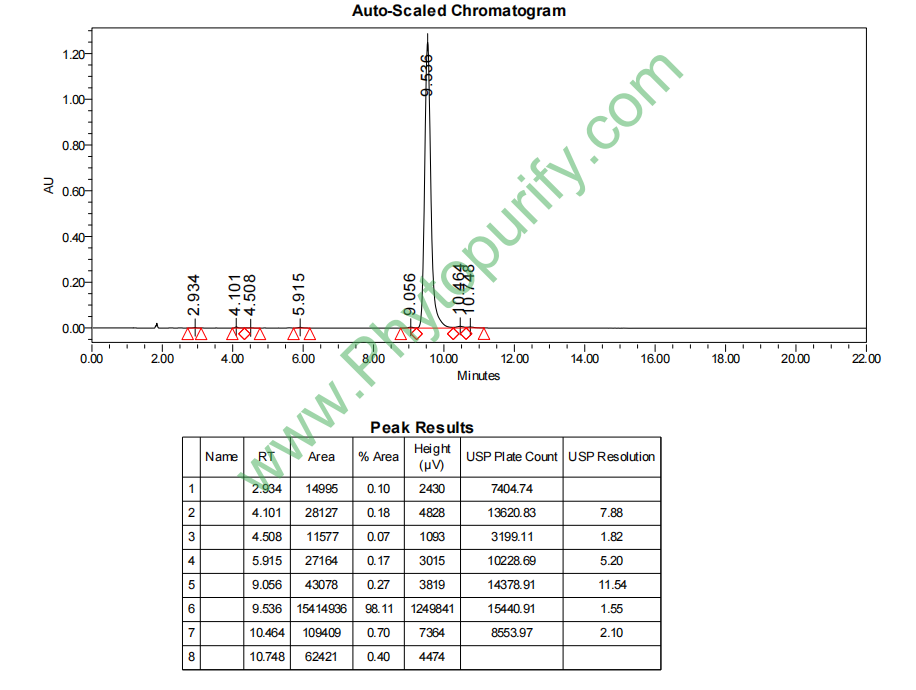
Purity: 95%~99%
Analysis Method: HPLC-DAD or/and HPLC-ELSD
Identification Method: Mass, NMR
Packing: Brown vial or HDPE plastic bottle
Can be supplied from milligrams to grams.
For Reference Standard and R&D, Not for Human Use Directly.
Inquire for bulk scale.
HPLC of Beta-Carotene
Storage conditions:Short-term storage at 2~8℃, long-term storage at -20 ~ -80℃
Beta Carotene, CAS number 7235-40-7, is a natural carotenoid product widely found in nature and has been extensively studied due to its significant red orange pigment properties. As the most important and active provitamin A carotenoid, β - carotene is not only an important source of vitamin A in the human body, but also highly regarded for its powerful antioxidant properties and diverse biological functions. In recent years, with a deeper understanding of the role of free radical damage and oxidative stress in the pathogenesis of various diseases, the potential of β - carotene in antioxidant damage, iron death inhibition, and cell protection has been widely explored.
This article aims to systematically review the chemical structure and physicochemical properties, plant sources, and extraction methods of β - carotene, combined with the latest pharmacological activity research, to deeply analyze its mechanism of action and molecular targets, evaluate its pharmacological and pharmacokinetic characteristics, and prospect its potential and challenges in clinical applications, in order to provide theoretical basis and research direction for natural product pharmacology and related clinical research.
β - carotene is a cyclic carotenoid composed of 40 carbon atoms, structurally linked by two β - terminal rings through a long conjugated double bond chain, forming an all trans configuration. This highly conjugated polyene structure endows it with strong red orange pigment properties, while also giving it excellent light absorption and electron transfer abilities. The molecular formula of β - carotene is C40H56, with a molecular weight of 536.87 and a LogP value of up to 12.7, indicating its strong hydrophobicity. Its topological polar surface area (TPSA) is 0 and there are no hydrogen bond acceptors, indicating that its molecular structure lacks polar groups.
In terms of physical and chemical properties, β - carotene is insoluble in water and easily soluble in organic solvents such as hexane, ethanol, and carbon tetrachloride. Its high hydrophobicity limits its solubility and bioavailability in living organisms, but also promotes its accumulation in lipid environments. β - carotene is sensitive to light, heat, and oxygen, and is prone to isomerization and oxidative degradation. Therefore, attention should be paid to avoiding light, low temperature, and antioxidant conditions during extraction, storage, and application.
β - carotene is widely present in various plants, fruits, vegetables, and algae, especially abundant in red orange or dark green plants such as carrots, pumpkins, bell peppers, spinach, cabbage, and tomatoes. Plants synthesize β - carotene through the biosynthesis pathway of carotenoids, which serves as a photosynthetic pigment and antioxidant, protecting plant cells from photooxidative damage.
The traditional methods for extracting β - carotene mainly include solvent extraction, supercritical fluid extraction, and enzyme assisted extraction. The solvent extraction method uses organic solvents such as hexane and ethanol to extract plant materials, which is simple to operate but has problems with solvent residue and environmental pollution. Supercritical carbon dioxide extraction technology has gradually become the first choice for industrial extraction due to its advantages of no solvent residue, strong selectivity, and environmental friendliness. Enzyme assisted extraction promotes the release of β - carotene by degrading plant cell walls, improving extraction efficiency and purity. In addition, the application of nanotechnology and membrane separation technology in recent years has provided new ideas for the efficient extraction and purification of β - carotene.
The pharmacological activity of β - carotene mainly stems from its antioxidant capacity and vitamin A precursor function. Numerous in vitro and in vivo studies have confirmed that β - carotene can effectively scavenge free radicals, inhibit lipid peroxidation, protect the integrity of cell membrane structure, and thereby alleviate cellular damage caused by oxidative stress.
As a natural antioxidant, β - carotene reduces oxidative damage by capturing singlet oxygen and scavenging free radicals. Its mechanism of action involves activating the nuclear factor E2 related factor 2 (NFE2L2/NRF2) signaling pathway, inducing the expression of downstream antioxidant enzymes such as superoxide dismutase (SOD1, SOD2), catalase (CAT), glutathione peroxidase (GPX1), and heme oxygenase-1 (HMOX1), and enhancing the intracellular antioxidant defense system.
Iron induced cell death is a novel form of programmed cell death primarily triggered by iron dependent lipid peroxidation. β - carotene, as a lipid soluble antioxidant, can effectively inhibit lipid peroxidation, slow down the process of iron death, and protect cells from oxidative damage. Related studies have shown that β - carotene exerts an inhibitory effect on iron death by regulating intracellular iron homeostasis and antioxidant enzyme activity, and has potential neuroprotective and tumor therapeutic value.
β - carotene can be converted into retinol (vitamin A) in the human body, which participates in physiological processes such as visual function, immune regulation, and cell differentiation. Vitamin A deficiency is closely related to night blindness, immune dysfunction, and skin lesions. Supplementing with beta carotene is considered an important strategy for preventing and treating vitamin A deficiency.
In addition to its antioxidant and vitamin A precursor functions, β - carotene also exhibits anti-inflammatory, immune regulatory, and anti-tumor activities. Research has shown that beta carotene can regulate the expression of inflammatory factors, inhibit pro-inflammatory signaling pathways, and alleviate chronic inflammatory states. In addition, β - carotene has shown certain anti-cancer potential by regulating cell cycle and apoptosis related genes.
The biological effects of β - carotene are mainly achieved by regulating the redox balance and signal transduction pathways. Its key molecular targets are mainly concentrated in the antioxidant defense system and cell protection related proteins.
NFE2L2 (Nuclear Factor E2 Associated Factor 2, NRF2) is the main intracellular transcription factor for antioxidant stress. β - carotene can activate NRF2, promote its translocation from the cytoplasm to the nucleus, bind to antioxidant response elements (ARE), induce downstream antioxidant enzyme gene expression, such as SOD1, SOD2, CAT, GPX1, and HMOX1, thereby enhancing the antioxidant capacity of cells and reducing oxidative damage.
β - carotene promotes the clearance of reactive oxygen species (ROS) and maintains cellular redox homeostasis by regulating the activity of key antioxidant enzymes such as superoxide dismutase (SOD1, SOD2), catalase (CAT), glutathione peroxidase (GPX1), and heme oxygenase-1 (HMOX1).
The occurrence of ferroptosis depends on intracellular iron ion levels and lipid peroxidation. β - carotene inhibits lipid peroxidation and regulates iron metabolism related proteins, reducing iron ion overload and ROS generation, blocking the iron death signaling pathway, and protecting cells from oxidative damage.
β - carotene is catalyzed by β - carotene 15,15 '- dioxygenase (BCMO1) in intestinal epithelial cells to produce retinol, which participates in vitamin A metabolism. Retinol is further converted into retinal and retinoic acid, regulating physiological functions such as visual conduction, gene expression, and cell differentiation.
The molecular weight of β - carotene is 536.87, with a LogP value of up to 12.7, indicating its strong hydrophobicity. The TPSA is 0 and there are no hydrogen bond acceptors, indicating its extremely low polarity. These characteristics result in extremely low solubility of beta carotene in aqueous environments, limiting its oral absorption and bioavailability. In addition, beta carotene cannot cross the blood-brain barrier, indicating its limited direct action in the central nervous system.
Toxicological evaluation shows that β - carotene has low acute toxicity, with an LD50 of approximately 10000 mg/kg, and has no hepatotoxicity, cardiotoxicity, or hERG channel inhibition effects. The Ames mutagenicity test is negative, indicating its high safety.
The absorption of β - carotene depends on the presence of dietary fat and enters intestinal epithelial cells through bile salt mediated liposome formation. It is partially converted into retinol in the intestine, while the rest enters the circulatory system in its original form or as metabolites. Due to its high hydrophobicity, β - carotene is mainly distributed in adipose tissue and liver, with a long half-life in vivo.
The metabolic pathways mainly include oxidative cleavage and esterification. Some β - carotenoids can be converted into retinol in the body and participate in vitamin A metabolism. Its excretion is mainly through bile and feces, with less excretion by the kidneys. The bioavailability of beta carotene is greatly influenced by individual dietary structure, fat intake, and intestinal health status.
β - carotene, as a precursor and natural antioxidant of vitamin A, has been widely used in preventing vitamin A deficiency, improving visual function, and enhancing immunity. Its high safety and abundant sources make it an important ingredient in dietary supplements and functional foods.
In recent years, the potential of β - carotene in the prevention and treatment of chronic diseases has gradually emerged. The antioxidant and ferroptotic inhibitory effects have shown positive effects in the adjuvant therapy of neurodegenerative diseases (such as Alzheimer's disease, Parkinson's disease), cardiovascular diseases, and certain tumors. Multiple epidemiological studies support the association between β - carotene intake and reduced risk of certain cancers and cardiovascular diseases, but clinical trial results are still controversial and require further high-quality randomized controlled trials to validate.
In the future, with the development of nanocarrier and liposome technology, it is expected to overcome the solubility and bioavailability limitations of β - carotene and improve its clinical efficacy. In addition, combining genomics and metabolomics techniques to deeply analyze the individualized metabolic differences and mechanisms of β - carotene will provide new ideas for precision nutrition and personalized treatment.
β - carotene, as an important natural carotenoid, has become a hot topic in natural product pharmacology research due to its unique chemical structure and strong biological activity. Its key role in antioxidant damage, iron death inhibition, and vitamin A metabolism provides a theoretical basis for the prevention and treatment of various diseases. Although its strong hydrophobicity limits its bioavailability, with the advancement of extraction technology and drug delivery systems, the clinical application prospects of β - carotene are broad.
Future research should focus on in-depth analysis of its molecular mechanisms, optimization of dosage form design, and systematic evaluation of clinical efficacy, promoting the transformation and application of β - carotene from nutritional supplementation to disease prevention and treatment, and contributing greater value to human health.
