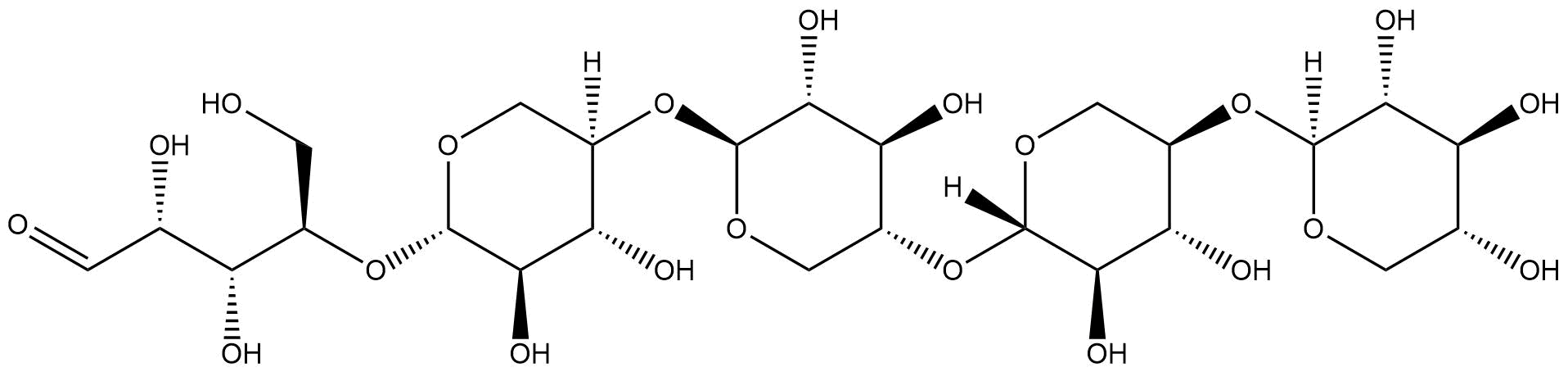


Product name: Xylopentaose
Synonym name: Xylopentaose (6CI,7CI); O-β-D-Xylopyranosyl-(1-4)-O-β-D-xylopyranosyl-(1-4)-O-β-D-xylopyranosyl-(1-4)-O-β-D-xylopyranosyl-(1-4)-D-xylose
Catalogue No.: BP4061
Cas No.: 49694-20-4
Formula: C25H42O21
Mol Weight: 678.59
Botanical Source:
Physical Description: White powder
Type of Compound: Oligose
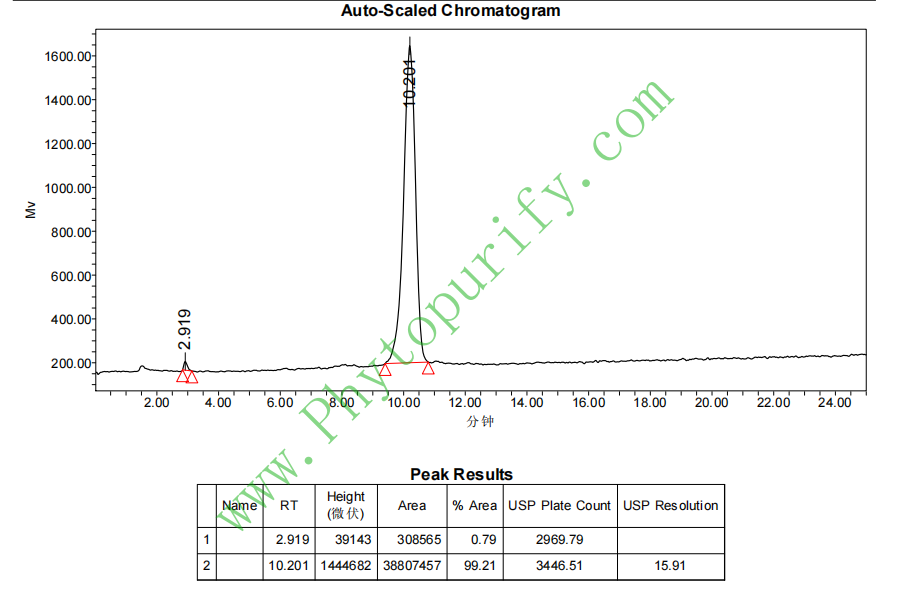
Purity: 95%~99%
Analysis Method: HPLC-DAD or/and HPLC-ELSD
Identification Method: Mass, NMR
Packing: Brown vial or HDPE plastic bottle
Storage: Store in a well closed container, protected from air and light. Put into refrigerate or freeze for long term storage.
Whenever possible, you should prepare and use solutions on the same day. However, if you need to make up stock solutions in advance, we recommend that you store the solution as aliquots in tightly sealed vials at -20℃. Generally, these will be useable for up to two weeks.
The product could be supplied from milligrams to grams
Inquire for bulk scale.
For Reference Standard and R&D, Not for Human Use Directly.
HPLC of Xylopentaose
Storage conditions:Short-term storage at 2~8℃, long-term storage at -20 ~ -80℃
333.6700
-3.4262
-3.4267
119.3916
.5009
.1664
Low
16.0496
5.8203
Yes
No
No
No
No
No
0.3
Yes
Yes
Yes
Yes
Xylopentao, as an important natural polysaccharide oligosaccharide, has attracted widespread attention in the field of natural product pharmacology in recent years. Due to its significant prebiotic activity, it can regulate the balance of intestinal microbiota and promote host health, making it a hot research topic. Xylose is a degradation product of xylan, which is an oligosaccharide composed of five xylose units connected by β -1,4-glycosidic bonds. Its unique structure endows it with good water solubility and biocompatibility, enabling it to perform multiple physiological functions in the intestine.
Probiotics, as important factors in regulating gut microbiota, can selectively promote the growth of beneficial bacteria such as Bifidobacterium, improve intestinal barrier function, and regulate immune responses. Wood pentose regulates multiple signaling pathways through interactions with intestinal epithelial cells and immune cell surface receptors, exhibiting significant anti-inflammatory, immune regulatory, and intestinal barrier repair effects. In addition, the low toxicity and good safety of wood pentose make it have broad application prospects in the development of functional foods and drugs.
This article will systematically review the chemical structure and physicochemical properties, plant sources, and extraction methods of xylooligosaccharides, with a focus on their pharmacological activity and mechanism of action. It will evaluate their pharmacological properties and pharmacokinetic characteristics, explore their clinical application potential, and provide comprehensive theoretical basis and practical guidance for related research.
Xylopentao (CAS number: 49694-20-4) is an oligosaccharide formed by connecting five xylose (D-xylose) units through β -1,4-glycosidic bonds. Its molecular formula is C25H42O26, with a molecular weight of 678.59 Da. The structural characteristics of xylooligosaccharides are linear chains, with reducing hydroxyl groups at the end and high hydrophilicity.
In terms of physicochemical properties, the LogP value of xylooligosaccharides is -3.4262, indicating its high hydrophilicity and suitability for biological activity in aqueous environments. Its polar surface area (TPSA) is as high as 333.67 Å ², indicating that the molecule has abundant polar functional groups, which facilitate the formation of hydrogen bonds and other non covalent interactions with biomolecules. Excellent water solubility (approximately 119.39 mg/mL), which is beneficial for intestinal absorption and action after oral administration. The low permeability of the blood-brain barrier suggests that its main target is limited to the intestine and surrounding tissues, reducing the risk of central nervous system side effects. The hERG channel inhibition experiment showed a negative result, indicating a low risk of cardiotoxicity associated with xylooligosaccharides. The Ames mutagenicity test score is 0.3, indicating extremely low genotoxicity and good safety.
In summary, the chemical structure and physicochemical properties of xylooligosaccharides have laid a solid foundation for their use as prebiotics and intestinal function regulators.
Wood pentose mainly comes from the polysaccharides in plant cell walls. Xylan is the main polysaccharide component in plant cell walls, second only to cellulose. It is widely present in grasses (such as corn, wheat, oats), woody plants (such as poplar and eucalyptus), and certain algae. The structure of xylan is complex, containing multiple sugar units and side chains. Through enzymatic hydrolysis or chemical degradation, different degrees of polymerization of xylose oligosaccharides can be obtained, among which xylooligosaccharides are typical pentameric products.
The common methods for extracting wood pentose include:
Enzymatic hydrolysis Xylooligosaccharides with the desired degree of polymerization can be obtained by using xylanase to specifically hydrolyze xylan and controlling reaction conditions (pH, temperature, enzyme dosage). This method is mild, the product purity is high, and the biological activity is well preserved.
Acid hydrolysis method Using dilute acid (such as dilute sulfuric acid) to hydrolyze xylan at a certain temperature, the product contains various degrees of polymerization of xylose oligosaccharides. This method has low cost, but it is prone to producing by-products and requires subsequent purification.
Membrane separation and chromatographic purification: Enzymatic or acidolysis products are graded by ultrafiltration, nanofiltration and other membrane technologies, and then further purified by ion exchange chromatography and gel permeation chromatography to obtain high-purity xylapentaose.
Fermentation method Some microorganisms can secrete xylanase and produce pentose through solid-state or liquid fermentation processes, which has the advantage of being environmentally friendly.
At present, industrial scale production mostly adopts enzymatic hydrolysis combined with membrane separation technology to ensure the high purity and biological activity of xylooligosaccharides.
Wood pentose, as a typical prebiotic, can selectively promote the proliferation of beneficial bacteria such as Bifidobacterium and improve the intestinal microbiota environment. Multiple in vitro and animal experiments have shown that xylooligosaccharides significantly increase the number of beneficial bacteria in the gut, inhibit the growth of potential pathogenic bacteria, and maintain microbial diversity and balance.
Wood pentose exerts anti-inflammatory effects by regulating the intestinal immune microenvironment. Research has shown that xylooligosaccharides can reduce the expression of intestinal inflammatory factors such as TNF - α and IL-6, promote the secretion of anti-inflammatory factor IL-22, and enhance mucosal immune barrier function. In addition, wood pentose activates intestinal innate immune cells and enhances the host's defense ability against pathogenic microorganisms.
The integrity of the intestinal barrier is crucial for maintaining the health of the body. Wood pentose can promote the expression of tight junction proteins (such as OCTN, ZO1, CLDN1) in intestinal epithelial cells, enhance intercellular connections, reduce intestinal permeability, prevent harmful substances and inflammatory factors from entering the bloodstream, and thus protect intestinal barrier function.
Xylopentasaccharide regulates lipid and glucose metabolism by activating intestinal short chain fatty acid receptors GPR41 and GPR43, and has potential anti obesity and anti diabetes effects. The generation of short chain fatty acids promotes energy metabolism and inflammation inhibition, further supporting the metabolic health benefits of xylooligosaccharides.
Although wood pentose has low blood-brain barrier permeability, it indirectly affects central nervous system function by regulating the gut brain axis. Studies suggest that it may improve neuroinflammation and cognitive dysfunction, which is worth further exploration.
The biological effects of wood pentose are mainly achieved through interactions with various molecular targets:
TLR4 and TLR2 (Toll like receptors 4 and 2)
Wood pentose can regulate the activity of TLR4 and TLR2 on the surface of intestinal immune cells, regulate downstream NF - κ B signaling pathway, inhibit excessive inflammatory response, and maintain immune homeostasis.
MUC2 (Mucin 2)
Wood pentose promotes the secretion of MUC2 by intestinal epithelial cells, enhances the thickness of the mucus layer, constructs a physical barrier, and prevents the invasion of pathogenic microorganisms.
IL22 (Interleukin-22)
By stimulating the expression of IL22, xylooligosaccharides promote intestinal epithelial cell repair and antimicrobial peptide production, enhancing mucosal defense.
OPLN, ZO1, CLDN1 (tight junction protein)
Wood pentose upregulates the expression of these key tight junction proteins, repairing and maintaining the integrity of the intestinal epithelial barrier.
GPR43 and GPR41 (short chain fatty acid receptors)
Wood pentose promotes the production of short chain fatty acids in the intestine, activates GPR43 and GPR41, and regulates immune and metabolic functions.
BIFIDO (Bifidobacterium)
Wood pentose as a substrate promotes the growth of bifidobacteria, indirectly regulating intestinal immunity and metabolic environment.
In summary, xylooligosaccharides achieve their prebiotic and intestinal protective functions through multi-target and multi pathway synergistic effects.
Wood pentose has good drug safety and biocompatibility. Its low molecular weight and high hydrophilicity are beneficial for the development of oral formulations. A low LogP value indicates that it is not easily able to cross lipid membranes and is mainly limited to local intestinal effects, reducing the risk of systemic side effects. The hERG channel has no inhibitory effect and reduces the risk of cardiac toxicity. The Ames test results showed no significant mutagenicity and high safety.
Due to the molecular structure and polarity of xylooligosaccharides, they are mainly degraded and utilized by gut microbiota after oral administration, with very little absorption into the bloodstream and low blood-brain barrier permeability. Its metabolism mainly relies on the fermentation of intestinal microbiota, producing short chain fatty acids and other metabolites. The main route of excretion is feces. The pharmacokinetic characteristics of xylooligosaccharides determine that their effects are mainly limited to the intestinal environment, making them suitable for development as intestinal targeted drugs or functional food ingredients.
With the deepening understanding of the importance of intestinal health, the clinical potential of xylooligosaccharides as a new type of prebiotic is becoming increasingly prominent. It has broad prospects in the following fields:
Adjuvant treatment for intestinal diseases
Wood pentose can be used as an adjuvant therapy for inflammatory bowel disease (IBD), irritable bowel syndrome (IBS) and other diseases, reducing symptoms and improving quality of life by regulating gut microbiota and repairing barriers.
Metabolic disease management
By regulating intestinal flora and metabolic signals, xylapentaose is expected to assist in the treatment of obesity, type 2 diabetes and lipid metabolism disorders, with potential metabolic regulation.
Immune regulation and anti-inflammatory effects
Wood pentose can serve as an immunomodulatory agent, assisting in the prevention and alleviation of chronic inflammation related diseases, and promoting immune homeostasis in the body.
Functional foods and nutritional supplements
Wood pentose is suitable for development as a functional food ingredient due to its safety and prebiotic properties, meeting consumers' needs for intestinal health.
Diseases related to the gut brain axis
Future research can explore the potential of xylooligosaccharides to affect neurological diseases such as neuroinflammation and cognitive impairment through the gut brain axis.
However, the clinical application of wood pentose is still in its infancy, and there is an urgent need for more systematic clinical trials to verify its efficacy and safety, clarify the optimal dosage and administration regimen. At the same time, the production process and quality control standards of wood pentose need to be further improved to ensure its stability and biological activity.
Wood pentose, as a natural xylose oligosaccharide, exhibits significant prebiotic activity and intestinal protective function due to its unique chemical structure and excellent physicochemical properties. Wood pentose plays an important role in maintaining intestinal health and preventing related diseases by regulating gut microbiota, enhancing intestinal barrier, regulating immune response and metabolic signals. Its good safety and pharmacological properties provide a solid foundation for the development of functional foods and intestinal targeted drugs.
Future research should focus on in-depth analysis of the mechanism of action of xylooligosaccharides, clinical efficacy verification, and formulation development, in order to promote their transformation from laboratory research to clinical application. With the continuous development of gut microbiota and natural product pharmacology, xylooligosaccharides are expected to become an important innovative molecule in the field of gut health, contributing new strength to human health.
