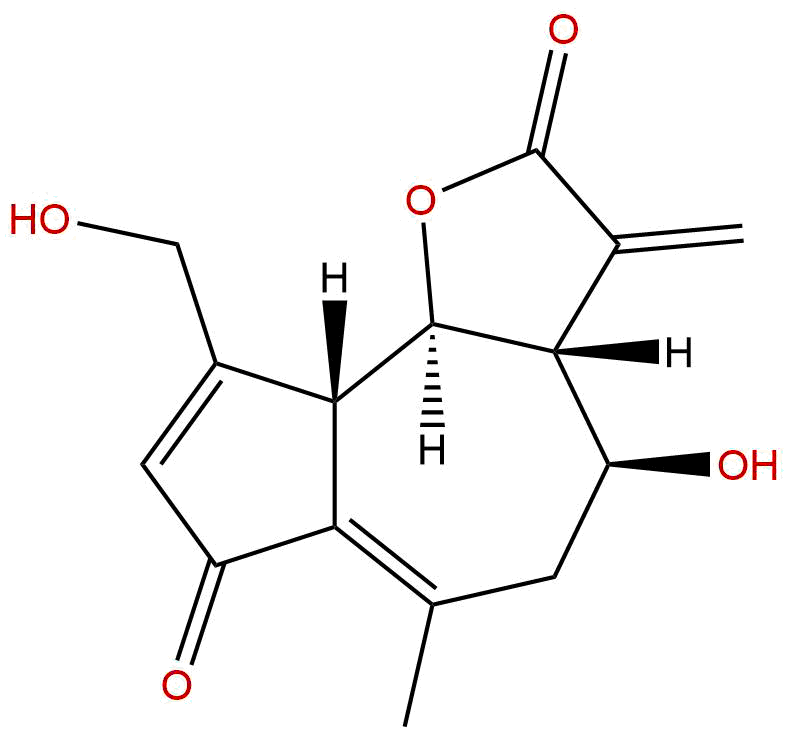


Product name: Lactucin
Synonym name:
Catalogue No.: BP5358
Cas No.: 1891-29-8
Formula: C15H16O5
Mol Weight: 276.288
Botanical Source:
Type of Compound: Terpenoids
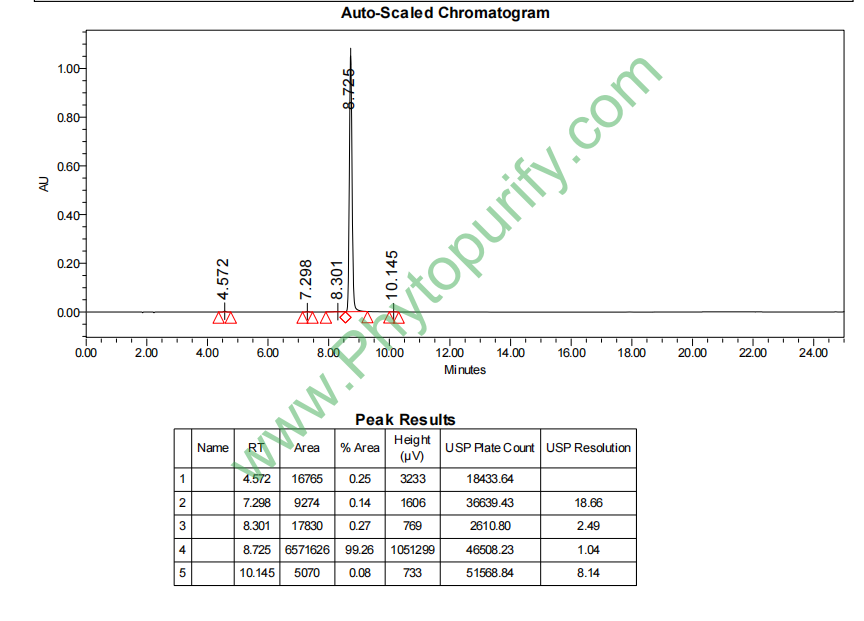
Purity: 95%~99%
Analysis Method: HPLC-DAD or/and HPLC-ELSD
Identification Method: Mass, NMR
Packing: Brown vial or HDPE plastic bottle
Storage: Store in a well closed container, protected from air and light. Put into refrigerate or freeze for long term storage.
Whenever possible, you should prepare and use solutions on the same day. However, if you need to make up stock solutions in advance, we recommend that you store the solution as aliquots in tightly sealed vials at -20℃. Generally, these will be useable for up to two weeks.
The product could be supplied from milligrams to grams
Inquire for bulk scale.
For Reference Standard and R&D, Not for Human Use Directly.
HPLC of Lactucin
Storage conditions:Short-term storage at 2~8℃, long-term storage at -20 ~ -80℃
83.8300
.1770
.1767
5.4518
2.6229
8.6187
High
39.6150
4.6139
No
No
No
No
Yes
No
0.0
Yes
Yes
Yes
Yes
Natural products, as an important source of drug discovery, play an indispensable role in the long history of human fight against diseases. Isolating and identifying small molecule compounds with biological activity from traditional herbs, and elucidating their pharmacological mechanisms, is an important paradigm in modern medicinal chemistry and pharmacology research. Among numerous phytochemicals with medicinal value, sesquiterpene lactones have attracted much attention due to their structural diversity and significant biological activity. Lactucin, as a typical azulene furan sesquiterpene lactone, is derived from the Asteraceae plant chicory(Cichorium intybus L. One of the active ingredients isolated from ().
The discovery of mountain lettuce extract (CAS number: 1891-29-8) is closely related to the traditional medicinal history of chicory. Chicory, as a medicinal and edible plant, has its roots, leaves, and whole plant widely used in traditional medical systems, especially in Europe and Asia, to treat digestive system diseases, inflammation, fever, and pain. Modern scientific research has revealed the complexity of the bitter components in chicory, among which mountain lettuce extract and its related sesquiterpene lactones (such as mountain lettuce extract, wild lettuce glycoside, etc.) are considered the main material basis for its pharmacological activity. Early research mainly focused on its bitter taste characteristics and regulatory effects on digestive function. However, in the past two decades, with the advancement of molecular biology and pharmacology techniques, the pharmacological activities of mountain lettuce extract, such as anti-inflammatory, analgesic, anticancer, anti malaria, and sedative effects, have gradually been revealed, making it a highly valuable natural product lead compound for research.
From a chemical structure perspective, mountain lettuce belongs to the guaianolide type sesquiterpenoid lactone, with a core skeleton of 3-methyl-3,3a, 4,5,9a, 9b hexahydroazulenyl [4,5-b] furan-2,7-dione. This molecule carries hydroxyl, methyl, and hydroxymethyl substituents at positions 4, 6, and 9, respectively, and has a specific stereoconfiguration (3aR, 4S, 9aS, 9bR diastereomer). This unique structure endows it with diverse chemical properties and biological activities. Its molecular weight is 276.2880 and LogP value is 0.1770, indicating that it has a certain degree of hydrophilicity. Its topological polar surface area (TPSA) is 83.8300, suggesting that it may have good oral absorption potential. Preliminary pharmacological evaluation shows that lettuce extract has high blood-brain barrier permeability, no risk of hERG inhibition, and a negative Ames test result. These characteristics provide positive signals for its development as a drug lead.
This article aims to provide a systematic professional review of mountain lettuce extract, covering its chemical structure and physicochemical properties, plant sources and extraction methods, comprehensive pharmacological activity research, in-depth exploration of its mechanism of action and molecular targets, evaluation of drug properties and pharmacokinetic characteristics, and prospects for its clinical application prospects. By integrating existing research results, this article aims to outline the clear development trajectory of lettuce extract from natural products to potential drug candidates, providing reference for further research in this field.
The chemical structure of lettuce extract is the core basis of its biological activity. As an azulene furan type sesquiterpene lactone, its skeleton consists of 15 carbon atoms, including a five membered lactone ring (γ - lactone) and a seven membered ring (azulene ring) fused together to form the azulene furan parent nucleus. The specific oxidation and substitution modes of the parent nucleus determine its unique chemical properties.
Structural features:
1. core skeleton 3-methyl-3,3a, 4,5,9a, 9b hexahydroazulene [4,5-b] furan-2,7-dione. Among them, the α - methylene - γ - lactone (- CH2-C=O) structure is a common active group in sesquiterpene lactones and is considered a key site for Michael addition reactions with biological targets such as cysteine thiol groups in proteins, thereby mediating various pharmacological effects.
2. substituent:
* C-4 position Has a hydroxyl group (- OH) and is a secondary alcohol.
* C-6 position Has a methyl group (- CH3).
* C-9 position Containing a hydroxymethyl group (- CH2OH), it is a primary alcohol.
* C-11, 13 positions There exists an extra cyclic methylene group (=CH2) that is conjugated with the carbonyl group of the lactone ring.
3. Stereochemistry Mountain lettuce extract has multiple chiral centers, with absolute configurations of 3aR, 4S, 9aS, and 9bR. This specific stereoconfiguration is crucial for its binding to the target protein.
Physical and chemical properties:
* Molecular formula:C₁₅H₁₆O₅
* molecular weight:276.2880 g/mol
* LogP: 0.1770. The low value indicates that lettuce extract has strong hydrophilicity and good water solubility, which is consistent with its polar characteristics of containing multiple hydroxyl groups (one primary alcohol, one secondary alcohol) and lactone rings in its molecule. A lower LogP value also suggests that it may not easily penetrate the lipid bilayer, but may be absorbed through active transport or cellular bypass pathways.
* Topological Polarity Surface Area (TPSA): 83.8300 Å ². TPSA is an important parameter for predicting drug oral absorption and blood-brain barrier permeability. Generally, molecules with TPSA less than 140 Å ² have good oral absorption potential, while molecules with TPSA less than 60 Å ² are more likely to cross the blood-brain barrier. The TPSA of lettuce extract is 83.83 Å ², which falls between the two, suggesting that it may have some oral absorption capacity, but its ability to cross the blood-brain barrier may be limited. However, the pharmacological parameters indicate a high blood-brain barrier, which may be a prediction based on specific models or experimental data and deserves further validation.
* Water solubility:5.4518 mg/mL。 This value indicates that lettuce extract has good solubility in water, which is beneficial for its interaction with targets in aqueous environments and also provides convenience for its formulation development.
* Stability As a sesquiterpene lactone, lettuce extract is prone to undergo ring opening reactions in its α - methylene - γ - lactone ring under alkaline conditions, resulting in loss of activity. Relatively stable under acidic conditions. In addition, it is also sensitive to light and heat, and attention should be paid to avoiding light and low temperatures during extraction, separation, and storage.
Mountain lettuce extract is mainly found in Asteraceae plants, with chicory being the most important source(Cichorium intybus L.)。 Chicory is a perennial herbaceous plant widely distributed in Europe, Asia, North Africa, and the Americas. Its different parts (roots, leaves, flowers) all contain mountain lettuce extract, but the content varies significantly. Usually, the content of mountain lettuce extract in chicory roots is the highest, especially during autumn harvesting, when its bitter components (including mountain lettuce extract, mountain lettuce bitter extract, 8-deoxy mountain lettuce extract, etc.) reach their peak. In addition, other Asteraceae plants such as lettuce(Lactuca sativa L. ) and its wild relatives, dandelion(Taraxacum Spp.) also contains a small amount of mountain lettuce extract.
Extraction method:
The extraction of mountain lettuce extract usually follows the classic process of natural product chemistry, aiming to efficiently and selectively enrich target compounds from plant substrates.
In recent years, significant progress has been made in the pharmacological activity research of lettuce extract, revealing its potential in multiple fields such as anti-inflammatory, anticancer, analgesic, antimalarial, and sedative effects.
1. Anti inflammatory activity
One of the most noteworthy activities of mountain lettuce extract is its anti-inflammatory effect. Multiple in vitro and in vivo studies have confirmed that it can effectively inhibit the production of various inflammatory mediators and cytokines.
* In vitro research In the lipopolysaccharide (LPS) - stimulated macrophage model (such as RAW264.7 cells), lettuce extract can significantly inhibit the production of nitric oxide (NO) and prostaglandin E2 (PGE2), while downregulating the expression of inducible nitric oxide synthase (iNOS) and cyclooxygenase-2 (COX-2). In addition, it can also inhibit the release of pro-inflammatory cytokines such as tumor necrosis factor - α (TNF - α), interleukin-1 β (IL-1 β), and interleukin-6 (IL-6).
* In vivo research In various animal models of acute inflammation (such as carrageenan induced rat toe swelling and xylene induced mouse ear swelling), mountain lettuce extract has shown significant anti-inflammatory effects, with a strength of action comparable to or better than positive control drugs (such as indomethacin).
2. Anti cancer activity
Mountain lettuce extract exhibits cytotoxicity towards various cancer cell lines and can induce cell apoptosis.
* Inducing apoptosis Research has shown that lettuce extract can induce cancer cell apoptosis by activating the endogenous apoptotic pathway (mitochondrial pathway). For example, in the models of human liver cancer cells (HepG2), human breast cancer cells (MCF-7), human colon cancer cells (HT-29), etc., the treatment of kaempferin can lead to the decline of mitochondrial membrane potential, the release of cytochrome c, and then activate Caspase-9 and Caspase-3, and finally lead to apoptosis.
* Inhibition of proliferation Mountain lettuce extract can also inhibit cancer cell proliferation by affecting the cell cycle. Research has shown that it can block cancer cells in the G2/M or S phase, thereby preventing their division.
* Anti transfer Some studies suggest that lettuce extract may inhibit the invasion and migration ability of cancer cells by suppressing the activity or expression of matrix metalloproteinases (MMPs).
3. Analgesic activity
The analgesic effect of mountain lettuce extract is closely related to its anti-inflammatory activity, but it may also involve central mechanisms.
* Peripheral analgesia In the formalin induced mouse pain model, mountain lettuce extract can significantly inhibit pain response, especially during the inflammatory phase (second stage), indicating its peripheral analgesic effect.
* Central analgesia In the hot plate test and acetic acid writhing test, mountain lettuce extract also showed certain analgesic effects, suggesting that it may have central analgesic activity. The mechanism may be related to activating opioid receptors or affecting the release of monoamine neurotransmitters such as serotonin and norepinephrine.
4. Anti malaria activity
Mountain lettuce extract against malaria parasites(Plasmodium falciparum)Has a certain inhibitory effect.
* In vitro activity Research has shown that both chloroquine sensitive and chloroquine resistant strains of Plasmodium exhibit certain antimalarial activity, with IC50 values in the micromolar range. Its mechanism of action may be related to inhibiting the fatty acid synthesis of malaria parasites or interfering with their heme detoxification process.
5. Sedative activity
Traditionally, chicory has been used to treat insomnia and anxiety. Modern research has confirmed that lettuce extract has a sedative effect.
* Animal Behavior Experiment In the experiment of spontaneous activity in mice, mountain lettuce extract can significantly reduce the number of spontaneous activities in mice, prolong the sleep time induced by pentobarbital sodium, and exhibit significant sedative and hypnotic effects. The mechanism may be related to enhancing gamma aminobutyric acid (GABA) neurotransmission.
6. Anti allergic activity
According to the provided target information, lettuce extract has potential anti allergic effects. Its related targets include ALOX5 (5-lipoxygenase), HRH1 (histamine H1 receptor), IL4, IL5, IL13, FCER1A (high affinity IgE receptor alpha subunit), TBXA2R (thromboxane A2 receptor), STAT6 (signal transduction and transcription activator 6), and TSLP (thymic stromal lymphopoietin). These targets are all related to key stages of allergic reactions, such as leukotriene synthesis, histamine release, Th2 immune response, IgE mediated degranulation of mast cells, etc. Therefore, mountain lettuce extract may exert anti allergic effects through synergistic effects of multiple targets and pathways.
The pharmacological activity of lettuce extract is the result of the combined action of multiple targets and pathways. Its core mechanism of action can be summarized as follows:
1. Inhibit the NF - κ B signaling pathway
NF - κ B is the core transcription factor of inflammatory response. Mountain lettuce extract can inhibit the activity of I κ B kinase (IKK), prevent the phosphorylation and degradation of I κ B α, and thus inhibit the nuclear translocation and transcriptional activity of NF - κ B. This leads to downregulation of downstream target genes such as iNOS, COX-2, TNF - α, IL-6, etc., which is the key mechanism for its anti-inflammatory effect.
2. Regulating the MAPK signaling pathway
The mitogen activated protein kinase (MAPK) pathway, including ERK, JNK, and p38, plays an important role in cell proliferation, differentiation, and apoptosis. Mountain lettuce extract can inhibit LPS induced phosphorylation of p38 and JNK, thereby suppressing inflammatory response. In cancer cells, it may induce apoptosis by activating the JNK or p38 pathways.
3. Induce endogenous apoptosis pathway
Mountain lettuce extract disrupts mitochondrial membrane potential, promotes cytochrome c release, activates Caspase-9 and Caspase-3, and ultimately leads to cell apoptosis. In addition, it may also promote apoptosis by upregulating the expression of pro apoptotic proteins (such as Bax, Bad) and downregulating the expression of anti apoptotic proteins (such as Bcl-2, Bcl xL).
4. Direct interaction with specific molecular targets
* Michael addition of α - methylene - γ - lactone This is the most classic mechanism of action for sesquiterpene lactones. The α - methylene - γ - lactone structure in lettuce extract molecules is an electrophilic center that can undergo covalent addition reactions (Michael addition) with the thiol group (- SH) of cysteine residues in proteins, thereby altering the structure and function of the target protein. Many key signaling proteins, such as the p65 subunit of NF - κ B and Keap1 (a negative regulator of Nrf2), contain cysteine residues that are sensitive to electrophilic reagents. Mountain lettuce extract may exert its biological activity by modifying these proteins.
* Targeting ALOX5 5-Lipoxygenase is a key enzyme in leukotriene synthesis, playing a central role in allergies and inflammation. Mountain lettuce extract may reduce the production of leukotrienes by directly inhibiting the activity of ALOX5.
* Targeting HRH1 The histamine H1 receptor is the main target of allergic reactions. Mountain lettuce extract may act as an H1 receptor antagonist, blocking histamine induced vasodilation, smooth muscle contraction, and other allergic symptoms.
* Targeting STAT6 STAT6 is a key transcription factor in the IL-4 and IL-13 signaling pathways, and is crucial for Th2 type immune responses. Mountain lettuce extract may inhibit IL-4/IL-13-mediated allergic reactions by suppressing phosphorylation and nuclear translocation of STAT6.
* Targeting TSLP TSLP is a cytokine derived from epithelial cells that can activate dendritic cells and initiate a Th2 type immune response. Mountain lettuce extract may exert anti allergic effects by inhibiting the production or activity of TSLP.
The conversion of mountain lettuce extract from natural products into clinical drugs requires a systematic evaluation of its pharmacological properties.
1. Analysis of pharmacological parameters
* Lipinski's Rule of Five The molecular weight of lettuce extract (276.28<500), LogP (0.177<5), number of hydrogen bond donors (3- OH,<5), and number of hydrogen bond acceptors (5 O atoms,<10) fully comply with the five principles of class drugs, indicating its good potential as an oral medication.
* Blood-brain barrier permeability The pharmacological parameters display 'blood-brain barrier: high'. Although its TPSA (83.83 Å ²) is slightly higher than the commonly believed threshold for easy passage through the blood-brain barrier (<60 Å ²), it may be achieved through active transport or carrier mediated transport mechanisms. This provides a pharmacological basis for its potential sedative, analgesic, and central nervous system related activities.
* HERG inhibition HERG (human Ether - à - go Related Gene) potassium channel inhibition is an important cause of drug cardiac toxicity. Mountain lettuce extract has no risk of hERG inhibition, indicating its good cardiac safety.
* Ames test Ames test is used to detect the mutagenicity of compounds. The Ames test result of lettuce extract is 0.0, indicating that it has no significant genetic toxicity.
2. Pharmacokinetic characteristics
At present, there is insufficient research on the pharmacokinetics of mountain lettuce extract in vivo, but there are some preliminary understandings.
* absorb Based on its good water solubility and LogP value, it is speculated that its oral absorption may be better. However, sesquiterpene lactones may undergo metabolism or degradation in the gastrointestinal tract, and their absolute bioavailability needs further research.
* distribution Its high blood-brain barrier permeability suggests that it can be distributed to the central nervous system. In addition, due to its hydrophilicity, it may mainly be distributed in the extracellular fluid.
* Metabolism Mountain lettuce extract mainly undergoes phase I and phase II metabolism in the body. Phase I metabolism may include reactions such as hydroxylation, oxidation, and reduction; Phase II metabolism mainly combines with glucuronic acid, sulfuric acid, etc. to form metabolites with higher water solubility, which are easier to excrete. Its α - methylene - γ - lactone structure is a sensitive metabolic site.
* excretion Metabolites are mainly excreted through urine and bile.
3. Potential problems and challenges
* Metabolic stability Although the α - methylene - γ - lactone structure endows it with biological activity, it also makes it prone to react with nucleophilic substances (such as glutathione) in the body, leading to rapid metabolism and clearance, thereby affecting its in vivo exposure and half-life.
* selectivity Due to its covalent binding mechanism, mountain lettuce extract may act on various thiol containing proteins, leading to off target effects and potential toxicity. Improving its selectivity is the key to drug development.
* toxicity Although the Ames test is negative, long-term, high-dose use may result in liver toxicity or other organ toxicity. A comprehensive toxicological evaluation is required.
Based on its various pharmacological activities and preliminary evaluation of good pharmacological properties, mountain lettuce extract has shown broad application prospects in multiple therapeutic fields.
1. Inflammatory diseases
The strong anti-inflammatory activity of lettuce extract makes it a promising new drug for the treatment of chronic inflammatory diseases such as rheumatoid arthritis, inflammatory bowel disease, asthma, etc. Its multi-target mechanism of action (inhibition of NF - κ B, MAPK, ALOX5, etc.) may have better efficacy and lower resistance risk than single target drugs.
2. Cancer treatment
As a natural product that induces apoptosis in cancer cells, mountain lettuce extract can be developed as a chemotherapy sensitizer or directly as an anti-cancer drug. Its combination with existing chemotherapy drugs such as cisplatin and paclitaxel may produce synergistic effects and reduce the toxic side effects of chemotherapy drugs. Based on its anti metastatic activity, adjuvant therapy drugs can be developed to prevent tumor recurrence and metastasis.
3. Pain management
The analgesic effect of mountain lettuce extract, especially its dual peripheral and central mechanisms, makes it a promising candidate drug for treating chronic pain such as neuropathic pain and inflammatory pain. It may avoid the addictive side effects of opioid drugs.
4. Allergic diseases
Given its targeting of multiple allergy related targets such as ALOX5, HRH1, STAT6, TSLP, etc., mountain lettuce extract has the potential to be developed as a novel drug for the treatment of allergic diseases such as allergic rhinitis, asthma, and atopic dermatitis. Its multi-target effect may be more effective than single antihistamines or leukotriene receptor antagonists.
5. Neurological disorders
Its sedative effect and high permeability to the blood-brain barrier suggest that it can be used to treat neurological disorders such as anxiety and insomnia. In addition, its anti-inflammatory and antioxidant effects may also have potential therapeutic value for neurodegenerative diseases such as Alzheimer's disease and Parkinson's disease.
Future research directions:
1. structural optimization The key to transforming mountain lettuce extract into clinical candidate drugs is to modify its structure, such as introducing specific functional groups to enhance its metabolic stability, improve target selectivity, and reduce toxicity. For example, one can attempt to modify the α - methylene - γ - lactone ring or introduce other functional groups to improve its pharmacokinetic properties.
2. In depth pharmacokinetic research Systematic in vivo pharmacokinetic studies are needed, including oral bioavailability, tissue distribution, metabolic pathways, excretion patterns, etc., to comprehensively understand its fate in the body.
3. Comprehensive toxicological evaluation Conduct acute and chronic toxicity tests, reproductive toxicity tests, genetic toxicity tests, etc. to evaluate their safety.
4. In depth study of the mechanism of action Using proteomics, chemical proteomics and other techniques, systematically identify the direct target protein of lettuce extract, elucidate its molecular mechanism, and provide a basis for structural optimization and indication selection.
5. Formulation development Develop appropriate drug delivery systems (such as liposomes, nanoparticles, etc.) to improve their bioavailability, targeting, and stability.
Mountain lettuce extract, a furan type sesquiterpene lactone derived from the traditional herb chicory, has become a prominent star in the field of natural product pharmacology due to its unique chemical structure and multifaceted pharmacological activities. From anti-inflammatory, analgesic, anticancer to anti malaria, anti allergic, and sedative, its broad spectrum of biological activities demonstrates the enormous potential of natural products as drug leads. Its mechanism of action involves the regulation of key signaling pathways such as NF - κ B and MAPK, as well as direct effects on specific molecular targets such as ALOX5, HRH1, and STAT6, reflecting the synergistic effect of multiple targets and pathways.
The preliminary drug efficacy evaluation is encouraging, as it conforms to the five principles of generic drugs, has no risk of hERG inhibition or Ames test positivity, and has high blood-brain barrier permeability. However, its poor metabolic stability and potential lack of selectivity are the main challenges facing its clinical application. In the future, these obstacles are expected to be overcome through structural optimization, in-depth pharmacokinetic and toxicological research, and innovative formulation development. The research on mountain lettuce extract not only provides modern scientific basis for understanding the traditional medicinal value of chicory, but also opens up new paths for the development of new drugs for the treatment of inflammation, cancer, pain, allergies, and neurological diseases. With the continuous deepening of research, we have reason to believe that mountain lettuce extract and its derivatives will play a more important role in future drug discovery.
