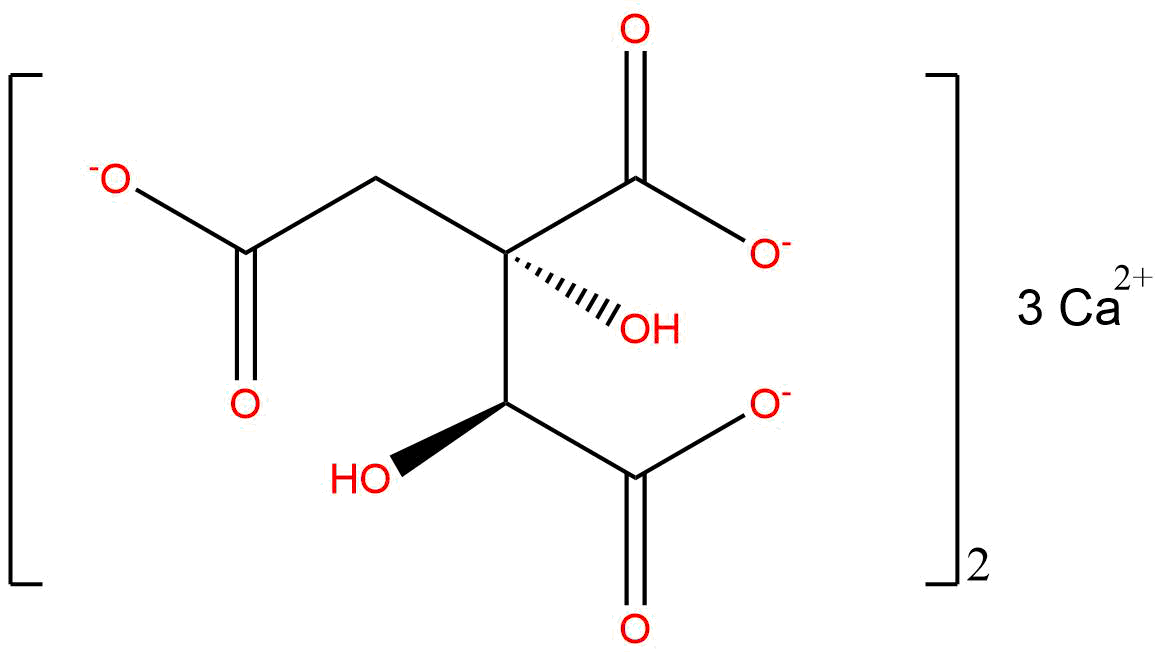


Product name: Calcium (−)-hydroxycitrate
Synonym name: (-)-Hydroxycitric acid tricalcium salt; (-)-Calcium hydroxycitrate;(-)-Hydroxycitric acid(27750-10-3)
Catalogue No.: BP1577
Cas No.: 921226-01-9
Formula: (C6H5O8)2 · Ca3
Mol Weight: 530.43
Botanical Source:
Physical Description:
Type of Compound:
Purity: 95%~99%
Analysis Method: HPLC-DAD or/and HPLC-ELSD
Identification Method: Mass, NMR
Packing: Brown vial or HDPE plastic bottle
The product could be supplied from milligrams to grams. Inquire for bulk scale.
We provide solution to improve the water-solubility of compounds, thereby facilitating the variety of activity tests and clinic uses.
For Reference Standard and R&D, Not for Human Use Directly.
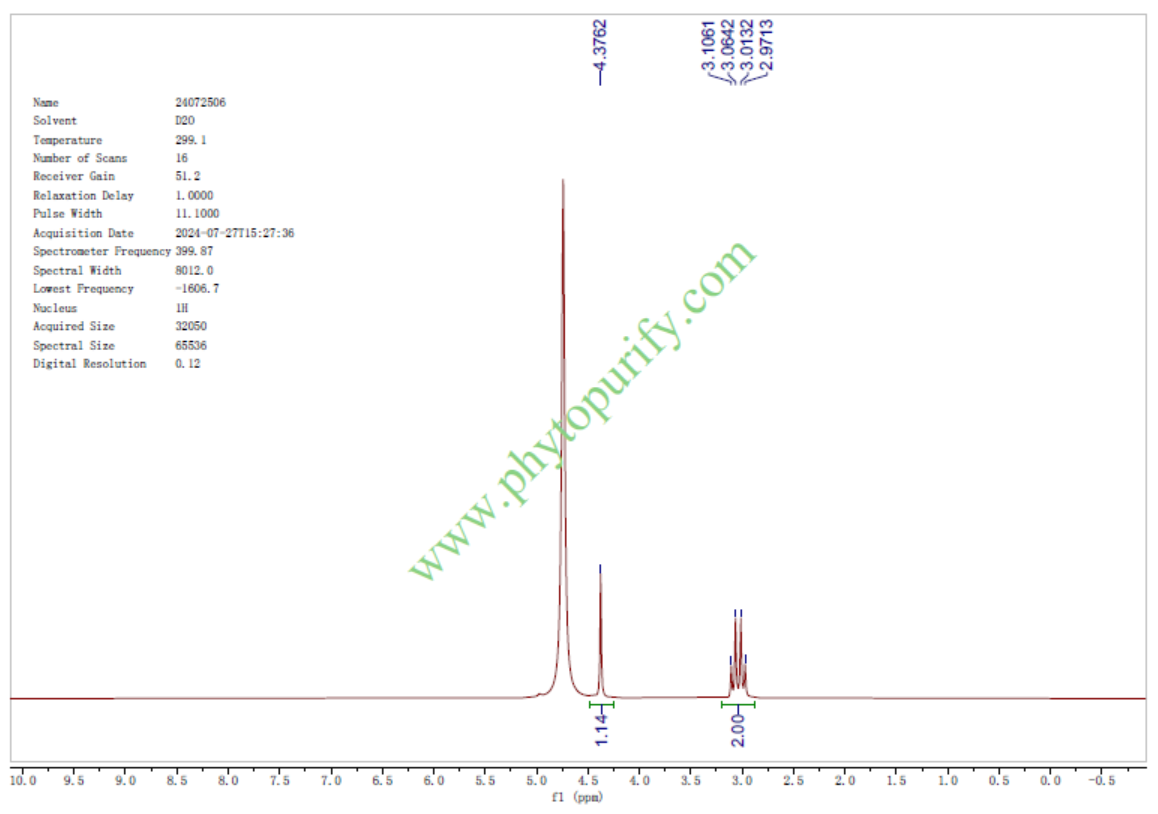
HNMR of Calcium (−)-hydroxycitrate
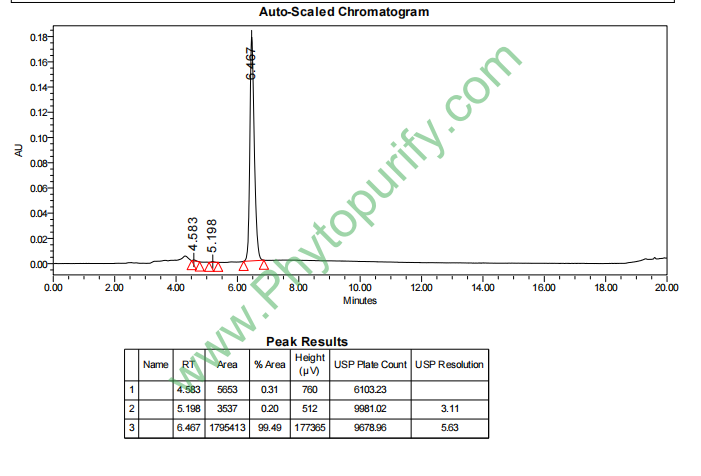
HPLC of Calcium (-)-hydroxycitrate
Storage conditions:Short-term storage at 2~8℃, long-term storage at -20 ~ -80℃
152.3600
-1.2000
-2.7700
110.0100
.4200
.6000
Low
30.9200
6.0600
Yes
No
No
No
No
No
0.0
Yes
Yes
Yes
Yes
Obesity and its related metabolic syndrome, such as type 2 diabetes, nonalcoholic fatty liver disease and cardiovascular disease, have become a major global public health challenge. In the search for safe and effective anti obesity strategies, natural products have attracted much attention due to their long history of use and potential diverse mechanisms of action. Calcium hydroxycitrate, as a calcium salt form of hydroxycitrate extracted from plants of the genus Tenghuang, has been a focal compound in the field of anti obesity research since the second half of the last century. It initially attracted the interest of the scientific community as a competitive inhibitor of adenosine triphosphate citrate lyase, which can interfere with the de novo synthesis of fatty acids. However, as research deepens, it has been found that its pharmacological effects go far beyond this, involving multiple levels such as energy metabolism, appetite regulation, adipocyte differentiation, and inflammatory response, forming a complex network. This article aims to systematically review the chemical properties, plant sources, pharmacological activities, multi-target mechanisms of action, pharmacological characteristics, and clinical application prospects of calcium hydroxycitrate, in order to provide a comprehensive academic perspective for the in-depth research and development of this natural product.
The chemical essence of calcium hydroxycitrate is the tricalcium salt of (-) - hydroxycitrate. The parent compound (-) - hydroxycitric acid is a hexacarbon tricarboxylic acid with a highly similar structure to citric acid, except that its C-2 position is replaced by a hydroxyl group, forming a unique chiral center. The molecular formula of its calcium salt form (CAS: 921226-01-9) is C6H8O8 · 3/2Ca, with a molecular weight of 208.12. This modification significantly improves the stability and water solubility of the compound, making it more suitable for development as a dietary supplement or potential drug.
From the analysis of drug related parameters, hydroxycitrate calcium exhibits typical hydrophilic small molecule characteristics. The calculated lipid water partition coefficient is -1.20, indicating its high hydrophilicity, which is closely related to the polar functional groups such as carboxylate and hydroxyl groups abundant in the molecule. The topological polarity surface area is as high as 152.36 Å ², further confirming its strong polarity characteristics. These properties directly determine its excellent water solubility, with a reported value of 110.01 mg/mL in literature, ensuring its good solubility and absorption potential in the gastrointestinal tract. However, high polarity and large TPSA also limit its ability to penetrate biofilms, especially its blood-brain barrier permeability has been evaluated as "low", which means it may primarily act through the peripheral system and have limited direct effects on the central nervous system. In early safety screening, the compound did not show significant hERG potassium channel inhibitory activity (low risk of arrhythmia) and Ames test mutagenicity (0.0), providing preliminary in vitro evidence for its relatively good safety.
The main natural sources of calcium hydroxycitrate are various plants in the family Theaceae and genus Theaceae, among which the most representative are Tenghuang This evergreen tree is native to Southeast Asia, and its fruit, especially the skin, is rich in (-) - hydroxycitric acid. Traditionally, local residents use its fruit shells as seasonings and preservatives, but modern research focuses on the extraction and purification of its anti obesity active ingredients.
The industrial production of calcium hydroxycitrate usually adopts the following process: first, dry rattan fruit shells are crushed, and then extracted with water or dilute acid solution to free the water-soluble hydroxycitric acid. Subsequently, plant residues were removed through filtration, centrifugation, and other steps to obtain crude extract. The crude extract undergoes steps such as decolorization with activated carbon and purification with ion exchange resin to remove impurities such as pigments, polysaccharides, and tannins. The key step is salt formation: adding an appropriate amount of calcium source (such as calcium hydroxide or calcium chloride) to the purified hydroxycitric acid solution, under controlled pH and temperature conditions, to combine (-) - hydroxycitric acid with calcium ions, forming insoluble or slightly soluble hydroxycitric acid calcium precipitate. Finally, after filtration, washing and drying (usually spray drying to obtain a powder with good fluidity), high-purity calcium hydroxycitrate products can be obtained. The entire process requires strict control of conditions to ensure the production of products with specific crystal forms and high bioavailability, while maximizing their biological activity.
Numerous preclinical and clinical studies have confirmed that hydroxycitrate calcium has multiple anti obesity and related metabolic regulatory activities.
Weight loss and inhibition of body fat accumulation This is its core pharmacological effect. In various diet induced obesity animal models, supplementing with calcium hydroxycitrate can significantly reduce the rate of weight gain, decrease the deposition of white adipose tissue (especially visceral fat), without affecting lean body mass. Its effect is related to inhibiting fatty acid synthesis and promoting fat oxidation.
Regulating lipid metabolism Calcium hydroxycitrate can reduce the levels of triglycerides, total cholesterol, and low-density lipoprotein cholesterol in serum and liver, while possibly increasing high-density lipoprotein cholesterol and improving the overall lipid profile. It can also reduce lipid accumulation in the liver and has potential value in preventing and improving non-alcoholic fatty liver disease.
Regulating appetite and energy expenditure Some studies have reported that hydroxycitrate calcium may increase satiety and reduce food intake by affecting central or peripheral signaling molecules related to satiety, such as leptin and neuropeptides. In addition, it may promote thermogenesis and increase resting energy expenditure by upregulating uncoupling proteins in brown adipose tissue and beige adipose tissue.
Improving insulin sensitivity and blood glucose control: In obesity and diabetes models, calcium hydroxycitrate showed the effects of improving glucose tolerance, reducing fasting blood glucose and insulin levels. This is related to its ability to reduce lipid toxicity, improve adipose tissue function, and potentially directly affect the insulin signaling pathway.
anti-inflammatory effect Chronic low-grade inflammation is the core link of obesity related metabolic disorders. Research has shown that calcium hydroxycitrate can downregulate the expression of pro-inflammatory factors (such as TNF - α, IL-6) in adipose tissue and liver, while possibly increasing the levels of anti-inflammatory factors (such as adiponectin), thereby alleviating metabolic inflammation.
The anti obesity effect of calcium hydroxycitrate is not achieved through a single target, but acts on a complex metabolic regulatory network involving multiple key molecules such as transcription factors, metabolic enzymes, hormones, and receptors.
Core enzyme inhibition: ATP citrate lyase Its classic mechanism is as a competitive inhibitor of ATP citrate lyase. This enzyme catalyzes the conversion of citric acid to acetyl CoA, which is a key step in linking glycolysis with de novo synthesis of fatty acids and cholesterol. Inhibiting this enzyme can directly reduce the carbon source units used for synthesizing fatty acids and cholesterol, thereby inhibiting lipid synthesis in the liver and adipose tissue.
Key transcription factors regulating fat production and differentiation:
Related molecules affecting fat synthesis and storage:
Neuroendocrine targets that regulate energy balance and appetite:
In summary, calcium hydroxycitrate works synergistically with multiple targets and pathways to combat obesity and its metabolic complications by inhibiting fatty acid synthesis (ACLY-FASN axis), regulating adipocyte differentiation and function (PPARG, FABP4), improving adipokine secretion (LEP, ADIPOQ), activating the central appetite suppression pathway (POMC), and promoting peripheral heat production and energy dissipation (ADRB3-UCP1 axis).
As a natural dietary supplement ingredient, calcium hydroxycitrate has a relatively good medicinal basis. Its excellent Water solubility Ensure rapid dissolution after oral administration. However, its high polarity and ionic properties lead to its Membrane permeability Generally, oral bioavailability is a key factor limiting its efficacy. Research has shown that the absorption of its prototype drug in the gastrointestinal tract is limited, and the absorption mechanism may involve active transport or paracellular pathways. After absorption, calcium hydroxycitrate rapidly dissociates into calcium ions and hydroxycitrate ions in the body. Hydroxycitrate may be involved in cellular metabolism and partially excreted in its original form through the kidneys. Its pharmacokinetic characteristics are characterized by a short half-life and require multiple daily administrations to maintain effective blood drug concentrations.
In safety Long term human experience has shown that hydroxycitrate calcium has good tolerance at recommended doses. Common adverse reactions are usually mild and related to the gastrointestinal tract, such as bloating, nausea, diarrhea, etc., which may be related to their high osmotic pressure in the intestine or their impact on the gut microbiota. Its lack of hERG inhibition and mutagenic risk further supports its potential for cardiovascular safety and genotoxicity safety. However, it should be noted that as a form of calcium salt, long-term high-dose intake should consider its potential impact on the balance of calcium and phosphorus metabolism. In terms of drug interactions, it is recommended to take them intermittently with other supplements or medications as they may affect mineral absorption (such as forming insoluble complexes with iron, magnesium, zinc, etc.).
At present, calcium hydroxycitrate is mainly used as dietary supplement Sold in the global market for weight management and metabolic health assistance. Although its effectiveness varies among individuals and some clinical research results are controversial, meta-analysis suggests that it can produce mild but significant weight loss and lipid-lowering effects when combined with moderate dietary control and exercise.
Looking ahead, its clinical application development may focus on the following directions:
1. Formulation optimization and bioavailability enhancement By developing new delivery systems (such as liposomes, nanoemulsions, phospholipid complexes, etc.) or prodrug strategies, the intestinal absorption rate and bioavailability can be improved, thereby enhancing efficacy, reducing dosage and gastrointestinal side effects.
2. Precise application and audience segmentation Future research needs to clarify which obesity subtypes (such as those primarily involved in fatty acid synthesis and those resistant to leptin) have the best response to hydroxycitrate calcium therapy, in order to achieve personalized nutritional interventions.
3. Combination therapy strategy Given its multi-target mechanism of action, combining it with other natural products (such as catechins, resveratrol) or drugs (such as GLP-1 receptor agonists) that have complementary mechanisms may produce synergistic effects and reduce the dosage and side effects of a single drug.
4. Expand indications Based on its ability to improve insulin resistance, dyslipidemia, and anti-inflammatory effects, it Type 2 diabetes, non-alcoholic fatty liver disease, metabolic syndrome The prevention and adjuvant treatment of obesity related complications have broad application prospects and deserve more rigorous clinical research to verify.
5. In depth mechanism exploration Using omics techniques (metabolomics, gut microbiome metagenomics) to further elucidate its systemic mechanisms of action, particularly its impact on the gut microbiota host metabolic axis, may reveal new targets of action and application value.
Calcium hydroxycitrate, as a natural anti obesity compound with a research history of over half a century, is valuable not only for its classic role as an ATP citrate lyase inhibitor, but also for its increasingly clear multi-target network pharmacological properties that act on multiple nodes of energy metabolism balance. From regulating fat production and breakdown, to affecting appetite center and peripheral thermogenesis, to improving adipokine profile and metabolic inflammation, it exhibits multifaceted capabilities in combating complex metabolic diseases. Although there are still challenges in terms of bioavailability and clinical efficacy consistency, its good safety and unique mechanism of action have laid a solid foundation for its continued development. With the advancement of formulation technology, the deepening of precision nutrition concepts, and a deeper understanding of their systemic biological effects, calcium hydroxycitrate is expected to evolve from a popular dietary supplement to a more targeted and effective component of comprehensive management plans for obesity and related metabolic diseases. Future research should strive to translate these scientific understandings into more reliable products and clinical practices to address the global obesity challenge.
