Introduction/Overview
Natural products, as an important source of drug discovery, play an irreplaceable role in the long history of human struggle against diseases. Pentacyclic triterpenoids are a class of secondary metabolites widely present in the plant kingdom. They have complex structures and diverse skeletons, exhibiting various biological activities such as anti-inflammatory, anti-tumor, hepatoprotective, and antiviral effects. They are one of the hot areas in new drug development. Among numerous pentacyclic triterpenoids, compounds with Ursane type and Oleanane type skeletons are particularly noteworthy, with Asiatic acid and Tormonic acid being representative examples.
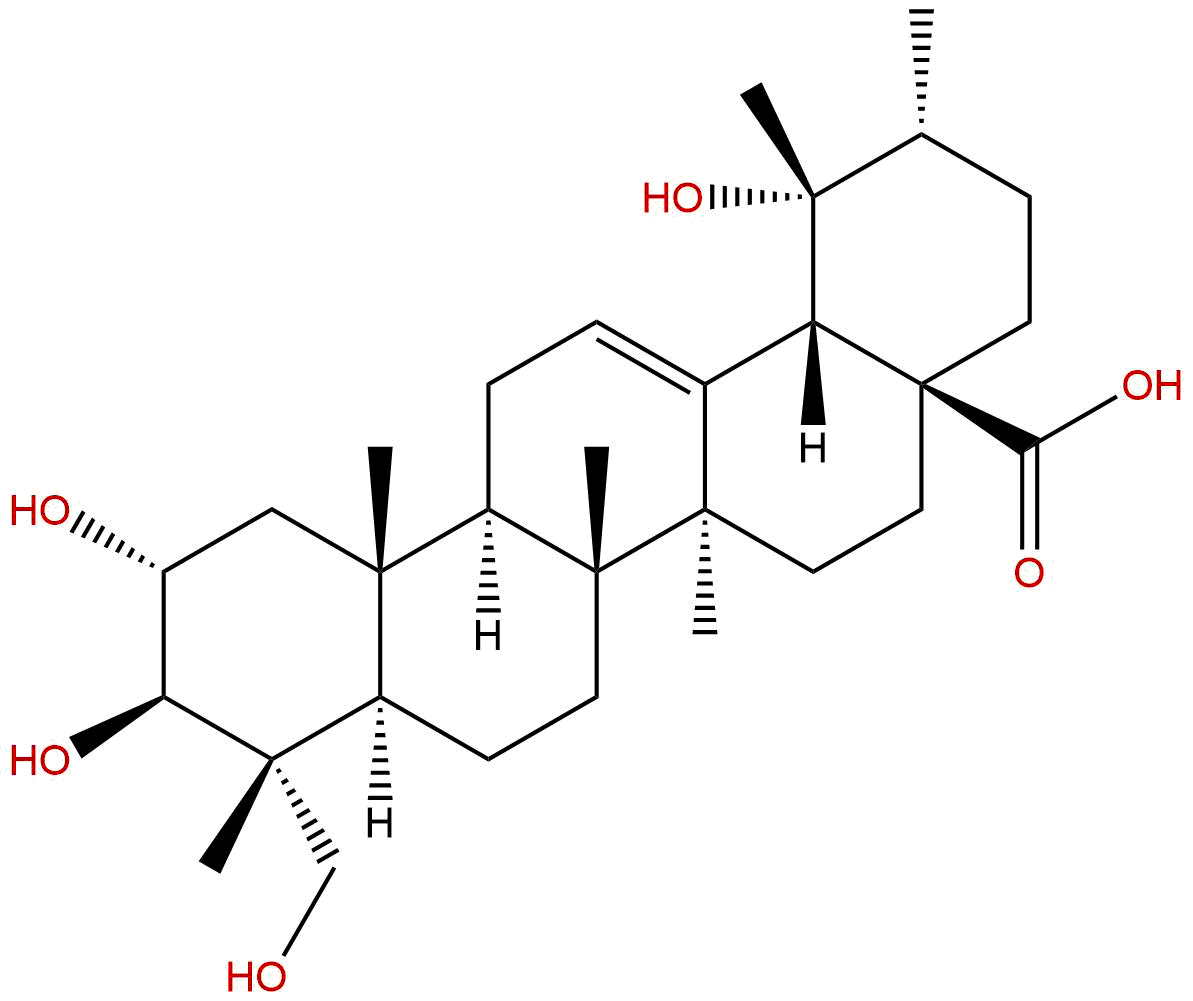
23 Hydroxyferulic acid (CAS number: 70868-78-9), as a structurally unique pentacyclic triterpenoid, can be described as 19 α - hydroxy oxalic acid, in which the hydrogen on the 19th carbon of the oxalic acid molecule is replaced by a hydroxyl group. This subtle structural modification endows it with unique biological activity and pharmacological potential. This compound was originally derived from the Rosaceae plant Rosa rugosa(Rosa laevigata It was isolated and identified from the leaves of Michx. and subsequently discovered in various medicinal plants. As a traditional Chinese medicine, Golden Cherry has the effects of consolidating essence, reducing urine, astringent intestines, and stopping diarrhea. Modern research has also confirmed that it has antioxidant, anti-inflammatory, and hepatoprotective effects, and 23 hydroxyferulic acid is considered one of the key components for its pharmacological activity.
In recent years, with a deeper understanding of the pathological mechanism of liver fibrosis, a chronic liver disease that seriously threatens human health, the search for natural active molecules that can effectively reverse or delay the progression of liver fibrosis has become a research hotspot. Liver fibrosis is a common pathological process in which various chronic liver diseases (such as viral hepatitis, alcoholic liver disease, non-alcoholic fatty liver disease) develop into cirrhosis and even liver cancer. Its core features include activation of hepatic stellate cells (HSCs), excessive deposition of extracellular matrix (ECM), and abnormal remodeling of liver structure. At present, there are no specific anti liver fibrosis drugs approved for marketing in clinical practice. In this context, 23 hydroxyferulic acid has gradually entered the field of researchers due to its potential activity in anti liver fibrosis and multi-target action characteristics. Preliminary studies have shown that this compound can inhibit the activation of HSCs, promote activated HSC apoptosis, reduce ECM synthesis and promote its degradation by regulating multiple key signaling pathways such as AMPK, STAT3, TLR4, etc., thus demonstrating great potential for anti liver fibrosis.
This article aims to provide a systematic review of the research progress of 23 hydroxypyruvic acid, covering its chemical structure and physicochemical properties, plant sources and extraction methods, pharmacological activity (especially anti liver fibrosis activity), mechanism of action and molecular targets, drug evaluation and pharmacokinetic characteristics, and prospects for its clinical application prospects, in order to provide scientific basis for the in-depth development and utilization of this natural product.
Chemical structure and physicochemical properties
The chemical structure of 23 hydroxyferulic acid belongs to the Ussurine type derivative of pentacyclic triterpenoids. Its core skeleton is Ursane, consisting of five fused rings (A, B, C, D, E rings), where A/B, B/C, C/D rings are trans fused and D/E rings are cis fused. The structural characteristics of this compound are mainly reflected in the modification of multiple functional groups:
1. Hydroxyl substitution The molecule contains four hydroxyl groups (tetraalcohols) located at positions C-2, C-3, C-19, and C-23. Among them, the hydroxyl groups at C-2 and C-3 positions are usually in the alpha configuration, the hydroxyl group at C-19 position is in the alpha configuration (which is also the origin of its alias 19 alpha hydroxy oxalic acid), and the hydroxyl group at C-23 position is connected to the corner methyl group at C-4 position.
2. carboxyl group The molecule contains a carboxyl group located at position C-28, which gives it weak acidity and belongs to hydroxymonocarboxylic acid.
3. double bond There is usually a double bond between C-12 and C-13 in the framework of Ursuline, forming a typical Ursuline-12-ene structure.
From a structural perspective, 23 hydroxyferulic acid is closely related to Asiatic acid and Tormonic acid. The structure of asiatic acid is a triterpenoid acid with three hydroxyl groups substituted at C-2, C-3, and C-23 positions, while 23 hydroxypyruvic acid introduces an additional alpha hydroxyl group at C-19 position on this basis. The structure of ferulic acid is composed of three hydroxyl groups at positions C-2, C-3, and C-19, while 23 hydroxy ferulic acid has an additional hydroxyl group at position C-23. Therefore, 23 hydroxyferulic acid can be regarded as a structural "hybrid" of oxalic acid and ferulic acid, possessing the structural characteristics of both.
In terms of physical and chemical properties, 23 hydroxyferulic acid is a white or off white amorphous powder. Its molecular formula is C ∝₀ H ₄₈ O ₆, and its molecular weight is 504.7080 g/mol. This compound exhibits typical pentacyclic triterpenoid acid properties:
* fat-soluble The calculated LogP value is 3.2875, indicating that it has a certain degree of lipophilicity, but its lipophilicity is not extreme, which is related to the presence of multiple polar hydroxyl and carboxyl groups in its molecule.
* Water solubility Its water solubility is poor, with a calculated water solubility value of 0.0255 mg/mL, making it a compound that is difficult to dissolve in water. This characteristic poses a challenge to its oral absorption and bioavailability.
* Polar Surface Area The topological polar surface area (TPSA) is 118.22 Å ², which is a relatively high value, indicating that its molecular polarity is high and not conducive to passive diffusion through the cell membrane, especially the blood-brain barrier.
* Stability As a natural polyhydroxytriterpenoid acid, it may undergo degradation or structural transformation under acidic or alkaline conditions, as well as under light and high temperature environments, and should be taken into account during storage and use.
Plant sources and extraction methods
23 hydroxyferulic acid was originally derived from the Rosaceae plant Rosa rugosa(Rosa laevigata Separated from the leaves of Michx. Golden cherry is widely distributed in China, Japan, and Southeast Asia. Its fruit is a commonly used traditional Chinese medicine, while its leaves are often used as folk herbs. In addition to the cherry blossom, this compound is also widely distributed in nature. Subsequent studies have identified its presence in various plants, including:
* Rosaceae family In addition to cherry blossoms, it also exists in the genus Potentilla(Potentilla)Plants, such as whitegrass(Potentilla discolor Bunge)、 Snakes containing Polygonatum sibiricum(Potentilla kleiniana Wight et Arn. These plants are commonly used in traditional medicine to treat dysentery, bleeding, inflammation, and so on.
* Araliaceae: Exists in the genus Snow Grass(Centella)Plants, such as snow grass(Centella asiatica (L.) Urban)。 Snow grass is a famous medicinal plant, and its extracts are widely used in promoting wound healing and improving cognitive function.
* Rubiaceae family: Exists in certain genera of Uncaria(Uncaria)In plants.
The content of 23 hydroxyferulic acid in plants is usually low, and it often coexists with other triterpenoid acids with similar structures (such as oxalic acid, ferulic acid, ursolic acid, etc.), which poses certain difficulties in its separation and purification. The extraction and separation methods usually follow the classic process of natural product chemistry:
-
Extract After crushing dry plant materials (such as cherry leaves), organic solvents are commonly used for extraction. Due to the moderate to high polarity of the target compound, methanol, ethanol, or their aqueous solutions are usually chosen as extraction solvents. Cold soaking, percolation, or reflux extraction are commonly used methods. To improve extraction efficiency and selectivity, acid hydrolysis pretreatment is sometimes used to hydrolyze bound triterpenoid saponins into free triterpenoid acids.
-
Preliminary separation After the extraction solution is concentrated under reduced pressure, the total extract is obtained. The total extract can be sequentially extracted using organic solvents of different polarities (such as petroleum ether, ethyl acetate, n-butanol) for liquid-liquid extraction. Due to the presence of carboxyl groups and multiple hydroxyl groups in 23 hydroxyferulic acid, it is distributed in both the ethyl acetate layer and the n-butanol layer, but is usually more enriched in the ethyl acetate layer.
-
purification The crude extract after extraction needs to be purified through various chromatographic techniques.
- Silica gel column chromatography: is the most commonly used method. By using gradient elution systems such as chloroform methanol, dichloromethane methanol, or ethyl acetate methanol, triterpenoid acid components can be preliminarily separated from other impurities.
- Reverse phase column chromatography Using ODS (C18) reverse phase silica gel with methanol water or acetonitrile water system for elution can effectively separate structurally similar triterpenoid acid isomers.
- Gel column chromatography: Use Sephadex LH-20 gel column, elute with methanol or chloroform methanol system, and further purify according to molecular size.
- Preparation type high performance liquid chromatography (Prep HPLC)For the final high-purity separation, preparative HPLC is an essential tool. Usually, a C18 reverse phase preparation column is used, and isocratic or gradient elution is performed using an acidic water acetonitrile or acidic water methanol system to obtain 23 hydroxyferulic acid monomer with a purity of over 98%.
-
Structural Identification The purified compound was structurally confirmed by spectroscopic methods, mainly including nuclear magnetic resonance spectroscopy (¹ H-NMR, ¹ ³ C-NMR, DEPT, HSQC, HMBC, NOESY, etc.) and high-resolution mass spectrometry (HR-ESI-MS). By comparing with the spectral data reported in the literature, its structure was ultimately determined to be 23 hydroxyferulic acid.
Pharmacological activity research
The pharmacological activity research of 23 hydroxyferulic acid has gradually increased in recent years, mainly focusing on anti-inflammatory, antioxidant, hepatoprotective, and anti fibrotic aspects, among which anti fibrotic activity is its most concerned research direction.
Anti hepatic fibrosis activity
Liver fibrosis is a common outcome of various chronic liver injuries, and its core pathological link is the activation of hepatic stellate cells (HSCs). Resting HSCs are activated after liver injury, transforming into myofibroblast like cells that proliferate and secrete extracellular matrix (ECM) rich in type I collagen and alpha smooth muscle actin (α - SMA). Therefore, inhibiting the activation of HSCs, inducing apoptosis of activated HSCs, and promoting ECM degradation are key strategies for anti liver fibrosis treatment.
Research has shown that 23 hydroxyferulic acid exhibits significant anti liver fibrosis effects in both in vitro and in vivo models.
* In vitro research In HSC-T6 cells (rat hepatic stellate cell line) or LX-2 cells (human hepatic stellate cell line) models stimulated by transforming growth factor - β 1 (TGF - β 1), 23 hydroxyferulic acid can dose dependently inhibit cell proliferation and reduce protein and mRNA expression levels of α - SMA and Collagen I. At the same time, it can also induce apoptosis of activated HSCs, manifested as increased Caspase-3 activity and increased Bax/Bcl-2 ratio.
* In vivo research In a rat liver fibrosis model induced by carbon tetrachloride (CCl ₄), treatment with 23 hydroxypyruvic acid (usually administered by gavage at a dose range of 10-50 mg/kg) can significantly reduce serum transaminase (ALT, AST) levels, alleviate liver tissue pathological damage (such as hepatocyte necrosis, inflammatory infiltration, and collagen deposition), and reduce the content of hydroxyproline (a characteristic amino acid of collagen) in the liver. These results indicate that 23 hydroxyferulic acid can effectively inhibit the progression of liver fibrosis in vivo.
anti-inflammatory activity
Inflammation is an important driving factor for liver fibrosis. 23 hydroxyferulic acid exhibits strong anti-inflammatory activity. In the lipopolysaccharide (LPS) - stimulated macrophage model (such as RAW264.7 cells), this compound can significantly inhibit the production of pro-inflammatory cytokines such as tumor necrosis factor - α (TNF - α), interleukin-6 (IL-6), and interleukin-1 β (IL-1 β). The mechanism may be related to the inhibition of the activation of the nuclear factor kappa B (NF - κ B) signaling pathway, which reduces the nuclear translocation of the p65 subunit by inhibiting the phosphorylation and degradation of I κ B α, thereby downregulating the expression of inflammatory genes.
antioxidant activity
Oxidative stress is another key factor in liver injury and fibrosis. The multiple phenolic hydroxyl groups (although alcohol hydroxyl groups, they still have a certain degree of reducibility) in the 23 hydroxyferulic acid molecule endow it with certain antioxidant capacity. Research has shown that this compound can scavenge free radicals such as DPPH and ABTS, and increase the activity of intracellular antioxidant enzymes such as superoxide dismutase (SOD) and glutathione peroxidase (GSH Px), while reducing the level of malondialdehyde (MDA). More importantly, it can activate the nuclear factor E2 related factor 2 (NFE2L2, also known as Nrf2) signaling pathway. Nrf2 is a core transcription factor in the cellular antioxidant defense system, which can upregulate the expression of a series of antioxidant enzymes and phase II detoxifying enzymes upon activation, thereby enhancing the cell's ability to resist oxidative stress.
Other activities
In addition to the aforementioned activities, preliminary studies also suggest that 23 hydroxyferulic acid may have other pharmacological effects, such as:
* Antitumor activity It can inhibit proliferation and induce apoptosis in some cancer cell lines (such as liver cancer and breast cancer cells).
* Antibacterial activity Has a certain inhibitory effect on certain Gram positive bacteria and fungi.
* Neuroprotective effect Given its structural similarity with oxalic acid, its potential neuroprotective effects are also worth exploring.
Mechanism of action and molecular targets
The pharmacological activity of 23 hydroxyferulic acid, especially its anti liver fibrosis effect, is achieved by regulating multiple complex signaling pathways and molecular targets, reflecting the multi-target and multi pathway characteristics of natural products. According to existing research, its main mechanism of action can be summarized as follows:
1. Regulating the AMPK signaling pathway
AMP activated protein kinase (AMPK, encoded by the PRKAA1 gene) is a key sensor of cellular energy metabolism, playing a central role in regulating cell growth, proliferation, apoptosis, and autophagy. In liver fibrosis, AMPK activity is usually inhibited. Research has found that 23 hydroxyferulic acid can directly or indirectly activate AMPK. Activated AMPK exerts anti fibrotic effects through the following pathways:
* Inhibition of HSC activation After AMPK activation, it can inhibit the downstream mTOR signaling pathway, thereby suppressing protein synthesis and proliferation of HSCs.
* Promote autophagy AMPK activation can induce autophagy, which can clear excessive accumulation of lipid droplets and damaged organelles in activated HSCs, and promote ECM degradation.
* Inhibit pro fibrotic signals AMPK activation can negatively regulate the TGF - β 1/Smad signaling pathway, reducing the expression of α - SMA and Collagen I.
2. Regulating the STAT3 signaling pathway
Signal transducer and activator of transcription factor 3 (STAT3) is an important transcription factor that is often abnormally activated in liver fibrosis. Activated STAT3 (p-STAT3) enters the nucleus and promotes transcription of genes related to cell proliferation, survival, and fibrosis (such as Bcl-2, Cyclin D1, MMP2). Research has shown that 23 hydroxyferulic acid can inhibit the phosphorylation of STAT3, thereby blocking its signaling pathway. This may be achieved by directly inhibiting the activity of upstream kinases such as JAK2, or by inducing the expression of negative regulatory factors such as SOCS3. Inhibiting the STAT3 signaling pathway can not only suppress the proliferation and survival of HSCs (by downregulating Bcl-2), but also reduce the expression of MMP2, thereby affecting the degradation balance of ECM.
3. Regulating the TLR4 signaling pathway
Toll like receptor 4 (TLR4) is an important pattern recognition receptor in the innate immune system. In liver fibrosis, ligands such as lipopolysaccharides (LPS) from intestinal bacteria activate TLR4 on the surface of HSCs, initiating downstream signaling cascades including activation of NF - κ B and MAPK pathways, thereby promoting the production of inflammatory and pro fibrotic factors. 23 hydroxyferulic acid has been reported to inhibit the expression of TLR4 or its downstream signaling, thereby reducing inflammatory response and indirectly inhibiting the activation of HSCs. This effect is closely related to the inhibition of NF - κ B activation, thereby reducing the release of inflammatory mediators such as TNF - α and IL-6.
4. Regulating apoptosis and ECM remodeling related targets
- BCL2 family 23 hydroxyferulic acid can downregulate the expression of anti apoptotic protein Bcl-2 and upregulate the expression of pro apoptotic protein Bax, thereby altering the Bax/Bcl-2 ratio, activating the mitochondrial apoptosis pathway, and inducing apoptosis in activated HSCs.
- MMPs and TIMPs Matrix metalloproteinases (MMPs, such as MMP1 and MMP2) and their inhibitors (TIMPs) jointly regulate the degradation of ECM. In liver fibrosis, MMP2 activity increases and participates in the destruction of the basement membrane and the migration of HSCs; However, the activity of MMP1 (degrading type I collagen) is relatively insufficient. 23 hydroxyferulic acid may promote the degradation of fibrotic ECM by regulating the balance between MMP1/MMP2 and TIMP1.
- Nrf2 As mentioned earlier, activating the Nrf2 signaling pathway upregulates the expression of antioxidant enzyme genes, resists oxidative stress, thereby protecting liver cells from damage and indirectly inhibiting fibrosis process.
5. Other potential targets
- PRKCA Protein kinase C alpha (PRKCA) is involved in various cellular processes, including cell proliferation and migration. Its role in HSC activation is not fully understood, but it may serve as an indirect target of 23 hydroxypyruvic acid.
- RECQL RecQ helicase (RECQL) is involved in DNA repair and telomere maintenance. There is relatively little research on its role in liver fibrosis, which may involve cellular aging and genomic stability. Its relationship with 23 hydroxyferulic acid needs further exploration.
In summary, 23 hydroxyferulic acid forms a synergistic network regulatory mechanism by simultaneously acting on multiple key targets and signaling pathways such as AMPK, STAT3, TLR4, Bcl-2, Nrf2, etc., exerting anti liver fibrosis effects in multiple aspects such as inhibiting HSC activation, inducing HSC apoptosis, reducing inflammation and oxidative stress, and promoting ECM degradation.
Evaluation of drug properties and pharmacokinetics
To promote the clinical application of 23 hydroxypyruvic acid from the laboratory, a systematic evaluation of its drug like and pharmacokinetic (ADME) properties is necessary.
Drugability assessment
Based on classic pharmacological rules such as Lipinski's "Rule of Five", a preliminary evaluation of 23 hydroxyferulic acid was conducted
* molecular weight:504.7 Da, Slightly above the threshold of 500 Da, it suggests that oral absorption may face challenges.
* LogP 3.29, meets the requirement of LogP<5, indicating moderate lipid solubility.
* hydrogen bond donor The molecule contains 4 hydroxyl groups and 1 carboxyl group, with a total of 5 hydrogen bond donors, meeting the rule of hydrogen bond donors ≤ 5.
* Hydrogen bond acceptor Contains 6 oxygen atoms and a total of 6 hydrogen bond acceptors, meeting the rule of hydrogen bond acceptors ≤ 10.
From the perspective of the "Five Rules", only the molecular weight of 23 hydroxypyruvic acid slightly exceeds the standard, and the overall medicinal properties are still acceptable. However, its TPSA (118.22 Å ²) is relatively high, far higher than the usual requirement of 140 Å ² or less for compounds with good oral absorption, indicating its high polarity and unfavorable for transmembrane passive diffusion. In addition, its extremely poor water solubility (0.0255 mg/mL) will be the main reason for its low oral bioavailability. ADMET prediction shows:
* Blood-brain barrier (BBB)Low permeability and difficulty in entering the central nervous system are advantageous features for treating peripheral diseases such as liver fibrosis, as they can reduce the risk of central neurotoxicity.
* HERG inhibition The predicted result is negative, indicating a low risk of cardiac toxicity.
* Ames test The predicted result is 0.0, indicating a low risk of mutagenicity and good genetic toxicity safety.
Pharmacokinetic characteristics
At present, there are few specialized studies on the pharmacokinetics of 23 hydroxypyruvic acid in vivo. However, we can make reasonable inferences based on the ADME characteristics of its structural analogues (such as oxalic acid and ursolic acid) and analyze them with limited experimental data
* absorb Due to its poor water solubility, high molecular weight, and polarity, oral absorption is expected to be poor, and its bioavailability may be low. This may be the reason why higher doses or intraperitoneal injections are often used in the study of its in vivo efficacy. Improving its oral bioavailability is the key to future formulation development, such as using novel drug delivery systems such as phospholipid complexes, nanoparticles, liposomes, etc.
* distribution After absorption into the bloodstream, due to its moderate lipid solubility, it may be widely distributed in tissues. Given its anti fibrotic activity, it is speculated that it may have a high distribution concentration in the liver. The plasma protein binding rate may be high.
* Metabolism As a polyhydroxytriterpenoid acid, its metabolism may mainly occur in the liver. Possible metabolic pathways include glucuronic acid or sulfate binding reactions (phase II metabolism), as well as phase I metabolic reactions such as hydroxylation and oxidation. The carboxyl group at position C-28 and multiple hydroxyl groups are potential sites for binding reactions.
* excretion Metabolites and small amounts of prototype drugs may mainly enter the intestine through bile excretion and be excreted with feces. Renal excretion may not be the main pathway.
Overall, 23 hydroxypyruvic acid has good preliminary safety characteristics (low hERG risk, low genetic toxicity), but its low oral bioavailability is the main bottleneck restricting its pharmacological development. Future research needs to focus on developing effective drug delivery systems to improve their solubility and oral absorption, and conducting in vivo pharmacokinetic studies to clarify the complete profile of their absorption, distribution, metabolism, and excretion.
Clinical application prospects and prospects
23 hydroxyferulic acid, as a natural pentacyclic triterpenoid with multi-target properties, has shown promising clinical application prospects in the treatment of liver fibrosis.
Potential as a candidate drug for anti liver fibrosis
Liver fibrosis is a global health issue, and there are currently no approved specific drugs. The existing treatment strategies mainly target the causes (such as antiviral therapy and alcohol withdrawal), but there is a lack of effective reversal methods for fibrosis that has already formed. 23 hydroxyferulic acid synergistically inhibits HSC activation, induces apoptosis, anti-inflammatory, antioxidant, and promotes ECM degradation by simultaneously regulating multiple key signaling pathways such as AMPK, STAT3, TLR4, and Nrf2. This multi-target mode of action theoretically outperforms single target chemical drugs and may have better efficacy and lower risk of drug resistance. In addition, its good preliminary safety evaluation (low cardiac toxicity, low genetic toxicity) has laid the foundation for its further development.
Challenges and Solutions Faced
Despite the promising prospects, the clinical translation of 23 hydroxyferulic acid still faces many challenges:
1. Low oral bioavailability This is the most fundamental obstacle. Poor water solubility and high polarity make oral absorption difficult. The solution strategy includes:
* Formulation technology Develop phospholipid complexes, self microemulsifying drug delivery systems (SMEDS), nanosuspensions, liposomes or polymer nanoparticles, etc., to improve their solubility and dissolution rate, and possibly enhance their bioavailability through lymphatic absorption pathways.
* Prodrug design Chemical modification of hydroxyl or carboxyl groups in molecules to synthesize ester or ether prodrugs, improving their lipid solubility and membrane permeability, and releasing the original drug after enzymatic hydrolysis or hydrolysis in vivo.
2. The mechanism of action still needs to be further elucidated Although multiple targets have been identified, the interaction network, primary secondary relationships, and direct molecular binding targets between these targets are not fully understood. It is necessary to use chemical biology methods (such as drug affinity reaction target stability technology, cell thermal transformation analysis, etc.) to find the protein that directly acts on it, and validate it using gene knockout or knock in models.
3. Lack of pharmacokinetic data Currently, there is a lack of systematic and comprehensive in vivo pharmacokinetic studies. A sensitive and reliable biological sample analysis method (such as LC-MS/MS) needs to be established to comprehensively evaluate its ADME characteristics in animals such as rats and dogs, providing a basis for clinical drug administration design.
4. Source and Cost Extracting and isolating from plants has high costs and low yields. In the future, it is necessary to develop efficient chemical synthesis or semi synthesis routes, or utilize synthetic biology techniques (such as building yeast cell factories) to achieve heterologous biosynthesis, in order to ensure stable raw material supply.
Future research directions
- Deepen research on anti liver fibrosis Validate its efficacy in complex liver fibrosis models that are closer to clinical practice, such as bile duct ligation models and high-fat diet carbon tetrachloride composite models. Explore its combined efficacy with other anti liver fibrosis drugs such as obeticolic acid, sorafenib, etc.
- Expand indications Given its anti-inflammatory and antioxidant activities, its potential applications in other fibrotic diseases such as renal fibrosis and pulmonary fibrosis, as well as inflammatory diseases such as colitis and arthritis, can be explored.
- structural optimization Using 23 hydroxyferulic acid as the lead compound, structural modifications were carried out through medicinal chemical methods, such as introducing nitrogen-containing heterocycles, changing the position or quantity of hydroxyl groups, in order to obtain derivatives with stronger activity and better pharmacokinetic properties.
- Develop compound preparations Combining traditional Chinese medicine theory, 23 hydroxyferulic acid is combined with other active ingredients in traditional Chinese medicine that have hepatoprotective and anti-inflammatory effects, such as silibinin and glycyrrhetinic acid, to form a compound that exhibits synergistic effects.
Conclusion
23 hydroxyferulic acid, a pentacyclic triterpenoid derived from the traditional Chinese medicine Rosa rugosa, has demonstrated unique value in the field of natural product pharmacology due to its unique 19 α - hydroxyauric acid structure. This article systematically reviews its chemical structure, plant origin, pharmacological activity, mechanism of action, and medicinal characteristics. Existing research has fully demonstrated that 23 hydroxyferulic acid exerts synergistic effects in inhibiting hepatic stellate cell activation, inducing apoptosis, anti-inflammatory, antioxidant, and promoting extracellular matrix degradation through multi-target and multi pathway regulatory mechanisms, thereby demonstrating significant anti liver fibrosis potential. Its preliminary pharmacological evaluation also showed good safety characteristics.
However, the road from laboratory discovery to clinical drug conversion of 23 hydroxypyruvic acid is still long and challenging. The low oral bioavailability is the primary bottleneck it faces, which urgently needs to be overcome through advanced formulation technology or prodrug design. Meanwhile, the in-depth analysis of its mechanism of action, systematic evaluation of in vivo pharmacokinetics, and establishment of an efficient and sustainable raw material supply system are all key scientific issues that must be overcome in future research.
Despite the bumpy road ahead, the multi-target, naturally sourced anti fibrotic strategy represented by 23 hydroxyferulic acid undoubtedly provides new ideas and hope for overcoming the medical challenge of liver fibrosis. With the interdisciplinary integration and collaborative innovation of modern medicinal chemistry, pharmacy, pharmacology, and chemical biology, we have reason to believe that 23 hydroxypyruvic acid and its derivatives have the potential to become candidate drugs for the treatment of liver fibrosis and other fibroproliferative diseases in the future, contributing to human health. The in-depth study of such natural products is not only a modern interpretation of traditional medicine wisdom, but also an important source for the creation of modern new drugs.