


Synonym name: 5,7-Dihydroxy-4'-methoxyflavonol; Kampheride; Campheride
Catalogue No.: BP0817
Cas No.: 491-54-3
Formula: C16H12O6
Mol Weight: 300.266
Botanical Source: many plant spp. First isol. in 1839 from roots of Alpinia officinarum (lesser galangal)
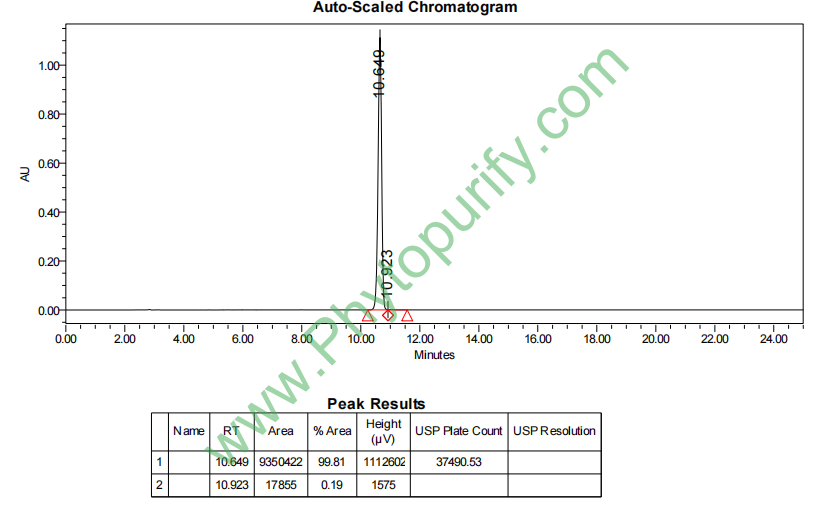
Purity: 95%~99%
Analysis Method: HPLC-DAD or/and HPLC-ELSD
Identification Method: Mass, NMR
Packing: Brown vial or HDPE plastic bottle
Can be supplied from milligrams to grams.
For Reference Standard and R&D, Not for Human Use Directly.
Inquire for bulk scale.
Description:
Kaempferide has a variety of effects including anti-carcinogenic, anti-inflammatory, anti-oxidant, anti-bacterial and anti-viral properties.it can protect DNA from radiation induced lesions resulting from radiation exposures under in vitro and ex vivo conditions.
References:
Yao Xue Xue Bao. 2012 Jul;47(7):890-6.
Comparison of effects of kaempferide and anhydroicaritin on biomineralization of cultured osteoblasts
This study is to compare the effects of Kaempferide and anhydroicaritin on biomineralization of rat osteoblasts (ROB) in vitro.
METHODS AND RESULTS:
Calvarias were dissected aseptically from newborn SD rats, the osteoblasts were obtained by enzyme digestion and were cultured in MEM containing 10% FBS. The medium was changed every three days, and serial subculture was performed when cells covered with 90% of the dish. Kaempferide and anhydroicaritin were separately added with final concentrations of 1 x 10(-4), 1 x 10(-5), 1 x 10(-6) and 1 x 10(-7) mol x L(-1) under the conditions of osteogenic differentiation. The proliferation was measured by MTT, and the optimal concentration was detected by the ALP activity at the 9th day after osteogenic induction culture. The osteogenic indexes of Kaempferide, anhydroicaritin and control group with the optimal concentration were compared. The result showed that the anhydroicaritin at concentration of 1 x 10(-5) mol x L(-1) had significantly promoted the activity of ALP, calcium content and osteocalcin content, increased the number of CFU-F(ALP) and mineralized nodules, enhanced the mRNA level of BMP-2, OSX and Runx-2, which are key genes of osteogenic differentiation, and raised the protein content of collagen-I. However, the Kaempferide group had not significantly represented the ability that promoted osteogenic differentiation of ROB.
CONCLUSIONS:
The difference of osteogenic differentiation on ROB between Kaempferide and anhydroicaritin was caused by the prenyl group on C-8 of icariin.
Int.J.Radiat. Res.,2013, 11(2):81-9.
Antioxidant capacity and radioprotective propertiesof the flavonoids galangin and kaempferide isolated from Alpinia galanga L. (Zingiberaceae) against radiation induced cellular DNA damage
Alpinia galanga L belonging to the family Zingiberaceae is widely grown in the state of Kerala, India. They are effective antioxidant and free radical scavenger under both in vitro and in vivo condition. The efficacy of the isolated flavonoids in conferring protection from radiation induced damages to genomic DNA was studied.
METHODS AND RESULTS:
The bioflavonoids, galangin and Kaempferide were isolated from the AE fractions Alpinia galanga. The isolated flavanoids - galangin and Kaempferide, and the crude extracts (AE and EE) were assayed for their various free radical scavenging activities like DPPH (1,1-diphenyl-2-picryl-hydrazyl), hydroxyl and superoxide radical scavenging activities. The in vitro DNA damage was monitored by assessing the radiation induced relaxation of supercoiled plasmid DNA (pBR 322). Damage to cellular DNA of human peripheral blood leukocytes induced by y-radiation (4 Gy) was monitored by alkaline single cell gel electrophoresis or comet assay. The extracts and pure compounds scavenged hydroxyl radicals in a concentration dependent manner. The compounds demonstrated a concentration dependent scavenging capacity by neutralizing the superoxide radicals. A considerably lower concentration (400-1000 ppm) of the pure flavonoids showed good antioxidant capacity. The presence of 10 mM Kaempferide helped in reducing the extent of DNA damage following 4 Gy gamma irradiation (P<0.001). Galangin (10 mM) also facilitated in reduction of comet parameters.
CONCLUSIONS:
The extracts of Alpinia galanga or the isolated bioflavonoids -galangin and Kaempferide can protect DNA from radiation induced lesions resulting from radiation exposures under in vitro and ex vivo conditions.
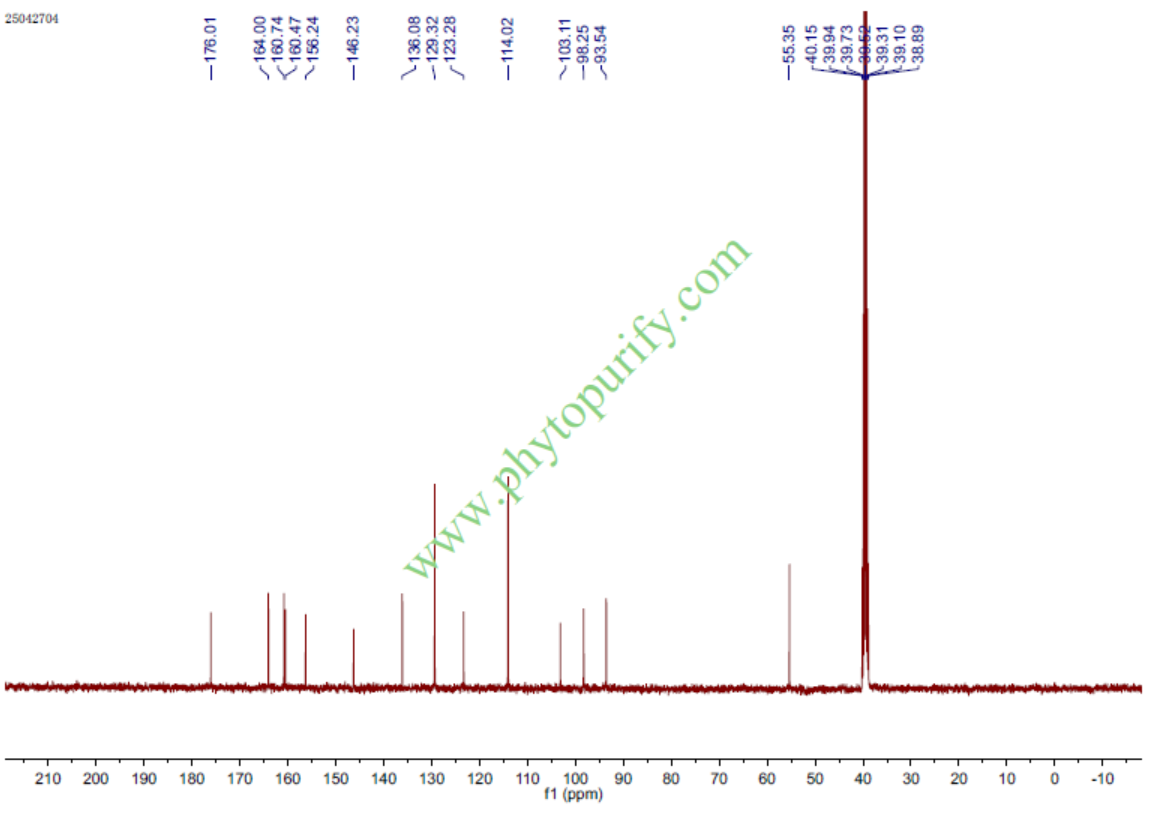
NMR of Kaempferide
HPLC of Kaempferide
Storage conditions:Short-term storage at 2~8℃, long-term storage at -20 ~ -80℃
100.1300
2.4689
2.0086
.0898
2.8404
13.6319
Low
89.7449
2.2536
Yes
No
Yes
No
Yes
No
0.6
Yes
No
Yes
No
Kaempferide (CAS number: 491-54-3) is a natural flavonoid compound widely found in various plants, especially in Hippophae rhamnoides L. As an important member of flavonoid natural products, kaempferol has received widespread attention in the fields of pharmacology and natural product chemistry due to its diverse biological activities. In recent years, kaempferol has shown significant pharmacological effects in anti-cancer, anti-inflammatory, antioxidant, anti diabetes, anti obesity, anti hypertension, neuroprotective and other aspects, and has become an important candidate molecule for natural drug research and development.
Shanbaisu not only has oral activity, but its mechanism of action involves multiple signaling pathways, especially in regulating cell apoptosis, antioxidant defense system, and bone metabolism. It significantly enhances the antioxidant capacity of cells by activating key transcription factors such as NFE2L2/NRF2, regulating the expression of antioxidant enzymes such as SOD1, CAT, GPX1, HMOX1, and SOD2. In addition, kaempferol has shown potential application value in the prevention and treatment of osteoporosis, mainly by promoting osteoblast function and inhibiting bone resorption.
The purpose of this article is to systematically review the chemical structure and physicochemical properties, plant sources, and extraction methods of kaempferol, with a focus on its pharmacological activity and mechanism of action. Pharmacokinetic analysis is conducted based on drug parameters to explore its clinical application prospects and future research directions, providing theoretical basis and reference for natural product pharmacology research and related drug development.
The chemical name of kaempferol is 3,5,7-trihydroxy-4 '- methoxyflavone, with a molecular formula of C16H12O6 and a molecular weight of 300.2660. Its structure belongs to flavonols, specifically the C-4 'position on the flavonoid skeleton is replaced by a methoxy group, while other positions retain hydroxyl groups, endowing it with unique biological activity. The chemical structural formula of kaempferol is as follows:
In terms of physical and chemical properties, the LogP value of kaempferol is 2.4689, indicating its moderate lipid solubility, which is beneficial for cell membrane permeation and oral absorption. The topological polar surface area (TPSA) is 100.1300, indicating moderate polarity and both hydrophilic and hydrophobic properties. The low water solubility (0.0898 mg/mL) limits its solubility in the aqueous phase, but facilitates its distribution in the lipid environment. The low permeability of the blood-brain barrier suggests that the direct role of the central nervous system may be limited. The negative result of hERG channel inhibition experiment indicates a low risk of cardiac toxicity. The Ames test result is 0.6, indicating that its genotoxicity risk is relatively low and has a good safety basis.
In summary, the chemical structure and physicochemical properties of kaempferol provide a molecular basis for its multi-target and multi mechanism pharmacological activity, and also provide reference for the formulation design and administration methods in its drug development.
Kaempferol is mainly isolated from Hippophae rhamnoides L. Sea buckthorn is a drought resistant and cold resistant deciduous shrub widely distributed in arid and semi-arid regions of Eurasia. Its fruit, leaves, and roots all contain abundant flavonoids, with the highest content of kaempferol in the fruit and leaves.
Solvent extraction method
Extract flavonoids from dried seabuckthorn fruits or leaves using ethanol, methanol, or ethyl acetate as solvents through reflux, ultrasound assisted, or microwave-assisted extraction techniques. Ultrasound assisted extraction is widely used due to its high efficiency and energy saving. The extract was concentrated, separated, and purified by column chromatography to obtain high-purity kaempferol.
Chromatographic separation technology
Qualitative analysis and purity detection are mainly carried out using silica gel column chromatography and reverse phase high performance liquid chromatography (RP-HPLC), combined with thin layer chromatography (TLC). Under the conditions of HPLC, kaempferol exhibits good separation efficiency and stable retention time, making it suitable for large-scale preparation.
Modern extraction techniques
Supercritical CO2 extraction and membrane separation technologies have also been explored to improve extraction efficiency and purity, reduce the use of organic solvents, and conform to the concept of green chemistry.
The content determination of kaempferol is usually carried out by HPLC-UV detection, with a detection wavelength of 360 nm, combined with mass spectrometry (LC-MS) for structural confirmation. Standardization of content helps ensure the consistency and safety of extract efficacy.
Kaempferol has a variety of pharmacological activities, including anti-cancer, anti-inflammatory, antioxidant, anti diabetes, anti obesity, anti hypertension, neuroprotection and other fields. The following are the main activities and their research progress.
Kaempferol exhibits significant anti-cancer effects by inducing tumor cell apoptosis, inhibiting cell proliferation and migration. Multiple in vitro and in vivo studies have shown that kaempferol can regulate tumor related signaling pathways, such as PI3K/Akt, MAPK, and NF - κ B pathways, promote cancer cell apoptosis, and inhibit tumor growth. It has inhibitory effect on breast cancer, colorectal cancer, lung cancer and other cancer cells.
Kaempferol reduces inflammation by inhibiting the expression of inflammatory mediators such as TNF - α, IL-6, and IL-1 β. Its mechanism of action mainly involves the inhibition of the NF - κ B signaling pathway and the reduction of transcription levels of inflammatory factors. In addition, kaempferol can also reduce the activity of inflammation related enzymes such as COX-2 and iNOS, exerting anti-inflammatory effects.
As a natural antioxidant, kaempferol can scavenge free radicals and alleviate oxidative stress damage. It activates the NFE2L2/NRF2 signaling pathway, induces the expression of antioxidant enzymes such as SOD1, CAT, GPX1, HMOX1, and SOD2, enhances the antioxidant defense ability of cells, and protects them from oxidative damage.
Kaempferol has shown potential in regulating blood glucose and lipid metabolism. Studies have found that kaempferine can improve insulin sensitivity, promote glucose uptake, inhibit adipocyte differentiation and lipid accumulation, thus playing an anti diabetes and anti obesity role. The mechanism involves the activation of the AMPK signaling pathway and the regulation of genes related to fat metabolism.
Kaempferol exhibits antihypertensive effects by dilating blood vessels, inhibiting the proliferation of vascular smooth muscle cells, and regulating the angiotensin system. Its antioxidant and anti-inflammatory properties also help improve vascular function and reduce cardiovascular risks associated with hypertension.
Kaempferol has a protective effect on the nervous system, mainly through antioxidant, anti-inflammatory, and regulation of neurotransmitter balance. It can alleviate oxidative damage to nerve cells, inhibit neuroinflammatory reactions, promote nerve regeneration, and demonstrate potential applications in neurodegenerative diseases such as Alzheimer's disease and Parkinson's disease.
Kaempferol promotes the function of osteoblasts through antioxidant mechanisms, inhibits osteoclast activity, and thus contributes to the prevention and treatment of osteoporosis. Research has shown that kaempferol can activate the NFE2L2/NRF2 signaling pathway, reduce oxidative stress damage to bone cells, promote bone matrix formation, and improve bone density and strength.
The multiple pharmacological activities of kaempferol are attributed to its regulation of multiple cellular signaling pathways and molecular targets, mainly including:
Shanbaisu induces cell apoptosis mainly by regulating Bcl-2 family proteins (upregulating pro apoptotic protein Bax and downregulating anti apoptotic protein Bcl-2), activating caspase enzyme systems (caspase-3, -9), and affecting mitochondrial membrane potential to initiate endogenous apoptosis pathways.
By inhibiting the NF - κ B signaling pathway, kaempferol reduces the expression of pro-inflammatory cytokines and alleviates inflammatory responses. In addition, kaempferol also affects the MAPK and JAK/STAT signaling pathways, regulating immune responses and cell proliferation.
Kaempferol activates AMPK signaling pathway, promotes energy metabolism balance, regulates glucose and lipid metabolism, improves insulin sensitivity, inhibits gene expression related to adipogenesis, and plays an anti diabetes and anti obesity role.
By activating the NFE2L2/NRF2 pathway, kaempferol reduces oxidative stress damage to bone cells, promotes osteoblast differentiation and mineralization, inhibits osteoclast activity, regulates bone remodeling processes, and contributes to the prevention and treatment of osteoporosis.
The pharmacological parameters of kaempferol show that it has good potential for drug development:
In terms of pharmacokinetics, kaempferol exhibits good absorption characteristics after oral administration, but its bioavailability is limited due to its low water solubility. It is widely distributed in the body and mainly metabolized through the liver. The metabolites still need further research. Excretion is mainly through bile and urine, with a moderate half-life. Future research needs to focus on its metabolic kinetics characteristics and the activity and safety of in vivo transformation products.
Shanbaisu, with its multi-target and multi mechanism pharmacological activities, has shown a wide range of clinical application potential:
Development of anti-cancer drugs
As a natural anti-cancer candidate drug, kaempferol can be used in combination with existing chemotherapy drugs to enhance efficacy and reduce side effects. Its ability to induce apoptosis of tumor cells provides new ideas for tumor treatment.
Anti inflammatory and antioxidant disease treatment
Kaempferol has great potential in the application of chronic inflammation, oxidative stress related diseases such as atherosclerosis, diabetes complications, neurodegenerative diseases.
Management of metabolic syndrome
The anti diabetes, anti obesity and antihypertensive effects of kaempferol make it a new natural drug for the multi target treatment of metabolic syndrome.
Prevention and treatment of osteoporosis
By promoting osteogenic and antioxidant mechanisms, kaempferol provides a new drug candidate for the prevention and treatment of osteoporosis.
neuroprotection
Although the blood-brain barrier has low permeability, its antioxidant and anti-inflammatory effects have the potential to protect peripheral nerves and assist in the treatment of neurological diseases.
Future research should focus on optimizing the dosage form, improving bioavailability, in vivo metabolism, and safety evaluation of kaempferol, combined with preclinical animal models and early clinical trials, to promote its translation into clinical applications. In addition, the design and synthesis of derivatives based on the structure of kaempferol may further enhance its activity and pharmacokinetic properties.
As a natural flavonol with multiple biological activities, kaempferol has become an important research object in the field of natural product pharmacology due to its significant anti-cancer, anti-inflammatory, antioxidant, metabolic regulation, and bone protection effects. It exerts extensive cellular protection and disease intervention functions by regulating key molecular targets such as NFE2L2/NRF2. Despite limitations in water solubility and bioavailability, its good safety and multi-target mechanism of action provide a solid foundation for drug development.
In the future, by combining modern medicinal chemistry, pharmacy, and molecular biology techniques, in-depth exploration of the mechanism of action of kaempferol and optimization of its pharmacokinetic properties will help promote it as an effective natural medicine for treating various chronic diseases. The study of kaempferol not only enriches the pharmacological knowledge of flavonoid natural products, but also provides valuable examples for the development of natural product drugs.
