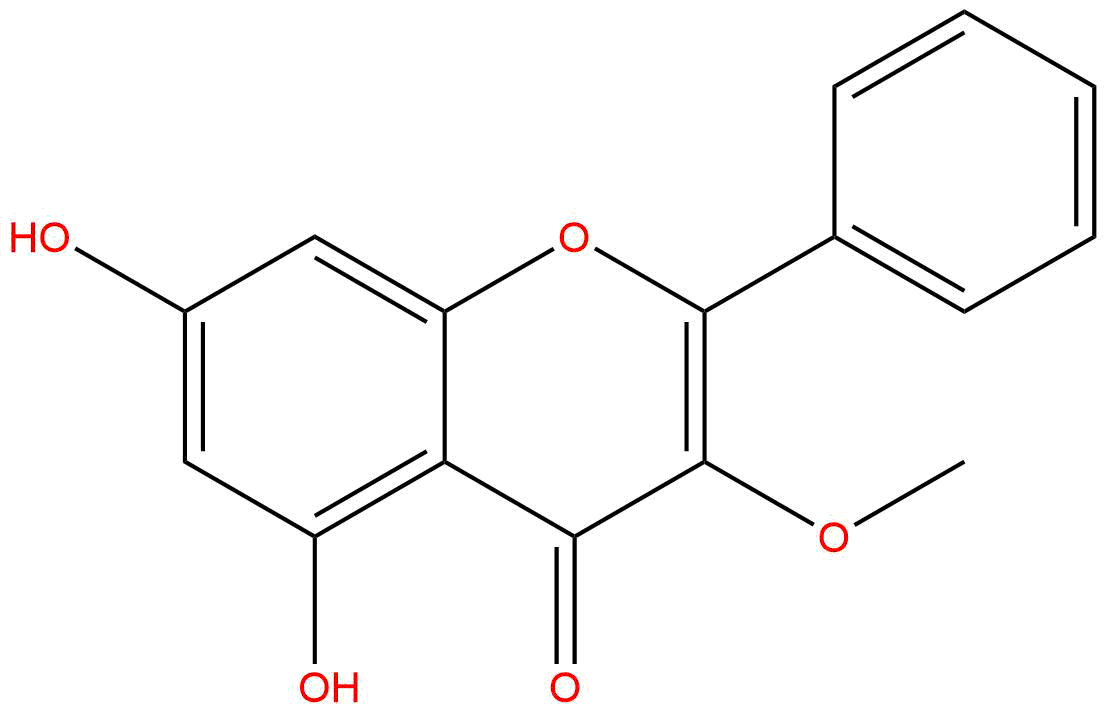


Product name: Galangin 3-methyl ether
Synonym name: 5,7-Dihydroxy-3-methoxyflavone
Catalogue No.: BPF2776
Cas No.: 6665-74-3
Formula: C16H12O5
Mol Weight: 284.267
Botanical Source:
Physical Description:
Type of Compound: Flavonoids
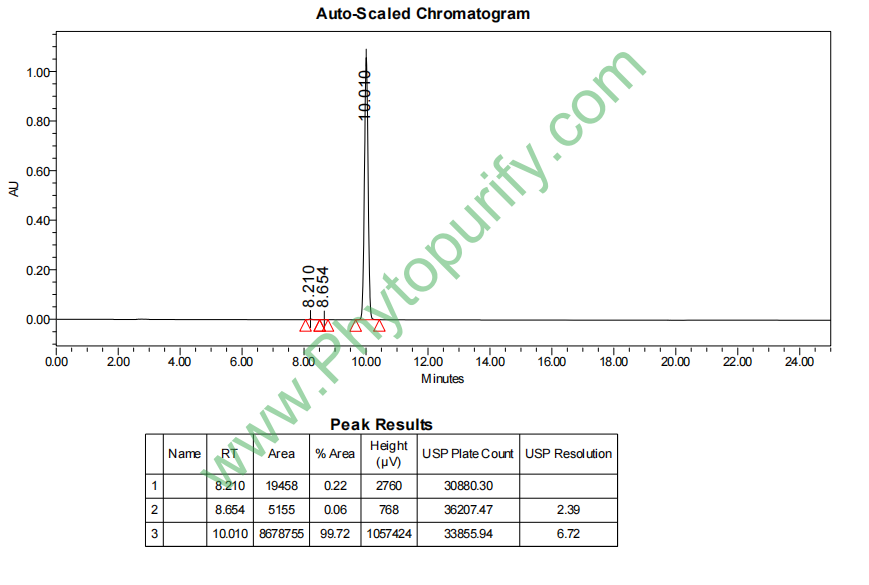
Purity: 95%~99%
Analysis Method: HPLC-DAD or/and HPLC-ELSD
Identification Method: Mass, NMR
Packing: Brown vial or HDPE plastic bottle
Storage: Store in a well closed container, protected from air and light. Put into refrigerate or freeze for long term storage.
Whenever possible, you should prepare and use solutions on the same day. However, if you need to make up stock solutions in advance, we recommend that you store the solution as aliquots in tightly sealed vials at -20℃. Generally, these will be useable for up to two weeks.
The product could be supplied from milligrams to grams
Inquire for bulk scale.
For Reference Standard and R&D, Not for Human Use Directly.
HPLC of Galangin 3-methyl ether
Storage conditions:Short-term storage at 2~8℃, long-term storage at -20 ~ -80℃
79.9000
2.6883
2.4406
.0782
3.5156
29.7257
Low
91.1044
2.1814
Yes
No
Yes
No
Yes
No
0.6
Yes
No
Yes
No
Natural products, as an important source of drug discovery, play an irreplaceable role in the long history of human fight against diseases. Flavonoids, as the most widely distributed class of secondary metabolites in nature, have attracted much attention due to their structural diversity and extensive biological activity. Galangin-3-methyl ether, also known as Norizalpinin, is a naturally occurring methylated flavonol with a chemical structure of 3,5,7-trihydroxyflavone, in which the 3rd hydroxyl group is replaced by a methoxy group. This compound was first derived from the ginger plant, galangal, in the ginger family(Alpinia officinarum It was isolated from traditional medicinal plants such as Hance and named after it.
In recent years, with the in-depth study of the pharmacological activity of natural products, galangin-3-methyl ether has gradually demonstrated its unique biological characteristics. Of particular note is that it has been identified as a regulator of aryl hydrocarbon receptors (AhR) and can inhibit the activity of cytochrome P450 family 1 subfamily A member 1 (CYP1A1). AhR is a ligand activated transcription factor that plays a central role in environmental toxicology, immune regulation, cell cycle regulation, and inflammatory response. CYP1A1 is a key target gene downstream of AhR, involved in the metabolic activation of various exogenous substances, including environmental pollutants and some drugs. Therefore, galangin-3-methyl ether has shown potential application value in multiple fields such as anti-inflammatory, anti-tumor, and chemoprevention by regulating the AhR-CYP1A1 signaling axis. In addition, the study also revealed its regulatory effects on various inflammation related targets such as interleukin-6 (IL-6), signal transduction and transcription activator 3 (STAT3), tumor necrosis factor (TNF), etc., further consolidating its position as an anti-inflammatory active molecule. This article aims to systematically review the chemical properties, plant sources, pharmacological activities, mechanisms of action, and medicinal prospects of galangin-3-methyl ether, in order to provide theoretical basis for the further development and utilization of this natural product.
The chemical name of galangin-3-methyl ether is 3,5,7-trihydroxy-3-methoxyflavone, and its core skeleton is flavonol, which has a basic mother nucleus of C6-C3-C6 and contains a double bond between positions 2 and 3 of the C ring, with a hydroxyl group attached to position 3. The uniqueness of this compound lies in the methylation of its 3rd hydroxyl group, forming a methoxy group (- OCH ∝). This structural modification has a significant impact on its physicochemical properties, biological activity, and metabolic pathways.
From the structural characteristics, the A ring of galangin-3-methyl ether (molecular formula C ₁₆ H ₁₂ O ₅) contains 5,7-dihydroxy substitution, and the B ring is an unsubstituted benzene ring. This substitution mode distinguishes it from galangin (3,5,7-trihydroxyflavone) only in the methylation of the 3-hydroxyl group. The presence of a 3-methoxy group increases the lipophilicity of the molecule and alters its binding mode with target proteins such as AhR and CYP1A1. The molecular weight is 284.2670 g/mol, belonging to the category of small molecule compounds and meeting the basic requirements of Lipinski's Rule of Five.
In terms of physicochemical properties, the lipid water partition coefficient (LogP) of galangin-3-methyl ether is 2.6883, indicating its moderate lipophilicity and favorable transmembrane transport. The topological polar surface area (TPSA) is 79.9000 Å ², which is below 100 Å ², indicating its good oral absorption potential. However, its low water solubility (0.0782 mg/mL) may limit its bioavailability in vivo. It is worth noting that the blood-brain barrier (BBB) penetration ability of the compound was evaluated as "low", suggesting that its application in central nervous system diseases may be limited, but at the same time, it also reduces the potential risk of central neurotoxicity. In addition, the risk assessment of hERG inhibition is' no ', indicating a low risk of cardiac toxicity. The Ames test result is 0.6, indicating a slight genetic toxicity risk, but this value is within the critical range and further in vitro and in vivo experiments are needed for verification. Overall, galangin-3-methyl ether has certain medicinal properties, but its poor water solubility is one of the key bottlenecks restricting its medicinal development.
Gaoliangjiangsu-3-methyl ether is widely distributed in nature, mainly found in plants such as Zingiberaceae and Fabaceae. Its most famous source is the tall ginger plant of the ginger family, the mountain ginger genus(Alpinia officinarum Hance), This plant is commonly used in traditional Chinese medicine to treat symptoms such as stomach cold vomiting and abdominal pain. In addition, propolis, especially those derived from poplar sprouts, also contains high levels of galangin and its methylated derivatives. Other reported plant sources include:Alpinia galanga(Da Gao Liang Jiang)Helichrysum Spp. (Chrysanthemum genus)Piper Spp. (Pepper genus) and certain ferns. The content of this compound varies significantly among different plant sources and tissue parts (such as rhizomes, leaves, and flowers), with higher levels usually found in rhizomes and flower buds.
The traditional method for extracting galangin-3-methyl ether is mainly based on solvent extraction. Due to its moderate polarity, commonly used extraction solvents include methanol, ethanol, ethyl acetate, or their mixed solvents with water. For example, using 80% ethanol reflux extraction to extract the powder of ginger rhizome can effectively dissolve the compound. To improve extraction efficiency and selectivity, modern extraction techniques such as ultrasound assisted extraction (UAE), microwave-assisted extraction (MAE), and supercritical fluid extraction (SFE) have been widely used. Ultrasound assisted extraction utilizes cavitation effect to destroy cell walls, accelerate solvent permeation, and achieve high yields in a short period of time. The supercritical CO ₂ extraction method is particularly suitable for the extraction of thermosensitive components due to its green and solvent-free characteristics.
The crude extract after extraction needs to undergo a series of purification steps to obtain high-purity target compounds. The classic separation methods include silica gel column chromatography, polyamide column chromatography, Sephadex LH-20 gel column chromatography and preparative high-performance liquid chromatography (Prep HPLC). Due to the coexistence of galangin-3-methyl ether with structurally similar compounds such as galangin and kaempferol, the use of polyamide column chromatography to utilize its hydrogen bonding adsorption with phenolic hydroxyl groups can achieve good preliminary separation. Subsequently, by combining preparative HPLC with a reverse phase C18 column and using methanol water or acetonitrile water systems as mobile phases, a single compound with a purity exceeding 98% can be obtained. In recent years, high-speed countercurrent chromatography (HSCCC) has been successfully applied as a liquid-liquid distribution chromatography technique for the efficient separation of flavonoids due to its advantages of irreversible adsorption and high sample recovery rate.
Inflammation is a defensive response of the body to injury and infection, but excessive or sustained inflammatory response is the pathological basis of many chronic diseases (such as arthritis, inflammatory bowel disease, atherosclerosis). Gaoliangjiangsu-3-methyl ether has shown significant anti-inflammatory activity in multiple in vitro and in vivo inflammatory models. Research has shown that this compound can effectively inhibit the production of nitric oxide (NO) and prostaglandin E ₂ (PGE ₂) in macrophages (such as RAW264.7 cells) stimulated by lipopolysaccharide (LPS). The mechanism is closely related to the downregulation of inducible nitric oxide synthase (iNOS, encoded by the NOS2 gene) and cyclooxygenase-2 (COX-2) expression. In addition, galangin-3-methyl ether can significantly reduce the secretion levels of pro-inflammatory cytokines such as TNF - α, IL-6, and IL-1 β. In animal models, such as the carrageenan induced rat paw swelling model and the xylene induced mouse ear swelling model, oral or local administration of galangin-3-methyl ether can effectively reduce the degree of edema, and the effect is comparable to that of positive control drugs.
Gaoliangjiangsu-3-methyl ether exhibits inhibitory effects on proliferation and induces apoptosis in various cancer cell lines. The research involves liver cancer (HepG2), breast cancer (MCF-7), colon cancer (HT-29) and melanoma (B16) cell lines. Its anti-tumor mechanism is multifaceted: firstly, it can regulate the AhR signaling pathway, affect the expression of cell cycle proteins (such as Cyclin D1), and block the cell cycle in the G0/G1 phase; Secondly, it can activate the mitochondrial apoptosis pathway, upregulate the Bax/Bcl-2 ratio, promote cytochrome c release, and thereby activate Caspase-3 and Caspase-9, inducing cell apoptosis; In addition, the compound can also inhibit the phosphorylation of STAT3, thereby blocking the transcription of downstream pro proliferative and anti apoptotic genes such as Survivor and c-Myc. It is worth noting that its toxicity to normal cells is relatively low, demonstrating a certain degree of selective anti-tumor potential.
Flavonoids usually have strong antioxidant capacity. The 5,7-dihydroxy structure in the molecule of galangin-3-methyl ether is the key pharmacophore for chelating metal ions and scavenging free radicals. In vitro chemical experiments (such as DPPH, ABTS, FRAP methods) have confirmed that the compound has moderate free radical scavenging and reducing abilities. In cell models, it can reduce the levels of reactive oxygen species (ROS) induced by hydrogen peroxide (H ₂ O ₂) or tert butyl hydroperoxide (t-BHP), and enhance the activity of endogenous antioxidant enzymes such as superoxide dismutase (SOD) and glutathione peroxidase (GSH Px) in cells. This antioxidant activity may partially explain its anti-inflammatory and chemopreventive effects.
In addition to the main activities mentioned above, galangin-3-methyl ether also exhibits certain antibacterial (against Staphylococcus aureus, Escherichia coli, etc.), antiviral (such as influenza virus), and neuroprotective activities. In terms of neuroprotection, studies have shown that it can alleviate neurogenic inflammation and pain response by inhibiting the overactivation of TRPV1 and TRPA1 channels. In addition, its inhibitory effect on CYP1A1 also suggests its potential value in detoxification of chemical carcinogens and prevention of environmental pollutant toxicity.
The pharmacological activity of galangin-3-methyl ether is rooted in its interactions with multiple key molecular targets. Among them, the regulation of the AhR-CYP1A1 signaling axis is one of its most core molecular mechanisms.
AhR is a ligand activated alkaline helix loop helix transcription factor. The classic AhR signaling pathway involves ligands (such as environmental pollutant TCDD) binding to AhR, causing it to dissociate from heat shock protein 90 (Hsp90), translocate into the nucleus, form heterodimers with AhR nuclear translocation factor (ARNT), and then bind to the dioxin responsive element (DRE) in the promoter region of the target gene, initiating transcription of downstream genes such as CYP1A1 and CYP1A2. Gaoliangjiangsu-3-methyl ether has been identified as a regulator of AhR, rather than a simple agonist or antagonist. It can bind to AhR with low affinity, partially activating the AhR signal, but more importantly, it can antagonize the overactivation of AhR by potent agonists such as TCDD. This dual action mode of partial excitation/antagonism enables it to maintain the basic physiological functions of AhR (such as immune regulation and intestinal homeostasis maintenance), while also inhibiting the toxic effects caused by excessive activation of AhR caused by environmental pollutants. Meanwhile, galangin-3-methyl ether can directly inhibit the enzymatic activity of CYP1A1, thereby reducing the metabolic activation of pre carcinogens (such as polycyclic aromatic hydrocarbons) and exerting a chemopreventive effect.
The anti-inflammatory effect of galangin-3-methyl ether is achieved through multi-target and multi pathway synergy. The key targets include:
- NF - κ B pathway This compound can inhibit the activity of I κ B kinase β (IKBKB), prevent the phosphorylation and degradation of I κ B α, thereby blocking the nuclear translocation of NF - κ B (composed of RELA and other subunits), and ultimately inhibiting the expression of downstream pro-inflammatory genes (such as TNF, IL-6, NOS2, PTGS1).
- STAT3 pathway STAT3 is a key transcription factor that connects inflammation and tumors. Gaoliangjiangsu-3-methyl ether can inhibit the tyrosine phosphorylation of STAT3, reduce its nuclear entry, and thus downregulate the expression of its target genes (such as IL-6, VEGF, Cyclin D1).
- Inflammatory bodies and Caspase-1 Research has shown that this compound may inhibit the assembly of NLRP3 inflammasomes, reduce the activity of Caspase-1 (CASP1), and thereby decrease the maturation and secretion of IL-1 β and IL-18.
- ion channel Its inhibitory activity on TRPV1 and TRPA1 channels explains its role in alleviating neurogenic inflammation and pain. These channels play a crucial role in the transmission of harmful stimuli and the release of inflammatory mediators.
In summary, galangin-3-methyl ether forms a complex regulatory network by acting on multiple targets such as AhR, IKBKB, STAT3, CASP1, TRPV1, etc., thereby exerting anti-inflammatory, anti-tumor, and chemopreventive effects at multiple levels.
To convert natural products into clinical drugs, a comprehensive evaluation of their drug like and pharmacokinetic (ADME) properties is necessary.
Based on the aforementioned physicochemical parameters, the molecular weight (284.27), LogP (2.69), and TPSA (79.9) of galangin-3-methyl ether are all within the ideal range, in accordance with Lipinski's five rules, indicating its good oral absorption and penetration potential. However, its water solubility (0.0782 mg/mL) is poor and belongs to low solubility compounds, which may lead to insufficient dissolution in the gastrointestinal tract, thereby affecting oral bioavailability. In addition, the Ames test result (0.6) is in the weak positive or critical positive range, indicating a possible risk of genetic toxicity, and further in vivo genetic toxicity experiments (such as micronucleus test, comet assay) are needed for confirmation. The low risk of hERG inhibition is a favorable factor. Overall, galangin-3-methyl ether has a good drug like skeleton, but poor water solubility and potential genetic toxicity are the main obstacles to its drug development.
At present, there is relatively limited systematic research on the pharmacokinetics of galangin-3-methyl ether in vivo, but it can be inferred based on the metabolic characteristics of its structural analogues (such as galangin and kaempferol). Flavonoids typically undergo extensive phase II metabolism in the body, including glucuronidation, sulfation, and methylation. The 5,7-dihydroxy group of galangin-3-methyl ether is a potential site of action for glucuronosyltransferases (UGTs) and sulfotransferases (SULTs), leading to its rapid metabolism in the intestine and liver, forming water-soluble complexes, which may be the main reason for its low oral bioavailability. In addition, its 3-methoxy group may undergo O-demethylation metabolism to generate galangin. This metabolic process is mainly catalyzed by cytochrome P450 enzymes (such as CYP1A2, CYP2D6). Due to the fact that galangin-3-methyl ether itself is an inhibitor of CYP1A1, it may interact with other drugs or pre carcinogens metabolized by CYP1A1. Its low blood-brain barrier penetration indicates limited distribution in the central nervous system. Strategies to improve its bioavailability include designing prodrugs (such as phosphate prodrugs), using nano formulations (such as liposomes, solid lipid nanoparticles), or combining them with absorption enhancers (such as piperine).
The unique pharmacological activity spectrum of galangin-3-methyl ether, especially its dual function as an AhR regulator and CYP1A1 inhibitor, has opened up prospects for its application in multiple disease fields.
Given its strong anti-inflammatory activity, galangin-3-methyl ether is expected to be developed as a candidate drug for the treatment of chronic inflammatory diseases. For example, in inflammatory bowel disease (IBD), the AhR signaling pathway is crucial for maintaining intestinal immune homeostasis. As a mild regulator of AhR, this compound may have advantages over potent agonists or antagonists, as it can restore intestinal barrier function and suppress excessive inflammatory responses without causing excessive immune suppression. In addition, its inhibitory effect on TRPV1/TRPA1 makes it potential for the treatment of inflammatory pain and neuropathic pain.
Gaoliangjiangsu-3-methyl ether is an ideal chemopreventive agent by inhibiting CYP1A1 activity and reducing the activation of environmental carcinogens such as benzo [a] pyrene. For high-risk populations who smoke or are exposed to polycyclic aromatic hydrocarbons, this compound may help reduce the risk of developing cancers such as lung cancer and colorectal cancer. In terms of tumor treatment, it can be used as an adjuvant therapy by inhibiting the STAT3 and NF - κ B pathways, enhancing the efficacy of conventional chemotherapy drugs, and reversing tumor resistance. However, its low water solubility and bioavailability are the main challenges facing clinical translation.
Future research should focus on the following directions:
1. Research on Structural Optimization and Structure Performance Relationship By chemically modifying key sites such as 3-methoxy and 5,7-dihydroxy, a series of derivatives were synthesized with the aim of improving water solubility, enhancing target selectivity, and reducing potential toxicity. For example, introducing phosphate groups or amino acid residues may improve its water solubility.
2. Development of new formulations Using nanotechnology (such as polymer micelles, nanocrystals) or phospholipid complex technology to improve its oral bioavailability and targeted delivery efficiency.
3. In depth pharmacokinetic and toxicological research Conduct systematic in vivo ADME research to clarify its metabolic pathways, tissue distribution, and excretion characteristics. At the same time, a comprehensive evaluation of acute and chronic toxicity, reproductive toxicity, and genetic toxicity should be conducted to confirm its safety.
4. Multi target network pharmacology research Combining systems biology and network pharmacology methods, comprehensively reveal its complex interactions with signaling networks such as AhR, NF - κ B, STAT3, etc., and elucidate its "multi-target multi pathway" mode of action.
5. Preclinical and clinical research Validate its efficacy in appropriate animal disease models, such as IBD mouse models and lung cancer chemoprevention models, and explore its synergistic effects with existing drugs. When conditions are ripe, conduct small-scale Phase I clinical trials to evaluate its safety and pharmacokinetic characteristics in humans.
As a natural methylated flavonol, galangin-3-methyl ether has become a remarkable research hotspot in the field of natural product pharmacology due to its unique dual role as an AhR regulator and CYP1A1 inhibitor, as well as its significant activities in anti-inflammatory, anti-tumor, and chemoprevention. Its mechanism of action involves the regulation of multiple key targets such as NF - κ B, STAT3, inflammasomes, and ion channels, exhibiting the characteristic of multi-target synergistic effects. Despite challenges such as poor water solubility and potential genetic toxicity in the physicochemical properties of the compound, its excellent drug like skeleton and unique pharmacological activity spectrum provide a solid foundation for its further development. In the future, through structural optimization, development of new formulations, and in-depth pharmacological and toxicological research, galangin-3-methyl ether and its derivatives are expected to play an important clinical value in the fields of inflammatory diseases, cancer prevention and treatment, and contribute new strength to human health. Exploring active molecules with clear targets and mechanisms of action from traditional medicinal plants, and improving them using modern medicinal chemistry and pharmacology methods, is an important and promising path for the development of innovative natural product drugs.
