


Synonym name: Norizalpinin; 3,5,7-Trihydroxyflavone
Catalogue No.: BP0605
Cas No.: 548-83-4
Formula: C15H10O5
Mol Weight: 270.24
Botanical Source: Galanga root (Alpinia officinarum) and many other plants
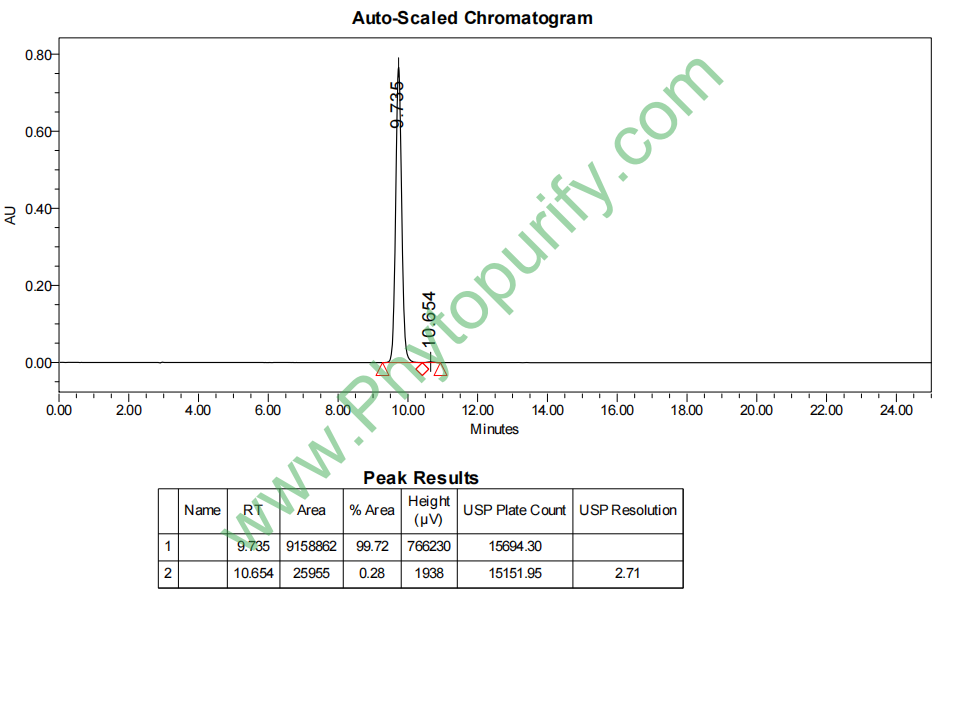
Purity: 95%~99%
Analysis Method: HPLC-DAD or/and HPLC-ELSD
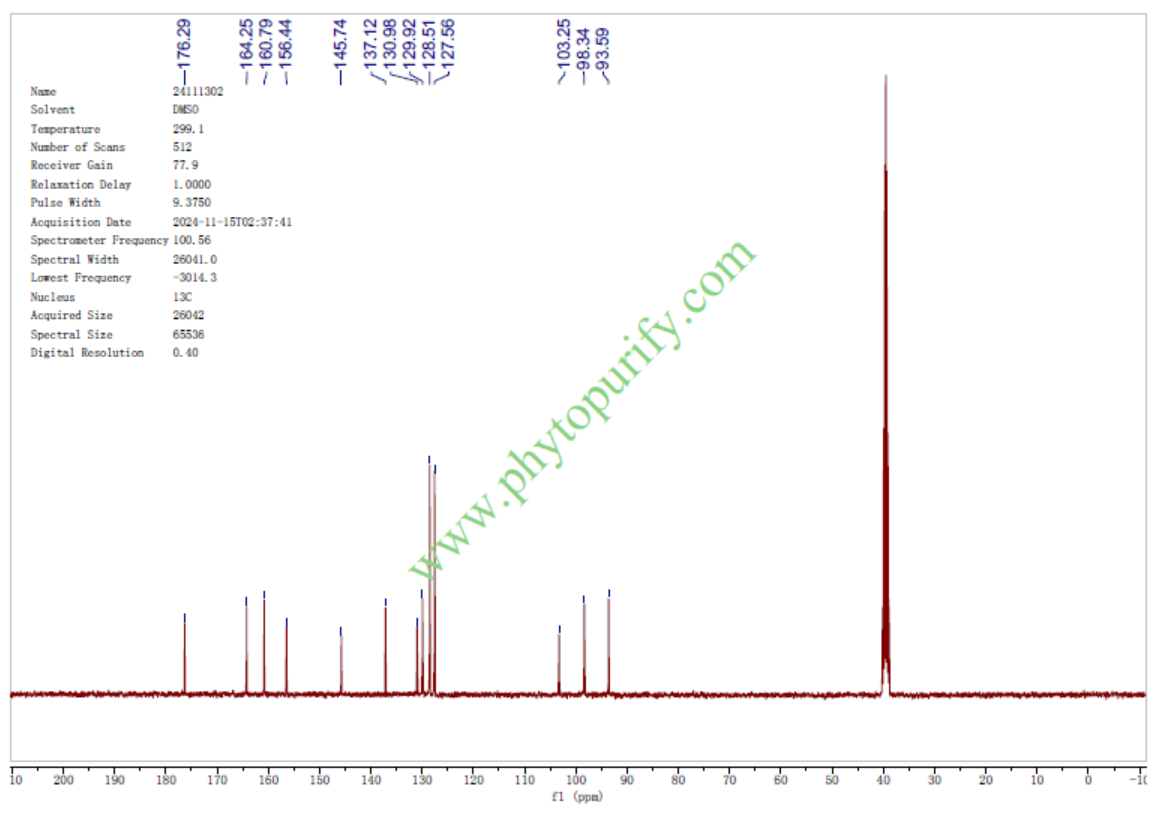
Identification Method: Mass, NMR
Packing: Brown vial or HDPE plastic bottle
Can be supplied from milligrams to grams.
For Reference Standard and R&D, Not for Human Use Directly.
Inquire for bulk scale.
HPLC of Galangin
NMR of Galangin
Storage conditions:Short-term storage at 2~8℃, long-term storage at -20 ~ -80℃
90.9000
2.5353
2.0787
.0832
3.5261
9.4147
Low
90.1181
2.2255
Yes
No
No
No
Yes
No
0.6
Yes
No
Yes
No
Natural products, as an important treasure trove for drug discovery, play an irreplaceable role in the history of human disease prevention and treatment. Flavonoids have always been a hot topic in medicinal chemistry and pharmacology research due to their wide range of biological activities and low toxicity. Galangin, also known as 3,5,7-trihydroxyflavone, is a typical natural flavonoid alcohol product with a CAS number of 548-83-4. It was originally isolated from the rhizome of Alpinia officinalarum, a plant in the ginger family, and is widely present in various plants and foods such as propolis, onions, and green peppers. Modern pharmacological research has shown that galangin exhibits various biological activities, including antioxidant, anti-inflammatory, antibacterial, antiviral, and particularly remarkable anti-tumor effects. Of particular note is that galangin, as a regulator of the aryl hydrocarbon receptor (AhR) and an inhibitor of cytochrome P450 1A1 (CYP1A1), has potential value in intervening in diseases associated with abnormal activation of the AhR signaling pathway, such as cancer. In recent years, its inhibitory effects and molecular mechanisms in various malignant tumors such as liver cancer have been gradually revealed, involving the regulation of multiple key targets such as BCL2, STAT3, and HIF1A, making it a highly promising lead compound for development. This article aims to systematically review the chemical properties, plant sources, pharmacological activities, mechanisms of action, pharmacological evaluation, and clinical application prospects of galangin, in order to provide comprehensive scientific references for the in-depth research and development of this compound.
The chemical name of galangin is 3,5,7-trihydroxy-2-phenyl-4H-1-benzopyran-4-one, with a molecular formula of C15H10O5 and a molecular weight of 270.24 g/mol. Its basic skeleton is flavonol, which has a 2-phenylchromenone-4-one structure and is substituted with one hydroxyl group at the 5th and 7th positions of the A ring, as well as at the 3rd position of the C ring. Therefore, it is classified as trihydroxyflavonol or 7-hydroxyflavonol. This specific hydroxyl substitution pattern is the chemical basis for its various biological activities.
In terms of physical and chemical properties, galangin is a light yellow needle shaped crystal or powder. Its calculated lipid water partition coefficient (LogP) is about 2.54, indicating that it has a certain lipophilicity, but not highly hydrophobic. The topological polar surface area (TPSA) is 90.9 Å ², reflecting the presence of polar hydroxyl groups in its molecules. The water solubility is poor, about 0.0832 mg/mL, which to some extent limits its bioavailability. High quality ginger extract is relatively stable at room temperature, but its phenolic hydroxyl structure gives it strong antioxidant capacity, and it may also be sensitive to light, heat, and extreme pH conditions. Its UV absorption spectrum has characteristic absorption peaks around 267 nm and 359 nm, which can be used for qualitative and quantitative analysis. According to the Ames test result (0.6), it suggests a low risk of mutagenicity, providing preliminary support for its safety.
Gaoliangsu is widely distributed in nature, and its main plant source is the dried rhizome of Alpinia officinalarum Hance, a plant in the ginger family. This is also the origin of its name. In addition, it is also one of the main flavonoid active ingredients in propolis (especially poplar type propolis), with a content of up to 20% -30%. Other sources include onions (Allium cepa), green peppers (Capsicum annuum), and certain medicinal plants such as Scutellaria baicalensis (trace).
Organic solvent extraction is commonly used to extract galangin from plant materials. The common process is as follows: Crush the dried roots and stems of ginger, and first degrease them with petroleum ether or n-hexane to remove oil and wax. Then use polar solvents such as methanol, ethanol (commonly 70% -95% concentration), or acetone for reflux extraction or ultrasound assisted extraction. Ethanol has become the most commonly used solvent due to its safety, low cost, and high extraction efficiency. The crude extract was obtained by vacuum concentration of the extraction solution.
The further purification of crude extracts usually relies on chromatographic techniques. Silica gel column chromatography is commonly used for preliminary separation using gradient elution systems such as chloroform methanol or petroleum ether ethyl acetate. Subsequently, high purity ginger extract can be obtained using preparative high-performance liquid chromatography (HPLC) or repeated recrystallization methods. In recent years, some green extraction techniques such as supercritical CO2 fluid extraction and microwave-assisted extraction have also been explored to improve extraction efficiency and selectivity. The process of extracting galangin from propolis is similar, usually by first extracting propolis blocks with ethanol, filtering and concentrating them, and then purifying them through liquid-liquid distribution (such as removing beeswax with petroleum ether) and column chromatography.
High quality ginger extract has a wide range of significant pharmacological activities, and its research has expanded from early antibacterial and antioxidant activities to multiple fields such as anti-tumor, anti-inflammatory, and metabolic regulation.
1. Antitumor activity:
High quality ginger extract exhibits growth inhibition and pro apoptotic effects on various tumor cells, especially in liver cancer research, which has attracted much attention. In vitro studies have shown that galangin can dose dependently inhibit the proliferation of human liver cancer cell lines (such as HepG2, Huh7, SMMC-7721) and induce cell cycle arrest (often in the G2/M phase) and apoptosis. In animal models, administration of galangin can significantly inhibit the growth of transplanted tumors in nude mice with low toxicity.
2. Antibacterial and antiviral activity:
High quality ginger extract has inhibitory effects on various Gram positive bacteria (such as Staphylococcus aureus, Bacillus subtilis) and some Gram negative bacteria. The mechanism may be related to the destruction of bacterial cell membrane integrity and inhibition of bacterial protein synthesis. In addition, galangasu also has a certain inhibitory effect on herpes simplex virus, influenza virus, etc.
3. Antioxidant and anti-inflammatory activities:
As a polyphenolic compound, galangin can effectively scavenge free radicals such as DPPH and ABTS, and exhibits strong iron ion reduction ability. Its anti-inflammatory effect is reflected in its ability to inhibit the production of nitric oxide (NO), prostaglandin E2 (PGE2), and pro-inflammatory cytokines (such as TNF - α, IL-6) in macrophages induced by lipopolysaccharide (LPS).
4. Metabolic regulatory activity:
Gaoliangjiang Su has been reported as an inhibitor of triacylglycerol lipase (EC 3.1.1.3), suggesting its potential to regulate lipid metabolism and combat obesity. In addition, it can also improve insulin resistance and diabetes and its complications.
5. Other activities:
High quality ginger extract also has neuroprotective, anti fibrotic, and anti allergic activities. Its regulatory effect on the AhR-CYP1A1 signaling pathway is not only related to anti-tumor effects, but may also play a role in reducing toxicity caused by environmental toxins such as dioxins.
The pharmacological effects of galangin, especially its anti-tumor activity, are achieved through the synergistic action of multiple targets and pathways. For liver cancer, its mechanism of action involves multiple aspects such as apoptosis induction, proliferation inhibition, invasion and metastasis blockade, and interacts with multiple key target molecules.
1. Inducing cell apoptosis:
* Targeting the BCL2 family: Galangin can downregulate the expression of anti apoptotic protein BCL2 and upregulate the expression of pro apoptotic protein BAX, leading to a decrease in mitochondrial membrane potential, release of cytochrome C, and activation of Caspase-9 and Caspase-3, inducing endogenous apoptotic pathways.
* Inhibition of STAT3 signaling pathway: Signal transducer and activator of transcription factor 3 (STAT3) is a key carcinogenic factor in the occurrence and development of liver cancer. Galangin can inhibit the phosphorylation (activated form) of STAT3, prevent its nuclear translocation and the transcription of downstream target genes (such as Cyclin D1, BCL2, Survivor), thereby inhibiting cell proliferation and promoting apoptosis.
2. Inhibit cell proliferation and survival:
* Regulating the PI3K/Akt pathway: Galangin can inhibit the phosphorylation of phosphatidylinositol 3-kinase (PIK3CA) and its downstream effector molecule Akt, thereby suppressing this classic pathway that promotes cell growth and survival.
* Inhibition of telomerase activity: By downregulating the expression of telomerase reverse transcriptase (TERT), galangin can inhibit telomerase activity, accelerate telomere shortening in tumor cells, and induce cell aging or death.
* Inhibition of MAPK signaling: High quality ginger extract has a regulatory effect on MAPK1 (ERK2) and other MAPK pathway members, affecting cell proliferation and differentiation decisions.
3. Inhibit tumor invasion and metastasis:
* Inhibition of HIF-1 α - mediated angiogenesis: Under hypoxic conditions, galangin can inhibit the stability and accumulation of hypoxia inducible factor-1 α (HIF1A), thereby reducing the expression of angiogenic factors such as vascular endothelial growth factor (VEGF) and inhibiting tumor angiogenesis.
* Inhibition of NF - κ B pathway: Galangin can inhibit the activity of IKB kinase (IKBKB), prevent the degradation of I κ B α and nuclear translocation of NF - κ B p65 subunit (RELA), thereby inhibiting the activation of the NF - κ B pathway. The downregulation of this pathway can reduce the expression of matrix metalloproteinases such as MMP9, and decrease the invasion and migration ability of tumor cells.
* Directly inhibiting MMP9: Matrix metalloproteinase-9 (MMP9) is a key enzyme that degrades extracellular matrix and promotes tumor invasion and metastasis. Galangin can directly or indirectly downregulate the expression and activity of MMP9.
4. Other mechanisms:
* AhR regulation and CYP1A1 inhibition: As a ligand of AhR, galangin may act as an antagonist or selective regulator, interfering with the abnormal metabolism caused by carcinogens through the AhR signaling pathway (such as inhibiting excessive activation of CYP1A1), thereby exerting a chemopreventive effect.
* Topoisomerase inhibition: There are studies suggesting that galangin may inhibit the activity of topoisomerase I (TOP1), interfere with DNA replication and repair, leading to DNA damage and cell death.
Although galangin has a wide range of pharmacological activities, its medicinal properties still face some challenges, mainly due to its inherent physicochemical properties and pharmacokinetic characteristics.
1. Absorption, distribution, metabolism, and excretion (ADME):
* Absorption: After oral administration, galangin can be absorbed in the intestine, but its low water solubility and high first pass metabolic rate limit its bioavailability. Research has shown that its absolute oral bioavailability in rats is relatively low.
* Distribution: Galangasu has a moderate plasma protein binding rate. Its ability to cross the blood-brain barrier is predicted to be 'low', which is unfavorable for its treatment of central nervous system diseases, but may help reduce central nervous system side effects.
* Metabolism: High quality ginger extract is rapidly and widely metabolized in the body, which is its main elimination pathway. Metabolic reactions mainly include glucuronidation and sulfation binding reactions (in the intestine and liver), as well as methylation, hydroxylation, and so on. It is also a substrate and inhibitor of CYP450 enzymes (such as CYP1A1, CYP1A2), which may trigger drug drug interactions.
* Excretion: Metabolites are mainly excreted through urine and bile.
2. Safety evaluation:
* Acute toxicity: Animal experiments have shown that the acute toxicity of galangin is relatively low.
* Genetic toxicity: The existing Ames test data (result 0.6) did not show significant mutagenicity, supporting its low genetic toxicity risk.
* Cardiac toxicity: Preliminary assessment shows that it does not significantly inhibit hERG potassium channels, suggesting a low potential risk of arrhythmia, but further in vitro and in vivo validation is still needed.
* Long term toxicity: The toxicity data on its long-term administration is not sufficient and requires systematic research.
3. Challenges and improvement strategies for drug development:
The main bottleneck for the medicinal properties of galangin lies in Poor solubility, low oral bioavailability, and rapid metabolism To overcome these obstacles, researchers are exploring various strategies:
* Structural modification: By synthesizing derivatives, such as preparing prodrugs (such as phosphate prodrugs to improve water solubility), or modifying hydroxyl groups through alkylation, glycosylation, etc., to improve their solubility, metabolic stability, and targeting.
* New drug delivery system:
* Nano drug delivery system: The preparation of liposomes, nanoparticles, micelles, solid lipid nanoparticles, etc. can significantly improve their solubility, prolong circulation time, and achieve passive tumor targeting through enhanced permeation and retention (EPR) effects.
* Cyclodextrin inclusion complex: By utilizing the cavity of cyclodextrin to encapsulate galangin, its water solubility and stability are improved.
* Self microemulsion drug delivery system: Improve the absorption of its lipophilic components in the gastrointestinal tract.
* Pharmacokinetic optimization: The combined use of CYP450 enzyme or UDP glucuronosyltransferase inhibitors may slow down their metabolism and increase blood drug concentrations.
The transition of sorghum ginger extract from laboratory research to clinical translation has broad prospects, but the road is tortuous.
1. Potential clinical application directions:
* Tumor adjuvant therapy and chemoprevention: Given its inhibitory effect on multiple targets such as liver cancer and low toxicity, galangin is the most promising candidate for development as an anti-tumor adjuvant or chemopreventive agent. Can be used in combination with existing chemotherapy drugs (such as sorafenib) to enhance efficacy, reduce resistance, or alleviate side effects.
* Inflammatory related diseases: Used to treat chronic inflammatory diseases such as colitis, arthritis, dermatitis, etc.
* Metabolic disorders: As a lipase inhibitor and insulin sensitizer, it has potential in the prevention and treatment of obesity, non-alcoholic fatty liver disease (NAFLD) and type 2 diabetes.
* Infectious diseases: As a natural antibacterial agent, it can be used to develop oral care products (such as mouthwash, toothpaste) or local anti infective ointments.
2. Future research focus and prospects:
* In depth mechanism research: Further clarification is needed on the exact mode of action (excitatory/antagonistic/selective regulation) of galangin as a regulator of AhR, as well as its immunomodulatory effects in the tumor microenvironment. Discovering new targets using proteomics, metabolomics, and other technologies.
* Strengthen preclinical development: The system completes pharmacological, pharmacokinetic, and toxicological evaluations that meet the requirements for new drug application, and establishes reliable preclinical research data packages. Emphasis will be placed on using humanized animal models or patient derived xenograft (PDX) models to validate its anti liver cancer efficacy.
* Overcoming the bottleneck of traditional Chinese medicine: Actively promoting the research and development of formulations based on nanotechnology and rational structural optimization is the key to their successful transformation. Explore targeted delivery systems, such as combining galangin nanoparticles with tumor specific ligands (such as folate and RGD peptides) to achieve active targeting.
* Explore combination therapy regimens: The system screens synergistic combinations with existing standard therapies (chemotherapy, targeted therapy, immunotherapy) to determine the optimal timing, dosage, and sequence of combination therapy.
* Conduct clinical research: Based on sufficient preclinical research, gradually advance Phase I (safety, pharmacokinetics) and Phase II (efficacy exploration) clinical trials.
As a natural flavonol compound with abundant sources, galangin has shown great potential for drug development due to its multi-target, multi pathway anti-tumor (especially anti liver cancer), anti-inflammatory, antioxidant and other pharmacological activities. It affects multiple malignant phenotypes of tumor cells, including proliferation, apoptosis, invasion, and angiogenesis, by regulating key signaling pathways such as STAT3, PI3K/Akt, NF - κ B, and HIF-1 α. The mechanism of action network is becoming increasingly clear. However, its low bioavailability due to poor water solubility and rapid metabolism is currently the main obstacle to its clinical application. Future research should focus on optimizing drug properties through advanced drug chemical modifications and novel delivery system strategies, while conducting in-depth preclinical and clinical studies to clarify safe and effective dosing regimens. With the continuous breakthroughs in these studies, galangin is expected to develop from a promising natural active molecule into an innovative drug or functional supplement for the prevention and treatment of tumors and other chronic diseases, contributing its unique value to human health.
