Anisic acid p-hydroxyphenyl ethyl ester: a natural antibacterial molecule derived from Qianghuo
1. Overview
Hydroxyphenylanisate (CAS number: 87932-34-1) is a natural phenolic ester compound isolated from the traditional Chinese medicine Notopterygium incisum/Notopterygium forbesii. Its chemical name is 4-methoxybenzoic acid 2- (4-hydroxyphenyl) ethyl ester, with a molecular formula of C16H16O4 and a molecular weight of 272.30 g/mol. This compound has attracted attention in the fields of natural product chemistry and drug discovery, mainly due to its potential antibacterial biological activity, especially its inhibitory effect on oral pathogenic bacteria. According to database records, its function is related to multiple key bacterial targets (such as GYRA, DHFR, PBP2, etc.), suggesting that it may interfere with bacterial survival and reproduction through multi-target mechanisms. At present, there is relatively limited publicly available research literature on this compound, and its data mainly comes from professional natural product and medicinal chemistry databases (as shown in product number BP3197), making it a lead compound that needs to be further explored. This article will systematically summarize the scientific connotation and potential value of this compound from its chemical structure, plant origin, pharmacological mechanism, medicinal evaluation, and research prospects.
2. Chemical structure and physicochemical properties
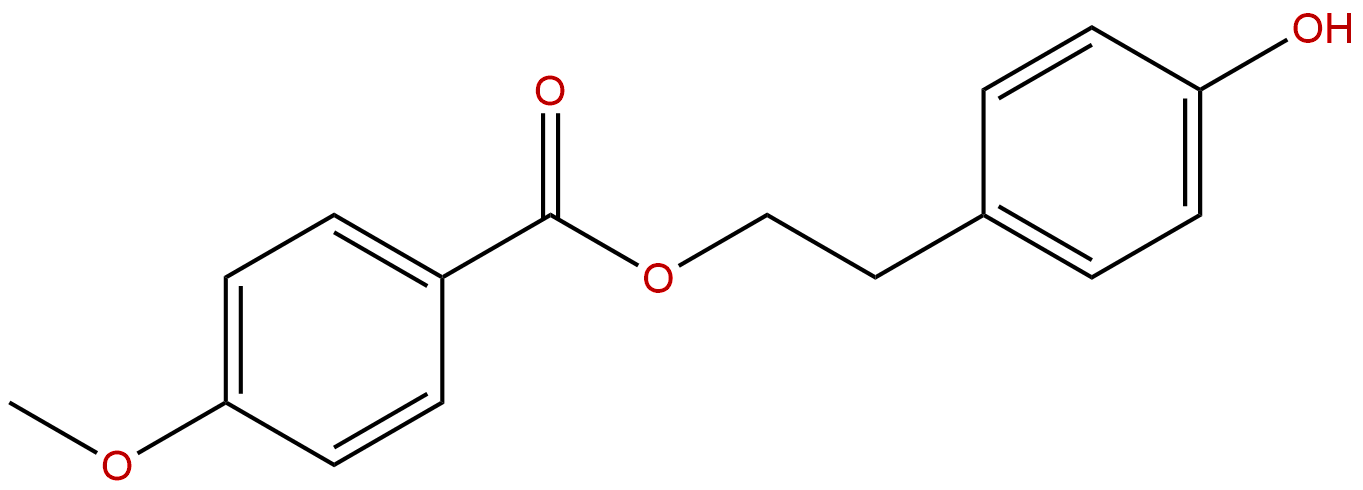
The molecular structure of hydroxybenzoic acid can be accurately described by its SMILES expression "COc1ccc (C (=O) OCCc2ccc (O) cc2) cc1". This molecule consists of two main aromatic ring systems: one is the para methoxy substituted benzoic acid moiety (i.e. anisic acid fragment), and the other is the para hydroxy substituted phenethyl moiety. The two are connected by an ester bond (- COO -) and a two carbon ethyl bridge (- CH2-CH2-). This structure gives it both hydrophobic aromatic rings and hydrophilic ester bonds and phenolic hydroxyl groups, endowing the molecule with amphiphilic properties.
According to the analysis of drug parameters, its molecular weight (MW) is 272.30, which meets the requirement of "MW<500" in Lipinski's five rules. The calculated lipid water partition coefficient (LogP) is 3.35, indicating that the compound has a moderately high lipophilicity, which is beneficial for its penetration of cell membranes. However, excessively high LogP (>5) may lead to a decrease in water solubility. Its topological polar surface area (TPSA) is 55.76 Å ², much lower than the commonly believed membrane permeability threshold (140 Å ²), indicating that it has good membrane permeability. The water solubility parameter is 0.1502 (unit may be mg/mL or log mol/L, usually a lower value indicates limited solubility), which is consistent with a moderate LogP value, suggesting that its water solubility may be poor and a solubilization strategy needs to be considered in formulation development. The permeability value of Caco-2 cells is 7.53 (usually measured in units of 10 ⁻⁶ cm/s), which belongs to highly permeable compounds, further confirming its good intestinal absorption potential. The blood-brain barrier (BBB) penetration prediction is "high", indicating that the compound may have central nervous system permeability, providing a structural basis for its potential neurorelated applications such as central infections.
3. Plant sources and traditional applications
The known plant source of anetholic acid for hydroxyphenyl ethyl ester is Qianghuo, including Notopterygium incisum and Notopterygium forbesii, both belonging to the Apiaceae family. Qianghuo is a traditional Chinese medicinal herb. Its dried rhizomes and roots are used as medicine, first recorded in the "Shennong Bencao Jing". It is pungent, bitter, warm, and belongs to the bladder and kidney meridians. It has the effects of relieving external coldness, dispelling wind and dampness, and relieving pain. In clinical practice of traditional Chinese medicine, Qianghuo is commonly used to treat symptoms such as wind cold and cold, strong headache, rheumatism and pain, shoulder and back pain, etc. It is often used in combination with medicinal herbs such as Duhuo, Fangfeng, Chuanxiong, etc.
Modern plant chemistry research has shown that Qianghuo contains various active ingredients such as volatile oils, coumarins, phenolic acids and their esters, polysaccharides, etc. Anisic acid, as one of the phenolic esters, may be one of the material bases for the anti-inflammatory, analgesic, and antibacterial effects of Qianghuo. Traditionally, Qianghuo has also been used to treat conditions such as toothache and oral ulcers, which coincides with the modern pharmacological discovery of this compound targeting oral pathogenic bacteria, reflecting the confirmation between traditional experience and modern science. The isolation and identification of specific chemical components in Qianghuo not only help clarify its pharmacological substance basis, but also provide clues for the development of new drugs based on natural products.
4. Pharmacological activity and mechanism of action
According to database information, anetholic acid is associated with five key bacterial targets:GYRA(DNA gyrase A subunit)DHFR(Dihydrofolate reductase)FOLA(speculated to be a target related to folate synthesis)PBP2(Penicillin binding protein 2) and ERG(May refer to ergosterol synthase, but more commonly in fungi; interpreted with caution in bacterial context, this may be a database annotation specifically or homologous target). These targets mainly involve the three core life processes of bacterial DNA replication, folate metabolism, and cell wall synthesis, strongly suggesting that the compound has broad-spectrum antibacterial potential, especially against Oral pathogenic bacteria。
-
Inhibition of DNA replication (targeting GYRA)DNA gyrase is a bacterial specific topoisomerase II, composed of GyrA and GyrB subunits, responsible for introducing negative supercoils during DNA replication and resolving topological tension. GYRA is the main target of quinolone antibiotics such as ciprofloxacin. If anetholic acid can bind to this target, it may interfere with enzyme function, leading to hindered DNA replication, accumulation of DNA damage, and ultimately causing bacterial death. This provides a mechanistic basis for its ability to combat rapidly proliferating oral pathogens such as streptococcus and actinomycetes.
-
Interference with folate metabolism (targeting DHFR and FOLA)Folic acid is a key cofactor in the synthesis of nucleic acid precursors such as purine and pyrimidine. DHFR catalyzes the reduction of dihydrofolate to tetrahydrofolate, which is the central link in folate metabolism. Trimethoprim (TMP) is a classic DHFR inhibitor. FOLA may refer to enzymes in other folate synthesis pathways, such as dihydropteroate synthase. Simultaneously interfering with these two targets can produce a synergistic effect, completely blocking the folate cycle of bacteria, inhibiting their DNA, RNA, and protein synthesis, and exerting antibacterial or bactericidal effects on various oral bacteria.
-
Disrupting cell wall synthesis (targeting PBP2)Penicillin binding proteins (PBPs) are enzymes involved in the final step of peptidoglycan synthesis in bacterial cell walls, and are targets of β - lactam antibiotics such as penicillin. PBP2 is one of the important ones. Inhibition of PBP2 activity can lead to cell wall defects and bacterial lysis due to osmotic pressure imbalance. If the compound has PBP2 inhibitory activity, its antibacterial mechanism will be similar to penicillin, especially effective against PBP2 dependent Gram positive oral cocci.
-
Potential effects (targeting ERG)ERG usually refers to the C-14 demethylase (CYP51) involved in ergosterol synthesis on fungal cell membranes, which is the target of azole antifungal drugs. In the oral environment, fungi such as Candida albicans are also important pathogenic bacteria. If the compound has inhibitory effects on fungal ERG, it may possess antifungal activity and broaden its spectrum of anti oral infections. But this target is not common in bacteria and needs to be experimentally validated.
The significance of targeting oral pathogenic bacteria The oral cavity is a complex microecological system that contains hundreds of types of bacteria, among which Streptococcus mutans, Porphyromonas gingivalis, and Actinobacteria actinomycetes are closely related to dental caries, periodontal disease, bad breath, and other conditions. The problem of antibiotic resistance in existing antibiotics is becoming increasingly serious. P-hydroxyphenylethyl anisate may reduce the risk of drug resistance caused by single target mutation through a multi-target mechanism, providing a promising lead compound for the development of new anti oral infection drugs (such as mouthwash, toothpaste, local gel or sustained release film). Its natural plant derived characteristics may also lead to better biocompatibility and lower systemic toxicity.
5. Evaluation of drug properties
Based on the provided pharmacokinetic parameters, combined with the Lipinski Rule of Five and the general standards for drug development, we have conducted a preliminary evaluation of the potential of anetholic acid for the development of hydroxyphenyl ethyl ester as a drug
-
Lipinski Five Rule Compliance:
- MW = 272.30 (<500) ✅
- LogP = 3.35 (<5) ✅
- Number of hydrogen bond donors (HBDs): Structurally, there is only one phenolic hydroxyl group, which may be 1 (<5) ✅
- Number of hydrogen bond acceptors (HBA): 2 oxygen for ester groups, 1 oxygen for methoxy groups, and 1 oxygen for phenolic hydroxyl groups, totaling 4 (<10) ✅
- Number of rotatable keys: about 6-7 (not directly given, but inferred from the structure to be moderate).
This compound fully complies with Lipinski's rules, indicating its good oral absorption potential.
-
Absorption, distribution, metabolism, excretion (ADME) characteristics:
- absorb The high Caco-2 permeability (7.53) and effective permeability (Peff: 4.69) indicate good intestinal absorption.
- distribution High BBB penetration indicates its ability to enter the central nervous system; The high plasma protein binding rate (PPB: 93.6%) may affect the concentration of free drugs and needs to be considered in the design of pharmacological doses.
- Metabolism and toxicity The Ames test (0.0) and chromosome aberration (none) results are negative, indicating no mutagenicity. HERG inhibition (no) indicates a low risk of cardiac toxicity. But please note Phototoxicity (Photo_tox: Yes) The warning is that compounds containing aromatic ester structures may produce reactive oxygen species or excited molecules under light exposure, causing skin photosensitivity. This is a risk that needs to be evaluated and avoided when developing topical preparations (such as oral topical drugs). In addition, some liver enzyme indicators (Ser_GGT, Ser_LT) indicate "yes", which may indicate potential liver cell effects and require further in vivo experimental verification.
- Other security measures Good skin sensitization (Skid_Sens: No), but there is a risk of respiratory sensitization (Resp_Sens: Yes), and caution should be exercised in the development of inhalation formulations. The maximum recommended therapeutic dose (MRTD: Yes) suggests that it may be safe at a reasonable dose.
-
Comprehensive Assessment Anisic acid exhibits good pharmacological properties in terms of molecular weight, lipophilicity, and membrane permeability towards hydroxyphenyl ethyl ester, and has a promising oral absorption prospect. The main risk points are Potential phototoxicity and liver effects And high plasma protein binding rate. As a candidate for anti infective drugs used locally in the oral cavity, its high permeability is beneficial for entering dental plaque biofilms, but it requires pharmaceutical methods such as avoiding photosensitive structures, adding antioxidants, and using local delivery systems to reduce phototoxicity and systemic exposure risks. Its multi-target antibacterial mechanism is a significant advantage.
6. Research Status and Application Prospects
At present, there are relatively few public in-depth research reports on the hydroxyphenethyl ester of anisic acid, and its data is mainly deposited in professional compound databases and plant chemistry research literature on Qianghuo. This not only indicates that the compound is a "niche" molecule that has not yet been fully developed, but also implies that it has broad exploration potential.
Research status The existing information clarifies its plant origin, chemical structure, preliminary target prediction, and pharmacological parameters. These data laid the foundation for subsequent research. However, the following key experimental data are lacking: 1)In vitro antibacterial activity verification Especially for the determination of minimum inhibitory concentration (MIC) and minimum bactericidal concentration (MBC) of standard oral pathogenic strains such as Streptococcus mutans and Porphyromonas gingivalis; 2)Confirmation of mechanism of action Does it indeed bind to target proteins such as GYRA, DHFR, PBP2, and what is the binding strength? Is it a direct inhibition or allosteric regulation; 3)Pharmacodynamic evaluation in vivo Efficacy in animal models of oral infections, such as rat dental caries models and periodontitis models; 4)Comprehensive toxicology and pharmacokinetic studies。
Application prospects and future directions:
1. Lead compounds of novel anti oral infection drugs Developing new antibacterial agents based on natural products is an important direction to address the increasingly serious problems of oral microbiota imbalance and drug resistance. The multi-target properties of anisic acid on hydroxyphenyl ethyl ester can reduce the risk of drug resistance and are suitable for development as Mouthwash, toothpaste, oral spray, dental slow release fiber or gel Apply local medication directly to the infected site to maximize chemotherapy efficacy and minimize systemic side effects.
2. Research on Structural Optimization and Structure Performance Relationship Chemical modification is carried out with it as the core structure. For example, modifying phenolic hydroxyl or methoxy groups to improve solubility, reduce phototoxicity, or enhance affinity for specific targets; Simplify or modify the connecting arm to optimize pharmacokinetic properties. Through structure-activity relationship studies, it is possible to discover derivatives with stronger activity and higher safety.
3. In depth elucidation of the mechanism of action Using methods such as molecular docking, surface plasmon resonance (SPR), and enzyme activity inhibition experiments, accurately verify the details of its interaction with the predicted target. Studying whether it has a penetrating and damaging effect on oral biofilms is crucial for the treatment of periodontal disease and dental caries.
4. Combination therapy research Exploring its synergistic effect with existing antibiotics such as metronidazole and chlorhexidine may reduce the dosage and side effects of existing drugs, providing new solutions for clinical combination therapy.
5. Expand activity spectrum Based on its target prediction, study its activity against other bacterial infections (such as skin infections, gastrointestinal infections) or fungal infections, and broaden its application scope.
In summary, as a natural molecule derived from the traditional Chinese medicine Qianghuo, anetholic acid has shown promising potential in the development of anti oral infection drugs due to its unique chemical structure and multi-target antibacterial prediction. Future research needs to fill the gaps in existing database information from the perspective of experimental science, systematically evaluate its activity, safety, and development value, and is expected to transform it from a string of database codes into actual products that benefit public health.