Introduction/Overview
In the long history of human health and disease research, the steady-state regulation of gut microbiota has gradually become the core hub connecting nutrition, immunity, and metabolism. Natural products, as a treasure trove for drug discovery and functional food development, continue to provide active molecules with novel structures and unique functions for this field. Raffinose, also known as honey trisaccharide or cottonseed sugar, is a functional oligosaccharide widely found in nature. Its chemical essence is a trisaccharide composed of galactose, glucose, and fructose linked by glycosidic bonds. For a long time, raffinose has been regarded as an anti nutritional factor due to its abundant presence in leguminous plant seeds, as it lacks the corresponding alpha galactosidase in the human small intestine and cannot be directly digested and absorbed. However, it is precisely this "indigestibility" that endows raffinose with unique physiological functions - as a typical prebiotic, it can smoothly reach the large intestine and be selectively fermented and utilized by intestinal symbiotic bacteria, thereby reshaping the balance of intestinal microbiota.
In recent years, with a deeper understanding of concepts such as the "gut immune axis" and the "gut brain axis", the pharmacological activity research of raffinose has far exceeded the scope of simple prebiotics. Numerous studies have revealed that raffinose not only improves the intestinal environment by promoting the proliferation of beneficial bacteria such as bifidobacteria, but also exerts direct anti-inflammatory, antioxidant, and immune regulatory effects by regulating the host's own signaling pathways. Specifically, it has been confirmed that raffinose can inhibit the classic pro-inflammatory signaling pathway TLR4-MyD88-NF - κ B, while activating the key antioxidant defense pathway Nrf2. This "dual pronged" mode of action demonstrates enormous potential in interventions for inflammatory bowel disease, metabolic diseases, liver injury, and even neurodegenerative diseases. In addition, raffinose has good oral activity and extremely high safety, which paves the way for its transition from laboratory research to clinical application. This article will provide a systematic review of raffinose, an ancient and emerging natural product, from the aspects of chemical structure, plant origin, pharmacological activity, molecular mechanism, medicinal properties, and clinical application prospects.
Chemical structure and physicochemical properties
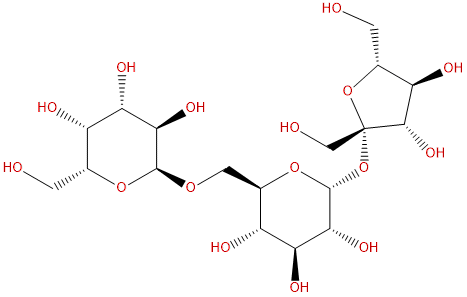
The chemical structure of raffinose is the basis of its biological activity. From a chemical classification perspective, raffinose belongs to the simplest member of the raffinose family oligosaccharides (RFOs). Its molecular formula is C ₁₈ H ∝₂ O ₁₆, and its molecular weight is 504.44 Da. Structurally, raffinose is composed of one molecule of D-galactose, one molecule of D-glucose, and one molecule of D-fructose connected by glycosidic bonds. Specifically, galactose is linked to the C-6 position of glucose residues in sucrose (glucose fructose) molecules through an alpha-1,6-glycosidic bond. This structure determines its key physicochemical properties: due to the presence of multiple free hydroxyl groups, raffinose has extremely strong hydrophilicity, which is reflected in its extremely high water solubility (about 85 g/100 mL) and extremely low lipid solubility.
The oil-water partition coefficient (LogP) of raffinose is -3.21, which is a very low value indicating that it is almost unable to penetrate the biofilm composed of lipid bilayers. This characteristic explains why raffinose cannot be passively diffused and absorbed by small intestinal epithelial cells after oral administration, and also explains why its blood-brain barrier permeability is extremely low. In addition, the topological polar surface area (TPSA) of raffinose is as high as 268.68 Å ², which further confirms its strong polarity and difficult transmembrane properties. In terms of physical form, raffinose is usually a white crystalline powder with a sweet taste, which is about 20-40% sweeter than sucrose. It is soluble in water, slightly soluble in ethanol, and insoluble in non-polar solvents such as ether. Under acidic conditions or when exposed to heat, raffinose can undergo hydrolysis to produce galactose and sucrose. These physicochemical properties determine the fate of raffinose in the body: after oral administration, it almost completely passes through the stomach and small intestine until it reaches the large intestine, where it is broken down and utilized by microbial enzyme systems (mainly alpha galactosidase).
Plant sources and extraction methods
Cottonseed sugar is widely distributed in the plant kingdom, especially in higher plants, as it is an important form of photosynthetic product transport and carbohydrate storage. The sources of its abundant content mainly include the following categories: firstly, the seeds of leguminous plants, such as soybeans, beans, peas, chickpeas, and peanuts. In soybeans, the content of raffinose is about 1-2% of dry weight, which is one of the main factors causing bloating in some people after consuming soy products. Next are certain vegetables and grains, such as cabbage, broccoli, asparagus, onions, and whole wheat. In addition, raffinose is also the main oligosaccharide component in cottonseed, which is the origin of its Chinese name "raffinose". In nature, raffinose often coexists with higher RFOs such as Stachyose (tetrasaccharide) and Verbascose (pentasaccharide).
The process of extracting raffinose from plant materials is quite mature, mainly based on its high water solubility. The traditional extraction method includes hot water extraction: the crushed raw material (such as defatted soybean meal) is soaked in hot water to dissolve the raffinose in water, and then the insoluble residue is removed by filtration and centrifugation. After concentration, the extract can be preliminarily purified using ethanol precipitation or activated carbon decolorization. In order to obtain high-purity raffinose, modern industry typically uses chromatographic separation techniques such as ion exchange resin chromatography or activated carbon column chromatography. These methods can effectively remove impurities such as monosaccharides, sucrose, and other oligosaccharides. In recent years, membrane separation technologies such as nanofiltration and ultrafiltration have been widely used in the separation and purification of raffinose due to their simple operation, low energy consumption, and environmental friendliness. In addition, enzyme assisted extraction is also a green and efficient strategy. By using cellulase and pectinase to destroy plant cell walls, the extraction rate of raffinose can be improved. With the deepening understanding of the functions of raffinose, its industrial production scale continues to expand, providing sufficient raw material guarantee for subsequent pharmacological research and application development.
Pharmacological activity research
The pharmacological activity research of raffinose has expanded from early "prebiotic" effects to direct regulation of host immunity, inflammation, and oxidative stress, demonstrating multi-target and multi-level biological effects.
1. Probiotic effects and regulation of gut microbiota
As the most classic and core activity of raffinose, its prebiotic effect has been confirmed by numerous in vitro and in vivo experiments. Due to the lack of alpha galactosidase in the human body for digesting raffinose, orally ingested raffinose can reach the colon intact and be selectively fermented by specific gut microbiota. Research has shown that raffinose can significantly promote bifidobacteria(Bifidobacterium)And lactobacilli(Lactobacillus)Waiting for the proliferation of beneficial bacterial communities. These microbial communities produce short chain fatty acids (SCFAs), especially acetic acid, propionic acid, and butyric acid, by fermenting raffinose. SCFAs not only provide energy for colonic epithelial cells, but also lower intestinal pH and inhibit the growth of harmful bacteria such as Clostridium perfringens and Escherichia coli. In addition, raffinose can upregulate the expression of genes encoding tight junction proteins such as Occludin (OCLN), Claudin-1 (CLDN1), and Zonula occludens-1 (ZO1), and promote the secretion of mucin MUC2, thereby enhancing the integrity of the intestinal barrier. The enhancement of this barrier function effectively reduces the "leakage" of pro-inflammatory substances such as endotoxins (such as lipopolysaccharides LPS) from the intestine to the systemic circulation, which is an important prerequisite for the systemic anti-inflammatory effect of raffinose.
2. Anti inflammatory activity
The anti-inflammatory activity of raffinose is one of its most important pharmacological effects, which has been validated in various inflammatory models. In a colitis mouse model induced by dextran sulfate sodium (DSS), oral administration of raffinose significantly reduced disease activity indices such as weight loss, rectal bleeding, and colon shortening. Histopathological analysis showed that treatment with raffinose reduced inflammatory cell infiltration and crypt destruction in the colon mucosa. At the molecular level, raffinose can significantly inhibit the expression of pro-inflammatory cytokines such as tumor necrosis factor - α (TNF - α), interleukin-6 (IL-6), and interleukin-1 β (IL-1 β). More importantly, studies have found that raffinose can inhibit the expression of TLR4 receptors and their downstream MyD88 dependent signaling pathway, thereby blocking the nuclear translocation and transcriptional activity of NF - κ B. This inhibition of the TLR4 MyD88 NF - κ B axis is one of the core mechanisms by which raffinose exerts anti-inflammatory effects. In addition, in liver injury models, raffinose also exhibits a protective effect, which can alleviate liver inflammation and fibrosis caused by alcohol or chemical toxins such as carbon tetrachloride.
3. Antioxidant activity
Oxidative stress is a common pathological basis for various diseases. Cotton seed sugar has been proven to have direct antioxidant activity, but its mechanism of action is not as a direct free radical scavenger like vitamin C or E, but mainly by activating the endogenous antioxidant defense system. Research has shown that raffinose can activate the nuclear factor E2 related factor 2 (Nrf2) signaling pathway. Nrf2 is a key transcription factor that regulates cellular oxidative stress response. After activation, it enters the nucleus and binds to antioxidant response elements (ARE), initiating the transcription of a series of downstream antioxidant enzyme genes, including heme oxygenase-1 (HO-1), quinone oxidoreductase 1 (NQO1), superoxide dismutase (SOD), and glutathione peroxidase (GPx). By upregulating the expression of these enzymes, raffinose can significantly reduce the level of intracellular reactive oxygen species (ROS), alleviate lipid peroxidation and protein oxidative damage. This antioxidant mode, which activates defense rather than directly neutralizing, makes its effects more long-lasting and efficient.
4. Immune regulatory activity
The immunomodulatory effect of raffinose is a comprehensive manifestation of its anti-inflammatory and prebiotic effects. On the one hand, by regulating the gut microbiota, raffinose can indirectly affect the host immune system. For example, SCFAs (especially butyric acid) produced by beneficial bacteria such as bifidobacteria can regulate the differentiation and function of regulatory T cells (Tregs) by binding to G protein coupled receptors (such as GPR41 and GPR43), thereby maintaining intestinal immune homeostasis. On the other hand, raffinose may directly act on immune cells. There are research reports that raffinose can regulate the polarization of macrophages, promote their transformation into anti-inflammatory phenotype (M2 type), and inhibit their transformation into pro-inflammatory phenotype (M1 type). In addition, raffinose can also promote the secretion of IL-22 by intestinal epithelial cells, which is a cytokine that plays a key role in maintaining intestinal barrier integrity and antibacterial defense. These immune regulatory effects together form a complex network of marshmallows that protect the body from inflammation and infection.
Mechanism of action and molecular targets
The pharmacological mechanism of raffinose is complex and intricate, mainly categorized into two pathways: "indirect regulation" and "direct action", involving multiple key molecular targets and signaling pathways.
1. Indirect effect: mediated by gut microbiota
This is the primary mechanism by which raffinose exerts physiological effects. Cotton seed sugar, as a prebiotic, is not an active molecule itself, but rather exerts its effects through metabolites (mainly SCFAs) produced by intestinal microbiota fermentation.
- Target: GPR41/GPR43 SCFAs (especially acetic acid and propionic acid) are endogenous ligands of GPR41 and GPR43. These receptors are expressed on intestinal epithelial cells, immune cells (such as neutrophils and macrophages), and adipocytes. After binding to GPR43, SCFAs can inhibit the NF - κ B signaling pathway, reduce the production of inflammatory factors, and promote the differentiation of Treg cells, thereby exerting anti-inflammatory and immune regulatory effects.
- Target: MUC2, OCLN, ZO1, CLDN1 Butyric acid, as the main energy source of colonic epithelial cells, can regulate gene expression by inhibiting histone deacetylase (HDAC). It can significantly upregulate the gene expression encoding tight junction proteins (OPLN, ZO1, CLDN1) and mucin (MUC2), thereby repairing damaged intestinal barriers and reducing endotoxin translocation.
- Target: IL-22 Certain specific intestinal commensal bacteria (such as segmented filamentous bacteria) can induce IL-22 production in intestinal innate lymphoid cells (ILC3) and T cells under the promotion of raffinose. IL-22 enhances the host's defense against pathogens by acting on intestinal epithelial cells, promoting the secretion of antimicrobial peptides (such as RegIII γ) and the production of mucus.
2. Direct action: Regulating the host signaling pathway
More and more evidence suggests that raffinose or its minimally absorbed fragments can directly act on host cells, regulating key signaling processes.
- Target: TLR4 MyD88 NF - κ B signaling pathway This is the core pathway through which raffinose exerts direct anti-inflammatory effects. TLR4 is a key receptor for recognizing pathogen associated molecular patterns (PAMPs) such as LPS. Cotton seed sugar has been shown to directly or indirectly inhibit the expression of TLR4 or its binding to ligands. Subsequently, the recruitment of downstream adaptor protein MyD88 was blocked, resulting in inhibition of the activation of IL-1 receptor associated kinase (IRAK) and TNF receptor associated factor 6 (TRAF6), ultimately inhibiting the activation of the I κ B kinase (IKK) complex and preventing the translocation of NF - κ B from the cytoplasm to the nucleus. After the transcriptional activity of NF - κ B is inhibited, the expression of pro-inflammatory genes such as TNF - α, IL-6, IL-1 β, and iNOS significantly decreases.
- Target: Nrf2 signaling pathway This is the core pathway through which raffinose exerts antioxidant effects. Under normal physiological conditions, Nrf2 binds to Kelch like ECH related protein 1 (Keap1), is in an inhibited state, and is degraded by ubiquitination. Gossypose or its metabolites may cause Nrf2 to dissociate and stabilize from Keap1 by modifying key cysteine residues on Keap1. Stable Nrf2 then translocates into the nucleus, forms heterodimers with small Maf proteins, and binds to ARE, initiating the expression of a series of antioxidant enzymes and phase II detoxifying enzymes such as HO-1, NQO1, SOD, GPx, thereby enhancing the cell's ability to resist oxidative stress.
- Target: TLR2 In addition to TLR4, raffinose may also affect immune responses by regulating the TLR2 signaling pathway. TLR2 mainly recognizes peptidoglycan and lipoteichoic acid of Gram positive bacteria. The regulatory effect of raffinose on gut microbiota may alter the ligand levels of TLR2, indirectly affecting this pathway. In addition, studies suggest that certain oligosaccharides can directly bind to TLR2 and exert immunomodulatory effects.
In summary, the mechanism of action of raffinose is a complex network of "microbiota metabolite host signaling". It first regulates the gut microbiota to produce SCFAs, indirectly acting on the host; At the same time, it itself or its trace absorbed components can directly regulate key signaling pathways such as TLR4 and Nrf2, thereby achieving synergistic regulation of inflammation, oxidative stress, and immune response.
Evaluation of drug properties and pharmacokinetics
The development of a natural product as a drug or functional food ingredient requires a rigorous evaluation of its drug like and pharmacokinetic (ADME) properties. Cottonseed sugar exhibits unique advantages and challenges in this regard.
1. Evaluation of drug properties
According to the classic Lipinski Five Rules, raffinose does not seem to meet the standards of traditional oral medications: its molecular weight (504 Da) is slightly greater than 500, its LogP value (-3.2) is much lower than 5, and there are numerous hydrogen bond donors and acceptors. However, these "rules" mainly target small molecule drugs that act on intracellular targets and require passive diffusion across membranes. The target of action of raffinose is mainly located in the intestine (such as the gut microbiota, receptors on the surface of intestinal epithelial cells) or indirectly exerted through the gut microbiota, so its "non compliant" physicochemical properties are precisely the basis for its probiotic function.
- Water solubility The high water solubility of raffinose (85 mg/mL) is its advantage, ensuring its uniform distribution in the gastrointestinal tract and sufficient contact with the microbiota.
- Blood-brain barrier (BBB) permeability Its BBB permeability is extremely low, which is safe for treating intestinal or peripheral diseases and avoids potential central nervous system side effects.
- HERG inhibition Cotton seed sugar has no inhibitory effect on hERG potassium channels (hERG inhibition: No), indicating that its risk of causing QT interval prolongation and arrhythmia in the heart is extremely low.
- Ames test The Ames test result is negative (0.0), indicating that it has no genetic toxicity or mutagenicity. This is consistent with its history of long-term safe use as a food ingredient.
2. Pharmacokinetic characteristics
The pharmacokinetic characteristics of raffinose are highly consistent with its physicochemical properties, exhibiting a typical pattern of "high exposure to the intestine and low absorption throughout the body".
- Absorption After oral administration, due to the lack of alpha galactosidase, raffinose is almost not digested and absorbed in the small intestine. Its absorption rate is extremely low (usually considered to be less than 0.5%), and the vast majority enters the colon in its intact form. Therefore, its oral bioavailability is extremely low, but this does not prevent it from exerting its pharmacological effects, as its main site of action is in the intestine.
- Distribution Due to its high molecular weight and strong hydrophilicity, raffinose is difficult to penetrate capillary walls and enter tissue gaps. Its distribution volume is very small, mainly limited to the intestinal lumen and plasma. When injected intravenously, it is mainly distributed in the extracellular fluid.
- Metabolism The metabolism of raffinose mainly occurs in the colon, where it is hydrolyzed into galactose, glucose, and fructose by alpha galactosidase and sucrase in the gut microbiota. These monosaccharides are subsequently fermented and utilized by the microbial community, producing SCFAs and gases such as hydrogen, carbon dioxide, and methane. The host liver has minimal contribution to the metabolism of raffinose.
- Excretion Cotton seed sugar that has not been fermented and utilized by the microbial community will be excreted with feces. A very small amount of raffinose absorbed into the bloodstream, due to its high hydrophilicity, will be filtered through the glomerulus and excreted in its original form from the urine.
Summary The "medicinal properties" of raffinose need to be re examined from its unique mechanism of action. It does not meet the ADME standards for traditional oral small molecule drugs, but as a type of prebiotic that acts on the intestine, its low absorption and high intestinal exposure characteristics are the ideal prerequisite for its pharmacological effects. Its greatest advantage is its extremely high safety and no genetic toxicity.
Clinical application prospects and prospects
Based on its unique pharmacological activity and excellent safety, the application prospects of raffinose in clinical and health fields are very broad, mainly covering the following aspects:
1. Adjuvant treatment for inflammatory bowel disease (IBD)
Ulcerative colitis and Crohn's disease are typical chronic intestinal inflammatory diseases. Cotton seed sugar can intervene in the pathological process of IBD from multiple aspects by regulating the microbiota, enhancing the intestinal barrier, inhibiting the TLR4/NF - κ B pathway, and activating the Nrf2 pathway. Preclinical studies have shown significant therapeutic effects. In the future, the development of raffinose as an adjuvant therapy or special medical formula for IBD patients has great potential, which is expected to reduce patients' dependence on hormones and immunosuppressants.
2. Metabolic diseases (such as obesity, type 2 diabetes, non-alcoholic fatty liver)
The imbalance of gut microbiota is closely related to metabolic diseases. Cotton seed sugar can alleviate chronic low-grade inflammation by promoting the growth of beneficial bacteria, reducing endotoxemia, and improving intestinal barrier function, which is a key driving factor for insulin resistance and fatty liver. In addition, SCFAs (especially butyric acid) can directly regulate glucose and lipid metabolism in the liver and adipose tissue. Therefore, as a dietary supplement, raffinose has important value in preventing and improving metabolic syndrome.
3. Liver protection
Whether it is alcoholic liver disease or non-alcoholic steatohepatitis (NASH), oxidative stress and inflammation are the core pathological processes. Cottonseed sugar has shown protective effects in various liver injury models by activating the Nrf2 antioxidant pathway and inhibiting the NF - κ B inflammatory pathway. Its oral activity makes it highly suitable as a daily nutritional intervention for patients with chronic liver disease.
4. Neurodegenerative diseases
The discovery of the gut brain axis has opened up new avenues for the treatment of neurological diseases. Cotton seed sugar may affect the synthesis of neurotransmitters (such as serotonin), alleviate systemic inflammation and oxidative stress, and indirectly have a protective effect on the brain by regulating gut microbiota. Although its BBB permeability is extremely low, it affects the central nervous system by improving intestinal health, providing new ideas for interventions in diseases such as Alzheimer's and Parkinson's disease.
5. Immune regulation and anti infection
The immunomodulatory activity of raffinose makes it promising for enhancing the body's resistance. By promoting the production of antibacterial factors such as IL-22, it may help prevent or treat infections caused by intestinal pathogens such as Salmonella and Clostridium difficile. In addition, it is worth exploring as an immune adjuvant or restorative agent after vaccination or radiotherapy and chemotherapy.
Outlook and Challenges:
Despite the bright prospects, the clinical translation of raffinose still faces challenges. Firstly, the significant differences in gut microbiota among individuals may lead to varying therapeutic effects of raffinose. In the future, precise prebiotic strategies based on microbiota typing will be needed. Secondly, high-dose intake of raffinose may cause intolerance symptoms such as bloating and diarrhea, and it is necessary to determine the optimal effective dosage and administration plan. Finally, most current research is still at the cellular and animal level, and high-quality randomized controlled clinical trials (RCTs) are urgently needed to confirm their efficacy and safety in humans. Future research directions should focus on: 1) in-depth analysis of the interaction between raffinose and specific microbial community members; 2) Explore the synergistic effects of raffinose with other drugs or probiotics; 3) Develop oral formulations targeting specific diseases to improve their targeting and patient compliance.
Conclusion
Cottonseed sugar, a simple trisaccharide once considered an "anti nutritional factor," is shining with new brilliance with the development of modern pharmacology and microbiology. It perfectly embodies the biological wisdom of how 'indigestibility' can be transformed into 'functionality'. As a prebiotic, it indirectly regulates host immunity and metabolism by nourishing beneficial gut microbiota; As a signaling molecule, it can directly act on key pathways such as TLR4 and Nrf2, exerting anti-inflammatory and antioxidant effects. This "dual pronged" mode of action demonstrates unique advantages in interventions for inflammatory bowel disease, metabolic diseases, liver protection, and even neurodegenerative diseases. Its excellent safety, oral activity, and clear physicochemical properties have paved the way for it to move from the laboratory to clinical and public health fields. In the future, with the continuous deepening of understanding of the "gut immune axis" and "gut organ axis", as well as the popularization of the concept of precision nutrition, raffinose is expected to play a more important role as a safe, effective, and multifunctional natural active molecule in the fields of functional food and medicine, and make new contributions to human health.