Introduction/Overview
Rheumatoid arthritis (RA) is an autoimmune disease characterized by chronic, symmetrical, and erosive polyarthritis. Its pathological features include synovial hyperplasia, inflammatory cell infiltration, vascular opacities formation, and progressive destruction of articular cartilage and bone. The global prevalence rate is about 0.5% -1%, which imposes a heavy disease burden on patients and society. At present, the clinical treatment drugs for RA mainly include nonsteroidal anti-inflammatory drugs, anti rheumatic drugs, glucocorticoids, and biologics. However, these drugs generally have limitations such as large side effects, high prices, or susceptibility to drug resistance. Therefore, searching for efficient and low toxicity new anti RA lead compounds or drugs from natural products has always been an important direction in drug development.
Oleanolic acid (OA), as a pentacyclic triterpenoid compound widely present in various medicinal plants, has been extensively studied for its pharmacological activities such as anti-inflammatory, hepatoprotective, and anti-tumor effects. 3-Epioleanolic acid (3-EPOA, CAS: 25499-90-5) is a stereoisomer of oleanolic acid with a change in hydroxyl configuration at the C-3 position. This small stereochemical change can often significantly alter the biological activity, target of action, and metabolic properties of compounds. Early research suggests that 3-EPOA is one of the effective ingredients isolated from the traditional medicinal plant verbena and has shown potential anti-inflammatory activity. In recent years, with the development of molecular pharmacology and network pharmacology, research on the anti RA activity of 3-EPOA has gradually deepened. Its effects involve multiple signaling pathways such as AMPK, TLR4/NF - κ B, JAK/STAT, PI3K/Akt, demonstrating the potential of multi-target and multi pathway intervention in the complex pathological network of RA. This article aims to provide a systematic review of the chemical properties, plant sources, anti RA pharmacological activity, mechanism of action, pharmacological evaluation, and clinical application prospects of 3-table oleanolic acid, in order to provide reference for the in-depth research and development of this natural product.
Chemical structure and physicochemical properties
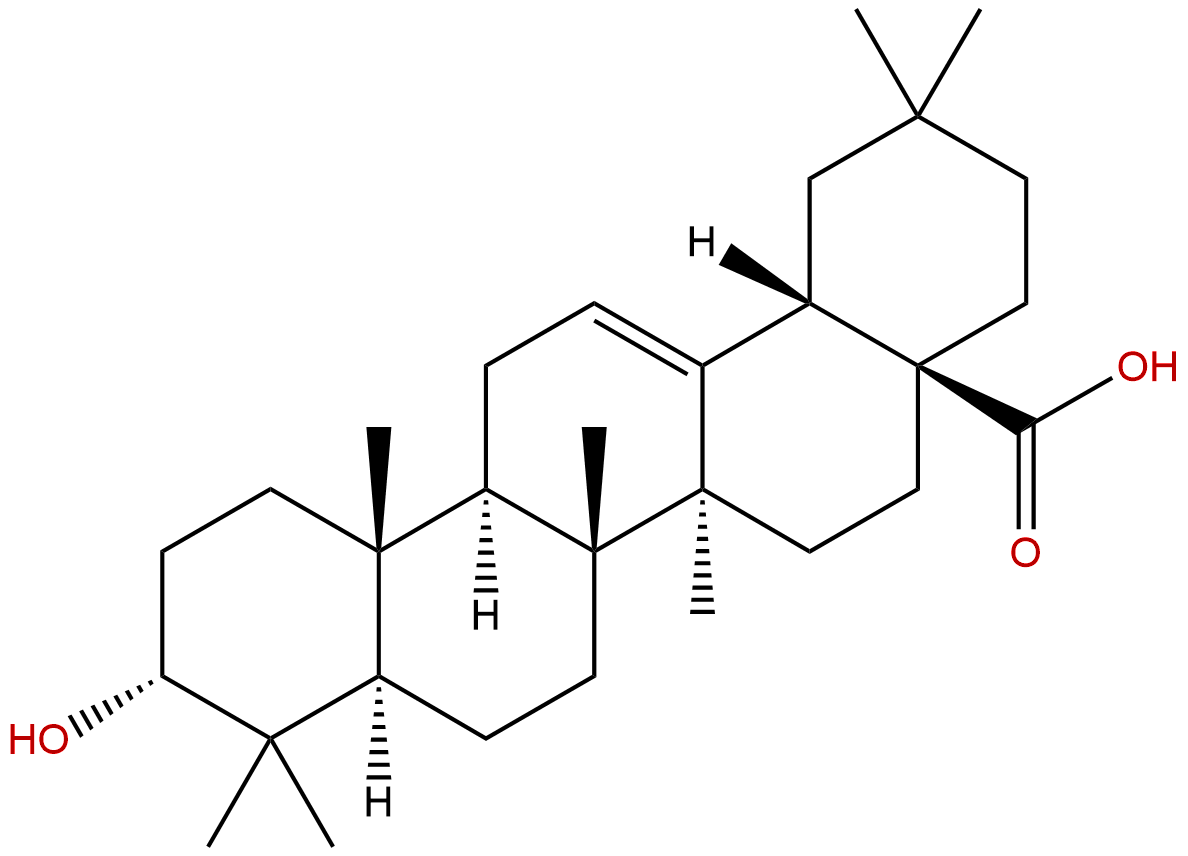
3-Epioleanolic acid is a pentacyclic triterpenoid compound with the molecular formula C ∝₀ H ₄₈ O3 and a molecular weight of 456.7110. Its core structure is the same as that of oleanane type, consisting of five fused rings (A/B/C/D/E rings), with A/B, B/C, and C/D rings being trans fused and D/E rings being cis fused. The key difference between it and oleanolic acid lies in the stereochemistry of the C-3 hydroxyl group (located on the A ring). In oleanolic acid, the C-3 hydroxyl group is in the β - configuration (upright bond, on the same side as the C-28 carboxyl group); In 3-oleanolic acid, the hydroxyl group is in the α - configuration (flat bond), and the two are C-3 isomers of each other. This conformational change affects the overall spatial conformation, polarity, and interaction mode with target proteins of the molecule.
In terms of physicochemical properties, 3-EPOA exhibits typical lipophilic triterpenoid acid characteristics. The calculated lipid water partition coefficient (LogP) is 6.7670, indicating strong lipid solubility. The theoretical polar surface area (TPSA) is 57.53 Å ², mainly contributed by one carboxyl group and one hydroxyl group. These properties determine its extremely low water solubility (about 0.0011 mg/mL), which poses challenges for its formulation development and in vivo bioavailability. Compounds appear as white crystals or powders at room temperature, soluble in organic solvents such as methanol, ethanol, chloroform, and dimethyl sulfoxide, but insoluble in water. The carboxyl groups in its structure give it a certain acidity and can form salts to improve solubility. In terms of spectroscopic characteristics, its nuclear magnetic resonance hydrogen and carbon spectra are highly similar to those of oleanolic acid, with the main difference being the chemical shift of the C-3 carbon and the coupling constant of its related protons, which is the key basis for identifying its configuration.
Plant sources and extraction methods
3-Oleanolic acid is mainly isolated from the Verbena officinalis L. plant in the family Verbenaceae. As a traditional Chinese medicine, verbena has the effects of promoting blood circulation, dispelling blood stasis, detoxifying, diuresis, reducing jaundice, and intercepting malaria. It is commonly used for treating diseases such as disease accumulation, dysmenorrhea, obstruction of the throat, abscess, edema, jaundice, malaria, etc. Modern plant chemistry research has shown that verbena is rich in various active ingredients such as iridoids, triterpenes, flavonoids, and phenylpropanoids, among which triterpenes are one of the important material bases for its anti-inflammatory activity.
In addition to verbena, 3-EPOA also exists as a minor component or metabolite in other plants containing oleanolic acid, such as Ligustrum lucidum plants in the Oleaceae family and Salvia plants in the Lamiaceae family, but the content is usually low. In plants, it may be generated by C-3 isomerization of oleanolic acid catalyzed by enzymes.
Its extraction and separation usually follow the conventional process of natural product chemistry. Firstly, the dried whole verbena plant is crushed and heated with high concentration ethanol (such as 70% -95%) for reflux or ultrasound assisted extraction to obtain the total extract. After vacuum concentration, the extract was extracted in stages using different polar solvents such as petroleum ether, ethyl acetate, and n-butanol. 3-EPOA is mainly enriched in the ethyl acetate extraction site. Subsequently, preliminary separation was performed by silica gel column chromatography, with different ratios of petroleum ether ethyl acetate or chloroform methanol gradient elution. The fraction containing the target component was further purified by preparative high-performance liquid chromatography (HPLC, commonly using C18 reverse phase column, methanol water or acetonitrile water as mobile phase) to obtain high-purity 3-epioleanolic acid monomer. The structural identification is completed through the comprehensive use of mass spectrometry (MS), nuclear magnetic resonance (NMR, especially 1H-NMR, 13C-NMR, DEPT, HSQC, HMBC and other two-dimensional spectra), and comparison with reference materials or literature data. In recent years, modern separation technologies such as high-speed countercurrent chromatography have also been applied to improve separation efficiency and yield.
Pharmacological activity research
Numerous in vitro and in vivo pharmacological studies have confirmed that the core pharmacological activities of 3-epioleanolic acid are anti-inflammatory and immunomodulatory, laying a solid foundation for its application in RA treatment.
1. In vitro anti-inflammatory and immune regulatory activity:
In cell model studies, 3-EPOA exhibits significant inhibitory effects on the production of inflammatory factors and regulates immune cell function. In the lipopolysaccharide (LPS) - induced macrophage (such as RAW264.7 cells) inflammation model, 3-EPOA can dose dependently inhibit the production of nitric oxide (NO) and prostaglandin E2 (PGE2), and downregulate the protein expression of inducible nitric oxide synthase (iNOS) and cyclooxygenase-2 (COX-2). Meanwhile, it can effectively inhibit the mRNA transcription and protein secretion of pro-inflammatory cytokines such as tumor necrosis factor - α (TNF - α), interleukin-6 (IL-6), and interleukin-1 β (IL-1 β). In the study of synovial fibroblasts (FLS) - key effector cells of RA joint destruction -3-EPOA can inhibit their abnormal proliferation, migration, and invasion abilities, and reduce their secretion of matrix metalloproteinases (MMPs, such as MMP-1, MMP-3, MMP-13), thereby reducing the degradation of extracellular matrix in articular cartilage cells.
2. In vivo anti arthritis activity:
The efficacy of 3-EPOA has been validated in animal arthritis models. In the rat arthritis model induced by Freund's complete adjuvant (CFA) or collagen induced arthritis (CIA) mouse model, oral or intraperitoneal injection of 3-EPOA can significantly reduce joint swelling, arthritis score, and improve joint activity function. Histopathological analysis showed that the inflammatory cell infiltration in the synovial tissue of the treatment group animals was reduced, synovial proliferation and vascular opacities formation were inhibited, and the degree of cartilage damage and bone erosion was significantly reduced. In addition, 3-EPOA can also reduce the levels of pro-inflammatory factors such as TNF - α, IL-6, IL-1 β in the serum of model animals, and regulate the balance of abnormal T cell subsets (such as Th1/Th2, Th17/Treg), demonstrating comprehensive immune regulatory effects.
3. Other related activities:
In addition to direct anti-inflammatory effects, studies have also found that 3-EPOA has a certain antioxidant stress response and can enhance the activation of intracellular nucleotide binding oligomeric domain like receptor protein 3 (NLRP3) inflammasome. These auxiliary activities help alleviate oxidative damage during the pathological process of RA and form a synergistic therapeutic effect.
Mechanism of action and molecular targets
Based on pharmacological research and network pharmacology prediction, the mechanism of action of 3-quercetin against RA involves a complex multi-target and multi-path network, mainly covering the following aspects:
1. Regulating the AMPK signaling pathway:
Adenosine activated protein kinase (AMPK) is a core regulator of cellular energy metabolism and an important anti-inflammatory target. 3-EPOA has been confirmed to activate AMPK (its catalytic subunit PRKAA1). The activation of AMPK inhibits the abnormal proliferation of synovial cells by suppressing the mammalian rapamycin target protein (mTOR) pathway; On the other hand, it can phosphorylate and inhibit the transcriptional activity of NF - κ B, reducing the expression of downstream inflammatory factors. In addition, AMPK activation can upregulate the nuclear factor E2 related factor 2 (NFE2L2/Nrf2) pathway, promote the expression of antioxidant genes, and alleviate oxidative stress.
2. Inhibit the TLR4/NF - κ B and JAK/STAT inflammatory pathways:
Toll like receptor 4 (TLR4) is a key molecule that recognizes endogenous danger signals and initiates innate immunity. 3-EPOA can intervene in the activation of TLR4 and its downstream myeloid differentiation factor 88 (MyD88), thereby inhibiting the transmission of nuclear factor kappa B (NF - κ B) signaling pathway. The reduction of NF - κ B nuclear entry leads to a decrease in transcription of genes such as iNOS, COX-2, TNF - α, IL-6, etc. Meanwhile, 3-EPOA can inhibit the Janus kinase/signal transduction and transcriptional activator (JAK/STAT) pathway activated by cytokines such as IL-6, particularly the phosphorylation and nuclear translocation of STAT3, thereby blocking the amplification and persistence of inflammatory signals.
3. Regulating arachidonic acid metabolism and protease activity:
3-EPOA has a certain inhibitory effect on 5-lipoxygenase (ALOX5), thereby reducing the production of pro-inflammatory mediator leukotrienes. It can also directly or indirectly inhibit the activity or expression of matrix metalloproteinase-1 (MMP-1), protecting the collagen network of articular cartilage from excessive degradation.
4. Intervention of PI3K/Akt and PKC signaling:
The catalytic subunit gamma (PIK3CG) of phosphatidylinositol 3-kinase (PI3K) and its downstream protein kinase B (Akt) are important pathways that regulate cell survival, proliferation, and inflammation. 3-EPOA can inhibit the excessive activation of PI3K/Akt. Meanwhile, it also has a regulatory effect on protein kinase C alpha (PRKCA), which is involved in the activation of various immune cells and the production of inflammatory factors.
5. Affects tryptophan metabolism and immune tolerance:
Indoleamine 2,3-dioxygenase 1 (IDO1) is a key enzyme involved in the metabolism of tryptophan to canine urea, and plays a role in immune tolerance and Treg cell differentiation. IDO1 activity may be dysregulated in RA patients. The regulatory effect of 3-EPOA on IDO1 is being explored, which may regulate the local immune microenvironment by affecting tryptophan metabolism.
In summary, 3-EPOA does not act on a single target, but rather synergistically acts on multiple targets such as AMPK, TLR4, STAT3, ALOX5, MMP1, PIK3CG, interweaving into a comprehensive network that inhibits inflammation, regulates immunity, and protects bone and cartilage. This is in line with the characteristics of multi-component and multi-target treatment of complex diseases in traditional Chinese medicine, and also provides a unique approach for the development of new anti RA drugs.
Evaluation of drug properties and pharmacokinetics
Although 3-epioleanolic acid has shown good pharmacological activity, its drug affinity still faces some challenges and requires systematic optimization and evaluation.
1. Physical and chemical properties and ADMET properties:
As mentioned earlier, the high LogP value and extremely low water solubility of 3-EPOA are the main obstacles to its oral absorption. According to the extended analysis of the "Rule of Five", its molecular weight (456.7) is moderate, but high LogP (>5) may affect the balance of its solubility and permeability. Its membrane permeability may be acceptable, but its absolute bioavailability is expected to be low. The blood-brain barrier permeability is predicted to be 'low', which may actually reduce potential side effects on the central nervous system for RA treatment primarily targeting peripheral joints. Importantly, preliminary computer predictions and in vitro experiments indicate that 3-EPOA has no significant inhibitory effect on hERG potassium channels (hERG inhibition: no), suggesting a low risk of causing cardiac QT interval prolongation. The Ames test predicted a result of 0.0, indicating that it may not have direct genetic toxicity, but this requires precise experimental verification.
2. Pharmacokinetic characteristics:
There are currently limited reports on the pharmacokinetic studies of 3-EPOA, and reference can be made to the relevant data of its parent compound, oleanolic acid. Oral absorption of oleanolic acid is slow and incomplete, with low bioavailability. It mainly binds to plasma proteins and is widely distributed in the liver. It mainly undergoes phase I metabolism (such as hydroxylation) and phase II binding reactions (such as glucuronidation) in the body, and the metabolic products are mainly excreted through bile and feces, with less excretion by the kidneys. Due to the difference in C-3 configuration, the metabolic rate, enzyme selectivity, and tissue distribution of 3-EPOA may differ from those of oleanolic acid, requiring specialized pharmacokinetic studies to clarify. Whether it can be used as a prodrug (such as esterification, salt formation) or requires new drug delivery systems (such as nanoparticles, liposomes, solid dispersions) to improve its solubility, stability, and targeting is the focus of future formulation research.
3. Potential toxicity and safety:
Triterpenoid acids from natural sources are usually safer. Oleanolic acid has been clinically used for liver protection with low toxicity. But at high doses, it may still stimulate the gastrointestinal tract or cause certain changes in liver and kidney function indicators. The systemic toxicity, long-term toxicity, and reproductive toxicity of 3-EPOA have not been reported in detail, which is a non clinical safety evaluation that must be completed before its clinical translation.
Clinical application prospects and prospects
3-Epioleanolic acid, as a natural product with clear anti RA activity, has broad prospects for clinical application and development, but there are also many areas that need to be overcome.
As a novel anti RA lead compound:
Its multi-target mechanism of action is particularly suitable for intervening in RA, a multifactorial and networked disease, which may overcome the disadvantages of single target drugs easily developing resistance or insufficient efficacy. By studying the structural modification and structure-activity relationship of the system, it is expected to optimize its solubility, metabolic stability, and targeting while retaining its core activity. For example, esterification or amidation modification of its carboxyl group, or derivatization of its hydroxyl group, may result in derivatives with stronger activity and better drug properties.
2. Develop new drug delivery systems:
Developing delivery systems based on nanotechnology is a highly promising direction to address the issue of poor water solubility. For example, preparing it into polymer nanoparticles, liposomes, micelles, or self microemulsion systems can not only improve oral bioavailability, but also enrich it more in inflamed joint sites through passive targeting (enhancing permeation and retention effects) or active targeting (connecting specific ligands) strategies, improve therapeutic efficacy, and reduce systemic side effects.
3. As quality control ingredients and active markers for traditional Chinese medicine formulas or herbal medicines:
Ma Bian Cao and its compound have a long history of clinical use in traditional Chinese medicine for the treatment of rheumatism (similar to RA). Identifying 3-EPOA as one of the quality control indicators for related formulations and studying its synergistic effects in compound formulations can help promote the modernization and internationalization of traditional Chinese medicine.
4. Exploration of combination therapy:
Considering the complexity of RA treatment, the combination of 3-EPOA with existing first-line DMARDs (such as methotrexate) or biologics may produce synergistic effects, reduce their respective dosages and toxicity, and provide new treatment options for refractory RA patients.
Outlook: Future research should focus on: ① delving into the precise molecular targets and details of their effects, especially using chemical biology methods to identify the proteins they directly affect; ② Conduct comprehensive preclinical pharmacokinetic and safety evaluations; ③ Strengthen structural optimization and formulation research to solve the bottleneck of drug development; ④ Explore its potential application in other inflammatory and autoimmune diseases, such as psoriatic arthritis and inflammatory bowel disease. With the advancement of these studies, 3-epioleanolic acid is expected to gradually develop from a potential natural active molecule into an innovative drug for treating RA.
Conclusion
3-Oleanolic acid, as a differential isomer of oleanolic acid discovered from the traditional medicinal plant verbena, has shown significant value in the treatment of rheumatoid arthritis due to its unique chemical structure and significant multi-target anti-inflammatory and immune regulatory activity. It intervenes in the inflammatory, immune, and bone destruction processes of RA by regulating AMPK, inhibiting TLR4/NF - κ B and JAK/STAT pathways, regulating ALOX5/MPs, and other multiple mechanisms, demonstrating the advantages of natural product multi pathway synergistic therapy for complex diseases. Although its strong lipophilicity leads to low water solubility and potentially low bioavailability, which are currently the main challenges in drug development, this bottleneck is expected to be overcome through modern drug chemical modifications and the development of novel drug delivery systems. In summary, 3-epioleanolic acid is a highly promising natural lead compound for anti RA research. Continuous and in-depth study of it not only helps to reveal the modern scientific connotation of the traditional efficacy of verbena, but also provides new candidate molecules and ideas for the development of new anti rheumatic drugs with independent intellectual property rights.