


Product name: Tiliroside
Synonym name: 6′′-O-trans-p-Coumaroylastragalin
Catalogue No.: BP1393
Cas No.: 20316-62-5
Formula: C30H26O13
Mol Weight: 594.525
Botanical Source: Edgeworthia chrysantha Lindl.
Physical Description:
Type of Compound: Flavonoids
Purity: 95%~99%
Analysis Method: HPLC-DAD or/and HPLC-ELSD
Identification Method: Mass, NMR
Packing: Brown vial or HDPE plastic bottle
Storage: Store in a well closed container, protected from air and light. Put into refrigerate or freeze for long term storage.
Whenever possible, you should prepare and use solutions on the same day. However, if you need to make up stock solutions in advance, we recommend that you store the solution as aliquots in tightly sealed vials at -20℃. Generally, these will be useable for up to two weeks.
The product could be supplied from milligrams to grams
Inquire for bulk scale.
Description:
Tiliroside possesses anti-inflammatory, antioxidant, anti-complement, anti-diabetic, anticarcinogenic and hepatoprotective activities. Tiliroside enhances fatty acid oxidation via the enhancement adiponectin signaling associated with the activation of both AMP-activated protein kinase and peroxisome proliferator-activated receptor α and ameliorates obesity-induced metabolic disorders.
References:
Fitoterapia. 2007 Jan;78(1):1-6.
Tiliroside and gnaphaliin inhibit human low density lipoprotein oxidation.
Two flavonoids, gnaphaliin and Tiliroside, isolated from Helichrysum italicum, were studied in vitro for their capacity to inhibit Cu(2+)-induced human low density lipoprotein (LDL) and diluted plasma oxidation.
METHODS AND RESULTS:
LDL oxidation was monitored by conjugated diene, thiobarbituric acid-reactive substances (TBARS) formation and electrophoretic mobility on agarose gel. Gnaphaliin and Tiliroside increased the lag-phase for diene conjugate production in a dose-dependent manner. The reduction of TBARS production confirmed the antioxidant activity of gnaphaliin and Tiliroside with 50% inhibitory concentration (IC(50)) values of 8.0+/-3.9 microM and 7.0+/-2.6 microM respectively. Furthermore, the flavonoids negated the Cu(2+)-induced increase in electrophoretic mobility of LDL. Antioxidant activity of gnaphaliin and Tiliroside was significantly different when diluted plasma was oxidised by adding 1 mM CuSO(4). Although both flavonoids again reduced the TBARS production, Tiliroside showed higher activity than gnaphaliin (IC(50)=10.6+/-2.5 microM vs. IC(50)>50 microM).
CONCLUSIONS:
In conclusion, Tiliroside and gnaphaliin are antioxidants against in vitro Cu(2+)-induced LDL oxidation in the same order of magnitude compared to that of the reference drug, probucol.
Eur J Pharmacol. 2003 Feb 7;461(1):53-61.
Assessment of the anti-inflammatory activity and free radical scavenger activity of tiliroside.
Three flavonoids, gnaphaliin, pinocembrin and Tiliroside, isolated from Helichrysum italicum, were studied in vitro for their antioxidant and/or scavenger properties and in vivo in different models of inflammation.
METHODS AND RESULTS:
In vitro tests included lipid peroxidation in rat liver microsomes, superoxide radical generation in the xanthine/xanthine oxidase system and the reduction of the stable radical 1,1-diphenyl-2-pycryl-hydrazyl (DPPH). Acute inflammation was induced by application of 12-O-tetradecanoylphorbol 13-acetate (TPA) to the mouse ear or by subcutaneous injection of phospholipase A(2) or serotonin in the mouse paw. Eczema provoked on the mouse ear by repeated administration of TPA was selected as a model of chronic inflammation. The flavonoids were assayed against sheep red blood cell-induced mouse paw oedema as a model of delayed-type hypersensitivity reaction. The most active compound, both in vitro and in vivo, was Tiliroside. It significantly inhibited enzymatic and non-enzymatic lipid peroxidation (IC(50)=12.6 and 28 microM, respectively). It had scavenger properties (IC(50)=21.3 microM) and very potent antioxidant activity in the DPPH test (IC(50)=6 microM). In vivo, Tiliroside significantly inhibited the mouse paw oedema induced by phospholipase A(2)(ED(50)=35.6 mg/kg) and the mouse ear inflammation induced by TPA (ED(50)=357 microg/ear). Pinocembrin was the only flavonoid that exhibited anti-inflammatory activity in the sheep red blood cell-induced delayed-type hypersensitivity reaction. However, only Tilirosidesignificantly reduced the oedema and leukocyte infiltration induced by TPA.
CONCLUSIONS:
As in the case of other flavonoids, the anti-inflammatory activity of Tiliroside could be based on its antioxidant properties, although other mechanisms are probably involved.
Mol Nutr Food Res. 2012 Mar;56(3):435-45.
Tiliroside, a glycosidic flavonoid, inhibits carbohydrate digestion and glucose absorption in the gastrointestinal tract.
Recent studies have reported that Tiliroside, a glycosidic flavonoid, possesses anti-diabetic activities. In the present study, we investigated the effects of Tiliroside on carbohydrate digestion and absorption in the gastrointestinal tract.
METHODS AND RESULTS:
This study showed that Tiliroside inhibits pancreatic α-amylase (IC₅₀ = 0.28 mM) in vitro. Tiliroside was found as a noncompetitive inhibitor of α-amylase with K(i) values of 84.2 μM. In male ICR mice, the increase in postprandial plasma glucose levels was significantly suppressed in the Tiliroside-administered group. Tiliroside treatment also suppressed hyperinsulinemia after starch administration. Tiliroside administration inhibited the increase of plasma glucose levels in an oral glucose tolerance test, but not in an intraperitoneal glucose tolerance test. In human intestinal Caco-2 cells, the addition of Tiliroside caused a significant dose-dependent inhibition of glucose uptake. The inhibitory effects of both sodium-dependent glucose transporter 1 (SGLT1) and glucose transporter 2 (GLUT2) inhibitors (phlorizin and phloretin, respectively) on glucose uptake were significantly inhibited in the presence of Tiliroside, suggesting that Tiliroside inhibited glucose uptake mediated by both SGLT1 and GLUT2.
CONCLUSIONS:
These findings indicate that the anti-diabetic effects of Tiliroside are at least partially mediated through inhibitory effects on carbohydrate digestion and glucose uptake in the gastrointestinal tract.
Bioorg Med Chem. 2002 Mar;10(3):707-12.
Hepatoprotective principles from the flowers of Tilia argentea (linden): structure requirements of tiliroside and mechanisms of action.
The methanolic extract from the flowers of Tilia argentea (linden) was found to show a hepatoprotective effect against D-galactosamine (D-GalN)/lipopolysaccharide (LPS)-induced liver injury in mice.
METHODS AND RESULTS:
By bioassay-guided separation using in vitro D-GalN-induced damage to hepatocytes, five flavonol glycosides were isolated as the hepatoprotective constituents of the methanolic extract. Tiliroside, the principal flavonol glycoside, strongly inhibited serum GPT and GOT elevations at doses of 25-100 mg/kg (p.o.) in D-GalN/LPS-treated mice. By comparing the inhibitory effects of Tiliroside with those of its components alone, the kaempferol 3-O-beta-D-glucopyranoside moiety was found to be essential for the activity, and its effect was suggested to depend on the inhibition of tumor necrosis factor-alpha (TNF-alpha) production, decreased sensitivity of hepatocytes to TNF-alpha, and on the protection of hepatocytes against D-GalN.
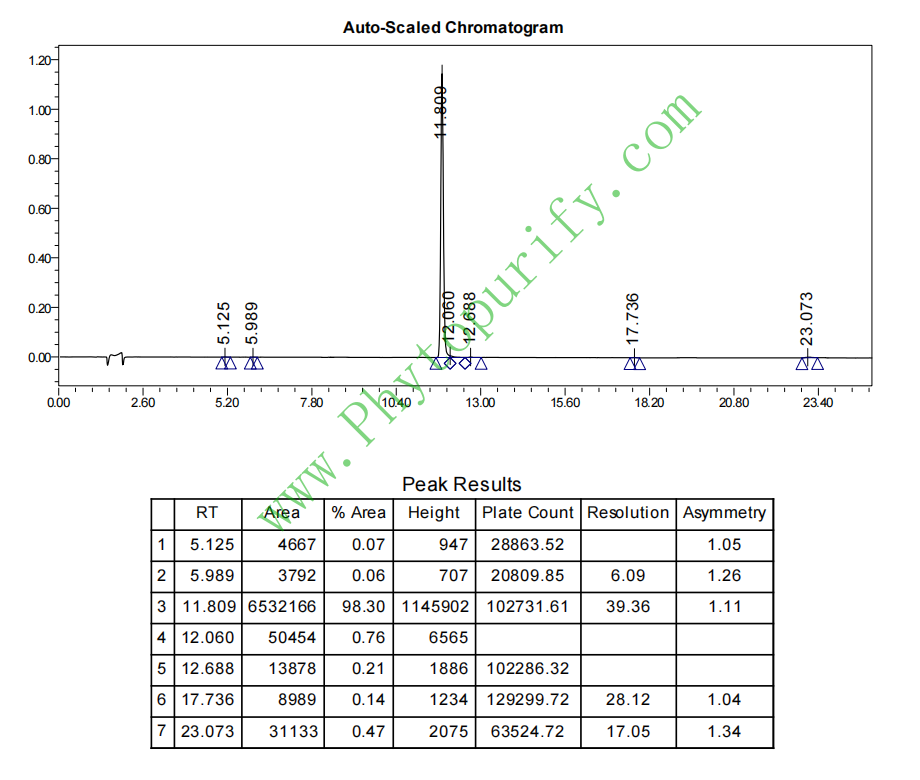
HPLC of Tiliroside
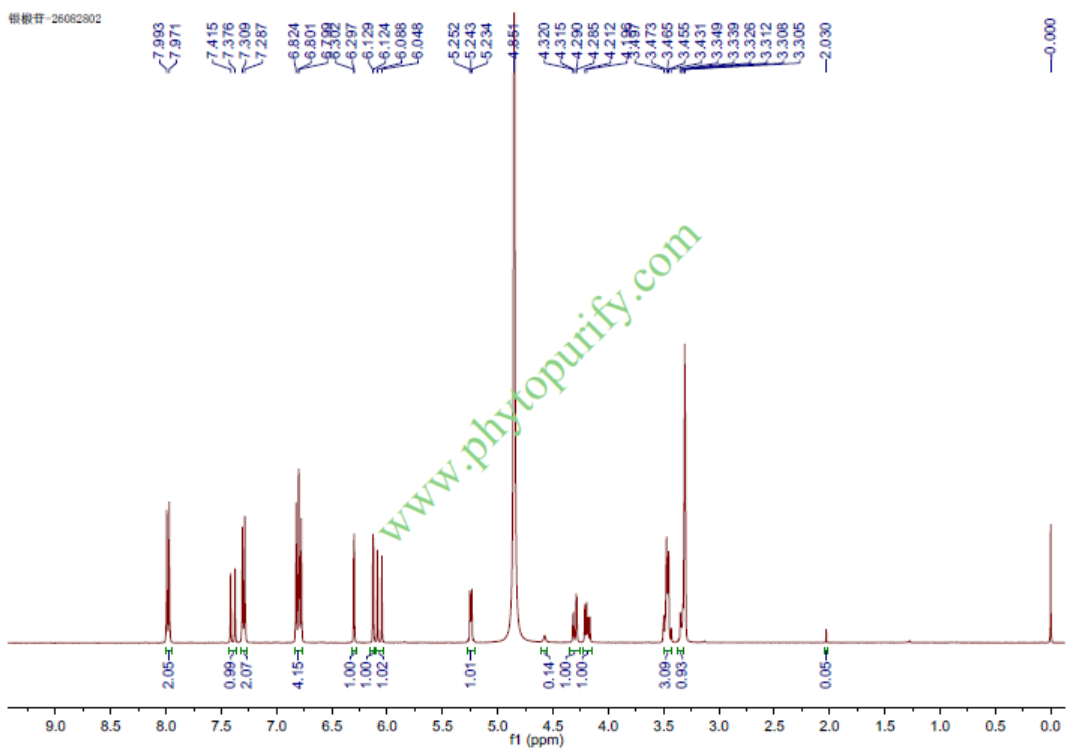
HNMR of Tiliroside
Storage conditions:Short-term storage at 2~8℃, long-term storage at -20 ~ -80℃
Tiliroside, also known as hesperidin, is a glycoside flavonoid compound widely present in various plants. Since its first isolation and identification, tilin has attracted great attention from the natural product pharmacology community due to its diverse biological activities, especially its potential applications in the fields of anti diabetes and anti inflammation. In recent years, with the increasing incidence of metabolic diseases and chronic inflammation related diseases, the pharmacological mechanism of tilin and its pharmaceutical properties have gradually deepened, providing an important scientific basis for the development of new natural drugs.
As a non competitive inhibitor of α - amylase, tilin can effectively inhibit the digestion of carbohydrates and the absorption of glucose, thus playing an anti diabetes role. In addition, it involves multiple key molecular targets in regulating inflammatory responses, such as IL-6, STAT3, TNF, etc., demonstrating good anti-inflammatory activity. This article will provide a systematic review of the chemical structure and physicochemical properties, plant sources and extraction methods, pharmacological activity and mechanism of action, pharmacological evaluation and pharmacokinetic characteristics of silver linden, and finally explore its clinical application prospects and future research directions.
The chemical structure of silver linden belongs to glycoside flavonoids, with a molecular formula of C30H26O13 and a molecular weight of 594.5250. Its core structure is the flavonoid mother nucleus, connected by glycosyl side chains, specifically the combination of quercetin or similar flavonoids with sugars such as glucose and arabinose. The structure contains multiple hydroxyl and phenolic hydroxyl groups, endowing it with strong antioxidant capacity.
In terms of physical and chemical properties, the LogP value of silver naringin is 1.6902, indicating that it has moderate lipid solubility, which is beneficial for cell membrane permeability but not easy to accumulate in the lipid environment. Its polar surface area (TPSA) is 216.58 Å ², and a higher polar surface area indicates good water solubility, with a water solubility of about 0.2002, suitable for dispersion in aqueous systems. The low blood-brain barrier permeability of silver naringin suggests its limited distribution in the central nervous system, which may reduce the risk of central side effects. The hERG channel inhibition test result was negative, indicating a low risk of cardiac toxicity. The Ames test result was 0.0, indicating no significant genotoxicity.
The non competitive inhibitory properties of silver naringin have an inhibition constant (Ki) of 84.2 μ M for alpha amylase, indicating its effectiveness in regulating enzyme activity. The synergistic effect of sugar groups and flavonoid mother nuclei in its structure not only ensures its binding ability with target enzymes, but also affects its bioavailability and metabolic stability.
Silver linden is widely present in various plants, especially in the flowers, leaves, and bark of Tilia spp., where its content is relatively high. In addition, silver naringin can also be detected in some medicinal plants such as Impatiens balsamina, Ginkgo biloba leaves, hawthorn, etc. Its plant sources are abundant, providing a natural raw material foundation for large-scale extraction and application.
The traditional method for extracting silver naringin mainly uses organic solvent extraction, such as ethanol or methanol aqueous solution (50% -80%) for reflux or ultrasound assisted extraction of plant materials. The extract was concentrated, separated, and purified by column chromatography to obtain high-purity silver naringin. In recent years, with the development of green extraction technology, new technologies such as supercritical CO2 extraction, microwave-assisted extraction, and enzyme assisted extraction have been introduced into the extraction of silver naringin, significantly improving extraction efficiency and purity while reducing the use of organic solvents, in line with the concept of green chemistry.
During the extraction process, parameters such as pH value, temperature, solvent polarity, and extraction time have a significant impact on the extraction rate of silver naringin. Optimizing the process conditions not only improves the yield, but also ensures the structural integrity and biological activity stability of silver naringin.
Silver linden, as a non competitive inhibitor of alpha amylase, can significantly inhibit the breakdown of carbohydrates in the gastrointestinal tract, delay the release and absorption of glucose, and reduce postprandial blood glucose peak. In vitro enzyme activity assays showed that the inhibitory effect of silver naringin on alpha amylase was stable and dose-dependent, with a Ki value of 84.2 μ M, indicating good enzyme inhibitory activity.
Animal experiments further confirmed that tilin can improve the blood sugar level of diabetes rats, enhance insulin sensitivity, and reduce diabetes related oxidative stress and inflammatory reaction. In addition, tilin can also regulate the expression of genes related to glucose and lipid metabolism, improve the function of pancreatic islet β cells, and show its multi target and multi mechanism anti diabetes potential.
Silver linden exhibits significant anti-inflammatory activity in various inflammatory models. Its targets include multiple key molecules in the inflammatory signaling pathway, including pro-inflammatory cytokines IL-6, TNF - α, transcription factor NF - κ B (NFKB1), inflammatory enzymes PTGS1 (COX-1), PTGS2 (COX-2), and inducible nitric oxide synthase NOS2. By inhibiting the expression and activity of these targets, silver naringin can effectively alleviate inflammatory reactions.
Silver linden also regulates inflammation related signaling pathways, such as STAT3 and CASP1, inhibits the activation of inflammasomes, and reduces the release of inflammatory mediators. In addition, silver naringin has a regulatory effect on pain related ion channels such as TRPV1 and TRPA1, exhibiting a certain analgesic effect.
In addition to anti diabetes and anti-inflammatory effects, tilin also has a variety of biological activities such as antioxidant, antibacterial, anti-tumor and so on. Its antioxidant effect mainly comes from the phenolic hydroxyl structure of the flavonoid mother nucleus, which can clear free radicals and alleviate oxidative stress damage. Some studies have shown that silver naringin has inhibitory effects on certain pathogenic bacteria and may exert anti-tumor effects by regulating apoptosis related signaling pathways.
The pharmacological mechanism of silver naringin involves synergistic regulation of multiple targets and pathways. Its anti diabetes effect mainly depends on the noncompetitive inhibition of α - amylase, blocking the enzymatic hydrolysis process of carbohydrates, reducing glucose absorption and lowering blood sugar level. This mechanism avoids direct stimulation of insulin secretion and reduces the risk of hypoglycemia.
In terms of anti-inflammatory effects, silver naringin blocks the cascade of inflammatory signaling by inhibiting the activity of pro-inflammatory cytokines (such as IL-6, TNF - α) and key transcription factor NF - κ B. Its regulation of STAT3 affects cell proliferation and apoptosis, further alleviating chronic inflammation. The inhibitory effect of CASP1 reduces the cytokine release mediated by inflammasomes and reduces tissue damage.
In addition, silver naringin has a regulatory effect on TRPV1 and TRPA1, reducing inflammation related pain perception. The inhibitory effects of PTGS1 and PTGS2 reduce prostaglandin synthesis and alleviate inflammatory symptoms. Inhibition of NOS2 reduces excessive production of nitric oxide, alleviates oxidative stress and inflammation.
The multi-target effect of silver naringin enables it to exhibit comprehensive regulatory effects in complex disease states and has high clinical translational potential.
The pharmacological parameters of silver naringin show that it has good potential for drug development. The molecular weight of 594.5250 is slightly higher, but still within an acceptable range. Moderate LogP (1.6902) and high TPSA (216.58) suggest that it has a certain degree of water solubility and polarity in vivo, which is beneficial for its distribution in blood circulation, but may limit passive diffusion of cell membranes.
Its water solubility is 0.2002, which is suitable for the design of oral preparations, but attention should be paid to the impact of solubility limitations on bioavailability. Low blood-brain barrier permeability reduces the risk of central nervous system side effects. The hERG channel inhibition negative and no genotoxicity (Ames test 0.0) provide good safety assurance.
Pharmacokinetic studies have shown that silver naringin is absorbed rapidly after oral administration, but its bioavailability is limited by the hydrolysis and metabolism of its glycoside structure. The gut microbiota and liver enzyme system have a significant impact on the metabolism of silver naringin, mainly through the action of glycoside hydrolases to release flavonoid mother nuclei, followed by corresponding phase I and phase II metabolic reactions.
The metabolites of silver naringin have certain biological activity in the body and may synergistically exert pharmacological effects with the parent compound. Its half-life is moderate, widely distributed in the body, and mainly excreted through the kidneys and bile. In the future, it is necessary to further optimize the administration method and dosage form to improve its oral bioavailability and targeting.
As a natural source of glycoside flavonoids, tilin has broad clinical application prospects because of its significant anti diabetes and anti-inflammatory activities. It provides a new strategy for treating metabolic syndrome, chronic inflammatory diseases, and related complications by regulating multiple targets and signaling pathways.
At present, clinical research on silver naringin is still in its early stages, mainly focusing on in vitro and animal model validation. In the future, systematic clinical trials need to be conducted to evaluate its safety, efficacy, and pharmacokinetic characteristics, and to clarify its therapeutic dosage and dosing regimen.
In addition, the development of formulations and innovative drug delivery technologies for silver naringin will also be a focus of future research. The use of nanocarriers, liposomes, or other drug delivery systems is expected to improve their bioavailability and targeting, enhancing therapeutic efficacy.
The multi-target action mechanism of tilin makes it possible to combine drugs, especially in the aspect of synergistic application with existing anti diabetes drugs or anti-inflammatory drugs, which may enhance the efficacy and reduce the side effects.
In summary, as a representative of natural product drugs, silver naringin has good pharmacological activity and safety, and is expected to become an important candidate drug for the treatment of metabolic diseases and inflammation related diseases in the future.
As a glycosidic flavonoid with multiple biological activities, tilin has shown important research value in the field of natural product pharmacology due to its anti diabetes and anti-inflammatory effects. Its unique chemical structure endows it with excellent physicochemical properties and multi-target regulatory ability, promoting its potential applications in metabolic diseases and inflammation treatment.
Although significant progress has been made in the research of silver naringin, further exploration is still needed on its pharmacokinetic characteristics, clinical safety, and effective dosage range. In the future, optimizing its extraction and purification process and drug delivery system through new technological means will further promote the clinical translation of silver naringin.
In summary, as a natural product with a wide range of pharmacological activities, silver naringin has great potential and application prospects, and deserves continuous attention and investment in basic research and clinical development.
