


Product name: Myricetin
Synonym name: Cannabiscetin; Myricetol
Catalogue No.: BP0970
Cas No.: 529-44-2
Formula: C15H10O8
Mol Weight: 318.237
Botanical Source: Myrica rubra (Lour.) S. et Zucc.
Physical Description:
Type of Compound: Flavonoids
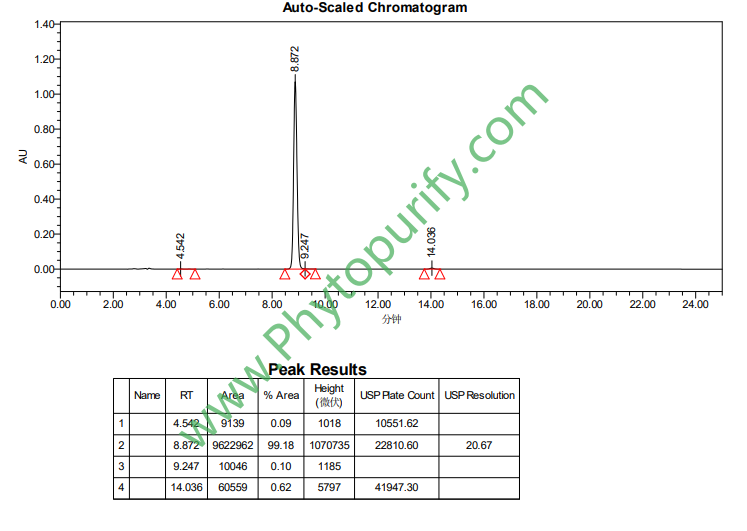
Purity: 95%~99%
Analysis Method: HPLC-DAD or/and HPLC-ELSD
Identification Method: Mass, NMR
Packing: Brown vial or HDPE plastic bottle
Storage: Store in a well closed container, protected from air and light. Put into refrigerate or freeze for long term storage.
Whenever possible, you should prepare and use solutions on the same day. However, if you need to make up stock solutions in advance, we recommend that you store the solution as aliquots in tightly sealed vials at -20℃. Generally, these will be useable for up to two weeks.
The product could be supplied from milligrams to grams
Inquire for bulk scale.
Chengdu Biopurify Phytochemicals Ltd. is a leading company in the research, development, manufacture and marketing of High Quality Phytochemicals and Extracts(especially Active Ingredients from Traditional Chinese Medicine,TCM), Natural Active Pharmaceutical Ingredients worldwide.
The main services:
A. Supply active ingredients and reference standards of TCM, from mgs to kgs scale
B. Custom extraction and purification, target Herb Active Ingredients
C. Custom synthesis and semi-synthesis for Natural Active Ingredients
D. CR(contract research), CM(contract manufacture) and PD(process development) services from lab scale, pilot scale to commercial scale(GMP is also available)
E. TCM compounds library for drug screen,more than 3000 compounds available, many of them are rare and unique.
HPLC of Myricetin
Storage conditions:Short-term storage at 2~8℃, long-term storage at -20 ~ -80℃
151.5900
1.6930
.7560
.0870
1.8707
10.2654
Low
86.7859
2.7333
Yes
No
No
No
Yes
No
1.2
Yes
No
Yes
No
Natural products have always been an important source of drug discovery and development, playing an indispensable role in the long history of human struggle against diseases. Among the diverse natural products, flavonoid compounds have attracted much attention due to their extensive biological activity and relatively low toxicity. Myrcetin, as a typical hexahydroxyflavonoid compound, is widely present in various plants, especially in the Yangmei family. Its unique chemical structure gives it a variety of pharmacological activities, including strong antioxidant, anti-cancer, anti diabetes and anti-inflammatory effects, making it one of the research hotspots in the field of natural product pharmacology.
The history of myricetin can be traced back to chemical research on traditional medicinal plants. As early as the early 20th century, scientists began studying Yangmei(Myrica rubra)This yellow crystalline compound was isolated from the bark and leaves of the plant, and its flavonoid properties were preliminarily determined. With the advancement of separation techniques and structural identification methods, the precise chemical structure of myricetin has been elucidated, and its identity as 3,3 ', 4', 5,5 ', 7-hexahydroxyflavone has been confirmed. This structural feature, which contains up to six phenolic hydroxyl groups in the molecule, is the key distinguishing factor from other common flavonoids such as quercetin and kaempferol, and also lays the chemical foundation for its excellent antioxidant capacity.
In recent years, with the deepening understanding of the role of oxidative stress and chronic inflammation in the occurrence and development of many major diseases (such as cancer, diabetes, neurodegenerative diseases), the research of myricetin ushered in a new climax. A large number of in vitro and in vivo experiments have revealed its protective effects in multiple disease models, and further exploration of its molecular mechanisms has begun. From directly clearing free radicals and chelating metal ions to regulating multiple signaling pathways (such as Nrf2/ARE, NF - κ B, PI3K/Akt, etc.), myricetin exhibits a multi-target and multi-level pharmacological action network. Despite facing some challenges in drug development, such as poor water solubility and low bioavailability, the clinical potential of myricetin is gradually being explored through structural modification and the development of novel drug delivery systems (such as nano formulations).
The purpose of this review is to systematically review the research progress of myricetin, review its plant origin and extraction methods from its chemical structure and physical and chemical properties, focus on its pharmacological activities in antioxidant, anti-cancer, anti diabetes and anti-inflammatory aspects, and further explore its mechanism of action and molecular targets. At the same time, this article will evaluate the pharmacological parameters and pharmacokinetic characteristics of myricetin, and look forward to its prospects and challenges in clinical translation, in order to provide comprehensive reference for the in-depth research and development of myricetin.
The chemical structure of myricetin is the basis of all its biological activities. Its system is named 3,5,7-trihydroxy-2- (3,4,5-trihydroxyphenyl) -4H-1-benzopyran-4-one, which belongs to flavonol compounds. Its core structure consists of a diphenylpropane skeleton (C6-C3-C6), where two benzene rings (A and B) are connected by an oxygen-containing heterocyclic pyranone ring (C ring). The most significant structural feature of myricetin is its high degree of hydroxylation: there is one hydroxyl group at each of the C-5 and C-7 positions of the A ring, one hydroxyl group at the C-3 position of the C ring, and all the C-3 ', C-4', and C-5 'positions of the B ring are replaced by hydroxyl groups, forming a triphenylphenol structure. This hexahydroxy substitution pattern is relatively rare in nature and is a key structural feature that distinguishes myricetin from quercetin (with a B ring of 3 ', 4' - dihydroxy) and kaempferol (with a B ring of 4 '- monohydroxy).
From the perspective of physical and chemical properties, the molecular formula of myricetin (CAS number: 529-44-2) is C ₁₅ H ₁₀ O ₈, with a molecular weight of 318.2370 g/mol. As a polyphenolic compound, myricetin appears as yellow needle shaped crystals (usually in the form of dihydrate) with a certain melting point (about 357 ° C). Its LogP value is 1.6930, indicating a certain degree of lipophilicity, but overall leaning towards moderate polarity. The topologically polar surface area (TPSA) is as high as 151.5900 Å ², mainly attributed to the numerous hydroxyl and carbonyl groups in its molecules, indicating its strong hydrogen bonding ability with water molecules. However, its water solubility is very poor, only 0.0870 mg/mL, which is related to its high crystallinity and strong hydrogen bonding between molecules, and is the main bottleneck limiting its in vivo absorption and bioavailability. Yangmei extract is soluble in organic solvents such as ethanol, methanol, and dimethyl sulfoxide (DMSO). Its solubility increases in alkaline aqueous solutions, but it is relatively stable under acidic conditions.
The chemical properties of myricetin are very active, mainly due to its abundant phenolic hydroxyl groups. Firstly, it is an efficient antioxidant. The pyrogallol structure on the B ring is the optimal site for providing hydrogen atoms and electrons, which can effectively scavenge various free radicals (such as hydroxyl radicals, superoxide anions, peroxynitrite, etc.) and chelate transition metal ions (such as Fe ² ⁺, Cu ² ⁺), thereby inhibiting the Fenton reaction and blocking the chain reaction of free radicals. Secondly, myricetin is easily oxidized under alkaline conditions to form quinone compounds, which is both its mechanism for exerting certain biological activities and may also bring potential toxicity. In addition, the multiple hydroxyl groups in its structure make it prone to metabolic reactions such as glycosylation, methylation, and sulfation, which is also one of the reasons for its rapid metabolism and low bioavailability in vivo. In terms of spectroscopic characteristics, myricetin has characteristic absorption in the UV visible region, usually with two main absorption peaks at 240-280 nm (band II, A-ring benzoyl system) and 300-400 nm (band I, B-ring cinnamoyl system), which can be used for its qualitative and quantitative analysis.
Yangmei extract is widely distributed in the plant kingdom, especially in angiosperms, and is one of the important active ingredients in many medicinal plants and edible fruits and vegetables. Its name comes from the Yangmei plant in the Yangmei family, Yangmei(Myrica rubra)Its bark, leaves, and fruit all contain abundant myricetin. In addition to Yangmei, plants from other families and genera are also important sources of myricetin. For example, in the Myrtaceae family, the fragrant peach wood(Myrtus communis)Willow trees in the Salicaceae family(Salix It has been found in some plants of the family Cornaceae, as well as in some plants of the family Cornaceae. In addition, many common vegetables and fruits, such as onions, berries (strawberries, blueberries, blackberries), grapes, tea (especially green tea), and certain nuts (such as walnuts), also contain a certain amount of myricetin. It is worth noting that myricetin is usually present in plant cell sap in the form of glycosides (such as myricetin-3-O-galactoside, myricetin-3-O-salic acid), rather than in the form of free aglycones.
There are various methods for extracting myricetin, and the choice depends on the target plant material, extraction efficiency, cost, and subsequent application requirements. The traditional extraction methods mainly include solvent extraction. Considering the good solubility of myricetin glycosides and their glycosides in organic solvents such as methanol, ethanol, and acetone, a certain concentration of ethanol or methanol aqueous solution is often used as the extraction solvent. For example, extracting Yangmei leaves or bark with 70% ethanol under heating reflux conditions can yield higher crude extracts of Yangmei extract. In order to improve extraction efficiency and selectivity, some new extraction techniques have been widely applied in recent years. Ultrasonic assisted extraction (UAE) utilizes the cavitation effect of ultrasound to destroy plant cell walls, accelerate solvent penetration, and dissolve target components. It has the advantages of short time, low temperature, and low solvent dosage. Microwave assisted extraction (MAE) utilizes the penetrability and selective heating of microwaves to rapidly increase the internal temperature and pressure of cells, leading to cell rupture and efficient release of contents. In addition, enzyme assisted extraction (EAE) can significantly improve the extraction rate of myricetin by degrading plant cell wall polysaccharides using cellulases, pectinases, and other enzymes.
Obtaining high-purity myricetin from crude extract requires further separation and purification steps. Classic separation methods include column chromatography technology. Common stationary phases include silicone, polyamide, macroporous adsorption resin, etc. For example, after concentrating the crude ethanol extract, flavonoids can be enriched by using a macroporous adsorption resin (such as D101, AB-8) column and washing with water and different concentrations of ethanol gradient. Subsequently, using polyamide column chromatography, further separation and purification were carried out based on the differences in hydrogen bonding ability between myricetin and its glycosides and polyamide. For flavonoids with similar structures, preparative high-performance liquid chromatography (Prep HPLC) is an effective method for obtaining high-purity monomers. In recent years, high-speed countercurrent chromatography (HSCCC), as a liquid-liquid distribution chromatography technique, has shown great potential in the separation and purification of myricetin due to its advantages of irreversible adsorption, high sample recovery rate, and easy amplification. By optimizing the solvent system (such as n-hexane ethyl acetate methanol water), HSCCC can isolate high-purity myricetin from complex plant extracts in one step.
Myricetin, due to its unique chemical structure, has shown a wide range of significant pharmacological activities, of which antioxidant, anti-cancer, anti diabetes and anti-inflammatory activities are the most in-depth areas of research.
antioxidant activity It is the most core and fundamental pharmacological action of myricetin. The catechol structure (3 ', 4', 5 '- trihydroxy) of the B ring and the resorcinol structure (5,7-dihydroxy) of the A ring in its molecule endow it with extremely strong hydrogen and electron donating abilities. Numerous studies have shown that myricetin can effectively eliminate various physiologically related reactive oxygen species (ROS) and reactive nitrogen species (RNS), such as hydroxyl radicals (• OH), superoxide anions (O ₂⁻ •), hydrogen peroxide (H ₂ O ₂), singlet oxygen (¹ O ₂), and peroxynitrite anions (ONOO ⁻). Its antioxidant capacity is even stronger than the classic antioxidants vitamin C and vitamin E. In addition, myricetin can inhibit the Fenton reaction by chelating transition metal ions such as Fe ² ⁺ and Cu ² ⁺, thereby blocking the generation of free radicals. More importantly, myricetin not only directly scavenges free radicals, but also exerts indirect antioxidant effects by activating the endogenous antioxidant defense system in cells. For example, it can activate the nuclear factor E2 related factor 2 (Nrf2) signaling pathway, promote the expression of downstream antioxidant enzymes such as superoxide dismutase (SOD1, SOD2), catalase (CAT), glutathione peroxidase 1 (GPX1), and heme oxygenase 1 (HMOX1), thereby enhancing the overall antioxidant capacity of cells.
anticancer activity It is another hot topic in the research of myricetin. In vitro experiments showed that myricetin inhibited the proliferation of many cancer cell lines (such as liver cancer, breast cancer, lung cancer, colon cancer, prostate cancer, melanoma, etc.), and induced apoptosis and autophagy. Its anti-cancer mechanism is complex and diverse, involving multiple aspects: 1) Inducing cell cycle arrest: Yangmei extract can block cancer cells in the G1/S or G2/M phase by upregulating cyclin dependent kinase inhibitors such as p21 and p27, or downregulating the expression of cyclins and cyclin dependent kinases (CDKs). 2) Inducing cell apoptosis: Yangmei extract can activate the mitochondrial apoptosis pathway (endogenous pathway) by reducing the Bcl-2/Bax ratio, leading to loss of mitochondrial membrane potential, release of cytochrome c, and activation of the Caspase-9 and Caspase-3 cascade reaction. Meanwhile, it can also activate the death receptor pathway (exogenous pathway) and upregulate the expression of death receptors such as Fas and TRAIL-R. 3) Inhibition of angiogenesis: Yangmei extract can inhibit the expression and secretion of vascular endothelial growth factor (VEGF), thereby blocking the formation of tumor neovascularization, limiting tumor growth and metastasis. 4) Reversal of multidrug resistance: Yangmei extract can inhibit the function of drug efflux pumps such as P-glycoprotein (P-gp), increase the accumulation of chemotherapy drugs in resistant cancer cells, and thus reverse multidrug resistance.
Antidiabetic activity It is an important research direction of myricetin in the field of metabolic diseases. Its main effects are reflected in the following aspects: 1) Improving insulin resistance: Yangmei extract can activate key metabolic regulatory factors such as AMP activated protein kinase (AMPK) and peroxisome proliferator activated receptor gamma (PPAR gamma), promote the uptake and utilization of glucose by skeletal muscle and adipose tissue, and inhibit hepatic gluconeogenesis, thereby reducing blood glucose levels. 2) Protecting pancreatic beta cells: The antioxidant and anti-inflammatory properties of myricetin help protect pancreatic beta cells from oxidative stress and inflammatory factors such as IL-1 β and TNF - α, maintaining their normal insulin secretion function. 3) Inhibition of alpha glucosidase activity: Yangmei extract can competitively inhibit alpha glucosidase in the brush border of the small intestine mucosa, delaying carbohydrate digestion and absorption, thereby reducing postprandial blood glucose peak. Its mechanism of action is similar to the commonly used hypoglycemic drug acarbose in clinical practice. 4) Inhibiting the formation of advanced glycation end products (AGEs): Myricetin can capture active carbonyl compounds, inhibit the non enzymatic glycosylation of proteins, reduce the generation of AGEs, and thus alleviate the complications of diabetes.
anti-inflammatory activity It is closely related to the antioxidant effect of myricetin. Inflammatory reactions are usually accompanied by a large amount of ROS production, and myricetin can cut off the inflammatory signaling pathway by clearing ROS. In addition, myricetin can directly act on key nodes in the inflammatory signaling network. It can inhibit the activation of nuclear factor kappa B (NF - κ B), prevent its nuclear translocation, and thereby downregulate the expression of various pro-inflammatory cytokines (such as TNF - α, IL-1 β, IL-6) and inflammatory mediators (such as cyclooxygenase-2 (COX-2), inducible nitric oxide synthase (iNOS)). Yangmei extract can also inhibit the phosphorylation of mitogen activated protein kinase (MAPK) pathways (such as p38, JNK, ERK), further weakening the inflammatory response. In various animal models of acute and chronic inflammation, such as carrageenan induced toe swelling, acetic acid induced peritonitis, and dextran sulfate sodium (DSS) - induced colitis, myricetin has shown significant anti-inflammatory effects.
The pharmacological activity of myricetin is not derived from the action of a single target, but is achieved through a complex and multi-level molecular network. Its core mechanism of action can be summarized as direct chemical reactions and indirect signaling pathway regulation.
Direct chemical reaction It is the basis for the effect of myricetin. The abundant phenolic hydroxyl groups in its molecules make it a powerful free radical scavenger and metal ion chelating agent. This direct chemical antioxidant effect is the main mechanism by which it protects cells from acute oxidative damage, such as ischemia-reperfusion injury. Meanwhile, myricetin can also directly bind to certain proteins or enzymes, affecting their function. For example, it can directly bind and inhibit alpha glucosidase COX-1/2、 The activity of enzymes such as xanthine oxidase (XO) plays a role in lowering blood sugar, anti-inflammatory, and anti gout effects.
Indirect signaling pathway regulation It is the key to the long-term and systematic pharmacological effects of myricetin. among which,Nrf2/ARE signaling pathway It is the core target of myricetin to exert antioxidant and cell protective effects. Under normal physiological conditions, Nrf2 binds to its inhibitory protein Keap1 and is in an inactive state. When myricetin enters cells, it can modify key cysteine residues on Keap1, causing Nrf2 to dissociate from Keap1. The released Nrf2 translocates into the nucleus and binds to antioxidant response elements (ARE), initiating the transcription of a series of downstream protective genes, including SOD1, SOD2, CAT, GPX1, HMOX1, NAD (P) H: quinone oxidoreductase 1 (NQO1), etc. These enzymes together form the intracellular antioxidant defense system, effectively clearing ROS and maintaining redox balance. Therefore, myricetin enhances the ability of cells to cope with various stresses (such as oxidative stress and electrophilic stress) by activating the Nrf2 pathway.
NF - κ B signaling pathway It is an important target for myricetin to exert anti-inflammatory and anticancer effects. NF - κ B is a key transcription factor for inflammatory response and cell survival. In resting cells, NF - κ B binds to the inhibitory protein I κ B and exists in an inactive form in the cytoplasm. Inflammatory stimuli (such as TNF - α, IL-1 β, LPS) or oxidative stress can activate I κ B kinase (IKK), leading to phosphorylation and ubiquitination degradation of I κ B, thereby releasing NF - κ B. Free NF - κ B translocates into the nucleus, initiating the transcription of various pro-inflammatory genes (such as TNF - α, IL-6, COX-2, iNOS) and anti apoptotic genes (such as Bcl xL, cIAP). Yangmei extract can inhibit the activity of IKK or directly prevent the binding of NF - κ B to DNA, thereby blocking the NF - κ B signaling pathway, downregulating inflammatory responses, and inducing cancer cell apoptosis.
PI3K/Akt/mTOR signaling pathway It is a core pathway that regulates cell growth, proliferation, metabolism, and survival, and is abnormally active in cancer and metabolic diseases. Yangmei extract can reduce the phosphorylation level of Akt by inhibiting the activity of PI3K or activating its negative regulatory factor PTEN. Inhibition of Akt activity can lead to the inactivation of multiple downstream effector molecules, such as mTORC1, thereby inhibiting protein synthesis and cell proliferation; Activate FOXO transcription factors to promote cell cycle arrest and apoptosis; Inhibiting GSK-3 β affects glycogen synthesis and cell fate. The inhibition of PI3K/Akt pathway by myricetin is one of the important mechanisms of its anticancer activity.
AMPK signaling pathway It is a key sensor for cellular energy metabolism. When the cellular energy state decreases (AMP/ATP ratio increases), AMPK is activated, promoting catabolic metabolism (such as glucose uptake, fatty acid oxidation) to produce ATP, while inhibiting synthetic metabolism (such as protein and fat synthesis) to consume ATP. Yangmei extract has been proven to be a potent activator of AMPK, and its mechanism may involve slight inhibition of mitochondrial function, leading to an increase in AMP levels. The activation of AMPK is one of the core mechanisms by which myricetin improves insulin resistance, lowers blood sugar, inhibits lipid synthesis, and exerts anti-inflammatory effects.
In summary, myricetin forms a synergistic molecular network by directly scavenging free radicals and chelating metal ions, as well as regulating multiple key signaling pathways such as Nrf2, NF - κ B, PI3K/Akt, AMPK, etc. This multi-target and multi pathway mode of action enables it to intervene in multiple pathological processes simultaneously, demonstrating a wide range of pharmacological activities, but also poses challenges to the precision of its mechanism research.
Although myricetin has shown great potential in both in vitro and in vivo pharmacological studies, its drug liking is a key bottleneck that restricts its clinical translation. The evaluation of drug properties mainly focuses on the physicochemical properties, pharmacokinetic characteristics (ADME), and safety of compounds.
From the perspective of physical and chemical properties, myricetin conforms to some of the "Lipinski Five Rules" (molecular weight<500, hydrogen bond donor number>5, hydrogen bond acceptor number>5), but its water solubility is extremely poor (0.0870 mg/mL), with a moderate LogP value (1.6930), but its TPSA value (151.5900 Å ²) is too high. These properties suggest that its oral absorption may be poor. In addition, the Ames test result is 1.2, indicating that it may have potential genetic toxicity and further validation is needed. The hERG inhibition assessment is' no ', indicating a low risk of cardiac toxicity. The blood-brain barrier (BBB) penetration rating is "low", which limits its application in the treatment of central nervous system diseases such as Alzheimer's disease, but may also reduce the risk of central nervous system side effects.
Pharmacokinetic studies have revealed the fate of myricetin in vivo. After oral administration, the absorption of myricetin in the gastrointestinal tract is very limited, with an absolute bioavailability typically below 10%. This is mainly attributed to its poor water solubility, instability in the alkaline environment of the intestine, and the efflux of intestinal epithelial cell efflux transporters (such as P-gp). The absorption of myricetin into the body undergoes extensive first pass metabolism. In the intestine and liver, myricetin rapidly undergoes glucuronidation, sulfation, and methylation under the action of phase II metabolic enzymes such as UDP glucuronosyltransferase UGTs, sulfotransferase SULTs, and catechol-O-methyltransferase COMT, generating corresponding metabolites. Therefore, the concentration of free myricetin detected in plasma is extremely low and mainly exists in the form of bound metabolites. The pharmacological activity of these metabolites is usually lower than that of the parent compound, but they may act as prodrugs and release active ingredients after unbinding in the target tissue. The elimination half-life of myricetin is relatively short, mainly excreted through bile and urine.
In order to overcome the pharmacological defects of myricetin and improve its bioavailability and targeting, researchers have explored various strategies.Structural modification It is one of the most direct methods. By introducing specific functional groups, such as amino acids, phosphate groups, sugar groups, or alkyl chains, into the molecule of myricetin, its water solubility and lipid solubility can be improved, or its metabolic pathways can be altered. For example, synthesizing the prodrug of myricetin to release the active parent drug under the action of specific enzymes in the body.New drug delivery system The development of is currently a research hotspot. Using nanotechnology to encapsulate myricetin in liposomes, polymer nanoparticles, solid lipid nanoparticles, cyclodextrin inclusion complexes, or phospholipid complexes can significantly improve its water solubility, stability, oral absorption rate, and bioavailability. For example, the myricetin phospholipid complex can significantly enhance its lipid solubility and promote its absorption through the intestinal mucosa. Nanoparticles can also achieve slow controlled release and targeted delivery of drugs, improving therapeutic efficacy and reducing side effects. In addition,Co crystallization technology It is also used to improve the solubility and dissolution rate of myricetin.
Although myricetin has not yet been approved as an official drug, its rich pharmacological activity and relatively low toxicity make it have broad application prospects in the prevention and treatment of various diseases.
In Metabolic diseases In the field of medicine, myricetin's anti diabetes and hypolipidemic activities are expected to be developed as an adjuvant or functional food ingredient for the treatment of type 2 diabetes and its complications. It lowers blood sugar through multiple mechanisms such as activating AMPK, inhibiting alpha glucosidase, and protecting pancreatic beta cells, while also improving lipid metabolism disorders and reducing liver steatosis. Given its good safety, developing dietary supplements or health foods based on myricetin has high feasibility.
In Cancer Prevention and Treatment On the one hand, the multi-target anti-cancer properties of myricetin make it a potential chemopreventive and chemotherapy sensitizer. It can be used in combination with conventional chemotherapy drugs such as doxorubicin, cisplatin, and paclitaxel to enhance anti-cancer effects through synergistic effects and reduce the toxic side effects of chemotherapy drugs. Especially its ability to reverse multidrug resistance provides new ideas for overcoming clinical chemotherapy resistance. However, its low bioavailability and potential Ames toxicity are key issues that need to be addressed. Developing nano delivery systems targeting tumor tissues may be the key to achieving their clinical applications.
In Inflammatory related diseases The anti-inflammatory and antioxidant effects of myricetin make it promising in the treatment of diseases such as colitis, arthritis, dermatitis, pancreatitis, etc. It can effectively alleviate inflammatory symptoms by inhibiting the NF - κ B and MAPK pathways, downregulating inflammatory mediators. In terms of cardiovascular disease, myricetin can inhibit the oxidation of low-density lipoprotein (LDL), suppress platelet aggregation, dilate blood vessels, and protect myocardial cells from ischemia-reperfusion injury, demonstrating cardiovascular protective effects.
In Neurodegenerative diseases Although myricetin has limited ability to penetrate the BBB, its strong antioxidant and anti-inflammatory activities still attract attention in the prevention and treatment of Alzheimer's disease (AD) and Parkinson's disease (PD). Research has shown that myricetin can inhibit the aggregation and fibrosis of β - amyloid protein (A β), reduce the excessive phosphorylation of tau protein, and protect dopaminergic neurons from damage. Nasal administration or development of nanocarriers capable of crossing the BBB may be effective ways to increase its concentration in the brain.
Looking ahead to the future, research and development of myricetin should focus on the following directions: 1)In depth mechanism research Using systems biology and network pharmacology methods, comprehensively analyze the multi-target action network of myricetin, and clarify its key targets and signaling pathways in different diseases. 2)Resolve the bottleneck of drug development Focus on developing efficient and low toxicity derivatives or prodrugs of myricetin, and optimize the nano delivery system to significantly improve its bioavailability and targeting. 3)safety evaluation Conduct systematic toxicological studies on myricetin and its derivatives, especially long-term toxicity, reproductive toxicity, and genetic toxicity, to provide safety guarantees for their clinical applications. 4)Clinical trial advancement: After completing sufficient preclinical research, design rigorous clinical trials to verify its effectiveness and safety in specific diseases (such as diabetes and inflammatory bowel disease). 5)Developing composite formulations Explore the synergistic effects of myricetin with other natural products or drugs, and develop composite formulations with multi-target synergistic effects.
Myricetin, as a typical natural polyhydroxy flavonoid, has shown remarkable multiple pharmacological activities such as anti-oxidation, anti-cancer, anti diabetes and anti-inflammatory by virtue of its unique chemical structure. Its mechanism of action is not singular, but rather forms a complex molecular network by directly clearing free radicals, chelating metal ions, and finely regulating key signaling pathways such as Nrf2, NF - κ B, PI3K/Akt, AMPK, etc., thus intervening in the occurrence and development of diseases at multiple levels. This makes it a natural lead compound with great potential for development.
However, the road from laboratory research to clinical application is not smooth. The inherent physical and chemical properties defects of myricetin, especially poor water solubility and low oral bioavailability, as well as potential genetic toxicity risks, pose the main challenges to its drug development. Fortunately, with the rapid development of medicinal chemistry, pharmacy, and nanotechnology, these obstacles are gradually being overcome through strategies such as structural modification, prodrug design, and novel drug delivery systems (such as nanoparticles, liposomes, phospholipid complexes).
In summary, myricetin is a brilliant pearl in the treasure trove of natural products. Although the road ahead is full of challenges, its in-depth research and reasonable development are expected to provide new candidate drugs or functional health products for human prevention and treatment of major diseases such as cancer, diabetes, chronic inflammation, etc. Future research should focus on addressing the bottleneck of drug development, elucidating its complex mechanisms of action, and promoting its clinical translation. We have reason to believe that with the advancement of science and technology, the medicinal value of myricetin will be more fully explored and utilized, ultimately benefiting human health.
