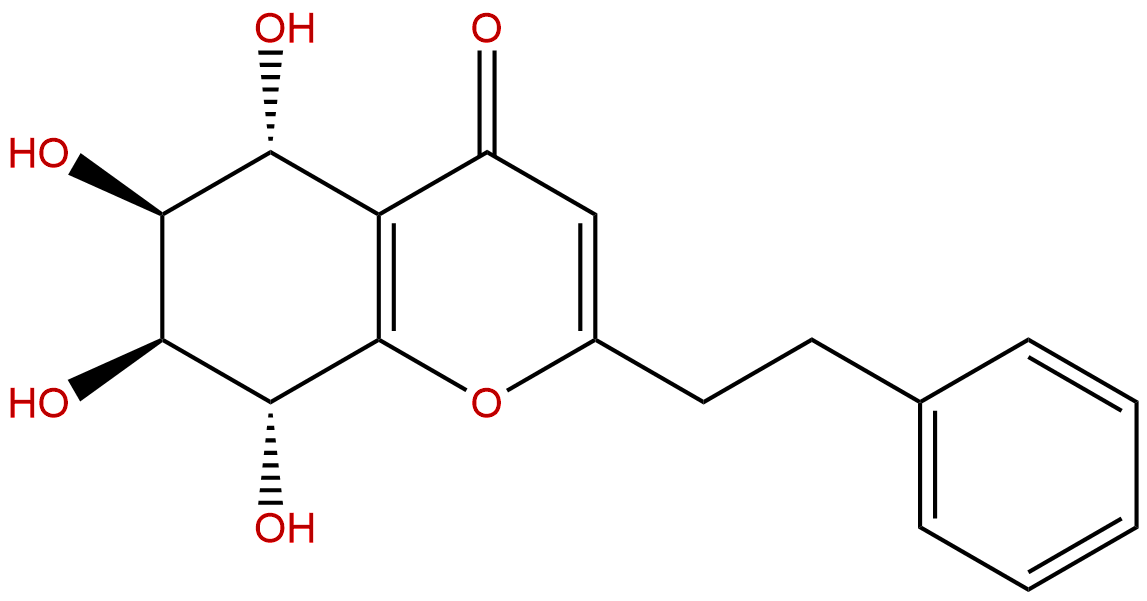


Product name: Agarotetrol
Synonym name:
Catalogue No.: BP3664
Cas No.: 69809-22-9
Formula: C17H18O6
Mol Weight: 318.325
Botanical Source:
Physical Description:
Type of Compound: Phenols
Purity: 95%~99%
Analysis Method: HPLC-DAD or/and HPLC-ELSD
Identification Method: Mass, NMR
Packing: Brown vial or HDPE plastic bottle
The product could be supplied from milligrams to grams. Inquire for bulk scale.
We provide solution to improve the water-solubility of compounds, thereby facilitating the variety of activity tests and clinic uses.
For Reference Standard and R&D, Not for Human Use Directly.
Description:
Agarotetrol is a chromone derivative isolated from Agarwood.
References:
Chemical & Pharmaceutical Bulletin, 2008 , 34 (7) :3033-7.
Studies on the Agalwood (Jinko). VI. : Structures of Three 2-(2-Phenylethyl)-5,6,7,8-tetrahydrochromone Derivatives, AH_<1A>, AH_<2a> and AH_<2b>
Three new kinds of phenylethyl chromone derivatives, named AH_<1A>, AH_<2a> and AH_<2b>, were isolated from the crude AH_1 (Agarotetrol) and AH_2 (isoAgarotetrol) fractions of agalwood (Jinko)from Kalimantan. AH<1A> separated from the crude AH_1 fraction through the process of acetylation was characterized as 2-[2-(4-methoxyphenyl)ethyl]-5α, 6β, 7β, 8α-tetraacetoxy-5,6,7,8-tetrahydro-chromone, and AH_<2a> and AH<2b>, from crude AH_2 fraction, were established to be 2[2-(4-methoxyphenyl)ethyl]- and 2-[2-(2-hydroxyphenyl)ethyl]-5α, 6β, 7α, 8β-tetrahydroxy-5,6,7,8-tetrahydrochromone, respectively.
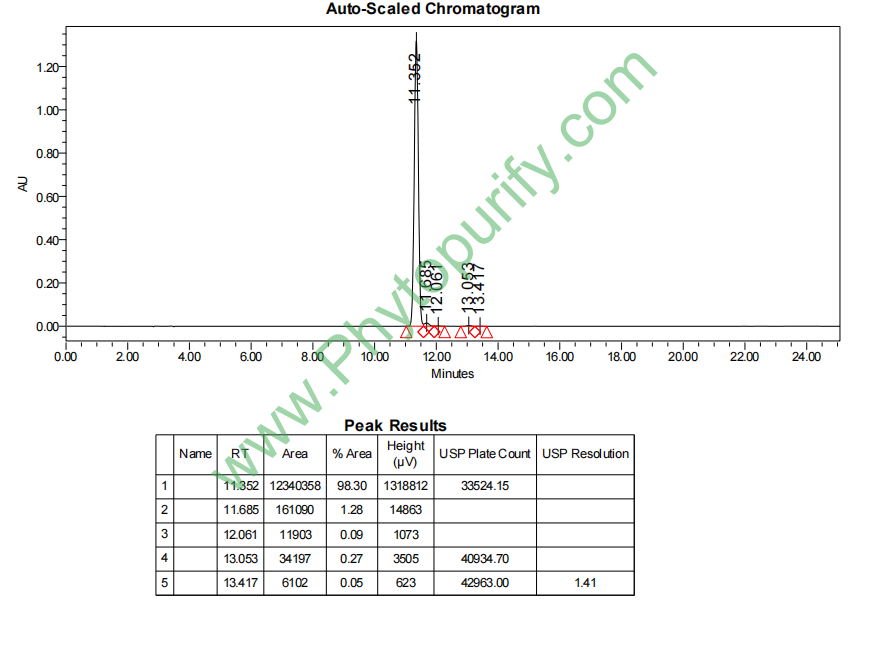
HPLC of Agarotetrol
Storage conditions:Short-term storage at 2~8℃, long-term storage at -20 ~ -80℃
111.1300
.4931
.4933
.7543
.5413
5.5228
Low
73.9185
3.8059
Yes
No
No
No
No
No
0.0
Yes
Yes
No
Yes
Agarotetrol, a chromone derivative with a CAS number of 69809-22-9, is a natural product with significant biological activity isolated from the traditional precious medicinal herb Agarwood. Aquilaria sinensis, scientific name Aquilaria sinensis, is a plant of the Aquilaria genus in the Rosaceae family. It has a long history of medicinal use in East and Southeast Asia and is commonly used to treat pain, inflammation, gastrointestinal diseases, and more. As one of the key active ingredients of agarwood, agarwood tetraol has attracted widespread attention in the field of natural product pharmacy in recent years. Its molecular formula is C17H18O6, with a molecular weight of 318.3250 g/mol, belonging to medium-sized organic molecules.
In terms of research background, with the development of modern pharmacology and molecular biology technologies, the active ingredients and their mechanisms of action of natural products have become an important source of new drug development. Due to its unique chemical structure and potential anti-inflammatory activity, agarwood tetraol has been listed as a key research object. According to database information, agarwood tetraol mainly targets key proteins in multiple inflammation related pathways, such as TNF, PTGS2, NFKB1, IL6, and IL1B, which are closely related to physiological and pathological processes such as inflammation response and immune regulation. Therefore, agarwood tetraol not only provides scientific basis for understanding the medicinal value of agarwood, but also provides candidate molecules for the development of new anti-inflammatory drugs. This article will systematically elaborate on the research progress of agarwood tetraol from the aspects of chemical structure, plant origin, pharmacological activity, medicinal evaluation, and research prospects.
The chemical structure of agarwood tetraol is based on the chromone skeleton, which is a class of oxygen-containing heterocyclic compounds commonly found in various medicinal plants and has a wide range of biological activities. Its SMILES is represented as O=c1cc (CCc2ccccc2) oc2c1 C@@HC@HC@H[C@H]2O, This indicates that agarwood tetraol is a molecule with four chiral centers and exists in stereoisomers, and its biological activity may be related to specific stereoconfigurations. The benzene ring and ketone ring in the molecule are connected by a propyl chain, forming a unique spatial structure that may affect their interaction with target proteins.
From the perspective of physicochemical properties, the molecular weight of agarwood tetraol is 318.3250 g/mol, which is within the typical range of small molecule drugs (usually less than 500 Da). Its topological polar surface area (TPSA) is 111.1300 Å ², which reflects the contribution of polar groups (such as hydroxyl groups) in the molecule. Higher TPSA values are usually associated with better water solubility. The LogP value is 0.4931 and the LogD value is 0.4933, indicating that agarwood tetraol has moderate lipophilicity and leans towards hydrophilicity, which is beneficial for its distribution and metabolism in organisms. The water solubility parameter is 0.7543 (unit may be mg/mL or similar), indicating that it has a certain solubility in water, which is a favorable factor for oral administration and formulation development.
In addition, the Caco-2 cell permeability of agarwood tetraol is 5.5228 (units may be × 10 ⁻⁶ cm/s), indicating moderate to good intestinal absorption potential, which may pass through intestinal epithelial cells through passive diffusion or carrier mediated pathways. These physicochemical parameters comprehensively indicate that agarwood tetraol has diversity in chemical structure, with properties ranging between hydrophilicity and lipophilicity, providing a basis for subsequent pharmacokinetic optimization.
The plant source of agarwood tetraol is single, mainly from Aquilaria sinensis, which is an evergreen tree distributed in southern China, Vietnam, India and other places. The formation of agarwood is a complex biological process that usually requires trees to secrete resin for defense after being injured or infected by fungi. These resins accumulate to form fragrant agarwood, which is highly regarded in traditional medicine and the spice industry. In China, agarwood is recorded in ancient medical texts such as "Compendium of Materia Medica". It has a pungent, bitter, and slightly warm nature, and can regulate the spleen, stomach, and kidney meridians. It has the effects of promoting qi circulation, relieving pain, warming the middle, stopping vomiting, absorbing qi, and relieving asthma. It is commonly used to treat symptoms such as chest and abdominal distension, stomach cold vomiting, kidney deficiency, and asthma.
In traditional applications, agarwood is often used in decoction, pill or powder form, and is also used as incense for religious ceremonies and daily health care. In Southeast Asia, agarwood is also used to treat inflammatory diseases such as arthritis and skin infections, which is closely related to its anti-inflammatory activity. Modern research has identified various active ingredients from agarwood through extraction and separation techniques, including agarwood tetraol, agarwood alcohol, sesquiterpenes, etc. These ingredients collectively contribute to the medicinal value of agarwood. As a chromone derivative, agarwood tetraol has a relatively low content in agarwood, but its high biological activity makes it a key research object. The experience of traditional applications provides clues for modern pharmacological research, for example, the anti-inflammatory effect of agarwood may be partially attributed to the regulation of inflammatory pathways by agarwood tetraol.
From a plant chemistry perspective, the extract of agarwood is usually obtained through methods such as steam distillation and solvent extraction, while the separation and purification of agarwood tetraol require chromatographic techniques such as high-performance liquid chromatography (HPLC). The limitations of natural sources such as scarce resources and high extraction costs have also driven research in synthetic biology and chemical synthesis to explore the possibility of large-scale production. Overall, the plant source of agarwood tetraol not only reflects the wisdom of traditional medicine, but also provides abundant natural resources for modern drug development.
The pharmacological activity of agarwood tetraol mainly focuses on the anti-inflammatory field, which is closely related to its targeting of multiple inflammation related proteins. According to database information, the targets of agarwood tetraol include TNF (tumor necrosis factor), PTGS2 (prostaglandin endoperoxide synthase 2, COX-2), NFKB1 (nuclear factor kappa B1), IL6 (interleukin-6), and IL1B (interleukin-1 β). These targets play a central role in the inflammatory response, and their overactivation is associated with various diseases such as rheumatoid arthritis, inflammatory bowel disease, asthma, and neurodegenerative diseases.
Mechanism analysis:
- TNF (tumor necrosis factor)TNF is a pro-inflammatory cytokine produced by immune cells such as macrophages and plays a critical role in the early stages of inflammatory response. It can activate downstream signaling pathways such as NF - κ B and MAPK pathways, leading to upregulation of the expression of other inflammatory factors such as IL6 and IL1B. Agarwood tetraol may alleviate tissue damage and pain by inhibiting the production of TNF or binding to its receptors, blocking the transmission of inflammatory signals.
- PTGS2(COX-2)COX-2 is a key enzyme in prostaglandin synthesis, which is induced to express during inflammation and promotes the production of mediators such as prostaglandin E2 (PGE2), causing redness, swelling, fever, and pain. Agarwood tetraol may exert anti-inflammatory and analgesic effects by inhibiting COX-2 activity, reducing prostaglandin synthesis. This is similar to the mechanism of action of traditional nonsteroidal anti-inflammatory drugs (such as ibuprofen), but as a natural product, agarwood tetraol may have a lower risk of side effects.
- NFKB1 (nuclear factor kappa B1)NF - κ B is a transcription factor family that regulates the expression of various inflammatory genes. In the resting state, NF - κ B binds to the inhibitory protein I κ B and exists in the cytoplasm; When stimulated by TNF and other factors, I κ B is degraded and NF - κ B enters the nucleus, initiating transcription of genes such as IL6 and IL1B. Agarwood tetraol may inhibit the activation of inflammatory pathways by interfering with the phosphorylation of I κ B or nuclear translocation of NF - κ B.
- IL6 and IL1B These two cytokines are important effector molecules in the inflammatory response. IL6 is involved in acute phase response and immune regulation, while IL1B is associated with fever and tissue destruction. Agarwood tetraol may alleviate systemic inflammatory response by downregulating their expression.
Related disease associations The anti-inflammatory activity of agarwood tetraol makes it potentially valuable in the treatment of inflammatory diseases. For example, in rheumatoid arthritis, overexpression of TNF and IL6 leads to joint destruction, and the multi-target action of agarwood tetraol may provide synergistic therapeutic effects. In addition, neuroinflammation is associated with neurodegenerative diseases such as Alzheimer's disease, and inhibition of the NF - κ B pathway may help protect neurons. The inclusion of "anti-inflammatory" as a related disease in the database reflects the effectiveness of agarwood tetraol in basic research and preclinical models. Experimental studies have shown that agarwood tetraol can significantly reduce the levels of inflammatory markers in cell and mouse models, and its effects may be enhanced through antioxidant and immune regulatory pathways.
In summary, agarwood tetraol regulates inflammatory responses through multiple targets and pathways, demonstrating the advantages of natural products in the treatment of complex diseases. Its mechanism of action not only involves directly inhibiting inflammatory factors, but may also include regulating immune cell function, providing a theoretical basis for the development of new anti-inflammatory drugs.
Evaluation of drug properties is a crucial step in drug development, involving the absorption, distribution, metabolism, excretion, and toxicity (ADMET) characteristics of compounds. Based on the provided pharmacological parameters, we can conduct a preliminary analysis of the pharmacological potential of agarwood tetraol and interpret it in conjunction with criteria such as Lipinski's Five Rules.
Lipinski's Five Rules This is an empirical rule for evaluating the pharmacological properties of oral medications, including: molecular weight (MW) less than 500 Da, LogP less than 5, number of hydrogen bond donors (HBDs) less than 5, and number of hydrogen bond acceptors (HBAs) less than 10. The MW of agarwood tetraol is 318.3250 Da, which complies with the rules; LogP is 0.4931, much less than 5, indicating moderate lipophilicity; From the molecular formula C17H18O6, the number of hydrogen bond donors (oxygen hydrogen bonds in hydroxyl groups) may be 4 (based on four chiral hydroxyl groups), and the number of hydrogen bond acceptors (oxygen atoms) is 6, both of which comply with the rules. Therefore, agarwood tetraol fully satisfies the Lipinski five rules, indicating its good oral absorption potential.
Other pharmacological parameters:
- TPSA(111.1300 Ų)A higher TPSA value is usually associated with lower blood-brain barrier (BBB) penetration, which is consistent with BBB penetration being labeled as "low". This means that agarwood tetraol may not easily enter the central nervous system, which is beneficial for treating peripheral inflammatory diseases such as arthritis, but structural modifications may be needed to enhance BBB penetration for neuroinflammatory diseases.
- Water solubility (0.7543)Moderate water solubility is beneficial for the development of formulations and oral bioavailability.
- Caco-2 permeability (5.5228)This value indicates moderate to good intestinal absorption and may support oral administration.
- Plasma protein binding rate (PPB, 73.9185%)A higher PPB may affect the free concentration and distribution of the drug, but it is still within an acceptable range (usually only when PPB>90% needs attention).
- Toxicity parameters The Ames test result is 0.0 (which may indicate negative or no mutagenicity), and chromosome aberration, hERG inhibition, skin sensitization, respiratory sensitization, and phototoxicity are all negative or "none", indicating that agarwood tetraol has good safety. However, serum markers showed 'yes' for Ser_LK, Ser_GGT, and Ser_LT, which may suggest potential liver enzyme effects and require further evaluation of liver toxicity in preclinical studies.
- Peff (0.5413) and SyneAccess (3.8059)These parameters may be related to synthesis feasibility and bioavailability, with moderate values that support further development.
Comprehensive Assessment Agarwood tetraol has shown good performance in terms of drug properties, meeting the basic requirements for oral medication, and its safety is preliminarily controllable. The main challenges lie in the low BBB penetration and possible hepatic enzyme effects, which can be improved through drug chemistry optimization such as prodrug design or structural modification. In addition, the limitations of its natural sources may affect large-scale production, but the development of synthetic biology or total synthesis technology is expected to solve this problem. Overall, agarwood tetraol has the potential to become a candidate molecule for anti-inflammatory drugs and deserves further preclinical research.
Currently, research on agarwood tetraol is still in its early stages, mainly focused on plant chemical isolation, activity screening, and mechanism exploration. Previous studies have confirmed its anti-inflammatory effects in vitro and animal models, such as by inhibiting LPS induced macrophage cytokine release or alleviating symptoms in mouse arthritis models. These studies provide preliminary evidence for the application of agarwood tetraol, but it has not yet entered the clinical trial stage. The target information in the database provides direction for mechanism research, and in the future, direct target effects need to be verified through techniques such as molecular docking and gene knockout.
The limitations of the current research status include: firstly, the low content of agarwood tetraol in agarwood, high extraction and purification costs, which limit large-scale research; Secondly, although its multi-target nature may enhance therapeutic efficacy, it also increases the complexity of the mechanism of action, which requires systematic biological methods such as network pharmacology to analyze; Finally, the impact of liver enzymes in the pharmacological parameters needs to be further evaluated in long-term toxicity experiments.
In terms of application prospects, agarwood tetraol is expected to develop in the following fields:
- drug development As a lead compound, its selectivity can be improved through structural optimization (such as targeting specific inflammatory targets), BBB penetration can be enhanced (for neuroinflammatory diseases), or pharmacokinetic properties can be improved. For example, prodrugs can be designed to improve oral bioavailability, or local formulations can be developed for the treatment of skin inflammation.
- Functional foods and health supplements Given the traditional application and safety of agarwood, agarwood tetraol can be added as an anti-inflammatory ingredient to health products for daily health maintenance.
- Synthetic Biology Production The use of microbial engineering (such as yeast or Escherichia coli) to produce agarwood tetraol to solve the problem of resource scarcity has become a hot topic in natural product research.
Future research directions should include: in-depth elucidation of the network regulation of its anti-inflammatory mechanism; Conduct preclinical pharmacokinetic and toxicological studies; Explore its synergistic effects with other anti-inflammatory drugs; And develop new delivery systems based on agarwood tetraol, such as nano formulations. With the advancement of interdisciplinary research, agarwood tetraol is expected to move from traditional medicinal materials to modern drugs, providing new options for the treatment of inflammatory diseases.
In summary, as the active ingredient in agarwood, agarwood tetraol has shown broad research and development prospects due to its unique chemical structure and multi-target anti-inflammatory activity. Through continuous scientific exploration and technological innovation, it may become a bridge connecting traditional medicine and modern pharmacy, contributing the power of nature to human health.
