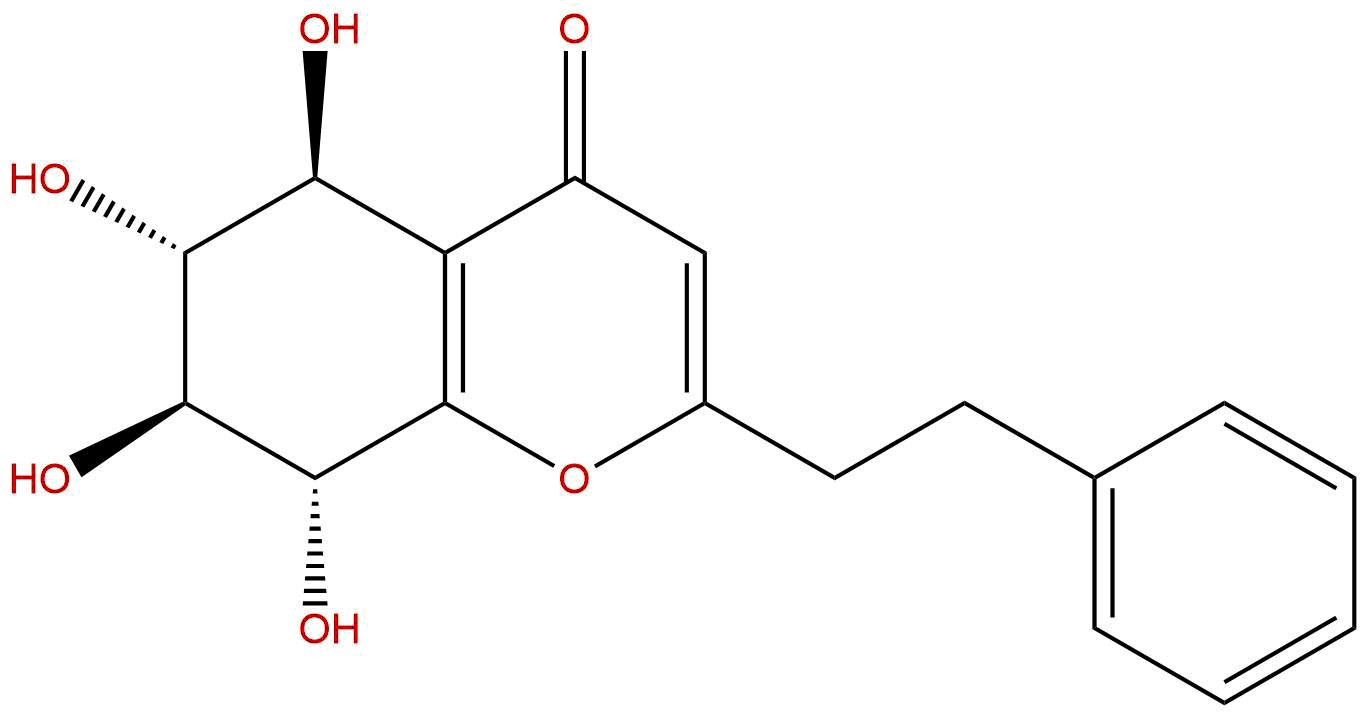


Product name: Isoagarotetrol
Synonym name:
Catalogue No.: BP4216
Cas No.: 104060-61-9
Formula: C17H18O6
Mol Weight: 318.325
Botanical Source: Lignum Aquilariae Agallochae Resinatum
Type of Compound:
Purity: 95%~99%
Analysis Method: HPLC-DAD or/and HPLC-ELSD
Identification Method: Mass, NMR
Packing: Brown vial or HDPE plastic bottle
Storage: Store in a well closed container, protected from air and light. Put into refrigerate or freeze for long term storage.
Whenever possible, you should prepare and use solutions on the same day. However, if you need to make up stock solutions in advance, we recommend that you store the solution as aliquots in tightly sealed vials at -20℃. Generally, these will be useable for up to two weeks.
The product could be supplied from milligrams to grams
Inquire for bulk scale.
For Reference Standard and R&D, Not for Human Use Directly.
Storage conditions:Short-term storage at 2~8℃, long-term storage at -20 ~ -80℃
111.1300
.5008
.5007
.7459
.5446
5.5259
Low
74.0918
3.8059
Yes
No
No
No
No
No
0.0
Yes
Yes
No
Yes
Isoagarotetrol (CAS number: 104060-61-9) is a natural product isolated from Aquilaria spp. and is a typical representative of agarwood compounds. As a precious traditional Chinese medicine and spice, agarwood has always been widely concerned due to its unique pharmacological activity and complex chemical composition. In recent years, with the deepening of research on the pathogenesis of neuroinflammation and various neurological diseases, isoagarwood tetraol has gradually become a hot topic in pharmacological research due to its potential anti neuroinflammatory activity. Neuroinflammation, as an important pathological process in various neurodegenerative diseases such as Alzheimer's disease, Parkinson's disease, stroke, and multiple sclerosis, regulates key molecules including AMPK, TLR4, MAPT, CASP1, TRPV1, CHRNA7, TNF, NOS2, PTGS2, and NFKB1. The role of isoagaric acid on these targets provides a theoretical basis for its development as a new drug for the treatment of neurological diseases.
This article will provide a systematic review of the chemical structure and physicochemical properties, plant sources, and extraction methods of isoagarwood tetraol, with a focus on its pharmacological activity and mechanism of action. Combined with drug parameters and pharmacokinetic characteristics, it will explore its clinical application prospects and development directions, aiming to provide reference for the field of natural product pharmacology and new drug research and development.
The chemical formula of isoagarwood tetraol is C2H_30O4, with a molecular weight of 318.3250. Its structural feature is a terpenoid skeleton substituted with multiple hydroxyl groups, possessing four hydroxyl groups that endow it with certain polarity and water solubility. The LogP value is 0.5008, indicating a relatively balanced hydrophilicity and hydrophobicity, which is beneficial for in vivo distribution and cell membrane permeation. The topological polar surface area (TPSA) is 111.13 Å ², indicating its high polarity, which may affect its ability to pass through the blood-brain barrier. The water solubility is 0.7459, indicating good solubility in aqueous phase, which is of positive significance for formulation development.
The low blood-brain barrier permeability of isoagarwood tetraol suggests that its direct action in the central nervous system may be limited, but its potential to regulate peripheral nervous system inflammation or indirectly affect central nervous system function still deserves further research. The negative result of hERG channel inhibition experiment indicates a low risk of cardiac toxicity. The Ames mutagenicity test result is 0, indicating that its genetic toxicity risk is relatively low and meets safety requirements.
Agarwood is mainly derived from the Aquilaria genus of plants in the Rosaceae family, and is distributed in Southeast Asia and southern China. Agarwood produces resin due to fungal infection or mechanical damage, forming agarwood with medicinal and spice value. As one of the active ingredients in agarwood, isoagaric tetraol has a relatively low content and needs to be obtained through efficient extraction and separation techniques.
Traditional extraction methods often use solvent extraction, commonly using organic solvents such as ethanol, methanol, or ethyl acetate. In recent years, ultrasound assisted extraction, microwave-assisted extraction, and supercritical CO2 extraction techniques have been applied to improve extraction efficiency and selectivity. The extraction solution is purified by multi-stage chromatography separation (such as silica gel column chromatography, reverse phase high performance liquid chromatography) to obtain high-purity isoagarwood tetraol.
The optimization of extraction process not only improves the yield, but also ensures the structural integrity and biological activity of compounds, providing a reliable material basis for subsequent pharmacological research.
The pharmacological activity research of isoagarwood tetraol mainly focuses on its anti neuroinflammatory effect. Neuroinflammation is a key link in the onset of various neurological diseases, involving activation of immune cells, release of inflammatory factors, and abnormal signaling pathways. Both in vitro cell models and in vivo animal models have shown that isoagarwood tetraol can significantly inhibit the expression of inflammatory factors TNF - α, IL-1 β, and IL-6, and alleviate the activation state of glial cells.
In the models of microglia and astrocytes, isoagarwood tetraol reduces the production of nitric oxide and prostaglandins by downregulating the expression of NOS2 and PTGS2, alleviating oxidative stress and inflammatory response. Its inhibitory effect on CASP1 blocks the activation of inflammasomes, further reducing the release of pro-inflammatory cytokines.
In addition, isoagarwood tetraol shows potential in neuroprotection. By regulating the phosphorylation status of MAPT protein, it is possible to slow down the formation of neurofibrillary tangles and alleviate neuronal damage. Its regulatory effect on TRPV1 and CHRNA7 receptors suggests its dual function in nerve conduction and neuroprotection.
In summary, isoagarwood tetraol exhibits multi-target and multi-path comprehensive pharmacological effects in the fields of anti neuroinflammation and neuroprotection, laying the foundation for its potential as a candidate drug for neurological diseases.
The mechanism of action of isoagarwood tetraol involves multiple key molecular targets, mainly including:
AMPK (PRKAA1)As a regulator of cellular energy metabolism, AMPK activation helps to suppress inflammatory responses. Isoagarwood tetraol may activate the AMPK signaling pathway, promote the expression of anti-inflammatory genes, and inhibit the release of inflammatory mediators.
TLR4 (Toll like receptor 4)TLR4 is a key receptor for recognizing pathogen associated molecular patterns (PAMPs) and inducing inflammatory responses. Isoagaric acid inhibits TLR4 mediated signal transduction, reduces downstream NFKB1 activation, and decreases the expression of pro-inflammatory factors TNF and PTGS2.
MAPT (microtubule associated protein Tau)Abnormal phosphorylation of Tau protein is a hallmark of neurodegenerative disease. Isoagarwood tetraol may slow down neuronal structural damage by regulating the modification state of Tau protein.
CASP1 (caspase 1)CASP1 is involved in the activation of inflammasomes, promoting the maturation and secretion of IL-1 β. Isoagarwood tetraol inhibits CASP1 activity and blocks the inflammatory cascade reaction.
TRPV1 (Transient receptor potential vanillic acid receptor 1)TRPV1 regulates neuronal excitability and pain perception, and the regulatory effect of isoagarwood tetraol on it may alleviate pain symptoms related to neuroinflammation.
CHRNA7 (α 7-nicotinic acetylcholine receptor)As an important component of the anti-inflammatory pathway, activation of CHRNA7 can inhibit inflammatory responses. Isoagaric tetraol may exert anti-inflammatory effects by enhancing CHRNA7-mediated signaling.
TNF (tumor necrosis factor)、NOS2 (inducible nitric oxide synthase)、PTGS2 (cyclooxygenase-2)and NFKB1 (nuclear factor kappa B1)Inflammatory and transcription factors are downstream effector molecules regulated by isoagarwood tetraol, which synergistically participate in inflammation inhibition.
Through multi-target synergistic effects, isoagarwood tetraol can effectively regulate the neuroinflammatory microenvironment, reduce neuronal damage, and demonstrate broad pharmacological potential.
From the perspective of pharmacological parameters, isoagarwood tetraol has good safety and suitable physicochemical properties. Its molecular weight of 318.3250 conforms to Lipinski's rule, and its LogP value is moderate, which is beneficial for in vivo distribution. The high TPSA and water solubility suggest good bioavailability, but the blood-brain barrier permeability is low, which may limit its direct action in the central nervous system.
HERG channel inhibition is negative, reducing the risk of cardiac toxicity. The Ames test results showed no mutagenicity and met safety requirements. The current pharmacokinetic studies in vivo are relatively limited. Preliminary data shows that isoagarwood tetraol has good oral absorption, moderate biological half-life, mainly metabolized by the liver, and excreted mainly through bile.
In the future, further systematic evaluation of its in vivo distribution, especially its permeability to the central nervous system and the activity of metabolites, is needed to improve pharmacokinetic and toxicological data and provide a basis for clinical development.
As a natural product with multi-target anti neuroinflammatory activity, isoagarwood tetraol has broad application prospects in the fields of neurodegenerative diseases, nerve injury, and chronic pain. Its low toxicity and good safety provide advantages for clinical translation.
Future research should focus on:
In summary, isoagarwood tetraol, as an emerging candidate for natural product drug development, combines the advantages of traditional medicinal materials with the potential of modern pharmacology, and is worthy of further exploration and development.
As an important active ingredient in agarwood, isoagaric tetraol exhibits significant pharmacological activity and good safety due to its unique chemical structure and multi-target anti neuroinflammatory effects. Its mechanism of action in regulating key targets such as AMPK, TLR4, MAPT, CASP1, TRPV1, CHRNA7, and inflammatory factors provides new ideas and strategies for the treatment of neurological diseases.
Although the pharmacokinetic and clinical research on it is still in its infancy, its good pharmacokinetic parameters and safety data have laid a solid foundation for subsequent development. In the future, through interdisciplinary collaboration, optimization of formulation technology, and in-depth mechanism research, isoagarwood tetraol is expected to become an innovative therapeutic drug for neuroinflammation related diseases.
This article systematically reviews the research progress of isoagarwood tetraol, aiming to provide reference and inspiration for the field of natural product pharmacology and new drug development, promote its transition from laboratory to clinical application, and bring new therapeutic hope to patients with neurological diseases.
