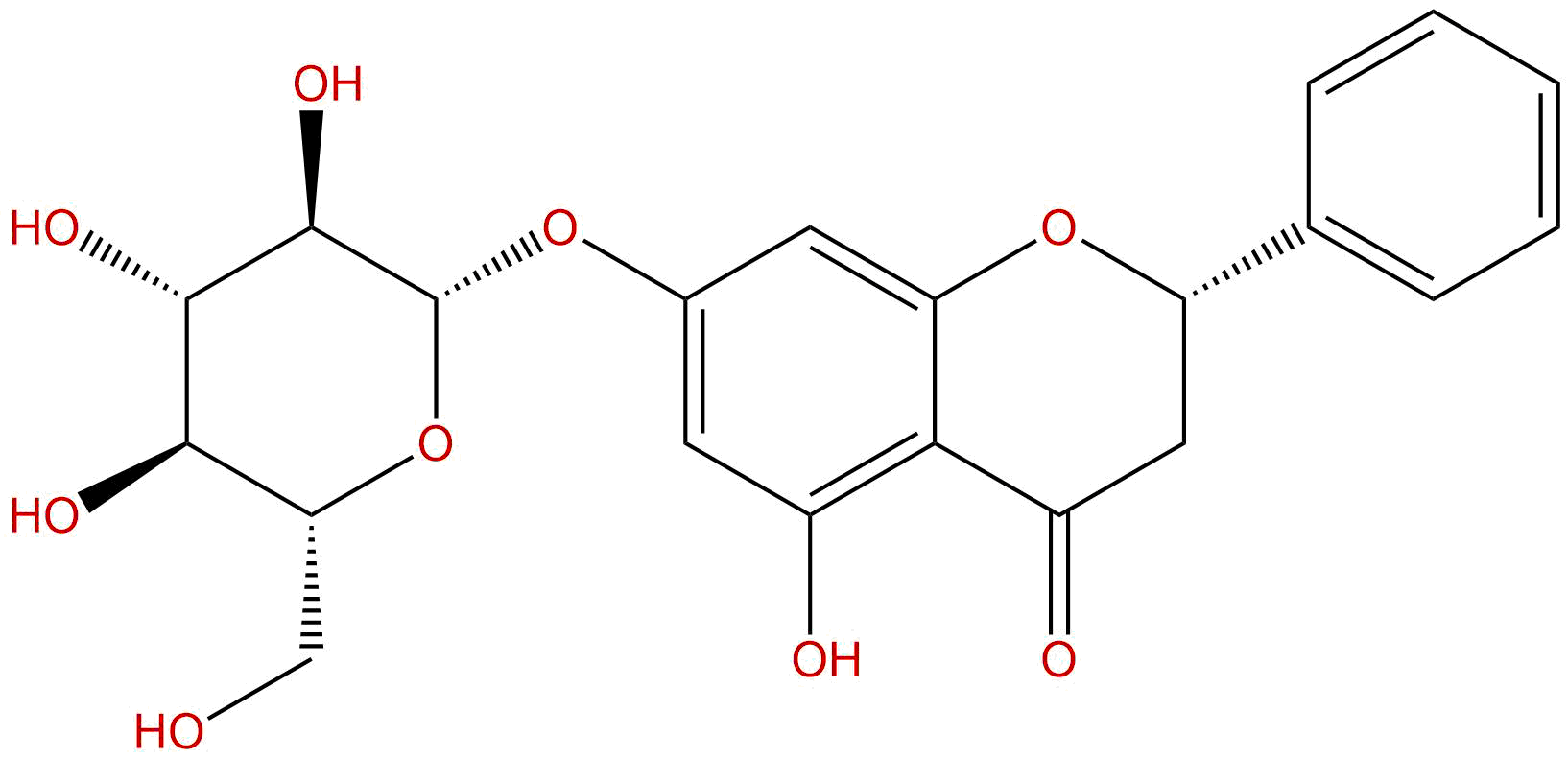


Product name: Pinocembroside
Synonym name: Pinocembrin-7-O-β-D-glucopyranoside;Pinocembrin 7-O-glucoside
Catalogue No.: BP2056
Cas No.: 75829-43-5
Formula: C21H22O9
Mol Weight: 418.398
Botanical Source: Penthorum chinense Pursh
Type of Compound: Flavonoids
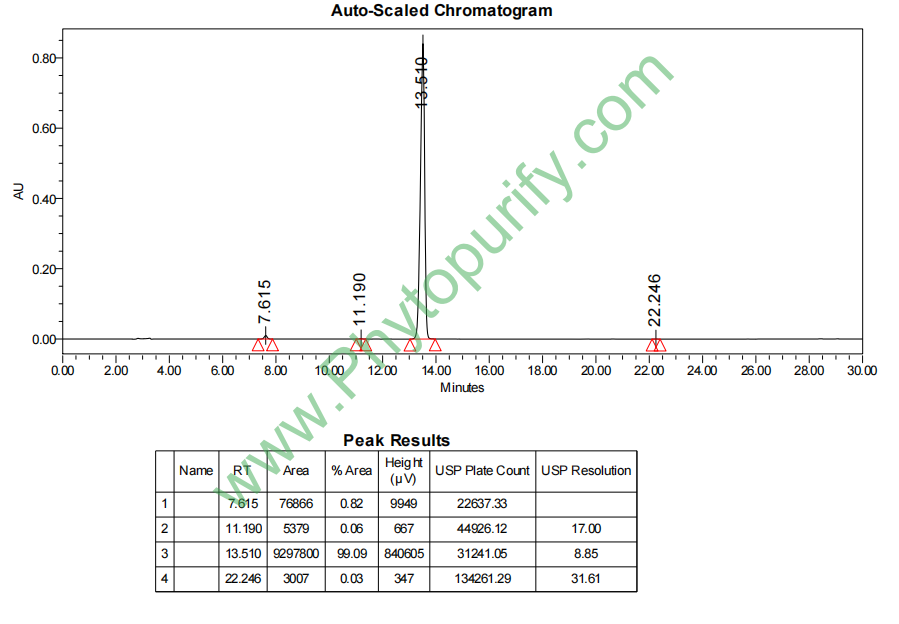
Purity: 95%~99%
Analysis Method: HPLC-DAD or/and HPLC-ELSD
Identification Method: Mass, NMR
Packing: Brown vial or HDPE plastic bottle
Storage: Store in a well closed container, protected from air and light. Put into refrigerate or freeze for long term storage.
Whenever possible, you should prepare and use solutions on the same day. However, if you need to make up stock solutions in advance, we recommend that you store the solution as aliquots in tightly sealed vials at -20℃. Generally, these will be useable for up to two weeks.
The product could be supplied from milligrams to grams
Inquire for bulk scale.
For Reference Standard and R&D, Not for Human Use Directly.
Chengdu Biopurify Phytochemicals Ltd. is a leading company in the research, development, manufacture and marketing of High Quality Phytochemicals and Extracts(especially Active Ingredients from Traditional Chinese Medicine,TCM), Natural Active Pharmaceutical Ingredients worldwide.
The main services:
A. Supply active ingredients and reference standards of TCM, from mgs to kgs scale
B. Custom extraction and purification, target Herb Active Ingredients
C. Custom synthesis and semi-synthesis for Natural Active Ingredients
D. CR(contract research), CM(contract manufacture) and PD(process development) services from lab scale, pilot scale to commercial scale(GMP is also available)
E. TCM compounds library for drug screen,more than 3000 compounds available, many of them are rare and unique.
HPLC of Pinocembroside
Storage conditions:Short-term storage at 2~8℃, long-term storage at -20 ~ -80℃
145.9100
.7149
.6856
1.9566
.5656
.2679
Low
77.5890
3.8956
No
No
No
No
No
No
0.0
Yes
No
Yes
No
Pinocchio glycoside is a natural product compound that was first isolated from plants of the genus Pinus. Due to its unique chemical structure and diverse biological activities, it has attracted widespread attention in the field of natural product pharmacology in recent years. With the increasing incidence of neurodegenerative diseases, especially Parkinson's Disease (PD), the search for natural active ingredients with neuroprotective effects has become a research hotspot. Qiaoson has shown potential neuroprotective and anti-inflammatory activities due to its regulatory effects on various molecular targets associated with Parkinson's disease, making it a strong candidate for developing novel therapeutic drugs.
This article provides a systematic review of the chemical structure and physicochemical properties, plant sources, and extraction methods of puerarin. It focuses on its pharmacological activity and mechanism of action, analyzes its pharmacokinetic characteristics based on drug parameters, and finally explores its clinical application prospects in neurological diseases such as Parkinson's disease. The aim is to provide theoretical support and research directions for natural product pharmacology research and new drug development.
The molecular formula of Pinocembroside (CAS number 75829-43-5) is C2H26O10, with a molecular weight of 418.3980. Its chemical structural feature is that a phenylpropane glycoside is connected to the glycoside part through glycosidic bonds, with multiple hydroxyl and ether bonds, giving it high polarity and water solubility. Its LogP value is 0.7149, indicating that puerarin has moderate lipophilicity, which is conducive to membrane penetration but not excessively hydrophobic, making it suitable for distribution in vivo. The polar surface area (TPSA) is 145.9100, reflecting its high polarity characteristics, which are usually closely related to the molecule's ability to pass through the cell membrane and its binding affinity to the target.
The water solubility index is 1.9566, indicating good solubility of puerarin in water, which is beneficial for its oral absorption and distribution in body fluids. The blood-brain barrier (BBB) has a low penetration ability, indicating limited ability to directly enter the central nervous system, but neuroprotective effects can still be achieved through indirect mechanisms or auxiliary delivery systems. In addition, puerarin does not exhibit hERG channel inhibitory activity, reducing the risk of cardiac toxicity. The Ames test result is 0.0, indicating no significant genotoxicity and high safety.
In summary, the physicochemical properties of paeoniflorin conform to the typical characteristics of natural drug molecules, and have good biological activity potential and safety, laying the foundation for further pharmacological research and drug development.
Quercetin is mainly present in plants of the genus Pinus, especially in the bark, leaves, and xylem of certain species of Pinus. The genus Quercus is widely distributed in temperate and subarctic regions and is an important source of traditional Chinese medicinal materials and natural medicinal resources.
The common methods for extracting puerarin include solvent extraction, ultrasound assisted extraction, and high-performance liquid chromatography (HPLC) separation and purification. Generally, aqueous ethanol (50% -70%) is used as the extraction solvent, and ultrasonic assisted extraction efficiency is enhanced. The extract was concentrated, liquid-liquid partitioned, and subjected to silica gel column chromatography, and finally purified by reverse phase HPLC to obtain high-purity puerarin.
In recent years, green extraction techniques such as supercritical CO2 extraction and microwave-assisted extraction have also been attempted to be applied to the extraction of puerarin, aiming to improve extraction efficiency, reduce solvent usage, and environmental pollution. The optimization of the extraction process not only improves the yield, but also ensures the stability of the active ingredient of puerarin, providing technical support for its large-scale production and clinical application.
The pharmacological activity research of puerarin mainly focuses on neuroprotection, antioxidant, anti-inflammatory, and anti apoptotic aspects, especially showing significant regulatory effects on Parkinson's disease related pathological processes.
Neuroprotective effect
Multiple in vitro and in vivo experiments have shown that puerarin can significantly alleviate oxidative stress damage to nerve cells and inhibit apoptosis of dopaminergic neurons. It activates the AMPK signaling pathway, enhances cellular energy metabolism and mitochondrial function, reduces ROS (reactive oxygen species) generation, and protects neurons from toxic substances.
anti-inflammatory effect
Qiaoson can downregulate the expression of inflammatory mediators, such as reducing lipid peroxidation mediated by ALOX5 and ALOX15, inhibiting the release of pro-inflammatory cytokines, alleviating neuroinflammatory reactions, and promoting the repair and regeneration of the nervous system.
Anti apoptotic effect
By regulating the expression of BCL2 family proteins, puerarin inhibits programmed cell death of nerve cells and maintains cell survival. Its positive regulation of BCL2 protein helps to stabilize mitochondrial membrane potential and prevent the cascade reaction of intracellular apoptosis signals.
Enzyme inhibition
Qiaoson exhibits certain inhibitory activity on BACE1 (β - secretase), which may reduce harmful β - amyloid deposition and indirectly alleviate neurodegenerative diseases. In addition, regulation of MMP1 (matrix metalloproteinase 1) helps maintain the stability of the extracellular matrix and prevent damage to neural tissue structure.
In summary, through multi-target and multi pathway synergistic effects, puerarin exhibits broad-spectrum neuroprotective and anti pathological damage abilities, providing new ideas for the treatment of neurodegenerative diseases such as Parkinson's disease.
The mechanism of action of puerarin involves multiple key molecular targets, mainly including:
AMPK(PRKAA1)As an "energy sensor" for cellular energy metabolism, AMPK activation promotes mitochondrial biosynthesis and autophagy, improving energy metabolism disorders. Quercetin enhances the metabolic adaptability of nerve cells and reduces oxidative stress by activating AMPK.
BCL2 Upregulation of anti apoptotic protein BCL2 helps maintain mitochondrial membrane integrity and prevent cell apoptosis. Qiaoson regulates BCL2 expression, inhibits neuronal apoptosis, and protects neurological function.
BACE1β - secretase BACE1 is involved in abnormal cleavage of amyloid precursor proteins, promoting the accumulation of neurotoxic proteins. The inhibitory effect of puerarin on BACE1 helps to slow down neurodegenerative diseases.
ALOX5 and ALOX15 Members of the lipoxygenase family are involved in the generation of inflammatory mediators. Qiaoson reduces neuroinflammatory reactions by inhibiting the activity of these two enzymes.
MMP1 Matrix metalloproteinases are involved in extracellular matrix degradation. Qiaoson regulates MMP1 activity and maintains the stability of neural tissue structure.
PTPN1 (protein tyrosine phosphatase 1B)Participate in the regulation of multiple signaling pathways, affecting cellular metabolism and inflammatory response. Quercetin may improve neuronal function by regulating PTPN1.
APEX1 DNA repair enzyme, involved in oxidative damage repair. Quercetin promotes APEX1 function and enhances the DNA repair ability of nerve cells.
AKR1B1 Aldehyde reductase, involved in sugar metabolism and oxidative stress response. The regulation of AKR1B1 by puerarin helps alleviate glycosylation related nerve damage.
Through comprehensive regulation of the above multiple targets, puerarin has achieved multi-level intervention in the pathological processes of neurodegenerative diseases such as Parkinson's disease, demonstrating its potential as a multi-target drug.
The pharmacological parameters of puerarin indicate that it has good potential for drug development. Its molecular weight is 418.3980, which is in the moderate range of drug molecular weight and is conducive to absorption and distribution in the body. The LogP value of 0.7149 indicates moderate lipid solubility, with both water solubility and cell membrane permeability. The high TPSA (145.91 Å ²) suggests strong polarity, which may limit its ability to pass through the blood-brain barrier, consistent with its assessment of low blood-brain barrier penetration.
The water solubility index of 1.9566 indicates that puerarin dissolves well in the aqueous phase, which is beneficial for the design of oral formulations and the improvement of bioavailability. The negative inhibition of hERG channel and the absence of mutagenicity in Ames test indicate its high safety and low risk of cardiac and genetic toxicity.
At present, there is limited research on the pharmacokinetics of puerarin, but its low blood-brain barrier permeability suggests that its direct central nervous system effects may be limited. In the future, drug delivery systems (such as nanocarriers, liposomes, etc.) or structural modifications can be used to enhance its brain distribution. In addition, there is an urgent need for systematic research on the metabolic stability, half-life, and bioavailability of puerarin to guide clinical formulation development and dosing regimen design.
Parkinson's disease, as a complex neurodegenerative disease, currently has no cure. Existing drugs mainly focus on symptom relief, and long-term use is accompanied by various side effects. Qiaoson provides a new drug candidate for the treatment of Parkinson's disease due to its multi-target and multi mechanism neuroprotective effects.
Its comprehensive effects of antioxidant, anti-inflammatory, and anti apoptotic are expected to delay the process of neuronal damage and improve patients' motor and non motor symptoms. In addition, the regulation of targets such as BACE1 by puerarin may have a certain adjuvant therapeutic effect on accompanying cognitive impairment.
In the future, the clinical application of puerarin needs to address the issue of insufficient blood-brain barrier penetration, which can be improved by optimizing drug delivery systems or structural modifications to enhance its concentration in the brain. At the same time, systematic toxicological evaluation, pharmacokinetic studies, and preclinical animal model validation are necessary steps. Combining modern drug design with natural product research methods, puerarin is expected to become a new natural medicine for the treatment of Parkinson's disease and related neurodegenerative diseases.
In addition, the potential application of oridonin in other diseases such as diabetes complications, inflammatory diseases and other fields is also worth exploring, providing a broader clinical transformation space for its multifunctional pharmacological activities.
Qiaoson, as a natural product with unique chemical structure and multiple pharmacological activities, has shown broad application prospects in the treatment research of neurodegenerative diseases such as Parkinson's disease. It exerts multiple protective effects such as antioxidant, anti-inflammatory, and anti apoptotic by regulating multiple key molecular targets, demonstrating the advantages of multi-target synergistic therapy.
Although the pharmacokinetics and clinical research on puerarin are still in the preliminary stage, its good safety and pharmacological parameters provide a solid foundation for subsequent drug development. In the future, by combining modern drug delivery technology and structural optimization strategies, it is expected to overcome the limitations of blood-brain barrier penetration and achieve more effective central nervous system treatment.
In summary, as an important object of pharmacological research on natural products, puerarin not only enriches natural drug resources, but also provides new ideas and directions for innovative drug development in neurodegenerative diseases. We look forward to more in-depth and systematic research to promote its early clinical translation and benefit patients.
