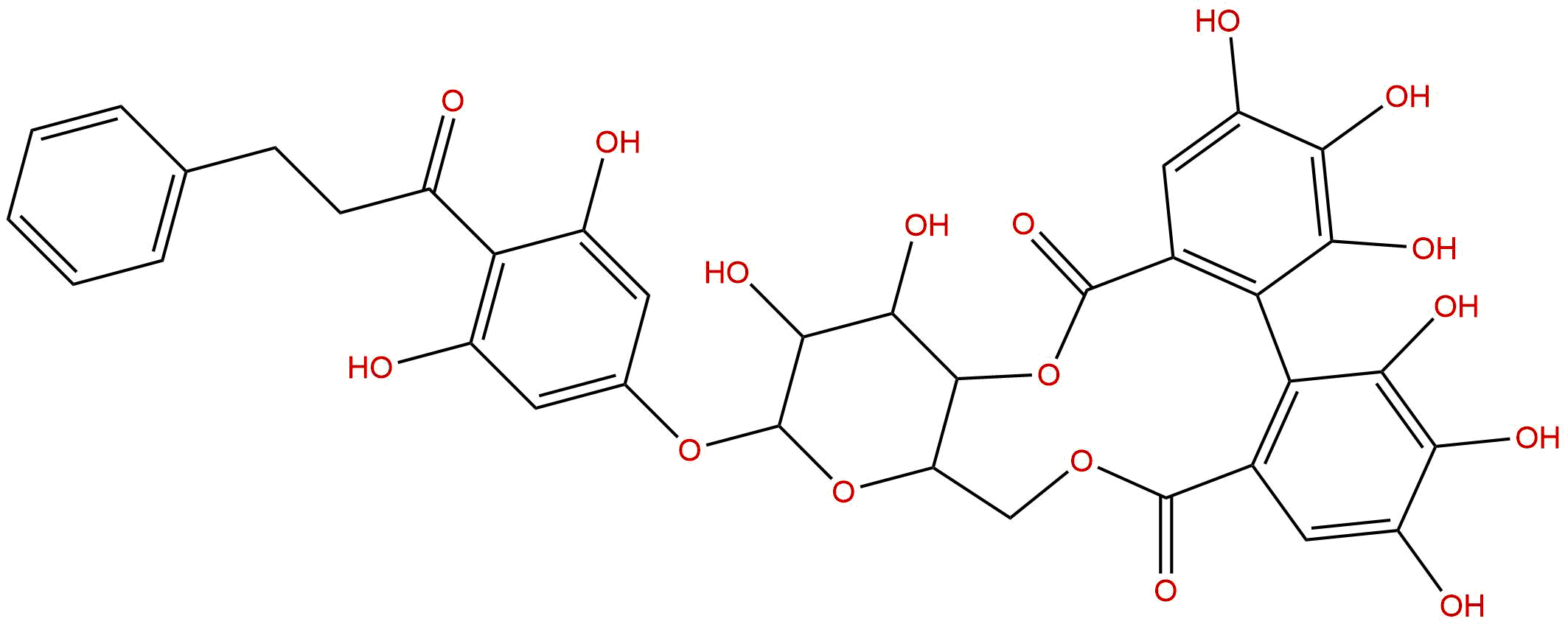


Storage conditions:Short-term storage at 2~8℃, long-term storage at -20 ~ -80℃
Thonninginin B (CAS number: 271579-12-5), as a natural product, has attracted much attention in recent years due to its significant antioxidant and autophagy enhancing activities. Natural products have unique advantages in drug development, especially in the prevention and treatment of liver diseases, and have become a research hotspot due to their multi-target regulation and low side effects. As an important metabolic and detoxifying organ in the human body, the liver is susceptible to various pathological factors such as oxidative stress, inflammation, and fibrosis, leading to liver damage and even serious diseases such as cirrhosis and liver cancer. Ganhuangcao glycoside B exhibits excellent liver protective potential by regulating various antioxidant enzymes and signaling pathways, making it an emerging candidate molecule for natural drug development.
This article aims to provide a systematic review of the chemical structure and physicochemical properties, plant sources and extraction methods, pharmacological activity and mechanism of action, pharmacological evaluation and pharmacokinetic characteristics of glyphosate B. Combining the latest research progress, it explores its clinical application prospects and future development directions, and provides theoretical support and research references for the fields of natural product pharmacology and liver disease treatment.
Ganhuangcao glycoside B is a natural phenolic glycoside compound with a molecular weight of 722.6080. It has a complex molecular formula and contains multiple phenolic hydroxyl groups and glycoside structural units. Its LogP value is 2.1901, indicating moderate lipid solubility, which is beneficial for membrane penetration and bioavailability. The TPSA (topological polar surface area) is as high as 290.43, indicating strong molecular polarity that may affect its transmembrane transport and oral absorption. Low water solubility (0.0596 mg/mL) indicates limited solubility in aqueous media and requires appropriate formulation techniques to improve its bioavailability.
Structurally, Ganhuangcao glycoside B contains multiple phenolic hydroxyl groups and glycosidic bonds, endowing it with excellent antioxidant activity and the ability to bind to protein targets. Its low blood-brain barrier permeability reduces the risk of central nervous system side effects, negative hERG channel inhibition, and Ames test results (0.6) show a low risk of genetic toxicity and good safety.
Ganhuangcao glycoside B is mainly found in plants of the Ganhuangcao genus, especially in traditional Chinese medicinal herbs such as Thonninia sanguinea, where its content is relatively high. Huangcao, as a traditional African herb, is widely used to treat inflammation, infections, and liver diseases. Its rhizome and whole plant are the main medicinal parts, containing abundant phenolic glycosides.
The extraction process usually uses ethanol or methanol as solvents to obtain crude extracts through methods such as cold soaking, reflux extraction, or ultrasound assisted extraction. Subsequently, liquid-liquid distribution, column chromatography (silica gel, C18 reverse phase), high-performance liquid chromatography (HPLC) and other techniques were used for separation and purification, ultimately obtaining high-purity glyphosate B. Modern extraction techniques such as supercritical fluid extraction and membrane separation have gradually been applied to the extraction of this compound, improving extraction efficiency and purity.
Ganhuangcao glycoside B, as a natural antioxidant, can eliminate free radicals and alleviate oxidative stress damage. In vitro studies have shown that it has significant DPPH radical scavenging ability and superoxide anion scavenging activity. In vivo experiments, Huanghuangcao glycoside B can significantly enhance the activity of antioxidant enzymes such as SOD1, SOD2, CAT, GPX1 in liver tissue, reduce the level of lipid peroxidation products (such as MDA), and alleviate oxidative damage to liver cells.
Autophagy, as an important metabolic regulatory mechanism within cells, is involved in organelle renewal and stress response. Ganhuangcao glycoside B can promote the expression of autophagy related protein LC3-II, enhance autophagy flow, promote the clearance of damaged organelles and proteins, thereby protecting liver cells from toxic damage. This effect helps maintain liver cell homeostasis and delay the progression of liver fibrosis.
Multiple in vivo liver injury models (such as CCl4 induced liver fibrosis model and alcoholic liver injury model) have shown that glyphosate B can significantly reduce serum transaminase (ALT, AST) levels, alleviate liver tissue inflammation and fibrosis pathological changes. Its mechanism of action involves multiple pathways such as antioxidant, anti-inflammatory, regulation of cell apoptosis, and autophagy.
The liver protective effect of Ganhuangcao glycoside B is closely related to its regulation of multiple key molecular targets:
NRF2 (nuclear factor erythroid 2 related factor 2)As the main regulatory factor of cellular antioxidant response, the activation of NRF2 promotes the expression of downstream antioxidant enzymes (NQO1, HMOX1, SOD1, CAT, GPX1, etc.), enhancing cellular antioxidant capacity. Ganhuangcao glycoside B can promote NRF2 nuclear translocation, activate its signaling pathway, and alleviate oxidative stress.
MMP9 (Matrix Metalloproteinase 9)MMP9 mediates extracellular matrix degradation and remodeling during liver fibrosis. Ganhuangcao glycoside B regulates MMP9 expression, inhibits excessive matrix deposition, and alleviates liver fibrosis.
TGFB1 (Transforming Growth Factor β 1)TGFB1 is the core pro fibrotic factor in liver fibrosis. Ganhuangcao glycoside B can inhibit the TGFB1 signaling pathway, block hepatic stellate cell activation, and slow down fibrosis progression.
ACTA2 (alpha smooth muscle actin)As a marker of hepatic stellate cell activation, the decrease in ACTA2 expression reflects fibrosis inhibition. Ganhuangcao glycoside B can reduce the expression of ACTA2 and inhibit liver fibrosis.
In addition, Ganhuangcao glycoside B exerts a comprehensive liver protective effect by regulating mitochondrial function, inhibiting the release of inflammatory factors, and promoting autophagy, reflecting its multi-target and multi pathway pharmacological characteristics.
Ganhuangcao glycoside B has a high molecular weight and polarity, with a high TPSA value, indicating that its oral absorption may be limited and its bioavailability needs to be improved through formulation optimization. LogP is moderate, which is beneficial for cell membrane permeability, but has low water solubility, which may affect in vivo distribution and absorption rate.
Low blood-brain barrier permeability reduces the risk of central nervous system toxicity. The hERG channel inhibition test was negative, indicating a low risk of cardiac toxicity. The Ames test results show that its genetic toxicity risk is low and its safety is good.
At present, there is limited pharmacokinetic research on rush yellow grass glycoside B. Preliminary data indicate that its metabolism is stable in vivo, mainly processed by the liver metabolic enzyme system, and excreted through bile and urine as the main pathways. Further systematic pharmacokinetic and toxicological studies are needed in the future to clarify its in vivo pharmacokinetic characteristics and safe dose range.
Huangcao glycoside B, as a natural antioxidant and autophagy enhancer, has shown broad application prospects in the prevention and treatment of liver diseases. Its multi-target regulatory ability makes it not only suitable for protection against liver injury, but may also extend to various liver disease fields such as liver fibrosis, non-alcoholic fatty liver disease (NAFLD), drug-induced liver injury, etc.
Future research directions include:
Formulation development To address the issues of poor water solubility and limited oral absorption, new drug delivery systems such as nano formulations, liposomes, or solid dispersions have been developed to improve bioavailability and targeting.
In depth analysis of the mechanism Using multi omics techniques such as genomics and proteomics, further reveal the molecular network of Huanghuangcao glycoside B regulating autophagy, oxidative stress, and fibrosis.
Preclinical and clinical research Conduct systematic pharmacokinetic and toxicological evaluations, as well as multicenter clinical trials, to verify its safety and efficacy, and promote its clinical translation.
Compound and combination therapy Explore the synergistic effects of Huanghuangcao glycoside B with other natural products or Western medicine, optimize treatment plans, and improve efficacy.
In summary, as a potential natural drug molecule, Ganhuangcao glycoside B has the foundation and conditions to become a new drug for the treatment of liver disease.
Ganhuangcao glycoside B, as a natural product, exhibits unique advantages in the field of liver protection due to its significant antioxidant and autophagy enhancing activities. Its multi-target and multi mechanism mode of action provides new ideas for the comprehensive treatment of liver diseases. Although its pharmacokinetics and clinical research are still in their infancy, with the continuous improvement of extraction and purification technology, drug design, and clinical evaluation system, Ganhuangcao glycoside B is expected to become an important candidate drug in the field of liver disease prevention and treatment.
In the future, we should strengthen the combination of basic and clinical research, promote the systematic development and application of glyphosate B, fully leverage the value of natural products in modern medicine, and bring new treatment options for liver disease patients.
