


Product name: Militarine
Synonym name: Loroglossin; Militarin; Militarine; Bis(4-(glucopyranosyloxy)benzyl) 2-sec-butylmalate
Catalogue No.: BP3996
Cas No.: 58139-23-4
Formula: C34H46O17
Mol Weight: 726.725
Botanical Source: Bletillae Rhizoma
Type of Compound: Others
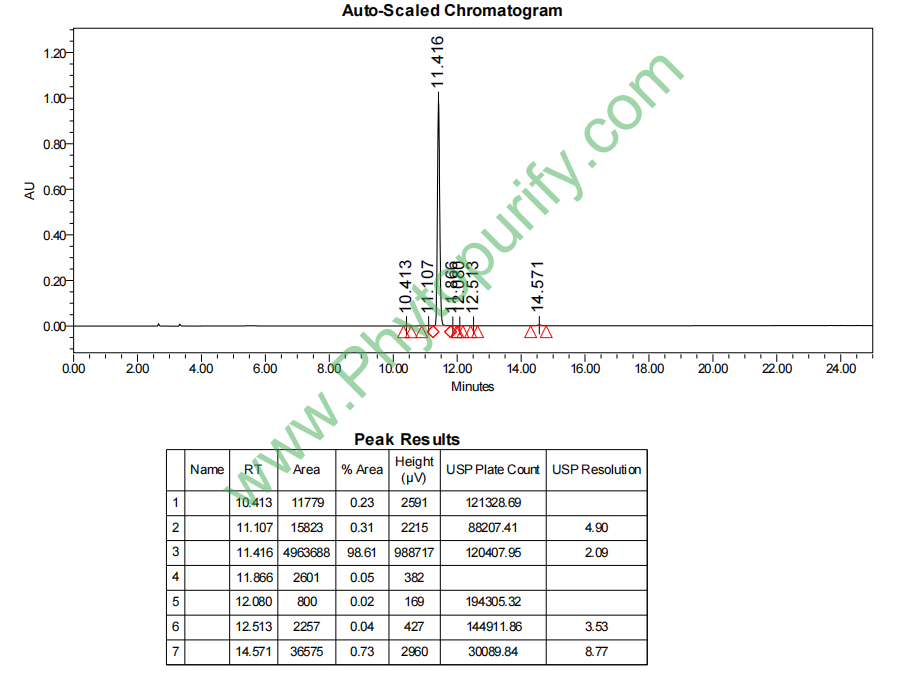
Purity: 95%~99%
Analysis Method: HPLC-DAD
Identification Method: Mass, NMR
Packing: Brown vial or HDPE plastic bottle
The product could be supplied from milligrams to grams, up to kilograms.
Inquire for bulk scale.
Storage: Store in a well closed container, protected from air and light. Put into refrigerate or freeze for long term storage.
Whenever possible, you should prepare and use solutions on the same day. However, if you need to make up stock solutions in advance, we recommend that you store the solution as aliquots in tightly sealed vials at -20℃. Generally, these will be useable for up to two weeks.
HPLC of Militarine
Storage conditions:Short-term storage at 2~8℃, long-term storage at -20 ~ -80℃
271.5900
.5076
.5078
2.9215
.4686
.0953
Low
72.7872
4.8819
Yes
No
No
No
No
No
0.0
Yes
Yes
No
Yes
Natural products, as an important source of drug discovery, play an irreplaceable role in the long history of human struggle against diseases. China has a long tradition of medicinal plant applications, among which the orchid plant Bai and(Bletilla striata As an important traditional Chinese medicine for astringency, hemostasis, swelling reduction, and muscle regeneration, the medicinal history of (Thunb.) Rchb.f. can be traced back to the "Shennong Bencao Jing". Modern pharmacological research has shown that Bai Ji not only has traditional hemostatic and anti ulcer activities, but also exhibits significant biological activities such as anti-inflammatory, antioxidant, anti-tumor, and promoting wound healing. These rich pharmacological functions are closely related to the complex chemical components they contain, among which phenolic compounds mainly composed of benzyl, dihydrophenanthrene, and their glycosides are the main active ingredient groups.
Militarin, as a representative glycoside compound isolated from baijiu, has received widespread attention from researchers both domestically and internationally in recent years. Its chemical structure is unique and belongs to the class of glucoside derivatives of benzyl compounds. Early research found that resveratrol has inhibitory activity on plant growth, suggesting its possible involvement in plant allelopathy. However, what is even more remarkable is its strong anti-inflammatory activity demonstrated in mammalian cells and in vivo models. Chronic inflammation is a common pathological basis for various major diseases, including autoimmune diseases, metabolic diseases, cardiovascular diseases, and even cancer. Therefore, in-depth analysis of the anti-inflammatory effects and molecular mechanisms of Baiji glycoside is of great scientific significance and application value for the development of new anti-inflammatory drugs.
This article aims to provide a systematic review of the research progress on white and glycosides. The article will first introduce its chemical structure and physicochemical properties, then elaborate on its plant origin and extraction methods, focusing on its pharmacological activities in anti-inflammatory, antioxidant, neuroprotective and other aspects, and deeply explore its mechanism of action and molecular targets. On this basis, combined with its pharmacological parameters and pharmacokinetic characteristics, the clinical application prospects of Baiji glycoside are discussed, in order to provide comprehensive reference for the subsequent research and development of Baiji glycoside.
The chemical structure of Baiji glycoside is the basis of its biological activity. From a chemical classification perspective, Baiji glycoside belongs to the class of benzyl glycosides. The glycoside part is a compound of the benzyl group, which is formed by connecting two benzene rings through an ethyl bridge (- CH ₂ - CH ₂ -). In the Baiji glycoside molecule, the aglycone is 4-hydroxy-3-methoxyphenethyl-4-hydroxy-3-methoxybenzoate (i.e. the aglycone of Gymnoside I), which is characterized by one benzene ring connected to a hydroxyl and methoxy group, and the other benzene ring connected to a carboxyl group through an ester bond. The sugar moiety is glucose, which is connected to one phenolic hydroxyl group of the aglycone through an oxygen glycosidic bond. This structure endows Baiji glycoside with unique physicochemical properties.
From the molecular formula, the precise molecular weight of Baiji glycoside is 726.7250 g/mol, which belongs to a medium to large molecule. Its lipid water partition coefficient (LogP) is 0.5076, indicating that the compound has moderate lipophilicity and hydrophilicity, neither completely hydrophobic nor completely hydrophilic. This balanced characteristic is beneficial for its dissolution, transport, and interaction with the target in vivo. The polar surface area (TPSA) is as high as 271.5900 Å ², mainly attributed to the numerous polar groups such as hydroxyl and ester bonds in its molecules. A high TPSA value usually indicates that the compound has good water solubility, but it also suggests that its transmembrane ability may be limited. In fact, the water solubility parameter of Baiji glycoside is 2.9215, indicating that it has a certain solubility in water, which provides a basis for its absorption and distribution in organisms. However, its high TPSA also leads to a lower ability to cross the blood-brain barrier, suggesting that baicalin may mainly act on peripheral tissues and have limited direct effects on the central nervous system.
In addition, pharmacological evaluation showed that the inhibitory risk of Baiji glycoside on hERG potassium channels was low (No), indicating that its potential toxicity risk of causing QT interval prolongation and arrhythmia in the heart is relatively small. The Ames test result was 0.0, indicating that it did not show significant mutagenicity in the bacterial recovery mutation test, suggesting a low risk of genetic toxicity. These physicochemical properties and preliminary safety evaluation results provide favorable conditions for the further development of Baiji glycoside as a candidate drug.
Baiji glycoside was originally derived from the orchid plant Baiji(Bletilla striata)It was isolated and identified from the tubers. Baiji is widely distributed in East Asia such as China, Japan, and South Korea, and its dried tubers are the medicinal parts of the traditional Chinese medicine "Baiji". Other plants belonging to the same genus, such as Huanghua and Baiji, except for Baiji(Bletilla ochracea)With Xiaobai and(Bletilla formosana)It may also contain resveratrol, but the content may vary. Baiji glycoside has a relatively high content in Baiji tubers and is one of its characteristic active ingredients, often used as an indicator compound for quality control of Baiji medicinal materials.
The extraction of baicalin typically relies on classical natural product chemistry methods, which utilize the difference in solubility between the target compound and impurities in the solvent. Due to the high polarity of Baiji glycosides, polar solvents are often used for extraction. Common extraction solvents include methanol, ethanol, water, or their mixed solvents. For example, using a 70% -80% ethanol aqueous solution for reflux extraction or cold soaking extraction can effectively dissolve paeoniflorin from plant materials. After filtration and concentration of the extract, crude extract is obtained.
Further separation and purification require the combination of multiple chromatographic techniques. Liquid liquid extraction is a commonly used method for preliminary separation. For example, by sequentially extracting the crude extract with solvents such as petroleum ether, ethyl acetate, n-butanol, etc., different polar components can be separated. Due to the high polarity of glycosides, they are usually enriched in the n-butanol extraction layer or water layer. Subsequently, silica gel column chromatography, ODS (octadecylsilane bonded silica gel) reverse phase column chromatography, Sephadex LH-20 gel column chromatography and preparative high-performance liquid chromatography (Pre HPLC) were used for systematic separation and purification. For example, in silica gel column chromatography, gradient elution systems such as chloroform methanol water are used; In ODS column chromatography, methanol water or acetonitrile water systems are used for elution. Finally, the structure of the purified compound was identified by spectroscopic methods such as nuclear magnetic resonance spectroscopy (NMR) and mass spectrometry (MS), confirming its identity as baicalin. In recent years, with the advancement of chromatographic technology, new technologies such as high-speed countercurrent chromatography (HSCCC) have also been applied to the efficient separation of paeoniflorin, greatly shortening the separation cycle and improving the yield.
The pharmacological activity research of Baiji glycoside is currently a hot topic in this field, with its effects mainly focused on anti-inflammatory, antioxidant, and neuroprotective aspects, among which anti-inflammatory activity is particularly prominent.
1. Anti inflammatory activity
Numerous in vitro and in vivo studies have confirmed that resveratrol is an effective anti-inflammatory natural product. In a cellular model, leukotrienes can significantly inhibit the release of nitric oxide (NO), prostaglandin E2 (PGE2), and various pro-inflammatory cytokines, including tumor necrosis factor - α (TNF - α), interleukin-6 (IL-6), and interleukin-1 β (IL-1 β), by macrophages (such as RAW264.7 cells) stimulated by lipopolysaccharide (LPS). These effects are concentration dependent. In animal models, resveratrol also exhibits good anti-inflammatory effects. For example, in the rat paw swelling model induced by carrageenan, the mouse ear swelling model induced by xylene, and the mouse peritoneal capillary permeability increase model induced by acetic acid, Baiji glycoside can effectively alleviate inflammatory reactions. In addition, in more complex disease models, such as ulcerative colitis (UC) mouse models, oral administration of resveratrol can significantly improve colon length shortening, weight loss, and disease activity index (DAI) scores, and alleviate pathological damage to colon tissue, such as inflammatory cell infiltration, crypt destruction, and mucosal ulcers. These results indicate that resveratrol has inhibitory effects on both acute and chronic inflammation.
2. Antioxidant activity
Oxidative stress is closely related to inflammation, and excessive reactive oxygen species (ROS) can activate inflammatory signaling pathways. Research has shown that resveratrol has a certain antioxidant capacity. In vitro chemical experiments, it can scavenge DPPH free radicals and ABTS cationic free radicals, and has a certain reducing ability. At the cellular level, resveratrol can reduce the increase in intracellular ROS levels caused by oxidative stress inducers such as H ₂ O ₂, and increase the activity of antioxidant enzymes such as superoxide dismutase (SOD) and catalase (CAT). This antioxidant activity may be one of the mechanisms of its anti-inflammatory effect, by clearing ROS and blocking the activation of inflammatory pathways by oxidative stress.
3. Neuroprotective activity
In recent years, the role of resveratrol in neurological diseases has also attracted attention. Research has found that resveratrol has a protective effect on glutamate induced neuronal damage. Glutamate excitotoxicity is a common pathological feature of various neurodegenerative diseases such as Alzheimer's disease, Parkinson's disease, and cerebral ischemia. Baiji glycoside can alleviate glutamate induced neuronal apoptosis, reduce intracellular calcium overload, and inhibit the activation of caspase-3 associated with apoptosis. In addition, in the model of cerebral ischemia-reperfusion injury, baicalin can reduce the area of cerebral infarction and improve neurological function scores. Its neuroprotective effect may be closely related to its anti-inflammatory and antioxidant activities, achieved by inhibiting the activation of microglia, reducing the release of pro-inflammatory factors, and clearing free radicals.
4. Other activities
In addition to the above main activities, leucoside has also been reported to have anti-tumor activity, such as inhibiting the proliferation of some cancer cell lines (such as liver cancer cells, breast cancer cells), but its effect is relatively weak. In addition, its initial discovery of plant growth inhibitory activity also suggests its potential as a natural herbicide in the agricultural field.
The pharmacological activity of Baiji glycoside, especially its strong anti-inflammatory effect, is achieved by regulating multiple key signaling pathways and molecular targets. According to existing research, its mechanism of action mainly involves the following aspects:
1. Inhibit the NF - κ B signaling pathway
Nuclear factor kappa B (NF - κ B) is the core transcription factor in inflammatory response, regulating the expression of various pro-inflammatory genes such as TNF - α, IL-6, IL-1 β, iNOS (NOS2), and COX-2 (PTGS2). Baiji glycoside can effectively inhibit the activation of NF - κ B. The specific mechanism is that resveratrol can inhibit the activity of I κ B kinase (IKK, including IKK α and IKK β, i.e. IKBKB), thereby preventing the phosphorylation and degradation of I κ B α. I κ B α is an inhibitory protein of NF - κ B. After its degradation, NF - κ B (usually p50/p65, i.e. RELA) is released and translocated into the nucleus, initiating transcription of target genes. Baiji glycoside stabilizes I κ B α and "sequesters" NF - κ B in the cytoplasm, thereby blocking its transcriptional activity. In macrophages stimulated by LPS, treatment with resveratrol can significantly reduce the nuclear translocation level of p65 protein.
2. Inhibit the STAT3 signaling pathway
Signal transducer and activator of transcription factor 3 (STAT3) is another transcription factor that plays a critical role in inflammation and tumors. Cytokines such as IL-6 can activate the JAK-STAT3 pathway, phosphorylated STAT3 forms dimers and enters the nucleus, regulating downstream gene expression. Research has shown that resveratrol can inhibit the phosphorylation of STAT3 (Tyr705 site), thereby blocking its activation. In the ulcerative colitis model, treatment with baicalin significantly reduced the levels of phosphorylated STAT3 in colon tissue. The synergistic effect of STAT3 inhibition and NF - κ B inhibition jointly downregulates the production of pro-inflammatory cytokines.
3. Regulating the MAPK signaling pathway
The mitogen activated protein kinase (MAPK) family, including ERK, JNK, and p38 MAPK, plays an important role in the transmission of inflammatory signals. Baiji glycoside has been found to inhibit LPS induced phosphorylation of p38 MAPK and JNK, but has little effect on ERK phosphorylation. The activation of p38 and JNK can promote the synthesis and release of pro-inflammatory cytokines. Therefore, inhibiting these MAPK pathways is another important mechanism by which resveratrol exerts anti-inflammatory effects.
4. Regulating NLRP3 inflammasome
NLRP3 inflammasome is a multi protein complex, and its activation is a key step in the maturation and secretion of IL-1 β and IL-18, which is associated with various inflammatory diseases. Caspase-1 (CASP1) is the core effector protein of NLRP3 inflammasome. Research has found that resveratrol can inhibit the assembly and activation of NLRP3 inflammasomes, thereby reducing caspase-1 cleavage and IL-1 β secretion. This may be another important target for its anti-inflammatory effect.
5. Acting on transient receptor potential channels
Transient receptor potential (TRP) channels, such as TRPV1 and TRPA1, are important ion channels involved in pain and inflammatory sensation. Baiji glycoside has been found to inhibit the activity of TRPV1 and TRPA1. TRPV1 and TRPA1 can be activated by various inflammatory mediators, leading to pain and neurogenic inflammation. The inhibitory effect of Baiji glycoside on these channels may be related to its pain relief and anti-inflammatory effects.
6. Inhibit arachidonic acid metabolism
Cyclooxygenase (COX, including PTGS1 and PTGS2) is a key enzyme involved in the metabolism of arachidonic acid to produce prostaglandins, which are important inflammatory mediators. Baiji glycoside has been reported to inhibit the expression and activity of COX-2 (PTGS2), thereby reducing the production of PGE2. This is closely related to its inhibition of the NF - κ B pathway, as COX-2 is a target gene of NF - κ B.
In summary, Baiji glycoside exerts its anti-inflammatory effects through multiple targets and pathways. It mainly acts on upstream signaling molecules (such as IKK β, JNK, p38), inhibits the activation of key transcription factors (NF - κ B, STAT3), and downregulates inflammasome activity, ultimately reducing the production of various pro-inflammatory mediators (TNF - α, IL-6, IL-1 β, NO, PGE2). This multi-target mode of action gives it unique advantages in treating complex inflammatory diseases.
Developing natural products into clinical drugs requires a systematic evaluation of their pharmacological properties, with pharmacokinetic (ADME) characteristics being a key step.
1. Analysis of pharmacological parameters
As mentioned earlier, the molecular weight of Baiji glycoside is 726.7 Da, exceeding the limit of molecular weight less than 500 in Lipinski's Rule of Five. Its LogP is 0.51, which complies with the rule (LogP<5). The number of hydrogen bond donors (from multiple hydroxyl groups) and hydrogen bond acceptors (from hydroxyl and ether oxygen groups) is numerous and exceeds the rules (HBD ≤ 5, HBA ≤ 10). The TPSA is as high as 271.6 Å ², far exceeding the threshold of 140 Å ². These parameters indicate that the pharmacological properties of Baiji glycoside are poor, especially its high polarity and high molecular weight, suggesting that its oral absorption may be poor. However, rules are not absolute, and many successful natural medicines such as cyclosporine have also broken through these rules. The low hERG inhibition risk and negative Ames test results of Baiji glycoside are positive factors for its drug development.
2. Pharmacokinetic characteristics
At present, research on the pharmacokinetics of resveratrol in vivo is relatively limited, but some preliminary findings have been made. Due to its glycosidic nature, baijiu may face intestinal metabolism and absorption disorders after oral administration. Its high water solubility and low LogP suggest that it may be difficult to passively diffuse through intestinal epithelial cells. Therefore, oral bioavailability may be low. Studies have shown that resveratrol may be hydrolyzed by gut microbiota or brush edge enzymes in the intestine, releasing aglycones, which may have higher membrane permeability. Therefore, Baiji glycoside may act as a prodrug and be converted into active metabolites in the body to exert its effects.
After intravenous administration, the distribution of resveratrol in the body may be mainly limited to extracellular fluid and blood, as it is difficult to cross the cell membrane. Its high TPSA also explains its low blood-brain barrier penetration ability, which limits its application in central nervous system diseases but also reduces potential neurotoxicity. The metabolism of baicalin may mainly occur in the liver, involving phase II metabolic reactions such as hydrolysis, glucuronidation, and sulfation. Its excretion pathway may be mainly through bile and urine. More systematic pharmacokinetic studies are needed in the future, including oral bioavailability, tissue distribution, metabolic pathways, and excretion kinetics, to comprehensively evaluate its potential as a drug.
Based on the significant anti-inflammatory activity and relatively good safety of Baiji glycoside, it has shown broad application prospects in the treatment of various inflammation related diseases.
1. Inflammatory bowel disease (IBD)
The significant therapeutic effect of Baiji glycoside in animal models of ulcerative colitis makes it a potential candidate drug for the treatment of IBD, including Crohn's disease and ulcerative colitis. It reduces intestinal inflammation and protects the intestinal mucosal barrier by inhibiting the NF - κ B and STAT3 pathways. Compared with existing drugs such as 5-aminosalicylic acid, glucocorticoids, and biologics, baicalin, as a natural product, may have the advantages of fewer side effects and lower cost. Developing formulations for oral or rectal administration, such as enemas and microspheres, is an important direction for the future.
2. Acute lung injury/acute respiratory distress syndrome (ALI/ARDS)
LPS induced acute lung injury is a classic model for studying anti-inflammatory drugs. The anti-inflammatory and antioxidant activities of Baiji glycoside suggest that it may have therapeutic effects on ALI/ARDS. Reduce lung inflammation and edema by inhibiting the activation of alveolar macrophages and the release of pro-inflammatory cytokines. Nebulized inhalation administration may be an effective route of administration.
3. Neurodegenerative diseases
Although it is difficult for resveratrol to cross the blood-brain barrier, its protective effects in cerebral ischemia-reperfusion injury and glutamate induced neuronal damage suggest that it may exert neuroprotective effects by acting on peripheral immune cells or entering the central nervous system through the damaged blood-brain barrier. For chronic neurodegenerative diseases such as Alzheimer's disease and Parkinson's disease, their anti-inflammatory and antioxidant properties may help slow down disease progression.
4. Pain management
The inhibitory effect of Baiji glycoside on TRPV1 and TRPA1 channels makes it a potential new analgesic drug, especially for inflammatory pain and neuropathic pain. Its mechanism of action is different from traditional opioid drugs and nonsteroidal anti-inflammatory drugs, which may provide new treatment options.
Outlook and Challenges
Despite the bright prospects, the clinical translation of Baiji glycoside still faces many challenges. The primary issue is its low oral bioavailability. Future research should focus on developing novel drug delivery systems, such as nanoliposomes, polymer micelles, phospholipid complexes, etc., to enhance their solubility and oral absorption. Secondly, it is necessary to conduct in-depth research on its metabolites in the body to clarify its true active form. In addition, long-term toxicology research and clinical trials are necessary to verify its safety and effectiveness. Finally, the development of Baiji glycoside derivatives with better pharmacokinetic properties and stronger activity through structural modification, such as modifying the sugar moiety or aglycone, is also an attractive research direction.
Baiji glycoside, as a representative active ingredient isolated from traditional Chinese medicine Baiji, has expanded its research from early plant growth inhibitory activity to various pharmacological effects centered on anti-inflammatory. It has shown great therapeutic potential in the fields of inflammatory bowel disease, acute lung injury, neuroprotection, etc. through the synergistic regulation mechanism of multiple targets and pathways (such as NF - κ B, STAT3, MAPK, NLRP3 inflammasome, TRP channel). Despite its shortcomings in oral bioavailability and other pharmacological properties as a natural macromolecular glycoside, its excellent safety and unique pharmacological activity make it a highly valuable lead compound for development. Future research requires the comprehensive use of multidisciplinary approaches such as medicinal chemistry, pharmacy, pharmacokinetics, and clinical medicine to overcome the bottleneck of drug formation, deeply elucidate its mechanism of action, and ultimately transform this gift from nature into a good medicine that benefits human health. The in-depth study of Baiji glycosides not only helps to reveal the scientific connotation of traditional Chinese medicine Baiji, but also provides valuable ideas and examples for discovering new anti-inflammatory drugs from natural products.
