| Catalog No | Package | Original Price | Price | Inventory | Quantity | Operating |
|---|---|---|---|---|---|---|
| BP4815-5mg | 5mg | $650.00 | Sign in |
|


Storage conditions:Short-term storage at 2~8℃, long-term storage at -20 ~ -80℃
392.5900
2.3178
2.3179
.2209
.5809
.1407
Low
71.7846
7.1698
Yes
No
No
No
No
No
0.0
Yes
No
No
Yes
Natural products, as an important source of drug discovery, play an irreplaceable role in the long history of human struggle against diseases. Isolating and identifying monomeric compounds with significant biological activity from traditional herbs, and elucidating their mechanisms of action, is an important paradigm in modern medicinal chemistry and pharmacology research. In this context, it originates from the silver lotus plant of the Ranunculaceae family - Diwu(Anemone flaccida The triterpenoid saponins in the rhizomes of Fr. Schmidt have attracted widespread attention from scholars both domestically and internationally due to their unique chemical structure and diverse pharmacological activities.
Flaccidoside II (CAS number: 140694-19-5) is one of the representative triterpenoid saponins with high content and outstanding activity in Flaccidoside. Early research mainly focused on its anti-inflammatory activity, especially its intervention effect on chronic inflammatory diseases such as rheumatoid arthritis. However, with the deepening of research, the anti-tumor potential of Diwusaponin W3, especially its inhibitory effect on malignant peripheral nerve sheath tumors (MPNST), has gradually become a new research hotspot. MPNST is a rare but highly invasive soft tissue sarcoma that is insensitive to conventional radiotherapy and chemotherapy, has a poor prognosis, and urgently requires new treatment strategies in clinical practice. The inhibitory and apoptotic effects of Diwusaponin W3 on the proliferation of MPNST cell lines have opened up new possibilities for its application in the field of tumor therapy.
This article aims to provide a systematic review of the research progress of Diwusaponin W3, covering its chemical structure and physicochemical properties, plant sources and extraction methods, pharmacological activities such as anti-inflammatory and anti-tumor effects, mechanism of action and molecular targets, drug evaluation and pharmacokinetic characteristics, as well as its clinical application prospects and challenges. By integrating existing research data, this review aims to provide comprehensive and in-depth academic references for this natural product with development potential, and lay the foundation for its subsequent research and translational applications.
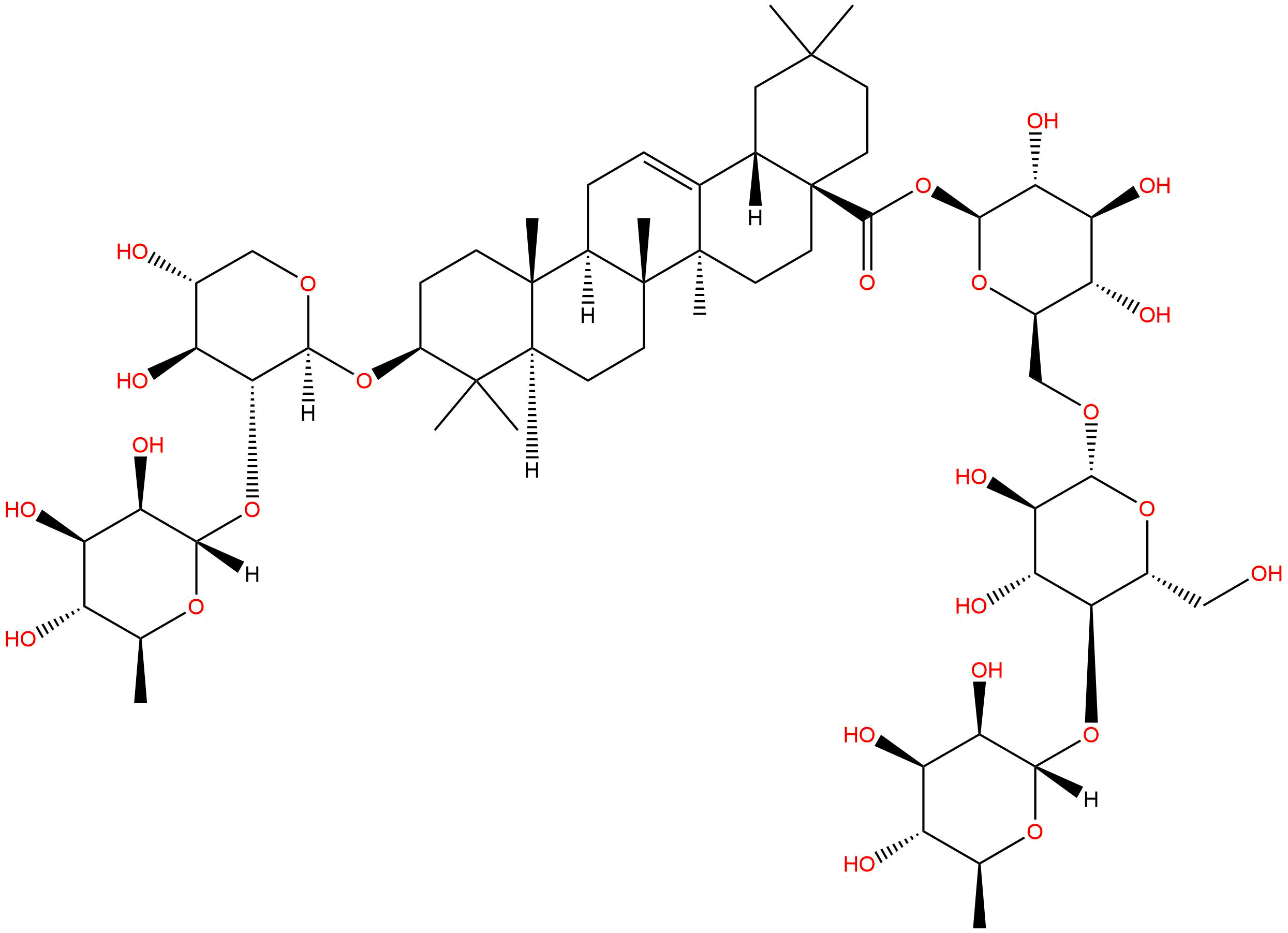
Diwusaponin W3 belongs to the oleanane type pentacyclic triterpenoid saponin, and its chemical structure consists of two parts: aglycone and glycone. Glycosides are derivatives of oleanolic acid, and their parent nucleus structure consists of five fused rings (A, B, C, D, E), with the A and E rings carrying functional groups such as carboxyl and hydroxyl, respectively. The unique feature of Diwusaponin W3 lies in its sugar chain: complex oligosaccharide chains are connected to the C-3 and C-28 positions of the glycoside. Specifically, the C-3 position is usually connected to a linear or branched sugar chain composed of monosaccharide units such as glucose, xylose, arabinose, etc; The C-28 position is connected to a sugar chain composed of glucose, xylose, etc. through an ester bond. This disaccharide chain structure (i.e. disaccharide chain saponins) is an important characteristic that distinguishes it from monosaccharide chain saponins, and has a significant impact on its water solubility, biological activity, and pharmacokinetic behavior.
From the perspective of physical and chemical properties, the molecular weight of Diwusaponin W3 is 1205.3920 Da, which belongs to the category of macromolecular compounds. Its lipid water partition coefficient (LogP) is 2.3178, indicating that it has a certain degree of lipophilicity, but overall tends to be hydrophilic, which is related to the presence of multiple polar hydroxyl and carboxyl groups in the molecule. Its polar surface area (TPSA) is as high as 392.5900 Å ², far exceeding the recommended upper limit of 140 Å ² for oral drugs, indicating poor transmembrane permeability and possibly low oral bioavailability. The water solubility data (0.2209 mg/mL) further confirms its limited solubility in water. In addition, the predictive model shows that the blood-brain barrier (BBB) penetration ability of Diwusaponin W3 is very low, indicating limited potential for its application in the treatment of central nervous system diseases. However, this may also mean a lower risk of side effects on the central nervous system after peripheral administration. In terms of early safety assessment, hERG inhibition was predicted as' no ', indicating a lower risk of inducing QT interval prolongation and arrhythmia in the heart; The Ames test result is 0.0, indicating a low risk of genetic toxicity. These physicochemical properties and early safety data provide important reference for the subsequent development of Diwusaponin W3.
The main plant source of Diwu saponin W3 is Diwu, a plant of the Ranunculaceae family and the genus Anemone(Anemone flaccida Fr. Schmidt), Also known as Goosefoot Grass, Second Wheel Seven, etc. This plant is mainly distributed in the Yangtze River Basin and its southern regions of China, such as Hubei, Hunan, Sichuan, Guizhou, Yunnan, etc. It mostly grows under mountain forests or in grassy areas near gullies at an altitude of 1000-2000 meters. The rhizome of Diwu has a long history of application in folk medicine, often used to treat rheumatism, rheumatism, pain, injuries from falls, abscesses, and other diseases. This provides a solid traditional medical foundation for modern research on its anti-inflammatory, analgesic, and anti-tumor activities.
The root and stem of Diwu are rich in various triterpenoid saponins, among which Diwu saponin W3 is one of the most abundant and representative active ingredients. Its extraction and separation purification usually follow the classic process of natural product chemistry, mainly including the following steps:
Raw material pretreatment and extraction After crushing the dried roots and stems of Diwu, polar solvents are usually used for extraction. Due to the polarity of saponin components, the most commonly used extraction solvents are methanol or ethanol (such as 70% -95% ethanol). The extraction methods include cold soaking, percolation, or heating reflux extraction. In order to improve the extraction efficiency and yield of target components, modern extraction techniques such as ultrasound assisted extraction and microwave-assisted extraction are gradually being applied. The extract was concentrated under reduced pressure to obtain the total extract.
Preliminary separation and enrichment The total extract is usually suspended in water and then subjected to liquid-liquid extraction using solvents of different polarities such as petroleum ether, ethyl acetate, n-butanol, etc. Due to the high polarity of Diwusaponin W3, it is mainly enriched in the n-butanol extraction layer. The n-butanol layer was concentrated to obtain a crude extract of total saponins.
Chromatographic Separation and Purification The crude extract of total saponins needs to be finely separated through a series of chromatographic techniques. Common methods include silica gel column chromatography (using gradient elution with solvent systems such as chloroform methanol water), macroporous adsorption resin column chromatography (such as D101, AB-8, using different concentrations of ethanol water system elution), and preparative high-performance liquid chromatography (Pre HPLC). Among them, preparative HPLC is a key step in obtaining high-purity daidzein W3 monomer, usually using a reverse phase C18 chromatography column with acetonitrile water or methanol water system as the mobile phase, combined with UV detector or evaporative light scattering detector for monitoring and collection.
Structural Identification The purified monomer obtained requires structural confirmation through modern spectroscopic techniques. The main methods include nuclear magnetic resonance spectroscopy (¹ H-NMR, ¹ ³ C-NMR, DEPT, HSQC, HMBC, COSY, etc.) and mass spectrometry (MS, especially high-resolution mass spectrometry HR-MS). By comparing with the spectral data reported in the literature and combining chemical methods such as identifying the type and connection mode of sugars after acid hydrolysis, the compound was finally determined to be Diwusaponin W3.
The pharmacological activity research of Diwusaponin W3 mainly revolves around its traditional applications and modern discoveries, focusing on two major fields: anti-inflammatory and anti-tumor.
The anti-inflammatory activity of Diwusaponin W3 is one of its most anticipated traditional benefits. Multiple in vitro and in vivo studies have confirmed its significant anti-inflammatory effects.
The effect on rheumatoid arthritis (RA)In the classic collagen induced arthritis (CIA) mouse model, dioscin W3 showed significant therapeutic effects. Research has found that treatment with Diwusaponin W3 can significantly reduce joint swelling, bone erosion, and cartilage damage in CIA mice, and lower the clinical score of arthritis. Its mechanism of action is closely related to inhibiting the infiltration of inflammatory cells and reducing the production of pro-inflammatory cytokines. Specifically, Diwusaponin W3 can significantly reduce the levels of key pro-inflammatory factors such as tumor necrosis factor - α (TNF - α) and interleukin-6 (IL-6) in the serum and synovial tissue of CIA mice. In addition, it can inhibit the expression of cyclooxygenase-2 (COX-2, encoded by the PTGS2 gene) and inducible nitric oxide synthase (iNOS, encoded by the NOS2 gene), thereby reducing the production of inflammatory mediators such as prostaglandin E2 (PGE2) and nitric oxide (NO). These effects collectively inhibit the abnormal proliferation of synovial cells and cascade amplification of inflammatory responses, thereby protecting joint structures.
The effect on acute inflammation In acute inflammation models such as carrageenan induced rat paw swelling model and xylene induced mouse ear swelling model, dioscin W3 also showed good anti-inflammatory activity, effectively inhibiting early exudation and edema of inflammation.
In recent years, the anti-tumor activity of Diwusaponin W3, especially its effect on malignant peripheral nerve sheath tumors (MPNST), has become a new highlight of research.
Inhibition of MPNST cell proliferation In vitro cell experiments have shown that dioscin W3 can inhibit the proliferation of various MPNST cell lines (such as ST88-14, S462, etc.) in a concentration - and time-dependent manner. Its half maximal inhibitory concentration (IC ₅₀) is usually at the micromolar level, exhibiting strong cytotoxicity.
Inducing cell apoptosis Further mechanistic studies have found that the cell death induced by Diwusaponin W3 is mainly achieved through the apoptosis pathway. The processed MPNST cells exhibit typical apoptotic morphological features, such as cell shrinkage, chromatin condensation, nuclear fragmentation, and the formation of apoptotic bodies. Meanwhile, flow cytometry analysis revealed that dioscin W3 can significantly increase the proportion of early and late apoptosis in cells.
Effects on other tumor cells In addition to MPNST, preliminary studies have also shown that Diwusaponin W3 has a certain growth inhibitory effect on other tumor cell lines, such as liver cancer cells, lung cancer cells, etc. However, its sensitivity and mechanism of action may be different from MPNST, and further research is needed.
The pharmacological activity of Diwusaponin W3 is the comprehensive result of its interaction with multiple molecular targets and regulation of multiple signaling pathways. Based on existing research, its mechanism of action mainly involves the following aspects:
The anti-inflammatory effect of Diwusaponin W3 is mainly achieved by inhibiting key inflammatory signaling pathways and downregulating the expression of pro-inflammatory factors.
NF - κ B signaling pathway Nuclear factor kappa B (NF - κ B) is the core transcription factor in inflammatory response. In the resting state, NF - κ B (usually a p50/p65 heterodimer encoded by the RELA gene) binds to the inhibitory protein I κ B and exists in an inactive form in the cytoplasm. When stimulated by inflammation such as TNF - α and IL-1 β, I κ B kinase (IKK, encoded by genes such as IKBKB) is activated, which phosphorylates I κ B and leads to its ubiquitination degradation. The released NF - κ B is immediately translocated into the nucleus, initiating the transcription of various pro-inflammatory genes such as TNF - α, IL-6, COX-2, iNOS. Research has shown that dioscin W3 can inhibit the activity of IKK, prevent the phosphorylation and degradation of I κ B, thereby blocking the nuclear translocation and transcriptional activity of NF - κ B, and ultimately downregulating the expression of downstream inflammatory factors.
STAT3 signaling pathway Signal transducer and activator of transcription factor 3 (STAT3) plays an important role in both inflammation and tumors. After binding to cytokines such as IL-6 and their receptors, JAK kinase can be activated, which phosphorylates STAT3 to form dimers and integrate into the nucleus, regulating the expression of target genes such as anti apoptotic protein Bcl-2 and cyclin D1. Diwusaponin W3 has been found to inhibit the phosphorylation level of STAT3, thereby interfering with the IL-6/STAT3 signaling pathway and exerting anti-inflammatory and anti proliferative effects.
NLRP3 inflammasome NLRP3 inflammasome is an important component of the innate immune system, and its activation can lead to cleavage activation of Caspase-1 (encoded by the CASP1 gene), thereby promoting the maturation and secretion of IL-1 β and IL-18, and inducing pyroptosis. Diwusaponin W3 may inhibit the assembly or activity of NLRP3 inflammasome, reduce the activation of Caspase-1, thereby suppressing the production of IL-1 β and alleviating inflammatory response.
Regulation of ion channels Transient receptor potential (TRP) channels, such as TRPV1 and TRPA1, are key molecules that mediate pain and inflammatory sensations. Diwusaponin W3 may exert analgesic and anti-inflammatory effects by directly or indirectly regulating the activity of these channels. For example, inhibiting the excessive activation of TRPV1 can reduce the release of neuropeptides (such as substance P) and alleviate neurogenic inflammation.
The mechanism by which dioscin W3 induces apoptosis in MPNST cells is complex and involves cross regulation of multiple signaling networks.
Mitochondrial pathway (endogenous apoptotic pathway)This is one of the main pathways through which Diwusaponin W3 induces apoptosis. Research has found that treatment of MPNST cells with dioscin W3 can lead to the loss of mitochondrial membrane potential (Δ PSI m) and promote the release of cytochrome c from mitochondria into the cytoplasm. Cytochrome c binds with Apaf-1 to form apoptotic bodies, which in turn activate Caspase-9 and further activate downstream executive Caspase-3/7, ultimately leading to cell apoptosis. This process is strictly regulated by Bcl-2 family proteins. Diwusaponin W3 typically downregulates the expression of anti apoptotic proteins such as Bcl-2 and Bcl xL, while upregulating the expression of pro apoptotic proteins such as Bax and Bak, thereby breaking the integrity of the mitochondrial outer membrane and initiating the apoptotic program.
Death receptor pathway (exogenous apoptosis pathway)Diwusaponin W3 may also initiate exogenous apoptotic pathways by upregulating the expression of death receptors such as Fas and TRAIL-R1/R2, or activating Caspase-8. The activation of Caspase-8 can directly cleave and activate Caspase-3, and on the other hand, it can also link the apoptotic signal with the mitochondrial pathway by cleaving the Bid protein (forming tBid), amplifying the apoptotic effect.
STAT3 signaling pathway Similar to anti-inflammatory mechanisms, the STAT3 signaling pathway is often abnormally activated in MPNST, promoting tumor cell proliferation, survival, and invasion. Diwusaponin W3 inhibits STAT3 phosphorylation, not only downregulating downstream anti apoptotic proteins such as Survivor and Mcl-1, but also possibly affecting cell cycle regulatory proteins such as Cyclin D1, thereby synergistically inhibiting cell proliferation and promoting apoptosis.
Other potential targets Diwusaponin W3 may also exert anti-tumor effects by affecting signaling pathways closely related to cell survival and proliferation, such as PI3K/Akt/mTOR and MAPK/ERK. In addition, inducing the production of reactive oxygen species (ROS) is also considered one of its mechanisms for killing tumor cells.
To push natural products from laboratory discovery to clinical application, strict pharmacological evaluation must be conducted. Diwusaponin W3 not only exhibits good pharmacological activity, but also faces some typical challenges in the development of natural products.
According to calculation predictions and preliminary experimental data, the pharmacological characteristics of Diwusaponin W3 are as follows:
At present, there are relatively few systematic studies on the pharmacokinetics of Diwusaponin W3. However, based on its structural characteristics and research on similar compounds, it can be inferred that its pharmacokinetic behavior has the following characteristics:
In summary, the main challenge facing the pharmacological properties of Diwusaponin W3 is its extremely low bioavailability. How to improve its pharmacokinetic properties through medicinal chemical methods (such as prodrug design, nano formulations, liposome encapsulation, etc.) or changing the route of administration (such as injection administration, transdermal administration) is the key to its successful development as a clinical drug.
Diwusaponin W3, as a natural triterpenoid saponin with significant anti-inflammatory and anti-tumor activities, has shown broad clinical application prospects, but also faces many challenges.
Treatment of rheumatoid arthritis Based on its significant therapeutic effect in the CIA model, Diwusaponin W3 or its structural analogues have the potential to be developed as novel drugs for the treatment of RA. Its multi-target mechanism of action (inhibition of NF - κ B, STAT3, NLRP3 inflammasome, etc.) may give it unique advantages in controlling inflammation and reducing joint damage, especially for patients who have poor response or intolerance to existing biologics or small molecule drugs (such as JAK inhibitors), which may provide new treatment options.
Treatment of malignant peripheral nerve sheath tumor (MPNST)This is the most promising direction for the conversion of Diwusaponin W3. Given the current lack of effective targeted drugs for MPNST, the unique mechanism of Diwusaponin W3 inducing apoptosis makes it a highly attractive candidate drug. In the future, it is possible to explore its combined application strategy with surgery, radiotherapy, or chemotherapy (such as doxorubicin) in order to improve treatment efficacy and overcome drug resistance.
Other inflammatory diseases Its anti-inflammatory activity may also be extended to other chronic inflammatory diseases, such as inflammatory bowel disease (IBD), psoriasis, asthma, etc. Local administration (such as enema, topical application) may avoid systemic side effects and leverage the advantages of local treatment.
Analgesic application By regulating pain related ion channels such as TRPV1 and TRPA1, dioscin W3 may have the potential to be developed as a novel analgesic, particularly for the treatment of inflammatory and neuropathic pain.
Pharmacokinetic defects As mentioned earlier, the extremely low oral bioavailability is the biggest obstacle to the clinical translation of Diwusaponin W3. Future research should focus on:
In depth analysis of the mechanism of action Although multiple targets and pathways have been identified, the direct target of action of Diwusaponin W3 (i.e. its "receptor" or "binding protein") is not yet clear. Identifying the proteins directly bound to it using techniques such as chemical proteomics and affinity chromatography is crucial for understanding its precise mechanism of action and rational drug design.
Systematic Toxicological Evaluation The current early safety data (hERG, Ames) are positive, but comprehensive in vivo toxicology studies are still needed, including acute toxicity, long-term toxicity, reproductive toxicity, immunotoxicity, etc., to evaluate their clinical safety.
Structure Activity Relationship (SAR) Study Systematically study the effects of different sugar chains and substituents in the structure of Diwusaponin W3 on its activity, selectivity, and pharmacokinetic properties, establish a complete structure-activity relationship model, and provide guidance for subsequent molecular optimization.
Resource sustainability Diwusaponin W3 comes from wild or cultivated plants, and its large-scale production may face resource limitations. Therefore, developing fully synthetic or semi synthetic routes, or utilizing biotechnology such as plant cell culture and synthetic biology for production, is a long-term solution to ensure future drug supply.
Flaccidoside II, as an active triterpenoid saponin derived from traditional Chinese medicine Flaccidoside, has demonstrated remarkable pharmacological activity in anti-inflammatory and anti-tumor fields due to its unique disaccharide chain chemical structure. It exerts anti-inflammatory effects by regulating multiple signaling pathways such as NF - κ B, STAT3, NLRP3 inflammasome, and inhibits the proliferation of malignant peripheral nerve sheath tumor (MPNST) cells by activating the mitochondrial apoptosis pathway. These findings not only elucidate the traditional medicinal value of Diwu from a modern scientific perspective, but also provide important lead compounds for the development of new candidate drugs for the treatment of refractory diseases such as rheumatoid arthritis and MPNST.
However, the clinical translation of Diwusaponin W3 is not a smooth road. The inherent pharmacokinetic defects of it as a large molecule and highly polar natural product, especially its extremely low oral bioavailability, are the core challenges it faces. Future research must focus on how to overcome this bottleneck through innovative approaches in medicinal chemistry, pharmacy, and biotechnology. At the same time, precise identification of its direct target, systematic toxicological evaluation, and in-depth exploration of structure-activity relationships will be key steps in promoting its transition from laboratory to clinical use. Despite the challenges ahead, the unique chemical space and biological activity contained in Diwusaponin W3 make it a highly valuable natural product molecule for research and development. Whether it can ultimately be successfully transformed into clinical drugs deserves our continuous attention and efforts.
Batch can search by a CAS number,one per line
