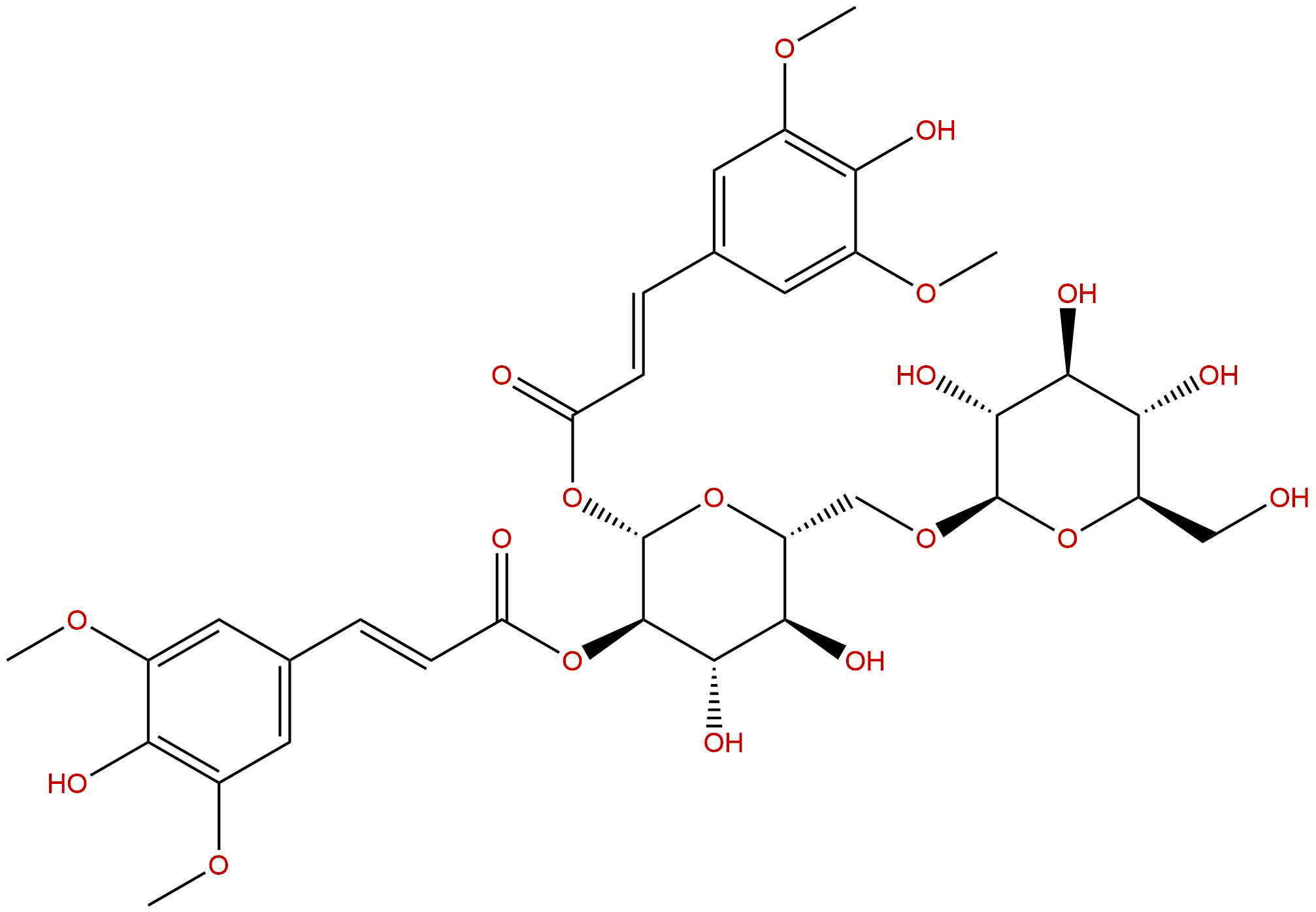


Product name: 1,2-Disinapoylgentiobiose
Synonym name:
Catalogue No.: BP5315
Cas No.: 195006-75-8
Formula: C34H42O19
Mol Weight: 754.691
Botanical Source:
Type of Compound: Phenylpropanoids
Purity: 95%~99%
Analysis Method: HPLC-DAD or/and HPLC-ELSD
Identification Method: Mass, NMR
Packing: Brown vial or HDPE plastic bottle
Storage: Store in a well closed container, protected from air and light. Put into refrigerate or freeze for long term storage.
Whenever possible, you should prepare and use solutions on the same day. However, if you need to make up stock solutions in advance, we recommend that you store the solution as aliquots in tightly sealed vials at -20℃. Generally, these will be useable for up to two weeks.
The product could be supplied from milligrams to grams
Inquire for bulk scale.
For Reference Standard and R&D, Not for Human Use Directly.
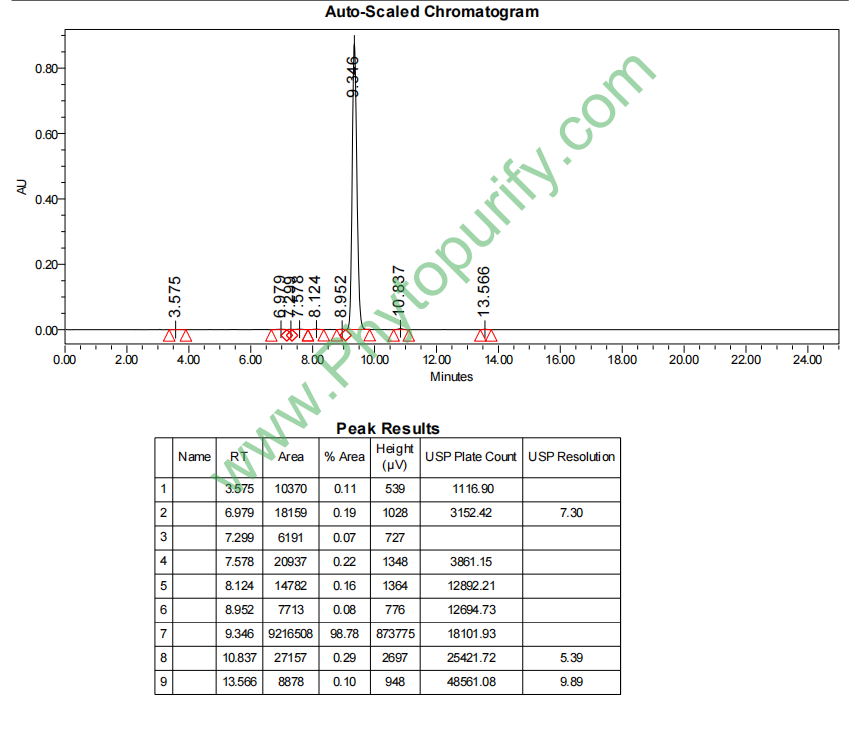
HPLC of 1,2-Disinapoylgentiobiose
Storage conditions:Short-term storage at 2~8℃, long-term storage at -20 ~ -80℃
279.0500
.0918
.0813
4.1111
.5324
.1190
Low
74.2284
4.9404
Yes
No
No
No
No
No
0.0
Yes
Yes
Yes
Yes
Natural products, as an important source of lead compounds for drugs, play an irreplaceable role in the long history of human struggle against diseases. In recent years, with the advancement of separation and purification technology and the innovation of activity screening methods, more and more natural glycoside compounds with unique structures and significant biological activities have been discovered. Among them, 1,2-disinapoylgentiose (1,2-DSG), as a structurally unique phenylpropanoid glycoside, is gradually attracting widespread attention in the field of natural product pharmacology due to its significant potential in antioxidant stress.
1,2-Bissinapylgentiopicroside is a bisacyl glycoside composed of gentiobiose as the parent nucleus, with its 1st and 2nd hydroxyl groups connected to two molecules of sinapine acid via ester bonds. Mustard acid belongs to the hydroxycinnamic acid family and is widely present in cruciferous plants. It itself has excellent antioxidant activity. Connecting two molecules of sinapine to the backbone of gentian disaccharide through glycosidic bonds not only endows the molecule with unique chemical stability, but also potentially leads to a qualitative leap in its antioxidant capacity compared to monomeric sinapine through intramolecular synergistic effects. From a functional classification perspective, this compound belongs to phenolic glycosides, and its active core lies in the phenolic hydroxyl structure on the mustard acid residue. These phenolic hydroxyl groups can effectively scavenge free radicals, chelate metal ions, and exert multiple biological effects such as antioxidant and anti-inflammatory effects.
From the perspective of disease association, oxidative stress is the common pathological basis for the occurrence and development of many chronic diseases (such as cardiovascular diseases, neurodegenerative diseases, diabetes complications and cancer). 1,2-Disinapyrylgentiopicroside regulates the antioxidant signaling pathway centered around NFE2L2/NRF2, inducing the expression of downstream antioxidant enzymes such as SOD1, SOD2, CAT, GPX1, and HMOX1, thereby constructing a multi-level defense system within cells. This approach of activating endogenous protective mechanisms rather than directly clearing free radicals gives it higher selectivity and lower risk of toxic side effects in pharmacology.
Despite the exciting activity demonstrated in basic research, 1,2-disuccinosyl gentiopicroside still faces many challenges in transitioning from laboratory to clinical applications, including low natural content, difficulty in extraction and purification, and the need to improve its bioavailability. The purpose of this article is to systematically review the research progress on the chemical structure characteristics, plant sources, pharmacological activities, molecular mechanisms, and pharmacological evaluation of 1,2-disuccinosyl gentiopicroside, in order to provide comprehensive scientific references for the in-depth development and transformation applications of this natural product.
The chemical structure of 1,2-disuccinosyl gentiopicroside has distinct characteristics. Its core skeleton is gentian disaccharide, which is a disaccharide composed of two molecules of D-glucose connected by β -1,6 glycosidic bonds. The 1-position carbon hydroxyl group of gentian disaccharide forms an ester bond with one molecule of sinapine, while its 2-position hydroxyl group forms an ester bond with another molecule of sinapine, thus forming a unique 1,2-disubstituted structure. Mustard acid (3,5-dimethoxy-4-hydroxycinnamic acid) is a typical derivative of hydroxycinnamic acid, which contains two methoxy groups and one phenolic hydroxyl group on its benzene ring, and its side chain is an α, β - unsaturated carboxylic acid structure. This structure endows sinapine with excellent electron delocalization ability, enabling it to effectively stabilize free radical intermediates.
From the molecular formula, the molecular formula of 1,2-disuccinosylgentiopicroside is C ∝₄ H ₄₂ O ₁₉, with a molecular weight of 754.6910 g/mol. This relatively large molecular weight is mainly derived from its complex glycosidic skeleton and two mustard acid substituents. Its lipophilic water partition coefficient (LogP) is 0.0918, indicating that the compound has extremely low lipophilicity and is more likely to be distributed in aqueous environments. This characteristic is closely related to the presence of a large number of hydroxyl groups in its molecule, including hydroxyl groups on the sugar ring and phenolic hydroxyl groups on sinapine. The topologically polar surface area (TPSA) is as high as 279.0500 Å ², further confirming its strong polarity characteristics. A high TPSA value typically means that the compound is difficult to passively diffuse through the biofilm, which significantly limits its oral absorption and blood-brain barrier penetration ability. In fact, the pharmacological parameters clearly indicate that its blood-brain barrier penetration ability is "low", which is consistent with its high polarity and high molecular weight.
In terms of water solubility, the predicted water solubility value of 1,2-disuccinosylgentiopicroside is 4.1111, which belongs to the above moderate level. This property enables it to dissolve well in extracellular fluid and blood under physiological conditions, facilitating its distribution to target organs through blood circulation. However, high water solubility also means that it is difficult for it to enter the cell interior through passive diffusion, and may require active transport processes mediated by specific transport proteins (such as the organic anion transport peptide OATP family or glucose transport protein GLUT family) to achieve transmembrane transport.
This compound has multiple ionizable phenolic hydroxyl and carboxylic ester groups in its structure, and its pKa value mainly depends on the phenolic hydroxyl group (pKa of about 9-10) and carboxylic ester group (pKa of carboxyl group produced after ester bond hydrolysis is about 4-5) on the sinapine residue. Under physiological pH 7.4 conditions, phenolic hydroxyl groups mainly exist in non dissociated form, while ester bonds can produce free carboxyl groups if hydrolyzed. It is worth noting that the stability of ester bonds is the key to the activity of the compound - a complete ester bond structure is crucial for maintaining its specific binding to the target protein, and although the free sinapine released after ester bond hydrolysis also has antioxidant activity, its mechanism of action and target specificity may be altered.
1,2-Disinapylgentiopicroside, as a naturally occurring secondary metabolite, mainly originates from Brassicaceae plants. The main source plants reported in current literature include rapeseed (Brassica napus), mustard (Brassica juncea), radish (Raphanus sativus), and some medicinal plants such as Polygala tenuifolia. In these plants, the compound is usually present in trace amounts, and its content is influenced by factors such as plant variety, growth stage, tissue location, and environmental stress (such as ultraviolet radiation, pathogen infection). Generally speaking, the content in seeds, rhizomes, and young leaves is relatively high, which may be related to the need for stronger antioxidant defense mechanisms in these tissues.
From a biosynthetic perspective, 1,2-disuccinosylgentiopicroside is a product of the phenylpropane metabolic pathway. This pathway begins with phenylalanine being catalyzed by phenylalanine ammonia lyase (PAL) to produce cinnamic acid, followed by a series of hydroxylation and methylation reactions to produce sinapine. Mustard acid is activated by the action of mustard acyl CoA ligase to form mustard acyl CoA, which is then transferred to a specific hydroxyl group of gentian disaccharide through a specific acyltransferase. Gentian disaccharides are generated from sucrose catalyzed by sucrose synthase and gentian disaccharide synthase. The entire biosynthesis process is subject to strict spatiotemporal regulation, involving the coordinated expression of multiple gene families.
In terms of extraction methods, traditional solvent extraction methods usually use methanol, ethanol, or aqueous alcohols as extraction solvents, given the high polarity and water solubility of 1,2-disuccinosyl gentiopicroside. In order to improve extraction efficiency, researchers often use ultrasound assisted extraction or microwave-assisted extraction techniques. The ultrasonic cavitation effect can destroy plant cell walls, promote solvent permeation, and significantly improve the dissolution rate of target compounds. Microwave assisted extraction utilizes the rapid vibration of polar molecules in a microwave field to generate heat and accelerate mass transfer processes. The typical extraction process is as follows: dry plant materials are crushed, and then extracted with a 50% -80% methanol aqueous solution as the solvent under ultrasound conditions at 40-60 ℃ for 30-60 minutes. The extraction is repeated 2-3 times, and the extracted solutions are combined and concentrated under reduced pressure.
The crude extract after extraction contains a large amount of interfering substances, including sugars, proteins, lipids, and other phenolic compounds. Therefore, multiple purification steps are required to obtain high-purity 1,2-sinapyrylgentiopicroside. The commonly used preliminary purification methods include liquid-liquid extraction (such as degreasing with petroleum ether, extracting phenolic components with ethyl acetate) and macroporous adsorption resin column chromatography (such as D101, HP-20 resin). Macroporous adsorption resin can achieve preliminary separation based on molecular polarity and molecular weight differences, usually using water ethanol gradient elution. The target compound is mainly enriched in the 30% -50% ethanol elution fraction.
Further refined purification typically relies on preparative high-performance liquid chromatography (pre HPLC). Due to the presence of two sinapine residues in 1,2-disuccinosylgentiopicroside, it exhibits a characteristic absorption peak (around 320-330 nm) in the UV spectrum, making it convenient for online detection. The commonly used chromatographic conditions are a reverse phase C18 column, with acetonitrile water (containing 0.1% formic acid or trifluoroacetic acid) as the mobile phase for gradient elution. Due to the high separation requirements between the target compound and structurally similar compounds (such as 1,6-disinapylgentiopicroside, 2,6-disinapylgentiopicroside, and other positional isomers), it is necessary to carefully optimize the gradient program and column temperature. The final pure product obtained can be structurally confirmed by mass spectrometry (MS) and nuclear magnetic resonance (NMR) techniques. The characteristic 1H-NMR spectrum includes the methoxy signal (δ 3.8-3.9 ppm) and trans double bond proton signal (δ 6.3-7.6 ppm) of sinapine residues, as well as the terminal proton signal (δ 4.5-5.5 ppm) of gentian disaccharides, which are key criteria for identification.
The pharmacological activity research of 1,2-disuccinosyl gentiopicroside mainly focuses on its antioxidant stress, while there are also a few studies on its potential activities such as anti-inflammatory, neuroprotective, and anti-tumor. These studies are mainly based on in vitro cell models and in vivo animal models, systematically evaluating the protective effect of the compound against oxidative damage.
At the cellular level, researchers typically use oxidants such as hydrogen peroxide (H ₂ O ₂), tert butyl hydroperoxide (t-BHP), or 6-hydroxydopamine (6-OHDA) to treat cells and establish oxidative stress models. Research has shown that 1,2-disuccinosyl gentiopicroside can significantly reduce oxidant induced cell mortality, decrease intracellular reactive oxygen species (ROS) levels, and inhibit the production of lipid peroxidation product malondialdehyde (MDA). In neuronal cell models such as PC12 cells and SH-SY5Y cells, this compound exhibits significant neuroprotective effects and can alleviate oxidative stress-induced cell apoptosis and mitochondrial dysfunction. In liver cell models (such as HepG2 cells and primary liver cells), 1,2-disuccinosyl gentiopicroside can effectively counteract chemical liver injury, reduce the release of transaminase (ALT, AST), and maintain intracellular glutathione (GSH) levels.
It is worth noting that the antioxidant activity of 1,2-disuccinosyl gentiopicroside does not solely stem from its direct free radical scavenging ability. Although the phenolic hydroxyl group on mustard acid residues can indeed directly neutralize free radicals, more importantly, this compound can exert a long-lasting protective effect by activating the endogenous antioxidant defense system in cells. Experimental evidence shows that cells pre treated with 1,2-sinapyrylgentiopicroside exhibit significantly increased activities of superoxide dismutase (SOD), catalase (CAT), and glutathione peroxidase (GPX), while the expression of heme oxygenase-1 (HO-1) is also significantly upregulated. These enzymes form the first line of defense for cells against oxidative stress, and upregulation of their activity means that the overall antioxidant capacity of the cell is systematically enhanced.
In animal studies, 1,2-disuccinosyl gentiopicroside also exhibits good antioxidant activity. In rodent models, this compound can alleviate acute liver injury induced by carbon tetrachloride (CCl ₄) or acetaminophen (APAP), manifested by decreased serum transaminase levels, reduced liver tissue necrosis area, and decreased levels of oxidative stress markers. In neurodegenerative disease models, such as MPTP induced Parkinson's disease mouse models, 1,2-sinapylgentiopicroside can improve motor dysfunction and protect dopaminergic neurons in the substantia nigra from oxidative damage. In addition, in cardiovascular disease models, this compound can reduce the myocardial infarction area caused by ischemia-reperfusion injury and improve cardiac function.
In addition to its direct antioxidant effect, 1,2-disuccinosyl gentiopicroside also exhibits certain anti-inflammatory activity. Research has shown that this compound can inhibit the release of pro-inflammatory cytokines (such as TNF - α, IL-6, IL-1 β) in macrophages induced by lipopolysaccharide (LPS), and downregulate the expression of inducible nitric oxide synthase (iNOS) and cyclooxygenase-2 (COX-2). This anti-inflammatory activity is closely related to its antioxidant activity, as oxidative stress and inflammatory response are often intertwined and mutually causal in pathological processes. By inhibiting the activation of inflammatory signaling pathways such as NF - κ B, 1,2-disuccinosylgentiopicroside can block the inflammatory cascade reaction from the source.
It is crucial to thoroughly analyze the molecular mechanism of action of 1,2-sinapyrylgentiopicroside in order to understand its pharmacological activity and guide subsequent drug design. Existing research evidence suggests that the compound primarily exerts its core antioxidant and cell protective effects by activating the nuclear factor E2 related factor 2 (NFE2L2, also known as NRF2) signaling pathway. NRF2 is the main transcription factor for cells to cope with oxidative stress and electrophilic substances, and is known as the "main regulator of antioxidant response".
In the resting state, NRF2 binds to its inhibitory protein Kelch like ECH associated protein 1 (KEAP1) in the cytoplasm and is continuously degraded by the ubiquitin proteasome pathway, maintaining low levels of expression. When cells are exposed to oxidative stress or electrophilic substances, key cysteine residues of KEAP1 (such as Cys151, Cys273, Cys288) are modified, leading to conformational changes in KEAP1. NRF2 dissociates and stabilizes from KEAP1. Subsequently, NRF2 translocates into the nucleus and forms heterodimers with small Maf proteins, binding to the antioxidant response element (ARE) in the promoter region of the target gene, initiating the transcription of a series of downstream protective genes.
1,2-disuccinosyl gentiopicroside acts through this classical pathway. The sinapine residues in its molecule contain alpha, beta unsaturated carbonyl structures, which are a typical Michael addition receptor capable of covalent modification with cysteine thiol groups on KEAP1 protein. This modification simulates the action of endogenous electrophilic signaling molecules (such as 15 deoxy - Δ 12,14-prostaglandin J2), thereby triggering nuclear translocation and transcriptional activation of NRF2. It is worth noting that compared to potent NRF2 activators such as tert butylhydroquinone tBHQ, 1,2-disuccinosyl gentiopicroside may modify KEAP1 more gently and reversibly, which helps to avoid potential side effects that may arise from overactivation of NRF2.
After activation of NRF2, the transcriptional upregulation of its downstream target genes constitutes the core of the cellular defense system. These target genes include:
- SOD1 (Cu/Zn SOD) and SOD2 (Mn SOD)Located in the cytoplasm and mitochondria respectively, it catalyzes the dismutation of superoxide anion radicals into hydrogen peroxide and oxygen.
- CAT (catalase)Decomposing hydrogen peroxide into water and oxygen is the main enzyme for removing hydrogen peroxide.
- GPX1 (Glutathione Peroxidase 1)Reduce hydrogen peroxide and organic peroxides to water or alcohol using reduced glutathione (GSH).
- HMOX1 (heme oxygenase-1)Catalytic degradation of hemoglobin into biliverdin, carbon monoxide, and free iron ions, among which biliverdin and its reduced product bilirubin are potent endogenous antioxidants.
By synergistically upregulating the expression of these antioxidant enzymes, 1,2-disuccinosyl gentiopicroside constructs a multi-level clearance network in cells, from superoxide anions to hydrogen peroxide and then to lipid peroxides. The advantage of this "indirect antioxidant" mechanism lies in its long-lasting and amplifying effect - a small amount of compound can induce the expression of a large number of protective proteins by activating transcription factors, thereby providing long-lasting cellular protection.
In addition to the NRF2 pathway, 1,2-disuccinosyl gentiopicroside may also exert pharmacological effects through other mechanisms. For example, it may directly inhibit the activity of certain pro oxidant enzymes (such as the NADPH oxidase NOX family), reducing the production of endogenous ROS. In addition, its anti-inflammatory activity may be partially achieved by inhibiting the NF - κ B signaling pathway, and there is cross-talk between NRF2 and NF - κ B, with NRF2 activation often accompanied by downregulation of NF - κ B activity. The multi-target and multi pathway action characteristics of 1,2-disuccinosyl gentiopicroside enable it to exhibit better therapeutic effects than single target drugs in complex disease models.
A systematic evaluation of its pharmacological properties is necessary to promote the clinical application of 1,2-sinapyrylgentiopicroside from laboratory research. The evaluation of drug properties involves the physicochemical properties, pharmacokinetic characteristics, safety, and preliminary toxicological assessment of compounds. Based on existing computational predictions and limited experimental data, we can make a preliminary assessment of the pharmacological properties of the compound.
From the perspective of physical and chemical properties, 1,2-disusinapylgentiopicroside meets some of the requirements in the Lipinski Five Rules, but there are significant deviations. Its molecular weight (754.69 Da) far exceeds the threshold of 500 Da, with a LogP value (0.0918) below 5. The number of hydrogen bond donors (total phenolic and sugar hydroxyl groups exceeding 10) and hydrogen bond acceptors (19 oxygen atoms) far exceed the upper limit of the rule. These features indicate that the compound belongs to a "rule breaking" molecule, and its oral bioavailability may face challenges. The high polarity, high molecular weight, and numerous hydrogen bond sites limit its ability to passively diffuse through intestinal epithelial cells.
In terms of pharmacokinetics, there is currently insufficient data on the in vivo processes of 1,2-disuccinosylgentiopicroside, but we can make reasonable inferences based on its structural characteristics. The stability of the compound in the gastrointestinal tract is a key issue after oral administration. The ester bonds in its molecule may be hydrolyzed by intestinal esterases, releasing free sinapine and gentian disaccharides. Mustard acid itself can be absorbed by the intestine, but its bioavailability is also affected by first pass metabolism. The complete 1,2-disuccinosyl gentiopicroside molecule may be absorbed through active transport mediated by organic anion transporters (such as OATP2B1) in the intestine, but its absorption efficiency may be low. Once it enters the bloodstream, the compound may be widely distributed in organs with abundant blood flow such as the liver and kidneys, but due to its high polarity, the tissue distribution volume may be limited.
In terms of metabolism, 1,2-disuccinosyl gentiopicroside may undergo multiple metabolic pathways. Esterases and carboxylesterases in the liver may hydrolyze their ester bonds, producing sinapine and gentian disaccharides. Mustard acid may subsequently undergo phase II metabolism, such as glucuronidation and sulfation, forming water-soluble complexes that are excreted through urine or bile. In addition, gut microbiota may also be involved in its metabolism, altering its structure through reactions such as hydrolysis, reduction, and methylation. It is worth noting that the pharmacological activity of metabolites may differ from that of the parent compound. For example, although free sinapine also has antioxidant activity, its mechanism of action and target specificity may be altered.
In terms of safety evaluation, the pharmacokinetic parameters show that the compound has no inhibitory activity on hERG potassium channels (hERG inhibition: No), which means that its risk of causing QT interval prolongation in the heart is low. The Ames test result is 0.0, indicating that it does not have significant genetic toxicity. These preliminary safety data are encouraging, but comprehensive toxicology studies are still needed, including acute toxicity, subchronic toxicity, reproductive toxicity, and carcinogenicity testing. In addition, as the compound may exert its effect through covalent modification of KEAP1, it is necessary to evaluate whether it will cause covalent modification of non target proteins in long-term use, leading to potential immunogenicity or toxicity.
In order to improve the bioavailability and pharmacological properties of 1,2-disuccinosyl gentiopicroside, researchers can explore various strategies. For example, using nano formulations such as liposomes and polymer nanoparticles to encapsulate the compound to improve its oral absorption and targeted delivery efficiency. Pre drug design is also a feasible strategy, which involves chemically modifying phenolic hydroxyl or carboxyl groups (such as acetylation or phosphorylation) to temporarily reduce their polarity and increase membrane permeability. After entering the body, the active parent drug is released under the action of specific enzymes. In addition, the synthesis of derivatives with similar activity but smaller molecular weight and lower polarity through structural optimization is also an important direction in the field of medicinal chemistry.
As a natural antioxidant with a unique mechanism of action, 1,2-disuccinosyl gentiopicroside has shown broad application prospects in the treatment of various oxidative stress-related diseases. It activates the NRF2 signaling pathway and upregulates the expression of endogenous antioxidant enzymes, providing a more long-lasting and comprehensive protective effect compared to traditional direct antioxidants such as vitamin C and vitamin E, and is less likely to develop tolerance.
In the field of neurodegenerative diseases, both Alzheimer's disease (AD) and Parkinson's disease (PD) are accompanied by severe oxidative stress and mitochondrial dysfunction in their pathological processes. The neuroprotective effect of 1,2-disuccinosyl gentiopicroside has been validated in various cell and animal models. It can protect dopaminergic neurons from damage caused by 6-OHDA and MPTP, improve motor function, and reduce the aggregation of alpha synuclein. For AD, this compound may exert a protective effect by alleviating oxidative damage and neuroinflammation induced by β - amyloid protein (A β). However, its low blood-brain barrier penetration ability is the main obstacle for its application in central nervous system diseases. Future research needs to explore how to improve its brain delivery efficiency through nanocarriers or chemical modifications.
In the field of metabolic diseases, the occurrence and development of nonalcoholic fatty liver disease (NAFLD) and diabetes complications are closely related to oxidative stress. 1,2-Disinapylgentiopicroside has a high distribution tendency in the liver, and its protective effect on liver cells makes it a potential candidate drug for treating NAFLD. By activating NRF2, this compound can alleviate liver steatosis, inflammation, and fibrosis. In the model of diabetes nephropathy, this compound may protect the function of glomeruli and tubules by inhibiting the expression of oxidative stress and fibrosis factors induced by high glucose.
In the field of cardiovascular disease, atherosclerosis, myocardial ischemia-reperfusion injury and heart failure are all involved in oxidative stress and inflammatory reaction. 1,2-Disinapylgentiopicroside can reduce myocardial infarction area, improve cardiac function, and inhibit oxidative damage and inflammatory response of vascular endothelial cells. Its anti atherosclerotic effect may be achieved by inhibiting the oxidation of low-density lipoprotein (LDL), reducing the formation of foam cells and stabilizing plaque.
In addition, 1,2-disuccinosyl gentiopicroside also has certain potential in anti-aging, skin protection, and cancer prevention. By activating NRF2, this compound can delay cellular aging, alleviate UV induced skin photoaging, and may reduce the carcinogenic risk of chemical carcinogens by enhancing the body's detoxification ability.
Looking ahead to the future, research and development of 1,2-disuccinosyl gentiopicroside need to focus on the following aspects: firstly, establishing efficient and green extraction and purification processes, or achieving large-scale production through biosynthetic technology to meet the needs of research and development. Secondly, conduct in-depth pharmacokinetic research to clarify its absorption, distribution, metabolism, and excretion characteristics in vivo, especially the activity identification of metabolites. Again, structural optimization is carried out through medicinal chemical methods to improve its bioavailability and targeting. Finally, its efficacy was validated in various animal models of diseases, and a systematic toxicological evaluation was conducted to lay the foundation for clinical trials.
As a unique natural bisacyl glycoside with a unique structure, 1,2-di-2-glucosinolate has shown important research value and application potential in the treatment of antioxidant stress-related diseases due to its unique mechanism of activating the NRF2 signaling pathway and synergistically upregulating the expression of various antioxidant enzymes. The clever combination of sinapine residues in its chemical structure with the gentian disaccharide skeleton not only endows the molecule with good water solubility and stability, but also achieves biological activity beyond monomeric sinapine through intramolecular synergistic effects. Although this compound faces challenges in drug development such as high molecular weight, high polarity, and low oral bioavailability, its low toxicity, multi-target action characteristics, and clear molecular mechanism make it a promising lead compound for further research in drug development. With the development of modern drug delivery technology and the maturity of structural optimization strategies, 1,2-disuccinosyl gentiopicroside and its derivatives are expected to be transformed into new drugs for the treatment of neurodegenerative diseases, metabolic diseases, and cardiovascular diseases in the future, contributing to human health.
