Introduction/Overview
Natural products, as an important treasure trove for drug discovery, have played an irreplaceable role in the long history of humanity's fight against infectious and inflammatory diseases. Among them, isoquinoline alkaloids have always been a hot topic in medicinal chemistry and pharmacology research due to their structural diversity and wide range of biological activities. Corydine (CAS number: 476-69-7), as an aporphine type isoquinoline alkaloid isolated from Euphorbiaceae plants, has attracted attention in recent years due to its unique anti human immunodeficiency virus (HIV) activity and potential anti-inflammatory properties. Early research revealed that it can effectively inhibit HIV-1 reverse transcriptase activity, suggesting its potential application in the field of antiviral therapy. More importantly, its target spectrum is closely related to the production and signaling of inflammatory mediators such as tumor necrosis factor (TNF), interleukin (IL-1 β, IL-6), nuclear factor kappa B (NF - κ B), and cyclooxygenase-2 (PTGS2/COX-2) in various inflammatory diseases of the central nervous system, including meningitis. In addition, its inherent high blood-brain barrier permeability makes purpurin a highly attractive candidate molecule for developing lead compounds for the treatment of neuroinflammatory diseases such as bacterial or viral meningitis. This article aims to provide a systematic review of the chemical properties, plant sources, pharmacological activities, mechanisms of action, medicinal properties, and clinical application prospects of Corydalis purpurea, in order to provide comprehensive scientific references for the in-depth research and development of this natural product.
Chemical structure and physicochemical properties
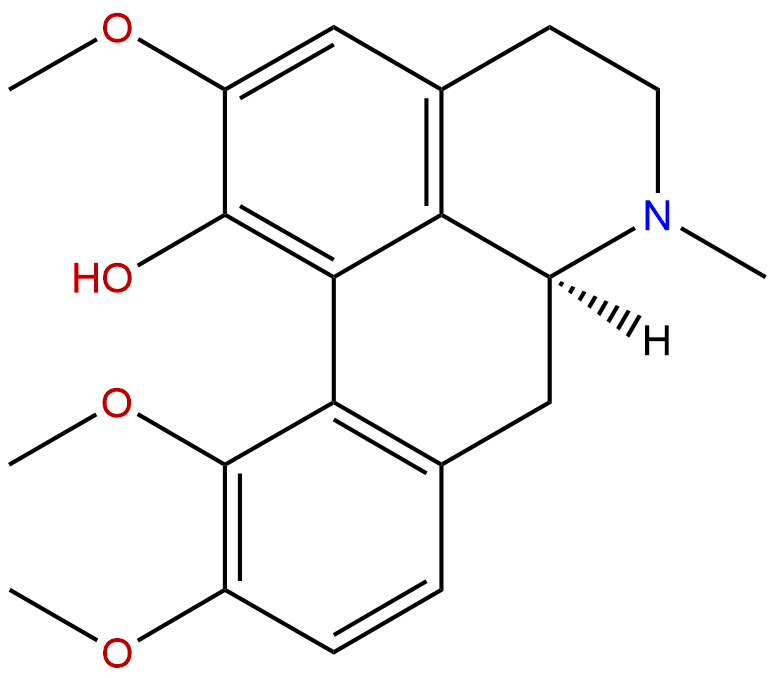
Zijinding is a typical aporphine type isoquinoline alkaloid, with the chemical name 1,2,9,10-tetramethoxyaporphine. Its molecular formula is C20H23NO4 and its molecular weight is 341.4070 g/mol. Structurally, it consists of a five ring coupled system that retains the basic skeleton of isoquinoline and is connected to a methoxy group (- OCH3) at positions 1, 2, 9, and 10. The introduction of these methoxy groups not only affects the electronic distribution and spatial conformation of the molecule, but also has a decisive impact on its pharmacological activity and physicochemical properties.
In terms of physical and chemical properties, purple violet alkaloids exhibit typical lipophilic characteristics. The calculated lipid water partition coefficient (LogP) is 3.1776, indicating that the compound has moderate to high lipophilicity, which is beneficial for its penetration of cell membranes but may also affect its water solubility. The measured or predicted water solubility value is relatively low (about 0.0789 mg/mL), indicating that the solubility of purple violet is limited in aqueous media, which is a key factor to consider in its formulation development process. The topological polar surface area (TPSA) of the molecule is 51.16 Å ², relatively small, which is one of the important structural foundations for its efficient penetration of the blood-brain barrier (predicted as "high" permeability). The smaller TPSA and moderate LogP values jointly meet the requirements of the classic "Lipinski Five Rules" for small molecule drugs to penetrate the blood-brain barrier.
In addition, preliminary safety screening of the drug showed that purpurin had no significant inhibitory effect on hERG potassium channels at the tested concentration (hERG inhibition: no), which reduces its potential risk of inducing QT interval prolongation and apical torsion type ventricular tachycardia, and is a favorable safety signal. In the preliminary assessment of genetic toxicity, the Ames test result was 0.6 (usually considered negative if the ratio is less than 2), indicating that it may not have direct mutagenicity, but more comprehensive genetic toxicity testing is needed to confirm.
Plant sources and extraction methods
Zijingding is mainly isolated from plants in the Euphorbiaceae family, Croton genus. One of the sources of plants clearly reported in the literature is Croton echinocarpus The leaves. Croton plants are widely distributed in tropical and subtropical regions around the world, and are often used in traditional medicine to treat various diseases such as inflammation, pain, and infections, indirectly confirming the potential biological activity of their secondary metabolites.
The extraction and purification of purpurin from plant materials usually follow the classic process of natural product chemistry. Firstly, dry and crushed plant leaves are extracted or refluxed using polar organic solvents (such as methanol, ethanol, or methanol chloroform mixed solvents) to maximize the extraction of polar components, including alkaloids. Due to the presence of free alkali in the form of purple violet alkaloids, a small amount of alkaline substances such as ammonia water may be added to the solvent during the extraction process to improve the efficiency of alkaloid extraction.
After obtaining the crude extract, further enrichment and separation of alkaloids are required. The conventional method is to use acid-base extraction for preliminary purification: dissolve the crude extract in a dilute acidic aqueous solution (such as 1-5% hydrochloric acid or citric acid), dissolve the alkaloids into salts in the aqueous phase, and separate them from non alkaline impurities; Then alkalize the aqueous phase (such as adjusting the pH to 9-10 with ammonia water), allowing the alkaloids to re precipitate or dissolve in the organic phase (usually extracted with chloroform or dichloromethane), thereby obtaining the total alkaloid fraction.
Finally, the isolation and purification of purple violet monomers from total alkaloids require the use of modern chromatographic techniques. Silica gel column chromatography is commonly used, with gradient elution using solvent systems such as chloroform methanol or hexane ethyl acetate diethylamine in different ratios. Thin layer chromatography (TLC) can be used to monitor the separation process. High performance liquid chromatography (HPLC), especially preparative HPLC, is a key step in obtaining high-purity purpurin. It often uses a reverse phase C18 column with methanol water or acetonitrile water (usually with a small amount of buffer salts such as phosphate or ammonium formate added to improve peak shape) as the mobile phase. The chemical structure can be ultimately identified by nuclear magnetic resonance (NMR), mass spectrometry (MS), and comparison with standard samples.
Pharmacological activity research
Although the pharmacological activity research of Zijingding is currently in its early stages, its potential in two important fields, antiviral and anti-inflammatory, has been revealed.
1. Anti HIV activity:
This is the earliest reported and relatively clear activity of purpurin. Research has shown that purpurin can directly inhibit the activity of HIV-1 reverse transcriptase (RT). Reverse transcriptase is a key enzyme in HIV replication life cycle, responsible for reverse transcription of viral RNA into cDNA, so it is an important target of anti AIDS drugs (such as nucleoside and non nucleoside reverse transcriptase inhibitors). The experimental data showed that the half maximal inhibitory concentration (IC50) of purpurin against HIV-1 RT was 356.8 μ g/mL (approximately 1.05 mM). At a concentration of 450 μ g/mL, its inhibition rate on HIV-1 RT activity reached 40%. Although the activity intensity is weaker compared to commonly used highly effective antiretroviral drugs in clinical practice (such as nevirapine with an IC50 in the nanomolar range), it clearly confirms the material basis for the anti HIV effect of purpurin as a natural product, and its efficacy may be optimized through structural modification.
2. Anti inflammatory and immune regulatory potential:
Although there are limited direct literature reports on the anti-inflammatory activity of Zijingding, its associated molecular targets strongly suggest the research value of this direction. In the context of a given disease (meningitis), key targets include TNF - α, IL-1 β, IL-6, NF - κ B, and COX-2. These molecules are the core drivers of the inflammatory cascade, especially in neuroinflammation, and their overexpression is directly related to blood-brain barrier disruption, neuronal damage, and disease progression. Given that many structurally similar aporphine alkaloids, such as camptothecin and isoquercetin, have been shown to exhibit significant NF - κ B inhibition, cytokine downregulation, and anti-inflammatory effects, it can be reasonably inferred that quercetin may exert anti-inflammatory effects by regulating these same signaling pathways. Future research needs to directly validate the inhibitory effect of Corydalis on the mRNA and protein expression of the aforementioned inflammatory factors in animal models of microglia, macrophages, or meningitis stimulated by lipopolysaccharides (LPS) or cytokines.
3. Other potential activities:
Based on the known activities of its alkaloid essence and structural analogues, Zijingding may also have analgesic, sedative, antibacterial, or anti-tumor activities, but these still need to be explored and confirmed through experiments.
Mechanism of action and molecular targets
The research on the mechanism of action of Zijingding mainly focuses on its antiviral aspect, while its potential anti-inflammatory mechanism is reasonably speculated based on target association.
1. Antiviral mechanism: direct inhibition of HIV-1 reverse transcriptase
Zijingding has been confirmed to be a non nucleoside inhibitor of HIV-1 reverse transcriptase. Non nucleoside reverse transcriptase inhibitors (NNRTIs) induce conformational changes by binding to a hydrophobic "pocket" region near the active site of reverse transcriptase, thereby non competitively inhibiting its catalytic activity. The aporphine skeleton and its methoxy substitution pattern on purple violet may provide the hydrophobicity and hydrogen bonding ability required for the binding pocket interaction with NNRTIs. Its IC50 value is in the range of micromoles to millimoles, indicating that its binding affinity needs to be improved, but confirming its target of action. Further mechanism research needs to include enzyme kinetics analysis (to determine inhibition types), molecular docking simulations (to predict binding patterns), and activity testing against drug-resistant mutant strains.
2. Anti inflammatory mechanism: multi-target regulation of neuroinflammatory pathways
The potential mechanism of action of Zijingding for neuroinflammatory diseases such as meningitis may involve interventions on multiple key targets:
* Inhibition of NF - κ B signaling pathway: NF - κ B is a core transcription factor that regulates the expression of inflammatory genes such as TNF - α, IL-1 β, IL-6, COX-2, etc. Many alkaloids can block this pathway by inhibiting the activity of I κ B kinase (IKK), preventing I κ B degradation, or interfering with NF - κ B nuclear translocation. Zijingding is likely to inhibit the production of inflammatory mediators at the source through a similar mechanism.
* Downregulation of pro-inflammatory cytokines: Directly or indirectly (by inhibiting NF - κ B) reduce the synthesis and release of TNF - α, IL-1 β, and IL-6. TNF - α and IL-1 β are initiators and amplifiers of inflammatory responses, which can disrupt the blood-brain barrier in meningitis; IL-6 is involved in acute phase response and immune cell recruitment.
* Inhibition of cyclooxygenase-2 (COX-2): COX-2 is the rate limiting enzyme for the synthesis of pro-inflammatory lipid mediators such as prostaglandin E2. Inhibition of COX-2 can alleviate pain, fever, and tissue edema caused by inflammation. Zijingding may reduce prostaglandin production by inhibiting NF - κ B or directly acting on COX-2 enzyme.
* Regulating microglial activation: In the central nervous system, microglia are the main immune effector cells. During infection or injury, microglia are overactivated and release a large amount of the aforementioned inflammatory factors. Zijingding may inhibit M1 type (pro-inflammatory) polarization of microglia through the above-mentioned targets, thereby reducing neuroinflammatory damage.
The high blood-brain barrier permeability of Zijingding is a key prerequisite for its direct anti-inflammatory effect in the central nervous system, making it a potential candidate drug for treating diseases such as meningitis.
Evaluation of drug properties and pharmacokinetics
Based on existing calculations and preliminary experimental data, a preliminary evaluation of the pharmacological properties of Zijingding is conducted
Advantage:
1. Good blood-brain barrier permeability: This is its most prominent advantage. The predicted "high" BBB permeability, combined with its anti-inflammatory targets, gives it an inherent advantage in treating central nervous system inflammatory diseases such as meningitis, encephalitis, and inflammation associated with neurodegenerative diseases.
2. Acceptable molecular weight: The molecular weight is 341.4, which meets the standards for small molecule drugs (usually<500 Da) and is beneficial for oral absorption and distribution.
3. Beneficial lipid solubility: LogP ~3.18, Being within the ideal range (usually considered 1-5 to be optimal) is beneficial for transmembrane absorption and distribution to tissues.
4. Preliminary heart safety tips: There is no obvious hERG inhibitory signal, which reduces the early risk of severe cardiac toxicity in clinical development.
5. Low potential genetic toxicity risk: The preliminary results of the Ames test show a negative tendency, but a full set of genetic toxicity tests (such as micronucleus test and chromosome aberration test) need to be completed for confirmation.
Challenges and unknowns:
1. Poor water solubility: Low water solubility (~0.079 mg/mL) may affect its oral bioavailability (dissolution is a prerequisite for absorption) and the development of formulations for intravenous administration. Improvements need to be made through formulation strategies such as salt formation (if suitable ionization sites exist), preparation of amorphous solid dispersions, nanocrystals, or use of solubilizing excipients.
2. The potency needs to be improved: The IC50 value of anti HIV is relatively high, and as a lead compound, further structural optimization is needed to improve its affinity (potency) with the target.
3. Lack of pharmacokinetic data: At present, there is almost no systematic pharmacokinetic research on Corydalis purpurea. Key information such as oral absorption degree, plasma protein binding rate, in vivo distribution characteristics (excluding BBB), metabolic pathways (possibly through the liver cytochrome P450 enzyme system), metabolites and their activities, elimination half-life, and excretion pathways are unknown. These are the core data that determine its dosing regimen and clinical feasibility, and must be obtained through in vitro (such as liver microsomal metabolic stability, CYP enzyme inhibition/induction) and in vivo (animal models such as rats and mice) experiments.
4. Lack of comprehensive toxicological evaluation: Preclinical safety evaluations such as acute toxicity, chronic toxicity, and reproductive toxicity need to be conducted to assess their treatment window.
Clinical application prospects and prospects
As a natural molecule with unique structure and preliminary activity, the clinical application prospects of Zijingding mainly depend on the depth and breadth of subsequent research.
Potential application directions:
1. Antineuroinflammation treatment: This is the most attractive direction. Combining its high BBB permeability and association with key neuroinflammatory targets such as TNF, IL, NF - κ B, COX-2, etc., Zijingding or its structurally optimized derivatives have the potential to be developed for the treatment of:
* Bacterial or viral meningitis/encephalitis: As an adjuvant anti-inflammatory therapy, it can alleviate inflammation mediated brain edema, intracranial hypertension, and neuronal damage, and improve prognosis. Can be used in combination with antibiotics or antiviral drugs.
* Neurodegenerative diseases: Chronic neuroinflammation is an important pathological component in diseases such as Alzheimer's disease, Parkinson's disease, and multiple sclerosis. BBB penetrating molecules with anti-inflammatory effects are currently a hot research topic.
* Ischemic stroke: The inflammatory response after reperfusion exacerbates brain damage. Early anti-inflammatory intervention may have neuroprotective effects.
2. Lead compounds for anti HIV therapy: Although its current activity is weak, as a new NNRTI skeleton, it provides a starting point for structural modification for medicinal chemists. By using semi synthetic or fully synthetic methods to modify its aporphine skeleton (such as modifying methoxy groups, introducing heteroatoms, changing ring saturation, etc.), it is expected to discover a new generation of anti HIV candidate drugs with higher potency and better resistance.
3. Other inflammatory diseases: If its systemic anti-inflammatory activity is confirmed, it may also be extended to the exploration of the treatment of peripheral inflammatory diseases such as rheumatoid arthritis and inflammatory bowel disease.
Future research prospects:
1. In depth study of the mechanism of action: It is necessary to empirically demonstrate the inhibitory effects of Corydalis on the NF - κ B pathway, specific cytokine production, and microglial activation in cell and animal models, and clarify its direct targets (such as whether it directly binds to IKK, COX-2, etc.).
2. Research on the Structure Activity Relationship (SAR) of the System: Synthesize a series of derivatives or analogues of purpurin and systematically evaluate the relationship between their anti-inflammatory and antiviral activities and chemical structural changes, with the aim of discovering lead compounds with better activity and drug properties.
3. Comprehensive preclinical development: Conduct standardized pharmacological (efficacy validation in animal models of related diseases), pharmacokinetic, and toxicological evaluations on the selected lead compounds to provide sufficient evidence for their suitability for clinical trials.
4. Exploring the potential of combination therapy: Studying its synergistic effect with existing standard treatment drugs such as antibiotics, antiviral drugs, and other anti-inflammatory drugs may lead to the discovery of more effective treatment plans.
Conclusion
As a plant derived aporphine alkaloid, purpurin has demonstrated pharmacological value worthy of further exploration due to its unique activity in inhibiting HIV-1 reverse transcriptase and its close association with the core target group of neuroinflammation. Its excellent blood-brain barrier penetration ability has drawn a hopeful blueprint for its application in the treatment of central nervous system diseases. However, the road from natural products to potential drugs is long and challenging. The current research on Zijingding is still in its early stages, and its weak in vitro activity, poor water solubility, and almost blank in vivo pharmacokinetic and safety data are all bottleneck issues that urgently need to be addressed. Future research should focus on optimizing its structure through medicinal chemistry methods, while improving potency and physicochemical properties, utilizing modern pharmacology and molecular biology techniques to deeply elucidate its multi-target mechanism of action, and conducting systematic preclinical evaluations. Only through such interdisciplinary and solid in-depth research can we accurately determine whether cordierdine is a new weapon that can ultimately be successfully transformed into clinical treatment of neuroinflammation or viral infectious diseases, or only as a tool molecule to clarify biological pathways or a source of inspiration for drug design. Anyway, the continuous exploration of Corydalis will undoubtedly enrich our understanding of the pharmacological effects of natural products and provide new ideas and candidate molecules for drug development in related diseases.