Introduction/Overview
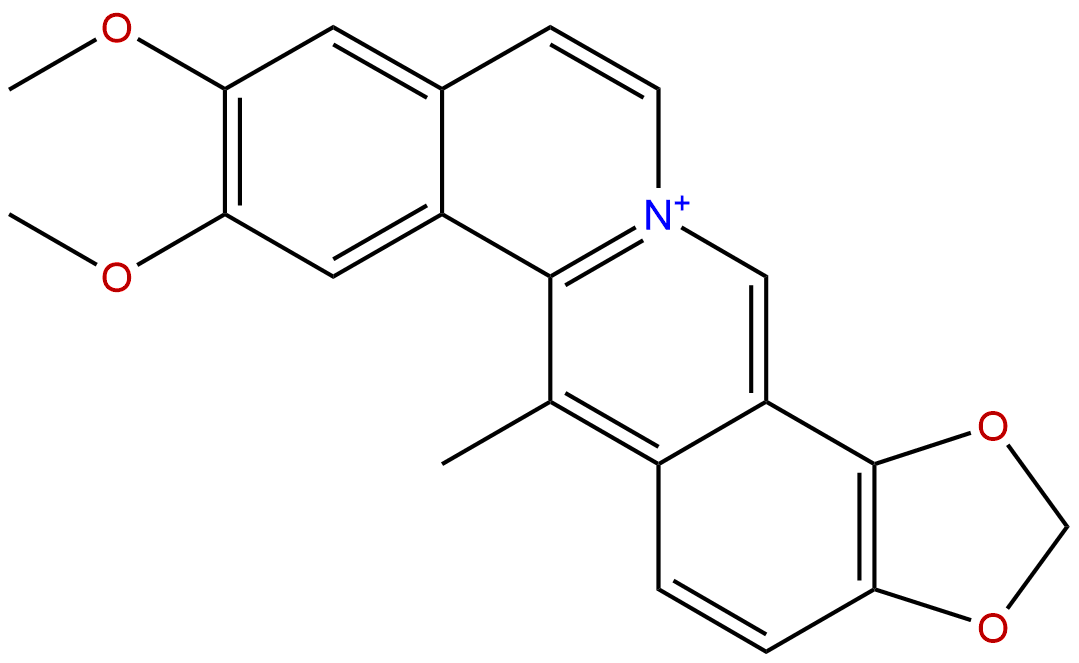
Natural products, as an important treasure trove for drug discovery, play an irreplaceable role in the history of human disease treatment. Among them, isoquinoline alkaloids have always been a hot topic in medicinal chemistry and pharmacology research due to their structural diversity and wide range of biological activities. Dehydrocavidine, as a tetrahydroberberine type isoquinoline alkaloid isolated from traditional Chinese medicinal materials, has attracted widespread attention from researchers in recent years due to its significant activity and multi-target action characteristics in the field of anti-tumor. Its CAS number is 83218-34-2. Yanhuanglian alkaloid not only inherits some pharmacological properties of its parent compound (such as berberine), but also exhibits novel biological effects due to its unique chemical structure. Existing research has preliminarily revealed that Yanhuanglian alkaloids exhibit inhibitory activity on various malignant tumor cells through various pathways such as intervening in cell apoptosis, inhibiting tumor invasion and metastasis, and regulating key signaling pathways. Their targets involve multiple key proteins such as MCL1, BCL2, STAT3, MMP2, etc. This article aims to systematically review the chemical characteristics, plant sources, pharmacological activities, molecular mechanisms of action, pharmacological evaluation, and clinical application prospects of Yanhuanglian alkaloids, in order to provide comprehensive scientific references for the deep development and transformation research of this natural product.
Chemical structure and physicochemical properties
The molecular formula of Yanhuanglian alkaloid is C21H22NO4, with a molecular weight of 348.3780. Its core structure belongs to the tetrahydroberberine class. Compared with common berberine, its D ring is a dehydroaromatic ring. This structural difference is the origin of its name "Dehuo -" and deeply affects its physicochemical properties and biological activity.
From the perspective of physicochemical parameters, the lipid water partition coefficient (LogP) of Yanhuanglian alkaloids is 0.5899, indicating moderate lipophilicity but not high lipophilicity. Its topological polar surface area (TPSA) is 41.0200 Å ², which is relatively low and usually favors the membrane permeability of the compound. The water solubility data is 0.0236 mg/mL, which belongs to the category of slightly soluble to poorly soluble, which poses certain challenges for its formulation development. It is worth noting that the predictive model shows a high blood-brain barrier permeability, which suggests its potential advantages in treating central nervous system related tumors or diseases. In early safety screening, berberine did not show significant hERG potassium channel inhibitory activity (hERG inhibition: no), reducing its risk of inducing QT interval prolongation in the heart. However, its laboratory Ames test result was 2.4, indicating potential mutagenicity under specific conditions, which is a key safety issue that must be carefully evaluated in its subsequent development.
Plant sources and extraction methods
Yanhuanglian alkaloids are mainly derived from the genus Corydalis in the Papaveraceae family(Corydalis)Among the various plants, the most famous original plant is Yanhuanglian(Corydalis saxicola Bunting), This is a traditional medicinal plant that grows in the limestone areas of southwestern China and is commonly used in folk medicine to treat hepatitis, cirrhosis, and various inflammatory diseases. In addition, in plants of the same genus such as Corydalis yanhusuo(Corydalis yanhusuo)Trace amounts were also found to exist.
Its extraction and separation usually follow the conventional process of natural product chemistry. Firstly, dry plant roots or whole plants are crushed and subjected to reflux extraction or percolation extraction using suitable polar organic solvents (such as methanol, ethanol, or acidic ethanol) to fully extract alkaloid components. After concentration, the extract is dissolved in acidic water (such as dilute hydrochloric acid) to make the alkaloids salt and transfer to the aqueous phase. Then, alkalization (such as ammonia water) is used to free the alkaloids and extract them with organic solvents such as chloroform or ethyl acetate. This process can preliminarily enrich the total alkaloids. Further purification relies on column chromatography technology, often using silica gel, alumina, or macroporous adsorption resin as the stationary phase, and gradient elution with chloroform methanol mixed solvents in different ratios. By combining thin-layer chromatography (TLC) or high-performance liquid chromatography (HPLC) for tracking and detection, high-purity berberine monomers can be obtained through methods such as preparative HPLC or recrystallization. Modern technologies such as high-speed countercurrent chromatography (HSCCC) have also been applied for the separation and purification of such alkaloids due to their high efficiency and avoidance of irreversible adsorption by solid adsorbents.
Pharmacological activity research
The pharmacological activity research of Yanhuanglian alkaloids mainly focuses on the field of anti-tumor, and there are also reports in other aspects such as anti-inflammatory and hepatoprotective effects, but the anti-tumor effect is the most profound and prominent.
1. Antitumor activity
A large number of in vitro studies have shown that rhubarb alkaloid has broad-spectrum growth inhibition and cytotoxic effects on a variety of human tumor cell lines, including liver cancer (such as HepG2, SMMC-7721), gastric cancer (such as SGC-7901, MKN-45), breast cancer (such as MCF-7, MDA MB-231), colon cancer (such as HCT-116, SW480), lung cancer (such as A549), and leukemia (such as HL-60, K562) cells. Its effects are concentration dependent and time-dependent, significantly inhibiting the proliferation and colony forming ability of tumor cells, and inducing apoptosis and cell cycle arrest (commonly seen in G2/M phase or S phase).
2. Other pharmacological activities
In addition to its core anti-tumor effect, early studies have also suggested that berberine may have antiviral (such as hepatitis B virus), anti-inflammatory, and hepatoprotective activities, which is consistent with its traditional use as a source plant of berberine. However, there is relatively little research on the molecular mechanisms in these areas, and further in-depth exploration is needed.
Mechanism of action and molecular targets
The anti-tumor effect of Yanhuanglian alkaloids is not achieved through a single pathway, but presents the characteristics of multi-target and multi pathway synergistic intervention, which provides potential advantages for overcoming tumor drug resistance. The molecular mechanisms revealed by existing research mainly include:
1. Inducing cell apoptosis and regulating Bcl-2 family proteins
Inducing tumor cell apoptosis is one of the core mechanisms of action of berberine. Research has found that it can downregulate the expression of anti apoptotic proteins Bcl-2 and Mcl-1, while possibly upregulating the expression of pro apoptotic proteins such as Bax, leading to a decrease in mitochondrial membrane potential, release of cytochrome C, and activation of the Caspase cascade reaction, ultimately triggering cell apoptosis. Its targeting effect on MCL1 and BCL2 is particularly critical.
2. Inhibit the STAT3 signaling pathway
Signal transducer and activator of transcription factor 3 (STAT3) is an important oncogenic transcription factor that is continuously activated in various tumors. Yanhuanglian alkaloid has been proven to effectively inhibit the phosphorylation (activation) of STAT3, block its nuclear translocation and the transcription of downstream target genes (such as Cyclin D1, Bcl-2, VEGF, etc.), thereby inhibiting cell proliferation, promoting apoptosis, and weakening the malignant expression of tumors.
3. Inhibit tumor invasion and metastasis
Yanhuanglian alkaloids can significantly inhibit the expression and activity of matrix metalloproteinase-2 (MMP-2) and MMP-9. MMPs are key enzymes that degrade extracellular matrix, and inhibition of their activity means that the invasion and metastasis ability of tumor cells is hindered. In addition, it can also interfere with the adaptation and angiogenesis of tumor cells in a hypoxic microenvironment (downregulation of VEGF expression) by inhibiting the expression of HIF-1 α (hypoxia inducible factor-1 α).
4. Interference with DNA topoisomerase activity
Research suggests that berberine may act as an inhibitor of topoisomerase I (TOP1) and topoisomerase II alpha (TOP2A). These enzymes are crucial for DNA replication, transcription, and chromosome separation. Inhibiting its activity can lead to DNA damage and replication stress, triggering cell cycle checkpoint activation and cell death.
5. Regulating the MAPK/ERK signaling pathway
Yanhuanglian alkaloids have a regulatory effect on the MAPK1 (ERK2) signaling pathway. The ERK pathway is typically associated with cell proliferation and survival. The treatment with berberine may inhibit the abnormal activation of this pathway, thereby contributing to its anti proliferative effect.
6. Affects estrogen signaling and synthesis
For hormone dependent tumors such as breast cancer, berberine has shown a regulatory effect on estrogen receptor alpha (ESR1) and can inhibit the activity of aromatase (CYP19A1). CYP19A1 is a key enzyme in estrogen synthesis, and inhibiting its activity can reduce estrogen levels in the body, thereby inhibiting the growth of estrogen dependent tumors.
In summary, Yanhuanglian alkaloids form a complex anti-tumor network by simultaneously acting on multiple key nodes such as apoptosis regulation (MCL1, BCL2), signal transduction (STAT3, MAPK1), extracellular matrix remodeling (MMP2), DNA metabolism (TOP1, TOP2A), hypoxia response (HIF1A), and hormone environment (ESR1, CYP19A1).
Evaluation of drug properties and pharmacokinetics
Although Yanhuanglian alkaloid has shown excellent anti-tumor potential in vitro, its successful development as a drug highly depends on systematic drug efficacy evaluation and pharmacokinetic studies.
Pharmacokinetic properties At present, the pharmacokinetic research data of Yanhuanglian alkaloids in vivo is not complete. Based on its physicochemical properties (moderate LogP, low TPSA, high blood-brain barrier permeability prediction), it can be inferred that it may have a certain absorption capacity after oral administration, but its absolute bioavailability is limited by its low water solubility. It is expected to undergo extensive metabolism in the body, and common metabolic pathways of isoquinoline alkaloids include oxidation, demethylation, and glucuronidation. Its metabolites, excretion pathways, and tissue distribution characteristics urgently need to be further studied through radioactive labeling or high-sensitivity mass spectrometry methods.
Challenges and optimization of drug development:
1. Poor water solubility The water solubility of 0.0236 mg/mL is the primary obstacle to its formulation development. Strategies include: preparing salts (such as hydrochloride and sulfate salts), utilizing solubilization techniques (such as cyclodextrin inclusion, nanocrystals, liposomes, micelles, and other novel drug delivery systems), or designing prodrugs to improve their solubility and dissolution rate.
2. Potential genetic toxicity risk A positive Ames test result (2.4) is an important warning signal. A more comprehensive genetic toxicity testing combination (such as micronucleus test, chromosome aberration test) must be conducted, and the molecular basis of its mutagenicity must be explored in depth. If it is confirmed that there is a risk, structural modification is necessary to eliminate this toxicity while retaining or enhancing anti-tumor activity.
3. The duality of multi-target characteristics Multi targeted effects are not only advantageous (with potentially more comprehensive therapeutic effects and less susceptibility to drug resistance), but may also lead to off target effects and unpredictable toxicity. A systematic toxicological evaluation is required in animal models to determine their safety window.
4. Synthesis and Optimization Although it can be extracted from plants, in order to ensure stable supply and optimize the structure, it is necessary to develop efficient total or semi synthetic routes for systematic structure-activity relationship (SAR) research, in order to find derivatives with better activity, lower toxicity, and better drug properties.
Clinical application prospects and prospects
Yanhuanglian alkaloid, as a multi-target anti-tumor natural lead compound, has broad clinical application prospects, but the road ahead is long and requires interdisciplinary collaboration.
Potential application directions:
1. Development of new anti-tumor drugs This is the most core direction. Due to its multi target characteristics, it is especially suitable for the treatment of malignant tumors that are prone to drug resistance to single target drugs or have complex signal pathways, such as triple negative breast cancer, liver cancer, stomach cancer, etc. It can be explored as a single drug or in combination with existing chemotherapy drugs/targeted drugs to enhance efficacy, reduce dosage and toxic side effects.
2. Treatment of central nervous system tumors The high blood-brain barrier permeability predicted by it makes it have unique potential in the treatment of brain tumors such as glioma, and it is worth exploring as a priority.
3. Expansion based on traditional uses Combining the traditional anti-inflammatory and hepatoprotective effects of its source plant, Yanhuanglian, it also has certain exploratory value in the treatment of chronic liver diseases such as non-alcoholic fatty liver disease (NASH) and liver fibrosis.
Future research focus:
1. In depth mechanism research Using chemical biology methods such as affinity fishing, molecular docking and kinetic simulation, CRISPR screening, etc., to accurately identify its direct target proteins and elucidate the interaction relationships between their multi-target networks.
2. Preclinical development of the system Complete standardized pharmacological (more in vivo transplant tumors, PDX model evaluation), pharmacokinetic (ADME), and safety evaluation (acute toxicity, long-term toxicity, reproductive toxicity, etc.) studies, comprehensively evaluate their development risks and value.
3. Structural optimization and derivative development Reasonably modify its water solubility and potential genetic toxicity, synthesize a series of derivatives, and search for clinical candidate compounds through structure-activity relationship studies.
4. Research on New Delivery Systems Develop a nano targeted delivery system for berberine to enhance tumor accumulation, improve solubility, and reduce toxicity caused by systemic exposure.
Conclusion
Yanhuanglian alkaloid is an important research value isoquinoline alkaloid discovered from the traditional Chinese medicine Yanhuanglian. It exhibits multi pathway anti-tumor pharmacological activity by intervening in multiple key tumor related targets such as MCL1, STAT3, MMP2, TOP1, etc., forming the molecular basis for its therapeutic effect. Despite facing challenges such as poor water solubility and potential genetic toxicity in drug development, these challenges also indicate directions that need to be addressed in future research. With the continuous advancement of modern medicinal chemistry, pharmacology, and pharmaceutical technology, through in-depth structural optimization, mechanism elucidation, and formulation innovation of Yanhuanglian alkaloid, it is expected to gradually push it from a potential natural lead compound to the clinical research stage, providing new candidate drugs for the treatment of malignant tumors, and also providing successful examples for innovative drug development based on traditional Chinese medicine resources. The research process fully reflects the translational medical value from traditional medical wisdom to modern scientific verification.