


Name: Dehydrocorydaline nitrate
Catalogue No.: BP3721
Cas No.: 13005-09-9
Formula: C22H24N2O7
Mol Weight: 428.441
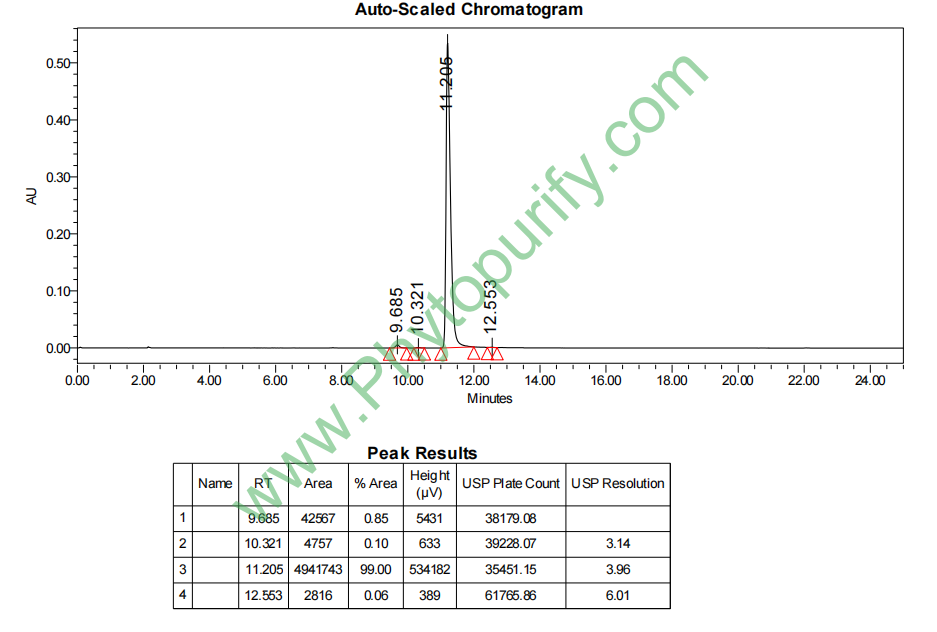
Purity: 95%~99%
Analysis Method: HPLC-DAD or/and HPLC-ELSD
Identification Method: Mass, NMR
Packing: Brown vial or HDPE plastic bottle
Can be supplied from milligrams to grams.
Inquire for bulk scale.
HPLC of Dehydrocorydaline nitrate
Storage conditions:Short-term storage at 2~8℃, long-term storage at -20 ~ -80℃
40.8000
.7237
.7240
.2655
3.0493
18.2167
High
40.2548
2.9188
Yes
No
Yes
Yes
Yes
Yes
1.8
No
No
No
No
Natural products have always been an important source of drug discovery and development, particularly demonstrating unique advantages in the treatment of complex diseases. Isoquinoline alkaloids, as a class of structurally diverse and widely active natural products, have long been closely studied by pharmaceutical researchers. Dehydrocorydaline nitrate (CAS number: 13005-09-9), also known as 13 Methylpalmatine nitrate, is derived from the traditional Chinese medicine Corydalis yanhusuo(Corydalis yanhusuo)A protoberberine type quaternary ammonium alkaloid found in other plants of the genus Corydalis in the family Papaveraceae. As one of the main active ingredients in Corydalis yanhusuo, dehydrocorydaline (DHC) and its nitrate form are often used in traditional Chinese medicine theory to treat pain related diseases such as stomach pain, chest and rib distension, dysmenorrhea, and traumatic injuries.
Modern pharmacological research has revealed a broader spectrum of biological activities of dehydroquercetin nitrate. It not only exhibits significant analgesic effects, but also has multiple pharmacological effects such as anti-inflammatory, anti-cancer, anti malaria, anti arrhythmia, and anti ulcer. Its mechanism of action involves regulating apoptosis related proteins (such as Bax, Bcl-2), activating caspase-7, caspase-8 and inactivating PARP, and enhancing the phosphorylation level of p38 mitogen activated protein kinase (p38 MAPK). Of particular note is that the compound exhibits nanomolar level inhibitory activity against Plasmodium falciparum 3D7 strain (IC50=38 nM) and extremely low cytotoxicity to mammalian cells (cell viability>90%), indicating its enormous potential as a novel antimalarial drug.
Given the potential application value of dehydroquercetin nitrate in the treatment of multiple diseases, this article aims to systematically review the chemical structure and physicochemical properties, plant sources and extraction methods, pharmacological activity, mechanism of action, drug evaluation, and clinical application prospects of this compound, in order to provide comprehensive references for subsequent basic research and drug development.
Dihydroquercetin nitrate belongs to the protoberberine class of quaternary ammonium alkaloids, and its parent nucleus structure consists of four fused benzene rings, forming a highly conjugated planar aromatic system. Its chemical name is 5,6,6a,7-tetrahydro-2,3,9,10-tetramethoxy-13-methyldibenzo [a, g] quinazine-6-ium nitrate. Compared with the common Palmatine, dehydroquercetin has an additional methyl substituent at the C-13 position, which may have a significant impact on its biological activity and target selectivity. The molecular formula of this compound is C22H24NO4 · NO3, with a molecular weight of 366.44 (calculated as free base, the actual salt form has a higher molecular weight).
In terms of physicochemical properties, dehydroquercetin nitrate exhibits typical quaternary ammonium alkaloid characteristics. Its LogP value is 0.7237, indicating that it has a certain hydrophilicity, but is not completely water-soluble. The calculated water solubility is 0.2655 mg/mL, indicating limited solubility in water, which may affect its oral bioavailability. The topologically polar surface area (TPSA) is 40.80 Å ², which is lower than the threshold commonly believed for passive diffusion through the cell membrane (approximately 140 Å ²), indicating that the molecule has good membrane permeability potential. It is worth noting that its blood-brain barrier (BBB) penetration is predicted to be "high", which is consistent with its potential to act on central nervous system targets in analgesic research. However, the prediction result of hERG inhibition is "yes", indicating that the compound may have a risk of cardiac toxicity, which is a key issue that needs to be focused on in its drug development. The Ames test result is 1.8, indicating that it may have potential genetic toxicity and requires further in vitro and in vivo validation.
As a nitrate form, this compound typically exists as a yellow or pale yellow crystalline powder with good stability. The presence of quaternary ammonium nitrogen atoms makes them positively charged under physiological pH conditions, which is beneficial for their interaction with negatively charged biomolecules such as DNA and proteins, but may also limit their rate of passage through biofilms.
Dehydrated purple violet alkaloid nitrate mainly comes from the genus purple violet in the Papaveraceae family(Corydalis)Plants, including Corydalis yanhusuo(Corydalis yanhusuo W. T. Wang is the most famous. As a traditional analgesic Chinese medicine, Corydalis yanhusuo contains abundant alkaloids in its tubers, among which dehydroquercetin is one of the active ingredients with a relatively high content. In addition, the compound is also present in other plants of the genus Corydalis, such as Northeastern Corydalis(C. ambigua)Dental valve Corydalis yanhusuo(C. turtschaninovii)And Fusheng Zijin(C. decumbens)In the middle. Different origins, harvesting seasons, and processing methods can affect the content of dehydroquercetin in medicinal materials.
Traditional extraction methods are mostly based on the acid-base properties of alkaloids. Usually, acidic aqueous solutions (such as 0.5% -1% dilute hydrochloric acid or sulfuric acid) are used for percolation or reflux extraction to dissolve alkaloids into salts in the aqueous phase. After alkalization of the extraction solution (such as adjusting the pH to 9-10 with ammonia water), it is extracted with organic solvents (such as chloroform, ether, or ethyl acetate) to obtain total alkaloids. Subsequently, the total alkaloids were separated and purified using silica gel column chromatography, alumina column chromatography, or preparative high-performance liquid chromatography (pre HPLC). Due to its quaternary ammonium salt structure, dehydroquercetin may produce tailing on conventional silica gel columns, and it is often necessary to add a small amount of base (such as triethylamine) to the mobile phase or use reverse phase chromatography (such as C18 column) for separation.
Modern extraction techniques have significantly improved efficiency and purity. Ultrasound assisted extraction (UAE) and microwave-assisted extraction (MAE) can shorten extraction time and improve yield. High speed counter current chromatography (HSCCC), as a liquid-liquid distribution chromatography technique, has shown unique advantages in separating and purifying quaternary ammonium alkaloids such as dehydroquercetin, avoiding irreversible adsorption problems. In addition, molecular imprinting technology (MIT) has also been explored for selective enrichment of target alkaloids. For the preparation of dehydroquercetin nitrate, it is usually obtained by reacting high-purity dehydroquercetin free base with equimolar nitric acid, followed by recrystallization to obtain the final product. In terms of quality control, high-performance liquid chromatography (HPLC) or liquid chromatography-mass spectrometry (LC-MS) methods are often used for content determination and purity inspection.
One of the most notable pharmacological activities of dehydroquercetin nitrate is its significant analgesic effect. In traditional Chinese medicine, Corydalis yanhusuo is used to treat various types of pain. Modern research has shown that dehydroquercetin can exert analgesic effects through various mechanisms. In both the classic acetic acid writhing model and the hot plate method model, dehydroquercetin exhibits dose-dependent analgesic activity. Its mechanism of action involves multiple pain related targets, including transient receptor potential vanillic acid subtype 1 (TRPV1), cannabinoid receptor 1 (CNR1), delta opioid receptor (OPRD1), μ - opioid receptor (OPRM1), kappa opioid receptor (OPRK1), cyclooxygenase-1/2 (PTGS1/PTGS2), transient receptor potential anchor protein subtype 1 (TRPA1), serotonin transporter (SLC6A4), and dopamine D2 receptor (DRD2). This multi-target mode of action may have a synergistic effect in analgesia and may reduce the common tolerance and dependence of single target drugs. Specifically, its regulatory effects on TRPV1 and TRPA1 suggest its potential in the treatment of neuropathic pain.
Dihydroquercetin nitrate exhibits strong anti-inflammatory activity. In the lipopolysaccharide (LPS) - induced macrophage inflammation model, this compound can significantly inhibit the production of pro-inflammatory cytokines such as tumor necrosis factor - α (TNF - α), interleukin-6 (IL-6), and interleukin-1 β (IL-1 β). Its anti-inflammatory mechanism is closely related to the inhibition of nuclear factor kappa B (NF - κ B) signaling pathway and mitogen activated protein kinase (MAPK) pathway. Research has shown that dehydroquercetin can inhibit the phosphorylation and degradation of I κ B α, thereby preventing the nuclear translocation of NF - κ B. Meanwhile, it can also regulate the phosphorylation levels of p38 MAPK, JNK, and ERK. In animal models, dehydroquercetin has inhibitory effects on acute and chronic inflammation models such as carrageenan induced foot swelling and cotton ball granuloma.
Dihydroquercetin nitrate exhibits cytotoxic effects on various cancer cell lines. Its anti-cancer mechanism mainly involves inducing cell apoptosis. Research has found that dehydroquercetin can regulate the expression ratio of Bax and Bcl-2 proteins, promote mitochondrial release of cytochrome c, activate caspase-9, and ultimately activate downstream caspases (such as caspase-3 and caspase-7). In addition, it can directly activate caspase-8, indicating that it may induce apoptosis through both endogenous (mitochondrial) and exogenous (death receptor) pathways. The inactivation of PARP (poly ADP ribose polymerase) is a hallmark event in the process of apoptosis, and dehydroquercetin can promote the cleavage of PARP, thereby blocking DNA repair and promoting cell death. The pro apoptotic effect of dehydroquercetin has been observed in various cancer cell lines such as gastric cancer, liver cancer, colon cancer, and leukemia. In addition, the compound can enhance the activation of p38 MAPK, which plays an important role in stress response and apoptosis regulation.
One of the most remarkable activities of dehydroquercetin nitrate is its strong anti malarial effect. Targeting Plasmodium falciparum(Plasmodium falciparum)The in vitro experiments of 3D7 strain (chloroquine sensitive strain) showed that its half maximal inhibitory concentration (IC50) was as low as 38 nM, demonstrating potent activity at the nanomolar level. More importantly, at the same concentration, the compound has extremely low toxicity to mammalian cells and maintains cell viability above 90%, indicating its excellent selectivity index. This characteristic makes it a highly promising candidate for antimalarial drugs, especially considering the increasing resistance of malaria parasites to traditional antimalarial drugs such as chloroquine and artemisinin. Its anti malaria mechanism may be related to the known DNA embedding effect of berberine alkaloids, inhibition of topoisomerase, or interference with the detoxification process of malaria parasite hemoglobin, but the specific molecular mechanism still needs further clarification.
In addition to the main activities mentioned above, dehydroquercetin nitrate has also been reported to have anti arrhythmic, anti myocardial ischemia, anti ulcer, anti depressive, and antibacterial effects. In the cardiovascular system, it can prolong the duration of action potentials, inhibit sodium and calcium ion channels, and thus exert antiarrhythmic effects. In the digestive system, it can inhibit gastric acid secretion, enhance gastric mucosal barrier function, and have a protective effect on experimental gastric ulcers. These diverse pharmacological activities further expand their clinical application potential.
The pharmacological mechanism of dehydroquercetin nitrate is complex, involving multiple signaling pathways and molecular targets, reflecting the multi-target and multi pathway characteristics of natural products.
The mechanism of cell apoptosis induced by dehydroquercetin has been extensively studied. It upregulates the expression of pro apoptotic protein Bax and downregulates the expression of anti apoptotic protein Bcl-2, increasing the Bax/Bcl-2 ratio and promoting mitochondrial outer membrane permeability, releasing cytochrome c and apoptosis inducing factor (AIF). After entering the cytoplasm, cytochrome c forms apoptotic bodies with Apaf-1 and procaspase-9, activating caspase-9. Activated caspase-9 further cleaves and activates downstream executing caspases, including caspase-3 and caspase-7. Meanwhile, dehydroquercetin can directly activate caspase-8, which may be achieved through death receptor pathways such as Fas/TNFR. Activated caspase-8 can activate caspase-3 and cleave Bid protein to form tBid, which translocates to mitochondria and further amplifies mitochondrial apoptosis signals. Finally, activated caspase-3/7 cleaves a variety of substrate proteins, including PARP, leading to blocked DNA repair, cytoskeleton disintegration, and irreversible apoptosis of cells.
Dihydroquercetin has regulatory effects on multiple key signaling pathways. In the MAPK pathway, it can enhance the phosphorylation activation of p38 MAPK. The activation of p38 MAPK is usually associated with stress response and inflammation, and in some cases also participates in apoptosis induction. In addition, it can also regulate the activity of JNK and ERK. In the NF - κ B pathway, dehydroquercetin inhibits the activity of I κ B kinase (IKK), prevents the phosphorylation and degradation of I κ B α, and retains NF - κ B in an inactive form in the cytoplasm, thereby inhibiting its nuclear translocation and transcription of downstream pro-inflammatory genes (such as TNF - α, IL-6, iNOS, COX-2). This explains the molecular basis of its anti-inflammatory activity.
The analgesic effect of dehydroquercetin involves multiple pain related targets. Its regulatory effect on TRPV1 and TRPA1 is particularly important. TRPV1 is a thermal pain sensor, and TRPA1 is a chemical pain sensor, both of which play key roles in inflammatory pain and neuropathic pain. Dihydroquercetin may act as an antagonist or regulator of these channels, inhibiting the transmission of nociceptive signals. In addition, it can interact with opioid receptors (OPRM1, OPRD1, OPRK1) to simulate the analgesic effects of endogenous opioid peptides. The regulation of dopamine D2 receptors and serotonin transporters may involve the activation of downregulation pathways. The inhibition of cyclooxygenase (COX-1/COX-2) is similar to the mechanism of classical NSAIDs analgesics, reducing the synthesis of prostaglandins.
Although the anti malarial mechanism of dehydroquercetin has not been fully elucidated, based on the commonality of berberine alkaloids, it is speculated that it may exert its effects through the following pathways: 1) embedding into malaria parasite DNA, interfering with DNA replication and transcription; 2) Inhibiting the topoisomerase I or II of malaria parasites, leading to DNA fragmentation; 3) Interfering with the process of malaria parasites digesting hemoglobin, inhibiting the activity of heme polymerase, leading to the accumulation of toxic free hemoglobin; 4) Inhibit the mitochondrial function of malaria parasites. Its extremely high selectivity and nanomolar activity suggest the possibility of a high affinity specific target, which deserves further investigation.
The evaluation of drug properties is a crucial step in determining whether candidate compounds can enter clinical development. The medicinal properties of dehydroquercetin nitrate exhibit a double-edged sword characteristic.
Beneficial aspects:
- High activity and selectivity In terms of anti malaria, an IC50 of 38 nM and>90% cell viability provide excellent selectivity indices, making it an ideal starting point for the development of anti infective drugs.
- Multi-target effect For complex diseases such as pain relief and anti-inflammatory, multi-target action may bring better therapeutic effects and lower side effects.
- Good membrane permeability The TPSA is 40.80 Å ², far below the upper limit of passive diffusion, indicating good cell membrane and intestinal epithelial permeability.
- High BBB penetration The predicted result is "high", which is advantageous for drugs that require central action (such as analgesia).
Adverse aspects and challenges:
- HERG inhibition risk The predicted results show that it has hERG inhibitory activity, which may lead to QT interval prolongation and increase the risk of ventricular arrhythmias (such as apical torsion). This is the biggest challenge facing the pharmacological development of the compound, which requires structural modifications (such as reducing lipophilicity and decreasing the number of aromatic rings) to decrease the affinity of hERG.
- Potential genetic toxicity The Ames test result is 1.8, although the value is not high, it suggests a possible risk of mutagenicity and requires a more comprehensive genetic toxicity assessment (such as in vivo micronucleus test, chromosome aberration test).
- Water solubility The water solubility of 0.2655 mg/mL may be low for oral formulations, which may result in limited dissolution and affect oral bioavailability. It can be improved through techniques such as salt formation (already nitrate), solid dispersion, nanocrystals, etc.
- Quaternary ammonium salt structure Quaternary ammonium nitrogen atoms permanently carry a positive charge at physiological pH, which is beneficial for binding to targets, but may also lead to non-specific binding to plasma proteins, enhanced first pass effects in the liver, and increased bile excretion, thereby reducing systemic exposure.
At present, there is insufficient systematic pharmacokinetic research on dehydroquercetin nitrate, but reasonable speculation can be made based on data from similar compounds such as palmatine and berberine.
absorb Oral absorption may be poor, mainly due to its quaternary ammonium salt structure and water solubility. The oral bioavailability of berberine is usually less than 5%. Dihydroquercetin may be similar, with most of it remaining in the intestine after oral administration and some being metabolized by gut microbiota. Its high BBB penetration suggests that if sufficient blood drug concentration can be achieved, it can enter the central nervous system.
distribution Due to its lipophilicity (LogP 0.72) and positively charged properties, dehydroquercetin may be widely distributed in tissues, especially in organs rich in mitochondria such as the liver, kidneys, and heart. The plasma protein binding rate may be high.
Metabolism The main metabolic pathways may include demethylation, glucuronic acid binding, and sulfate binding. Both the liver and gut microbiota are involved in its metabolism. The CYP450 enzyme system may be involved in its oxidative metabolism.
excretion The prototype drug and its metabolites are mainly excreted through bile and urine. Due to the quaternary ammonium salt structure, bile excretion may be its main clearance pathway, leading to enterohepatic circulation.
key parameters The half-life (t1/2) may be short and requires frequent administration. The apparent volume of distribution (Vd) may be relatively large. The clearance rate (CL) may be moderate.
Dihydroquercetin nitrate, with its unique pharmacological activity and multi-target mechanism of action, has shown broad application prospects in multiple therapeutic fields.
Given its nanomolar activity and extremely low cytotoxicity against Plasmodium falciparum 3D7 strain, dehydroquercetin nitrate is a highly promising novel anti malaria lead compound. Currently, artemisinin resistance has emerged and is spreading in Southeast Asia, and there is an urgent need for drugs with novel mechanisms of action. The mechanism of action of dehydroquercetin may be different from artemisinin, which makes it an effective weapon against drug-resistant malaria parasites. Future research directions should focus on: 1) elucidating its precise anti malarial molecular targets; 2) Evaluate its activity against multiple drug-resistant strains of malaria parasites (including artemisinin resistant strains); 3) Conduct in vivo pharmacological studies (such as mouse malaria model); 4) Conduct preliminary toxicology and pharmacokinetic studies. If these research results are positive, the compound is expected to enter the preclinical development stage.
Dihydroquercetin exerts analgesic effects through multiple targets (TRPV1, opioid receptors, COX, etc.), providing new ideas for the development of novel non addictive analgesics. Compared to traditional opioid drugs, it may have lower addiction and respiratory depression risks; Compared to NSAIDs, their gastrointestinal and cardiovascular side effects may be fewer. However, the risk of hERG inhibition is a major obstacle to the development of analgesic drugs. Future strategies include: 1) eliminating or reducing hERG inhibitory activity while retaining analgesic activity through structural modification; 2) Develop local administration preparations (such as patches and gel) to avoid systemic exposure, so as to avoid cardiac toxicity; 3) Explore its synergistic effect with low-dose opioid drugs or NSAIDs to reduce the dosage of each component.
The anti-inflammatory and anticancer activities of dehydroquercetin make it potential for adjuvant therapy in chronic inflammation related diseases (such as rheumatoid arthritis, inflammatory bowel disease) and certain cancers. It induces apoptosis by regulating the Bax/Bcl-2 and caspase pathways, and has a synergistic effect with many chemotherapy drugs. In the future, the combination application of it with chemotherapy drugs such as cisplatin and paclitaxel can be explored to enhance efficacy and reduce drug resistance. In terms of anti-inflammatory effects, it can be developed into oral or rectal formulations for the treatment of ulcerative colitis or Crohn's disease.
Despite its broad prospects, the clinical translation of dehydroquercetin nitrate still faces severe challenges, mainly including: 1)cardiotoxicity HERG inhibition is the primary issue that requires structural optimization through medicinal chemical methods, such as introducing polar groups, reducing molecular flexibility, and decreasing the number of aromatic rings. 2)Low oral bioavailability This can be improved through strategies such as prodrug design (such as converting quaternary ammonium nitrogen into tertiary amine prodrug and reactivating it in vivo), nano formulations (liposomes, polymer nanoparticles), absorption enhancers, etc. 3)Potential genetic toxicity A more comprehensive genetic toxicity assessment is needed, and if confirmed, mutagenicity needs to be eliminated through structural modification. 4)Complex mechanism of action Multi targeting is both an advantage and a challenge, and it is necessary to clarify its core targets and key signaling pathways for more rational drug design.
Dihydroquercetin nitrate, as a natural quaternary ammonium alkaloid derived from the traditional Chinese medicine Corydalis yanhusuo, combines various pharmacological activities such as pain relief, anti-inflammatory, anti-cancer, and anti malaria. Its mechanism of action involves regulation of cell apoptosis, MAPK/NF - κ B signaling pathway, and multiple pain related targets. Especially its nanomolar level antimalarial activity and extremely low cytotoxicity make it a star molecule in the development of antimalarial drugs. However, there are significant shortcomings in the pharmacological properties of this compound, particularly the risk of hERG inhibition and potential genotoxicity, as well as potentially low oral bioavailability, which constitute the main obstacles to its clinical translation.
In the future, research on dehydroquercetin nitrate should focus on: 1) further elucidating its core molecular mechanisms for anti malaria and analgesic effects, and identifying key targets; 2) Based on structure-activity relationship (SAR) research, systematic structural modifications are carried out with the aim of preserving or enhancing drug efficacy while eliminating hERG inhibition and genotoxicity, and improving pharmacokinetic properties; 3) Develop a new drug delivery system to overcome the shortcomings of poor oral absorption; 4) Validate its in vivo efficacy and safety in various animal models. The research process of dehydroquercetin nitrate vividly illustrates the classic pathway of discovering lead compounds from traditional Chinese medicine and optimizing them into innovative drugs through modern medicinal chemistry and pharmacology methods. Despite the numerous challenges ahead, its unique chemical structure and significant biological activity make it still a gem worth exploring in the field of natural product drug development.
