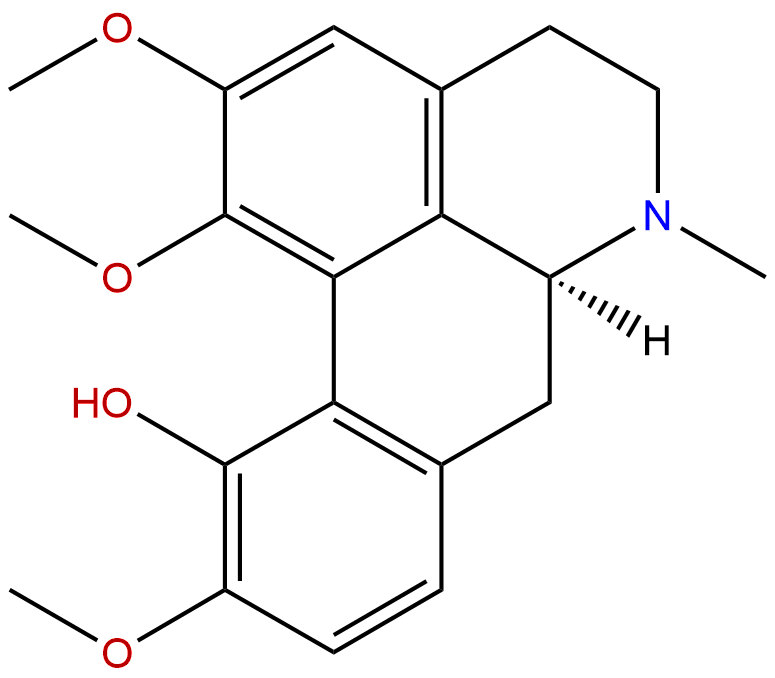


Product name: Isocorydine
Synonym name: (+)-Isocorynoline; (S)-form
Catalogue No.: BP1586
Cas No.: 475-67-2
Formula: C20H23NO4
Mol Weight: 341.407
Botanical Source: " Alkaloid from a wide variety of genera in the Annonaceae (Annona, Enantia, Asimina, Artabotrys), Berberidaceae (Berberis, Mahonia), Lauraceae (Cryptocarya, Dehaasia, Beilschmiedia, Litsea, Phoebe, Ocotea)"
Physical Description: Cryst.
Type of Compound: Alkaloids
Purity: 95%~99%
Analysis Method: HPLC-DAD or/and HPLC-ELSD
Identification Method: Mass, NMR
Packing: Brown vial or HDPE plastic bottle
The product could be supplied from milligrams to grams. Inquire for bulk scale.
We provide solution to improve the water-solubility of compounds, thereby facilitating the variety of activity tests and clinic uses.
For Reference Standard and R&D, Not for Human Use Directly.
References:
Tetrahedron Letters, 1988, 29(50):6621–6623.
A biomimetic synthesis of (±)-corynoline, (±)-11-epicorynoline, (±)-isocorynoline, and (±)-11-epiisocorynoline from corysamine.
METHODS AND RESULTS:
A novel and efficient synthesis of hexahydrobenzo[c]phenanthridine alkaloids, (±)-corynoline, (±)-11-epicorynoline, (+)-Isocorynoline, (-)-isocorynoline,and (±)-11-epiisocorynoline was accomplished from protoberberine alkaloid, corysamine through a biogenetic route.
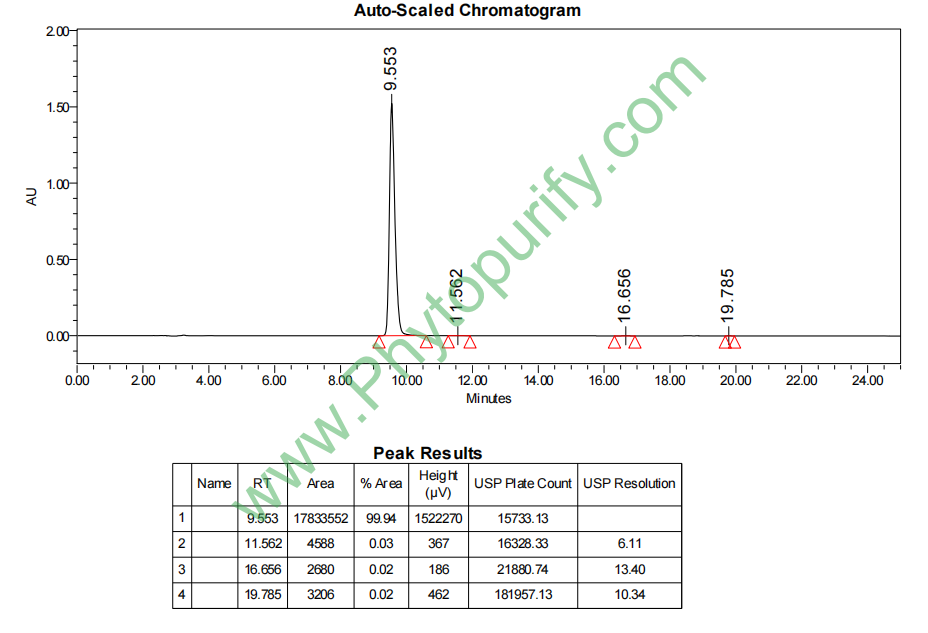
HPLC of Isocorydine
Storage conditions:Short-term storage at 2~8℃, long-term storage at -20 ~ -80℃
51.1600
3.2111
2.6842
.1025
4.3352
10.6771
High
81.3344
3.0756
No
Yes
Yes
No
Yes
No
0.6
Yes
No
No
No
Isocolydine (ICD), CAS number 475-67-2, is an isoquinoline alkaloid with a tetrahydroisoquinoline skeleton. It is mainly isolated from poppy plants, such as the Meloidogyne elegans(Dicranostigma leptopodum). Traditionally, plants containing isoquercetin are commonly used in folk medicine for pain relief, sedation, and anti-inflammatory purposes. In recent years, with the deepening of modern pharmacological research, isoquercetin has shown a wide range of biological activities beyond traditional uses, especially in the field of anti-tumor treatment, which has attracted much attention. Research has shown that its combination with chemotherapy drug doxorubicin (DOX) exhibits significant synergistic potential in the treatment of hepatocellular carcinoma (HCC), providing new ideas for overcoming tumor multidrug resistance and reducing chemotherapy toxicity. In addition, its pharmacological effects in pain relief, cardiovascular protection, anti-inflammatory and other aspects have gradually been revealed. This article aims to systematically review the chemical properties, plant sources, pharmacological activities, molecular mechanisms of action, pharmacological evaluation, and clinical application prospects of isoquercetin alkaloids, in order to provide comprehensive scientific references for the in-depth research and development of this natural product.
The chemical name of isoquinoline alkaloids is 5,6,6a, 7-tetrahydro-1,2,10-trimethoxy-6-methyl-4H-dibenzo [de, g] quinoline, with a molecular formula of C20H23NO4 and a molecular weight of 341.4070. Its core structure is tetrahydroisoquinoline, which belongs to the derivatives of aporphine alkaloids. The structure contains three methoxy groups (- OCH3) and one N-methyl group, and these substituents have a significant impact on its physicochemical properties and biological activity.
From the perspective of pharmacological parameters, its lipid water partition coefficient (LogP) is 3.2111, indicating that the compound has moderate lipophilicity, which is conducive to transmembrane transport and absorption. The topological polar surface area (TPSA) is 51.1600 Å ², which is relatively low, consistent with its good membrane permeability. The water solubility value is 0.1025 mg/mL, which is slightly soluble and may be a limiting factor for its oral bioavailability. It is worth noting that its blood-brain barrier (BBB) permeability is predicted to be "high", suggesting that it may have central nervous system activity, which is consistent with its potential analgesic mechanism. In early safety screening, hERG inhibition was "no", indicating a low risk of causing QT interval prolongation in the heart; The Ames test result is 0.6 (usually expressed as mutation rate, less than 2 is considered negative), indicating that it has no significant genetic toxicity. These physicochemical and preliminary safety parameters have laid a favorable foundation for the subsequent development of isoquinoline alkaloids.
Isoquercetin is mainly found in various plants of the Papaveraceae family. One of its most famous sources is the Meloidogyne elegans(Dicranostigma leptopodum (Maxim.) Fedde), This is a traditional medicinal plant. In addition, in Yanhusuo(Corydalis yanhusuo)Some species of the Thousand Golden Vine genus(Stephania)The Peony Genus in Hebao(Dicentra)The distribution of isoquercetin or its homologs has also been found in plants. The content of alkaloids in plants is significantly influenced by factors such as species, origin, harvest season, and location (such as roots and tubers).
The extraction of isoquercetin from plant materials usually follows the conventional process of natural product chemistry. Firstly, dry and crushed plant materials are extracted or refluxed using polar organic solvents such as methanol, ethanol, or acidified aqueous solutions to dissolve alkaloids from plant cells. Subsequently, utilizing the characteristics of alkaloids, preliminary enrichment was carried out through acid soluble alkali precipitation method: the extraction solution was acidified to dissolve the alkaloids into salts in the aqueous phase, remove lipid soluble impurities, and then alkalized to free the alkaloids, or extracted with organic solvents such as chloroform and ethyl acetate. The crude extract obtained needs to be further separated and purified by column chromatography technology, often using silica gel column chromatography with gradient elution using solvent systems such as chloroform methanol or petroleum ether ethyl acetate in different ratios. By combining thin-layer chromatography (TLC) or high-performance liquid chromatography (HPLC) monitoring, high-purity isoquercetin monomers can ultimately be obtained. Modern technologies such as high-speed countercurrent chromatography (HSCCC) and preparative HPLC have also been applied in their separation and purification processes due to their high efficiency and resolution.
Isoquercetin has diverse pharmacological activities, and its research has expanded from traditional applications to modern disease treatment fields.
Antitumor activity This is currently the most active research direction. A large number of in vitro and in vivo experiments have confirmed that isocyanidine can inhibit proliferation, induce apoptosis, autophagy, migration and invasion of many tumor cells, especially for liver cancer, gastric cancer, breast cancer and leukemia. Its most notable discovery is the synergistic effect with doxorubicin (DOX). In the hepatocellular carcinoma (HCC) model, isoquercetin can significantly enhance the cytotoxicity of DOX, and may reverse tumor cell resistance to DOX by regulating the expression of multidrug resistance related proteins, and alleviate DOX induced cardiac toxicity and other side effects, demonstrating great potential as a chemotherapy sensitizer.
Analgesic effect As one of the active ingredients in traditional analgesics, the analgesic effect of isoquercetin has been experimentally confirmed. Its analgesic mechanism may differ from classical opioid drugs, involving multi-target regulation. Research has shown that it has inhibitory effects on both chemical and thermal pain models, and its effects may be related to regulating central and peripheral pain pathways.
Cardiovascular system function Isoquercetin exhibits anti arrhythmic, negative inotropic, and vasodilatory effects. It can counteract various experimental arrhythmia models, and its mechanism may be related to antagonizing calcium ion channels and affecting the electrophysiological characteristics of myocardial cells. In addition, its vasodilatory effect helps to lower blood pressure.
Other activities The study also suggests that isoquercetin has anti-inflammatory, antioxidant, sedative, and potential anti fibrotic (such as liver fibrosis) activities, indicating a wide range of pharmacological effects.
The pharmacological effects of isoquercetin, especially its analgesic and anti-tumor activities, are closely related to its regulation of multiple molecular targets.
In analgesia In terms of its mechanism of action, it exhibits multi-target characteristics, involving multiple receptors and pathways related to pain perception and regulation:
* Transient receptor potential channel Research has shown that isoquercetin may be TRPV1(Vanillin receptor 1) and TRPA1 Regulators or antagonists of the (anchor protein repeat domain 1) channel. These two channels are key sensors for sensing harmful thermal and chemical stimuli, and their antagonistic effects can produce analgesic effects.
* Endogenous cannabinoid system and opioid system: It is related to CNR1 The interaction of cannabinoid CB1 receptor may be involved in its analgesic and anti-inflammatory regulation. Meanwhile, its impact on OPRM1(μ - opioid receptor)OPRD1(δ - opioid receptor) and OPRK1(kappa opioid receptors) may have regulatory effects, which may be a partial basis for central analgesia.
* Monoamine neurotransmitter system: By influencing SLC6A4 The function of serotonin transporter (SERT), which regulates serotonin neurotransmission, may be involved in its antidepressant and pain emotion regulating components.
* Dopamine system: Yes DRD2 The antagonistic effect of dopamine D2 receptor may be related to its sedative, antiemetic, and pain modulation effects.
* Cyclooxygenase pathway: Yes PTGS1/COX-1 and PTGS2/COX-2 Inhibition may be one of the peripheral mechanisms underlying its anti-inflammatory and analgesic effects.
In antitumor In terms of mechanism, it is more complex and involves multiple signaling pathways:
* cell cycle arrest Tumor cells can be blocked in the G0/G1 or G2/M phase, inhibiting their proliferation.
* Inducing cell apoptosis By upregulating pro apoptotic proteins (such as Bax and cleaved caspase-3) and downregulating anti apoptotic proteins (such as Bcl-2), the mitochondrial apoptosis pathway is activated.
* Induce autophagy In some cases, protective or lethal autophagy can be induced by activating pathways such as AMPK/mTOR.
* Inhibition of epithelial mesenchymal transition (EMT)By downregulating EMT markers such as Snail and N-cadherin, upregulating E-cadherin, and inhibiting tumor cell migration and invasion.
* Reverse multidrug resistance (MDR)It is possible to increase the accumulation of chemotherapy drugs in cells by downregulating the expression or function of drug efflux pumps such as P-gp/ABCB1.
* Regulating key signaling pathways This includes inhibiting survival and proliferation pathways such as PI3K/Akt/mTOR, MAPK (such as ERK, JNK), Wnt/β - catenin, etc.
Based on its physicochemical parameters, isoquercetin has shown certain potential as a drug, but there are also challenges.
Pharmacokinetic study(Mainly based on animal experiments) shows that the absorption of isoquinoline alkaloids is relatively fast after oral administration, but the absolute bioavailability may be limited due to first pass effects and moderate solubility. Its wide distribution, high lipid solubility, and blood-brain barrier permeability allow it to enter the central nervous system, which is consistent with its central analgesic activity. In terms of metabolism, isoquercetin mainly undergoes phase I metabolism in the liver through cytochrome P450 enzyme systems (such as CYP3A4, CYP2D6) for oxidation and demethylation, and combines with glucuronic acid or sulfuric acid to form phase II complexes. It is mainly excreted through the kidneys and bile. Previous studies have focused on the possibility of its interaction with commonly used drugs, especially those metabolized through CYP450.
Pharmaceutical advantages Moderate molecular weight, LogP value within the ideal range (2-5), low TPSA, indicating good membrane permeability and oral absorption potential. The lack of hERG inhibition warning and preliminary Ames negative results provide early positive signals for its safety assessment.
Challenges and optimization directions faced:
1. Water solubility The micro solubility characteristics may limit the development and in vivo absorption of its formulations. Its solubility and dissolution rate can be improved through salt formation techniques (such as forming hydrochloride salts, phosphates), preparation into solid dispersions, cyclodextrin inclusion complexes, or nano formulations (such as liposomes, nanoparticles).
2. bioavailability The first pass effect and metabolic stability are key factors that need to be optimized. Structural modification (such as preparing prodrugs) or rational combination with CYP450 enzyme inhibitors may be one of the strategies.
3. Targeting and toxicity Although the combination with DOX can enhance and reduce toxicity, its potential toxicity to normal cells and selectivity of target action still need to be further evaluated in broader preclinical toxicology studies. Developing tumor targeted delivery systems, such as antibody conjugates and folate modified nanoparticles, is an important way to improve therapeutic efficacy.
As a natural product with multiple targets and activities, isoquercetin has broad clinical application prospects, but solid research is still needed for its transformation.
Future research should focus on:
* In depth mechanism clarification Using chemical biology methods (such as chemical proteomics) to discover its direct target and draw more accurate signal network diagrams.
* Structural optimization and derivative development By rational drug chemical modification, improve its water solubility, metabolic stability, and targeting selectivity, and obtain candidate compounds with better activity and drug properties.
* Innovation in delivery system Vigorously develop nano targeted delivery technology to improve tumor accumulation and reduce systemic toxicity.
* System preclinical and clinical research Complete standardized GLP toxicology evaluation and design rigorous clinical trials to verify its safety and efficacy in humans, especially its synergistic effect when combined with standard therapies.
Isoquinoline alkaloid is an important research value discovered from traditional medicinal plants. From traditional analgesic uses to the focus of modern anti-tumor research, the pharmacological characteristics of its multi-target and multi pathway effects are becoming increasingly clear. Especially in the treatment of hepatocellular carcinoma, the synergistic enhancement and attenuation potential demonstrated by the combination with doxorubicin has injected strong impetus into its development as a chemotherapy sensitizer. Despite facing challenges such as water solubility and metabolic stability in drug development, these obstacles are expected to be overcome through the optimization of modern medicinal chemistry and pharmacology methods. In the future, with the in-depth analysis of its molecular mechanism of action, the rational design of its derivatives, and the application of innovative delivery systems, it is highly likely that isoquercetin will be successfully transformed from an interesting natural product into a clinical new drug for the treatment of major diseases such as tumors and pain, demonstrating the sustained vitality of natural products in innovative drug development.
