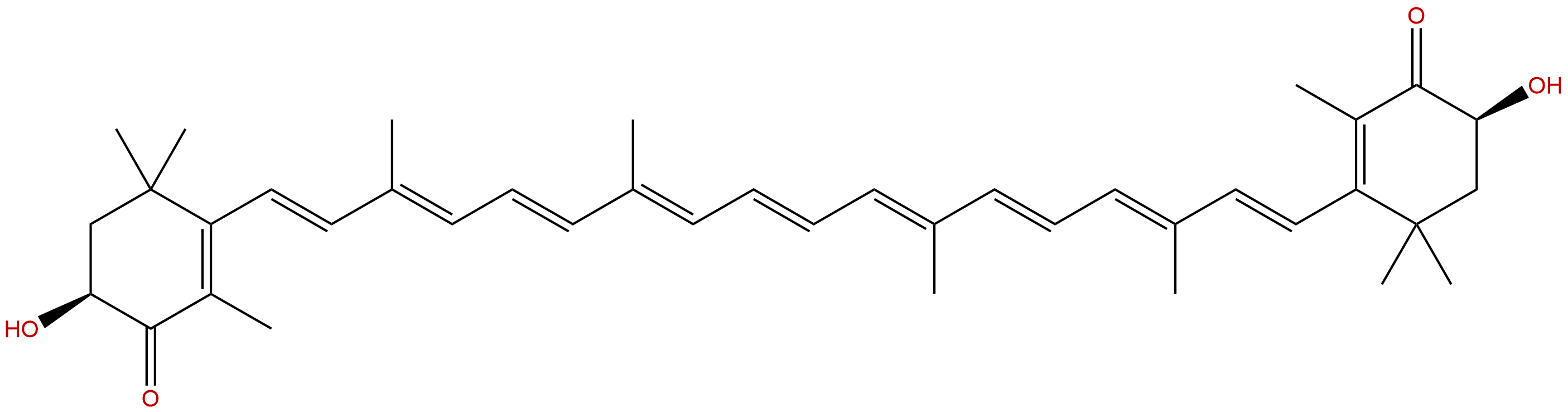


Product name: Astaxanthin
Synonym name:
Catalogue No.: BP1506
Cas No.: 472-61-7
Formula: C40H52O4
Mol Weight: 596.852
Botanical Source: Haematococcus pluvialis
Physical Description: Red powder
Type of Compound: Miscellaneous
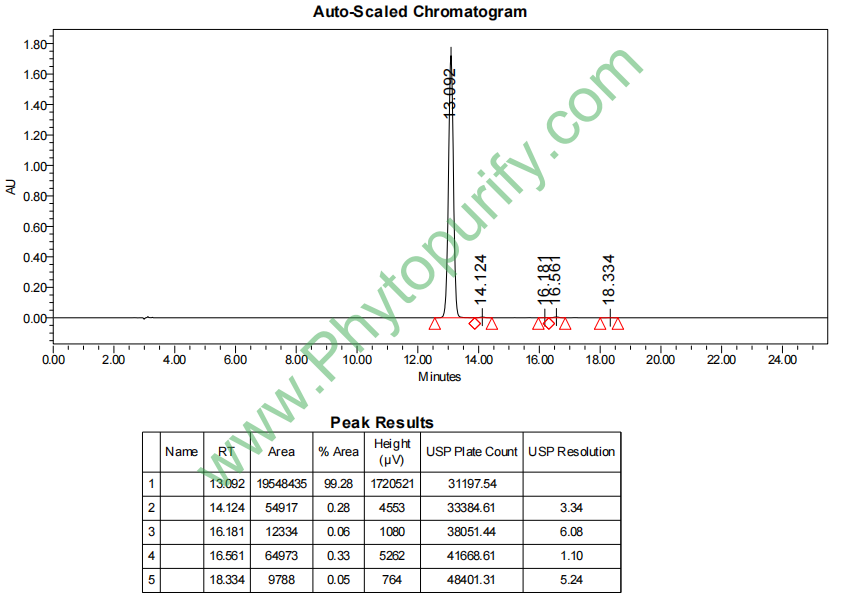
Purity: 95%~99%
Analysis Method: HPLC-DAD or/and HPLC-ELSD
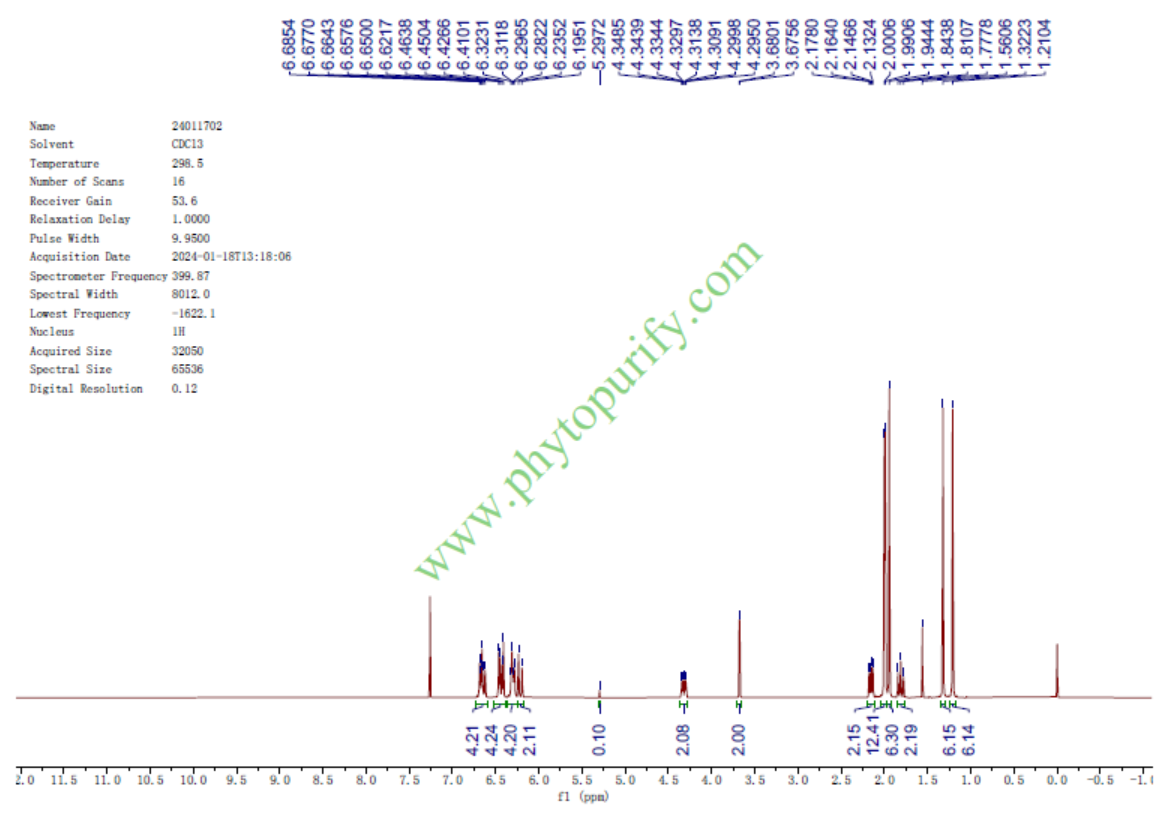
Identification Method: Mass, NMR
Packing: Brown vial or HDPE plastic bottle
The product could be supplied from milligrams to grams. Inquire for bulk scale.
We provide solution to improve the water-solubility of compounds, thereby facilitating the variety of activity tests and clinic uses.
For Reference Standard and R&D, Not for Human Use Directly.
Description:
Astaxanthin is a strong antioxidant which shows neuroprotective property and can reduce the markers of inflammation, it can reduce matrix metalloproteinase expression in human chondrocytes, it may be beneficial in the treatment of osteoarthritis.Astaxanthin has protective effect on fetal alcohol spectrum disorder, and suggests that oxidative stress and TLR4 signaling associated inflammatory reaction are involved in this process. Astaxanthin administration can reduce renal calcium oxalate crystal deposition possibly by modulating the renal renin-angiotensin system (RAS), which reduces the expression of OPN and TGF-β1 levels.
References:
Int Immunopharmacol. 2014 Mar;19(1):174-7.
Astaxanthin reduces matrix metalloproteinase expression in human chondrocytes.
Astaxanthin is a red carotenoid pigment which exerts multiple biological activities. However, little is known about the effects of Astaxanthin on matrix metalloproteinases (MMPs) in OA.
METHODS AND RESULTS:
The present study investigated the effects of Astaxanthin on MMPs in human chondrocytes. Human chondrocytes were pretreated with Astaxanthin at 1, 10 or 50μM, then, cells were stimulated with IL-1β (10ng/ml) for 24h. MMP-1, MMP-3 and MMP-13 were observed. We found that Astaxanthin reduced the expression of MMP-1, MMP-3 and MMP-13 as well as the phosphorylation of two mitogen-activated protein kinases (MAPK) (p38 and ERK1/2) in IL-1β-stimulated chondrocytes. Astaxanthin also blocked the IκB-α degradation.
CONCLUSIONS:
These results suggest that Astaxanthin may be beneficial in the treatment of OA.
Metab Brain Dis. 2015 Jun 27.
The antioxidant effect of astaxanthin is higher in young mice than aged: a region specific study on brain.
Astaxanthin is a potential antioxidant which shows neuroprotective property. We aimed to investigate the age-dependent and region-specific antioxidant effects of Astaxanthin in mice brain.
METHODS AND RESULTS:
Animals were divided into 4 groups; treatment young (3 months, n = 6) (AY), treatment old (16 months, n = 6) (AO), placebo young (3 months, n = 6) (PY) and placebo old (16 months, n = 6) (PO) groups. Treatment group was given Astaxanthin (2 mg/kg/day, body weight), and placebo group was given 100 μl of 0.9% normal saline orally to the healthy Swiss albino mice for 4 weeks. The level of non-enzymatic oxidative markers namely malondialdehyde (MDA); nitric oxide (NO); advanced protein oxidation product (APOP); glutathione (GSH) and the activity of enzymatic antioxidants i.e.; catalase (CAT) and superoxide dismutase (SOD) were determined from the isolated brain regions. Treatment with Astaxanthin significantly (p < 0.05) reduces the level of MDA, APOP, NO in the cortex, striatum, hypothalamus, hippocampus and cerebellum in both age groups. Astaxanthin markedly (p < 0.05) enhances the activity of CAT and SOD enzymes while improves the level of GSH in the brain. Overall, improvement of oxidative markers was significantly greater in the young group than the aged animal.
CONCLUSIONS:
In conclusion, we report that the activity of Astaxanthin is age-dependent, higher in young in compared to the aged brain.
Rev Biol Trop. 2014 Dec;62(4):1331-41.
The effect of astaxanthin on resistance of juvenile prawns Macrobrachium nipponense (Decapoda: Palaemonidae) to physical and chemical stress.
In recent years, the use of new scientific techniques has effectively improved aquaculture production processes. Astaxanthin has various properties in aquaculture and its antioxidant benefits have been closely related to stress resistance; besides, it is an essential factor for growth in many crustaceans and fish. The objective of this study was to evaluate the resistance of prawn (Macrobrachium nipponense) fed diets containing different amounts of Astaxanthin (AX) to the shock and stress of different physicochemical environments.
METHODS AND RESULTS:
A 70-day trial was conducted to evaluate the effect of supplementation of a source of Astaxanthin (Carophyll Pink, 10% Astaxanthin, w/w, Hoffman-La Roche, Switzerland) at various levels in the diet of M. nipponense juveniles. Four dry diets were prepared: AX0 without Astaxanthin, AX50 with 50 mg/kg, AX100 with 100 mg/kg, and AX150 with 150 mg/kg Astaxanthin. The feeding trial was conducted in a recirculation water system consisting of 12 fiberglass tanks (1000L) used for holding prawns. Three replicate aquaria were initially stocked with 36 org/m2 per tank. During the trial, prawns were maintained on a 12:12-h light:dark photoperiod with an ordinary incandescent lamp, and the water quality parameters were maintained as follows: water temperature, 25-26°C; salinity, 1 g/L; pH, 8.5-8.8; dissolved oxygen, 6.0-6.5 mg/L; and ammonia-nitrogen, 0.05 mg/L. Incorporation of AX, production output, and physiological condition were recorded after 10 weeks of feeding. At the end of the growing period, the prawns were exposed to thermal shock (0°C), ammonia (0.75 mg/L), and reduced oxygen (0.5 mg/L). The time to lethargy and the time to complete death of the prawns were recorded. The results showed that control prawns had the shortest time to lethargy and death compared with prawns subjected to the other treatments. The results of this study have shown that the amount of muscle tissue and gill carotenoids in prawn fed with an AX150 diet showed greater reduction than those exposed to other treatments. It is possible that higher levels of Astaxanthin in the body under oxygen reduction stress can be beneficial for prawns.
CONCLUSIONS:
These results suggest that male prawns showed lethargy earlier than females, and the percentage of carotenoid reduction in muscle and gill tissues was higher in males.
HPLC of Astaxanthin
HNMR of Astaxanthin
Storage conditions:Short-term storage at 2~8℃, long-term storage at -20 ~ -80℃
74.6000
7.7378
7.7378
.0003
3.1156
4.5030
High
93.7436
4.6963
No
Yes
Yes
No
No
Yes
0.3
No
Yes
Yes
Yes
Astaxanthin, also known as 3,3 '- dihydroxy - β, β - carotene -4,4' - dione, is a naturally occurring ketone carotenoid with a CAS number of 472-61-7. Since its structure was elucidated, astaxanthin has demonstrated biological activity far beyond many common antioxidants such as beta carotene and vitamin E due to its unique conjugated polyene structure. It not only serves as the main pigment for marine organisms such as salmon, shrimp, and crabs to appear red, but also plays a crucial physiological role in living organisms. Modern pharmacological research has revealed that astaxanthin is an orally effective and potent antioxidant with a wide range of biological activities, including anti-inflammatory, anticancer, neuroprotective, cardiovascular protection, and improvement of metabolic diseases. Its mechanism of action involves the regulation of multiple key signaling pathways, including nuclear factor kappa B (NF - κ B), nuclear factor E2 related factor 2 (NRF2), peroxisome proliferator activated receptor gamma (PPAR gamma), and signal transduction and transcription activating factor 3 (STAT3). This article aims to systematically review the chemical properties, sources, pharmacological activities, molecular mechanisms of action, medicinal properties, and application prospects of astaxanthin in disease prevention and treatment, in order to provide scientific references for the deep development and utilization of this natural product.
The molecular formula of astaxanthin is C40H52O4, with a molecular weight of 596.8520. Its core structure consists of a polyene chain and a six membered ring at the end, each ring carrying a hydroxyl group (- OH) and a ketone group (=O). This unique chemical structure is the foundation of its outstanding biological activity.
1. structural characteristics Astaxanthin exists in various stereoisomers, with the main natural source being the all trans configuration, and different optical isomers (such as 3S, 3'S, 3R, 3'S, 3R, 3'R) can be formed on the 3,3 'hydroxyl group. The conjugated double bond long chain in its molecule is an effective electron transfer system that can efficiently quench singlet oxygen and scavenge free radicals. The hydroxyl and ketone groups at the end give it amphiphilicity, allowing it to anchor to the lipid bilayer of the cell membrane. Its polar end can also extend into the aqueous phase inside and outside the membrane, thereby more effectively protecting the cell membrane from oxidative damage.
2. Physicochemical properties Astaxanthin is a deep red crystal or powder with extremely strong lipid solubility. Its theoretical lipid water partition coefficient (LogP) is as high as 7.7378, and it is almost insoluble in water (with a water solubility of about 0.0003 mg/mL). It is easily soluble in organic solvents such as chloroform, acetone, and dimethyl sulfoxide. Its theoretical polar surface area (TPSA) is 74.6000 Å ². Astaxanthin is sensitive to light, heat, and oxygen, and is particularly prone to isomerization and degradation in solution, which poses challenges for its extraction, preservation, and formulation development. Its strong antioxidant capacity is due to its high reactivity to reactive oxygen species and free radicals in its structure.
Although astaxanthin is widely present in the animal kingdom, especially in crustaceans and salmonids, these animals cannot synthesize astaxanthin on their own, and their sources depend on the transmission of the food chain. The primary producers of astaxanthin are certain microalgae and yeast.
1. natural source:
* Haematococcus pluvialis It is currently recognized as the best biological source of natural astaxanthin. Under adverse conditions such as strong light and nutrient deficiency, the algae will accumulate a large amount of astaxanthin (up to 1-3% of dry weight) to resist oxidative stress, and its astaxanthin esterification form (bound to fatty acids) has higher stability.
* Phaffia rhodozyma A yeast that produces astaxanthin and is also a potential source for industrial production.
* Animal origin Krill, Antarctic krill, shrimp and crab shells, salmon meat, etc., but their content is relatively low and mostly exists in the form of binding with proteins (such as astaxanthin protein complex chitosan).
2. Extraction and preparation methods:
* chemical synthesis Astaxanthin can be synthesized industrially through chemical methods, but its product is a mixture of three stereoisomers (1:2:1), which may differ in bioavailability and biological activity from natural sources (mainly 3S, 3'S configurations).
* Naturally Extracted Extracting high-purity natural astaxanthin from Haematococcus pluvialis is the main way to obtain it. The process includes: algae cultivation and induction → harvesting and wall breaking (mechanical, enzymatic, or chemical methods) → solvent extraction (commonly used supercritical CO2 extraction, which can effectively protect astaxanthin activity due to its low temperature, no solvent residue, and good selectivity) → concentration and purification (chromatographic separation, etc.).
* Biotechnology Law The use of genetic engineering to modify microorganisms (such as Escherichia coli and yeast) for the production of astaxanthin is currently a research hotspot, aimed at increasing yield and reducing costs.
Numerous in vitro and in vivo studies have confirmed that astaxanthin has multiple pharmacological activities.
1. Strong antioxidant activity The ability of astaxanthin to scavenge free radicals (such as singlet oxygen and hydroxyl radicals) is 550 times that of vitamin E and 11 times that of beta carotene. It can effectively inhibit lipid peroxidation, protect low-density lipoprotein (LDL), cell membrane, mitochondria, and DNA from oxidative damage.
2. anti-inflammatory effect Astaxanthin can significantly inhibit the production of pro-inflammatory mediators such as tumor necrosis factor - α, interleukin-1 β, nitric oxide, and prostaglandin E2. Has shown good anti-inflammatory effects in various acute and chronic inflammation models, such as arthritis, colitis, and gastritis.
3. anticancer activity: Studies have shown that astaxanthin has inhibitory effects on a variety of cancer cells (such as breast cancer, colon cancer, liver cancer, prostate cancer, oral cancer), which are manifested in inhibiting cell proliferation, inducing apoptosis, blocking cell cycle (such as G1/S phase), and weakening the migration, invasion and metastasis ability of cancer cells.
4. Neuroprotective effect Astaxanthin can cross the blood-brain barrier and exert antioxidant and anti-inflammatory effects in the brain. Astaxanthin has shown potential in improving cognitive function, reducing neuronal apoptosis, and inhibiting neuroinflammation in neurodegenerative and psychiatric models such as Alzheimer's disease, Parkinson's disease, cerebral ischemia-reperfusion injury, and depression.
5. Eye protection function: Especially for diabetes retinopathy, astaxanthin can reduce retinal vascular leakage and neovascularization and protect photoreceptor cells through antioxidant, anti-inflammatory and down regulating the expression of vascular endothelial growth factor (VEGF).
6. Cardiovascular protective effect Astaxanthin can improve the blood lipid profile (reduce triglyceride and low-density lipoprotein cholesterol, increase high-density lipoprotein cholesterol), inhibit the formation of atherosclerotic plaque, improve vascular endothelial function, reduce blood pressure, and also have a protective effect on myocardial ischemia reperfusion injury.
7. Improving metabolic diseases In the model of diabetes and its complications, astaxanthin can improve insulin sensitivity, reduce blood sugar, and alleviate complications such as diabetes nephropathy and retinopathy.
8. Other activities Enhance immunity, resist fatigue, protect the skin from UV damage, improve sperm quality, etc.
The various pharmacological activities of astaxanthin stem from its diverse regulation of cellular signaling pathways, with its core mechanisms revolving around antioxidant and anti-inflammatory effects, and extending to processes such as apoptosis and proliferation.
1. Activate endogenous antioxidant pathway - NRF2/ARE Astaxanthin is an effective activator of NRF2 (encoded by the NFE2L2 gene). It upregulates the expression of a series of phase II detoxifying enzymes and antioxidant proteins, including heme oxygenase-1 (HMOX1), superoxide dismutase (SOD1, SOD2), catalase (CAT), glutathione peroxidase (GPX1), etc., by promoting the dissociation and translocation of NRF2 and Keap1 to the nucleus, where it binds to antioxidant response elements (ARE). This is the core molecular mechanism by which astaxanthin exerts systemic antioxidant defense.
2. Inhibition of pro-inflammatory and pro cancer pathways - NF - κ B/STAT3:
* Inhibition of NF - κ B Astaxanthin can prevent the phosphorylation and degradation of I κ B α, inhibit the nuclear translocation of NF - κ B p65 subunit, thereby downregulating the expression of its target genes (such as COX-2, iNOS, TNF - α, IL-6, VEGF), which is the key to its anti-inflammatory and partially anticancer effects.
* Regulating STAT3 In cancer research, astaxanthin has been shown to reduce the phosphorylation (activation) of STAT3 and the expression of downstream target proteins (such as Bcl-2, Cyclin D1, MMPs), thereby inhibiting cell proliferation, promoting apoptosis, and weakening invasion and metastasis.
3. Regulating metabolic and differentiation related pathways - PPAR γAstaxanthin can activate PPAR γ, a nuclear receptor that plays a central role in adipocyte differentiation, glucose homeostasis, and inflammation inhibition. The activation of PPAR γ contributes to improving insulin resistance and may be involved in its anti proliferative effects.
4. Direct interaction and enzyme regulation:
* Direct antioxidant Its molecular structure can directly neutralize free radicals.
* Inhibition of matrix metalloproteinases (MMPs)Astaxanthin can down regulate the expression of MMP1 and MMP3, which is related to the inhibition of tumor invasion and metastasis and the stabilization of atherosclerotic plaque.
* Inhibition of Tyrosinase (TYR)Suggesting its potential application in skin whitening.
5. Mitochondrial protection Astaxanthin can localize to mitochondria, maintain their membrane potential, reduce the production of mitochondrial derived reactive oxygen species, and inhibit cell apoptosis through the mitochondrial pathway.
Although astaxanthin has excellent biological activity, its medicinal properties face some challenges.
1. Analysis of drug properties parameters:
* Solubility and permeability The extremely high LogP value (7.7378) and extremely low water solubility make it a class II or IV drug in the Biopharmaceutical Classification System (BCS) with low solubility. This results in low oral bioavailability (<5%). However, its high blood-brain barrier permeability (predicted as "high") is a significant advantage for neuroprotective applications.
* safety The existing data indicates that astaxanthin has good safety. The Ames test result is 0.3, indicating no significant mutagenicity. Predicting the absence of hERG potassium channel inhibition reduces the potential risk of cardiac toxicity. At the recommended dosage, the human body has good tolerance and no significant serious adverse reactions.
2. Pharmacokinetic characteristics:
* absorb After oral administration, astaxanthin is absorbed in the intestine through passive diffusion and mainly enters the systemic circulation through the lymphatic system. Its absorption depends on the presence of dietary fat and bile, and co administration with lipids can significantly improve absorption rate. Natural astaxanthin esters need to be enzymatically hydrolyzed into free form in the intestine for reabsorption.
* distribution After absorption, it mainly binds and transports with plasma lipoproteins (especially low-density lipoprotein), and is widely distributed in lipid rich tissues and organs such as the liver, skin, retina, adrenal glands, testes, and brain.
* Metabolism and excretion Mainly involved in liver metabolism, it may involve oxidation of cytochrome P450 enzymes (such as CYP1A1, CYP1A2) and subsequent binding reactions (glucuronidation, sulfation). Metabolites are mainly excreted through bile and feces, with a small amount excreted through urine. Its half-life varies greatly in different studies, ranging from approximately 16 to 52 hours.
3. Formulation strategy In order to improve bioavailability, current research focuses on various new delivery systems, including liposomes, micro lotion, self microemulsion drug delivery systems (SMEDDS), nano emulsions, cyclodextrin inclusion complexes, phospholipid complexes, and biopolymer based nanoparticles. These techniques can effectively improve the solubility, stability, and intestinal absorption of astaxanthin.
The conversion of astaxanthin from dietary supplements to therapeutic drugs has broad prospects, but there are also many unresolved issues.
1. Current applications and clinical research:
* Dietary supplements and functional foods It has been widely used in fields such as antioxidation, enhancing immunity, relieving visual fatigue, protecting skin health, and sports nutrition.
* Animal feed additives As a coloring agent and health promoter for aquaculture (salmon, trout, shrimp) and poultry farming.
* Clinical research stage: A number of human clinical trials are exploring its efficacy in metabolic syndrome, diabetes retinopathy, age-related macular degeneration, Alzheimer's disease, cardiovascular disease risk reduction, exercise recovery, etc. Some studies have shown positive effects, but larger scale and longer period confirmatory studies are still needed.
2. Future development direction and challenges:
* Deep exploration of mechanisms It is necessary to utilize omics technologies (proteomics, metabolomics) and gene editing tools to more accurately elucidate their role nodes in complex disease networks.
* Structural optimization and derivative development By chemical modification or synthetic biology methods, improve its water solubility and stability, or enhance its specific targeting activity, develop astaxanthin derivatives or analogues.
* Precision delivery system Develop intelligent delivery systems targeting specific organs such as the retina, brain, and tumors to improve efficacy, reduce dosage, and mitigate side effects.
* Upgrading clinical evidence Promote rigorously designed, multicenter, randomized double-blind placebo-controlled Phase III clinical trials to obtain high-level evidence-based medicine to support their registration application as prescription drugs.
* Regulations and Standards We need to establish more unified quality standards, testing methods, and clinical usage guidelines for astaxanthin raw materials and preparations.
Astaxanthin, as a potent multi-target bioactive molecule derived from nature, has been widely proven to have excellent multiple pharmacological effects such as antioxidant, anti-inflammatory, anticancer, and neuroprotective properties. Its mechanism of action involves precise regulation of key signaling pathways such as NRF2, NF - κ B, PPAR γ, STAT3, etc., demonstrating the unique advantages of natural products in complex disease intervention. Despite challenges in terms of solubility and bioavailability, these obstacles are gradually being overcome through innovation in modern formulation technology and delivery systems. With the continuous deepening of basic research and the continuous accumulation of clinical evidence, astaxanthin is expected to move from an excellent dietary supplement ingredient to a valuable therapeutic drug in the fields of ophthalmology, neurodegenerative diseases, metabolic diseases, and tumor adjuvant therapy. In the future, interdisciplinary cooperation will promote the systematic, precise, and industrialized research of astaxanthin, contributing more "red power" from the ocean to human health.
