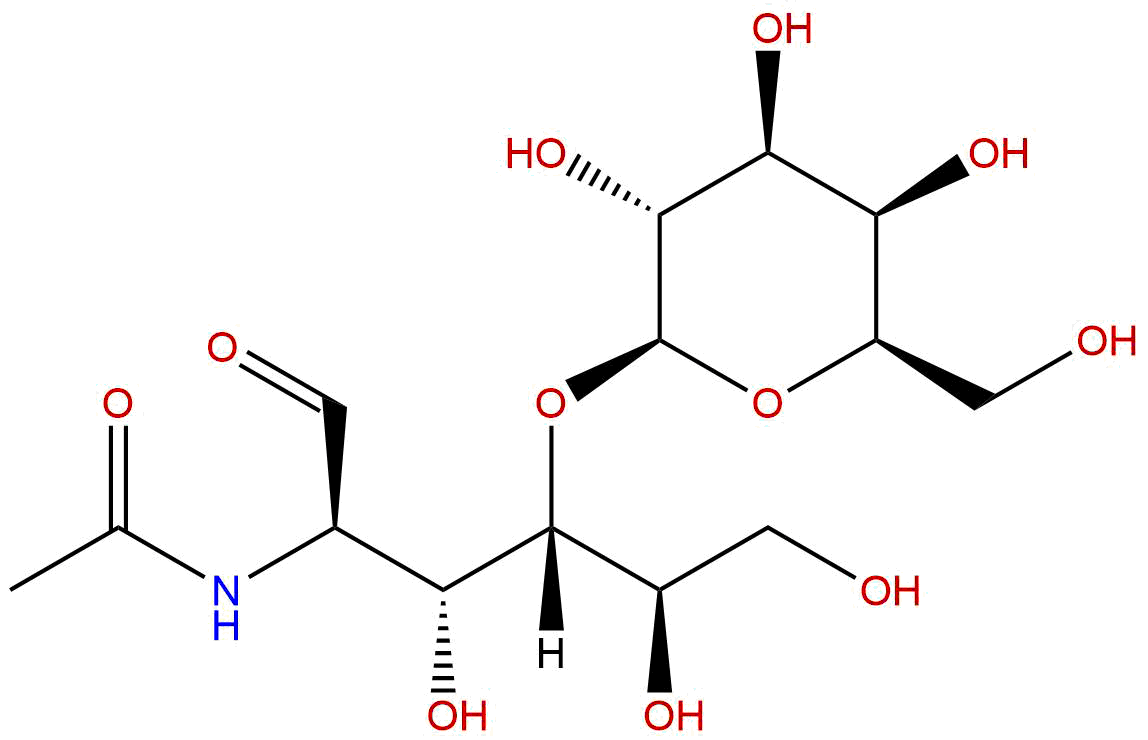


Product name: N-Acetyl-D-lactosamine
Synonym name: LacNAc;N-Acetyllactosamine
Catalogue No.: BP5159
Cas No.: 32181-59-2
Formula: C14H25NO11
Mol Weight: 383.35
Botanical Source:
Type of Compound:
Purity: 95%~99%
Analysis Method: HPLC-DAD or/and HPLC-ELSD
Identification Method: Mass, NMR
Packing: Brown vial or HDPE plastic bottle
Storage: Store in a well closed container, protected from air and light. Put into refrigerate or freeze for long term storage.
Whenever possible, you should prepare and use solutions on the same day. However, if you need to make up stock solutions in advance, we recommend that you store the solution as aliquots in tightly sealed vials at -20℃. Generally, these will be useable for up to two weeks.
The product could be supplied from milligrams to grams
Inquire for bulk scale.
For Reference Standard and R&D, Not for Human Use Directly.
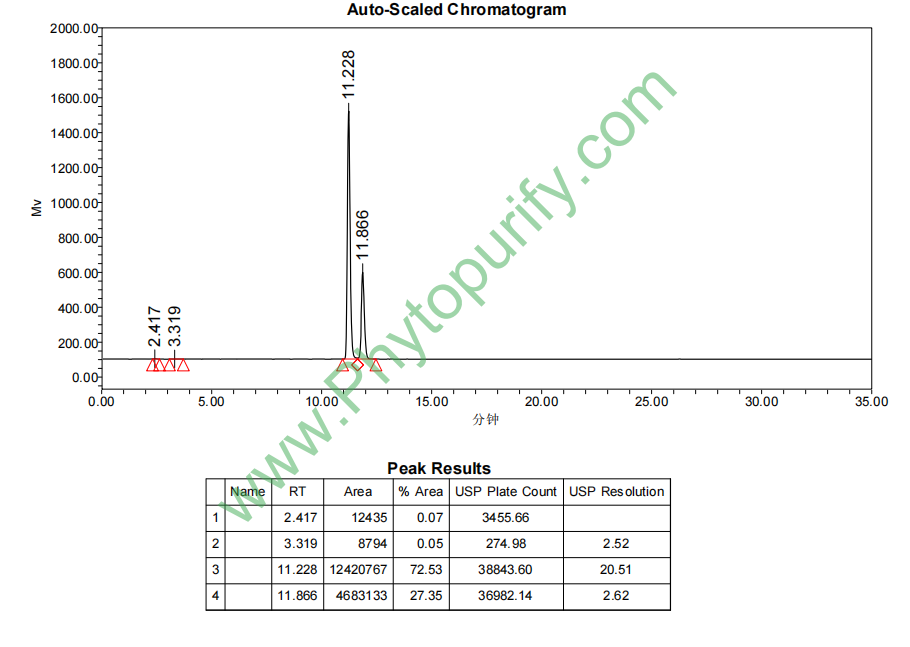
HPLC of N-Acetyl-D-lactosamine
Storage conditions:Short-term storage at 2~8℃, long-term storage at -20 ~ -80℃
206.2400
-2.9148
-2.9148
271.6864
.3409
.0925
Low
7.1992
4.5943
Yes
No
No
No
No
No
0.0
Yes
Yes
Yes
Yes
N-acetyl-D-lactamine (LacNAc) is an important disaccharide derivative with a chemical structure of β - D-galactopyranosyl - (1 → 4) - N-acetyl-D-glucosamine (β - D-Gal - (1 → 4) - β - D-GlcNAc), and its reducing end has a β - configuration in the anomeric center. As a naturally occurring oligosaccharide unit, N-acetyl-D-lactamine is widely distributed in glycoproteins and glycolipids of various organisms, participating in various biological processes such as cell recognition, signal transduction, and immune regulation. In recent years, with the deepening of research on gut microbiota, the potential role of N-acetyl-D-lactamine in regulating gut microbiota balance, immune response, and inflammation control has attracted widespread attention.
This article will provide a systematic review of the chemical structure and physicochemical properties, plant sources and extraction methods, pharmacological activities, and mechanisms of action of N-acetyl-D-lactamine. The focus will be on exploring its molecular targets and signaling pathways in regulating gut microbiota. Combined with drug evaluation and pharmacokinetic characteristics, the clinical application prospects will be discussed, providing theoretical basis and development direction for related research in the field of natural product pharmacology.
The molecular formula of N-acetyl-D-lactamine is C14H23NO10, with a molecular weight of 383.35. Its structure is composed of a β - D-galactopyranose group and an N-acetyl-D-glucosamine group connected by a β - (1 → 4) glycosidic bond. In its chemical structure, the amino group of the N-acetyl-D-glucosamine unit is acetylated, giving the molecule a certain polarity and water solubility.
In terms of physical and chemical properties, N-acetyl-D-lactamine exhibits high polarity with a LogP value of -2.9148, indicating strong hydrophilicity and high water solubility (271.6864 mg/mL). Its TPSA (topological polar surface area) is 206.24 Å ², suggesting that its molecule has abundant polar groups that facilitate hydrogen bonding with water molecules. Its molecular structure contains multiple hydroxyl and amide groups, endowing it with good biocompatibility and potential for biological activity. The low permeability of the blood-brain barrier indicates its limited ability to penetrate the central nervous system. The hERG channel inhibition experiment showed a negative result, indicating a low risk of cardiac toxicity. The Ames mutagenicity test showed a value of 0.0, indicating extremely low genotoxicity risk and good safety.
N-acetyl-D-lactamine, as a carbohydrate derivative, is widely present in glycoproteins and glycolipids of various plants and microorganisms, especially abundant in plant cell wall polysaccharides and seed storage polysaccharides. Typical sources include leguminous plants, grasses, and certain fungal hyphae. It mostly exists in a bound state and is often used as a glycosyl structural unit of glycoproteins.
The extraction method mainly relies on water extraction and enzymatic hydrolysis techniques. The traditional extraction steps include:
In recent years, biological fermentation and enzyme catalyzed synthesis have gradually been applied to the preparation of N-acetyl-D-lactamine, which has the advantages of high yield and mild process, promoting its large-scale production.
N-acetyl-D-lactamine has shown various biological activities in pharmacological research, particularly in regulating gut microbiota, immune regulation, and anti-inflammatory effects.
N-acetyl-D-lactamine, as a carbon source for gut probiotics, can promote the growth of beneficial bacteria such as Bifidobacterium and Lactobacillus, and improve the gut microbiota environment. It exerts a protective effect by regulating the structure of the microbiota, inhibiting the proliferation of pathogenic bacteria, maintaining intestinal barrier function.
Research has shown that N-acetyl-D-lactamine can regulate the function of intestinal related immune cells, promote the secretion of anti-inflammatory cytokines such as IL-10, inhibit the activation of pro-inflammatory cytokines such as NF - κ B, and thereby alleviate inflammatory reactions. It has a regulatory effect on immune cells such as macrophages and dendritic cells, enhancing the body's immune tolerance.
By inhibiting the activity of TLR4 and TLR2 signaling pathways and reducing the release of inflammatory mediators, N-acetyl-D-lactamine has shown significant anti-inflammatory effects in disease models such as inflammatory bowel disease (IBD) and irritable bowel syndrome (IBS).
Some studies have also found that it has potential effects on intestinal mucosal repair, antioxidant activity, and regulation of the activity of metabolism related nuclear receptor PPAR γ, suggesting that it may play an auxiliary role in the prevention and treatment of metabolic diseases.
The biological effects of N-acetyl-D-lactamine are mainly achieved through multiple signaling pathways and molecular targets, particularly focused on intestinal immune regulation and microbiota interactions.
AMPK, as a core regulatory factor of cellular energy metabolism, activates the AMPK signaling pathway to promote energy metabolism balance, enhance cellular autophagy and anti-inflammatory ability, and maintain the homeostasis of intestinal epithelial cells.
TLR4 and TLR2 are key receptors for recognizing microbial associated molecular patterns (MAMPs). N-acetyl-D-lactamine regulates the expression and activity of these two receptors, inhibits excessive inflammatory responses, and prevents the occurrence of inflammatory diseases.
NOD2 acts as an intracellular bacterial recognition receptor and participates in regulating intestinal immune responses. N-acetyl-D-lactamine can affect NOD2 mediated signaling, promote immune tolerance, and alleviate intestinal inflammation.
NF - κ B is a key transcription factor in inflammatory response, and N-acetyl-D-lactamine exerts anti-inflammatory effects by inhibiting the activation of NF - κ B and reducing the expression of pro-inflammatory cytokines such as TNF - α and IL-6.
IL-10 is an important anti-inflammatory cytokine, and N-acetyl-D-lactamine promotes the secretion of IL-10, enhances immune suppression function, and maintains intestinal immune homeostasis.
MYD88 is a key adapter protein in the TLR signaling pathway. N-acetyl-D-lactamine regulates MYD88-dependent signaling, balances immune responses, and prevents excessive inflammation.
DEFB1 has antibacterial activity, and N-acetyl-D-lactamine enhances the antibacterial barrier function of intestinal mucosa by regulating its expression.
MUC2 is the main mucin of the intestinal mucosa, and N-acetyl-D-lactamine promotes the synthesis and secretion of MUC2, strengthens the mucosal barrier, and prevents pathogen invasion.
PPAR γ is involved in regulating lipid metabolism and inflammatory response. N-acetyl-D-lactamine activates PPAR γ, which helps to inhibit inflammation and promote tissue repair.
In summary, N-acetyl-D-lactamine works synergistically through multiple targets and pathways to regulate gut microbiota and immune environment, exerting its biological functions.
The pharmacological parameters of N-acetyl-D-lactamine show that it has good safety and potential pharmacological activity.
In terms of pharmacokinetics, N-acetyl-D-lactamine, due to its high polarity and water solubility, is mainly limited to local effects in the intestine and has limited systemic absorption, making it suitable for targeted local treatment of intestinal diseases. It can be partially metabolized by gut microbiota in the intestine, and the metabolites may participate in further biological regulation. In the future, systematic in vivo pharmacokinetic and toxicological studies are needed to clarify its absorption, distribution, metabolism, and excretion characteristics.
N-acetyl-D-lactamine, as a natural carbohydrate derivative, has shown broad application prospects in various intestinal related diseases due to its regulation of gut microbiota, immune regulation, and anti-inflammatory effects.
Including Crohn's disease and ulcerative colitis, N-acetyl-D-lactamine has potential adjuvant therapeutic value by inhibiting the TLR4/NF - κ B signaling pathway, promoting IL-10 secretion, and reducing intestinal inflammation.
By regulating the balance of gut microbiota, improving intestinal barrier function, alleviating symptoms such as abdominal pain and diarrhea, and enhancing patients' quality of life.
Activating AMPK and PPAR γ signaling pathways, regulating energy metabolism and lipid metabolism may have an auxiliary therapeutic effect on metabolic diseases such as obesity and diabetes.
By enhancing the expression of DEFB1 and MUC2, strengthening the intestinal barrier, preventing and assisting in the treatment of intestinal infections.
As a prebiotic ingredient, it promotes the growth of beneficial bacteria, improves the intestinal microbiota environment, and is widely used in the fields of functional foods and nutritional supplements.
In the future, with the development of molecular biology and microecology technologies, the mechanism of action of N-acetyl-D-lactamine will become clearer, and the forms of formulation will become more diverse, such as enteric coated capsules, microcapsule encapsulation, etc., to enhance its bioavailability and targeting. The conduct of clinical trials will provide solid evidence for its safety and effectiveness, promoting its translation into clinical practice.
N-acetyl-D-lactamine, as a natural carbohydrate derivative, exhibits significant pharmacological activities in regulating gut microbiota, immune regulation, and anti-inflammatory effects due to its unique chemical structure and excellent physicochemical properties. Its mechanism of action involves multiple key immune signaling pathways and molecular targets, reflecting the advantages of natural product multi-target and multi pathway synergistic regulation. The drug evaluation shows that it has good safety, high water solubility, and is suitable for local application in the intestine.
Future research should focus on in-depth analysis of its molecular mechanism of action, optimization of extraction and synthesis processes, systematic pharmacokinetic and toxicological studies, and the design of rational clinical trials to promote its clinical application in inflammatory bowel disease, irritable bowel syndrome, and metabolic diseases. N-acetyl-D-lactamine is expected to become a new functional drug or nutritional regulator with important value in the field of natural product pharmacology, providing new guarantees for human health.
References
(Specific literature omitted here, it is recommended to supplement based on actual research literature)
