| Catalog No | Package | Original Price | Price | Inventory | Quantity | Operating |
|---|---|---|---|---|---|---|
| BP0506-20mg | 20mg | $30.00 | Sign in |
|


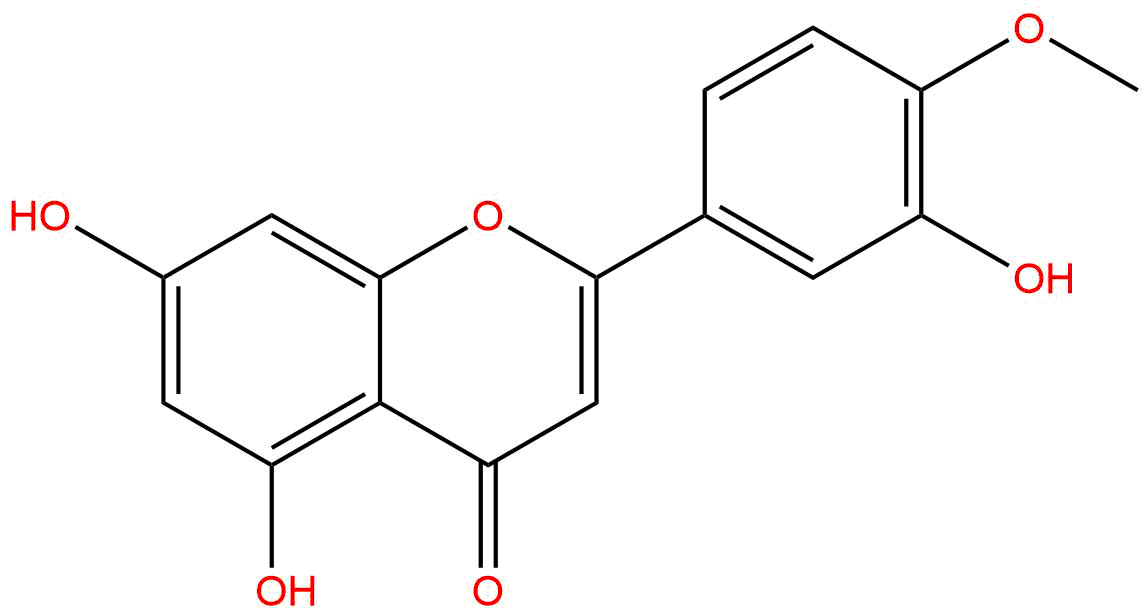
Product name: Diosmetin
Synonym name: 3',5,7-Trihydroxy-4'-methoxyflavone; Luteolin 4′-methyl ether; Salinigricoflavonol; Vitamin P
Catalogue No.: BP0506
Cas No.: 520-34-3
Formula: C16H12O6
Mol Weight: 300.266
Botanical Source: Citrus limon (L.) Burm. f.
Physical Description:
Type of Compound: Flavonoids
Purity: 95%~99%
Analysis Method: HPLC-DAD or/and HPLC-ELSD
Identification Method: Mass, NMR
Packing: Brown vial or HDPE plastic bottle
Storage: Store in a well closed container, protected from air and light. Put into refrigerate or freeze for long term storage.
Whenever possible, you should prepare and use solutions on the same day. However, if you need to make up stock solutions in advance, we recommend that you store the solution as aliquots in tightly sealed vials at -20℃. Generally, these will be useable for up to two weeks.
The product could be supplied from milligrams to grams
Inquire for bulk scale.
Chengdu Biopurify Phytochemicals Ltd. is a leading company in the research, development, manufacture and marketing of High Quality Phytochemicals and Extracts(especially Active Ingredients from Traditional Chinese Medicine,TCM), Natural Active Pharmaceutical Ingredients worldwide.
The main services:
A. Supply active ingredients and reference standards of TCM, from mgs to kgs scale
B. Custom extraction and purification, target Herb Active Ingredients
C. Custom synthesis and semi-synthesis for Natural Active Ingredients
D. CR(contract research), CM(contract manufacture) and PD(process development) services from lab scale, pilot scale to commercial scale(GMP is also available)
E. TCM compounds library for drug screen,more than 3000 compounds available, many of them are rare and unique.
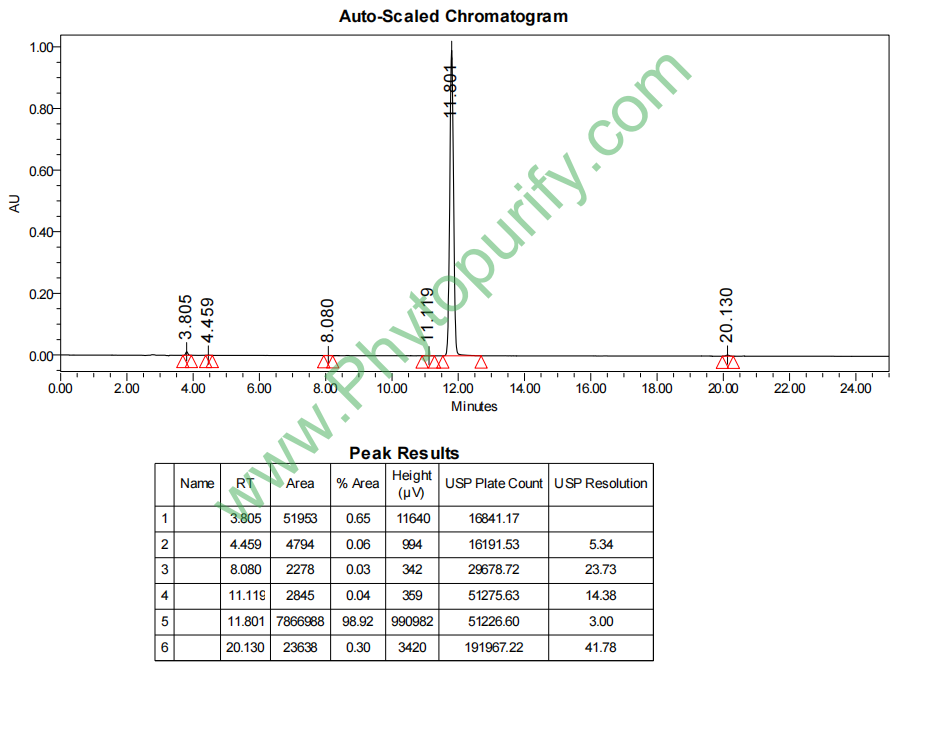
HPLC of Diosmetin
Storage conditions:Short-term storage at 2~8℃, long-term storage at -20 ~ -80℃
100.1300
2.2286
1.9121
.0397
3.1576
31.0966
Low
91.2910
2.3463
Yes
No
Yes
No
Yes
No
0.6
No
No
Yes
No
Natural products have long been an important source of innovative drug discovery, with flavonoid compounds receiving much attention due to their broad biological activity and low toxicity. Diosmetin, also known as 5,7-dihydroxy-2- (3-hydroxy-4-methoxyphenyl) -4H-phenylpyran-4-one, is an important monomethoxyflavonoid. As a 4 '- methyl ether derivative of luteolin, it is widely present in citrus fruits and various medicinal plants. Early research mainly focused on its antioxidant properties, but with the development of molecular pharmacology, the pharmacological activities of lignin in various aspects such as anti-tumor, anti-inflammatory, cardiovascular protection, and neuroprotection have gradually been revealed. Especially as an effective inhibitor of human cytochrome P450 1A (CYP1A) enzyme (IC50 of 40 μ M in HepG2 cells), it suggests its potential value in chemoprevention and drug interactions. This article aims to provide a systematic review of the chemical properties, plant sources, pharmacological activities, molecular mechanisms of action, and medicinal properties of lignin from fragrant leaves, and to explore its clinical application prospects as a candidate drug or functional ingredient.
The molecular formula of lignin in fragrant leaves is C16H12O6, with a molecular weight of 300.2660. Its core structure is the flavonoid nucleus, characterized by the presence of two phenolic hydroxyl groups at positions 5 and 7 of the A ring, a hydroxyl group at position 3 'of the B ring, and a methoxy group at position 4'. This specific substitution pattern of hydroxyl and methoxy groups is the key structural basis for its biological activity, affecting its electron distribution, hydrogen bonding ability, and interaction with biomolecules.
In terms of physical and chemical properties, lignin exhibits typical flavonoid characteristics. The calculated lipid water partition coefficient (LogP) is 2.2286, indicating that it has moderate lipophilicity and is conducive to transmembrane transport. The topological polar surface area (TPSA) is 100.1300 Å ², reflecting the area occupied by polar functional groups (such as hydroxyl and carbonyl) in the molecule. Its water solubility is relatively low, about 0.0397 mg/mL, which to some extent limits its bioavailability. Fragrant leaf lignin is a light yellow crystalline powder at room temperature, with characteristic absorption peaks at around 250 nm and 350 nm in its UV absorption spectrum, which can be used for qualitative and quantitative analysis. The presence of catechol (ring A) and meta phenyltriphenylphenol (ring B) in its structure endows it with strong metal chelating ability and potential for free radical scavenging.
Fragrant lignin is widely distributed in nature and mainly comes from citrus plants in the Rutaceae family, such as lemon, lime, and citrus peel and leaves. In addition, there are also high levels in leguminous plants such as catnip, lip shaped plant rosemary, and olive leaves. In these plants, vanillin often exists in the form of free glycosides or its glycosides (such as Diosmin).
Organic solvent extraction is commonly used to extract lignin from plant materials. Polar solvents such as methanol, ethanol, and acetone are commonly used due to their good solubility in flavonoids. In order to improve extraction efficiency and selectivity, modern extraction techniques such as ultrasound assisted extraction, microwave-assisted extraction, and supercritical fluid extraction have been widely used. For example, using a 70% ethanol solution for ultrasonic extraction can effectively enrich lignin from citrus peels. After extraction, further separation and purification steps are usually required, such as macroporous resin adsorption, silica gel column chromatography, preparative high-performance liquid chromatography, etc., to obtain high-purity lignin monomers. Its glycoside form, naringin, can be hydrolyzed and converted into naringin by gut microbiota in vivo, which is also one of the important pathways for its pharmacological effects.
Numerous in vitro and in vivo studies have confirmed that lignin from fragrant leaves has diverse pharmacological activities, making it a potential candidate molecule for multi-target therapy.
The various pharmacological activities of lignin in fragrant leaves stem from its regulation of multiple signaling pathways within cells and its interactions with multiple key target proteins.
In Mechanism of anti-tumor action In terms of function, the action of lignin in fragrant leaves is multi-target:
* Inducing cell apoptosis By downregulating the expression of anti apoptotic proteins B cell lymphoma 2 (BCL2) and myeloid leukemia 1 (MCL1), while upregulating pro apoptotic proteins, the mitochondrial apoptosis pathway is activated.
* Inhibit survival signals It can effectively inhibit the phosphorylation and activation of signal transduction and transcription activator 3 (STAT3), and block the transcription of downstream genes that promote survival and proliferation.
* Inhibit invasion and metastasis Downregulate the expression and activity of matrix metalloproteinase-2 (MMP2), thereby inhibiting the degradation and invasion of extracellular matrix by cancer cells.
* Interference with DNA metabolism and hypoxia response By inhibiting the activity of topoisomerase I (TOP1) and topoisomerase II alpha (TOP2A), it interferes with DNA replication and repair. At the same time, inhibiting the stability and transcriptional activity of hypoxia inducible factor-1 alpha (HIF1A) disrupts tumor hypoxia adaptation and angiogenesis.
* Regulating kinases and hormone pathways Inhibiting the activity of mitogen activated protein kinase 1 (MAPK1/ERK2) and affecting cell proliferation signaling. In addition, its regulatory effect on estrogen receptor alpha (ESR1) and aromatase (CYP19A1) may play an important role in the treatment of hormone dependent tumors (such as breast cancer).
its Anti inflammatory and antioxidant mechanisms Involved in inhibiting the activation of inflammation related transcription factors such as nuclear factor kappa B (NF - κ B) and activator protein-1 (AP-1), while activating the Nrf2/ARE antioxidant defense pathway.
Cardiovascular protection mechanism Related to promoting nitric oxide synthesis, inhibiting abnormal proliferation of vascular smooth muscle cells, and their inherent antioxidant stress resistance. But Neuroprotective effect It is mainly related to the activation of TrkB receptors, which in turn activate downstream survival pathways such as PI3K/Akt and MAPK/ERK.
Although the pharmacological activity of lignin in fragrant leaves is significant, its medicinal properties still need to be comprehensively evaluated.
Fragrant leaf lignin exhibits broad potential for conversion from dietary supplements to therapeutic drugs.
Xiangye lignin, as a natural source of monomethoxyflavonoids, has become a star molecule in natural product pharmacology research due to its multifaceted pharmacological activities and multi-target mechanisms of action. From inhibiting CYP1A enzyme to regulating multiple key targets such as STAT3, BCL2, TrkB, its biological effects cover multiple major disease fields such as cancer, inflammation, cardiovascular and neurological diseases. Despite facing challenges such as low bioavailability in drug development, these obstacles are expected to be overcome through the modification and optimization of modern medicinal chemistry and pharmacology methods. In the future, with the continuous deepening of basic research and the continuous promotion of translational applications, lignin and its derivatives are expected to move from the laboratory to clinical practice, providing important lead compounds and scientific basis for the development of new, efficient, and low toxicity multi-target therapeutic drugs.
