


Product name: Jaceosidin
Synonym name:
Catalogue No.: BP0806
Cas No.: 18085-97-7
Formula: C17H14O7
Mol Weight: 330.292
Botanical Source: Centaurea arguta, Digitalis lanata, Artemisia arctica, Liatris chapmanii, Liatris gracilis, Helichrysum viscosum and others
Physical Description: Yellow powder
Type of Compound: Flavonoids
Purity: 95%~99%
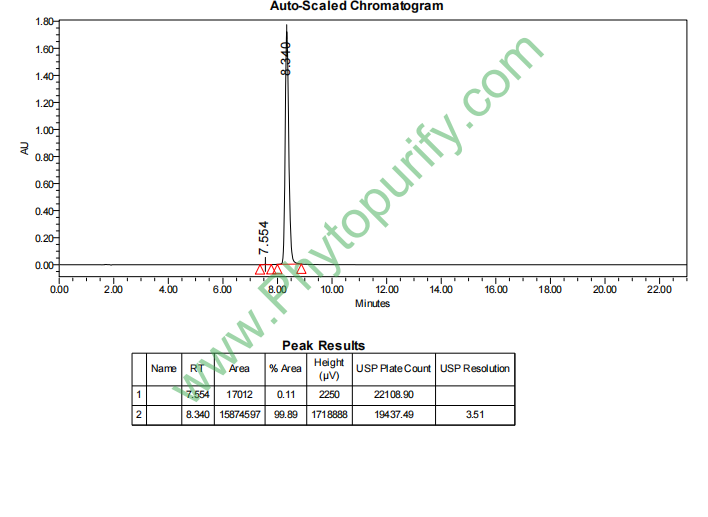
Analysis Method: HPLC-DAD or/and HPLC-ELSD
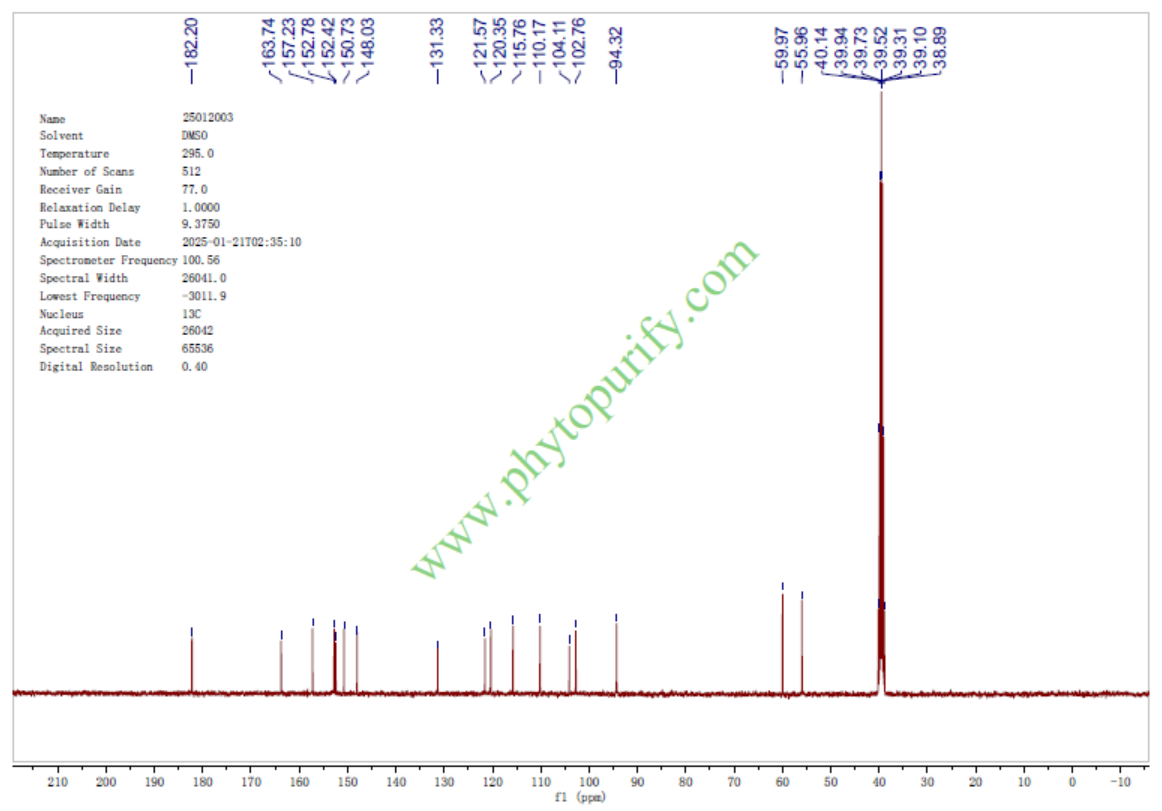
Identification Method: Mass, NMR
Packing: Brown vial or HDPE plastic bottle
Storage: Store in a well closed container, protected from air and light. Put into refrigerate or freeze for long term storage.
Whenever possible, you should prepare and use solutions on the same day. However, if you need to make up stock solutions in advance, we recommend that you store the solution as aliquots in tightly sealed vials at -20℃. Generally, these will be useable for up to two weeks.
The product could be supplied from milligrams to grams, up to kilograms
Inquire for bulk scale.
Descriptions:
Jaceosidin and Eupatilin are bioactive flavones found in the medicinal herbs of the genus Artemisia, exhibit various antioxidant, antiinflammatory, antiallergic, and antitumor activities, jaceosidin is a competitive inhibitor of CYP1A2 with a K(i) value of 3.8 microM and a mixed-type inhibitor of CYP2C9 with K(i) value of 6.4 microM in human liver microsomes.[1]
Jaceosidin has anti-inflammatory effect, may reduce inflammation by inhibiting NF-kappaB activation.[2]
Jaceosidin has anticancer effect and antiproliferation effect , may be contributed by an induction of apoptosis involving cytochrome c release from mitochondria to cytosol, induces apoptosis in ras-transformed human breast epithelial cells through generation of reactive oxygen species.[3,4]
Jaceosidin exerts growth inhibitory effect by arresting the cells at G2/M phase and induction of apoptosis.[5]
References:
[1] Ji H Y, Kim S Y, Kim D K, et al. Molecules, 2010, 15(9):6466-75.
[2] Min S W, Kim NJBaek N I. J Ethnopharmacol, 2009, 125(3):497-500.
[3] Min‐Jung K, Do‐Hee K, Won L K, et al. Ann N Y Acad Sci, 2007, 1095(1):483-95.
[4] Lv W, Sheng X, Chen T, et al. J Biomed Biotechnol, 2008(1):394802.
[5] Khan M, Yu B, Rasul A, et al. Evid-based Compl Al, 2011, 2012(1):72-79.
[6] Zhou Q, Sun L L, Jiang B, et al. China Pharmacy, 2013, 24(47):4464-6.
HPLC of Jaceosidin
NMR of Jaceosidin
Storage conditions:Short-term storage at 2~8℃, long-term storage at -20 ~ -80℃
109.3600
2.2584
1.9585
.0133
4.1461
19.3996
Low
90.9978
2.4592
Yes
No
Yes
No
Yes
No
0.6
Yes
No
Yes
No
Natural products, as an important source of drug discovery, play an irreplaceable role in the long history of human fight against diseases. Flavonoids, as the most widely distributed class of secondary metabolites in nature, have attracted much attention due to their structural diversity and extensive biological activity. Among numerous flavonoids, Jaceosidin, as a natural polyphenol with unique pharmacological activity, has gradually become a research hotspot in the field of natural product pharmacology in recent years.
Brown cornflower extract, chemically known as 4 ', 5,7-trihydroxy-3', 6-dimethoxyflavone, is a typical methylated flavonoid. This compound was initially isolated and identified from Asteraceae plants, especially in the Artemisia genus(Artemisia)Plants are rich in content. Its name comes from its first discovered plant source - the cornflower genus(Centaurea)Plants. Brown cornflower extract has a long history of application in traditional medicine, and various plants containing this compound are used to treat diseases such as inflammation, infections, and tumors. Modern pharmacological research has confirmed that cyanidin has significant biological activities such as anti-cancer, anti-inflammatory, antioxidant, and neuroprotective effects. Its mechanism of action involves regulating cell apoptosis, inhibiting inflammatory signaling pathways, activating antioxidant defense systems, and other aspects.
With the continuous deepening of research on zeaxanthin, its molecular targets and signaling pathways are gradually being elucidated. Research has shown that brown cornflower extract can induce tumor cell apoptosis by activating Bax protein, downregulating the expression of Mcl-1 and c-FLIP; Meanwhile, it can also inhibit the expression of COX-2 and exert anti-inflammatory effects by regulating the NF - κ B signaling pathway. In addition, brown cornflower extract has shown great potential in antioxidant damage, as it can activate the NRF2/ARE signaling pathway and upregulate the expression of various antioxidant enzymes. These findings not only reveal the multi-target action characteristics of cyanidin, but also provide scientific basis for its potential applications in cancer, inflammatory diseases, and oxidative stress-related diseases.
This article will provide a systematic review of the research progress of cyanidin from the aspects of chemical structure and physicochemical properties, plant sources and extraction methods, pharmacological activity research, mechanism of action and molecular targets, drug evaluation and pharmacokinetics, and explore its clinical application prospects and future development directions.
The chemical structure of cyanidin belongs to the flavonoid subclass of flavonoids, and its parent nucleus is a 2-phenylchromone structure. Specifically, the chemical name of brown cornflower extract is 4 ', 5,7-trihydroxy-3', 6-dimethoxyflavone, with a molecular formula of C ₁₇ H ₁₄ O ₇ and a molecular weight of 330.2920 g/mol. Its structural features include: hydroxyl substitution at positions C-5 and C-7 of ring A, and methoxy substitution at position C-6; The C-3 'position of the B ring is substituted with methoxy, and the C-4' position is substituted with hydroxyl. This unique substitution pattern endows cyanidin with physicochemical properties and biological activity that distinguish it from other flavonoids.
From the perspective of structure activity relationship, multiple phenolic hydroxyl groups in the molecule of brown cornflower are key functional groups for its antioxidant activity, which can effectively scavenge free radicals and chelate metal ions. The substitution of methoxy groups at positions C-6 and C-3 'increases the lipophilicity of the molecule, facilitating its transmembrane transport and binding to the hydrophobic region of the target protein. In addition, the ortho dihydroxy structure of the B ring (3 '- methoxy-4' - hydroxy) is a common feature of many flavonoids with strong biological activity and is considered closely related to anti-inflammatory and anticancer activities.
In terms of physical and chemical properties, cyanidin is a yellow needle shaped crystal with a melting point of 261-263 ° C. Its lipid water partition coefficient (LogP) is 2.2584, indicating that the compound has moderate lipophilicity and can be well distributed in a lipid environment. The topological polar surface area (TPSA) is 109.3600 Å ², which is within the conventional range for oral drugs (usually less than 140 Å ²), indicating its good oral absorption potential. However, the water solubility of brown cornflower extract is poor, only 0.0133 mg/mL, which to some extent limits its bioavailability and clinical application. The low blood-brain barrier permeability of this compound indicates its limited distribution in the central nervous system, which may be beneficial for reducing central nervous system related side effects, but also limits its potential application in neurodegenerative diseases.
It is worth noting that the hERG inhibition risk of brown cornflower extract is low, with an Ames test result of 0.6, indicating a low genetic toxicity risk. This provides a favorable basis for its safety evaluation as a candidate drug. However, poor water solubility and potential metabolic instability remain the main obstacles that need to be overcome in the development of its drug properties.
Brown cornflower extract is widely distributed in nature, mainly found in Asteraceae plants, especially in the Artemisia genus(Artemisia)The cornflower genus(Centaurea)The genus of Hedyotis(Gnaphalium)Plants of the same genus. among which,Artemisia vestita Tibetan artemisia is one of the important sources of zeaxanthin, which is used in traditional Tibetan medicine to treat diseases such as fever, inflammation, and tumors. In addition, Artemisia annua(Artemisia argyi)Artemisia annua(Artemisia annua)Artemisia scoparia, Artemisia scoparia(Artemisia capillaris)Many species of Artemisia plants also contain zeaxanthin. Other plants rich in zeaxanthin include Centaurea scabiosa、Gnaphalium affine(Mouse mold grass) as well as certain leguminous and lip shaped plants.
The content of cyanidin in plants varies significantly depending on species, growth environment, harvest season, and plant parts. Generally speaking, the content is higher in the aboveground parts (especially leaves and inflorescences), while the content is relatively lower in the rhizomes. Research shows that Artemisia vestita The content of cyanidin in the dry aboveground parts can reach 0.1% -0.5% (dry weight), making it an ideal natural source.
The extraction method of brown cornflower extract is mainly based on its physicochemical properties, usually using organic solvent extraction method. The traditional extraction process includes crushing dried plant materials, soaking or refluxing them with polar organic solvents such as ethanol or methanol, concentrating the extract, and sequentially extracting flavonoids with solvents such as petroleum ether, ethyl acetate, and n-butanol to enrich flavonoid components. Brown cornflower extract is mainly enriched in the ethyl acetate extraction site. Subsequently, through silica gel column chromatography, Sephadex LH-20 gel column chromatography, preparative high performance liquid chromatography (prep HPLC) and other separation and purification technologies, we can obtain high-purity brown cyanidin monomer.
In recent years, in order to improve extraction efficiency and reduce the use of organic solvents, some new extraction techniques have also been applied to the extraction of cyanidin. For example, ultrasound assisted extraction (UAE) utilizes the cavitation effect of ultrasound to destroy plant cell walls, accelerate the dissolution of target components, significantly shorten extraction time, and improve yield. Microwave assisted extraction (MAE) uses microwave heating to evaporate water inside plant cells, creating a pressure difference and promoting the release of active ingredients. In addition, supercritical fluid extraction (SFE) technology, especially the use of carbon dioxide as the extraction solvent, has shown good application prospects in the extraction of cyanidin due to its advantages of green environmental protection and good selectivity.
In terms of quality control, high-performance liquid chromatography (HPLC) and ultra high performance liquid chromatography (UPLC) combined with ultraviolet detectors (UV) or mass spectrometry detectors (MS) are the main methods for qualitative and quantitative analysis of cyanidin. Usually, a C18 reverse phase chromatography column is used, with acetonitrile water or methanol water system (containing 0.1% formic acid or phosphoric acid) as the mobile phase for gradient elution, and the detection wavelength is 254 nm or 350 nm. This method has good sensitivity, accuracy, and reproducibility, and is suitable for the determination of the content of cyanidin in plant extracts and biological samples.
The anticancer activity of brown cornflower extract is one of its most concerned pharmacological effects. A large number of in vitro and in vivo studies have confirmed that brown cyanidin has significant proliferation inhibition and apoptosis induction effects on a variety of human cancer cell lines, including liver cancer, lung cancer, breast cancer, colorectal cancer, gastric cancer, prostate cancer and leukemia.
In liver cancer cells, brown cornflower extract can induce apoptosis by activating the mitochondrial apoptosis pathway, upregulating the expression of pro apoptotic protein Bax, and downregulating the levels of anti apoptotic proteins Mcl-1 and c-FLIP. In addition, brown cornflower extract can also inhibit the migration and invasion ability of liver cancer cells, which may be related to its regulation of the expression of epithelial mesenchymal transition (EMT) - related proteins. In lung cancer cells, zeaxanthin induces cell cycle arrest and apoptosis by inhibiting the PI3K/Akt signaling pathway and activating the p38 MAPK pathway. For breast cancer cells, brown cyanidin can inhibit the proliferation of estrogen receptor positive (ER+) and triple negative breast cancer (TNBC) cells, and its mechanism involves down-regulation of Wnt/β - catenin signaling pathway and induction of endoplasmic reticulum stress.
It is worth noting that brown cornflower extract has relatively low toxicity to normal cells and exhibits certain selective anti-tumor activity. This selectivity may be related to abnormally activated signaling pathways and metabolic characteristics in tumor cells. For example, brown cornflower extract can selectively inhibit the glycolysis process in tumor cells, with little effect on oxidative phosphorylation in normal cells, thus achieving targeted killing of tumor cells.
Brown cornflower extract has shown significant anti-inflammatory effects in various inflammatory models. In a macrophage model stimulated by lipopolysaccharide (LPS), zeaxanthin can significantly reduce the production of pro-inflammatory cytokines such as tumor necrosis factor - α (TNF - α), interleukin-6 (IL-6), and interleukin-1 β (IL-1 β), while inhibiting the release of nitric oxide (NO) and prostaglandin E ₂ (PGE ₂). Its anti-inflammatory mechanism mainly involves inhibiting the activation of the nuclear factor kappa B (NF - κ B) signaling pathway. Brown cornflower extract can block the phosphorylation and degradation of I κ B α, thereby preventing the nuclear translocation of NF - κ B p65 subunit and inhibiting the transcription of downstream inflammatory genes such as COX-2, iNOS, and various cytokines.
In addition, cyanidin can also exert anti-inflammatory effects by regulating the mitogen activated protein kinase (MAPK) signaling pathway. Research has shown that zeaxanthin can inhibit LPS induced phosphorylation of p38 MAPK and JNK, but has little effect on ERK phosphorylation. This differential regulation of the MAPK pathway may be related to its selective anti-inflammatory activity.
In animal models, brown cornflower extract exhibits protective effects against acute inflammation (such as carrageenan induced toe swelling) and chronic inflammation (such as collagen induced arthritis). Oral or intraperitoneal injection of brown cornflower extract can significantly alleviate inflammatory reactions, reduce the levels of pro-inflammatory factors in inflammatory tissues, and inhibit neutrophil infiltration.
Brown cornflower extract has strong antioxidant activity, which is closely related to its multiple phenolic hydroxyl groups in the molecular structure. In chemical systems, brown cornflower extract can effectively scavenge 1,1-diphenyl-2-trinitrophenylhydrazine (DPPH) radicals, 2,2 '- diazobis (3-ethylbenzothiazoline-6-sulfonic acid) radicals, and hydroxyl radicals, and exhibits strong reducing ability.
At the cellular level, brown cornflower extract can protect various cells from oxidative stress damage. For example, in the oxidative damage model induced by hydrogen peroxide (H ₂ O ₂), brown cornflower extract pretreatment can significantly improve cell survival rate, reduce intracellular reactive oxygen species (ROS) levels, and inhibit lipid peroxidation and protein oxidation. Its antioxidant mechanism not only includes direct clearance of free radicals, but more importantly, it upregulates the expression of a series of antioxidant enzymes by activating the nuclear factor E2 related factor 2 (NRF2)/antioxidant response element (ARE) signaling pathway. Brown cornflower extract can promote the release of NRF2 from Keap1, causing it to translocate into the nucleus and bind to ARE, thereby initiating the transcription of downstream antioxidant genes, including heme oxygenase-1 (HMOX1), quinone oxidoreductase 1 (NQO1), superoxide dismutase (SOD1, SOD2), catalase (CAT), and glutathione peroxidase 1 (GPX1).
In addition, brown cornflower extract can enhance the antioxidant defense ability of cells by activating the NFE2L2 (NRF2 encoding gene) signaling pathway. Research has shown that treatment with brown cornflower extract can significantly increase intracellular glutathione (GSH) levels and enhance the activity of glutathione S-transferase (GST) and glutathione reductase (GR), thereby maintaining cellular redox balance.
In addition to the main activities mentioned above, brown cornflower extract also exhibits various other pharmacological effects. In terms of neuroprotection, brown cornflower extract can protect neurons from glutamate excitotoxicity and β - amyloid protein induced damage, and may have potential therapeutic value for neurodegenerative diseases such as Alzheimer's disease and Parkinson's disease. In terms of cardiovascular protection, cyanidin can inhibit the proliferation and migration of vascular smooth muscle cells, and reduce the formation of atherosclerosis. In addition, brown cornflower extract also exhibits antibacterial, antiviral, and anti allergic activities, demonstrating its potential for development as a multifunctional natural medicine.
The pharmacological activity of cyanidin involves the regulation of multiple molecular targets and signaling pathways, reflecting its multi-target and multi pathway action characteristics. A deep understanding of its mechanism of action is of great significance for guiding clinical applications and drug design.
The mechanism by which brown cornflower extract induces apoptosis in tumor cells mainly involves the activation of the mitochondrial apoptosis pathway (endogenous pathway). Specifically, brown cornflower extract can directly activate the pro apoptotic protein Bax, promote its translocation from the cytoplasm to the outer mitochondrial membrane, form oligomers, increase mitochondrial outer membrane permeability (MOMP), and release pro apoptotic factors such as cytochrome c and apoptosis inducing factor (AIF). Cytochrome c binds with Apaf-1 to form apoptotic bodies, activating caspase-9 and subsequently activating downstream effector caspase-3 and caspase-7, ultimately leading to cell apoptosis.
At the same time, brown cornflower extract can downregulate the expression of anti apoptotic proteins Mcl-1 and c-FLIP. Mcl-1 is an important anti apoptotic member of the Bcl-2 family, and its downregulation can release the inhibition of Bax/Bak and promote the activation of the mitochondrial apoptosis pathway. C-FLIP is a key inhibitory protein of the death receptor pathway, and its downregulation can enhance the exogenous apoptosis pathway mediated by the death receptor. Therefore, brown cornflower extract achieves effective killing of tumor cells by simultaneously regulating endogenous and exogenous apoptosis pathways.
In addition, brown cornflower extract can induce endoplasmic reticulum stress (ERS), activate unfolded protein response (UPR), upregulate the expression of pro apoptotic factors such as CHOP/GADD153, and further promote cell apoptosis. This multi pathway apoptosis induction mechanism makes brown cornflower extract have certain killing activity against various drug-resistant tumor cells.
The anti-inflammatory effect of brown cornflower extract is mainly achieved by inhibiting the NF - κ B signaling pathway. In the resting state, NF - κ B binds to the inhibitory protein I κ B α and exists in an inactive form in the cytoplasm. When cells are stimulated by inflammation (such as LPS, TNF - α), I κ B kinase (IKK) is activated, phosphorylating I κ B α, causing it to be ubiquitinated and degraded, releasing NF - κ B p65/p50 dimer. The released NF - κ B translocates into the nucleus and binds to the κ B site in the promoter region of the target gene, initiating the transcription of inflammation related genes.
Brown cornflower extract can inhibit the activity of IKK, block the phosphorylation and degradation of I κ B α, thereby preventing the nuclear translocation and transcriptional activity of NF - κ B. In addition, brown cornflower extract can directly interact with NF - κ B p65 subunit, inhibiting its binding ability to DNA. By inhibiting the NF - κ B signaling pathway, zeaxanthin can downregulate the expression of COX-2, iNOS, TNF - α, IL-6, IL-1 β, and various chemokines, thereby exerting anti-inflammatory effects.
It is worth noting that the regulation of NF - κ B by brown cornflower extract is selective. It has an inhibitory effect on NF - κ B activation induced by inflammatory stimuli, but has a relatively small impact on the basal level of NF - κ B activity, which helps to reduce potential immunosuppressive side effects.
The antioxidant effect of brown cornflower extract is mainly achieved by activating the NRF2/ARE signaling pathway. NRF2 is a key transcription factor in the cellular antioxidant defense system, which binds to Keap1 under normal physiological conditions and is rapidly degraded through the ubiquitin proteasome pathway. When cells are stimulated by oxidative stress or electrophilic agents, NRF2 is released from Keap1, stabilized, and translocated into the nucleus, forming heterodimers with small Maf proteins. It binds to the ARE in the promoter region of the target gene and initiates transcription of downstream antioxidant genes.
Brown cornflower extract can promote the release and nuclear translocation of NRF2 by modifying the thiol residues of Keap1. Research has shown that treatment with brown cornflower extract can significantly increase the protein level and nuclear translocation efficiency of NRF2, thereby upregulating the expression of antioxidant enzymes such as HMOX1, NQO1, SOD1, SOD2, CAT, and GPX1. These enzymes work together to effectively eliminate ROS and maintain cellular redox balance.
In addition, zeaxanthin can promote the phosphorylation and activation of NRF2 by activating upstream signaling pathways such as PI3K/Akt and MAPK. This multi-level regulatory mechanism enables brown cornflower extract to effectively enhance the antioxidant defense ability of cells and protect them from oxidative stress damage.
The pharmacological activity of cyanidin is not determined by a single target, but by acting on multiple molecular targets, forming a complex signaling network. In addition to the main targets mentioned above, zeaxanthin can also regulate various signaling pathways such as Wnt/β - catenin, PI3K/Akt/mTOR, JAK/STAT, and TGF - β/Smad. This multi-target action characteristic makes brown cornflower extract potentially advantageous in the treatment of complex diseases such as cancer and chronic inflammation, as it can simultaneously intervene in multiple stages of disease occurrence and development.
The pharmacological evaluation of brown cornflower extract involves a comprehensive assessment of its physicochemical properties, pharmacokinetic characteristics, safety, and bioavailability. According to Lipinski's "Rule of Five", the molecular weight of cyanidin (330.29 Da) is less than 500 Da, the LogP value (2.26) is less than 5, the number of hydrogen bond donors (4 phenolic hydroxyl groups) is less than 5, and the number of hydrogen bond acceptors (7 oxygen atoms) is less than 10, meeting the basic requirements for oral medication. Its TPSA value is 109.36 Å ², which is less than 140 Å ², indicating that it has good oral absorption potential.
However, the water solubility of brown cornflower extract is poor (0.0133 mg/mL), which may result in lower solubility in the gastrointestinal tract and affect oral absorption. In addition, flavonoids commonly exhibit first pass metabolic effects, and zeaxanthin may be rapidly metabolized by glucuronic acid transferases (UGTs) and sulfotransferases (SULTs) in the liver, forming glucuronic acid or sulfate complexes, thereby reducing its oral bioavailability.
In terms of safety, the hERG inhibition risk of brown cornflower extract is relatively low, indicating a lower risk of cardiac toxicity. The Ames test result is 0.6, indicating a low risk of genetic toxicity. However, there is still insufficient research on the long-term toxicity and reproductive toxicity of brown cornflower extract, and further evaluation is needed.
At present, research on the pharmacokinetics of cyanidin is relatively limited, but some preliminary results have been obtained. In animal experiments, after oral administration of zeaxanthin, its concentration in plasma is relatively low, and its absolute bioavailability is usually less than 10%, mainly due to its poor water solubility and first pass metabolic effects. After intravenous injection, brown cornflower extract is widely distributed in the body, manifested by a large distribution volume, indicating that it can be distributed to various tissues and organs.
The metabolism of zeaxanthin mainly occurs in the liver, involving phase II metabolic reactions such as glucuronic acid binding, sulfate binding, and methylation. In addition, cytochrome P450 enzymes (CYP450) may also be involved in its oxidative metabolism. Metabolites usually have higher water solubility than the original drug, which is beneficial for excretion. Brown cornflower extract and its metabolites are mainly excreted through bile and urine.
It is worth noting that the blood-brain barrier permeability of cyanidin is low, which limits its distribution in the central nervous system, but may also reduce central related side effects. For diseases that require action in the central nervous system (such as neurodegenerative diseases), special delivery systems may need to be developed to increase their brain concentration.
Researchers have explored various strategies to address the issues of poor water solubility and low bioavailability of brown cornflower extract. Nanoformulation technology, such as liposomes, nanoemulsions, polymer nanoparticles, and solid lipid nanoparticles, can significantly improve the solubility and oral bioavailability of cyanidin. For example, encapsulating zeaxanthin in poly (lactic acid glycolic acid) copolymer (PLGA) nanoparticles can increase its oral bioavailability several times.
In addition, phospholipid complex technology has also been used to improve the lipid solubility and transmembrane transport ability of cyanidin. The brown cornflower pigment phospholipid complex can significantly improve its oral absorption and prolong the circulation time in the body. The cyclodextrin inclusion technology improves the water solubility and stability of cyanidin by encapsulating it in the cavity of hydroxypropyl - β - cyclodextrin (HP - β - CD).
Pre drug design is another effective strategy. By introducing phosphate, amino acid, or sugar groups onto the phenolic hydroxyl group of cyanidin, its water solubility can be improved, and the original drug can be released in vivo through enzymatic or chemical hydrolysis. For example, the phosphate prodrug of cyanidin can be hydrolyzed by alkaline phosphatase in the intestine to release its original form, which can significantly improve its oral bioavailability.
Based on the significant anticancer activity and selective cytotoxicity of cyanidin, it has broad application prospects in cancer treatment. Brown cornflower extract can be used as a single drug or in combination with chemotherapy drugs to improve efficacy and reduce side effects. Research has shown that zeaxanthin can enhance the killing effect of chemotherapy drugs such as cisplatin, paclitaxel, and 5-fluorouracil on tumor cells, while reducing normal tissue damage caused by chemotherapy. This synergistic effect provides a scientific basis for the development of a combination therapy based on zeaxanthin.
In addition, the inhibitory effect of cyanidin on tumor stem cells (CSCs) is also worth paying attention to. Tumor stem cells are considered the root cause of tumor recurrence and metastasis, and zeaxanthin can reduce the proportion of tumor stem cells by inhibiting signaling pathways such as Wnt/β - catenin and Notch, thereby reducing the risk of tumor recurrence.
The anti-inflammatory and antioxidant activities of brown cornflower extract make it potentially valuable for the treatment of chronic inflammatory diseases and oxidative stress-related diseases. For example, in diseases such as rheumatoid arthritis, inflammatory bowel disease, asthma, and chronic obstructive pulmonary disease, zeaxanthin may exert therapeutic effects by inhibiting inflammatory responses and oxidative damage.
In terms of metabolic diseases, brown cyanidin can improve insulin resistance, reduce blood sugar and lipid levels, which may have therapeutic effects on type 2 diabetes and non-alcoholic fatty liver disease (NAFLD). The mechanism involves activating the AMPK signaling pathway, inhibiting inflammatory responses, and improving mitochondrial function.
In terms of neuroprotection, although the blood-brain barrier permeability of cyanidin is low, it is still expected to achieve effective concentrations in the brain through methods such as nano delivery systems or nasal administration. The protective effects of brown cornflower extract on Alzheimer's disease, Parkinson's disease, and cerebral ischemia-reperfusion injury have been preliminarily validated in animal models.
Despite exhibiting various pharmacological activities and good safety, the clinical application of brown cornflower extract still faces many challenges. Firstly, the poor water solubility and low oral bioavailability of cyanidin are the main obstacles that restrict its clinical translation. Although strategies such as nanomedicine and prodrug design can improve these issues to some extent, the safety, stability, and large-scale production capacity of these technologies still need further validation.
Secondly, although the multi-target action characteristics of brown cornflower extract provide advantages for its treatment of complex diseases, they also increase the complexity of mechanism research and the potential risk of off target effects. It is necessary to use systems pharmacology and network pharmacology methods to comprehensively analyze the molecular action network of cyanidin and predict possible side effects.
In addition, clinical research on brown cornflower extract is still in its early stages, with only a few clinical trials currently underway or completed. More rigorously designed and sufficiently sampled clinical trials are needed to validate its efficacy and safety in different diseases. At the same time, establishing a standardized quality control system to ensure the quality and consistency of different batches of brown cornflower extract products is also a necessary condition for promoting its clinical application.
In the future, with a deeper understanding of the mechanism of action of zeaxanthin and continuous progress in formulation technology, it is expected to develop new drugs or functional foods based on zeaxanthin, providing new options for the prevention and treatment of cancer, inflammatory diseases, and oxidative stress-related diseases. Meanwhile, it is also an important research direction to develop derivatives with higher activity and better pharmacokinetic characteristics through structural modification and optimization, using zeaxanthin as the lead compound.
Brown cornflower extract, as a natural flavonoid compound, has become a research hotspot in the field of natural product pharmacology due to its unique chemical structure and multifaceted pharmacological activities. This article systematically reviews the research progress on the chemical structure and physicochemical properties, plant sources and extraction methods, pharmacological activity research, mechanism of action and molecular targets, pharmacological evaluation and pharmacokinetics of cyanidin.
Brown cornflower extract exerts biological activities such as anti-cancer, anti-inflammatory, and antioxidant effects by regulating multiple molecular targets, including the Bax/Mcl-1/c-FLIP apoptotic pathway, NF - κ B inflammatory pathway, and NRF2/ARE antioxidant pathway. Its multi-target and multi pathway action characteristics give it unique advantages in treating complex diseases. However, poor water solubility and low oral bioavailability remain the main bottlenecks restricting its clinical translation.
In the future, with the advancement of formulation technology, in-depth elucidation of the mechanism of action, and the advancement of clinical research, brown cornflower extract is expected to play an important role in the treatment of cancer, inflammatory diseases, and oxidative stress-related diseases. At the same time, the structural optimization and derivative development of lead compounds such as cyanidin will also provide new ideas for the discovery of innovative drugs. In summary, as a natural product with great potential for development, brown cornflower extract deserves continuous attention and in-depth exploration by researchers.
