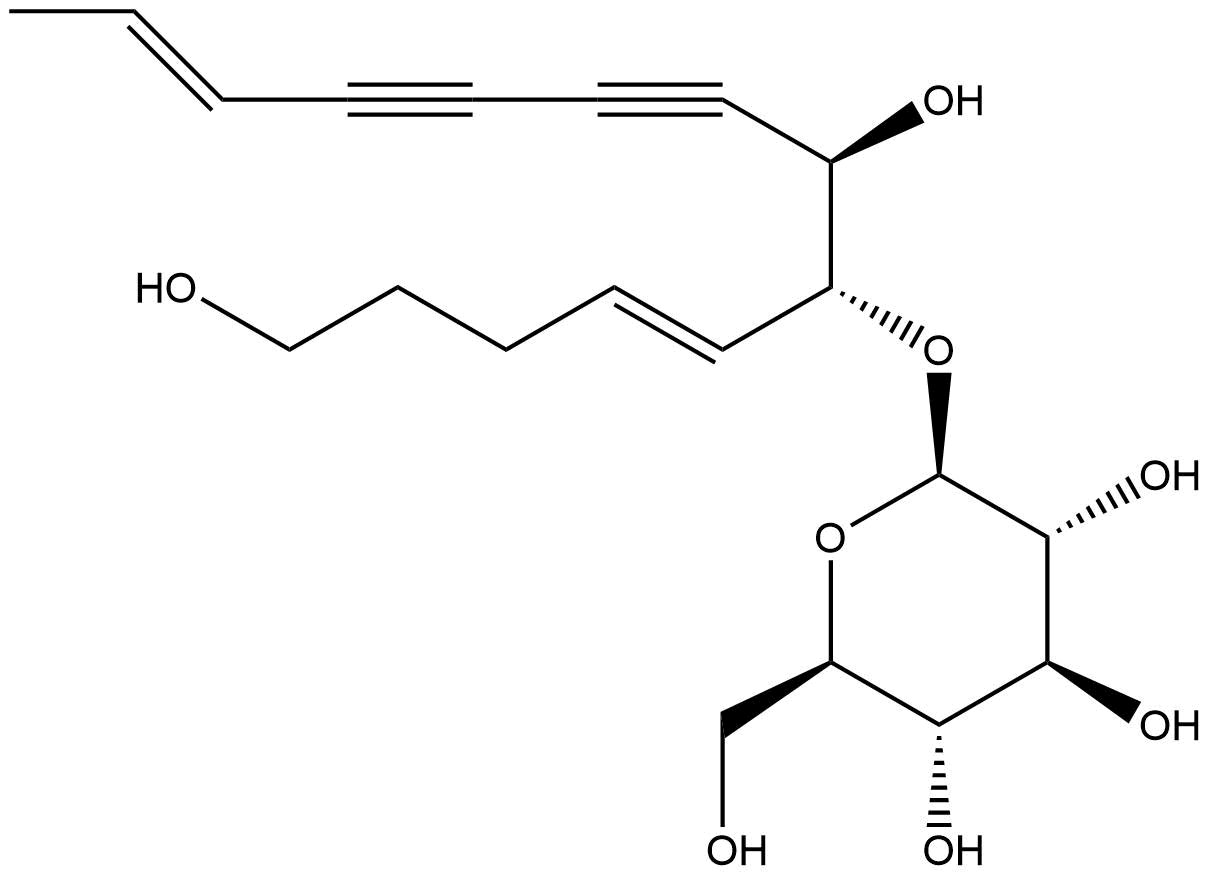


Product name: Lobetyolin
Synonym name: 129277-38-9
Catalogue No.: BP0882
Cas No.: 136085-37-5
Formula: C20H28O8
Mol Weight: 396.436
Botanical Source: the hairy roots of Lobelia inflata; also from Pratia nummularia
Physical Description: Powder
Type of Compound: Miscellaneous
Purity: 95%~99%
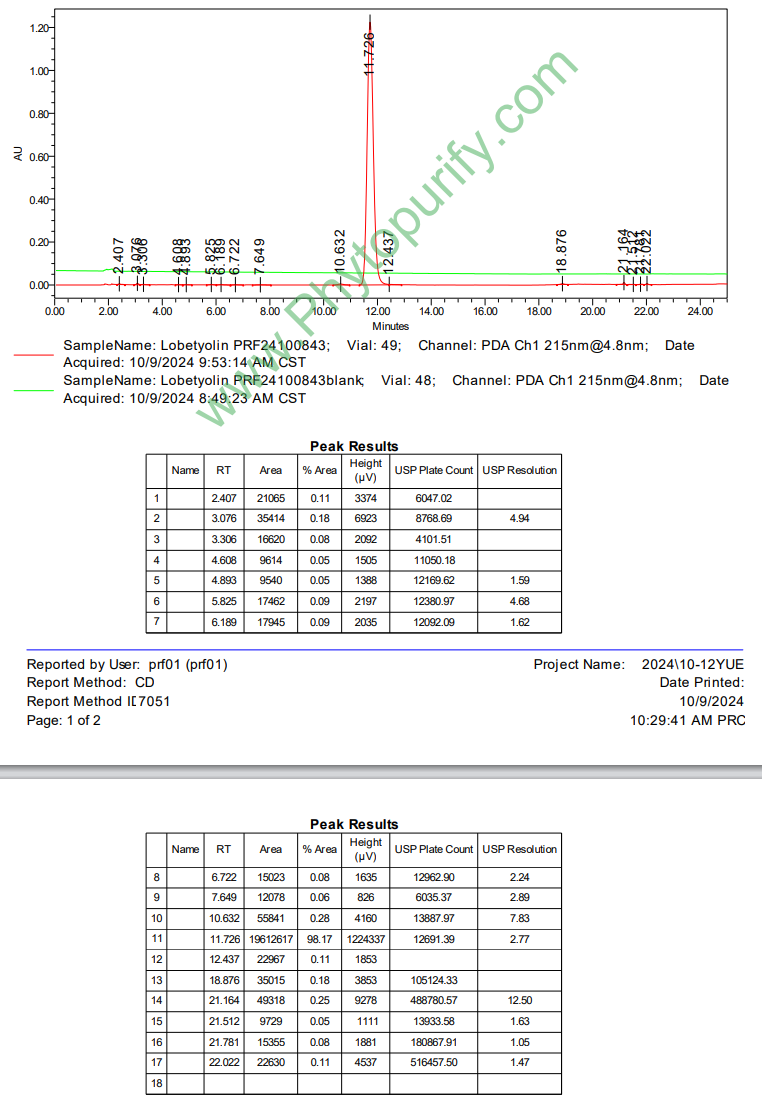
Analysis Method: HPLC-DAD or/and HPLC-ELSD
Identification Method: Mass, NMR
Packing: Brown vial or HDPE plastic bottle
Storage: Store in a well closed container, protected from air and light. Put into refrigerate or freeze for long term storage.
Whenever possible, you should prepare and use solutions on the same day. However, if you need to make up stock solutions in advance, we recommend that you store the solution as aliquots in tightly sealed vials at -20℃. Generally, these will be useable for up to two weeks.
The product could be supplied from milligrams to grams, up to kilograms
Inquire for bulk scale.
Descriptions:
Lobetyolin has a protective role in gastric mucosa injury,and the mechanism may be relate to the increase in level of 6-K-PGF1αand the inhibition the excretion of gastric acid and EGF.[1]
Lobetyolin, lobetyol, and methyl linoleate inhibit the gene expression of MUC5AC mucin induced by PMA, however lobetyolin did not affect PMA-induced MUC5AC mucin production. [2]
References:
[1] Song D, Wang Z T, Long-Yun L I. Journal of Emergency in Traditional Chinese Medicine, 2008, 17(7):963-4.
[2] Yoon Y P, Ryu J, Park S H, et al. Tuberculosis & Respiratory Diseases, 2014, 77(5):203-8.
[3] Song D, Cheng X M, Long-Yun L I, et al.China Journal of Chinese Materia Medica, 2008, 33(17):2133-5.
HPLC of Lobetyolin
Storage conditions:Short-term storage at 2~8℃, long-term storage at -20 ~ -80℃
Lobetyolin, CAS number 136085-37-5, is an active natural product isolated from the traditional Chinese medicine Codonopsis pilosula. Codonopsis pilosula, as an important nourishing herb in traditional Chinese medicine, has always been used to enhance immune function, improve physical fitness, and regulate various disease states. In recent years, with the development of modern pharmacology and natural product chemistry, Codonopsis pilosula acetylide has gradually become a research hotspot due to its unique chemical structure and diverse biological activities. Numerous studies have shown that Codonopsis pilosula acetylide has significant anti-inflammatory, antioxidant, and xanthine oxidase inhibitory activities, and exhibits the potential to induce apoptosis in tumor cell metabolism regulation, especially by inhibiting the ASCT2 mediated glutamine metabolism pathway. In addition, its regulatory effect on key targets of immune regulatory signaling pathways such as TLR4, STAT3, NFKB1, etc. provides a theoretical basis for its application in the treatment of immune related diseases and tumors. This article will provide a systematic review of the chemical structure, pharmacological activity, mechanism of action, pharmacological evaluation, and clinical application prospects of Codonopsis pilosula acetylide, aiming to provide scientific references for its subsequent drug development and clinical translation.
Codonopsis pilosula alkynyl glycoside is a natural glycoside compound with a characteristic alkynyl structure, with a molecular formula of C21H32O7 and a molecular weight of 396.4360. Its chemical structure contains alkynyl groups (- C ≡ C -) and glycosidic moieties, endowing it with unique physicochemical properties. The LogP of Codonopsis pilosula acetylide is -0.0983, indicating its strong hydrophilicity. Combined with its high polar surface area (TPSA 139.84 Å ²), it suggests that its molecular polarity is high and its water solubility is good (15.0053 mg/mL), which is conducive to absorption and distribution in vivo. However, the low blood-brain barrier permeability of Codonopsis pilosula acetylide suggests that its direct role in central nervous system diseases may be limited. The hERG channel inhibition experiment showed a negative result, indicating a low risk of cardiac toxicity. The Ames mutagenicity test score is 0.6, indicating a low risk of genetic toxicity and meeting safety requirements.
The structural characteristics of Codonopsis pilosula acetylide determine its binding ability with various biomolecules, especially its interaction with protein receptors and enzymes, laying the foundation for its multi-target pharmacological activity. The alkynyl moiety may participate in covalent or non covalent binding with the target protein, while the glycosidic moiety enhances its water solubility and bioavailability.
Codonopsis pilosula is mainly derived from the roots of Codonopsis pilosula, a perennial herbaceous plant in the Campanulaceae family, widely distributed in northern and southwestern China. Codonopsis pilosula root contains various active ingredients, including polysaccharides, saponins, and various glycoside compounds, among which Codonopsis pilosula alkynyl glycoside is the main alkynyl glycoside component.
The traditional method for extracting acetylene glycosides from Codonopsis pilosula mainly uses water or alcohol solvents (such as ethanol, methanol) for extraction. Modern extraction techniques often combine ultrasound assisted extraction, microwave-assisted extraction, and other technologies to improve extraction efficiency and purity. The general steps include:
In recent years, supercritical fluid extraction and membrane separation technologies have also been explored for efficient extraction of Codonopsis pilosula alkynyl glycosides, balancing environmental friendliness and industrial production needs.
The pharmacological activity research of Codonopsis pilosula acetylide covers multiple fields such as anti-inflammatory, antioxidant, immune regulation, and anti-tumor effects.
Codonopsis pilosula acetylide has shown significant anti-inflammatory effects in various inflammatory models. In vitro cell experiments have shown that Codonopsis pilosula acetylide can inhibit the expression of pro-inflammatory factors such as TNF - α, IL-6, and IL-1 β in macrophages, and alleviate inflammatory reactions. The mechanism partially inhibits the TLR4/NF - κ B signaling pathway, blocking the transmission of inflammatory signals and thereby reducing the release of inflammatory mediators. In vivo experiments, Codonopsis pilosula acetylide has a significant inhibitory effect on acute inflammation models such as mouse ear swelling and cotton ball granuloma.
Codonopsis pilosula acetylide has good free radical scavenging ability, which can effectively reduce intracellular ROS levels and protect cells from oxidative stress damage. Its antioxidant mechanism includes direct clearance of free radicals and activation of endogenous antioxidant enzyme systems such as superoxide dismutase (SOD), glutathione peroxidase (GPx), etc. The antioxidant properties of Codonopsis pilosula acetylide make it potentially valuable for the prevention and treatment of oxidative stress-related diseases, such as cardiovascular disease and neurodegenerative diseases.
Xanthine oxidase (XO) is a key enzyme in purine metabolism, and overactivation is associated with hyperuricemia and gout. Codonopsis pilosula acetylide showed significant inhibitory effects on XO, with inhibitor activity comparable to the standard drug allopurinol, indicating its potential in the treatment of gout and related metabolic diseases.
Codonopsis pilosula acetylide exerts immunomodulatory effects by regulating various immune related targets. Research has found that it can regulate the expression of key factors such as TLR4, STAT3, NFKB1, IL-2, IL-10, FOXP3, and promote immune balance. Specifically, it enhances the body's immune response, inhibits excessive inflammatory reactions, regulates the proportion of immune cell subsets, and shows promising prospects in autoimmune diseases and tumor immunotherapy.
Codonopsis pilosula acetylide induces tumor cell apoptosis by inhibiting the glutamine metabolism mediated by ASCT2 (glutamine transporter). Glutamine metabolism is an important source of energy and biosynthesis for tumor cells, and Codonopsis pilosula acetylide weakens the survival ability of tumor cells by blocking this metabolic pathway. In addition, Codonopsis pilosula acetylide can also inhibit the proliferation and metastasis of tumor cells by regulating the STAT3 and NF - κ B signaling pathways, demonstrating multi-target anti-tumor potential.
The mechanism of action of Codonopsis pilosula acetylide is complex and diverse, involving multiple signaling pathways and molecular targets, mainly including:
As a key receptor of innate immunity, TLR4 activates the NF - κ B signaling pathway, inducing the expression of pro-inflammatory cytokines. Codonopsis pilosula acetylide inhibits the activation of TLR4, blocks the nuclear translocation of downstream NF - κ B, reduces the production of inflammatory mediators, and exerts anti-inflammatory and immune regulatory effects.
STAT3 is a key transcription factor for various cell proliferation, apoptosis, and immune regulation. Codonopsis pilosula acetylide can inhibit the phosphorylation and activation of STAT3, block its regulated gene expression, inhibit tumor cell proliferation and promote apoptosis, while regulating immune cell function.
ASCT2 is the main transporter of glutamine, and tumor cells rely on glutamine as an energy and precursor for synthesis. Codonopsis pilosula acetylide inhibits ASCT2 function, reduces glutamine uptake, causes metabolic disorders in tumor cells, and induces cell apoptosis.
Codonopsis pilosula acetylide regulates various immune related factors, including IL-2, IL-10, IFN - γ, FOXP3, CTLA4, etc. It regulates the balance of T cell subsets, promotes immune tolerance or activation, and adapts to the immune needs of different pathological states.
By directly binding to the active site of XO enzyme, Codonopsis pilosula acetylide inhibits its catalytic activity, reduces uric acid production, and alleviates symptoms related to hyperuricemia.
The pharmacological evaluation of Codonopsis pilosula acetylide shows that it has good potential for drug development. The molecular weight of 396.4360 is moderate, with a LogP value close to zero, indicating a good balance between water solubility and lipid solubility, which is beneficial for in vivo absorption. A higher TPSA value indicates a higher polarity, which may limit its oral bioavailability, but it has good water solubility, which is beneficial for formulation development.
The low permeability of the blood-brain barrier suggests that Codonopsis pilosula acetylide is limited in the development of central nervous system drugs, but this also reduces the risk of central nervous system side effects. HERG channel inhibition is negative, indicating a low risk of cardiac toxicity. The Ames test results show that its genetic toxicity risk is relatively low and its safety is good.
In terms of pharmacokinetics, existing research is relatively limited. The metabolism in the body is mainly through the liver enzyme system, which may involve glucosidase hydrolysis and redox reactions. The half-life, central distribution, and excretion pathways of Codonopsis pilosula acetylide still require further research. In the future, its pharmacokinetics and toxicology evaluation should be strengthened to provide a basis for clinical application.
Codonopsis pilosula acetylide has shown broad prospects in clinical applications due to its multi-target and multifunctional pharmacological properties.
Immune regulation and autoimmune diseases Codonopsis pilosula acetylide is suitable for adjuvant therapy of autoimmune diseases such as rheumatoid arthritis and systemic lupus erythematosus by regulating immune cell function and balancing pro-inflammatory and anti-inflammatory factors.
Antitumor therapy Its ability to inhibit tumor metabolism and regulate the tumor microenvironment makes it a potential candidate drug for tumor adjuvant therapy, especially in the field of tumor metabolism targeted therapy.
Anti inflammatory and antioxidant properties Codonopsis pilosula acetylide can be used for the treatment of chronic inflammatory diseases such as chronic obstructive pulmonary disease (COPD), inflammatory bowel disease (IBD), etc., to reduce inflammatory damage.
metabolic diseases By inhibiting xanthine oxidase, Codonopsis pilosula acetylide has potential in the treatment of gout and hyperuricemia.
Future research should focus on optimizing the drug formulation of Codonopsis pilosula acetylide, evaluating its clinical safety, and conducting multicenter clinical trials to verify its efficacy and safety. At the same time, by combining modern molecular biology techniques, we will deeply analyze its mechanism of action and promote the transformation of Codonopsis pilosula alkynyl glycosides into new natural medicines.
As an important active ingredient in Codonopsis pilosula, its unique alkynyl glycoside structure and diverse biological activities have demonstrated extensive pharmacological potential. Its mechanism of action in anti-inflammatory, antioxidant, immune regulation, and anti-tumor aspects is becoming increasingly clear, and related targets such as TLR4, STAT3, ASCT2, etc. lay the foundation for its multi-target pharmacology. The pharmacological evaluation shows that Codonopsis pilosula acetylide has good safety and drug development potential, but its pharmacokinetic characteristics still need further research. In the future, Codonopsis pilosula acetylide is expected to become an important candidate molecule for natural product drug development, promoting the modernization process of traditional Chinese medicine and providing new treatment strategies for immune related diseases and tumor treatment. The pharmacological mechanism research and clinical translation research of the system will be the key to achieving its clinical application.
