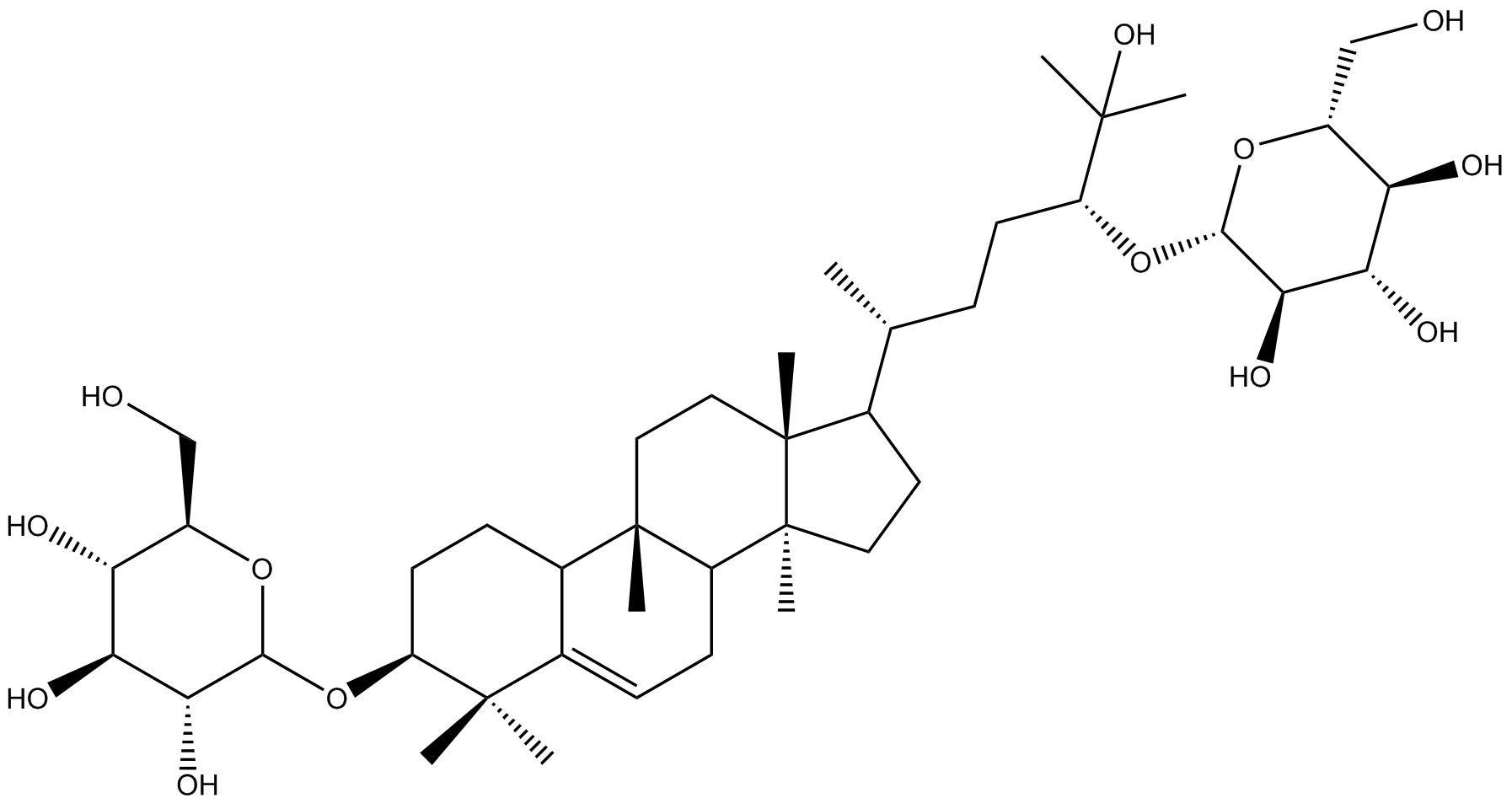


Product name: 11-Deoxymogroside IIE
Synonym name:
Catalogue No.: BP2041
Cas No.: BP2041
Formula: C42H72O13
Mol Weight: 785.025
Botanical Source: Siraitiae fructus
Physical Description:
Type of Compound: Triterpenoids
Purity: 95%~99%
Analysis Method: HPLC-DAD or/and HPLC-ELSD
Identification Method: Mass, NMR
Packing: Brown vial or HDPE plastic bottle
Storage: Store in a well closed container, protected from air and light. Put into refrigerate or freeze for long term storage.
Whenever possible, you should prepare and use solutions on the same day. However, if you need to make up stock solutions in advance, we recommend that you store the solution as aliquots in tightly sealed vials at -20℃. Generally, these will be useable for up to two weeks.
The product could be supplied from milligrams to grams
Inquire for bulk scale.
For Reference Standard and R&D, Not for Human Use Directly.
Storage conditions:Short-term storage at 2~8℃, long-term storage at -20 ~ -80℃
228.6000
.5000
.3000
No
.8500
No
Negative
11 deoxymogroside IIE (11 deoxymogroside IIE) is a kind of fruit derived from the traditional medicinal plant Arhat grosvenorii(Siraitia grosvenorii)The triterpenoid saponins of cucurbitacin obtained through separation. As an important member of Siraitia grosvenorii glycosides family, this compound has attracted extensive attention in the field of natural product pharmacy in recent years due to its multiple pharmacological activities in regulating glucose and lipid metabolism. As a traditional dual-use resource of medicine and food in China, the extract of siraitia grosvenorii has long been used to moisten the lungs, relieve cough, clear heat and moisten dryness, while modern pharmacological research has gradually revealed the huge potential of its active ingredients in the prevention and treatment of metabolic diseases.
Although the complete chemical information of the compound (such as CAS number, precise molecular formula and molecular weight) has not been fully disclosed in the public database, it can be inferred that it belongs to the category of natural sweetener with high sweetness and low calorie according to the structural characteristics of its Arhat fruit glycosides. It is worth noting that the existing research data show that 11 deoxygenated Arhat fruit glycoside IIE can intervene in modern high incidence metabolic diseases such as type 2 diabetes, insulin resistance, metabolic syndrome, obesity and nonalcoholic fatty liver disease by acting on seven key targets such as AMPK, PPARG, SLC5A2, DPP4, SLC2A4, GLP1R and α - glucosidase. This "multi-target, multi pathway" characteristic of action makes it a lead compound for developing new metabolic regulatory drugs and provides an ideal research model for a deeper understanding of the pharmacological effects of natural product systems.
11 deoxygenated Arhat fruit glycoside IIE belongs to Arhat fruit glycoside compounds, and its basic skeleton is cucurbitane type triterpene. It can be seen from the naming rules that "11 deoxygenation" means that compared with Arhat fruit glycoside IIE, the C-11 position in its molecule is missing an oxygen atom (usually hydroxyl). This structural modification may significantly affect its polarity, solubility, conformation, and interaction mode with biological targets.
Although accurate molecular formula and molecular weight data of the compound are lacking at present, it can be reasonably inferred that the molecular weight of 11 deoxygenated Arhat fruit glycoside IIE is slightly lower, probably between 785-795 g/mol, by referring to its homologous Arhat IIE (molecular formula C42H72O14, molecular weight about 801.0 g/mol). Arhat fruit glycosides are usually composed of hydrophobic cucurbitane triterpenoids and hydrophilic glucose, rhamnose and other sugar groups through glycosidic bonds, forming a typical amphiphilic structure. This structure makes it soluble in both water and organic solvents of certain polarity.
From the perspective of drug properties, this type of compound typically has a molecular weight exceeding 500 Da and contains multiple sugar groups, resulting in a large total polar surface area (TPSA) and a low lipid water partition coefficient (LogP) value, exhibiting strong hydrophilicity. These characteristics may affect their transmembrane absorption and bioavailability. According to the existing data of similar compounds, 11 deoxygenated Arhat fruit glycoside IIE may be difficult to penetrate the blood brain barrier (BBB), and its oral bioavailability may be limited by the first pass effect and intestinal absorption efficiency. However, its larger polarity also means that it may have lower cytotoxicity and better safety, which is a potential advantage for long-term management of chronic metabolic diseases.
11 deoxygenated Arhat IIE is derived from the cucurbitaceae plant Siraitia grosvenorii(Siraitia grosvenorii (Swingle) C. Jeffrey ex A. M. Lu et Z. Y. Zhang)。 Siraitia grosvenorii mainly grows in Guangxi, Guangdong, Hunan and other regions of China. It is a famous homologous plant of medicine and food, and has been used for more than 300 years.
In the traditional Chinese medicine theory, Momordica grosvenorii is cool in nature, sweet in taste, and belongs to the lung and large intestine meridians. It has the effects of clearing heat and moistening the lung, promoting pharynx and opening sound, and smoothing the intestines and catharsis. It is commonly used in clinical practice to treat symptoms such as lung heat and dry cough, sore throat and loss of voice, intestinal dryness and constipation. It can be used in a variety of ways, including decocting a single medicine, making a paste, or as a component of Tonic Diet. People also often drink dried siraitia grosvenorii in water as a health drink for cooling and detoxification.
Modern analytical chemistry research reveals that the main active components of Siraitia grosvenorii are a series of cucurbitane triterpene saponins, namely siraitia grosvenorii glycosides. These ingredients are not only the source of its extremely high sweetness (up to 300 times that of sucrose), but also the material basis for its pharmacological activity. With the progress of separation and purification technology, dozens of Arhat grosvenorides and their derivatives have been identified from momordica grosvenorii, including 11 deoxygenated Arhat grosvenoride IIE. Traditional applications mainly focus on its "lung moistening" effect, while modern research continuously expands its pharmacological connotation beyond "lung moistening", especially in the regulation of systemic metabolism, reflecting the wisdom of traditional Chinese medicine's "treating different diseases with the same treatment" and the compatibility with modern multi-target treatment concepts.
The pharmacological activity of 11 deoxygenated Arhat fruit glycoside IIE is mainly reflected in its intervention potential for diseases related to glucose and lipid metabolism disorders. Its mechanism of action involves multiple key targets and pathways, forming a synergistic network.
Core target and mechanism analysis:
AMPK (AMP activated protein kinase)AMPK is a core regulatory factor in cellular energy metabolism. Activated when the cellular energy state is low (AMP/ATP ratio increases). 11 deoxygenated Arhat fruit glycoside IIE may activate AMPK directly or indirectly. Activated AMPK can promote fatty acid oxidation, inhibit fat synthesis, increase glucose uptake, improve insulin sensitivity, thereby combating obesity, insulin resistance, and non-alcoholic fatty liver disease.
PPARG (Peroxisome proliferator activated receptor gamma)PPARG is a member of the nuclear receptor superfamily and plays a central role in adipocyte differentiation, lipid metabolism, and glucose stability. It is the target of insulin sensitizer thiazolidinedione drugs (such as Rosiglitazone). 11 deoxygenated Arhat fruit glycoside IIE may be used as a regulator of PPARG to regulate its activity in a way different from synthetic drugs, promote the normal differentiation of fat cells, enhance the sensitivity of peripheral tissues to insulin, and may avoid the side effects of synthetic drugs such as weight gain.
SLC5A2 (sodium glucose cotransporter 2) and α - glucosidase These two targets mainly affect the absorption of glucose in the intestine. SLC5A2 is responsible for the reabsorption of glucose by the proximal tubules of the kidney, and its inhibitor (SGLT2i) has become an important hypoglycemic drug. Alpha glucosidase is located at the brush border of the small intestine and is responsible for breaking down polysaccharides into monosaccharides. 11 deoxygenated Arhat fruit glycoside IIE may inhibit the activity of these two targets, respectively reducing the renal reabsorption of glucose and delaying the digestion and absorption of intestinal carbohydrates, thereby reducing postprandial blood sugar.
DPP4 (dipeptidyl peptidase-4) and GLP1R (glucagon like peptide-1 receptor)This is a pair of functionally closely related targets. GLP-1 is an incretin that stimulates glucose dependent insulin secretion, inhibits glucagon secretion, delays gastric emptying, and increases satiety. DPP4 can rapidly degrade endogenous GLP-1. 11 deoxygenated Arhat fruit glycoside IIE may achieve multiple effects such as glucose reduction and weight loss by inhibiting DPP4 activity, prolonging the action time of endogenous GLP-1, and/or directly activating GLP1R, simulating the benefits of GLP-1.
SLC2A4 (glucose transporter 4)This is the main transporter for glucose to enter muscles and adipocytes under the action of insulin. Under insulin resistance, the transport of SLC2A4 to the cell membrane is obstructed. 11 deoxygenated Arhat fruit glycoside IIE may promote the membrane translocation of SLC2A4 through upstream signaling pathways such as AMPK, and increase the uptake and utilization of glucose in peripheral tissues independent of insulin.
Association with related diseases:
To sum up, the action mechanism network of 11 deoxygenated Arhat fruit glycoside IIE covers multiple levels, including energy perception (AMPK), transcriptional regulation (PPARG), hormone regulation (DPP4/GLP1R), membrane transport (SLC5A2, SLC2A4), and digestive enzyme inhibition (α - glucosidase). It shows unique advantages of system regulation for multiple pathophysiological links of metabolic diseases.
To evaluate the pharmaceutical properties of 11 deoxygenated Arhat fruit glycoside IIE, it is necessary to make reasonable inference based on its common characteristics as a Arhat fruit glycoside compound, and refer to the famous "Lipinski Five Rules" and other standards.
Inference analysis based on structural features:
Comprehensive evaluation of the potential of traditional Chinese medicine:
According to the above analysis, 11 deoxygenated Arhat fruit glycoside IIE almost completely does not conform to the Lipinski Five Rules for predicting the properties of small molecule oral drugs, and belongs to the "lead like compound" or "beyond the rules" molecule. This suggests that its development as a traditional oral small molecule drug may face challenges, mainly reflected in:
- Poor oral absorption High polarity and high molecular weight may lead to weak passive transmembrane diffusion ability and low intestinal absorption efficiency.
- Unsatisfactory pharmacokinetic properties May be easily hydrolyzed by gastrointestinal enzymes, with obvious first pass effects and short half-life in the body.
- Difficult to penetrate the blood-brain barrier (BBB)The extremely high hydrophilicity makes it basically unable to penetrate the BBB, but this may actually avoid central nervous system side effects for its goal of treating peripheral metabolic diseases.
However, not complying with Lipinski's rules does not mean that there is no development value. Many natural product derived drugs, such as antibiotics and anti-tumor drugs, exceed these rules. Potential development strategies for 11 deoxygenated Arhat fruit glycoside IIE may include:
- Prodrug modification Chemical modification of its sugar or glycoside groups to enhance lipid solubility and membrane penetration, and metabolize it into an active form in vivo.
- New drug delivery system Develop delivery systems such as nanomaterials, liposomes, and microemulsions to improve their solubility, stability, and intestinal absorption.
- As a functional food/health food additive By utilizing its natural source and high safety characteristics, it can be directly used as a dietary supplement in lower doses for long-term metabolic regulation.
- Research on the mechanism of action Its multi-target properties can serve as a tool compound for studying the regulation of metabolic networks and inspiring the design of novel synthetic molecules with simpler structures and better drug properties.
In terms of toxicity, based on the long-term consumption history of Arhat and the safety record of its extract as a natural sweetener, it is speculated that the acute toxicity of 11 deoxygenated Luohanguo glycoside IIE is low, but it still needs to be confirmed by systematic preclinical toxicology research.
Research Status:
At present, the specialized research on 11 deoxygenated Arhat fruit glycoside IIE is still in a relatively early stage. Most studies focused on the total extract of Momordica grosvenorii or the more common Arhat grosvenorii glycosides (such as momordicin V). The existing data mainly comes from computer-aided target prediction, preliminary activity screening based on cell models, and activity analogy with structurally similar compounds. Its activity on multiple key metabolic targets such as AMPK and PPARG suggests that it is a very valuable research object. However, the lack of detailed in vivo pharmacological, pharmacokinetic, and toxicological data is currently a shortcoming in research. The precise chemical structure, bulk acquisition of pure products, and study of structure-activity relationships also urgently need to be further explored.
Application prospects:
1. As a leading compound for multi-target metabolic regulation Under the background of the rise of "multi target drug design" and "network pharmacology", 11 deoxygenated Arhat fruit glycoside IIE provides a natural, synergistic multi target template. By optimizing its structure, it is expected to develop a new generation of drugs to treat type 2 diabetes, obesity and their complications.
2. Development of functional and specialty foods: With its natural source and potential hypoglycemic and lipid regulating effects, it can be developed into functional food ingredients or special medical formula food for pre diabetes and obese people, serving the "prevention of disease" and chronic disease nutrition management.
3. Modernization of Traditional Chinese Medicine and Research on Quality Markers As one of the active ingredients of Arhat grosvenorii, in-depth study of 11 deoxygenated siraitin IIE will help clarify the modern scientific connotation of "regulating metabolism" in addition to "moistening the lung" of Siraitia grosvenorii, and may be used as one of the quality indicators for evaluating the quality of Siraitia grosvenorii medicinal materials and its products.
4. Tools for studying the mechanisms of metabolic diseases By utilizing its multi-target properties, it can be used as a probe to reveal the complex mechanism of cross dialogue among multiple pathways such as AMPK, PPARG, GLP-1 in metabolic networks.
Future research directions:
- basic research Complete the separation, purification, and full structure identification of the compound; Conduct in vitro activity validation of the system to clarify its strength, selectivity, and mode of action (excitation/inhibition/regulation) on each target; Establish animal models to verify its anti diabetes and anti obesity effects in vivo.
- Optimization of drug properties Conduct comprehensive ADMET (absorption, distribution, metabolism, excretion, toxicity) assessment; Based on the structure-activity relationship, design and synthesize a series of structurally simplified or modified derivatives to improve their pharmacological parameters while maintaining their activity.
- application development Explore the feasibility of its application in different dosage forms, such as oral and injectable formulations; Study the combined application effect of it with other hypoglycemic/lipid-lowering drugs.
In conclusion, 11 deoxygenated Arhat fruit glycoside IIE, as a natural product derived from traditional medicinal plants, with its unique multi target action characteristics, provides new ideas and candidate molecules for the prevention and treatment of metabolic diseases. Although there are still many challenges on the path towards mature drugs, their scientific value and potential applications are worth exploring in depth. With the continuous deepening of research, it is expected to play an important role in innovative drug development and the health industry.
Batch can search by a CAS number,one per line
