Introduction/Overview
Natural products, as an important source of drug discovery, play an irreplaceable role in the development of anti-inflammatory drugs. Inflammatory response is a protective response of the body to various injury stimuli, but its excessive activation is closely related to the occurrence and development of various chronic diseases, such as rheumatoid arthritis, inflammatory bowel disease, neurodegenerative diseases, and cardiovascular diseases. In recent years, research on small molecule inhibitors targeting inflammatory mediators and signaling pathways has attracted much attention. Among them, nitric oxide (NO), as one of the important inflammatory mediators, has become a key target for anti-inflammatory drug development due to its dual role in inflammatory response.
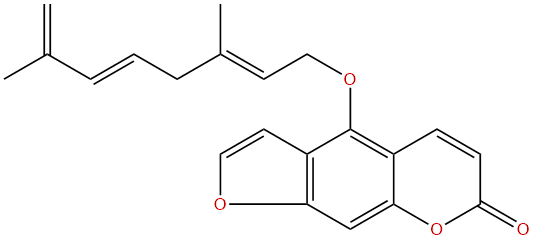
Anhydronotoptol (CAS number: 88206-51-3) is an emerging natural product that has been shown to have significant inhibitory activity on nitric oxide production. This compound exhibits good anti-inflammatory potential by inhibiting LPS induced NO production in RAW 264.7 macrophages, with an IC50 of 36.6 μ M. This article will provide a systematic review of the chemical structure and physicochemical properties, plant sources and extraction methods, pharmacological activity and mechanism of action, pharmacological evaluation, and clinical application prospects of dehydrated Qiangfu phenol, aiming to provide theoretical basis and research direction for its subsequent drug development and clinical translation.
Chemical structure and physicochemical properties
The molecular formula of dehydrated Qianghuo phenol is C21H28O4, with a molecular weight of 336.3870. Its chemical structure belongs to the dehydrated derivatives of Qianghuo natural products, which contain multiple hydroxyl groups and aromatic rings, endowing it with specific biological activity. The LogP value is 4.7942, indicating that it has high lipid solubility, which is beneficial for penetrating cell membranes and the blood-brain barrier (BBB), further confirmed by its high blood-brain barrier permeability. The polarization surface area (TPSA) is 52.58 Å ², which belongs to the category of moderately polar compounds and has a certain degree of water solubility and lipid solubility.
The extremely low water solubility (0.0006 mg/mL) suggests limited solubility in the aqueous phase, which may affect its oral bioavailability. The hERG channel inhibition experiment result was negative, indicating that dehydrated Qiangfuofen has a low risk of cardiac toxicity. The Ames test score is 0.9, indicating a low risk of genotoxicity and meeting safety requirements.
In summary, the physicochemical properties of dehydrated Qiangfu phenol indicate its good membrane permeability and low toxicity risk, but poor water solubility may become a challenge in its drug development.
Plant sources and extraction methods
Dehydrated Qiangfuo phenol mainly comes from the traditional Chinese medicinal herb Notopterygium incisum Ting ex H.T. Chang and its related species. Qianghuo is a plant of the Umbelliferae family and genus Qianghuo, widely distributed in northwest and southwest China. It has always been used for the treatment of rheumatism, rheumatism, headache, and cold fever. Qianghuo contains various active ingredients, including volatile oils, flavonoids, phenols, and sesquiterpenes. Dehydrated Qianghuo phenol is one of the important active ingredients.
The extraction method usually uses organic solvent extraction combined with column chromatography separation. The specific process is as follows: after crushing the dried roots and stems of Qianghuo, reflux extraction is carried out with ethanol or methanol, concentration is carried out, and then separated and purified by silica gel column chromatography or high performance liquid chromatography (HPLC) to obtain high-purity dehydrated Qianghuo phenol. In recent years, ultrasound assisted extraction and supercritical CO2 extraction techniques have also been applied to improve extraction efficiency and purity.
The optimization of extraction process not only affects the yield, but also relates to the maintenance of compound activity and the feasibility of subsequent drug development. In the future, green and efficient extraction and separation technologies can be further explored to meet the needs of industrial production.
Pharmacological activity research
The pharmacological activity of dehydrated Qiangxuofen mainly focuses on the anti-inflammatory field. In vitro experiments have shown that the compound can significantly inhibit the production of nitric oxide (NO) in RAW 264.7 macrophages induced by LPS (lipopolysaccharide), with an IC50 of 36.6 μ M, demonstrating good NO production inhibition activity. NO, as an important signaling molecule in inflammatory response, plays a crucial role in regulating immune cell function, vascular dilation, and the release of inflammatory mediators. Excessive NO production is closely related to the pathological processes of various inflammatory diseases, therefore, it is of great significance for dehydrated Qiangfuofen to exert anti-inflammatory effects by inhibiting NO production.
In addition, dehydrated Qiangfuo phenol exhibits regulatory effects on various inflammation related targets, including IL-6, STAT3, CASP1, TRPV1, PTGS1, TNF, TRPA1, NOS2, PTGS2, and NFKB1. These targets play important roles in inflammation signaling, cell apoptosis, and pain perception, indicating that dehydrated Qiangfuofen has multi-target and multi mechanism anti-inflammatory potential.
Animal model research is still in its early stages, and preliminary data suggests that dehydrated Qiangfuofen can alleviate inflammation and tissue damage in inflammatory pain and arthritis models. Systematic in vivo pharmacological validation is needed in the future.
Mechanism of action and molecular targets
The anti-inflammatory mechanism of dehydrated Qiangfuofen involves multiple signaling pathways and molecular targets. The main mechanisms include:
-
Inhibition of nitric oxide synthase (NOS2) activity
Dehydrated Qiangfu phenol significantly inhibits the expression and activity of inducible nitric oxide synthase (iNOS, NOS2), reduces the excessive production of NO, and thus alleviates inflammatory reactions.
-
Regulating the expression of inflammatory cytokines
By downregulating the expression of pro-inflammatory cytokines such as tumor necrosis factor (TNF), interleukin-6 (IL-6), and prostaglandin synthase (PTGS1/PTGS2), the release of inflammatory mediators is reduced and the inflammatory cascade is inhibited.
-
Inhibition of NF - κ B signaling pathway
NF - κ B, as the core transcription factor of inflammatory response, regulates the expression of various inflammatory genes. Dehydrated Qiangfuofen exerts anti-inflammatory effects by inhibiting the activation of NF - κ B (NFKB1), blocking inflammatory signaling pathways.
-
Regulating the STAT3 signaling pathway
STAT3 plays an important role in inflammation and immune regulation. Dehydrated Qiangfuofen's regulation of STAT3 helps to inhibit excessive activation of inflammatory cells.
-
Acting on TRP channel
TRPV1 and TRPA1 are key ion channels for pain and inflammation perception, and the regulation of dehydrated Qiangfuofen on them is expected to alleviate inflammation related pain symptoms.
-
Affects apoptosis related proteins
By regulating caspase 1 (CASP1), dehydrated Qiangfuofen may participate in programmed cell death of inflammatory cells and promote inflammation resolution.
In summary, dehydrated Qianghuo phenol systematically regulates inflammatory response through multi-target and multi pathway synergistic effects, reflecting the advantages of natural product multi regulation.
Evaluation of drug properties and pharmacokinetics
The development of medicinal properties is a crucial step in the development of natural product drugs. The pharmacological parameters of dehydrated Qiangfuofen show that it has certain advantages and challenges:
-
Molecular Weight and Lipinski Rule
The molecular weight is 336.3870, which conforms to the ideal range of Lipinski rule and is beneficial for oral absorption.
-
Fat solubility and membrane permeability
The LogP is 4.7942, which is high but still within an acceptable range, indicating that it has good lipid solubility and cell membrane penetration ability, supporting its high blood-brain barrier permeability.
-
Polarization surface area (TPSA)
52.58 Å ², suitable for penetrating cell membranes and supporting its biological activity.
-
Water solubility
The extremely low water solubility (0.0006 mg/mL) may limit its oral bioavailability and in vivo distribution, which needs to be improved through formulation technology.
-
safety
The hERG channel inhibition was negative and the Ames test results were good, indicating a low risk of cardiac and genetic toxicity.
-
pharmacokinetics
At present, there is a lack of systematic pharmacokinetic data in vivo, but its high lipid solubility and blood-brain barrier permeability suggest that it may have good tissue distribution, especially in the application potential of central nervous system diseases.
In the future, systematic ADME (absorption, distribution, metabolism, excretion) research is needed to clarify its metabolic pathways and in vivo stability, optimize dosage forms to enhance bioavailability.
Clinical application prospects and prospects
Dehydrated Qiangfuofen, as an effective inhibitor of nitric oxide production, has broad clinical application potential. Its anti-inflammatory activity and multi-target regulatory mechanism make it potentially therapeutic in various inflammatory diseases:
-
Rheumatic and immune diseases
Dehydrated Qiangfuofen can alleviate joint inflammation and pain in immune-mediated inflammatory diseases such as rheumatoid arthritis and systemic lupus erythematosus by inhibiting inflammatory mediators and signaling pathways.
-
Neuroinflammation and pain management
Due to its excellent blood-brain barrier permeability and regulatory effect on TRP channels, dehydrated Qiangfuofen is expected to be used in neuroinflammatory related diseases such as multiple sclerosis and neuropathic pain.
-
cardiovascular disease
Excess NO is closely related to cardiovascular inflammation, and the NO inhibitory effect of dehydrated Notopterygol may help prevent atherosclerosis and related diseases.
-
Tumor associated inflammation
The inflammatory microenvironment plays an important role in the occurrence and development of tumors, and dehydrated Qiangfuofen has the potential to serve as an adjuvant anti-tumor drug by regulating the STAT3 and NF - κ B signaling pathways.
However, the clinical translation of dehydrated Qiangfuofen still faces many challenges, including poor water solubility, unclear in vivo stability and pharmacokinetic properties. In the future, there is a need for systematic pharmacodynamic, safety evaluation, and preclinical research, combined with modern drug design and formulation technology, to promote its clinical application.
Conclusion
Dehydrated Qianghuol, as an active ingredient in natural products of Qianghuo, exhibits significant inhibitory activity on nitric oxide production and multi-target anti-inflammatory potential. Its unique chemical structure and excellent blood-brain barrier permeability provide new ideas for the development of novel anti-inflammatory and neuroprotective drugs. Although further optimization and research are needed for its water solubility and pharmacokinetic properties, dehydrated Qiangfuofen has the potential to become an important candidate molecule for natural product drug development due to its safety and multi mechanism effects.
In the future, by combining modern medicinal chemistry, molecular biology, and pharmacology techniques, we will deeply analyze its mechanism of action, optimize the formulation process, and carry out systematic in vitro and in vivo evaluations, which will lay a solid foundation for the clinical translation and new drug development of dehydrated Qiangfuofen. The continuous development of pharmacology of natural products will undoubtedly promote the widespread application of dehydrated Qianghuol and similar compounds in the fields of anti-inflammatory and related disease treatment.