Introduction/Overview
Decuroside V is a natural product of coumarin glycosides derived from the traditional Chinese medicine Peucedanum praeruptorum Dunn. As a classic traditional Chinese medicine herb, Qianhu has always been used to treat respiratory system diseases and inflammation related conditions. Its active ingredients are diverse, among which coumarin and its glycosides are the main pharmacological active substances. Due to its unique molecular structure and significant biological activity, puerarin V has received widespread attention in the field of natural product pharmacology in recent years. Numerous studies have shown that puerarin V exhibits promising potential in anti-inflammatory, antioxidant, and immune regulation, particularly in regulating inflammation related signaling pathways and targets.
This article aims to systematically review the chemical structure and physicochemical properties, plant sources and extraction methods, pharmacological activity and mechanism of action, pharmacological evaluation and pharmacokinetic characteristics of puerarin V, and explore its clinical application prospects and development trends. By comprehensively reviewing existing research results, it is expected to provide theoretical basis and research direction for the drug development and clinical translation of puerarin V.
Chemical structure and physicochemical properties
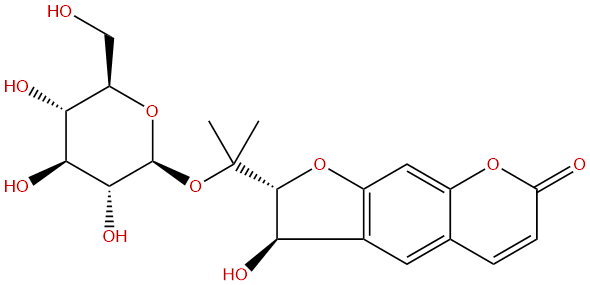
The chemical formula of Qianhu glycoside V is C21H24O10, with a molecular weight of 424.4020 and a CAS number of 96648-59-8. Its structure belongs to the coumarin glycoside class, with the core being the coumarin skeleton connected by glycosidic moieties. The structure contains multiple hydroxyl and ester groups, giving it good hydrophilicity and a certain degree of polarity.
In terms of physicochemical properties, the LogP value of puerarin V is approximately -0.0833, indicating its low hydrophobicity and strong hydrophilicity, which is consistent with its presence of multiple polar functional groups. Its topological polar surface area (TPSA) is 159.05 Å ², and a higher TPSA value suggests strong polarity, which may affect its cell membrane permeability. The water solubility index is 3.2295, indicating that it has a certain solubility in water, but not extremely high solubility. The low permeability of the blood-brain barrier suggests limited distribution in the central nervous system. The negative result of hERG channel inhibition experiment indicates a low risk of cardiac toxicity. The Ames test value is 0.9, indicating a low risk of genotoxicity and a good safety basis.
Overall, the physicochemical properties of paeoniflorin V are suitable as candidate molecules for oral administration, but its high polarity and water solubility may limit its membrane permeability and bioavailability, and need to be optimized in subsequent drug design and formulation development.
Plant sources and extraction methods
Qianhu glycoside V mainly exists in the roots of the Umbelliferae plant Qianhu. Qianhu is widely used in traditional Chinese medicine, mainly distributed in parts of North China, Northeast China, and Southwest China. The roots of this plant are rich in various coumarins and their glycosides, among which paeoniflorin V is one of the important components. Although its content is not as high as the main coumarins (such as paeoniflorin), its unique structure and biological activity make it a research focus.
The common methods for extracting paeoniflorin V include:
-
Solvent extraction method
Ethanol or methanol can be used as solvents to effectively extract puerarin V through reflux or ultrasound assisted extraction. Extraction conditions such as solvent concentration, temperature, and time have a significant impact on extraction efficiency.
-
Liquid liquid distribution and column chromatography purification
After concentration, the extraction solution is subjected to liquid-liquid distribution (such as ethyl acetate water system) to remove impurities, and then further purified by techniques such as silica gel column chromatography and reverse phase high performance liquid chromatography (RP-HPLC) to obtain high-purity puerarin V.
-
Modern extraction techniques
Emerging technologies such as ultrasound assisted extraction and microwave-assisted extraction have been applied to the extraction of paeoniflorin V, significantly improving extraction efficiency and purity, while shortening extraction time and reducing energy consumption.
The optimization of extraction process is not only related to the yield of puerarin V, but also affects its subsequent pharmacological activity research and quality control in drug development.
Pharmacological activity research
The pharmacological activity of Qianhu glycoside V mainly focuses on anti-inflammatory effects, and also exhibits certain antioxidant and immune regulatory functions.
anti-inflammatory effect
Numerous in vitro and in vivo experiments have shown that puerarin V can significantly inhibit the release of various inflammatory mediators and the activation of inflammatory signaling pathways. In the inflammatory model, puerarin V reduces the intensity of inflammatory response by regulating cytokines such as tumor necrosis factor (TNF) and interleukin-6 (IL-6). Its inhibitory effect on inflammation related enzymes such as cyclooxygenase (PTGS1 and PTGS2) and nitric oxide synthase (NOS2) further supports its anti-inflammatory potential.
Antioxidant effect
Qianhu glycoside V contains multiple hydroxyl structures and has the ability to scavenge free radicals, which can alleviate cell damage caused by oxidative stress. Its antioxidant activity has been validated in vitro DPPH radical scavenging experiments and cell models, which helps alleviate inflammation related oxidative damage.
immunomodulation
Research has shown that puerarin V can regulate immune cell function, affect the expression of inflammatory mediators and the activity of signaling pathways, and have a positive effect on maintaining immune system homeostasis.
Overall, as a natural product with multiple targets and mechanisms, the anti-inflammatory activity of puerarin V is currently the focus of research, and it has good safety and biological activity foundation.
Mechanism of action and molecular targets
The anti-inflammatory effect of Qianhu glycoside V involves multiple molecular targets and signaling pathways, mainly including:
-
IL-6/STAT3 signaling pathway
IL-6 is an important pro-inflammatory cytokine that promotes inflammation gene expression by activating STAT3 transcription factor. Qianhu glycoside V can inhibit the secretion of IL-6 and the phosphorylation of STAT3, block inflammatory signaling, and alleviate inflammatory reactions.
-
Inflammatory mediators PTGS1/PTGS2 (COX-1/COX-2)
PTGS1 and PTGS2 are key enzymes involved in prostaglandin synthesis and are involved in inflammation and pain responses. Qianhu glycoside V has an inhibitory effect on these two enzymes, reducing the production of prostaglandins and alleviating inflammatory symptoms.
-
TNF and NFKB1 signaling pathways
TNF is a core cytokine in the inflammatory response, and NFKB1 is a key transcription factor that regulates the expression of inflammatory genes. Qianhu glycoside V can inhibit the release of TNF and the activation of NFKB1, blocking the expression of downstream inflammatory genes.
-
CASP1 (caspase 1)
CASP1 participates in the activation of inflammasomes and promotes the maturation of pro-inflammatory cytokine IL-1 β. Qianhu glycoside V inhibits CASP1 activity and reduces inflammasome mediated inflammatory response.
-
TRPV1 and TRPA1 receptors
These two types of transient receptor potential channels play important roles in inflammation and pain transmission. Qianhu glycoside V may be involved in the relief of inflammatory pain by regulating the activity of TRPV1 and TRPA1.
-
NOS2 (inducible nitric oxide synthase)
NOS2 is highly expressed in an inflammatory state, producing a large amount of nitric oxide and promoting the inflammatory response. Qianhu glycoside V inhibits the expression of NOS2 and reduces the production of inflammatory mediators.
In summary, Qianhu glycoside V regulates inflammation related signaling pathways through multi-target synergistic effects, demonstrating its complex and effective anti-inflammatory mechanism.
Evaluation of drug properties and pharmacokinetics
The pharmacological evaluation of Qianhu glycoside V shows that it has certain potential for drug development:
-
Molecular weight and polarity The molecular weight of 424.4 is slightly higher than the "rule" of an ideal drug, but still within an acceptable range. A higher polarity (TPSA 159.05) may limit its cell membrane permeability and affect oral absorption.
-
Fat solubility and water solubility LogP is close to zero, indicating a good balance between hydrophilicity and hydrophobicity, which is beneficial for distribution in the body. Moderate water solubility is beneficial for formulation development.
-
Blood-brain barrier penetrability Low, indicating that it mainly acts on peripheral tissues and reduces the risk of central nervous system side effects.
-
safety indicator HERG channel inhibition is negative, and the Ames test results are good, indicating a low risk of cardiac toxicity and genotoxicity.
-
pharmacokinetics At present, there is limited data on the in vivo absorption, distribution, metabolism, and excretion (ADME) of puerarin V. It is speculated that its polarity is high, and its oral bioavailability may be limited. The metabolic pathway may involve glycoside hydrolysis by liver enzymes and oxidative metabolism of coumarin skeleton.
In the future, in vivo pharmacokinetic studies are needed to clarify its absorption kinetics, metabolites, and excretion pathways, providing a basis for dosage form design and clinical application.
Clinical application prospects and prospects
Qianhu glycoside V, as a natural product with significant anti-inflammatory activity, has broad clinical application prospects. Its multi-target mechanism of action makes it potentially advantageous in the treatment of inflammation related diseases such as chronic inflammation, rheumatic diseases, respiratory system inflammation, etc.
At present, the study of Qianhu glycoside V is still in the stage of basic research and pharmacological validation, and there is no systematic clinical trial data available. Future research should focus on:
-
Pharmacokinetic and safety evaluation The in vivo metabolism and toxicology research of the system provides safety assurance for clinical trials.
-
Formulation development and optimization of administration routes Develop suitable sustained-release formulations or nanocarriers based on their physicochemical properties to improve bioavailability and targeting.
-
Disease model validation Validate its efficacy in various inflammation related disease models and clarify the scope of indications.
-
Clinical trial design Conduct early clinical trials to evaluate its safety, tolerability, and initial efficacy.
In addition, combining modern medicinal chemistry and molecular biology methods, through structural modification and targeted delivery technology, it is expected to enhance the efficacy and drug properties of puerarin V, and promote its clinical translation.
Conclusion
Qianhu glycoside V, as an important coumarin glycoside active ingredient in Qianhu, exhibits significant anti-inflammatory activity and multi-target regulatory ability. Its unique chemical structure and good safety provide a solid foundation for its drug development. Although its pharmacokinetics and clinical application data are currently insufficient, with further research, praeruptin V is expected to become a new natural drug candidate molecule for the treatment of inflammation related diseases.
Future research needs to focus on systematic pharmacological mechanism analysis, pharmacokinetic evaluation, and preclinical safety studies, combined with modern drug design concepts, to promote the clinical translation and industrial application of puerarin V. As a bridge connecting traditional Chinese medicine and modern pharmacology, the study of paeoniflorin V not only enriches the theoretical system of natural product pharmacology, but also provides valuable resources for innovative drug development.